
Druid Shape-Shifting Techniques for Flexible Gameplay
Shape-shifting is one of the most recognizable DnD Druid abilities. A Druid can become a dangerous beast in battle, but that is only one part of what transformation can accomplish.
A spider can slip through a narrow opening. A wolf can help follow a trail. An aquatic creature can investigate a flooded ruin. A fast form can carry a warning, while a climbing form can reach a ledge that seems inaccessible to the rest of the party.
Effective Druid shape shifting begins with a simple idea: the strongest form is not always the form with the highest damage or most hit points. The best form is the one that solves the current problem.
Understand What Wild Shape Is Meant to Do
Druid Wild Shape allows a Druid to assume another form within the limits of the rules being used at the table. Those limits can involve available forms, Druid level, Challenge Rating, movement types, duration, uses, and other restrictions.
Players should check the exact version of the Druid class used in their campaign. The 2014 Fifth Edition Druid and the revised 2024 Druid handle Wild Shape differently, including important details involving forms, durability, uses, and subclass features.
For that reason, a good Wild Shape guide should not treat the two rulesets as interchangeable.
Regardless of version, study the important parts of any available form:
-
Size
-
Armor Class
-
Relevant hit points or durability rules
-
Movement and special movement types
-
Ability scores
-
Senses
-
Actions
-
Special traits
A creature's stat block is a toolbox. Its attack damage is only one tool inside it.
Define the Purpose Before Choosing a Form
Before transforming, ask what the party actually needs.
Are you trying to deal damage, survive attacks, scout a dangerous area, follow a trail, cross water, climb a wall, escape, or detect something hidden?
This question is the foundation of useful Druid shape-shifting techniques. Choosing by purpose prevents a player from automatically using the same familiar form in every scene.
A durable beast may be useful when holding a doorway. A small creature may be better when investigating a hidden passage. A form with useful senses might prevent an ambush before combat even begins.
Flexible Druid gameplay is about matching the tool to the task.
Use Combat Forms for More Than Damage
The best Wild Shape forms for combat are not necessarily those with the largest damage numbers.
Depending on the available forms and ruleset, a combat transformation may contribute by:
-
Providing greater frontline durability
-
Occupying important battlefield space
-
Reaching distant enemies
-
Protecting vulnerable allies
-
Using a form's actual control abilities
-
Drawing attention away from spellcasters
-
Creating pressure in a narrow area
Always read the actual stat block. If a Beast has an ability that can knock a target prone, grapple, restrain, or provide another effect, that feature may be more important than a small increase in damage.
Good Druid combat tactics respond to what the party needs right now.
Choose Durable Forms When the Party Needs a Frontliner
A durable form can help when enemies are threatening a fragile ally, the party must protect an NPC, or the group needs someone to hold a position while others retreat.
Do not judge durability through one number alone. Consider Armor Class, movement, size, offensive reliability, special traits, and escape options.
The exact way Wild Shape durability works differs between the 2014 and 2024 Druid rules, so players should use the rules for their chosen version rather than assuming every transformed Druid uses the same hit point system.
Use Fast Forms to Control Distance
Speed can be more useful than strength.
A fast form might chase a fleeing enemy, reach an endangered ally, deliver a warning, cross a dangerous area, or escape an encounter the party cannot win.
Special movement can be even more important. A climbing speed may provide access to a tower or cliff. A swimming speed can make underwater exploration possible. Flying forms, when available under the applicable Wild Shape rules, can change how a party approaches obstacles and reconnaissance.
Always confirm level and ruleset restrictions before selecting forms with swimming or flying movement.
Scout with Small Animal Forms
Small and ordinary-looking Druid animal forms can be excellent scouting tools.
A tiny creature may fit through an opening that a humanoid cannot. A form appropriate to the environment may observe guards, listen near a doorway, investigate a tunnel, or check whether a route is safe.
The environment matters. A spider might be unremarkable in an old cellar, while an unexpected animal inside a guarded chamber could attract attention.
Scouting also carries risks. Small forms may be vulnerable to traps, predators, magical detection, and direct attacks. The Druid may also be unable to communicate normally while transformed and can become separated from the party.
Gather Information Without Slowing Down the Session
Wild Shape scouting should help the whole group rather than becoming a long solo adventure.
Before leaving the party:
-
Define exactly what you are trying to discover.
-
Set a reasonable distance or time limit.
-
Focus on information that affects the group's plan.
-
Avoid investigating every minor object.
-
Return before taking unnecessary risks.
A scouting mission with a clear objective is usually faster, safer, and more useful.
Use Keen Senses and Special Traits
Some forms are valuable because of what they can detect.
Depending on the specific Beast stat block, useful traits may include keen hearing, keen smell, darkvision, blindsight, web-related senses, echolocation, camouflage, or other specialized abilities.
Never assume that every creature of a certain type has the same traits. Read the exact stat block available in your game.
A form with strong senses may help locate a hidden creature, follow a trail, or identify danger before initiative is rolled. Avoiding a fight can sometimes be more valuable than winning one.
Shape-Shift for Environmental Challenges
Shape-shifting in D&D can turn environmental obstacles into opportunities.
Wild Shape may help a Druid:
-
Swim through a flooded chamber
-
Climb toward a hidden entrance
-
Move through a narrow tunnel
-
Search underwater
-
Follow a scent trail
-
Reach a rooftop
-
Carry a rope to an inaccessible point
-
Escape through an opening
However, remember the rest of the party. Reaching the other side of a ravine alone does not automatically solve the group's problem.
A flexible Druid build looks for transformations that help create a solution everyone can use.
Think About Size Before Transforming
Creature size affects practical gameplay.
A large form may control open battlefield space but struggle in narrow corridors. A smaller form may hide or enter restricted areas but lack the strength or durability needed for another task.
Before transforming, consider doorways, tunnels, available battlefield space, carrying capacity, hiding opportunities, and the applicable rules for grappling or transporting creatures.
Size is a tactical feature, not simply a description.
Protect Concentration Before You Transform
A Druid may sometimes cast a concentration spell and then use Wild Shape, provided the specific rules and features involved allow the sequence. Transforming does not automatically mean an existing concentration spell becomes irrelevant.
Ask:
-
Will the spell remain useful while I am transformed?
-
Am I likely to take repeated damage?
-
What modifier will I use for concentration saves under my ruleset?
-
Can I position myself more safely?
-
Is maintaining this spell worth the risk?
A Druid might establish an ongoing battlefield effect before transforming, but moving into the frontline can expose concentration to repeated checks.
Always verify the exact spell, Wild Shape, and character rules being used.
Know When Not to Use Wild Shape
Sometimes the correct Wild Shape technique is not transforming.
The party may need the Druid's spellcasting, healing, communication, ritual magic, ranged control, knowledge, or ability to use equipment.
Transforming too early can reduce your options when the situation changes.
Before using a transformation, ask whether the party is more likely to need a Beast form or a spellcaster during the next few rounds or minutes.
Circle of the Moon and Combat-Focused Transformation
The Circle of the Moon Druid is closely associated with combat transformation, but its mechanics differ significantly between the 2014 and revised 2024 rules.
Use the subclass features written for your chosen ruleset rather than combining features from both versions.
In either case, a Moon Druid still benefits from thinking beyond combat. Greater specialization in transformation does not make scouting, travel, escape, or environmental problem-solving less valuable.
A combat-focused Druid can still become a tiny scout when a tiny scout is what the adventure needs.
Druid Shape-Shifting Comparison Table
| Shape-Shifting Goal | Useful Form Quality | Example Situation | Main Risk |
|---|---|---|---|
| Frontline defense | Durability and useful size | Holding a doorway during a retreat | Losing access to needed spells |
| Damage | Reliable combat actions | Pressuring a dangerous enemy | Ignoring needed control |
| Scouting | Small size and natural appearance | Investigating a guarded cellar | Isolation and low durability |
| Tracking | Useful senses | Following a missing traveler | Losing the trail |
| Climbing | Climbing movement | Reaching a tower opening | Leaving allies behind |
| Swimming | Aquatic movement | Exploring a flooded temple | Underwater hazards |
| Escape | Speed or small size | Slipping away from danger | Separation from allies |
| Transport | Suitable size and strength | Moving supplies or helping an ally | Carrying and space limitations |
| Detection | Special senses | Searching for hidden threats | Misreading the stat block |
The table is a planning tool, not a list of universal answers. The exact form available depends on your Druid level, ruleset, campaign, and permitted Beast options.
Prepare a Small Wild Shape Reference List
You do not need to memorize every Beast stat block.
Instead, prepare a short list organized by role:
-
Combat
-
Defense
-
Scouting
-
Climbing
-
Swimming
-
Flying, when available
-
Tracking
-
Escape
-
Special senses
For each form, record its size, Armor Class, relevant durability, speed, special movement, senses, attacks, important traits, and best use.
This preparation makes Druid shape shifting much faster during actual play.
Keep Shape-Shifting Organized at the Table
Wild Shape can involve several moving parts, so good organization helps.
Keep commonly used stat blocks ready, track Wild Shape uses, note movement types, and clearly separate temporary form abilities from your normal character abilities.
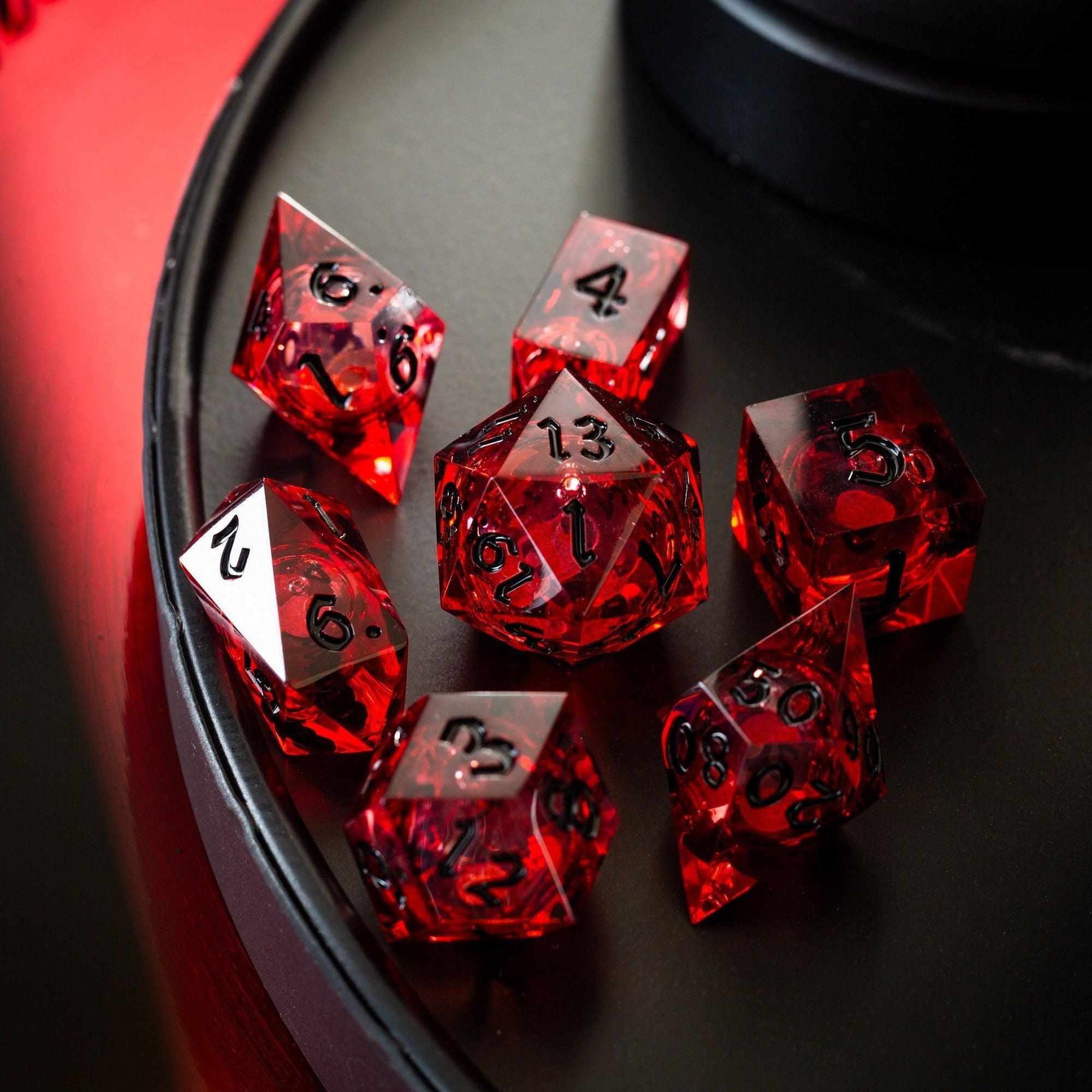
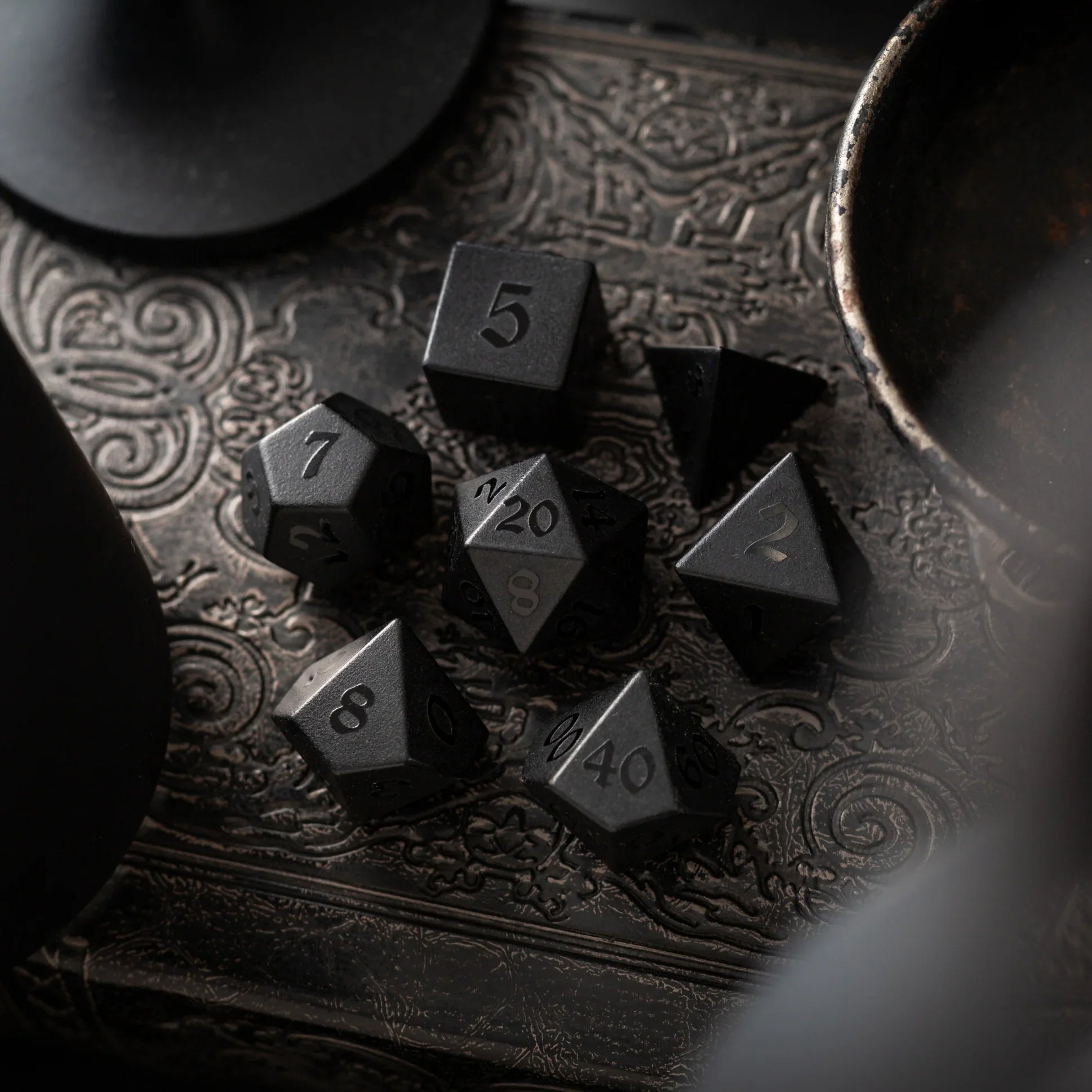
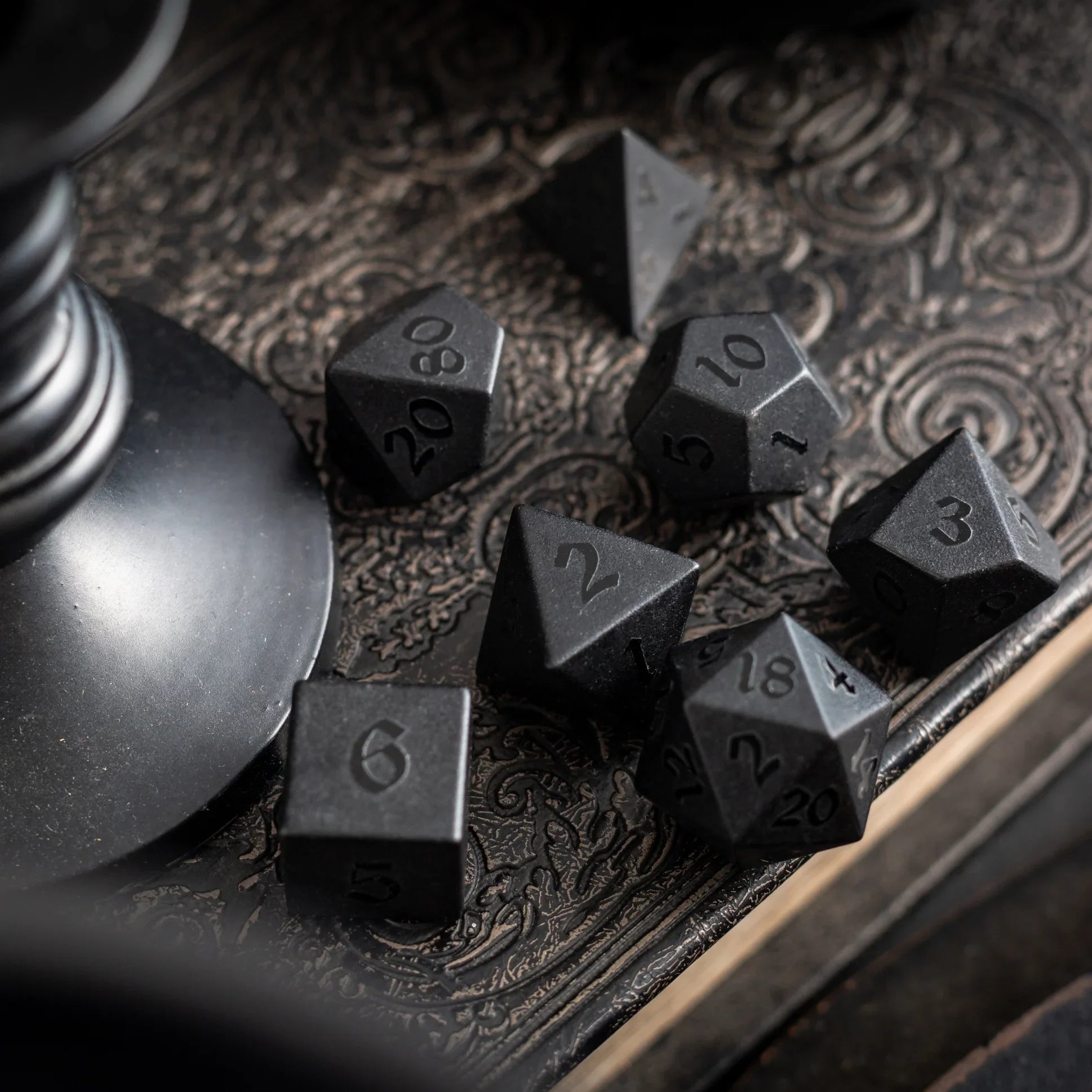
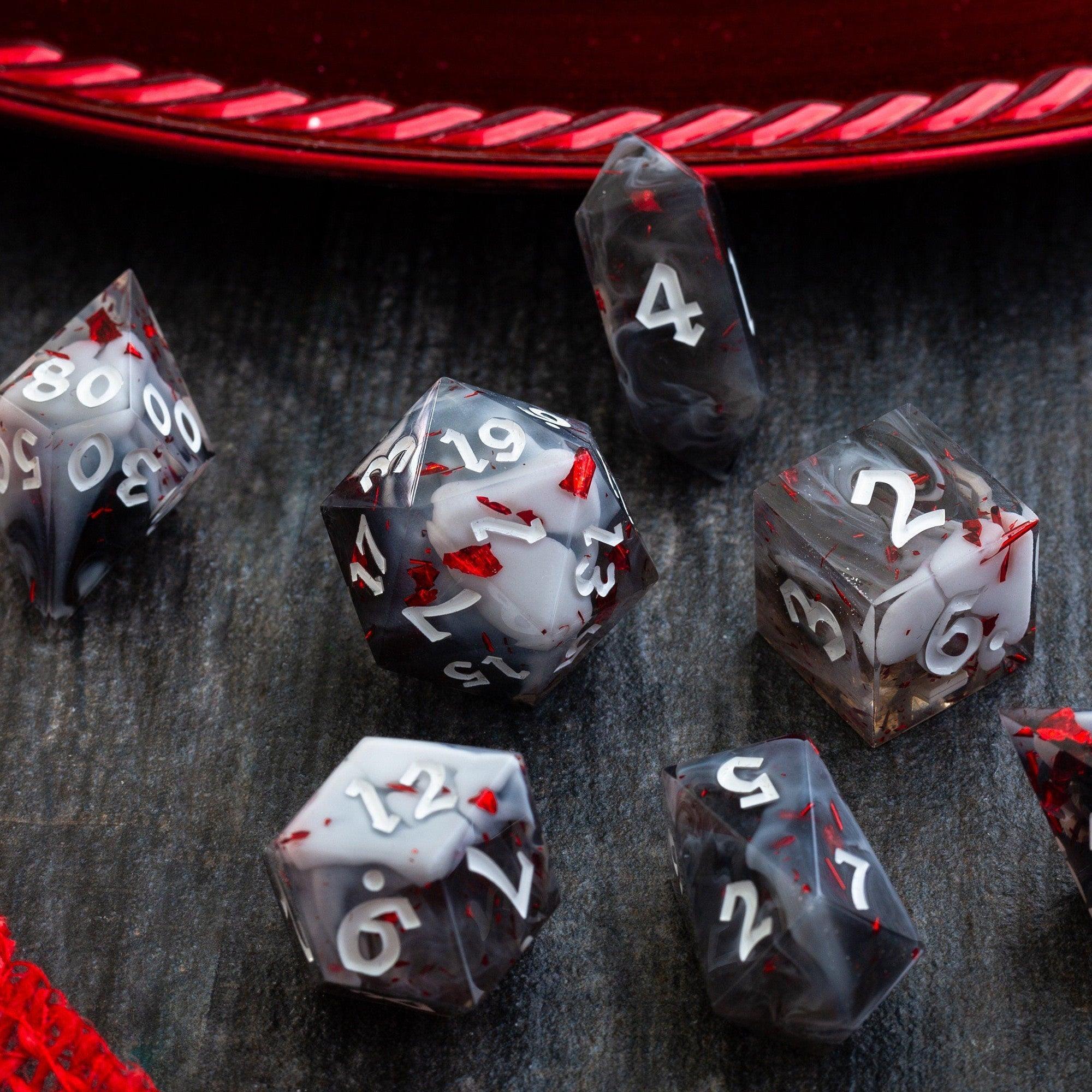
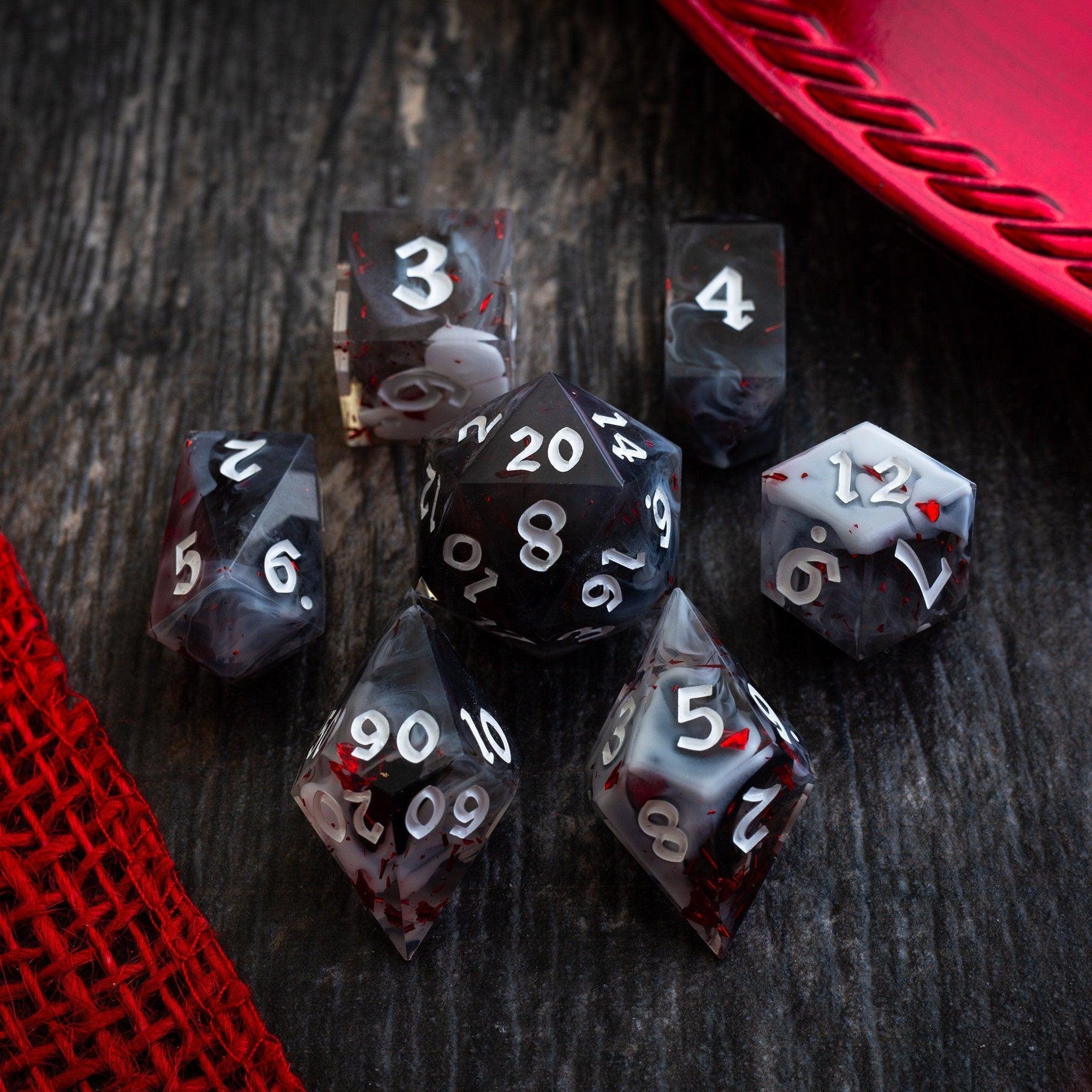
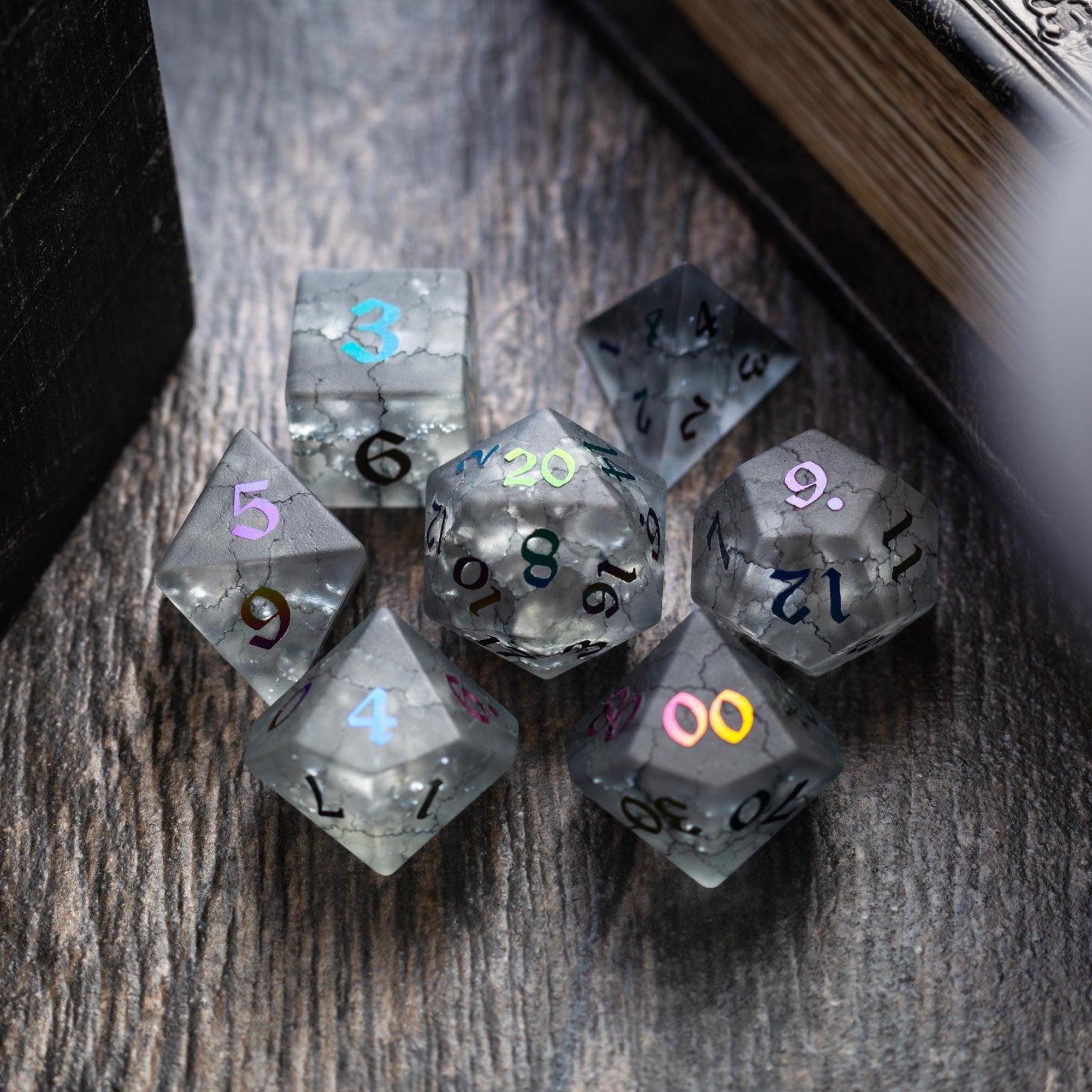
Condition rings or markers can help show concentration, prone, poisoned, restrained, and other effects affecting the transformed Druid. Different colored dice can also track temporary resources or durations, although tracking dice should stay separate from dice currently being rolled.
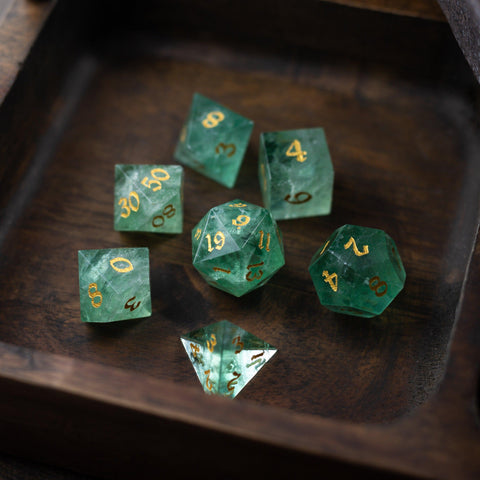
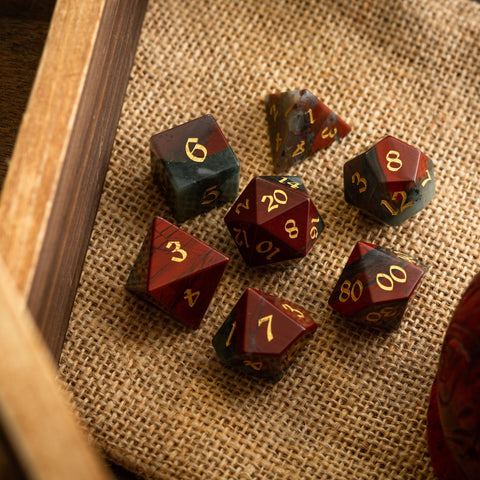
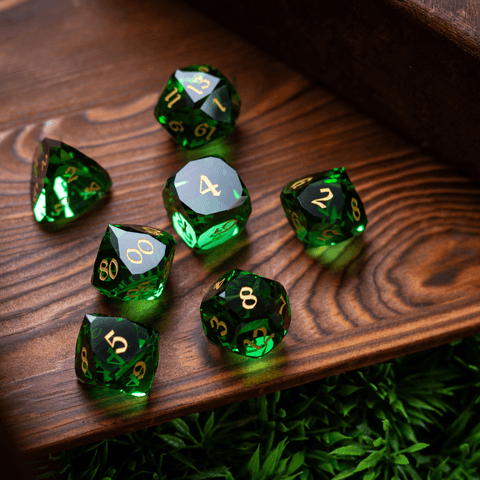
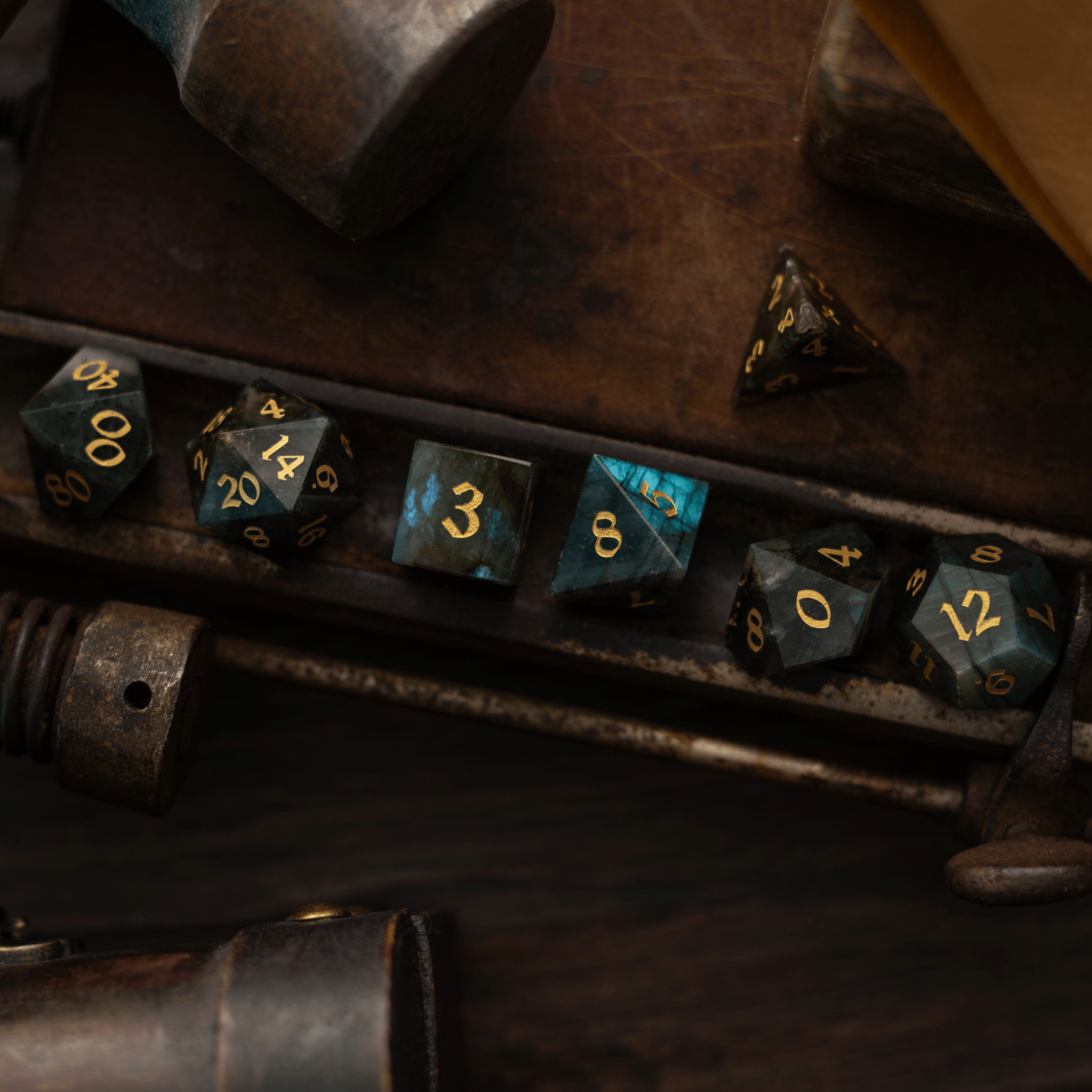
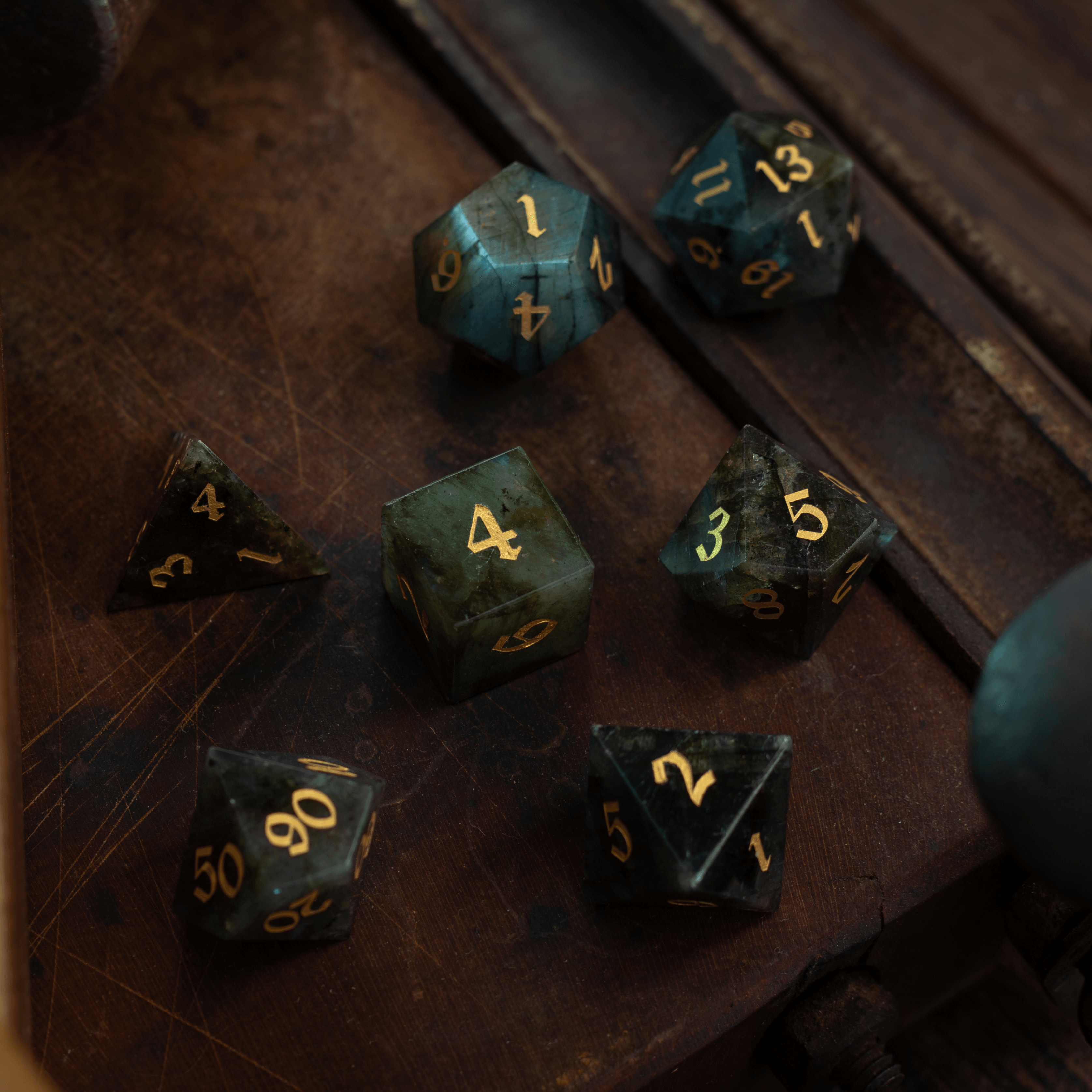
Readable dice also make busy turns easier when switching between attack rolls, damage, saving throws, concentration checks, healing, and spell effects. A Green Water Glass set can fit the identity of a river Druid, Yellow Tiger's Eye can complement a wilderness protector, and Labradorite can suit a moonlit shapeshifter. The theme is personal, but clear numbering is what helps play move smoothly.
Use Shape-Shifting for Roleplaying
Wild Shape can express character identity without changing game mechanics.
A Druid might prefer animals from their homeland, use forms connected to their circle, carry a recognizable scar across every transformation, or treat shape-shifting as a personal ritual.
A character might even feel more comfortable in animal form than in a crowded city.
Flavor can make transformations memorable, but description does not add mechanical abilities. A wolf described as spectral or covered in glowing runes still uses the statistics and features allowed by the game.
Work with the Dungeon Master
Clear expectations prevent confusion.
Discuss which forms the Druid knows or has seen, how new forms become available, which version of the rules is being used, and how the table handles equipment, carrying, stealth, unusual appearances, and NPC reactions.
Dungeon Masters can also create occasional situations where unexpected forms become useful. Not every obstacle needs to be designed around Wild Shape, but varied environments reward creative thinking.
Common Druid Shape-Shifting Mistakes
Many Wild Shape problems come from using the ability without a clear goal.
Common mistakes include choosing forms only for damage, forgetting special senses, transforming before the party needs spellcasting, ignoring available space, assuming every small animal is automatically unnoticed, forgetting concentration checks, scouting too far alone, searching for stat blocks during every turn, and mixing 2014 and 2024 rules.
Another common mistake is inventing abilities based on real-world animal behavior. Use the actual stat block and the rules or rulings established at your table.
Preparation solves many of these problems.
A Practical Wild Shape Checklist
Before transforming:
-
Identify the current objective.
-
Confirm the form is allowed.
-
Check size and available space.
-
Review movement types.
-
Check senses and special traits.
-
Compare durability and Armor Class.
-
Decide whether the party still needs your spells.
-
Protect concentration when relevant.
-
Keep the correct stat block ready.
-
Track Wild Shape uses.
-
Avoid scouting too far alone.
-
Choose function before appearance.
-
End the form when another role becomes more useful.
Choose the Form That Solves the Problem
The most effective Druid shape-shifting techniques are built around flexibility.
Wild Shape can turn a Druid into a defender, scout, tracker, explorer, messenger, escape artist, or frontline threat. The correct choice depends on what the party needs at that moment.
Sometimes the answer will be a durable combat beast. At another time, it may be a quiet spider, a swift swimmer, a climbing creature, or a form with exceptional senses.
Prepare a small group of reliable forms. Learn what each one does well. Keep their statistics ready, and remain willing to choose an unexpected solution.
A flexible Druid does not transform simply to become stronger.
They transform to become exactly what the moment requires.









Leave a comment
This site is protected by hCaptcha and the hCaptcha Privacy Policy and Terms of Service apply.