

Wizard-Themed RPG Gear: Smart Picks for Better Rolls
A wizard carries more than a spellbook.
During a typical tabletop RPG session, a wizard player may need to manage prepared spells, spell slots, concentration, saving throw difficulties, damage dice, rituals, class features, magical items, and complicated spell effects. When combat gets busy, all that information can quickly spread across character sheets, books, cards, tokens, and dice.
The right wizard-themed RPG gear can make those responsibilities easier to manage. Useful gear should do more than look magical. It should help you read results clearly, organize important information, protect your gaming pieces, and make decisions without slowing down the table.
Better rolls do not mean guaranteed high numbers. They come from having D&D dice that are comfortable to use, easy to read, protected from damage, and appropriate for your available rolling space.
What Makes RPG Gear Useful for a Wizard?
The best wizard RPG accessories solve real problems at the table.
A wizard player might lose track of a spell slot, forget that a spell requires concentration, or spend several minutes searching through a long spell list. During combat, multiple damage dice can scatter across the table or become mixed with dice being used as resource counters.
Useful tabletop RPG gear can help with problems such as:
-
Losing track of spell slots
-
Forgetting concentration
-
Searching through prepared spells
-
Rolling large groups of damage dice one at a time
-
Mixing up damage types
-
Struggling to read highly decorative dice
-
Damaging a table with heavy dice
-
Carrying loose accessories between sessions
Theme still matters. A violet dice set, arcane tower, or crystal-like gemstone set can complement a wizard character beautifully. However, appearance works best when it supports function rather than replacing it.
Start with a Readable Wizard Dice Set
Dice are the foundation of most tabletop RPG setups. Wizards may use several types during a single turn, especially when casting damaging spells or resolving multiple effects.
A practical wizard dice set should have:
-
Clear, easy-to-read numbers
-
Strong contrast between the numbers and die surface
-
A comfortable size
-
Easily distinguishable die shapes
-
A material appropriate for the rolling surface
-
Enough additional dice for commonly used damage rolls
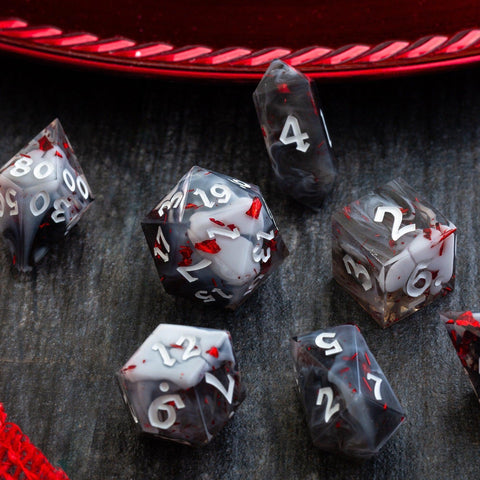
Visual design is important, but readability should come first. Glitter, reflective surfaces, dark swirls, and complex patterns can look impressive while making numbers difficult to see from across the table.
A good test is simple: can you identify the result quickly under normal gaming-room lighting? If you need to pick up every die after rolling it, the design may be better suited to display than fast gameplay.
Choose a Dice Material That Fits Your Table
Different dice materials create different rolling experiences. There is no single best material for every wizard player.
Resin Dice for Everyday Spellcasting
Resin dice are lightweight, portable, and available in a wide range of colors and designs. They work especially well for players who travel between gaming locations or frequently roll several damage dice at once.
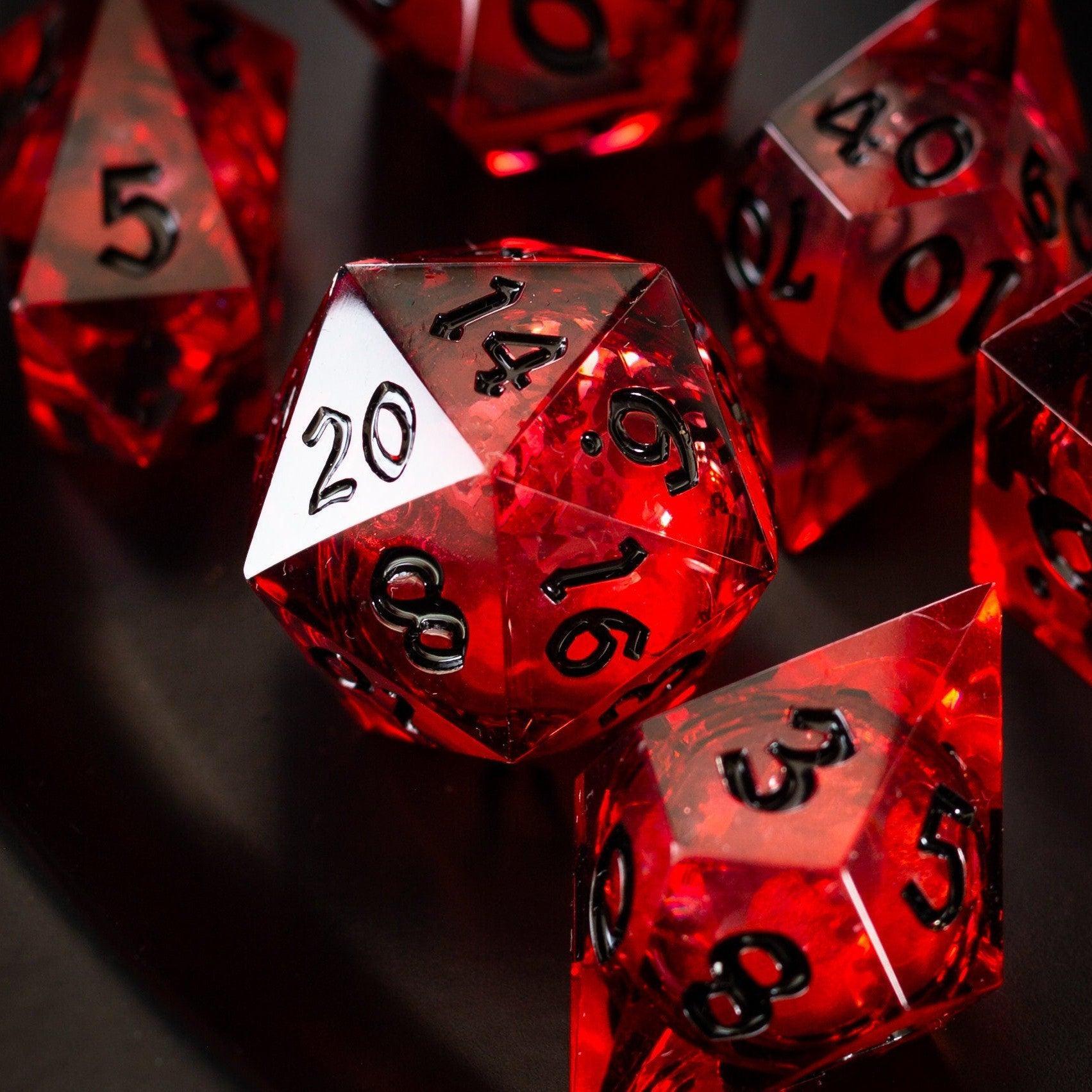
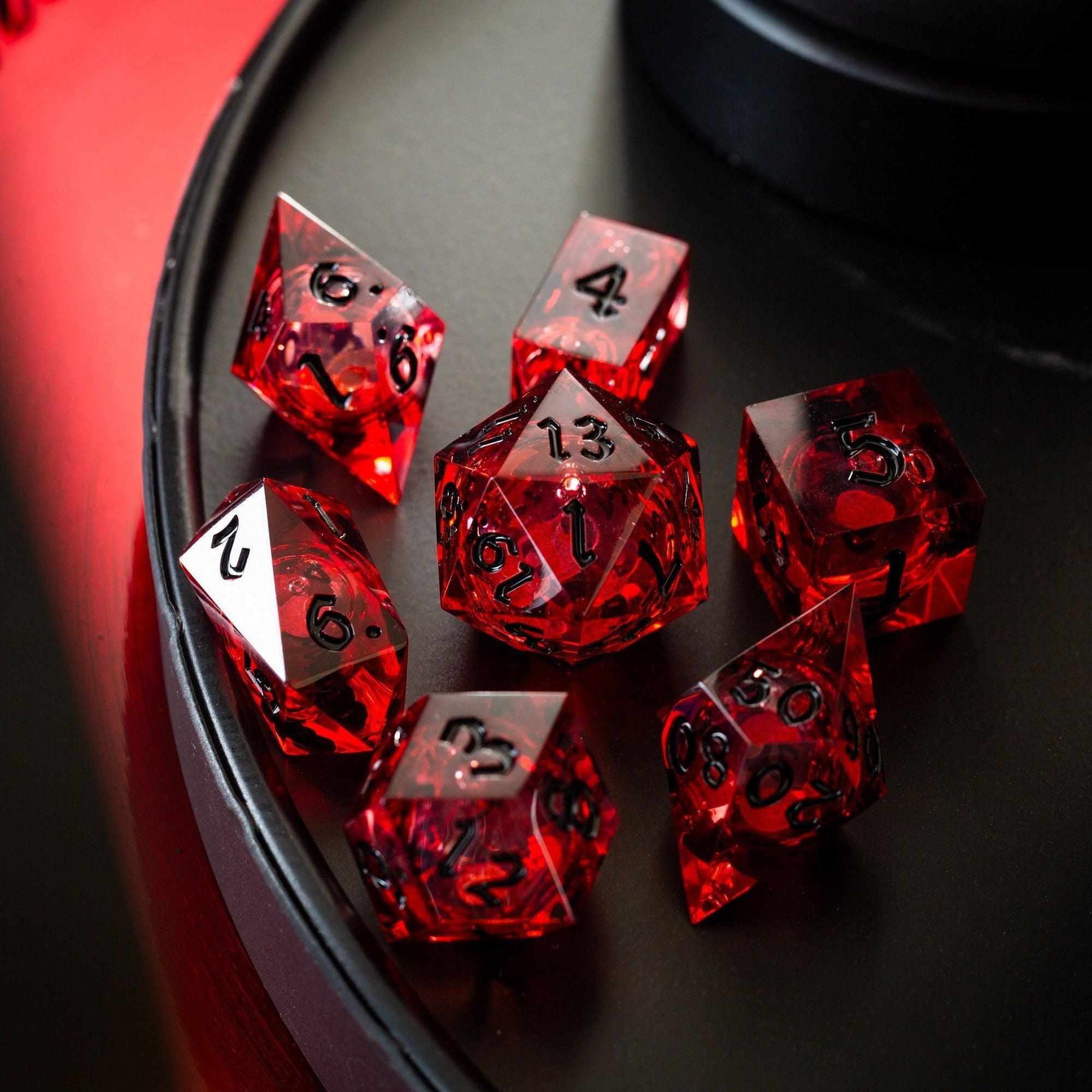
A set such as Mystic Violet Resin can support a classic arcane theme, while Starlit Rift Resin can fit a wizard inspired by stars, space, or mysterious magical forces.
Resin dice are also relatively quiet compared with heavier materials. That can be helpful during long sessions or when playing on hard tables.
Liquid Core Dice for an Arcane Effect
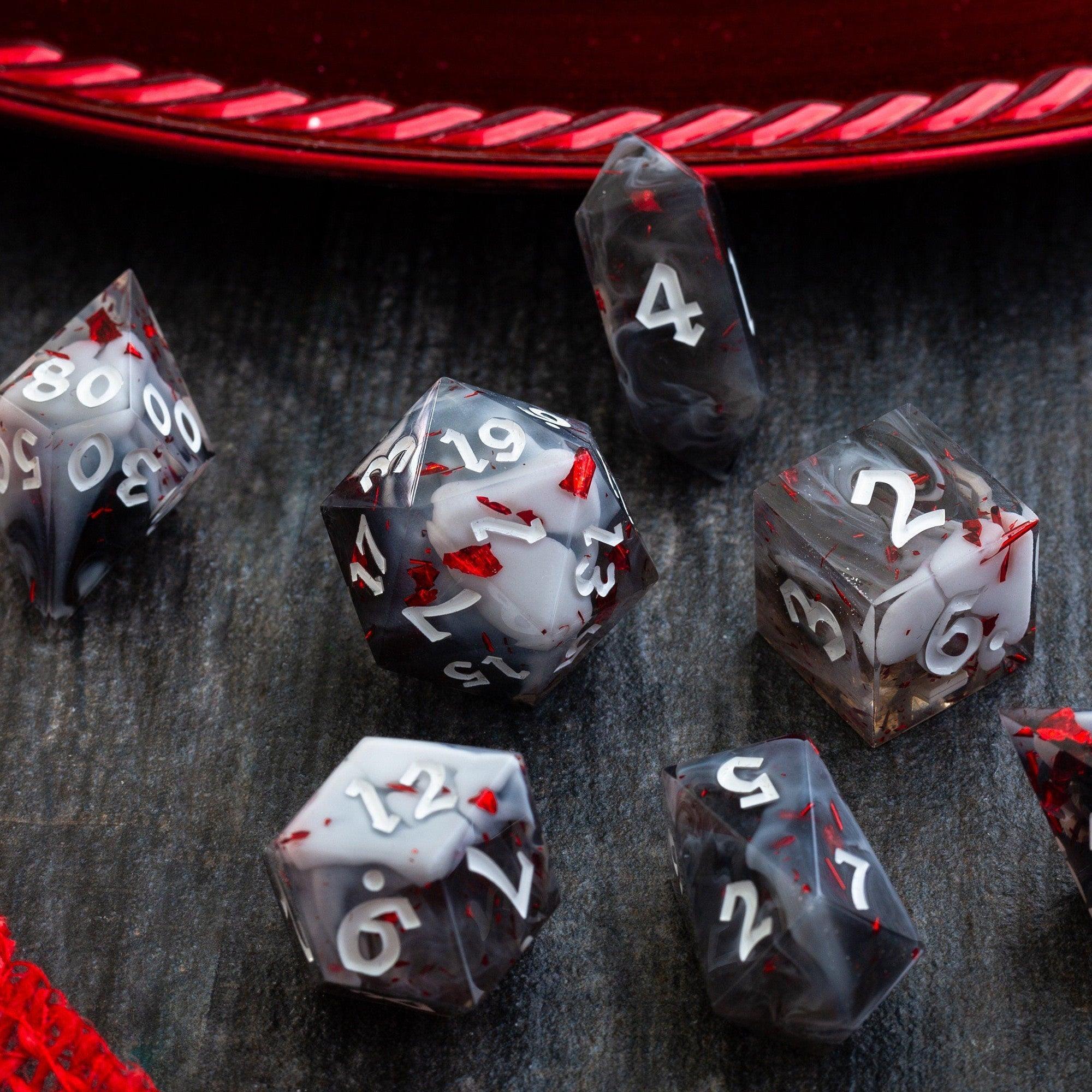
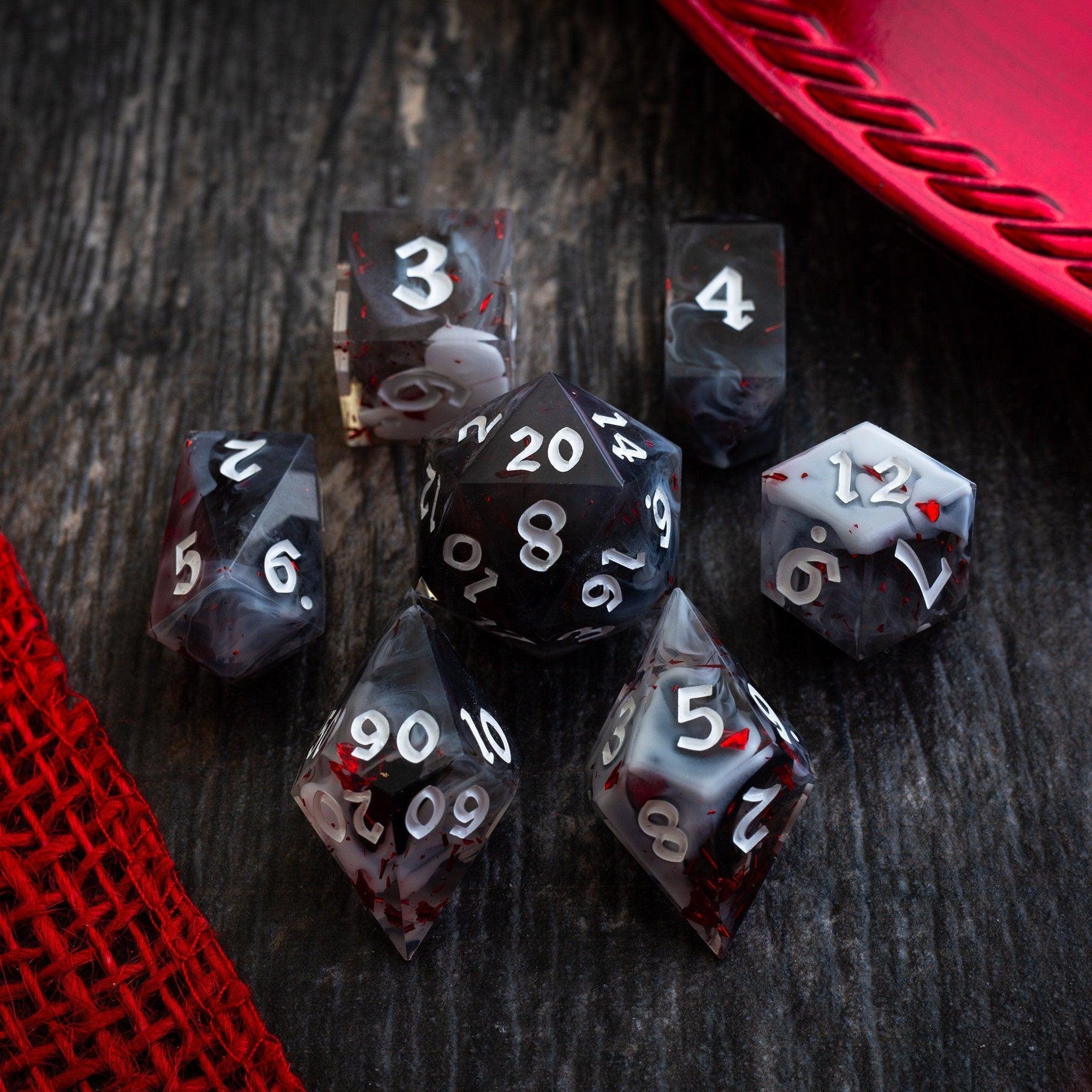
Liquid core dice contain moving internal elements that can resemble swirling magical energy. That makes them a natural visual match for illusionists, elemental spellcasters, and other arcane characters.
A Blue and Green Glitter Liquid Core Sharp Edge set, for example, can create a strong magical appearance while still serving as a functional gaming tool.
Before choosing liquid core dice, check the number contrast, size, weight, and storage requirements. Some designs are visually complex, so readability remains important.
The movement inside the dice does not improve luck or guarantee better results. Its value is visual, not mathematical.
Gemstone Dice for a Scholar of Ancient Magic
Gemstone dice can suit wizards inspired by ancient relics, magical academies, crystals, or elemental power.
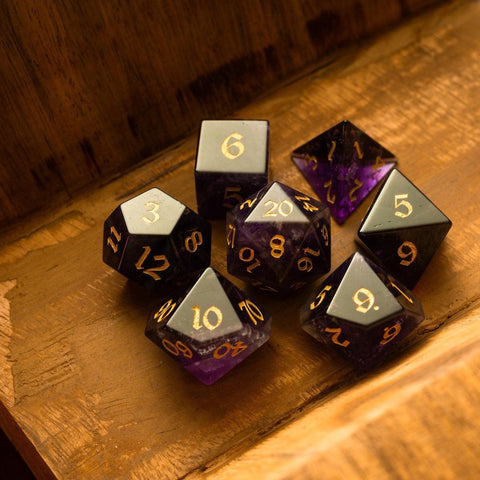
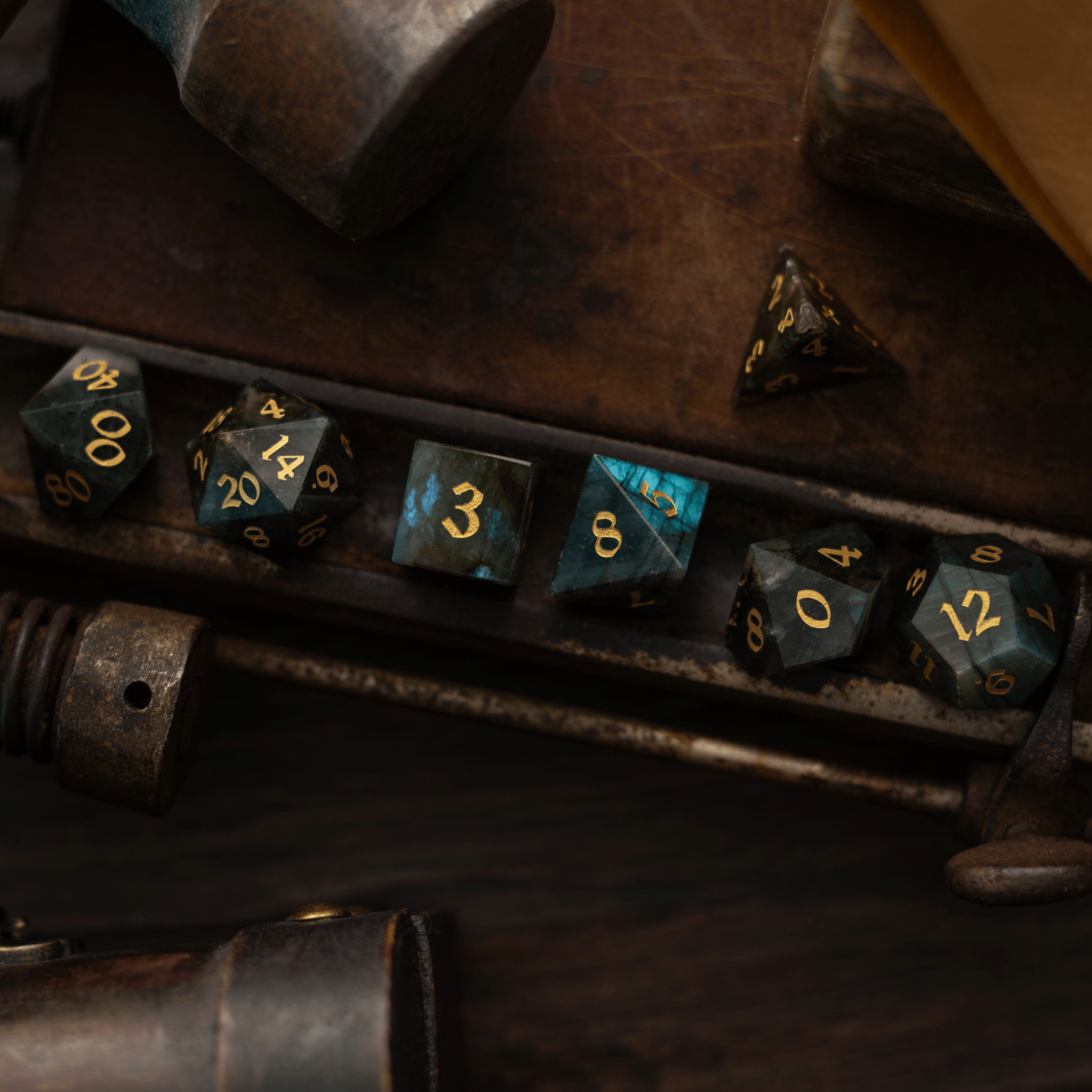
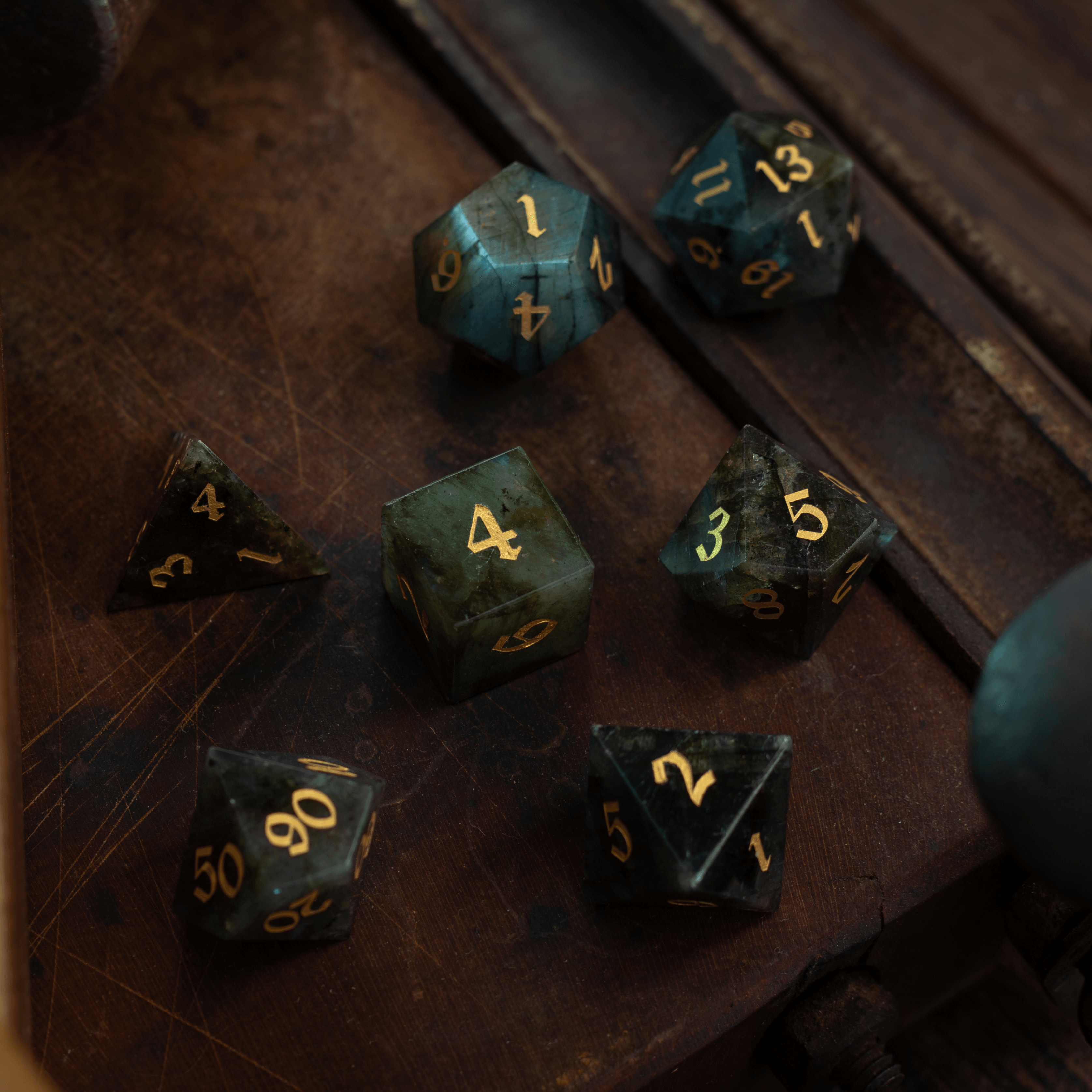
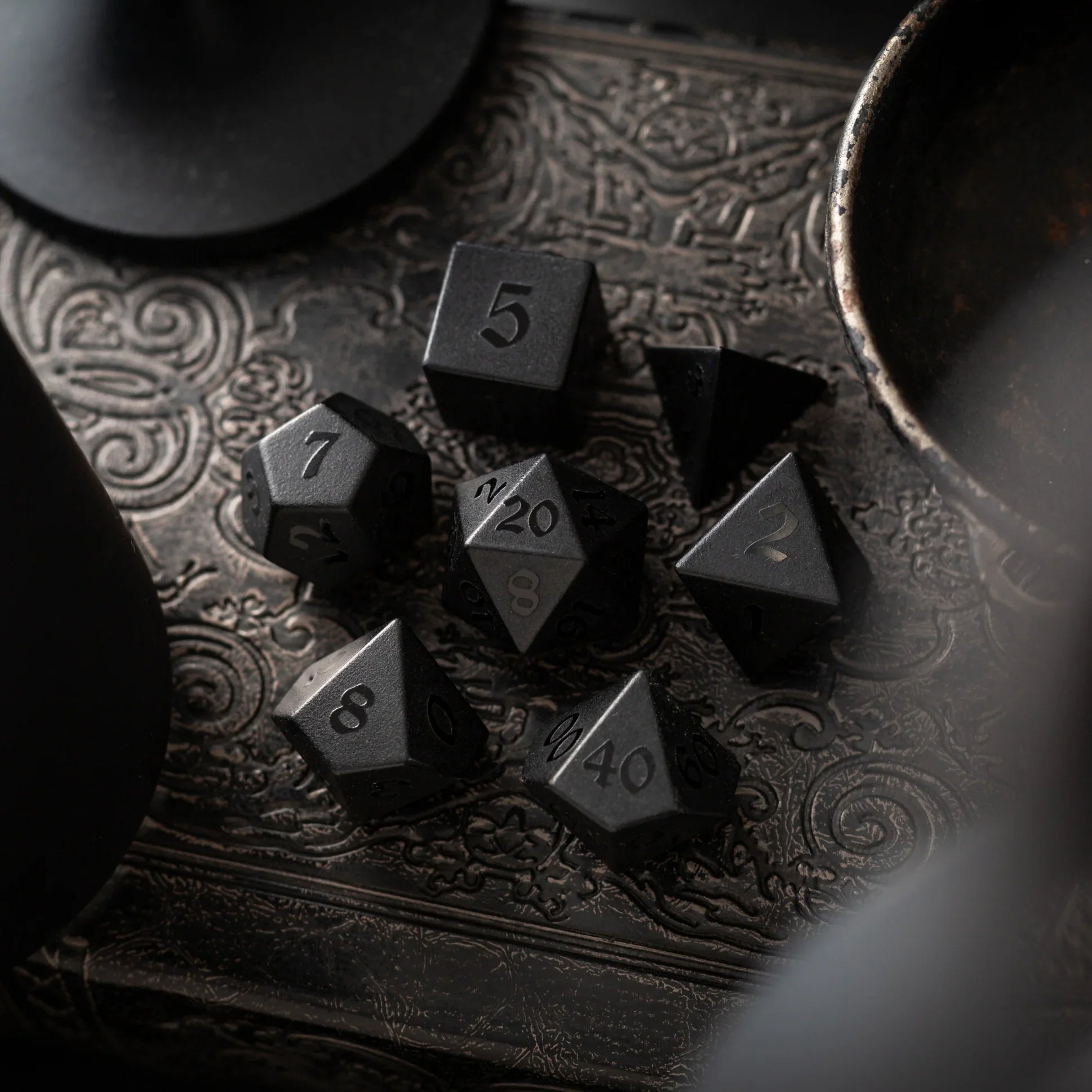
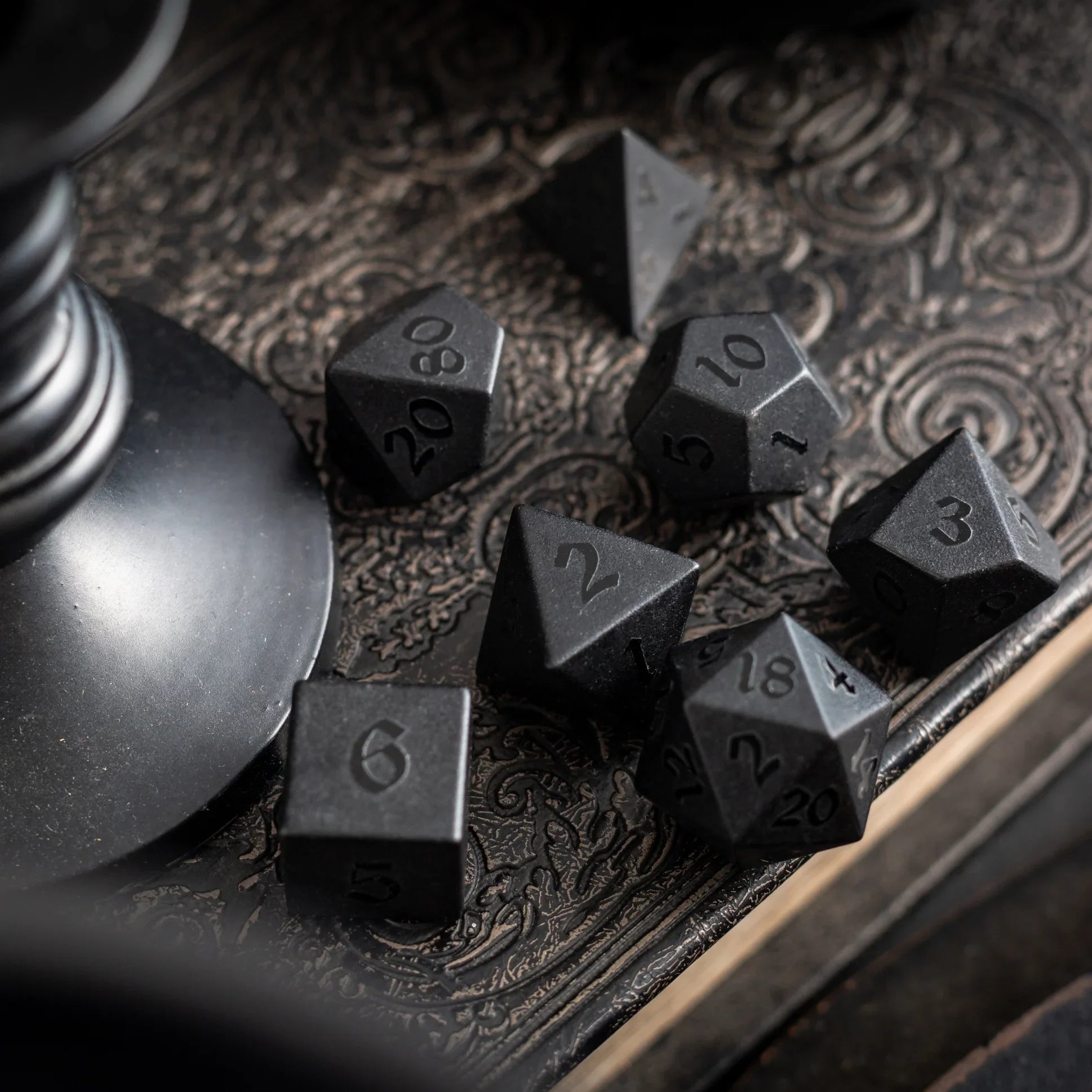
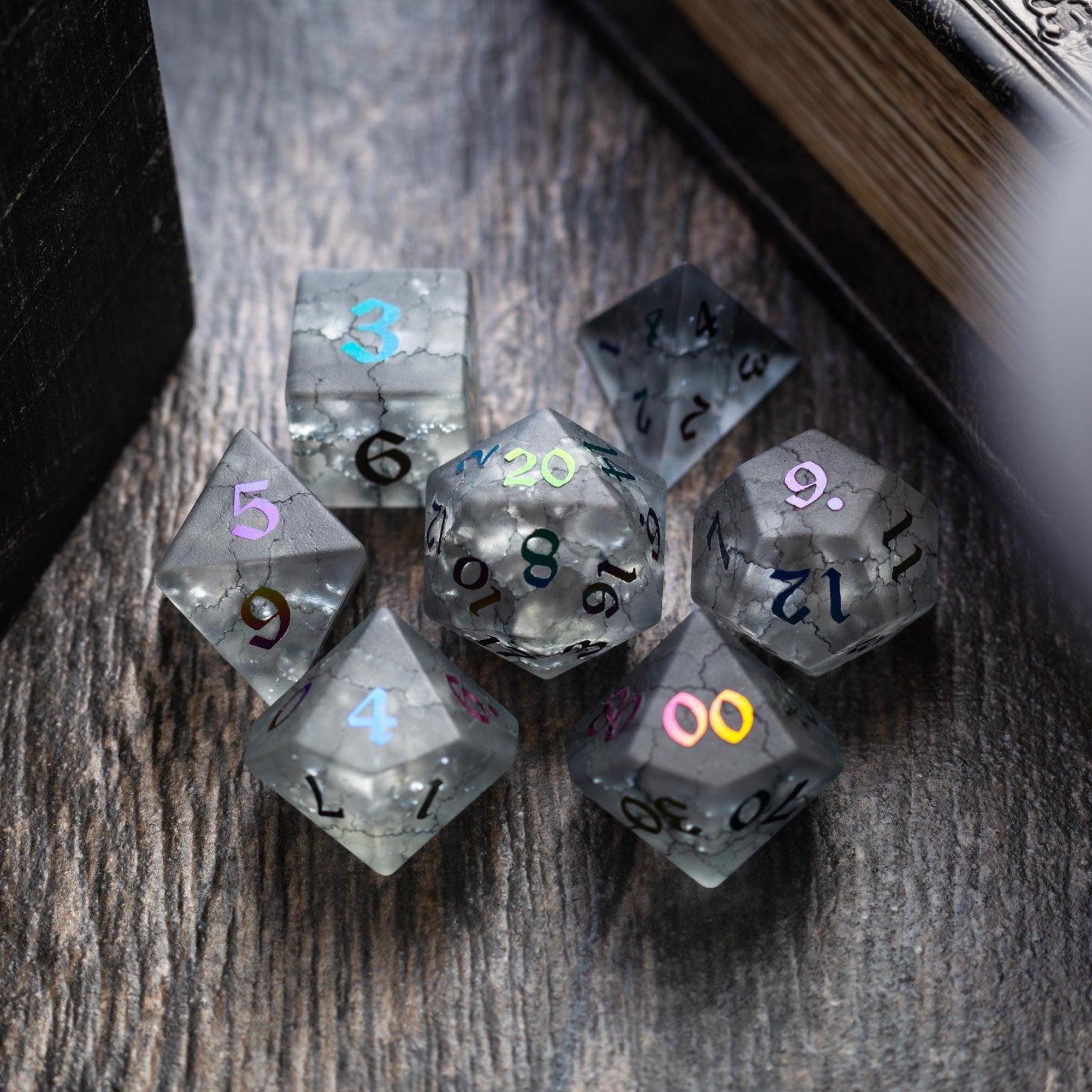
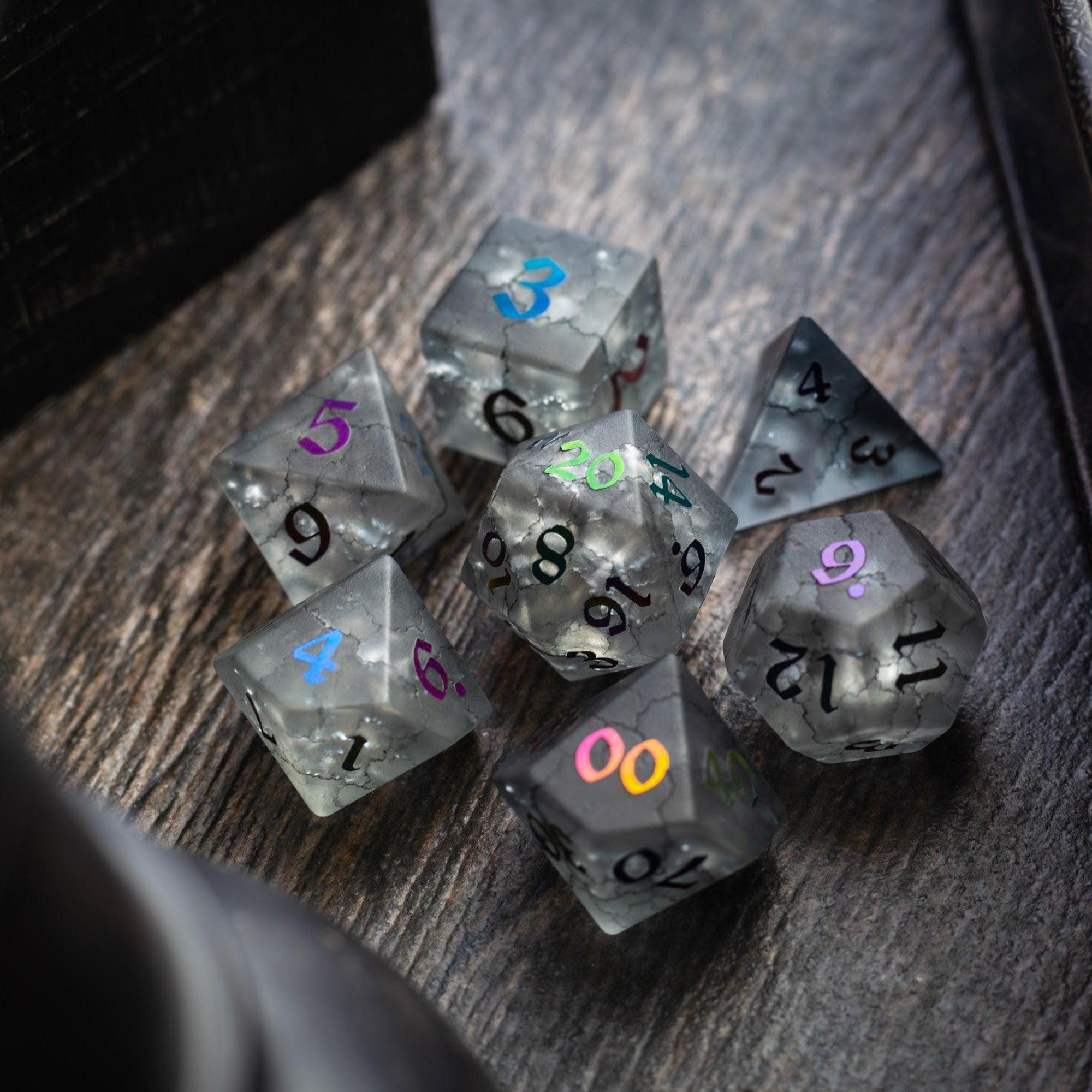
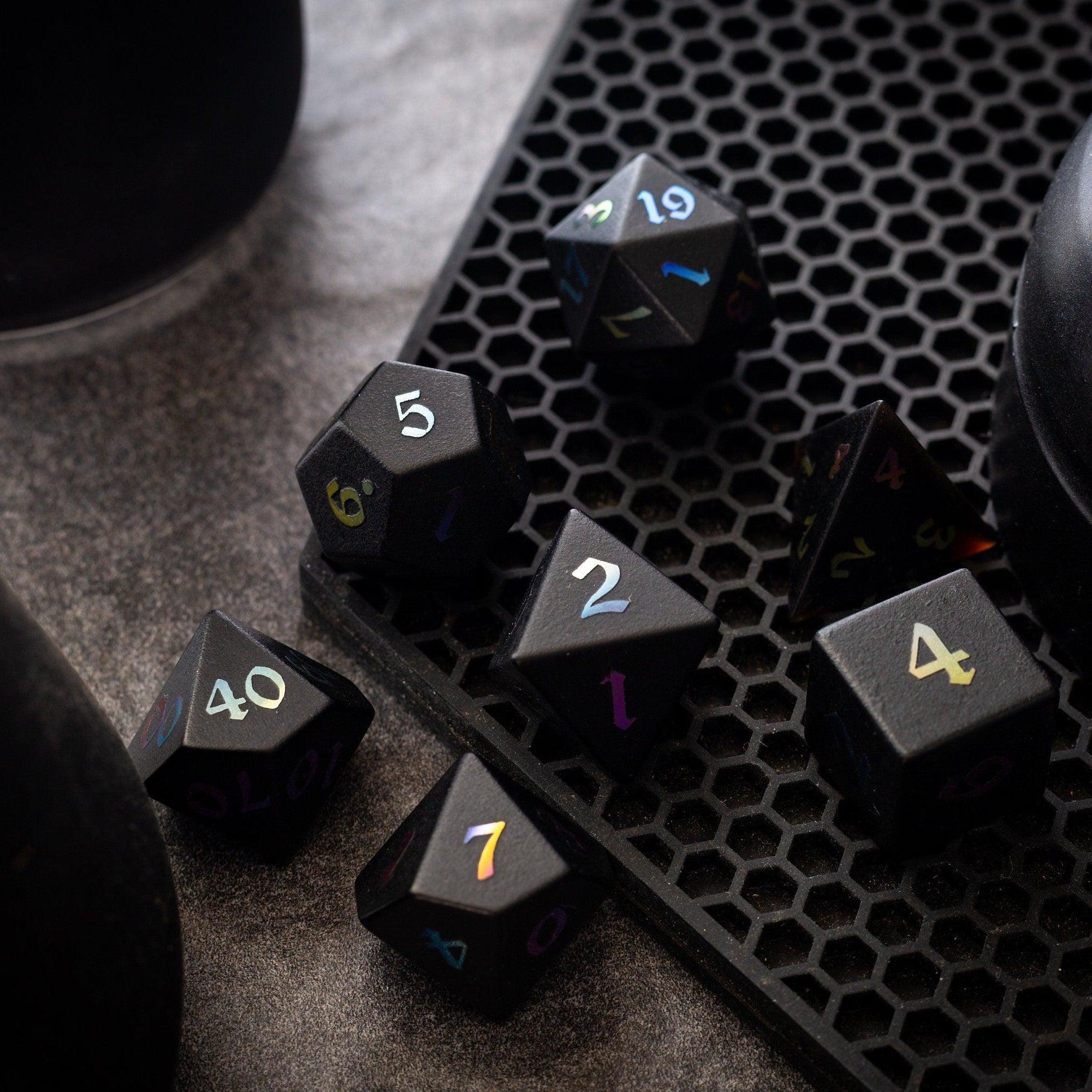
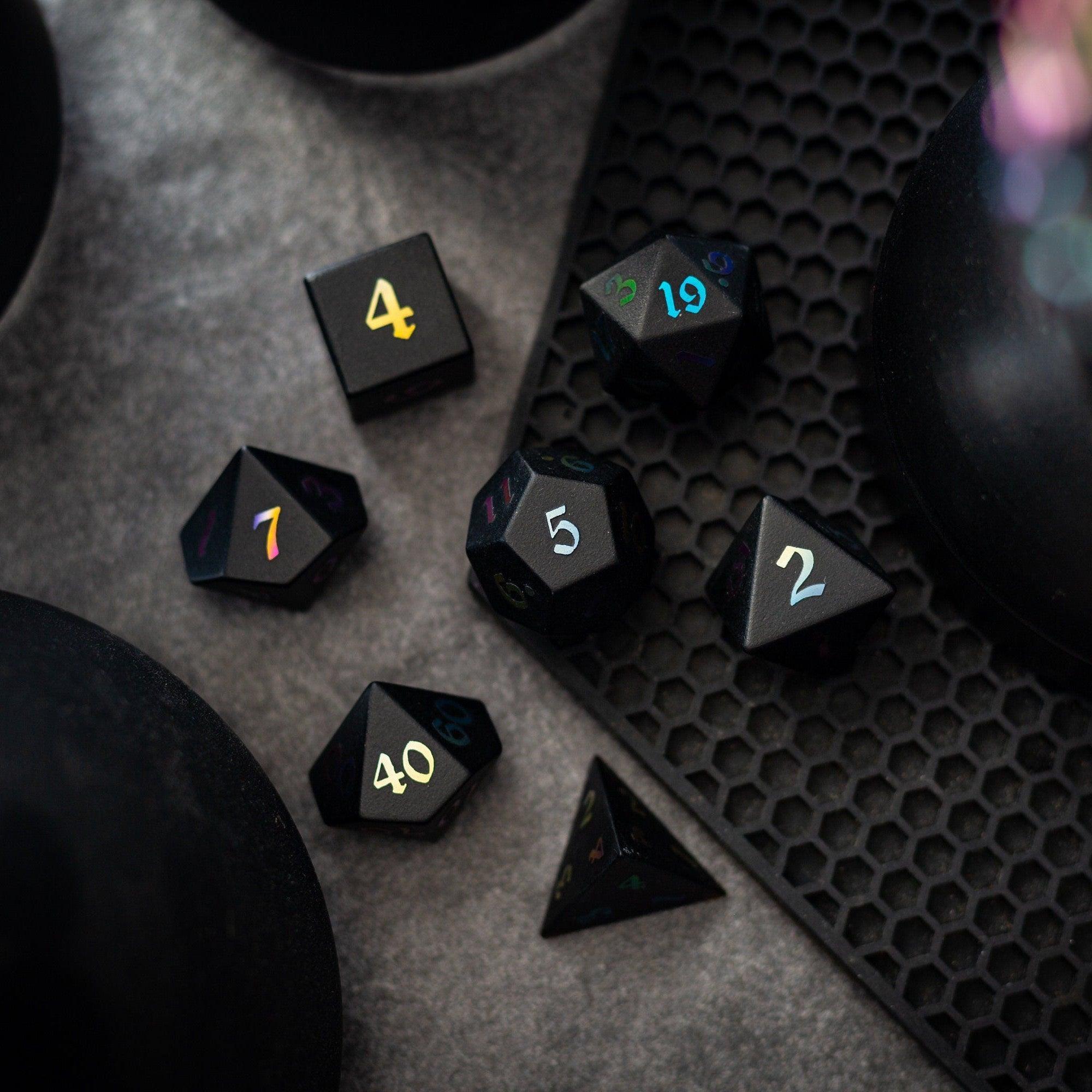
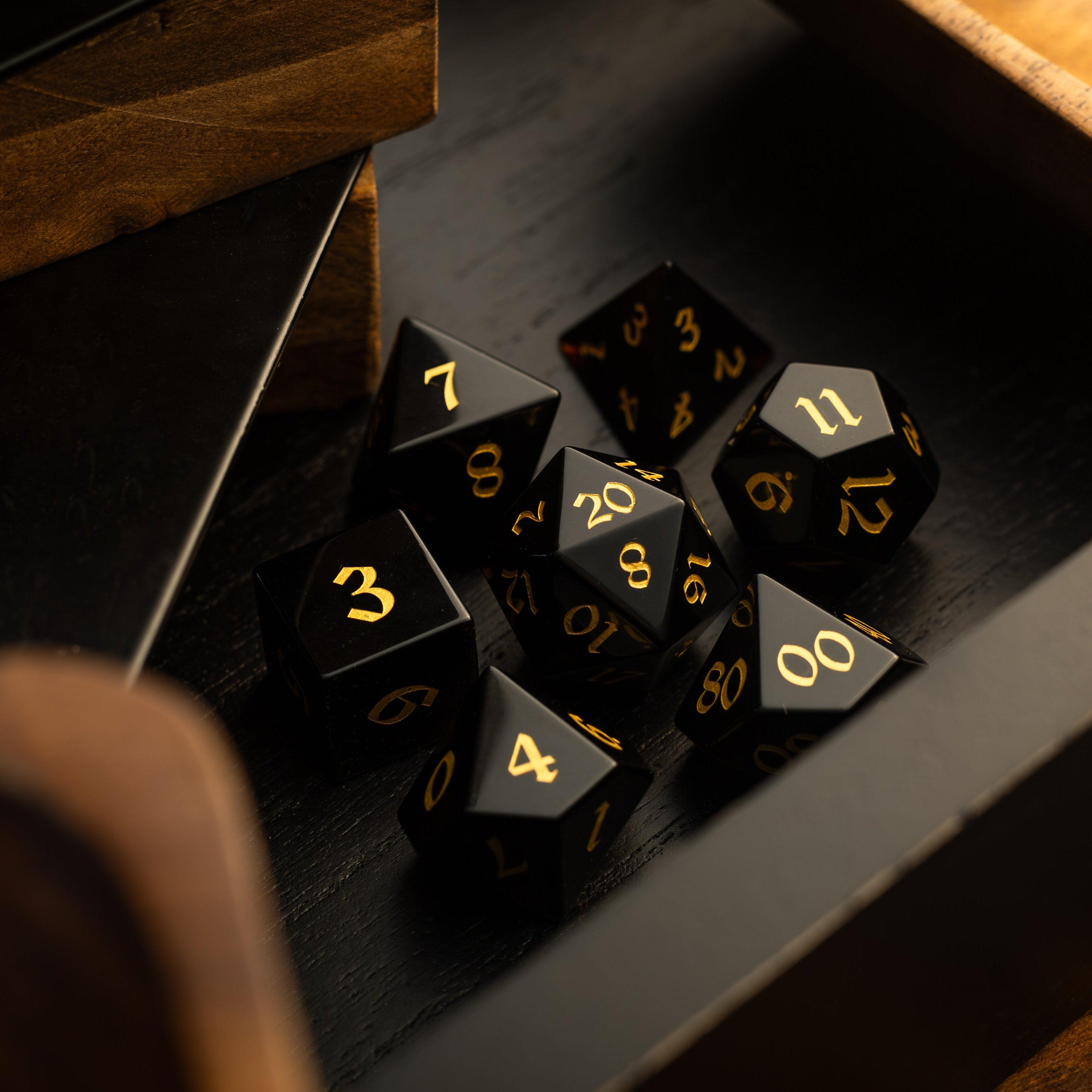
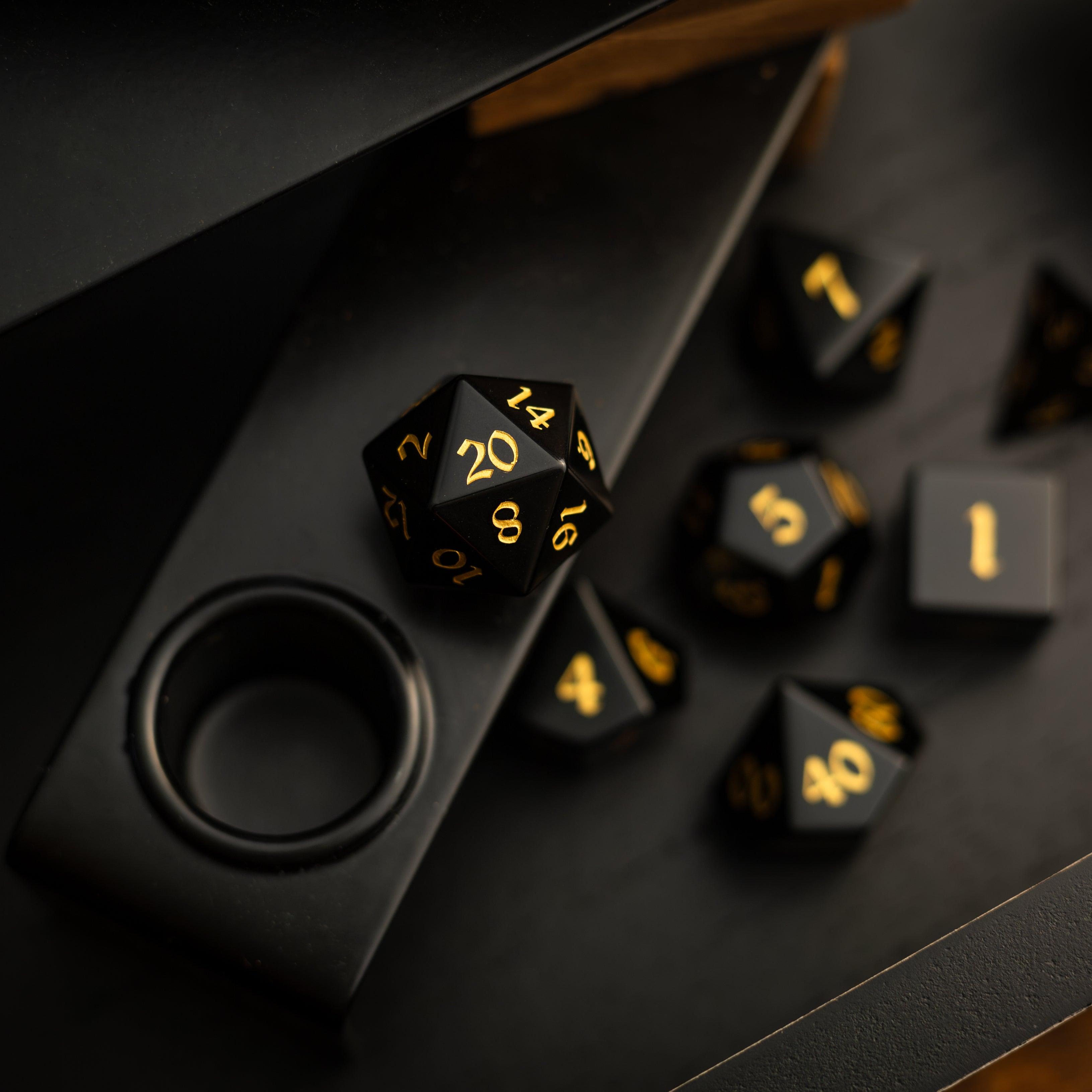
Materials such as Purple Amethyst, Labradorite, Black Obsidian, and Aquamarine Cat’s Eye each create a different character theme. Natural patterns also mean individual dice may vary in appearance.
Gemstone dice usually have a denser feel than standard resin dice and require more careful handling. A padded dice tray is strongly recommended to protect both the dice and the table.
They should also be stored securely rather than carried loose with metal accessories or other hard objects.
Metal Dice for the Battle Mage
Metal dice offer a substantial rolling feel that can suit armored wizards, war mages, and other battle-focused spellcasters.
Players often enjoy them for their weight, durability, and clearly engraved numbers. However, that weight also creates practical concerns.
Metal dice can be loud, may damage wooden tables, and can be inconvenient when rolling large groups of damage dice. A sturdy padded tray provides a controlled surface and helps protect the surrounding play area.
Glass Dice for an Illusionist or Diviner
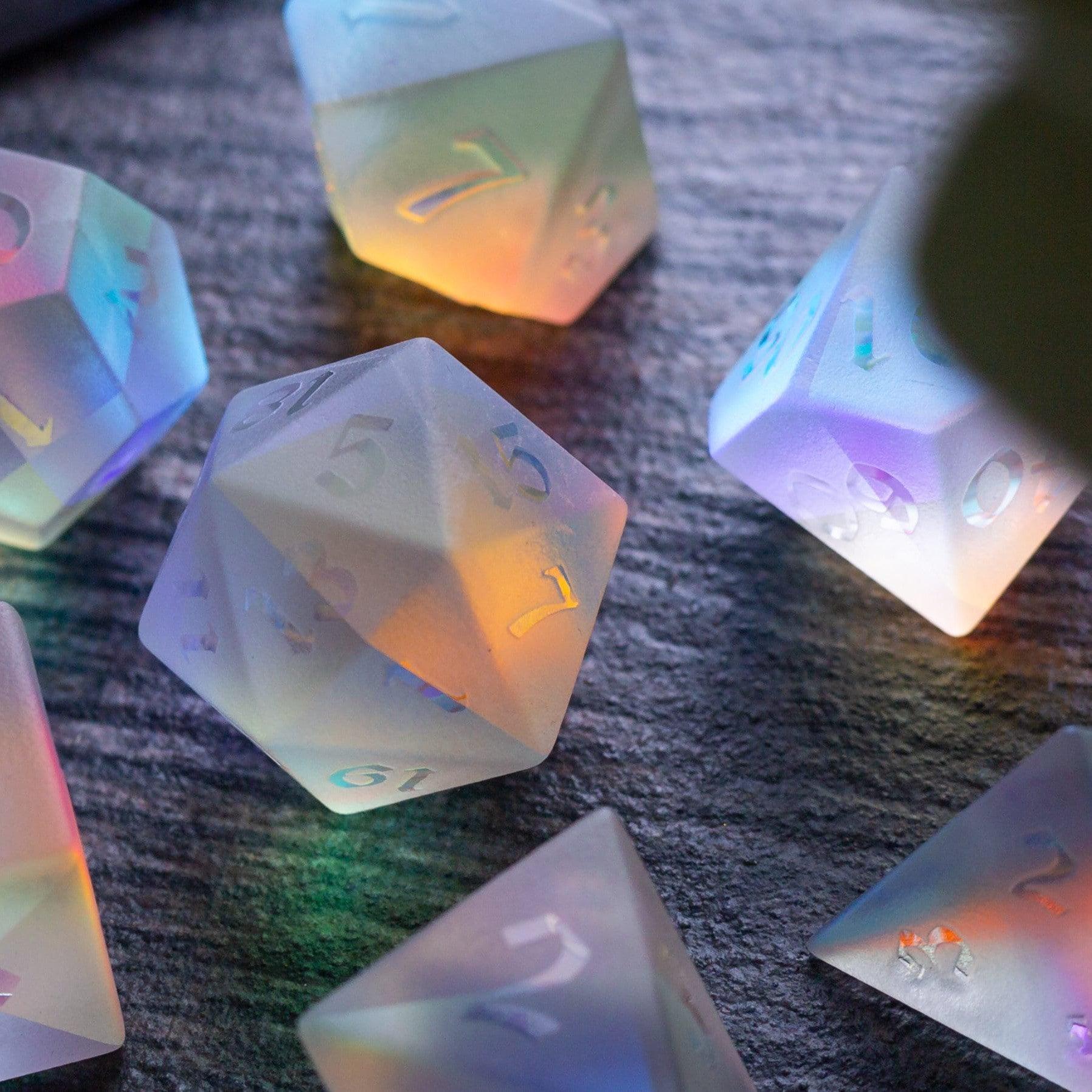
Glass dice can complement themes involving divination, dreams, stars, portals, or illusion magic. Their reflective surfaces and crisp appearance can make them feel like arcane artifacts.
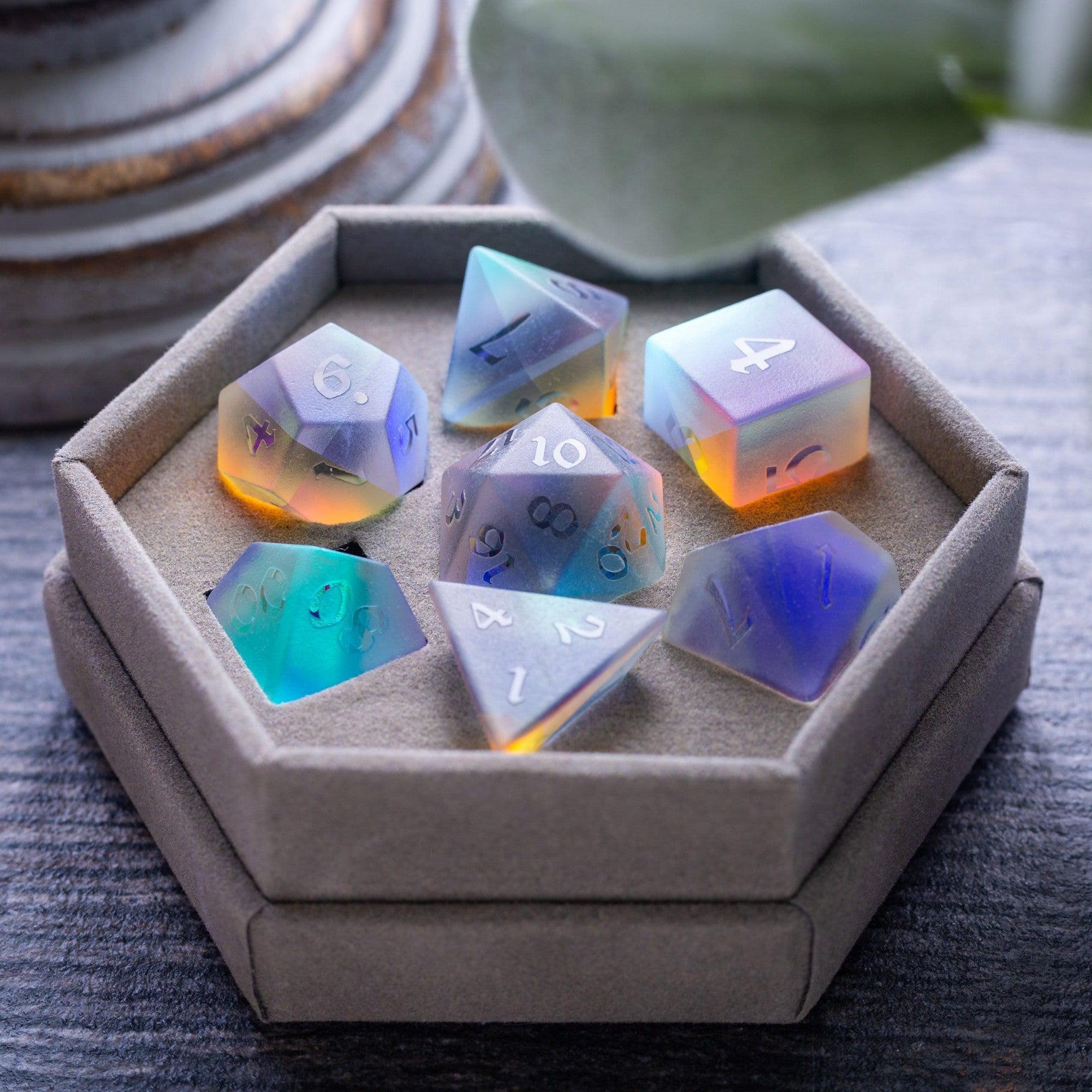
Dichroic Glass is particularly well suited to shifting, otherworldly themes.
Like gemstone dice, glass dice require careful handling. Use a soft rolling surface and store them in separate compartments whenever possible.
Why Wizards Often Benefit from Extra Damage Dice
Some spells require several dice of the same type. Depending on a wizard's spell choices, that might mean rolling multiple d4s, d6s, d8s, or d10s.
Having a few extra matching dice can make these rolls faster. Instead of rolling the same two dice several times and recording separate totals, you can roll the required group together.
A practical system is to:
-
Keep commonly used damage dice together.
-
Use different colors when separating damage types.
-
Roll large groups inside a tray.
-
Count the required dice before beginning the roll.
-
Avoid buying large quantities of dice your character rarely uses.
Efficiency matters more than having the largest collection possible. Build your dice pool around the spells you actually prepare and cast.
Use a Dice Tray to Control Powerful Rolls
A dice tray creates a defined rolling area, which becomes especially useful when a wizard is rolling several damage dice at once.
A tray can:
-
Keep grouped dice together
-
Protect the table
-
Protect gemstone and glass dice
-
Stop dice from striking miniatures
-
Make results easier to count
-
Prevent dice from disappearing under books and character sheets
Padded trays are particularly useful for gemstone, glass, and metal dice. The ideal size depends on how many dice you regularly roll. A small tray may be convenient for travel, but a larger rolling area can be more comfortable for damage-heavy spellcasters.
When a Dice Tower Makes Sense
A dice tower creates a controlled path for each roll and helps keep dice contained in a predictable area.
A tower may be useful if you:
-
Play at a crowded table
-
Frequently knock dice onto the floor
-
Enjoy a dramatic arcane setup
-
Want rolls to remain contained
-
Primarily use lightweight resin dice
However, towers have limitations. Some cannot accommodate oversized dice. Heavy metal dice may be too loud or rough for certain designs, and large groups of damage dice can crowd the tower or rolling area.
A tower should match your actual gaming habits. A beautiful arcane design is useful only if it works with your preferred dice and available table space.
Track Spell Slots Before They Become Confusing
Spell slots are among the most important resources a wizard manages.
Common tracking methods include:
-
Tokens
-
Counters
-
Dry-erase cards
-
Character sheet boxes
-
Spell slot wheels
-
Small numbered dice
-
Dedicated tracking boards
The best method is the one you can update immediately.
Your system should clearly show your available spell levels, total slots, used slots, and any special resources connected to magical items or class features.
If you use dice as counters, keep them separate from your rolling area. A tracking d6 sitting beside active damage dice can easily be picked up and rolled by mistake.
Make Concentration Easy to Remember
Concentration can be easy to forget when several creatures, spells, and effects are active at once.
A visible reminder can help. Options include condition rings, tokens beside a miniature, a marker on the character sheet, or a dedicated card placed near the dice tray.
Physical markers are especially useful during miniature-based combat because both the player and Dungeon Master can see that concentration is active.
This makes it easier to remember when a concentration check may be required and reduces confusion about which effects remain active.
Spell Cards and Reference Tools
A wizard's spell list can become difficult to navigate. Spell tracking accessories and concise reference tools can reduce time spent searching through books.
A useful spell reference should show important information such as:
-
Casting time
-
Range
-
Components
-
Duration
-
Concentration requirements
-
Saving throw information
-
Damage or primary effect
-
Changes at higher levels
You do not need a physical card for every spell ever published.
Start with prepared spells, frequently used cantrips, rituals, reactions, and spells with complicated areas or effects. Organize them by spell level or purpose so you can find what you need quickly.
Organize Gear with a Dedicated Storage System
Loose dice, tokens, spell cards, pencils, and markers can become difficult to manage between sessions.
Useful storage options include divided dice cases, small token containers, spell card boxes, pouches, and compact accessory cases. Some rolling trays can also fold or close for storage.
Gemstone and glass dice benefit from individual compartments. Metal dice should be stored so they cannot repeatedly strike softer or more fragile dice.
Choose storage based on how you actually play. A home player may prefer a larger organized case, while a traveling player may need a compact setup that fits easily into a backpack.
Wizard-Themed RPG Gear Comparison Table
| Gear Type | Main Purpose | Best For | Key Consideration |
|---|---|---|---|
| Readable Dice Set | Resolving attacks, saves, and damage | Every wizard player | Prioritize number contrast |
| Extra Damage Dice | Rolling multi-die spells quickly | Combat-focused spellcasters | Buy only die types used often |
| Dice Tray | Controlling and protecting rolls | Metal, gemstone, or glass dice users | Allow enough space for grouped rolls |
| Dice Tower | Keeping rolls contained | Small tables and dramatic setups | Check dice size and material |
| Spell Cards | Fast rules reference | Players with large spell lists | Carry only relevant spells |
| Spell Slot Tracker | Managing limited resources | Prepared spellcasters | Use a system that updates quickly |
| Condition Rings | Tracking concentration and effects | Miniature-based combat | Keep markers visible |
| Storage Case | Organizing and protecting gear | Traveling players and collectors | Separate fragile materials |
Match Gear to Your Wizard's Playstyle
Different wizard characters benefit from different D&D wizard accessories.
The Evocation Wizard
Extra damage dice and a spacious tray can make large spell rolls easier to manage. Clearly grouped dice also simplify counting.
The Divination Wizard
Readable d20s, visible resource markers, and glass or gemstone styles can support a fortune-telling theme while remaining practical.
The Illusion Wizard
Visually unusual resin or liquid core dice can complement the character's style, but number contrast should remain a priority.
The Necromancer
Dark dice and visible condition markers can fit the theme. Organized tokens may also help when tracking summoned or controlled creatures.
The Traveling Scholar
Lightweight resin dice, compact spell references, and a protective carrying case keep DnD wizard gear portable.
The Dungeon Master Playing Multiple Spellcasters
Distinct dice colors, condition markers, and concise references can help separate multiple creatures and magical effects during complicated encounters.
Smart Gear Picks for a Beginner Wizard
A new wizard player does not need a backpack full of spellcaster accessories before the first session.
A practical starter setup includes:
-
One readable polyhedral dice set
-
A few extra commonly used damage dice
-
A basic dice tray
-
A pencil and eraser
-
A simple spell slot tracking method
-
Short references for prepared spells
-
One concentration marker
-
A compact storage pouch or case
Start with the essentials. Add new gear when you discover a specific problem that needs solving.
Common Mistakes When Choosing Wizard Gear
More accessories do not automatically create a better setup.
Common mistakes include choosing decorative dice with unreadable numbers, buying too much gear before playing the character, rolling metal dice directly on a wooden table, and carrying every available spell card instead of organizing only the spells currently needed.
Other problems include using fragile dice without a padded tray, buying a tower that cannot fit larger dice, forgetting a concentration marker, and mixing resource-tracking dice with active rolling dice.
Theme can make a setup more enjoyable, but practical function should guide the final choice. Expensive materials and lucky colors do not improve your odds.
A simple, organized setup often works better than an overloaded table.
How to Choose Wizard-Themed Gear as a Gift
The best gifts for wizard players do not require detailed knowledge of every spell on the recipient's character sheet.
Consider:
-
Their preferred colors
-
Their wizard school or magical theme
-
Their current dice collection
-
Whether they travel to sessions
-
Their available table space
-
Their preferred dice material
-
Whether they use miniatures
-
Whether spell tracking causes problems
-
Whether they already own a tray or tower
A Purple Amethyst style can complement an arcane scholar, while Black Obsidian may fit a darker magical theme. A readable liquid core set can suit an illusionist, while a sturdy tray may be far more useful for someone who already owns heavy metal dice.
The most thoughtful wizard RPG accessories often solve a problem the player regularly encounters.
Build a Wizard Setup That Works Like Magic
The best wizard-themed RPG gear combines character theme, organization, and practical function.
A useful setup may include readable dice, enough damage dice for frequently used spells, a protective rolling surface, clear spell references, visible concentration markers, reliable spell slot tracking, and safe storage.
Better rolls do not come from expensive materials or supposedly lucky colors. They come from being able to roll comfortably, read results quickly, keep dice controlled, and stay organized when a wizard's turn becomes complicated.
Begin with the biggest problem at your table. If your dice scatter, use a tray. If you forget concentration, add a visible marker. If spell selection takes too long, organize your references.
Build the rest of your arcane toolkit as your character and campaign develop. The most useful wizard gear is the gear that helps you spend less time searching, sorting, and remembering, and more time deciding what spell to cast next.


Leave a comment
This site is protected by hCaptcha and the hCaptcha Privacy Policy and Terms of Service apply.