
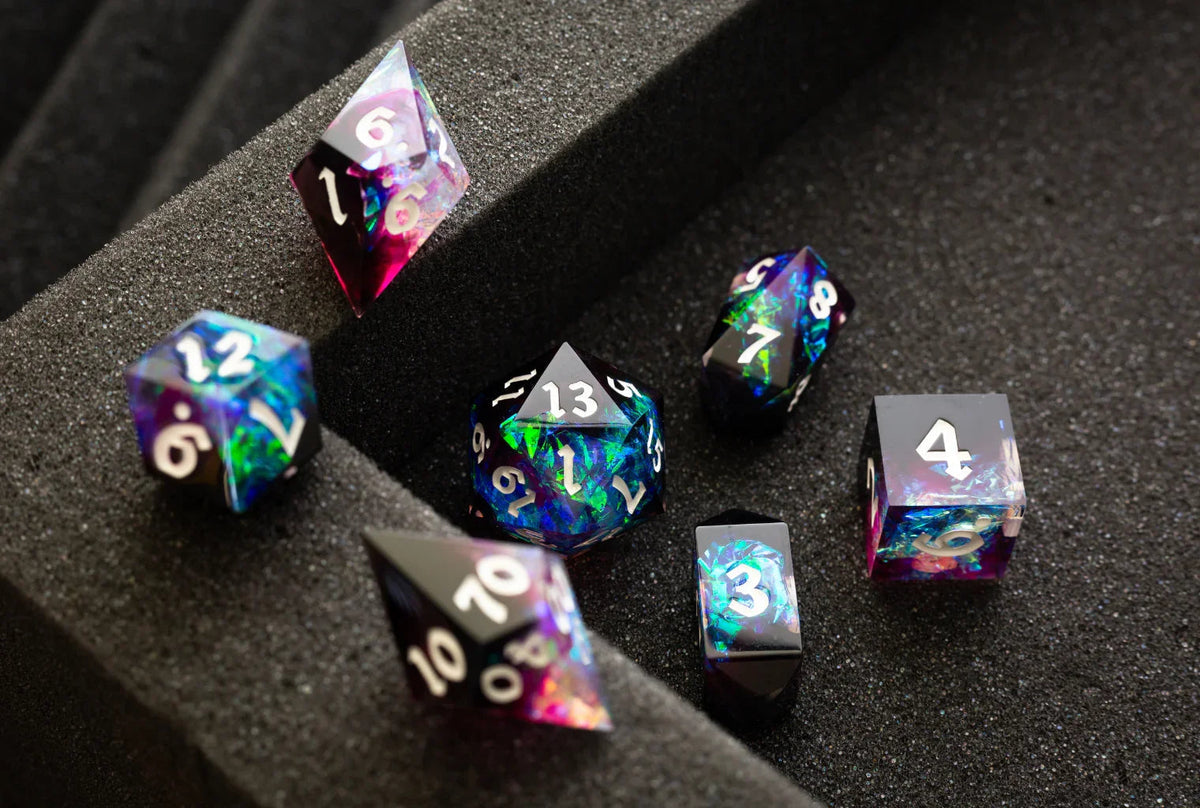
Premium DND Dice Sets That Elevate Every Campaign Session
If you play Dungeons & Dragons or another tabletop RPG regularly, your dice become some of the most-used tools at the table. A good set should be easy to read, comfortable to roll, suitable for your playing surface, and durable enough for regular sessions. Premium DND dice sets come in materials ranging from resin and metal to glass and natural stone, but a higher price does not automatically make one set better for every player. This guide explains what to look for, how popular materials differ, and how to care for your dice so they stay in good condition.
Why Choose Premium DND Dice Sets?
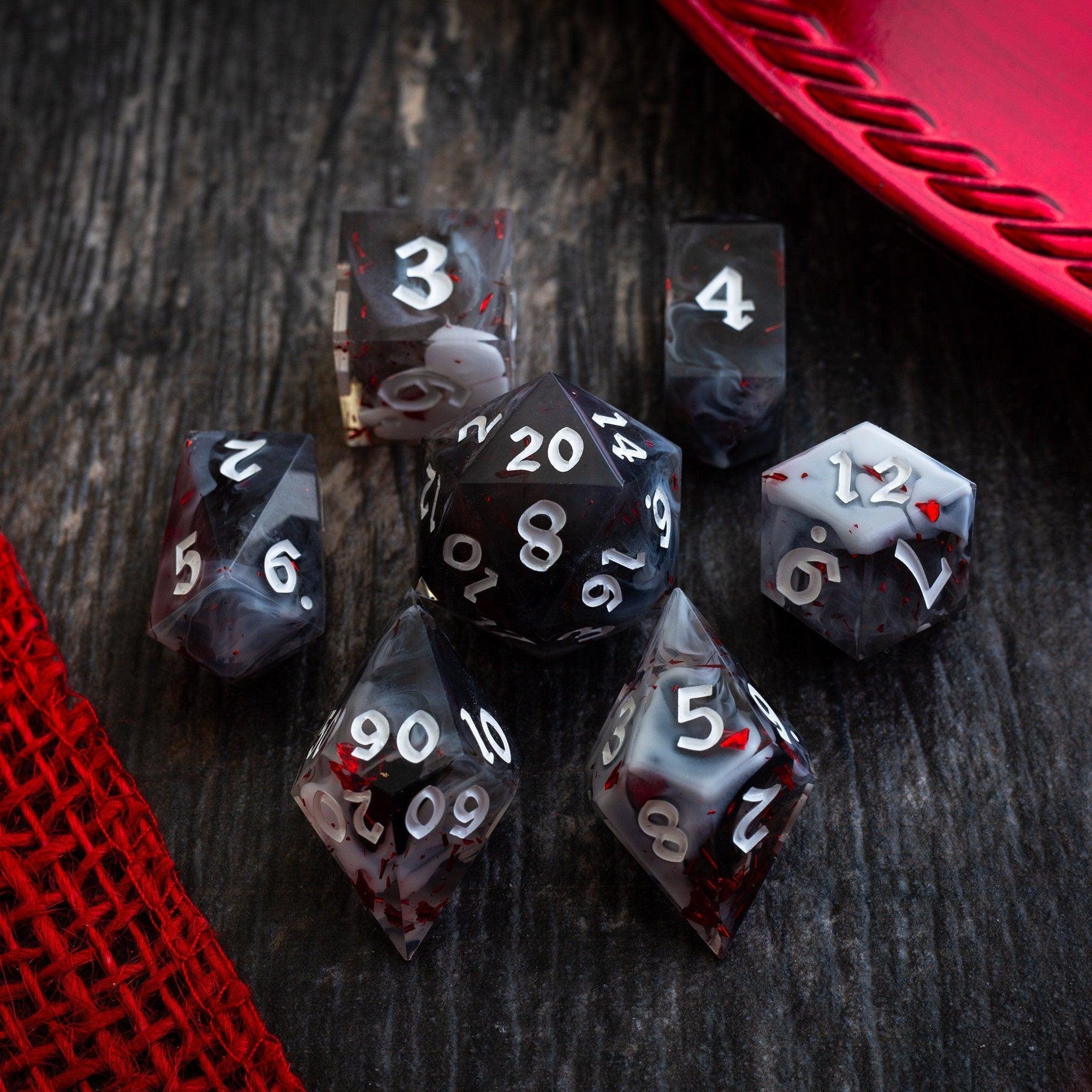
Premium DND dice sets are usually chosen for their materials, craftsmanship, appearance, readability, and feel rather than because they change how the game works. A standard seven-piece polyhedral set includes a d4, d6, d8, d10, percentile die, d12, and d20, covering the main dice used in D&D.
For many players, readability should come first. Decorative patterns, glitter, inclusions, translucent materials, and detailed designs can look impressive, but they should not make the numbers difficult to see. Strong contrast between the numerals and the face of the die is especially useful during combat, when several rolls may happen quickly.
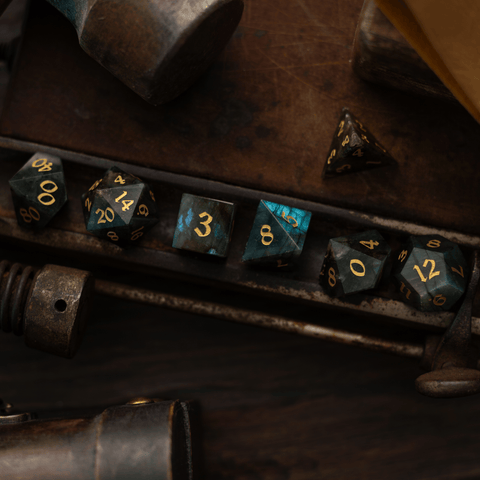
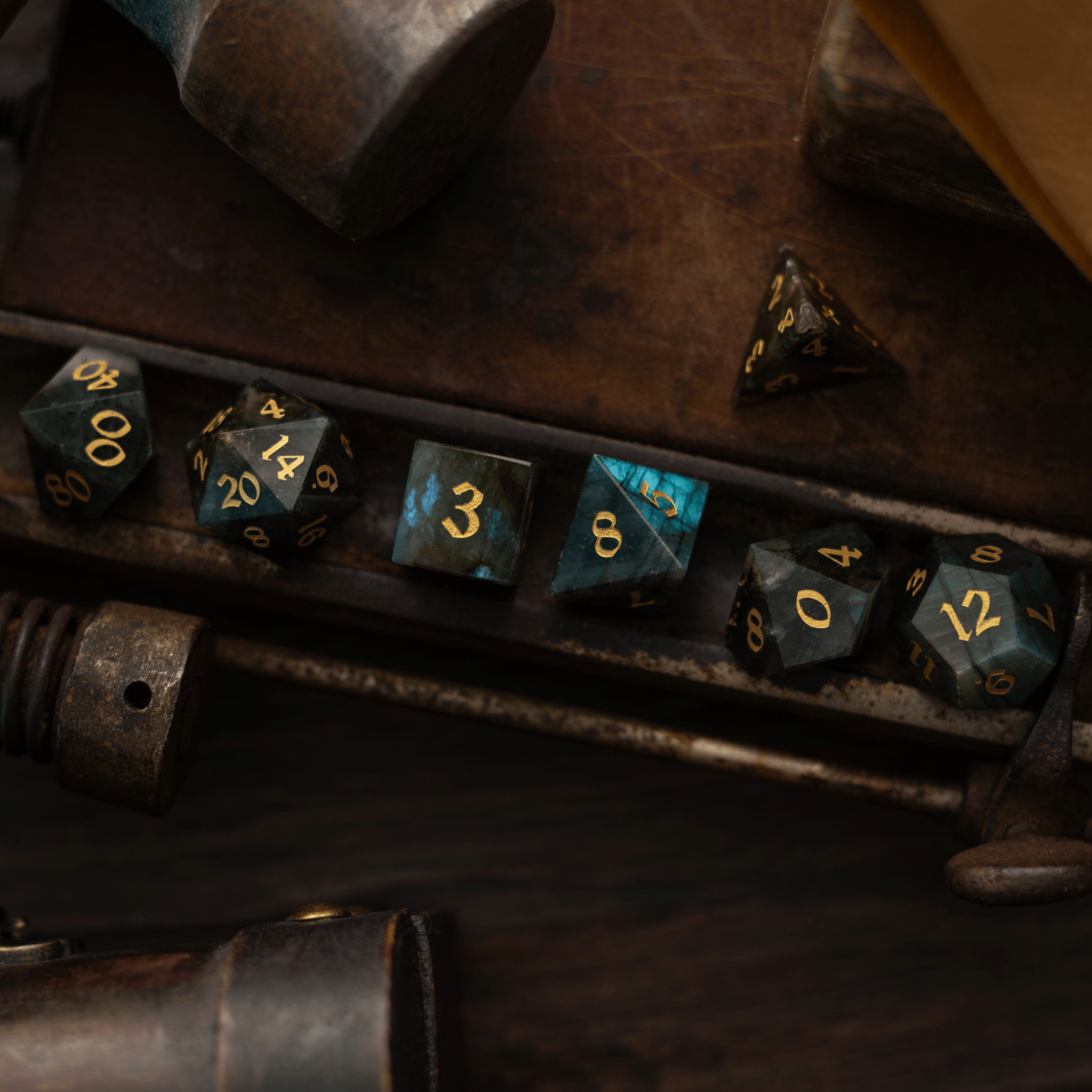
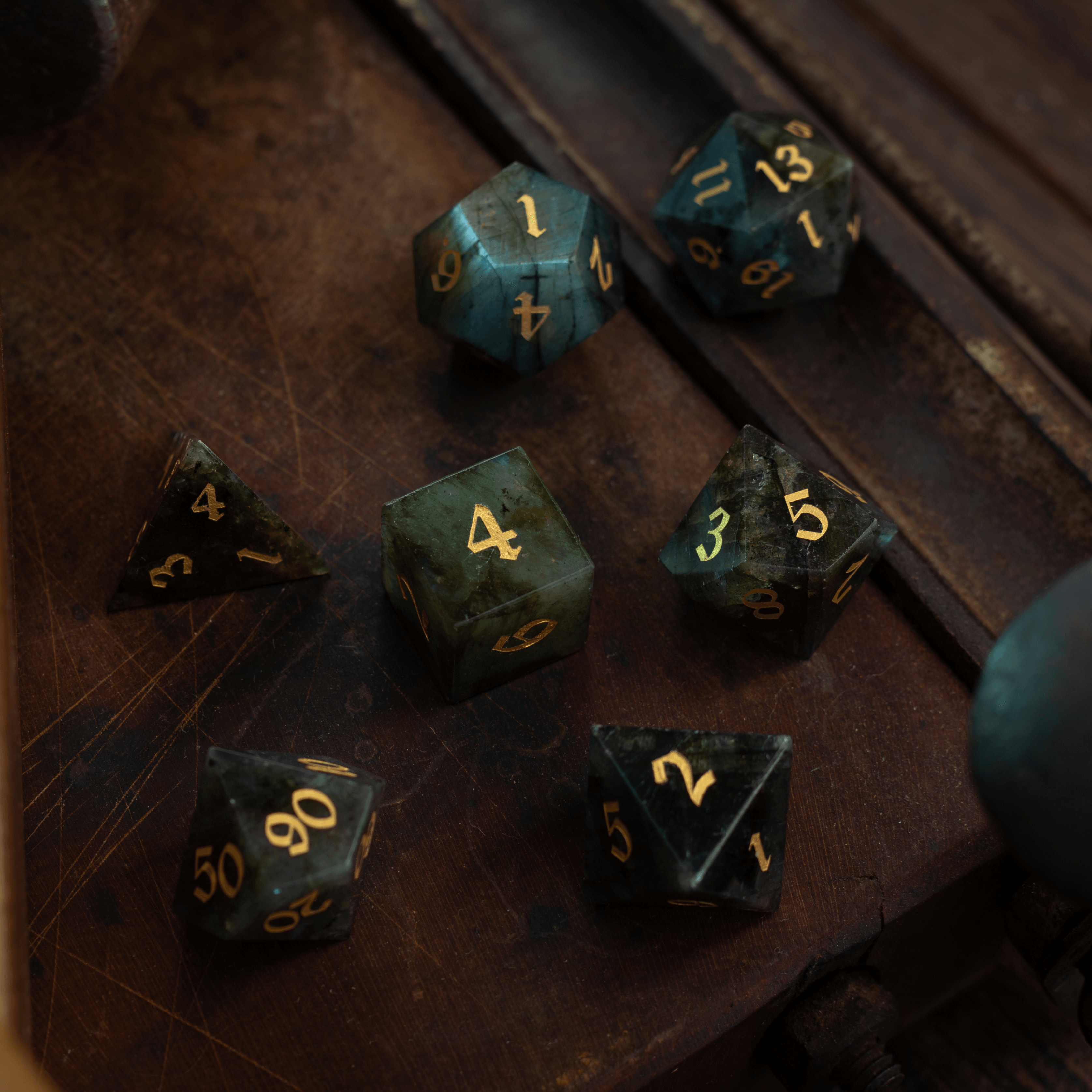
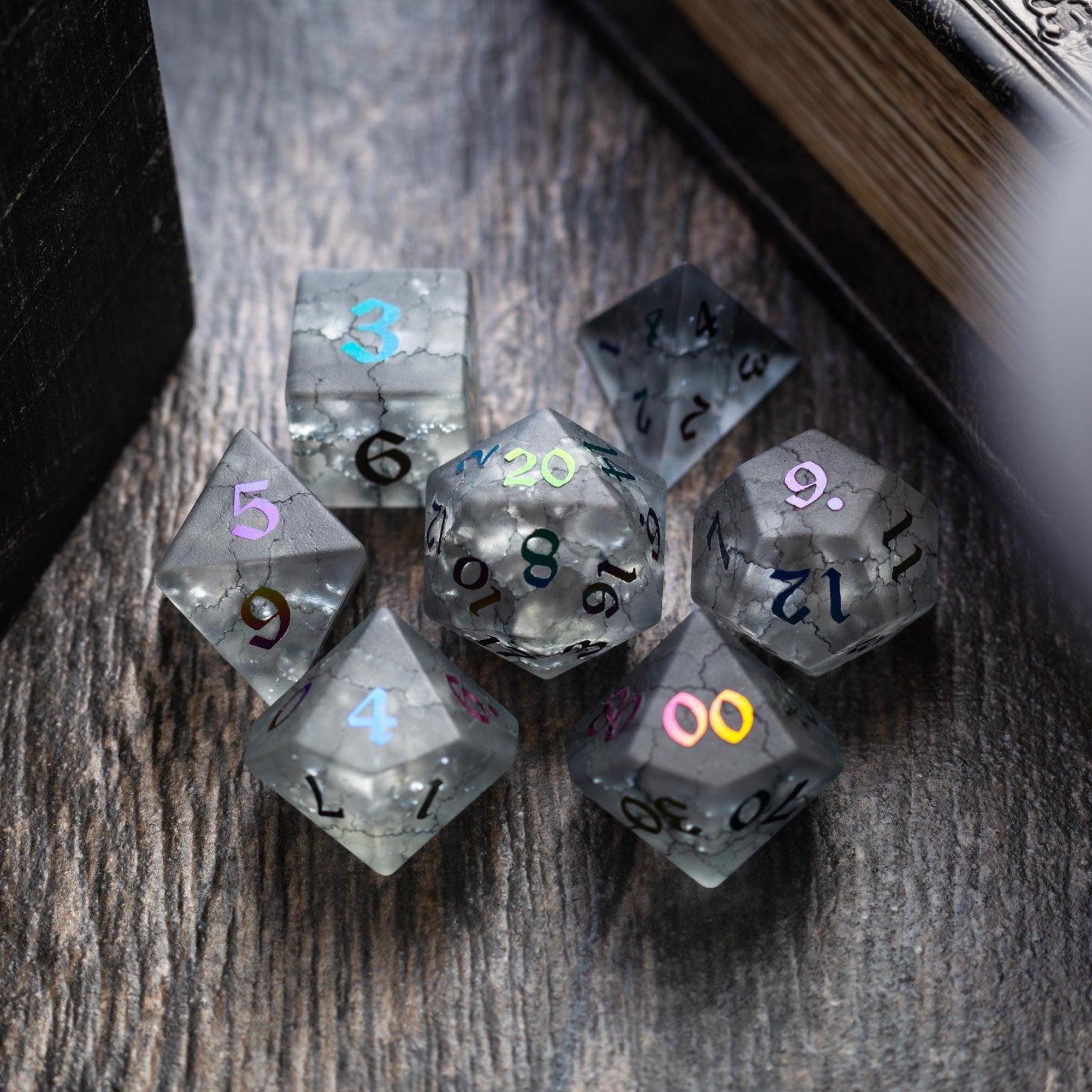
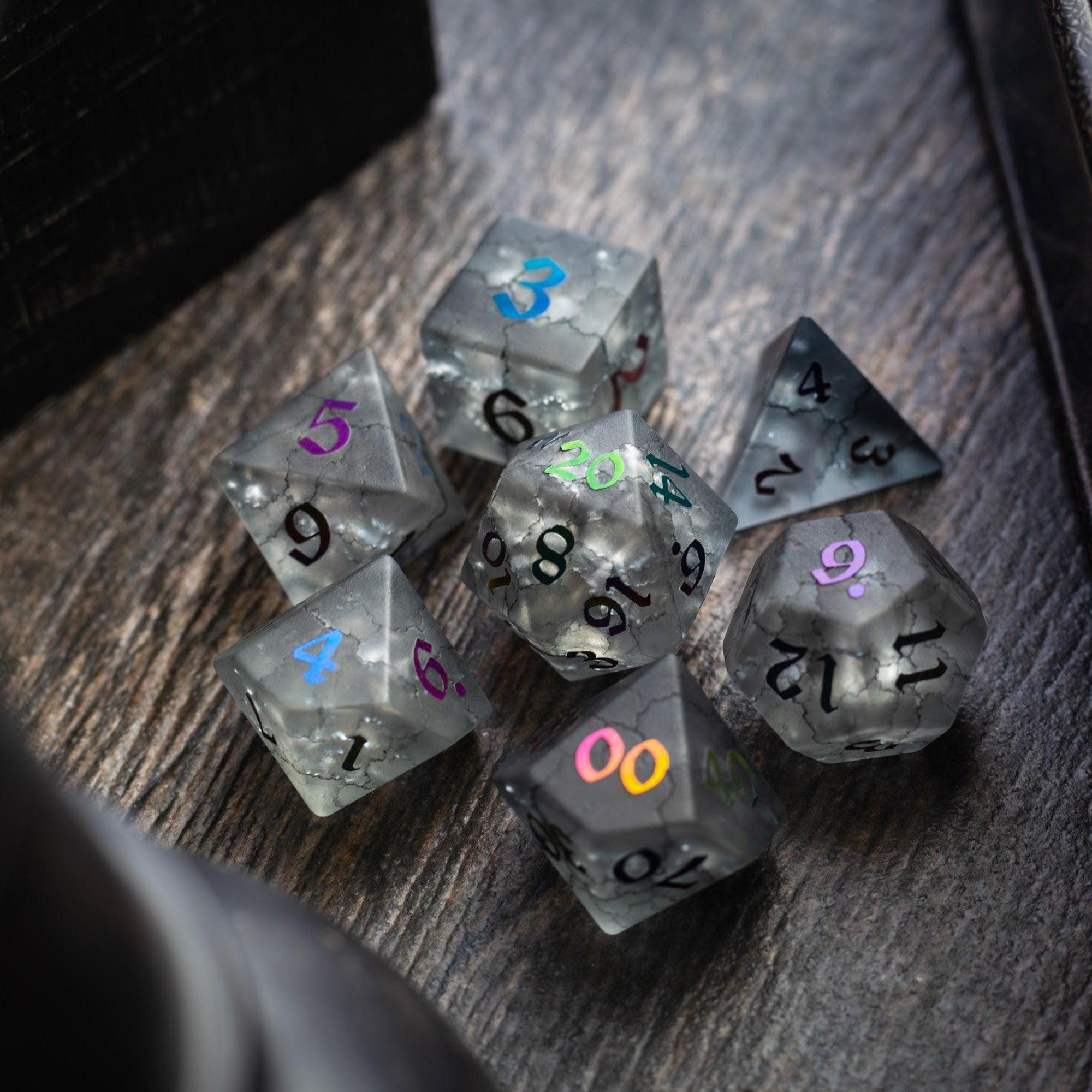
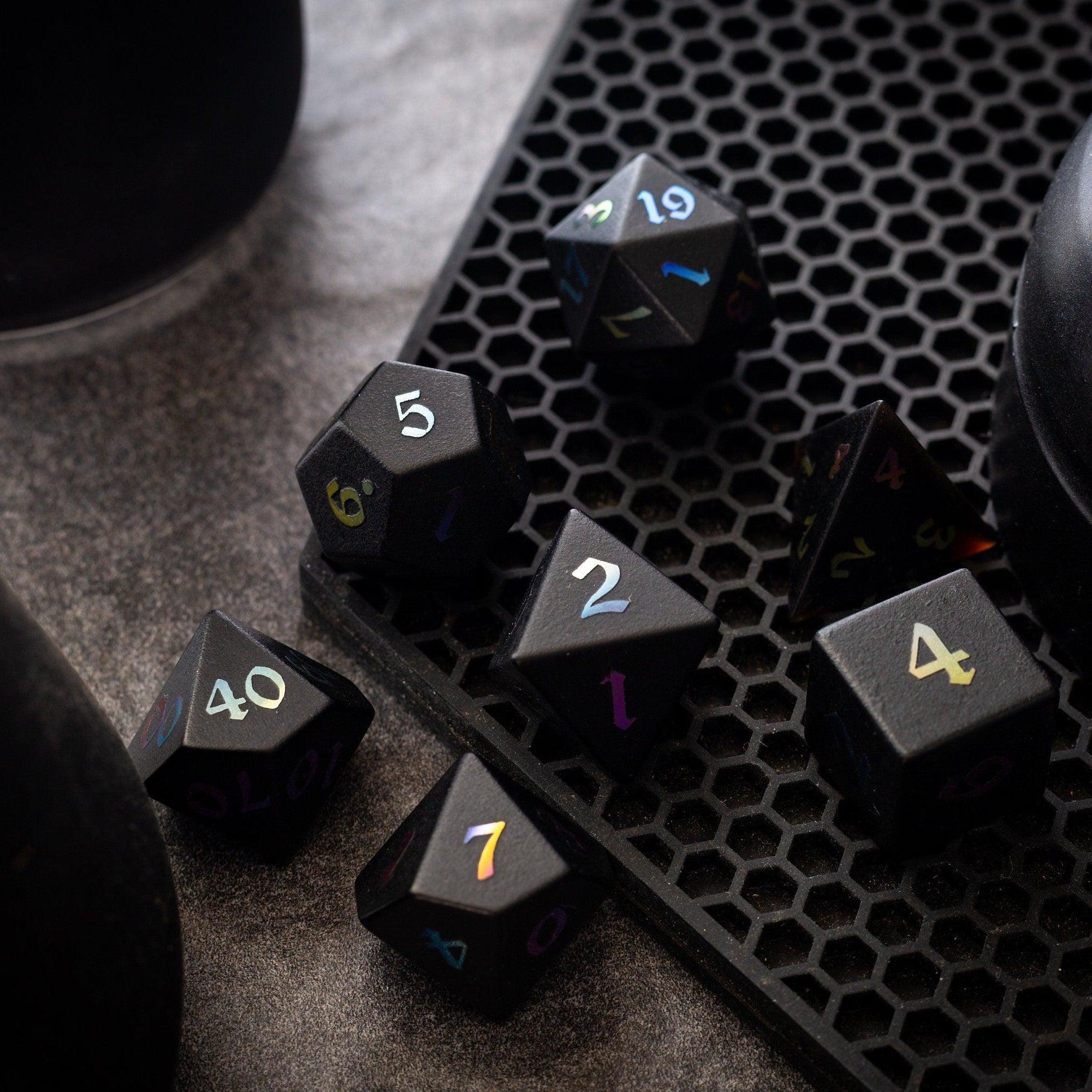
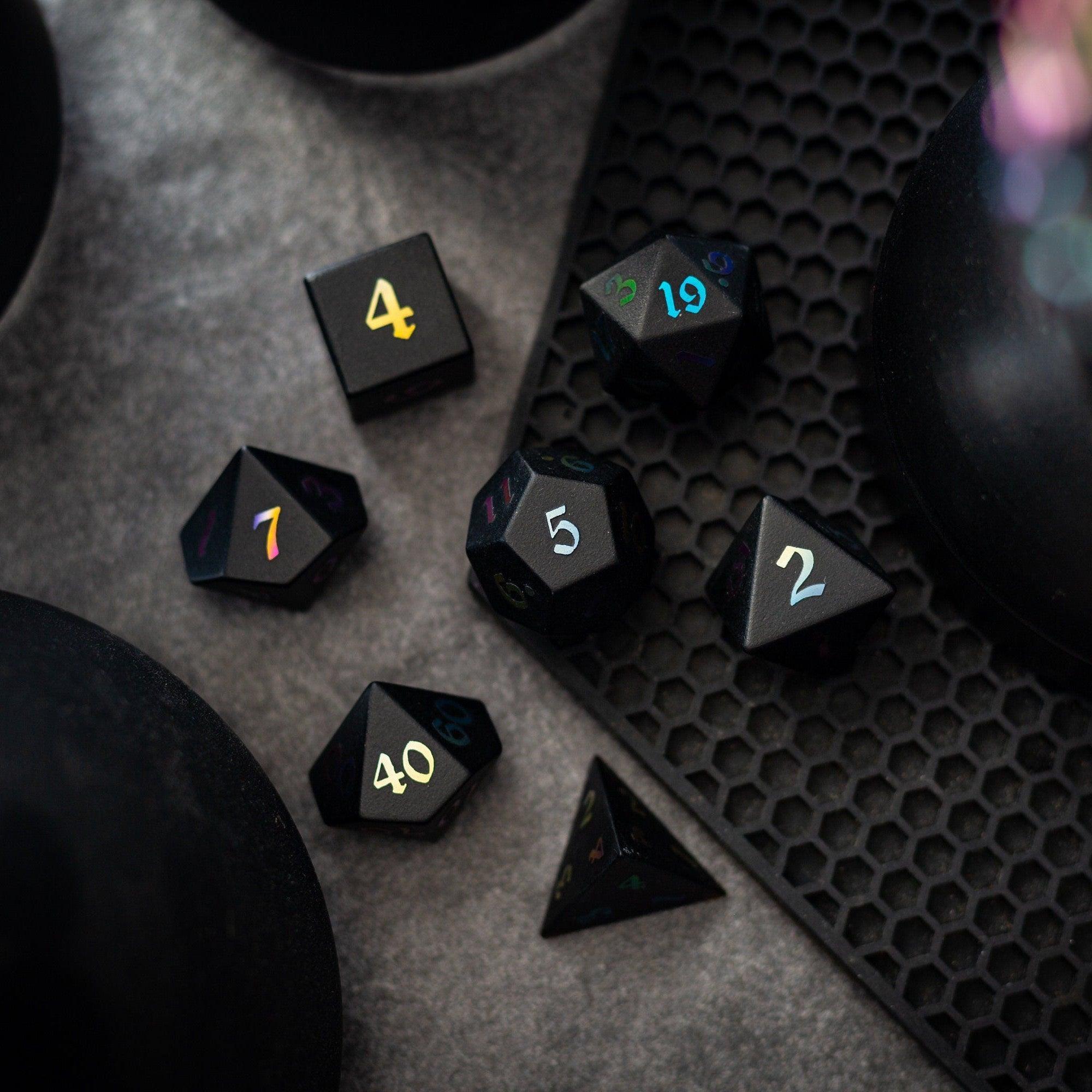
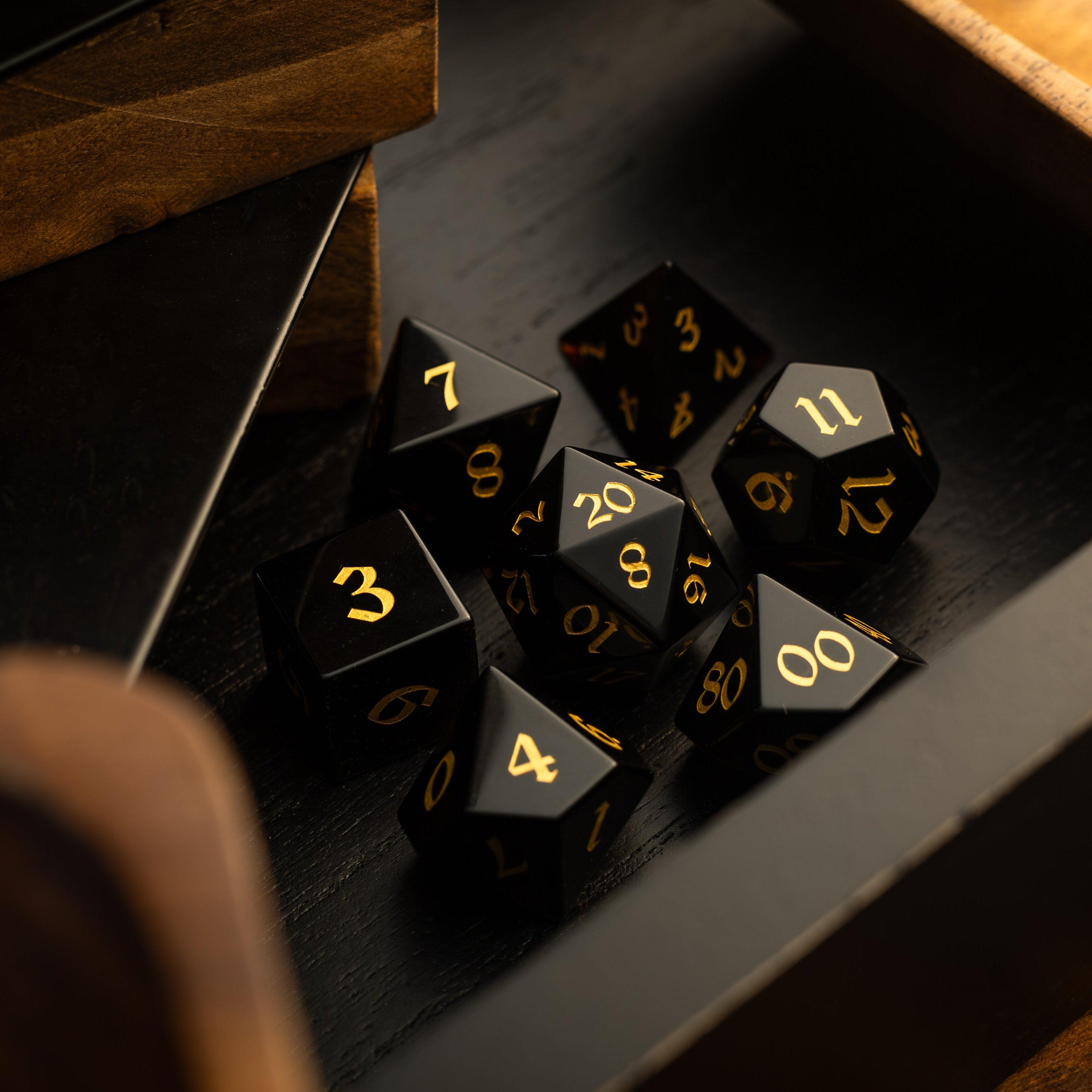
Material is another major consideration. Gemstone dice have natural patterns and variations that make individual pieces visually distinct. Options such as obsidian, amethyst, labradorite, and tiger's eye can provide a very different look and feel from conventional resin dice. You can compare available materials in the Gemstone Dice collection.
Keep in mind that stone and glass dice require more careful handling than many resin sets. Their hardness does not make them immune to damage. Hard impacts can chip edges or corners, particularly if the dice strike each other or land repeatedly on a hard surface. A padded dice tray is a practical addition when using gemstone, glass, or metal dice.
How to Choose the Right Dice Material
The best material depends on how and where you play. There is no single material that is ideal for every campaign.
Gemstone Dice
Gemstone dice are popular with players who appreciate natural patterns and want a set that can also serve as a collectible or display piece. Because stone is a natural material, color, veining, translucency, and other visual characteristics can vary from one die to another. That variation is part of the appeal, but gemstone dice should be handled carefully and rolled on a protective surface.
Resin Dice
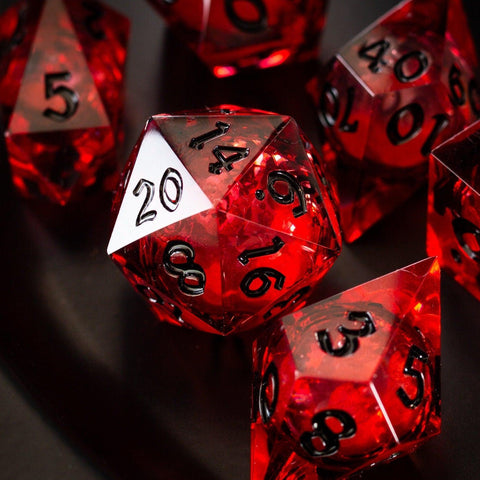
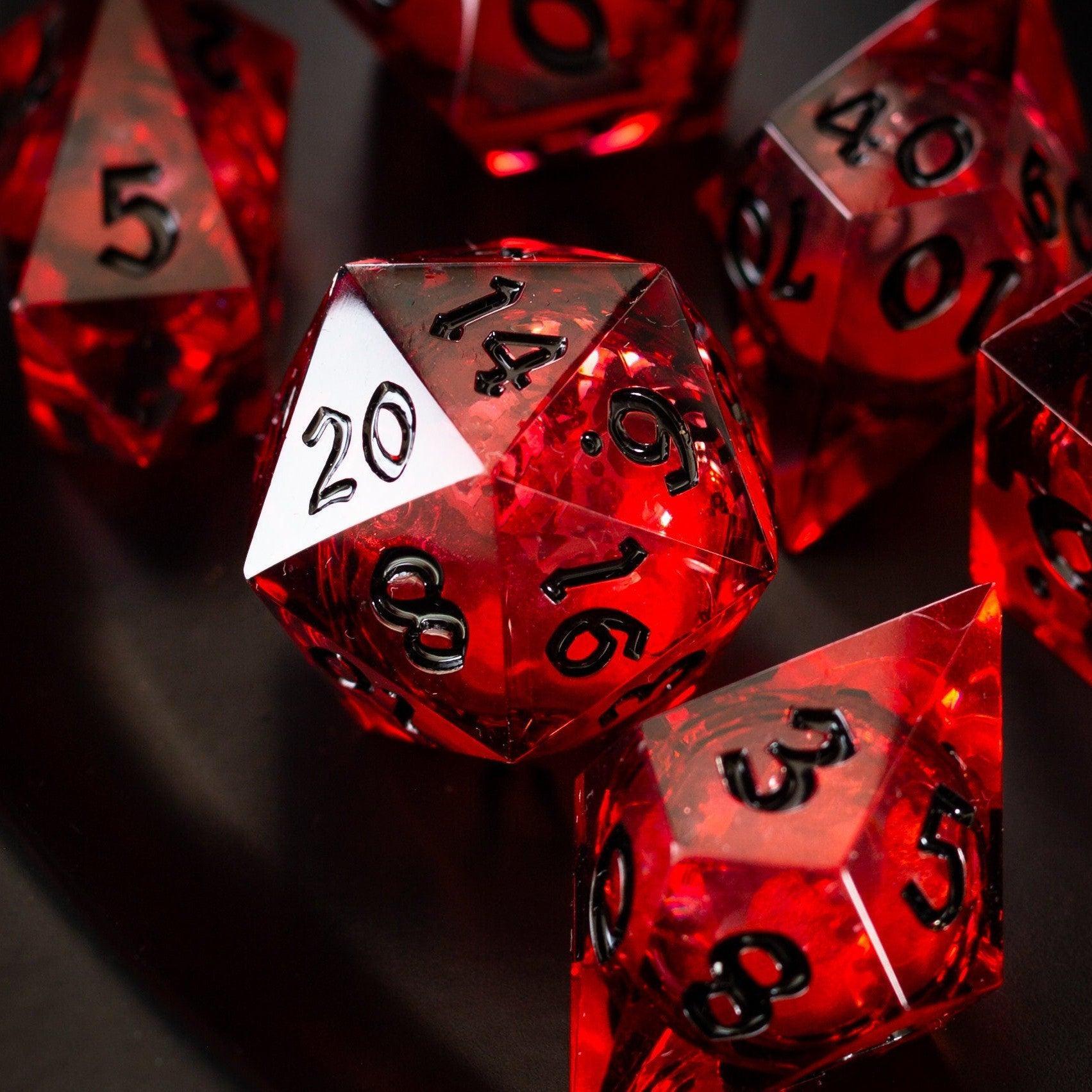
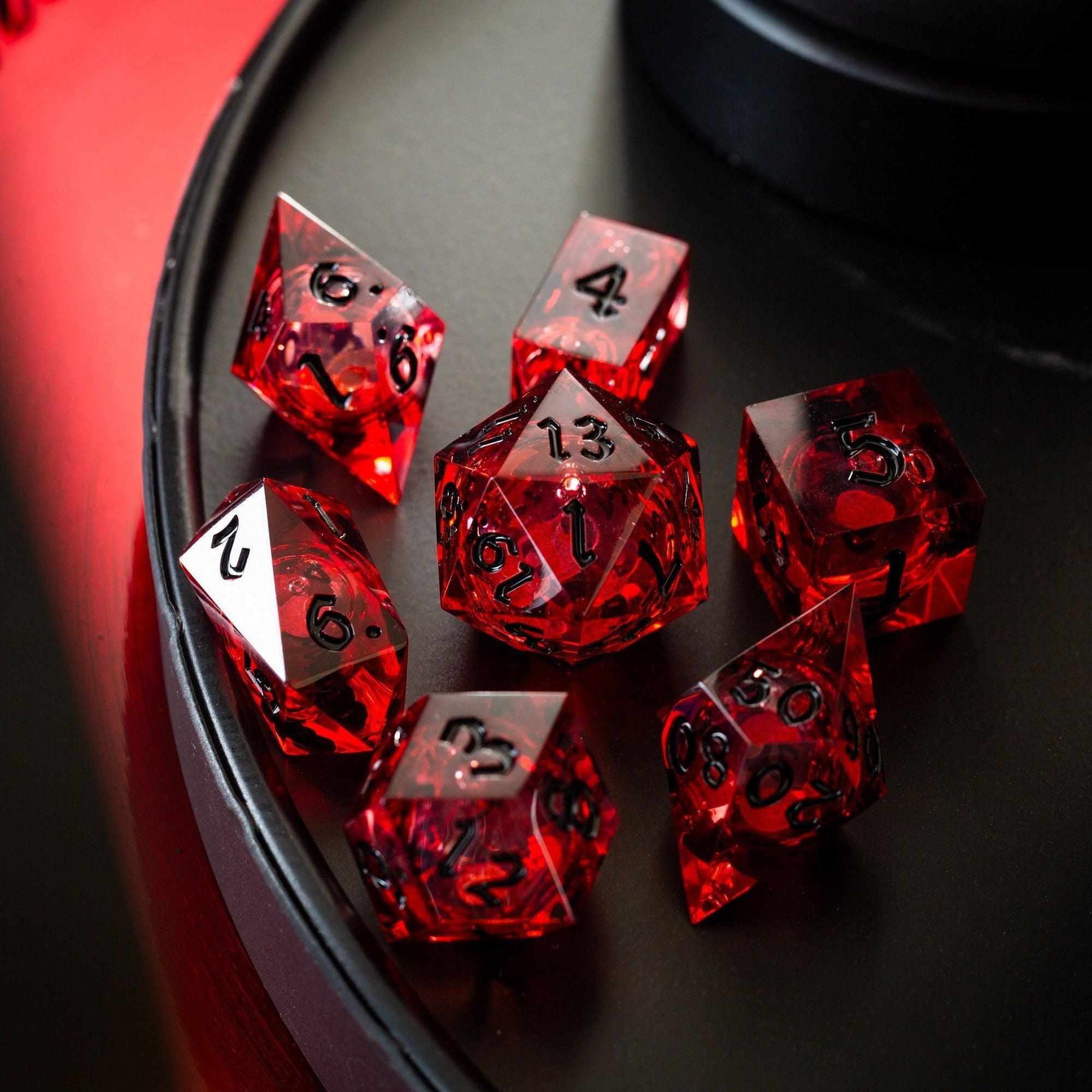
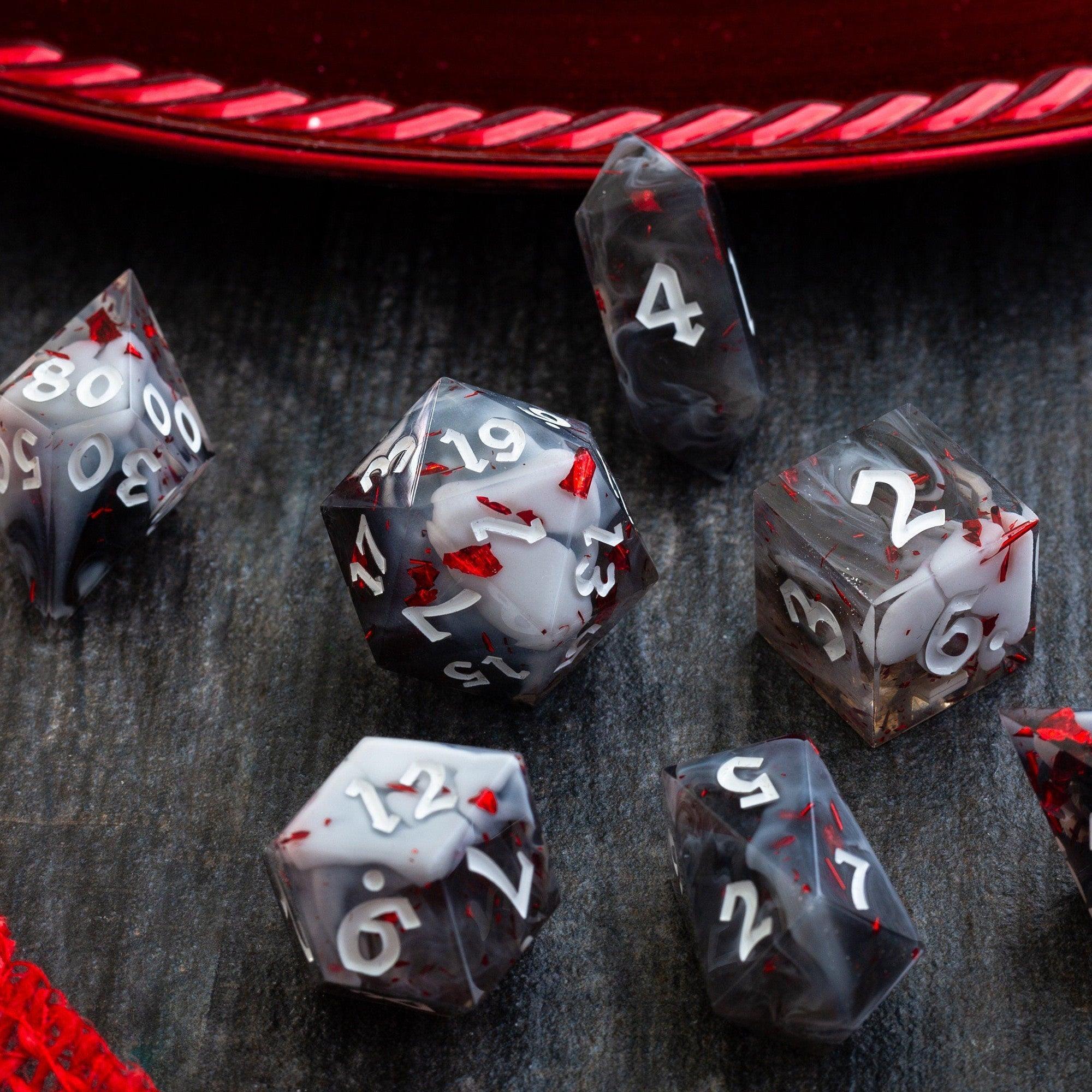
Resin is one of the most versatile materials for RPG dice. It allows manufacturers to create sharp-edge designs, layered colors, glitter effects, inclusions, and many other styles. Resin dice are generally easier to carry and less demanding to handle than stone or glass, making them a practical option for regular sessions and travel.
Metal Dice
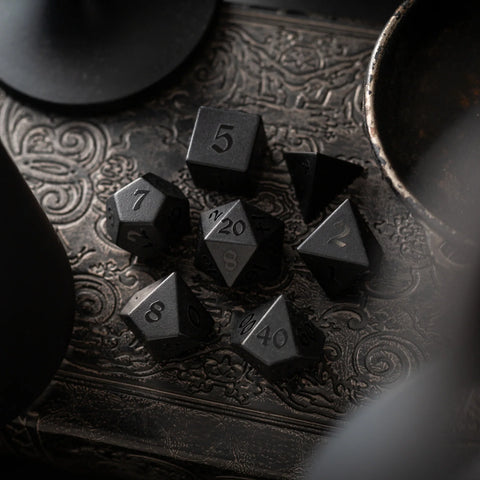
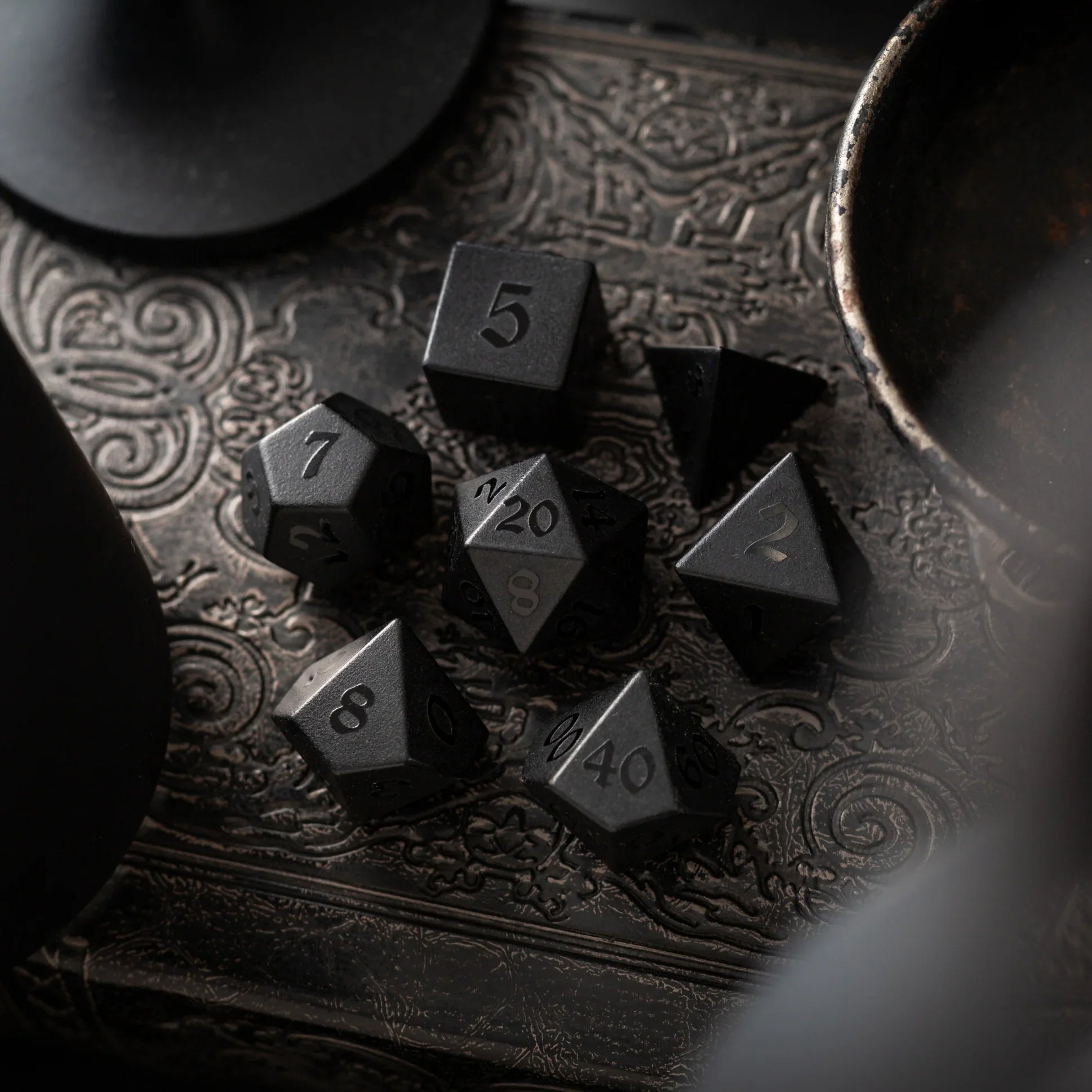
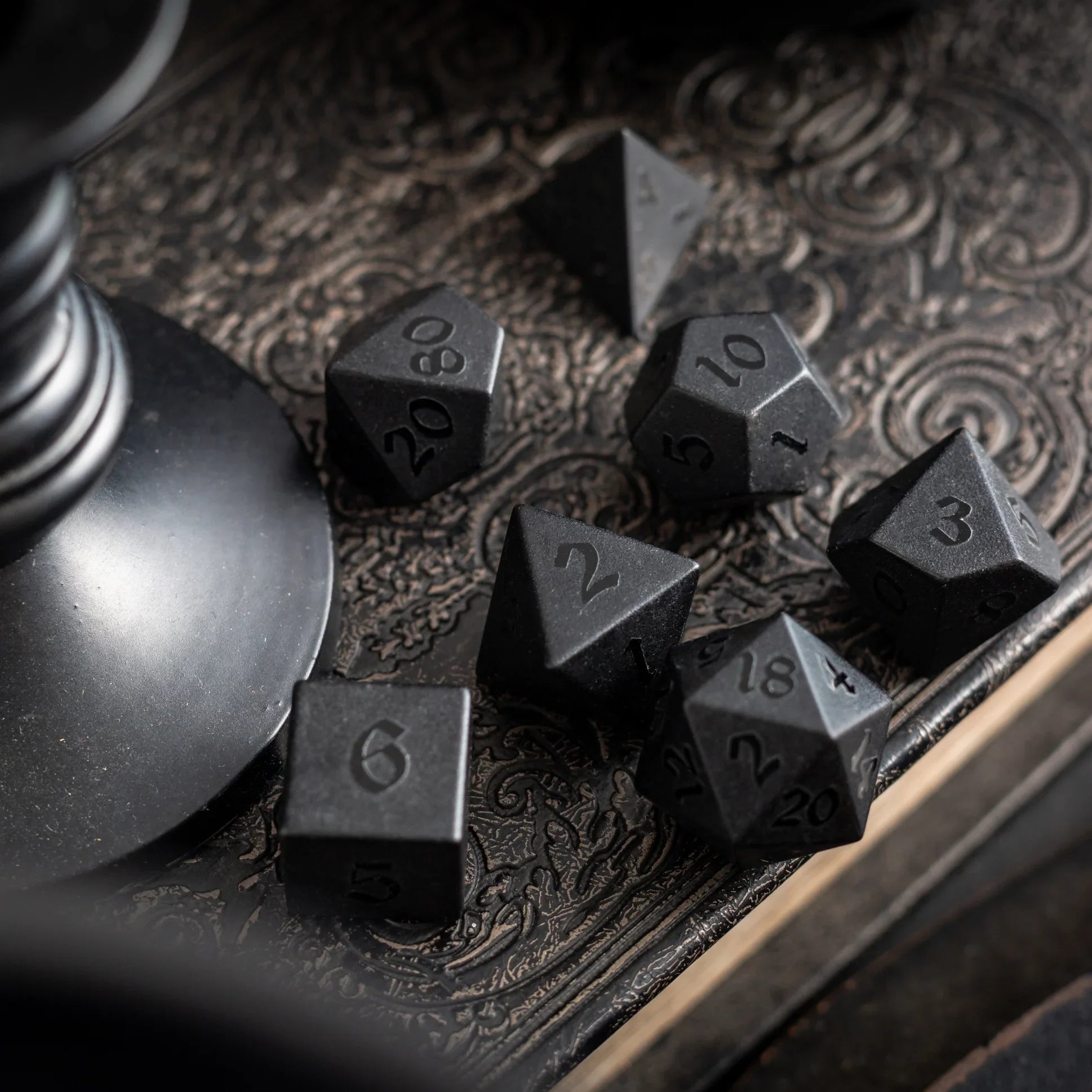
Metal dice have considerably more weight than typical resin dice and produce a noticeable impact when rolled. Some players enjoy that heavy feel, while others prefer lighter materials. Because metal dice can mark wooden tables and can damage more fragile dice if stored together, they are best used with a padded tray and kept separate during storage.
Glass Dice
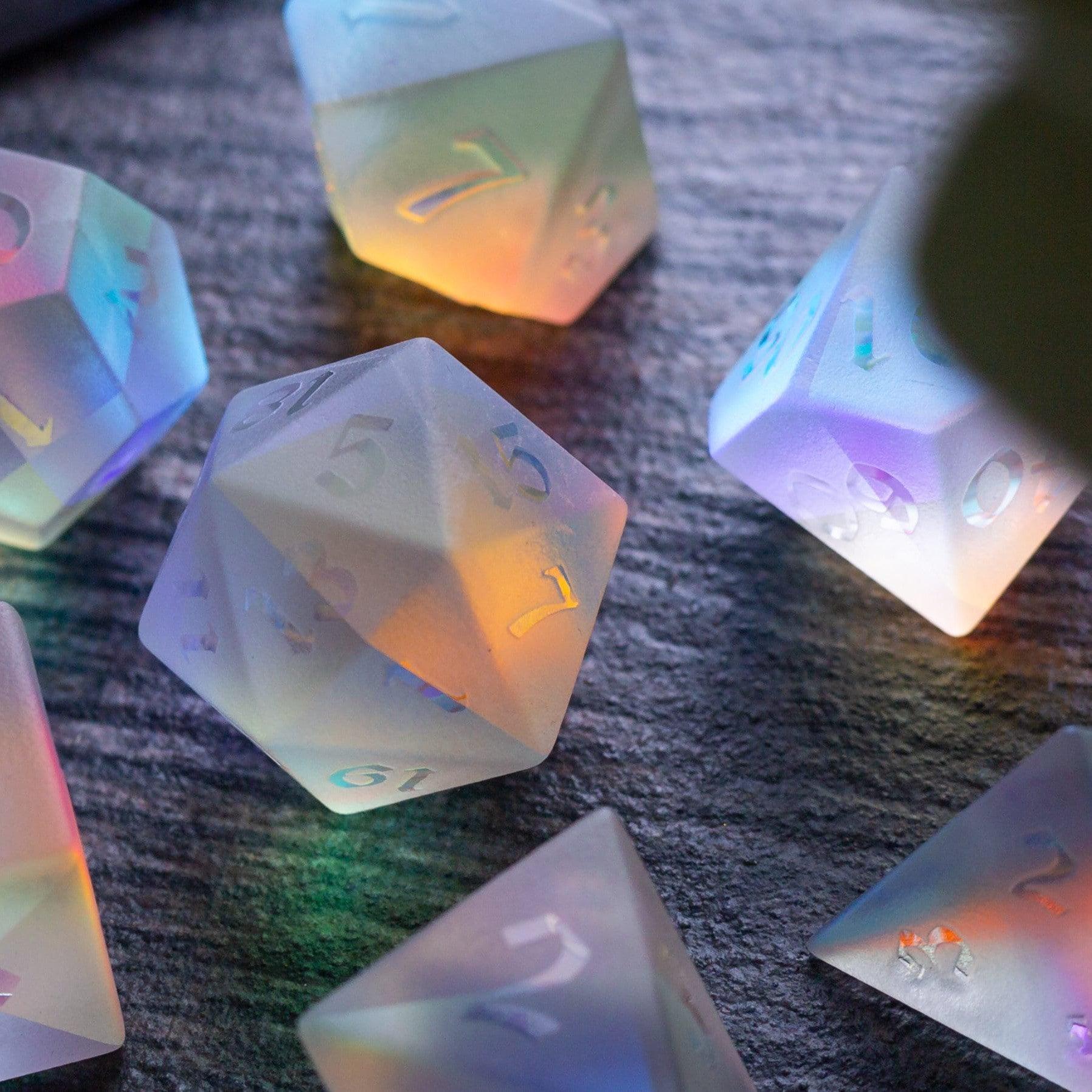
Glass dice can provide exceptional clarity, color, and reflective effects, but they deserve the same careful treatment as gemstone dice. Avoid dropping them onto hard floors or rolling them directly against metal or stone dice. Protective storage is especially useful when transporting them.
What to Look for When Buying Premium Dice
Appearance matters, but it should not be your only consideration. Before choosing a set, look at the size of the numerals, their contrast against the dice, the material, edge style, and how you plan to use the set.
- Readability: Choose numerals that remain clear under the lighting where you normally play.
- Material: Consider weight, durability, handling requirements, and the type of rolling surface you use.
- Edge style: Sharp-edge dice offer a defined geometric appearance, while rounded designs may feel different when rolling and handling.
- Size: Make sure the dice fit comfortably in your hand and have enough room to roll inside your tray.
- Storage: Fragile or heavy sets benefit from separate padded compartments rather than being carried loose together.
- Number visibility: Decorative dice are still gaming tools, so make sure style does not make common results difficult to identify.
Are Premium Dice More Balanced?
Price and material alone do not prove that a die is perfectly balanced. Physical dice can have small differences in shape, dimensions, density, polishing, or internal structure. Manufacturing consistency can reduce irregularities, but ordinary tabletop dice should not be confused with certified precision casino dice.
For normal D&D play, the practical question is whether a die rolls reliably enough for recreational gaming. A short streak of high or low numbers does not prove that a die is biased because random results naturally include streaks. Testing fairness through recorded rolls requires a sufficiently large sample and proper statistical analysis, so a handful of rolls is not a reliable test.
If fairness is particularly important to you, look for clear information from the manufacturer about how the dice are produced and inspected rather than assuming that terms such as "premium," "luxury," or "sharp edge" guarantee greater randomness.
How to Care for Premium DND Dice Sets
Good storage and rolling habits can extend the life of almost any dice collection. Use a padded tray or mat when rolling gemstone, glass, or metal dice. The softer surface reduces direct impacts against the table and helps keep dice contained during energetic rolls.
Store different materials separately when possible. Metal dice can scratch or chip more delicate pieces if everything moves around together in the same bag. Individual compartments, padded boxes, or soft protective cases are particularly useful for collectible gemstone and glass sets.
For routine cleaning, start with a clean, soft cloth. Avoid automatically using harsh chemicals or abrasive cleaners, especially on natural stone, painted numerals, coatings, or specialty finishes. Cleaning requirements can vary by material, so follow the seller or manufacturer's care instructions when available.
Quick Tips for Choosing Better Dice
- Prioritize readable numerals over complicated designs if the set will be used frequently.
- Check how the dice look under your normal gaming-room lighting.
- Use a padded tray with metal, glass, and gemstone dice.
- Keep heavy metal dice away from more fragile sets during storage.
- Choose a material you actually enjoy handling, not simply the most expensive option.
- Consider your character or campaign theme if appearance is important to you.
- Inspect natural stone and glass dice regularly for chips or damaged edges.
Summary & Takeaways
Premium DND dice sets can be worthwhile when you value distinctive materials, clear numerals, careful craftsmanship, or a particular feel at the table. Gemstone and glass provide striking visual characteristics, metal offers substantial weight, and resin gives players an enormous range of colors and designs. None is automatically the best choice.
For regular play, focus on readability, material, handling, and storage. A beautiful set that is difficult to read or unsuitable for your rolling surface may be less useful than a simpler design. If you choose gemstone dice, protect them from hard impacts and store them separately from heavy metal sets. Players interested in natural stone options can browse the Runic Dice gemstone collection to compare available styles.
Q&A
What makes gemstone dice different from resin or metal?
Gemstone dice are made from natural stone, so individual pieces can show variations in color, pattern, translucency, and texture. Resin offers greater flexibility for colorful effects and inclusions, while metal provides much more weight. Gemstone dice are often chosen for their natural appearance, but they also require careful handling because hard impacts can chip or damage them.
How do I protect my table and keep my dice in good condition?
Use a padded dice tray or rolling mat, especially with metal, glass, or gemstone dice. Store heavier and more fragile materials separately so they do not strike or rub against one another. For routine cleaning, use a soft cloth and follow any material-specific care instructions supplied by the manufacturer.
Are higher-end dice fair and well-balanced?
A higher price does not guarantee perfect balance. Manufacturing quality can improve consistency, but all physical tabletop dice can have small variations. For ordinary RPG sessions, well-made dice are generally intended to provide practical random results. A few unusual rolls are not enough to establish bias, and meaningful fairness testing requires many recorded rolls and appropriate statistical analysis.
Availability, specifications, colors, and materials may change. Always follow the manufacturer's care recommendations and use an appropriate rolling surface for fragile or heavy dice.



Leave a comment
This site is protected by hCaptcha and the hCaptcha Privacy Policy and Terms of Service apply.