

Circle of Stars Druid Guide for Beginners: Mastering the Stars Druid in D&D 5e

The Circle of Stars Druid, officially called the Circle of the Stars in the updated Player's Handbook, draws magic from constellations and the night sky. Originally introduced in Tasha's Cauldron of Everything, this subclass was updated in 2024 and follows the revised fifth-edition rules, now labeled D&D 5.5e on D&D Beyond in 2026.
Unlike a Circle of the Moon Druid, you don't have to become an animal to make good use of Wild Shape. Instead, you can transform into a glowing constellation while continuing to cast spells, deal radiant damage, heal allies, and control the battlefield.
This Circle of Stars Druid guide covers subclass abilities, ability scores, recommended spells, equipment, and practical strategies for building a celestial spellcaster.
Why Play a Circle of Stars Druid?
Key Benefits
- Ranged damage: The Archer constellation adds a radiant spell attack to your turns without consuming additional spell slots.
- Stronger healing: Chalice restores additional hit points when you use a spell slot to heal.
- Reliable concentration: Dragon helps you maintain important spells and improves Intelligence and Wisdom ability checks.
- Flexible Wild Shape: Starry Form gives you another way to spend Wild Shape uses without becoming a beast.
- Easy roleplay hooks: A stargazer, wandering astronomer, or keeper of celestial omens fits naturally into many campaigns.
Stars Druids are especially useful in parties that need someone who can switch between dealing damage, supporting allies, and controlling enemies. They are also a good choice for players who enjoy the Druid spell list but prefer spellcasting over fighting in animal form.
Core Features
Circle of the Stars Abilities in the 2026 Rules
Star Map (Level 3)
Your magical star map serves as a Druid spellcasting focus. While holding it, you have Guidance and Guiding Bolt prepared. You can cast Guiding Bolt without spending a spell slot a number of times equal to your Wisdom modifier (minimum once), regaining these uses after a long rest.
If you lose your map, you can create a replacement through a one-hour ceremony during a short or long rest. Creating the replacement destroys the previous map.
Starry Form (Level 3)
As a bonus action, you spend one Wild Shape use to enter Starry Form for up to 10 minutes. It requires no concentration, and you retain your normal statistics and spellcasting abilities. Choose one constellation when you transform:
- Archer: Make a ranged spell attack against a creature within 60 feet when you activate the form and as a bonus action on subsequent turns. A successful attack deals 1d8 + your Wisdom modifier in radiant damage.
- Chalice: When you cast a healing spell using a spell slot, you or another creature within 30 feet can recover an additional 1d8 + your Wisdom modifier in hit points.
- Dragon: You can treat d20 results of 9 or lower as 10 when making Intelligence checks, Wisdom checks, or Constitution saving throws to maintain concentration.
Starry Form produces bright light within 10 feet and dim light for another 10 feet, potentially revealing your position while sneaking. It ends early if you become incapacitated, dismiss it, or activate Starry Form again.
Cosmic Omen (Level 6)
After a long rest, consult your star map and roll a die. An even result grants Weal, while an odd result grants Woe. When a creature you can see within 30 feet is about to make an attack roll, saving throw, or ability check, you can use your reaction to add 1d6 with Weal or subtract 1d6 with Woe.
You can use this feature a number of times equal to your Wisdom modifier (minimum once) per long rest. Use Weal to support allies or Woe to interfere with important enemy rolls.
Twinkling Constellations (Level 10)
Archer's damage and Chalice's extra healing increase from 1d8 to 2d8. Dragon grants a 20-foot flying speed and the ability to hover. You can also change constellations at the start of each of your turns without spending another Wild Shape use.
Remember that your flying speed only applies while Dragon is your active constellation. Land somewhere safe before switching forms.
Full of Stars (Level 14)
While Starry Form is active, you gain resistance to bludgeoning, piercing, and slashing damage, including damage from magical attacks of those types. This improves your survivability regardless of which constellation you choose.
Rules update: Under the original rules, Star Map and Starry Form arrived at level 2, while free Guiding Bolt casts and Cosmic Omen uses depended on proficiency bonus. Under the revised rules used in 2026, the subclass begins at level 3, and these limited uses depend on Wisdom. See the official Player's Handbook update overview and the Circle of the Stars subclass rules.
Suggested Ability Scores
- Wisdom first: Improves spell attacks, spell save DCs, healing, and several subclass features.
- Constitution second: Increases your hit points and helps maintain concentration.
- Dexterity third: Improves Armor Class, initiative, and Dexterity saving throws.
Recommended Species and Backgrounds
Under the revised rules, your background provides starting ability score increases rather than your species. Human offers an additional Origin feat, while Elf provides useful exploration abilities. With your DM's permission, older species options such as Firbolg, Eladrin, and Owlin also suit celestial-themed Druids.
The Sage background suits a scholarly astronomer and provides Magic Initiate (Wizard), while Guide fits a wilderness traveler and provides Magic Initiate (Druid).
Playing as a Circle of Stars Druid
Role in a Party
Use Archer when your party needs consistent ranged damage, Chalice when multiple allies need healing, and Dragon when maintaining concentration on an important spell matters most.
Dragon is often the most dependable choice during difficult encounters, especially when spells such as Entangle or Faerie Fire benefit the entire party.
Tips for New Players
- Track your resources: You recover one expended Wild Shape use after a short rest and all uses after a long rest.
- Manage bonus actions: Archer attacks and Healing Word compete for your bonus action on subsequent turns.
- Save a reaction: Cosmic Omen must be used before the target makes its d20 roll.
- Protect concentration: Dragon improves concentration saving throws but does not guarantee success against higher difficulty classes.
- Use Wild Resurgence: Starting at level 5, you can expend a spell slot to recover a Wild Shape use when you have none remaining.
Best Spells for a Circle of Stars Druid
- Guiding Bolt: Deals radiant damage and grants advantage on the next qualifying attack against the target.
- Healing Word: Provides emergency healing from a distance.
- Entangle: Restrains enemies and limits their movement.
- Faerie Fire: Helps your party land attacks against affected enemies.
- Moonbeam: Provides ongoing radiant damage and battlefield control.
- Spike Growth: Makes enemy movement through an area dangerous.
- Revivify: Offers emergency resurrection when its requirements are met.
Beginner-Friendly Level 5 Build
Try a level 5 Human Stars Druid with Wisdom 18, Constitution 14, and Dexterity 14, using the Sage background and War Caster at level 4. Choose Magician for Primal Order and Tough as your additional Human Origin feat.
Begin combat by activating Dragon and casting a concentration spell on the same turn. With Constitution 14, Dragon allows you to reach at least 12 on concentration saves before other modifiers. In encounters where damage matters more, combine Archer with Guiding Bolt.
Roleplay Suggestions
Your Druid might study forgotten constellations, navigate ancient roads by starlight, or record celestial events connected to important moments in their life.
For a campaign built around strange beliefs, Remarkable Cults & Their Followers (Hardcover) offers groups, rituals, and motives a DM can adapt into rival stargazing circles. Perhaps one order protects ancient sky charts while another believes a falling star will bring its chosen leader to power.
Gear and Dice Recommendations
Suggested Equipment
- Quarterstaff and dagger: Simple backup weapons that fit a traveling astronomer.
- Studded leather and shield: Practical defense for a spell-focused Druid. Consider medium armor if you choose Warden for Primal Order.
- Wand of the War Mage: Improves spell attack rolls, including Guiding Bolt and Archer attacks.
- Staff of Healing: Provides additional healing spells, although spells cast through its charges do not activate Chalice without a spell slot.
- Pearl of Power: Recovers an expended spell slot, up to level 3.
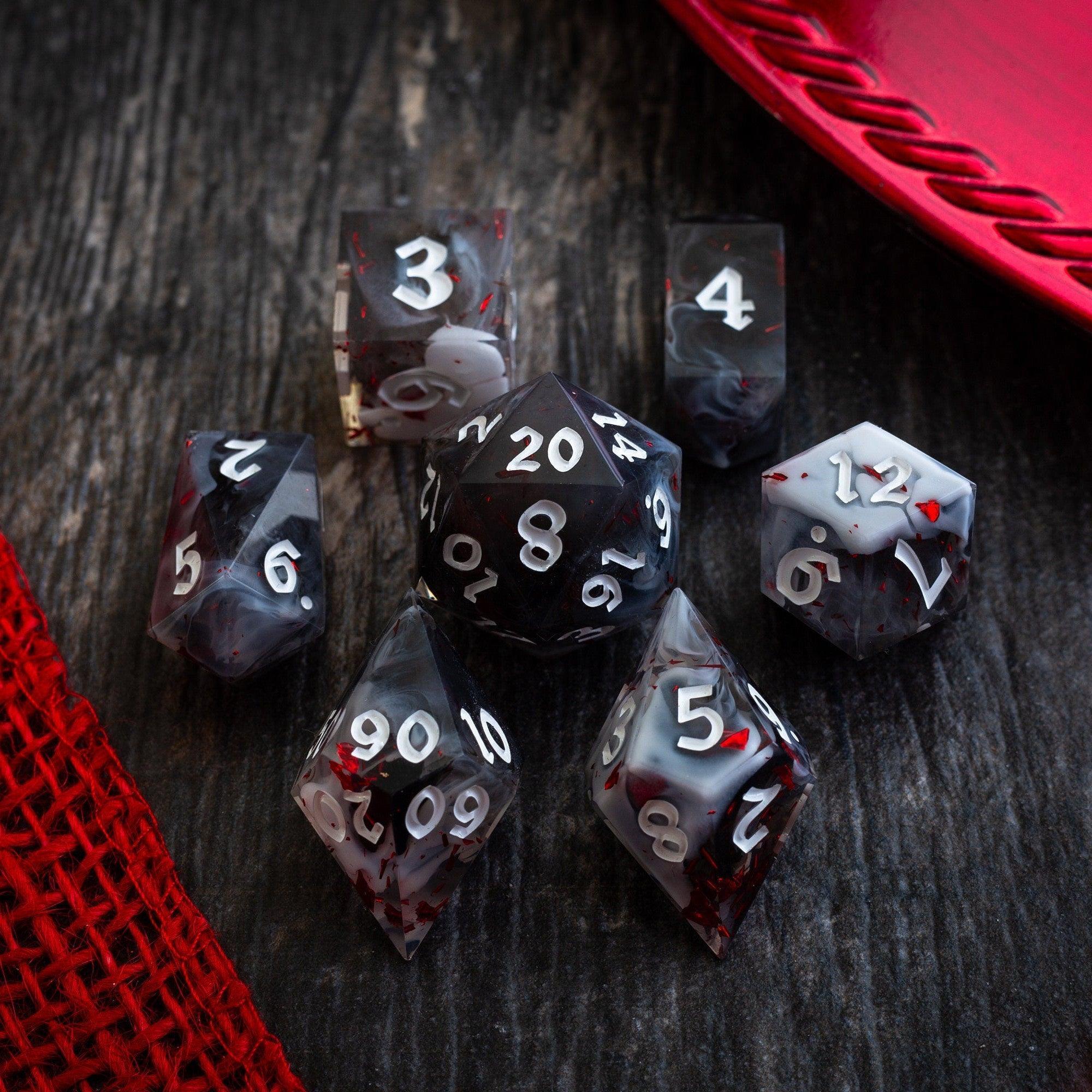
Dice Recommendations from Runic Dice
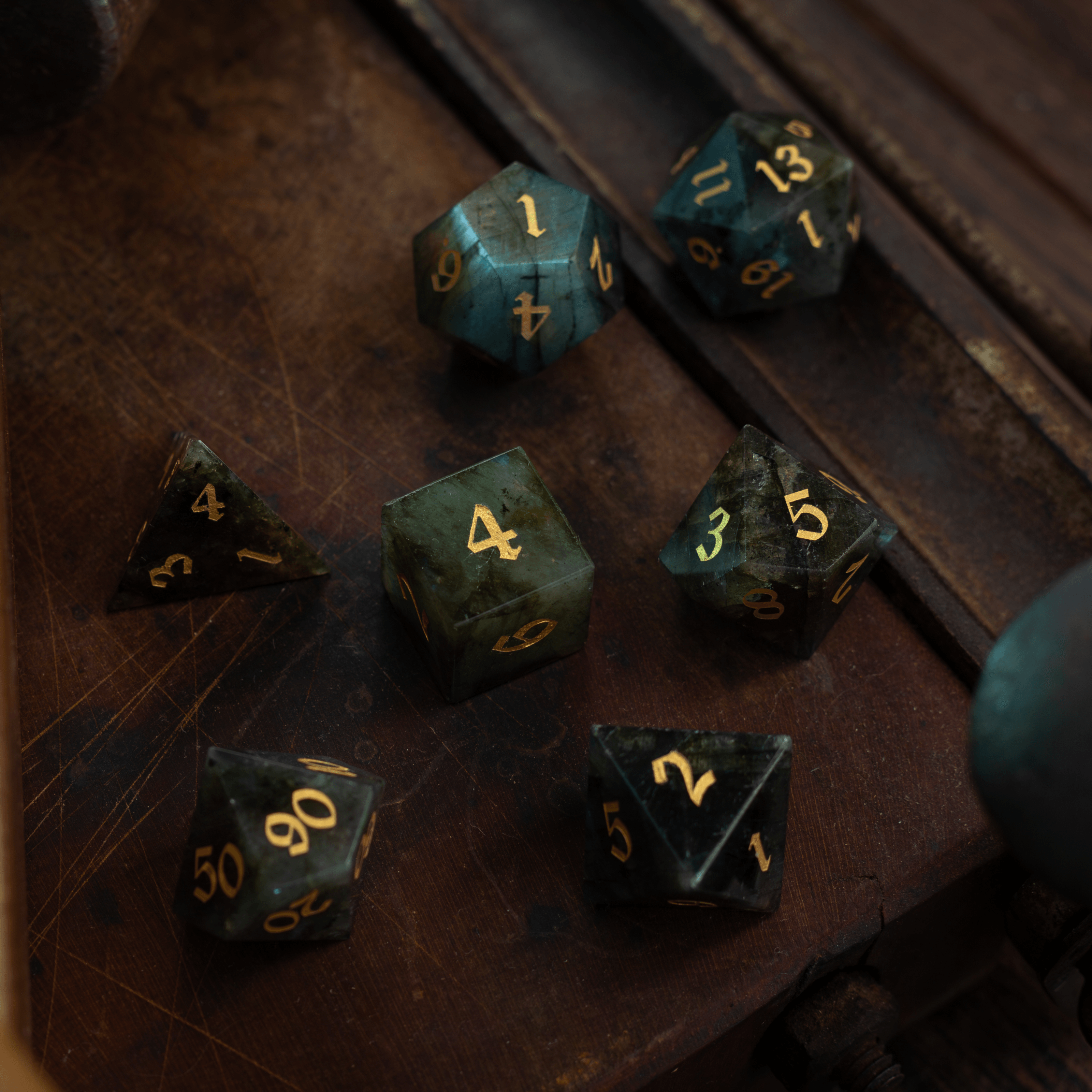
For a celestial character, choose dice that look like they belong beside a well-worn star map. These sets fit the theme:
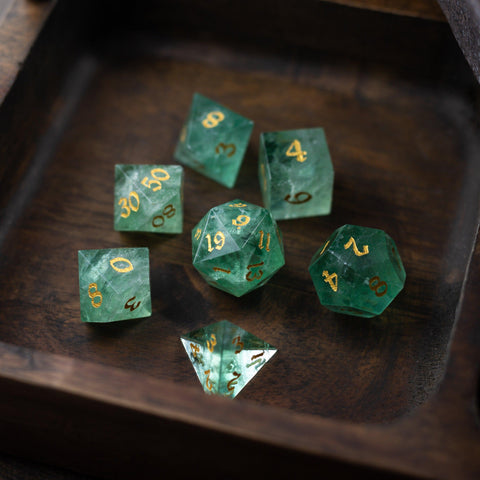
- Celestial Oracle: The Blue Glitter Liquid Core Sharp Edge Resin DND Dice Set has deep blue tones and a moving liquid core for a night-sky feel.
- Stargazer's Light: The Purple Gemstone Amethyst DND Dice Set brings natural purple color to a scholar of the heavens.
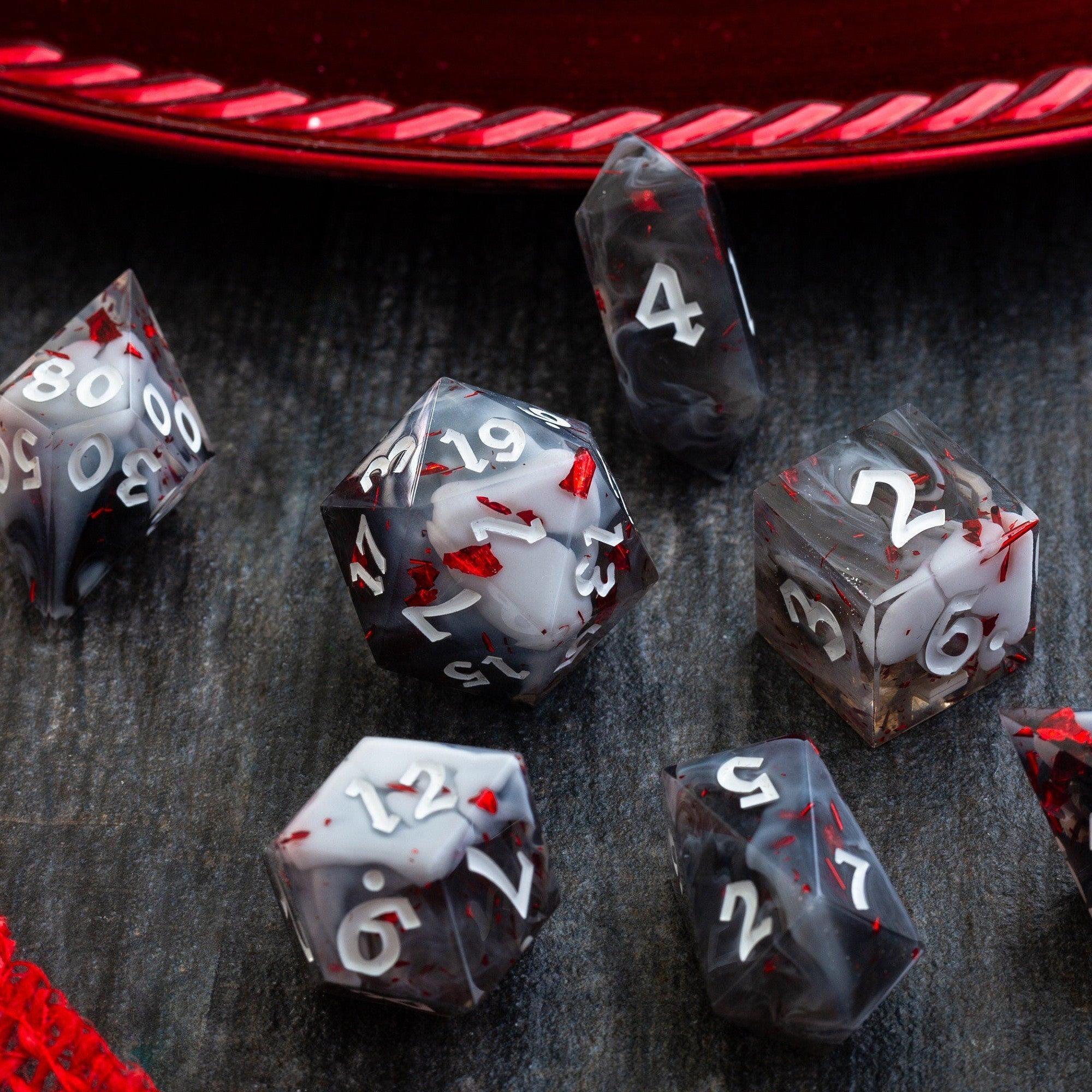
- Constellation Keeper: The Black Inked Lightning Cracked Glass DND Dice Set has a cracked-glass design suited to an unusual celestial oracle.
Prefer another material? Browse gemstone dice, sharp-edge resin dice, liquid core dice, or metal DND dice for a set that feels right in your hands.
Advanced Tips and Tricks
Optimization Strategies
- Feats: War Caster grants advantage on concentration saving throws. Resilient (Constitution) provides proficiency in Constitution saving throws.
- Spell selection: Balance damage, healing, and battlefield control instead of preparing only offensive spells.
- Multiclassing: Cleric offers complementary divine magic, but multiclassing delays access to higher-level Druid spells and subclass features.
- Resource management: Save your free Guiding Bolt casts for meaningful attacks while reserving spell slots for more demanding encounters.
Is the Circle of Stars Druid good for beginners? Yes. Its three constellations have clear purposes, and Star Map provides useful spells without requiring additional preparation choices.
What is the best Starry Form? Dragon is excellent for concentration, Archer provides consistent damage, and Chalice is best when additional healing is needed.
The Circle of Stars Druid works best when you pay attention to what your party needs. Choose your constellation carefully, protect your concentration, and use your celestial magic to support your companions throughout the adventure.
















Leave a comment
This site is protected by hCaptcha and the hCaptcha Privacy Policy and Terms of Service apply.