
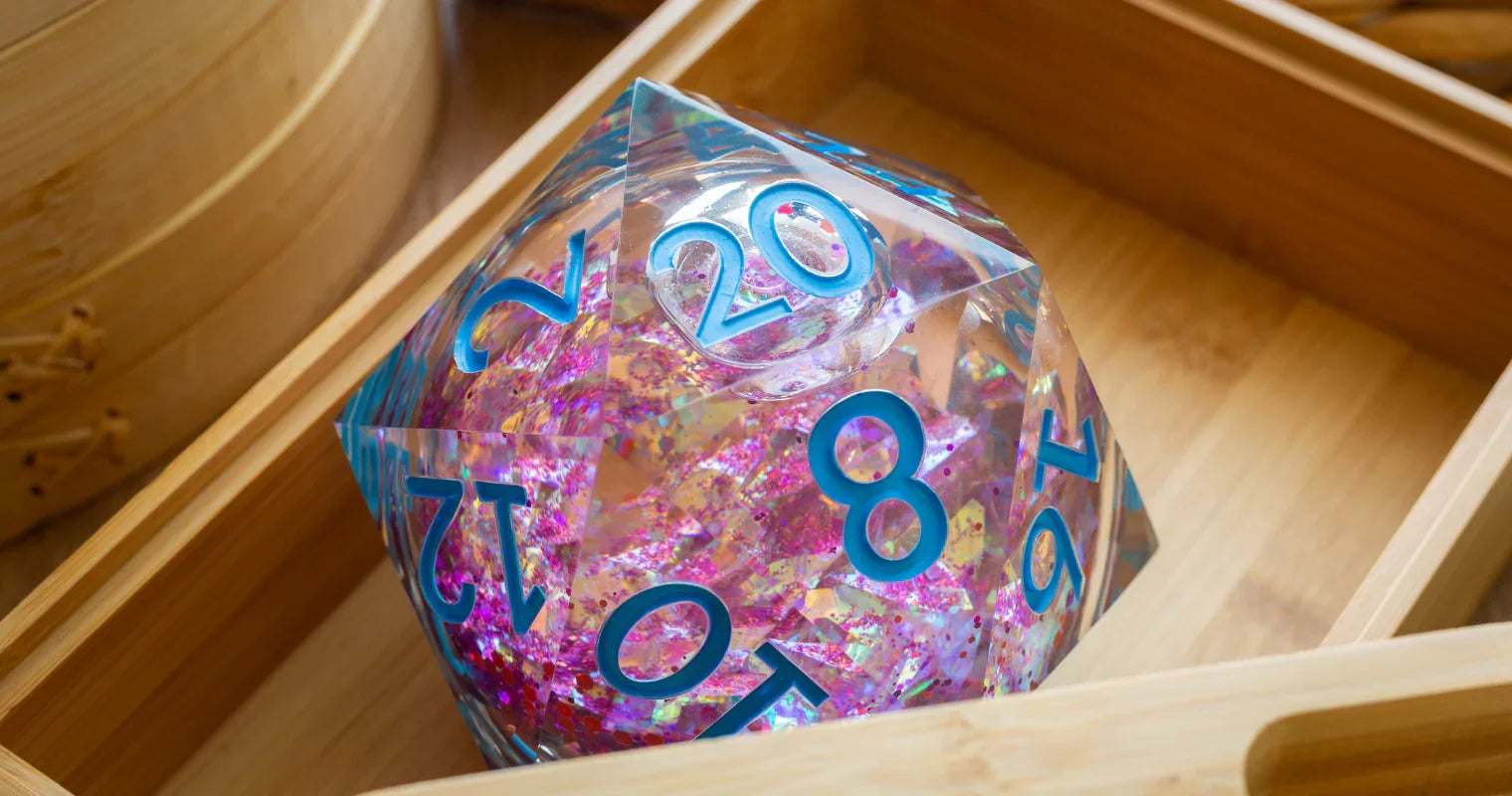
Twenty-Sided Die: How to Choose the Right D20 for Your Game
Few objects are as closely connected to tabletop roleplaying games as the twenty-sided die. In Dungeons & Dragons, players reach for a D20 when attacking an enemy, attempting a difficult task, resisting a dangerous spell, or making a crucial saving throw.
During a single gaming session, you might roll your D20 dozens of times. That makes it one of the most frequently used pieces of D&D dice at the table.
But not every D20 feels the same.
Material, size, weight, edge style, number design, and even the surface beneath the die can change the rolling experience. A lightweight resin D20 feels very different from a heavy metal D20. A gemstone D20 requires different care than a standard resin die. An oversized D20 might be perfect for dramatic rolls but inconvenient at a crowded table.
Choosing the best D20 is not about finding one die that is perfect for everyone. It is about finding a twenty-sided die that fits the way you actually play.
What Is a Twenty-Sided Die?
A twenty-sided die, also written as a twenty sided die or D20, is an icosahedral die with twenty numbered faces. The numbers typically range from 1 to 20.
The D20 plays a central role in D20-based tabletop RPG systems, including Dungeons & Dragons. In many situations, you roll the die, add the appropriate modifier, and compare the total to a target number.
Common uses include:
-
Attack rolls
-
Ability checks
-
Saving throws
-
Death saving throws
-
Initiative rolls in some games or house rules
The exact rules depend on the game, but the basic purpose remains similar. The D20 helps determine whether an attempted action succeeds or fails.
Because players use d20 dice so frequently, small differences in comfort and readability can become noticeable over a long campaign.
Why Choosing the Right D20 Matters
A D20 is more than another die in a standard polyhedral set. For many characters, it is the die they handle most often.
Several practical factors can affect how enjoyable a D20 is to use:
-
Comfort in the hand
-
Number readability
-
Weight
-
Rolling distance
-
Noise
-
Durability
-
Portability
-
Rolling surface requirements
-
Personal style
A player who travels to weekly game nights may appreciate a lightweight resin D20 that fits easily into a compact dice case. Someone who plays at a permanent home table might prefer the substantial feel of metal or gemstone.
Neither choice is automatically better.
The right D20 for D&D depends on where you play, how often you travel, what surface you roll on, and what feels comfortable in your hand.
Start with D20 Material
Material is one of the biggest differences between tabletop RPG dice. It affects weight, appearance, durability, sound, and the type of rolling surface you should use.
Resin D20s
Resin dice are popular for everyday play because they are generally lightweight and comfortable to roll repeatedly.
They can offer:
-
Easy portability
-
A wide range of colors and patterns
-
Comfortable handling
-
Different visual effects
-
Many number and edge styles
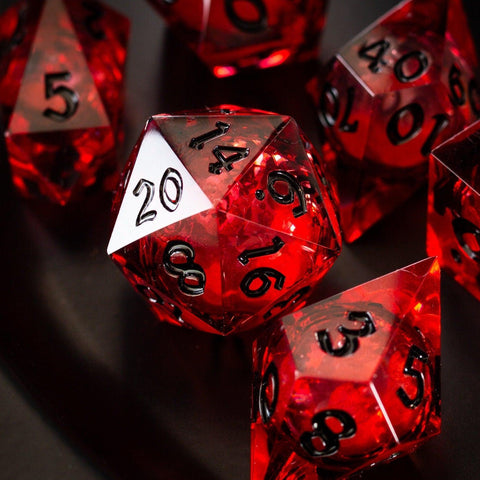
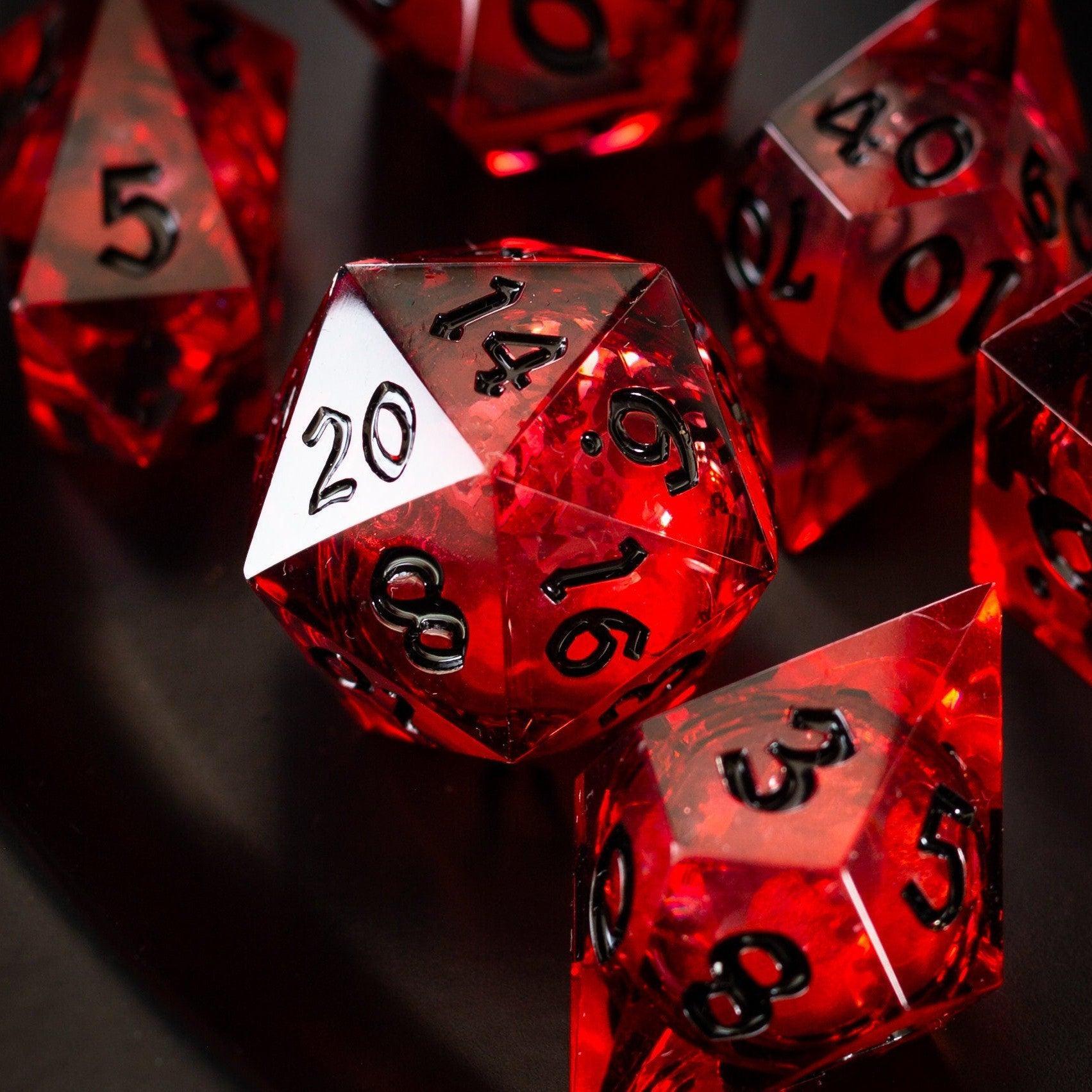
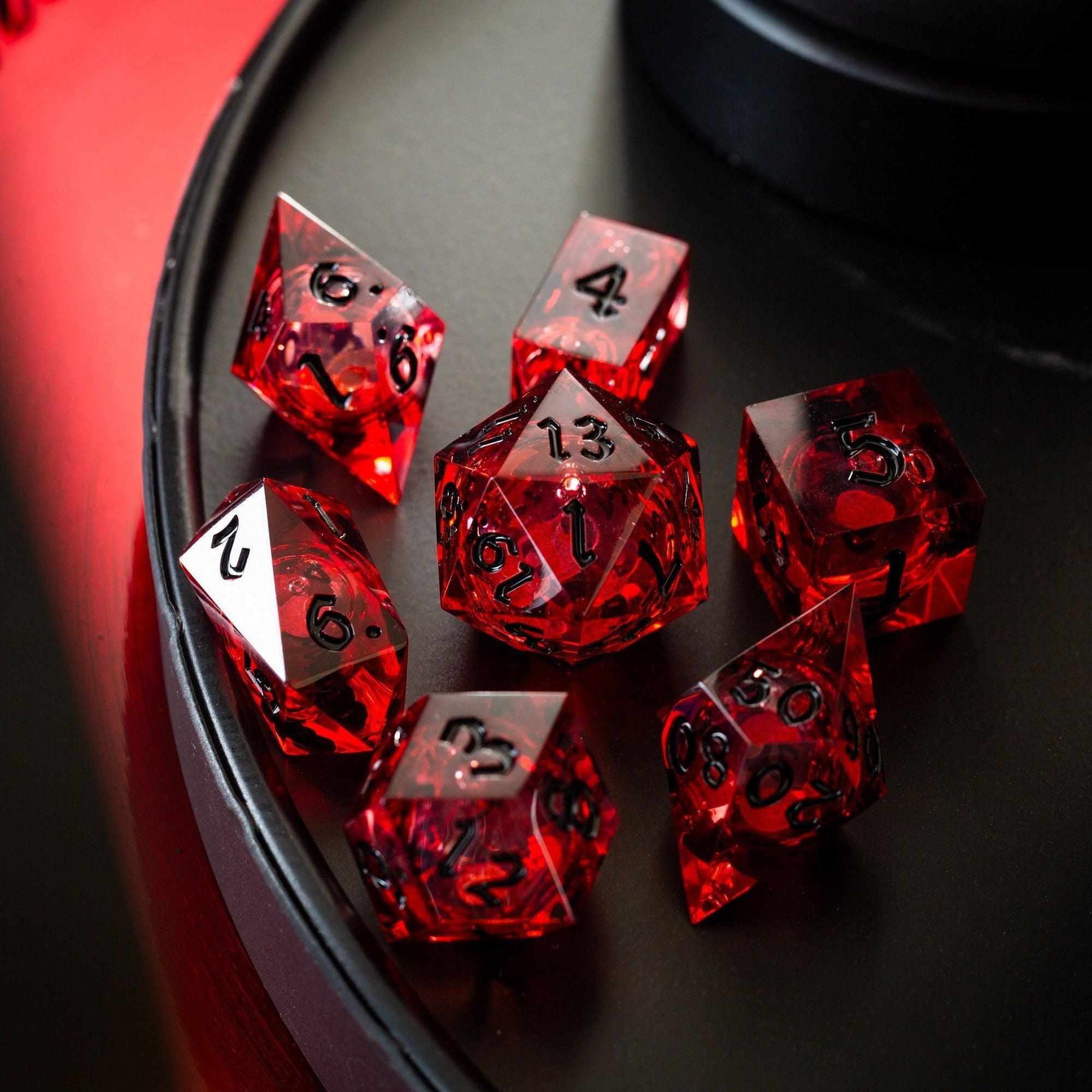
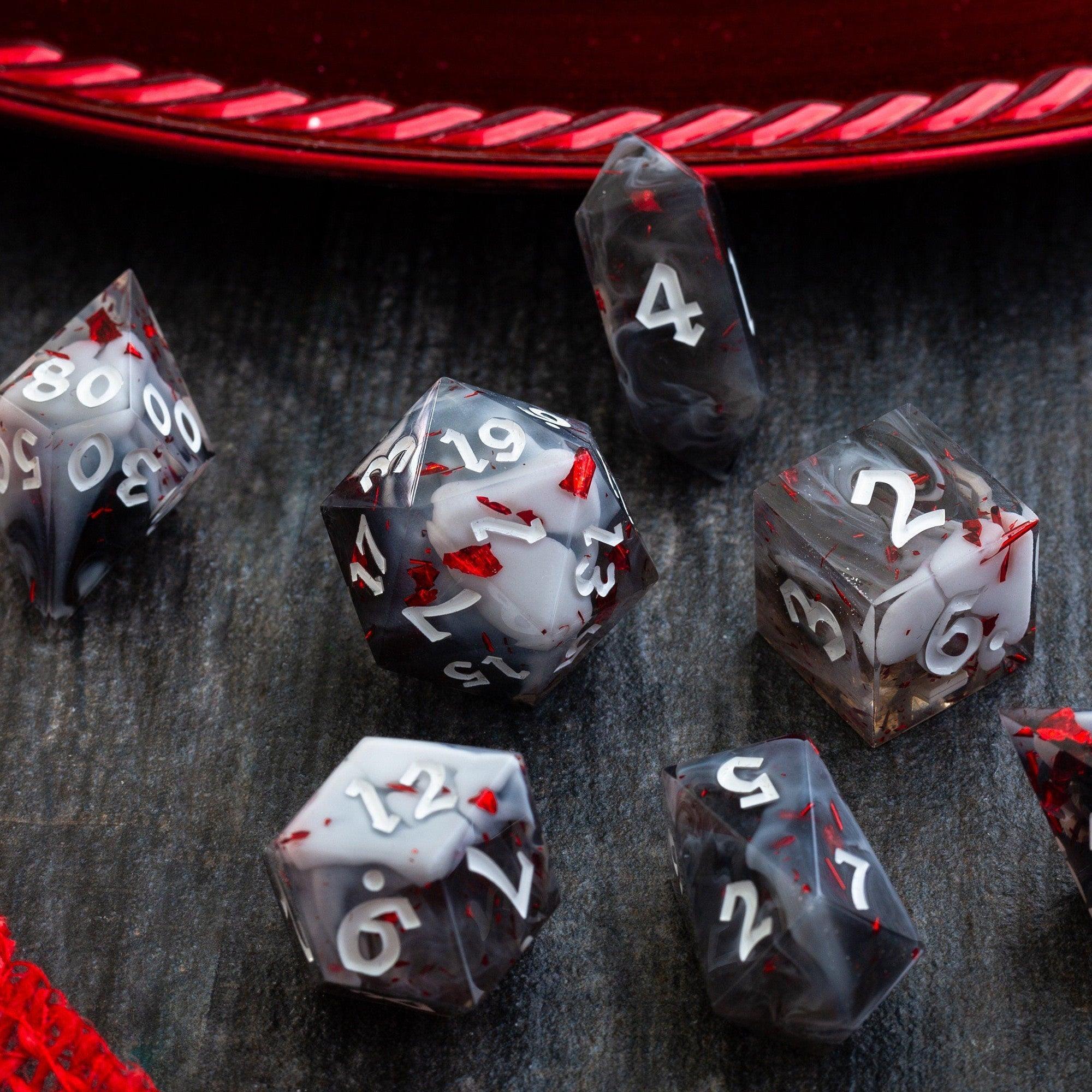
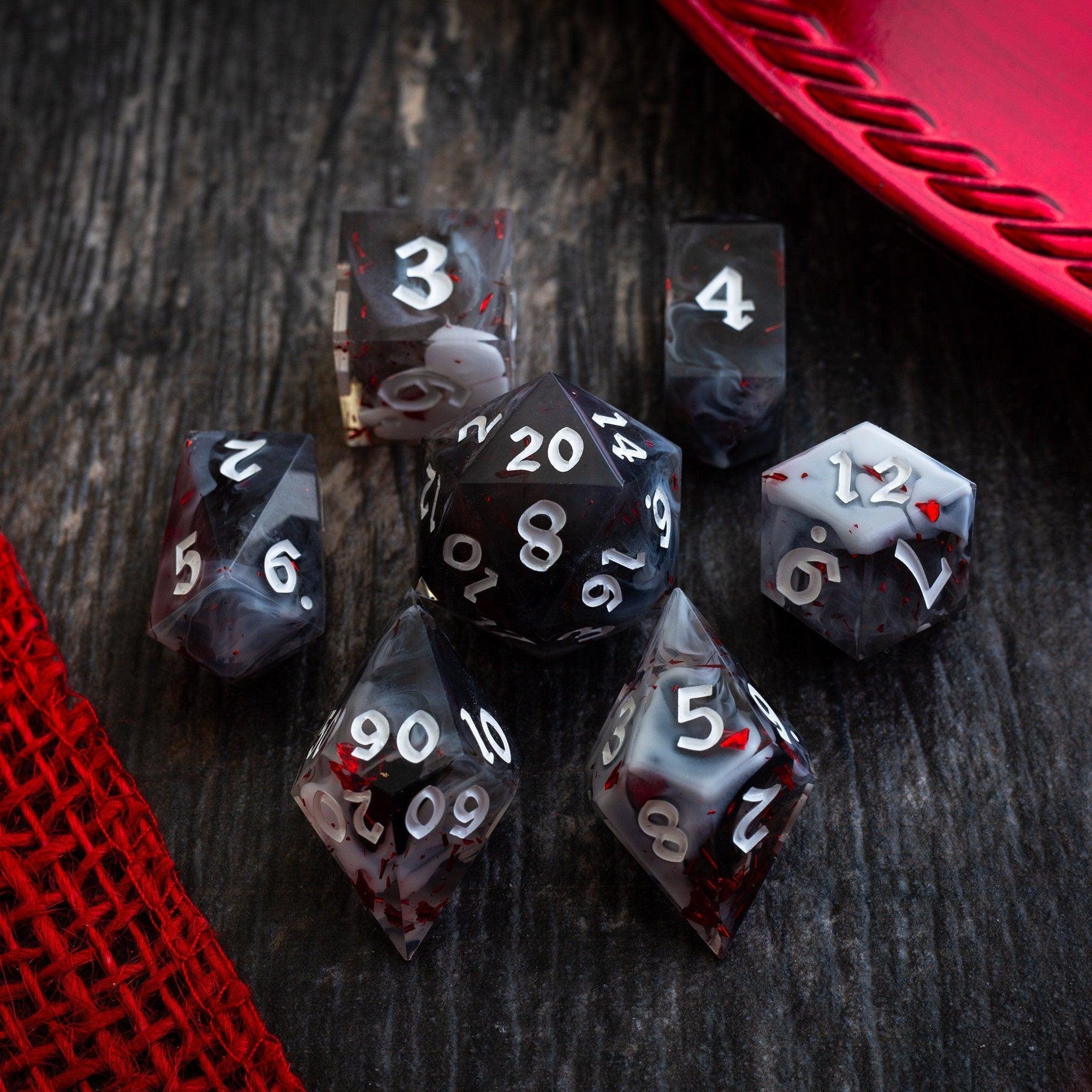
A traditional resin D20 may have slightly rounded edges, while sharp-edge resin dice have a more defined geometric shape. Sharp-edge designs can also display internal decorations and layered effects clearly.
Liquid core dice add another visual element. Designs such as blue and green glitter liquid core styles contain internal movement that shifts when the die is handled or rolled.
The main practical consideration is readability. Detailed patterns, glitter, and internal effects can look impressive, but the numbers should still be easy to identify during play.
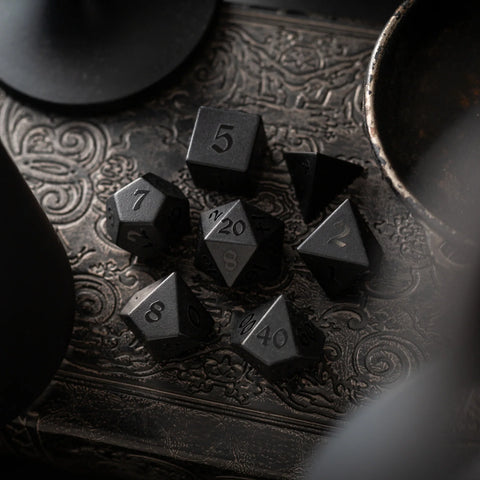
Metal D20s
A metal D20 provides a noticeably heavier rolling experience.
For some players, that extra weight makes each roll feel deliberate and substantial. Metal dice also have a strong physical presence in the hand.
However, that weight comes with practical considerations.
Metal dice can be louder than resin dice and may dent, scratch, or mark delicate tables. They can also knock over miniatures or terrain if rolled aggressively across a crowded battlefield.
A dice tray is especially useful when rolling metal DnD dice. It creates a controlled rolling area and helps protect the table beneath the die.
Players who enjoy weight may prefer metal. Players who travel with lightweight gear or play on delicate surfaces may find resin more convenient.
Gemstone D20s
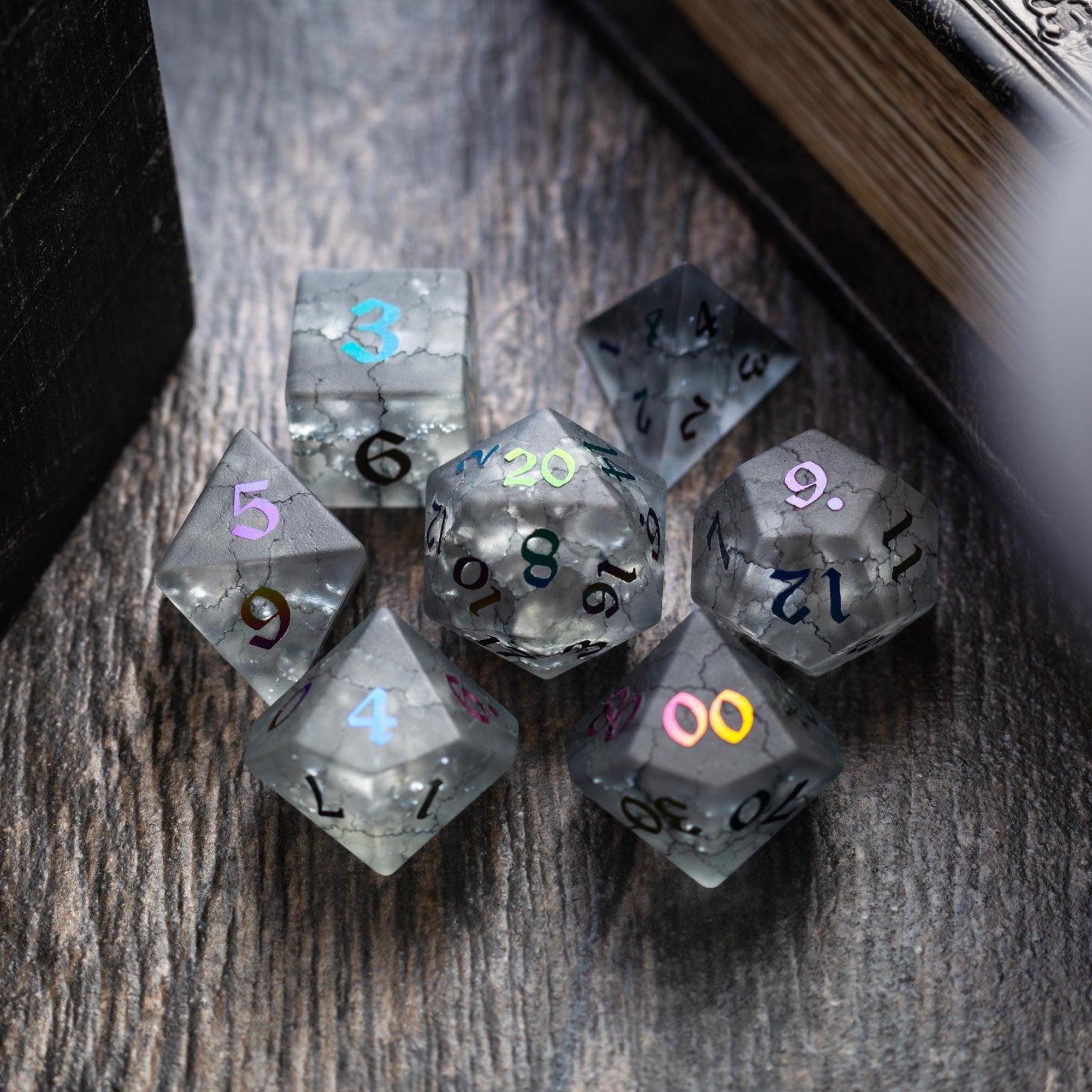
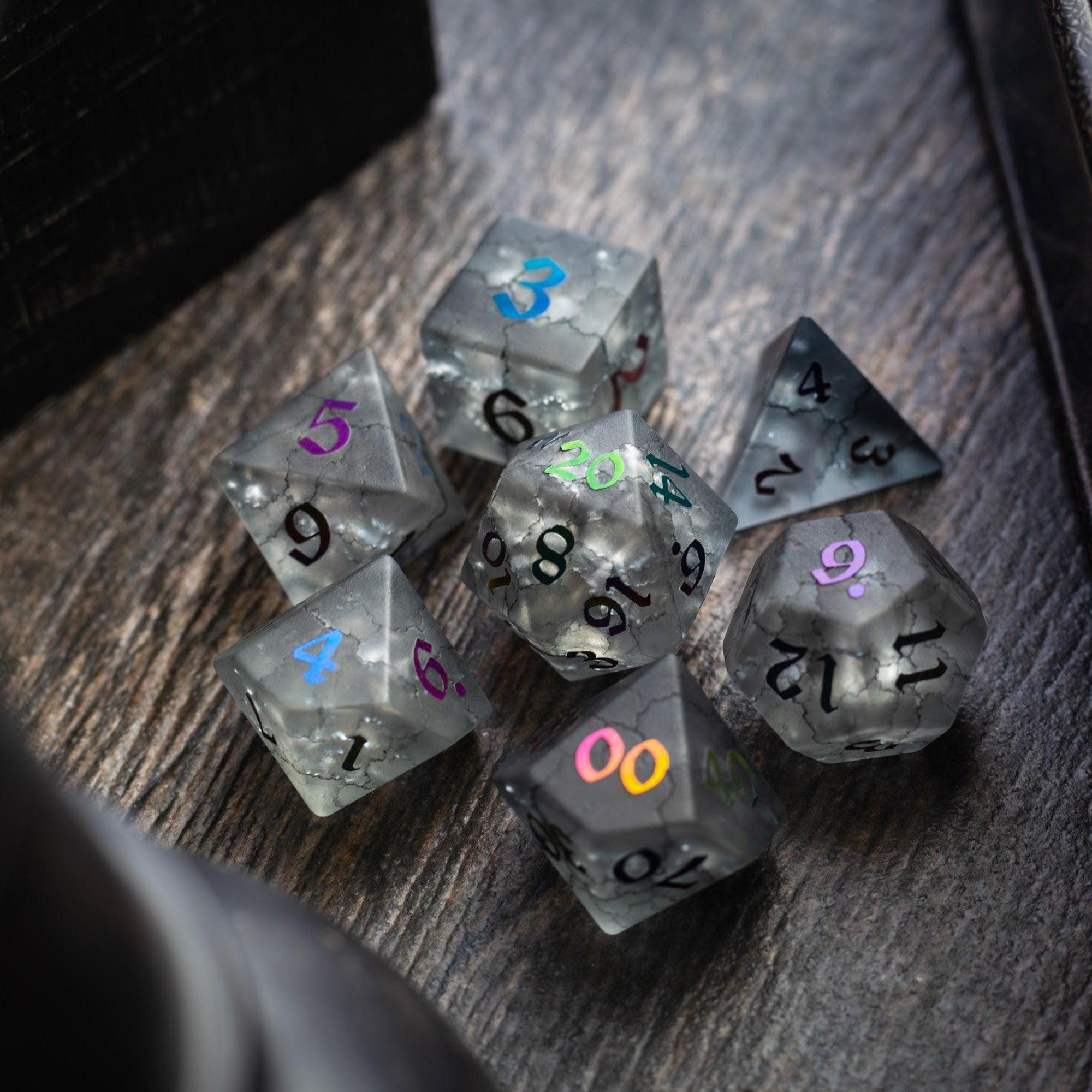
Gemstone dice are valued for their distinctive appearance and material character. Natural variations mean that two dice made from similar materials may still have different patterns, shades, or inclusions.
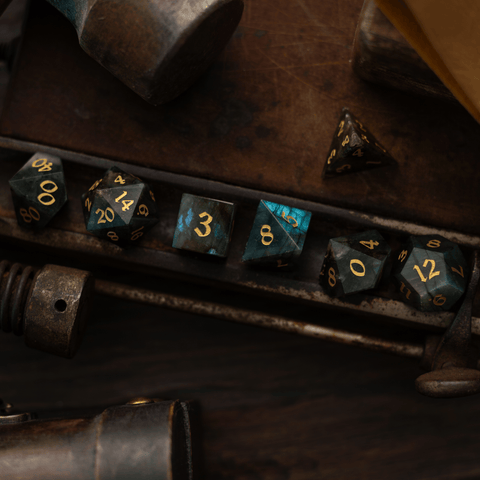
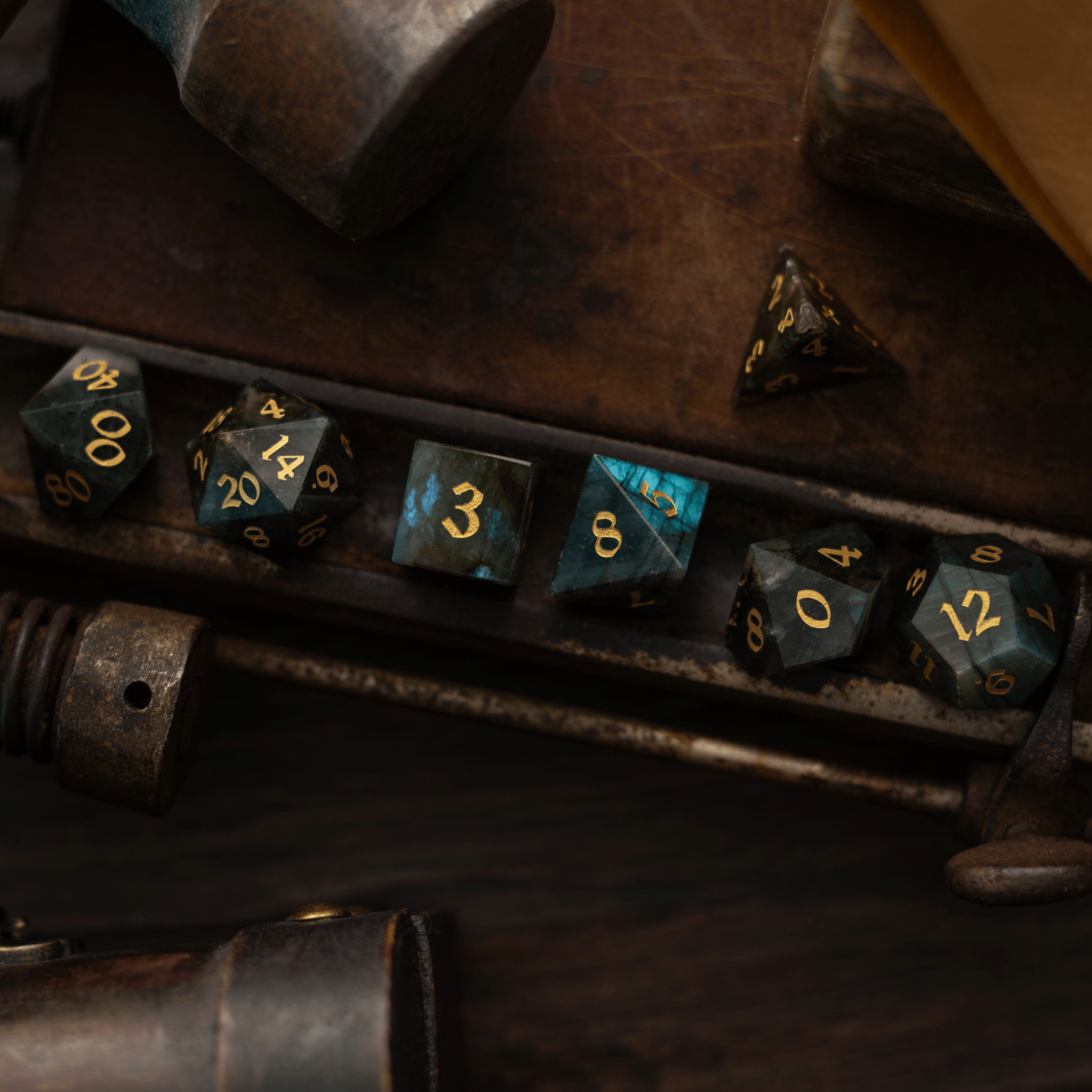
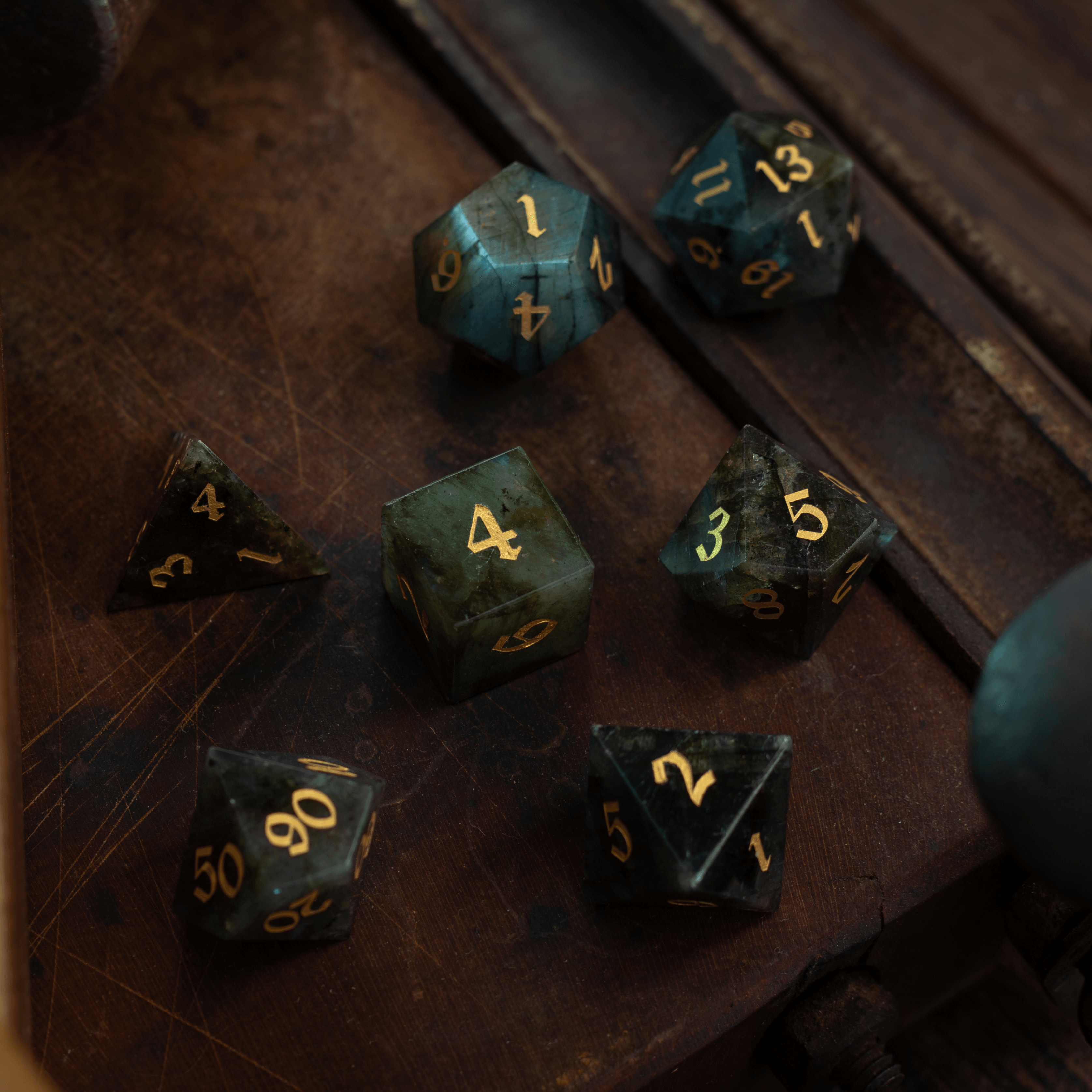
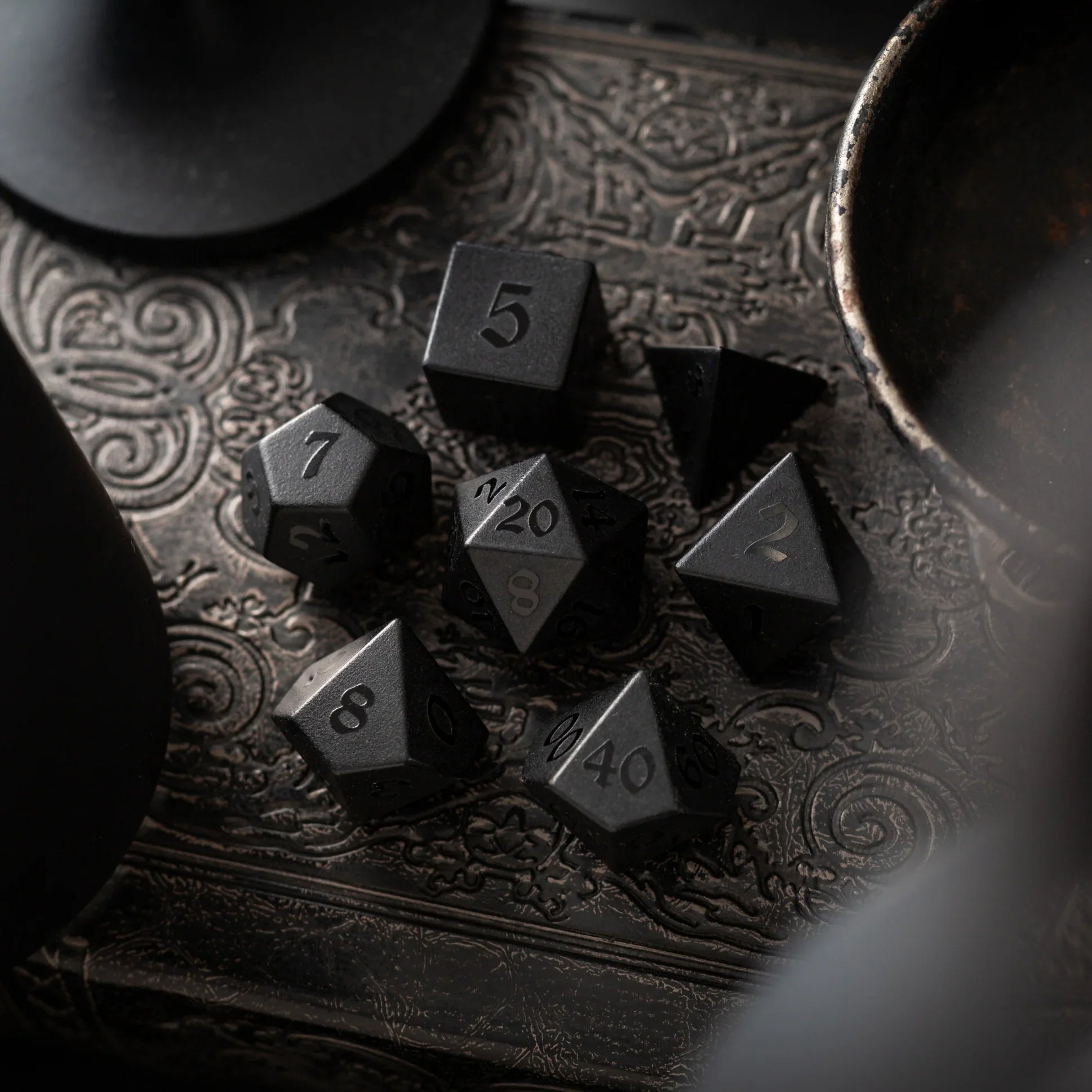
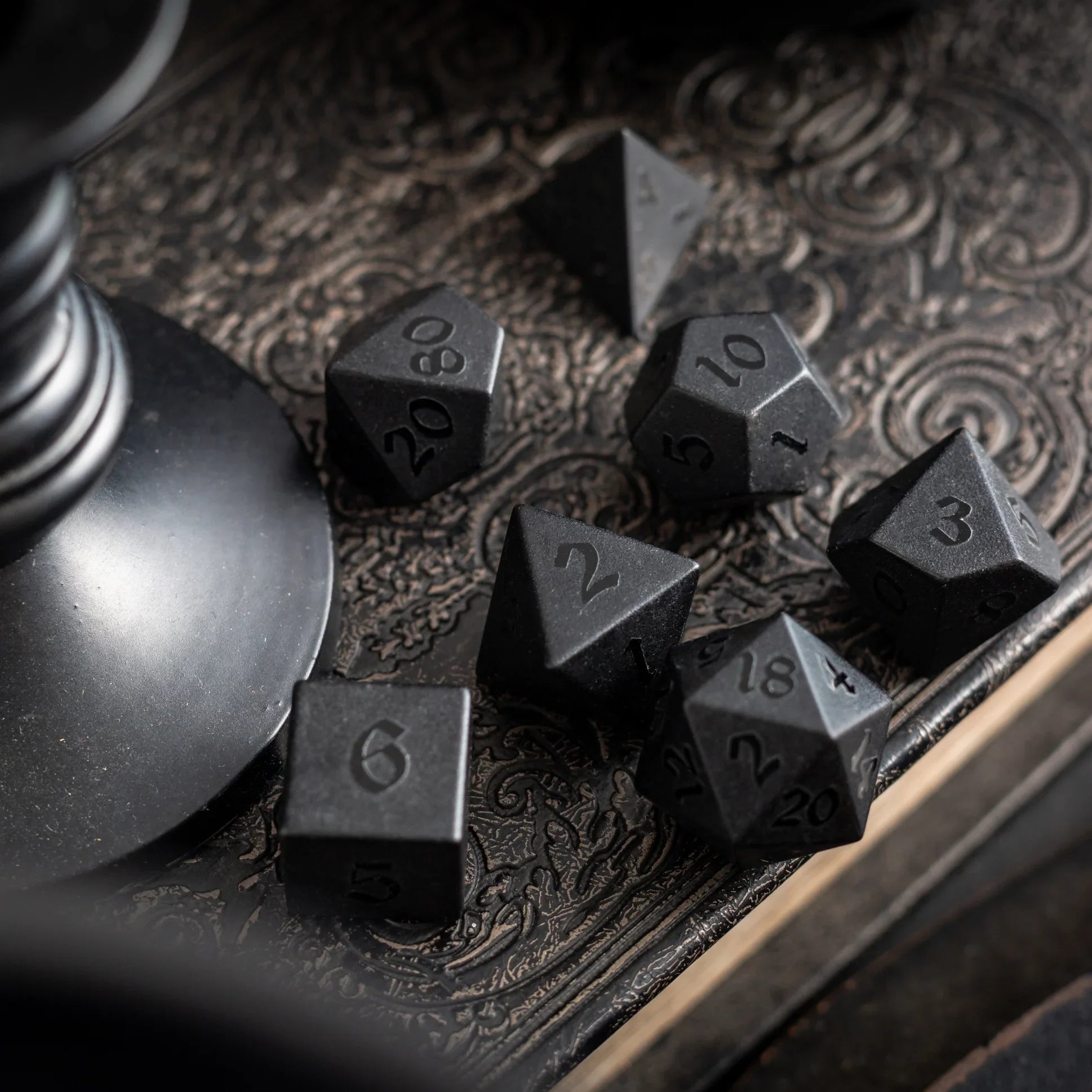
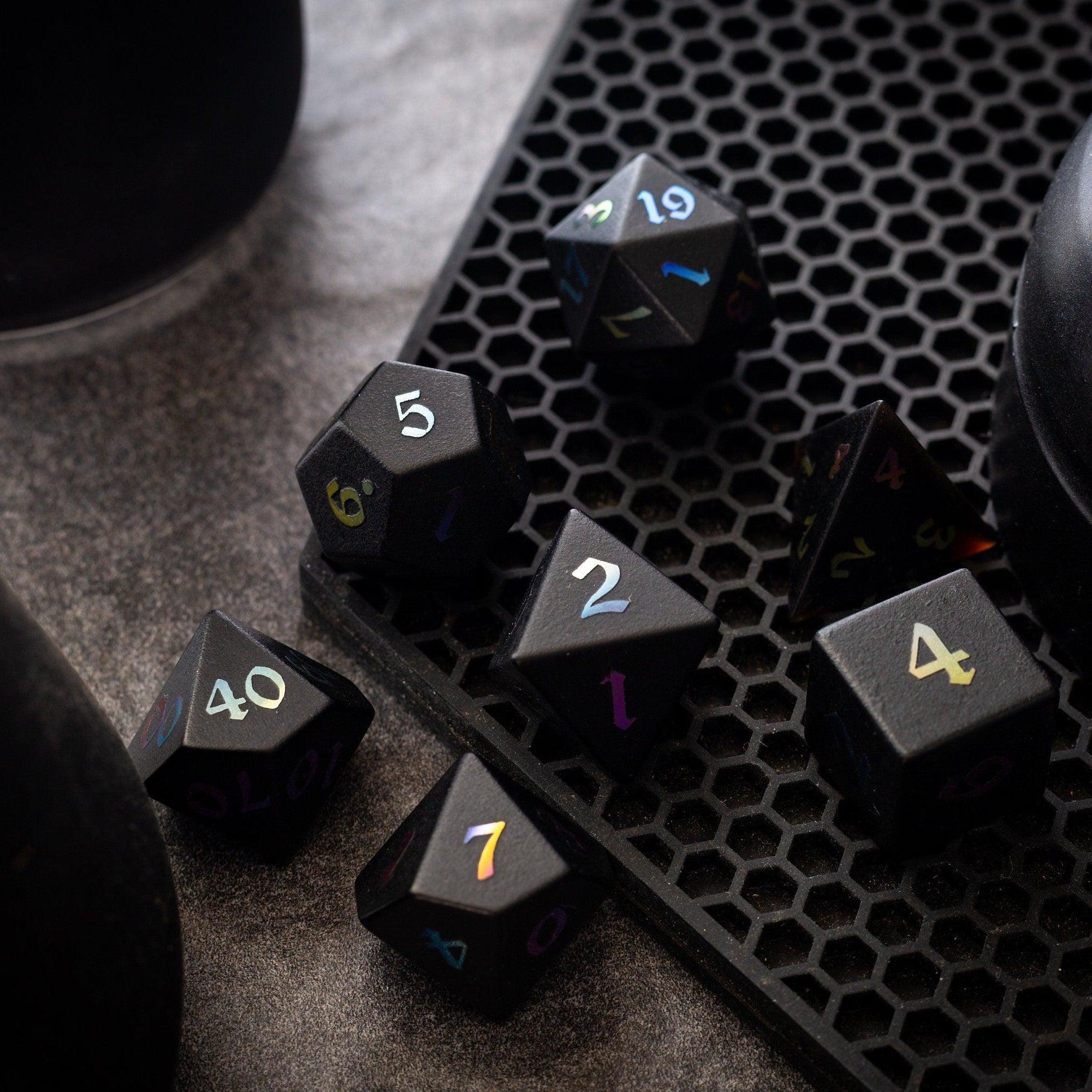
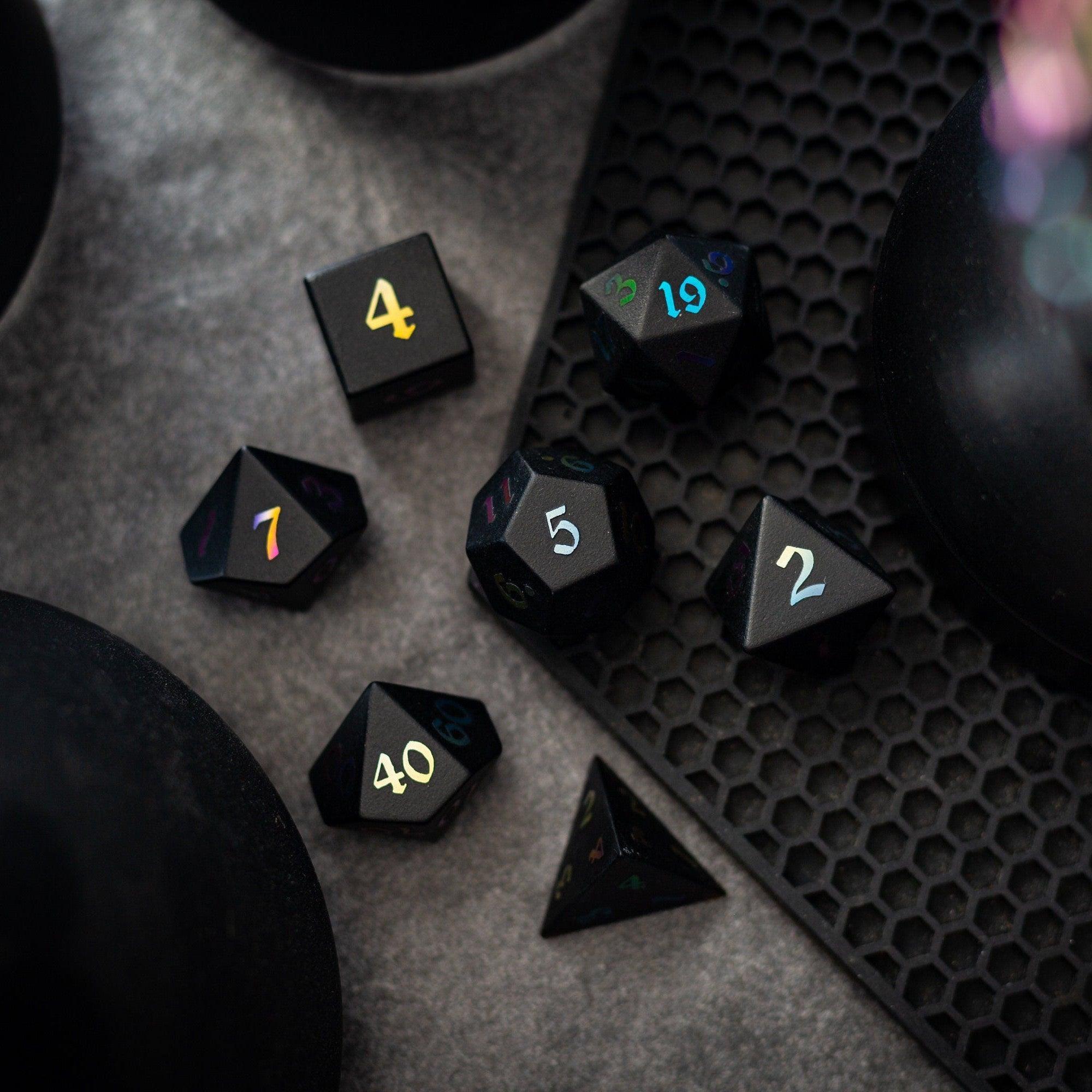
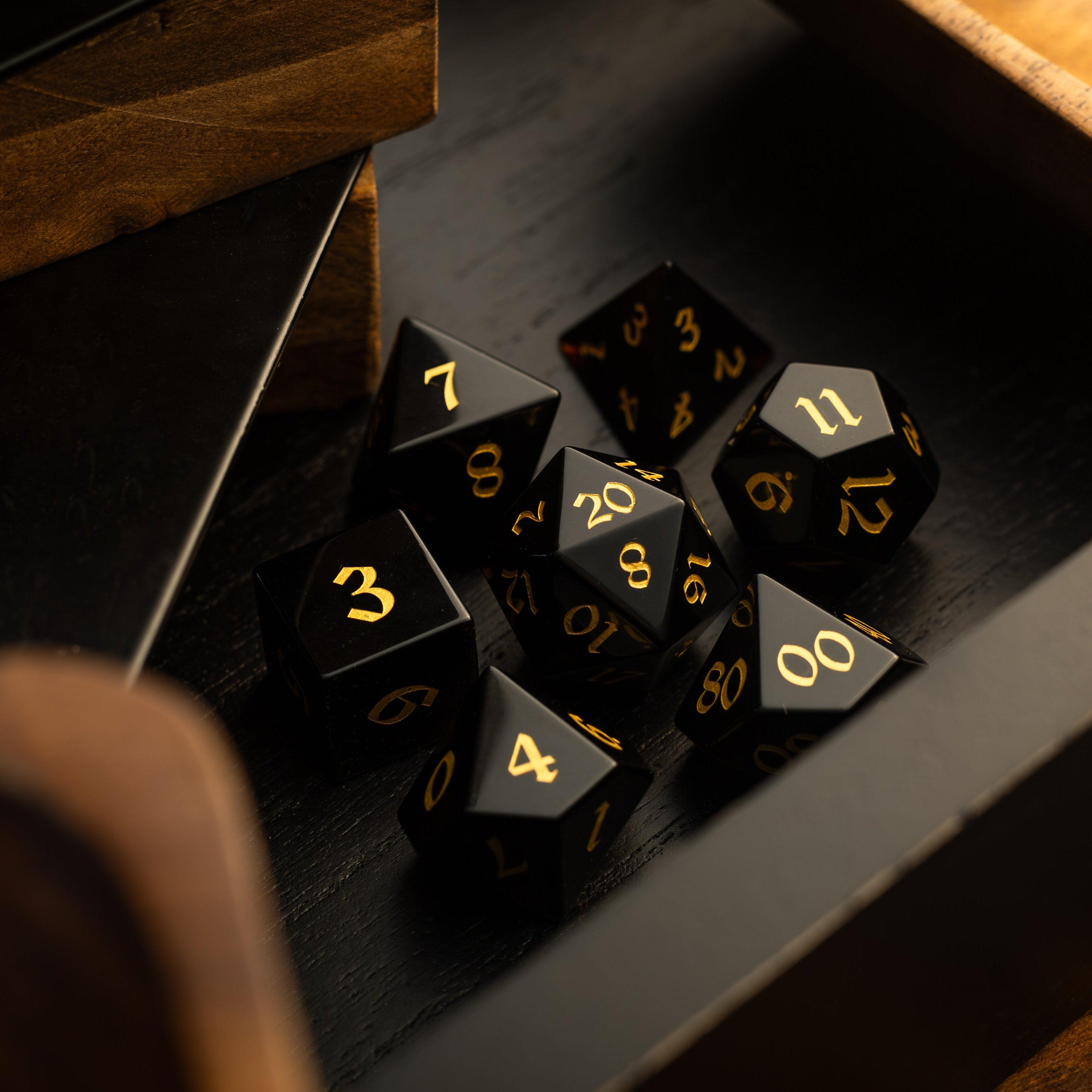
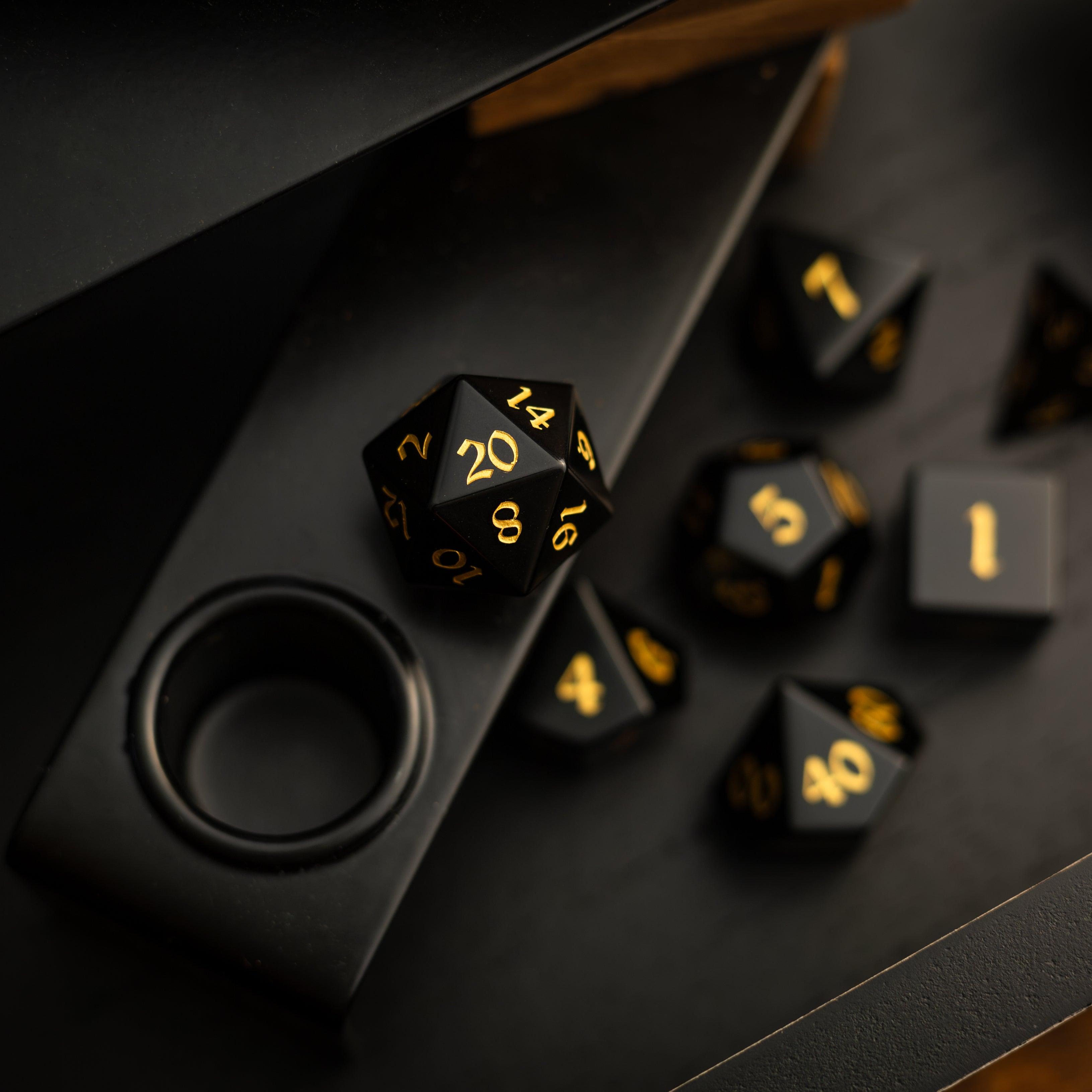
Materials such as amethyst, black obsidian, labradorite, yellow tiger's eye, and cat's eye styles can each create a different look and feel.
A gemstone D20 is generally denser than a standard resin die and should be handled with more care. Stone can chip if it strikes another hard object or lands repeatedly on an unforgiving surface.
For that reason, gemstone dice are best used with a padded dice tray or another protective rolling surface. Separate storage can also help prevent individual dice from striking one another during transportation.
Glass D20s
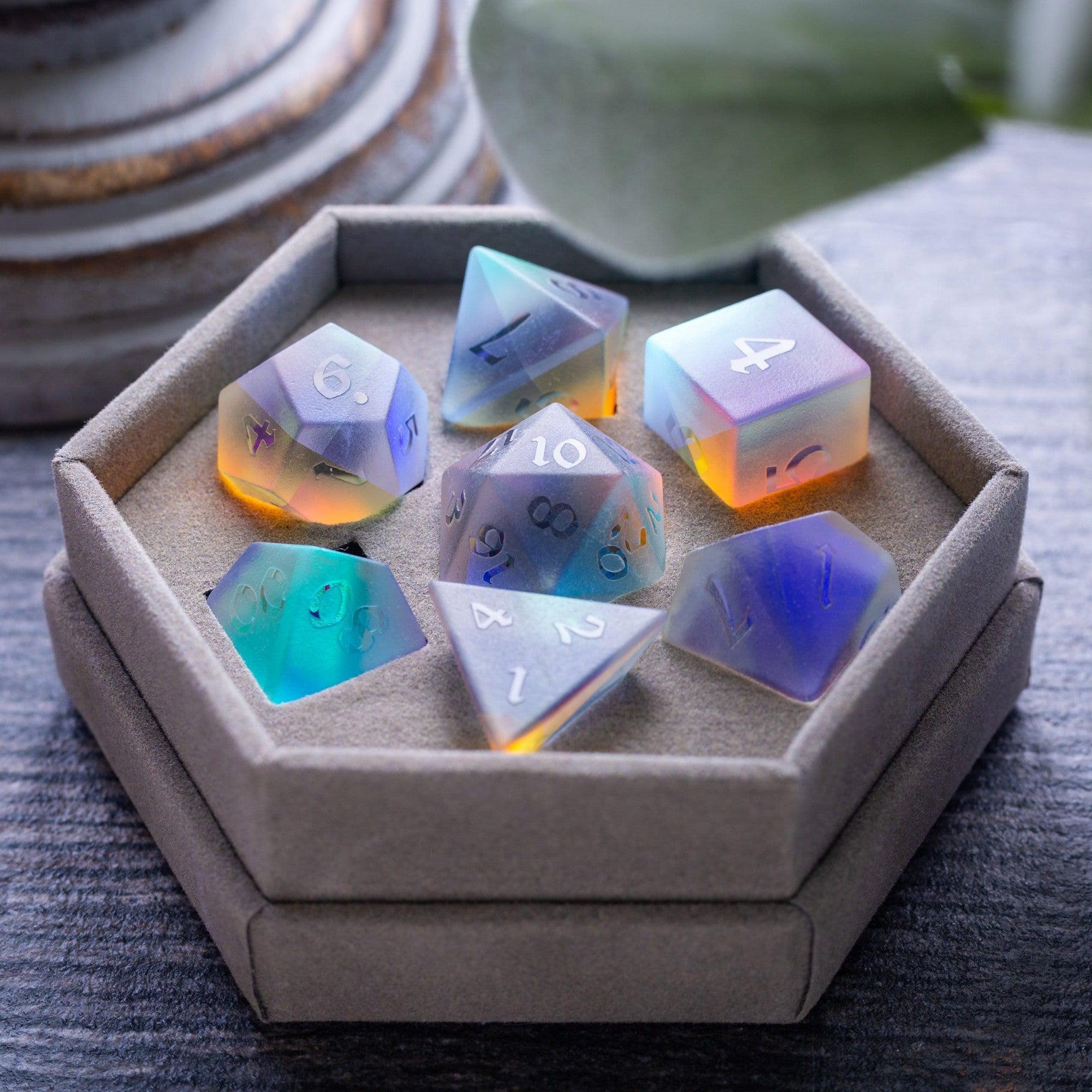
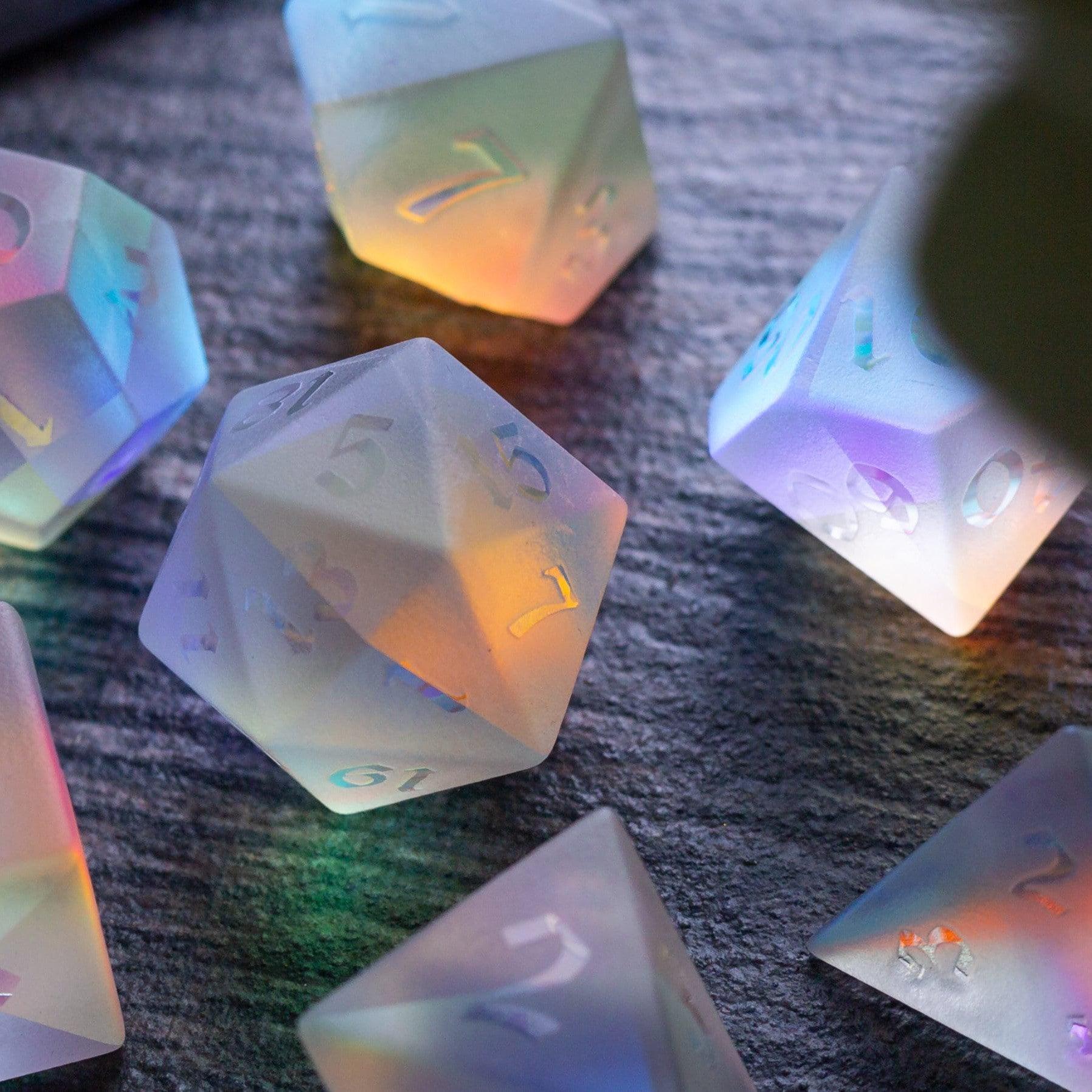
Glass dice can feature crisp edges, transparency, rich colors, and unusual visual effects. Their solid feel also makes them distinct from lightweight resin.
Like gemstone dice, glass D20s deserve careful handling. Repeated impacts against hard surfaces can increase the risk of chips or damage.
A padded dice tray gives glass dice a safer place to roll while also protecting the table. Careful storage is equally important, especially when transporting several premium dice together.
Standard D20 vs. Oversized D20
Size can make a major difference in how a twenty-sided die fits into your gaming setup.
A standard-sized D20 is usually the most practical option for everyday play. It is easy to carry, fits most dice cases, and works with many common dice trays and towers.
Standard D20s are often:
-
Easy to transport
-
Comfortable for frequent rolling
-
Compatible with most accessories
-
Practical on crowded gaming tables
An oversized D20 offers a different experience.
Larger numbers may be easier to see from across the table, and the die itself can make an important roll feel more dramatic. Some players also find larger dice easier to pick up and handle.
However, an oversized D20 requires more space. It may travel farther when rolled and may not fit through every dice tower. Carrying several oversized dice can also take up considerably more room.
An oversized D20 works especially well as a special-purpose die for major attacks, saving throws, or other memorable moments. For frequent everyday rolls, many players still prefer a standard size.
Pay Attention to Number Readability
A beautiful die is not very useful if you cannot quickly read the result.
Readability should be one of the first things you consider when choosing a D20 for D&D. During combat, players and Dungeon Masters may need to read many rolls quickly. Constantly picking up a die to inspect the number can slow the game.
Look at:
-
Number size
-
Font style
-
Contrast
-
Decorative patterns
-
Transparency
-
Lighting conditions
High contrast between the numbers and the body of the die usually makes results easier to identify. Decorative fonts can add character, but extremely complex designs may be harder to read from a distance.
Think about your normal gaming environment. A translucent die that looks clear in bright daylight may be more difficult to read in a dim gaming room.
The best D20 for regular use should allow you to recognize most results quickly from your normal seated position.
How Weight Changes the Rolling Experience
Different materials create different rolling sensations.
A resin D20 is usually lightweight and easy to roll repeatedly. Metal is much heavier. Gemstone and glass provide their own dense, solid feel.
Heavier dice often require more controlled rolls. Throwing a metal or gemstone D20 across a crowded battle map can knock into miniatures, terrain, drinks, or other gaming accessories.
A heavier die may also benefit from:
-
A larger rolling area
-
A padded dice tray
-
More careful handling
-
Extra protection during transportation
Lighter dice are often easier to carry and may work better in compact gaming spaces.
Weight does not automatically make a die better, fairer, or luckier. It simply changes the physical experience of rolling.
Rounded Edges vs. Sharp Edges
Edge style is another feature worth considering.
Rounded D20s tend to have a familiar appearance and may roll more freely across a surface. They are common choices for casual everyday play.
Sharp-edge D20s have crisp, clearly defined faces and a more geometric appearance. This style is especially common among detailed resin dice because the clear edges can showcase internal designs.
Rounded dice may:
-
Feel familiar to many players
-
Roll freely
-
Work well for frequent use
Sharp-edge dice may:
-
Have a crisp geometric appearance
-
Display internal designs clearly
-
Benefit from careful storage
Neither edge style is automatically more accurate simply because of its appearance. For most players, the choice comes down to personal preference, material, and manufacturing quality.
Choose the Right Rolling Surface
The surface beneath your D20 matters, especially when using heavier or more delicate materials.
Resin dice can generally handle many common gaming surfaces, although a dice tray still helps keep rolls controlled.
Metal dice should not be rolled directly onto delicate wooden furniture. Their weight can leave marks or dents.
Gemstone and glass dice should be protected from hard impacts. A padded tray helps reduce contact with hard surfaces and keeps the die from crashing into other objects.
Useful rolling accessories include:
-
Dice trays
-
Padded rolling surfaces
-
Dice towers designed for the die's size and weight
Before using a dice tower, check whether it can comfortably accommodate your die. An oversized D20 or particularly heavy die may not work with every tower.
Twenty-Sided Die Comparison Table
| D20 Type | Rolling Feel | Best For | Main Consideration |
|---|---|---|---|
| Resin D20 | Light and comfortable | Everyday play and travel | Quality and readability vary by design |
| Sharp-Edge Resin D20 | Crisp and defined | Players who enjoy detailed designs | Store carefully to protect edges |
| Liquid Core D20 | Light with internal movement | Visual collectors and character-themed sets | Check number readability |
| Metal D20 | Heavy and substantial | Players who prefer weight | Use a dice tray |
| Gemstone D20 | Dense and distinctive | Collectors and premium game setups | Protect against chips |
| Glass D20 | Solid and visually striking | Careful tabletop use | Requires gentle handling |
| Oversized D20 | Large and dramatic | Important rolls and improved visibility | Needs more rolling space |
Match Your D20 to the Way You Play
There is no single best D20 for every player. Your gaming habits can help narrow the choices.
The Frequent Roller
If your character makes many attacks and ability checks, comfort and readability may matter most. A lightweight resin D20 with clear numbers can be easy to use repeatedly throughout a long session.
The Traveling Player
Players who carry their gaming supplies between homes, game stores, conventions, or other locations may prioritize portability and durability.
A compact resin D20 is easier to transport than several heavy metal or oversized dice. If you prefer gemstone or glass, protective storage becomes more important.
The Collector
Collectors may care more about unusual materials, craftsmanship, visual effects, and natural variations.
An amethyst, labradorite, obsidian, or tiger's eye D20 can have characteristics that vary from piece to piece. Glass and liquid core designs can also provide unusual visual effects.
The Dramatic Roller
Some players enjoy having a special die for major moments.
A metal D20 or oversized D20 can give an important saving throw or final attack a different physical presence. Just make sure you have enough space to roll it safely.
The Dungeon Master
Dungeon Masters often need speed and readability.
Keeping several clear, easy-to-read d20 dice available can make encounters with multiple creatures easier to manage. A DM may also prefer dice that can be read quickly without interrupting the flow of combat.
You do not need to use the same D20 for every roll. Many players keep one reliable everyday die and another for special moments.
How to Check a D20 Before Choosing It
Before choosing a new D20, ask yourself:
-
Can I read the numbers quickly?
-
Is the size comfortable in my hand?
-
Do I like the weight?
-
Will it work with my current dice tray or tower?
-
Does the material require special care?
-
Is it easy to transport?
-
Will I use it for everyday rolls or special moments?
-
Does the design fit my character or personal style?
These practical questions are often more useful than choosing the most visually dramatic option.
A great-looking die that is difficult to read or inconvenient to use may spend more time in a display case than on the gaming table.
Caring for Your D20
Good care depends on the material.
For premium tabletop RPG dice:
-
Store delicate dice separately when necessary.
-
Avoid rolling gemstone or glass dice on hard surfaces.
-
Use a tray when rolling heavy metal dice.
-
Keep dice away from extreme heat when appropriate for the material.
-
Clean dice gently using methods suitable for their material.
-
Avoid throwing heavy dice near miniatures, screens, or fragile terrain.
A padded tray is one of the simplest ways to protect both your dice and your gaming surface.
Common Mistakes When Choosing a D20
One common mistake is choosing appearance while ignoring readability. A detailed design may look excellent up close but become frustrating during actual play if the numbers disappear into the background.
Other mistakes include:
-
Buying an oversized D20 without enough rolling space
-
Rolling metal dice directly on delicate furniture
-
Treating gemstone or glass dice like inexpensive plastic dice
-
Assuming heavier automatically means better
-
Choosing decorative numbers that are difficult to read
-
Ignoring storage and transportation needs
Think about your actual gaming environment before choosing. A die that works perfectly at a large home table may be inconvenient in a crowded game store or small apartment.
Choose the D20 You Will Enjoy Rolling
The best twenty-sided die is the one that works well for you.
Some players prefer the lightweight convenience of resin. Others enjoy the substantial feel of a metal D20, the natural variation of a gemstone D20, the crisp appearance of glass, or the dramatic presence of an oversized D20.
Your choice should balance:
-
Readability
-
Comfort
-
Material
-
Weight
-
Durability
-
Rolling space
-
Care requirements
-
Personal style
The D20 is one of the most frequently used tools in Dungeons & Dragons and many other tabletop RPGs. It may decide whether your sword finds its target, your character resists a dangerous spell, or your desperate plan succeeds against impossible odds.
Choose a D20 that feels comfortable in your hand, works with your gaming setup, and is easy to read when the result matters. With the right choice, your twenty-sided die can become a reliable companion through countless attacks, saves, checks, and memorable campaign moments.

Leave a comment
This site is protected by hCaptcha and the hCaptcha Privacy Policy and Terms of Service apply.