
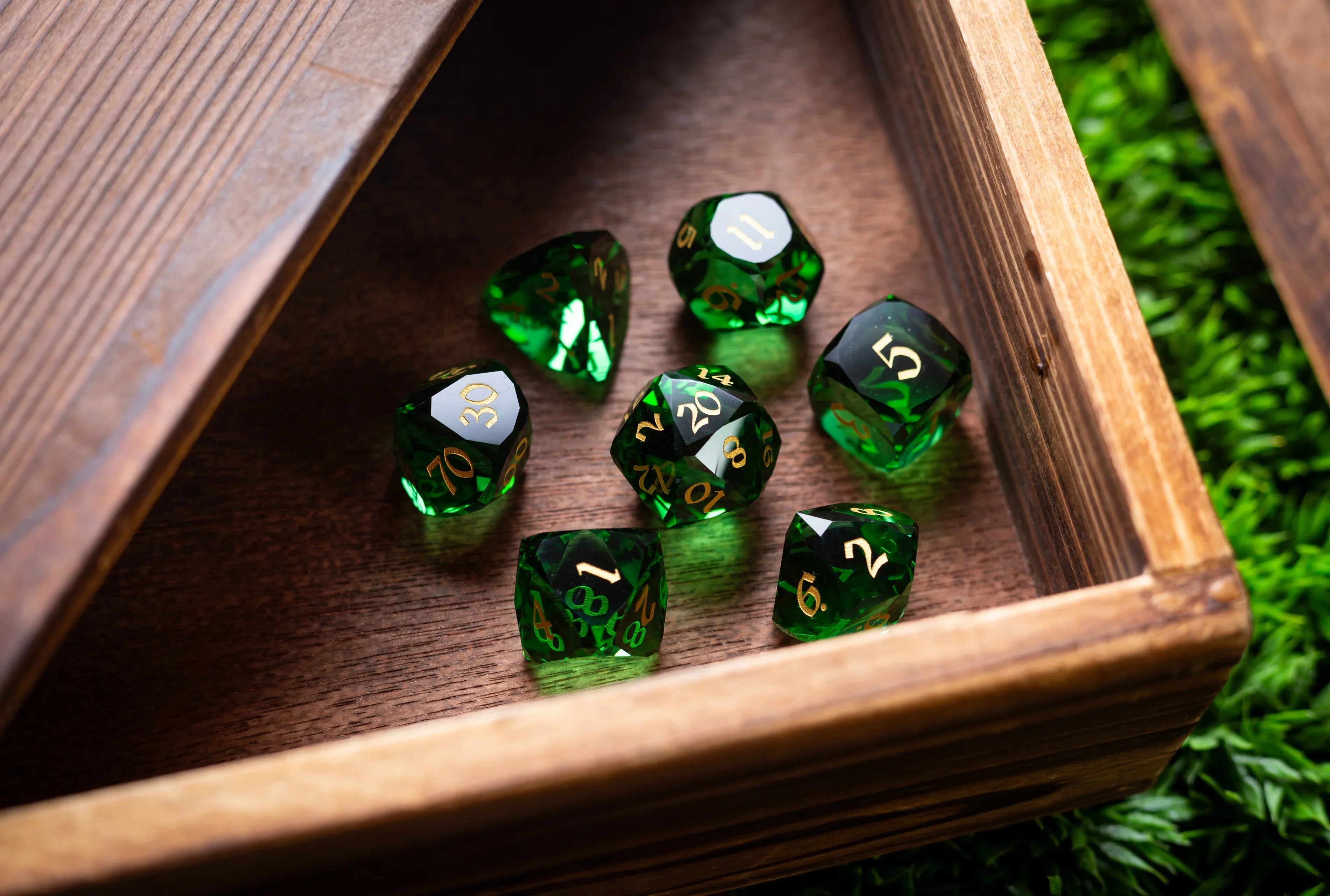
Everything You Need to Know About 7 Piece Dice Sets
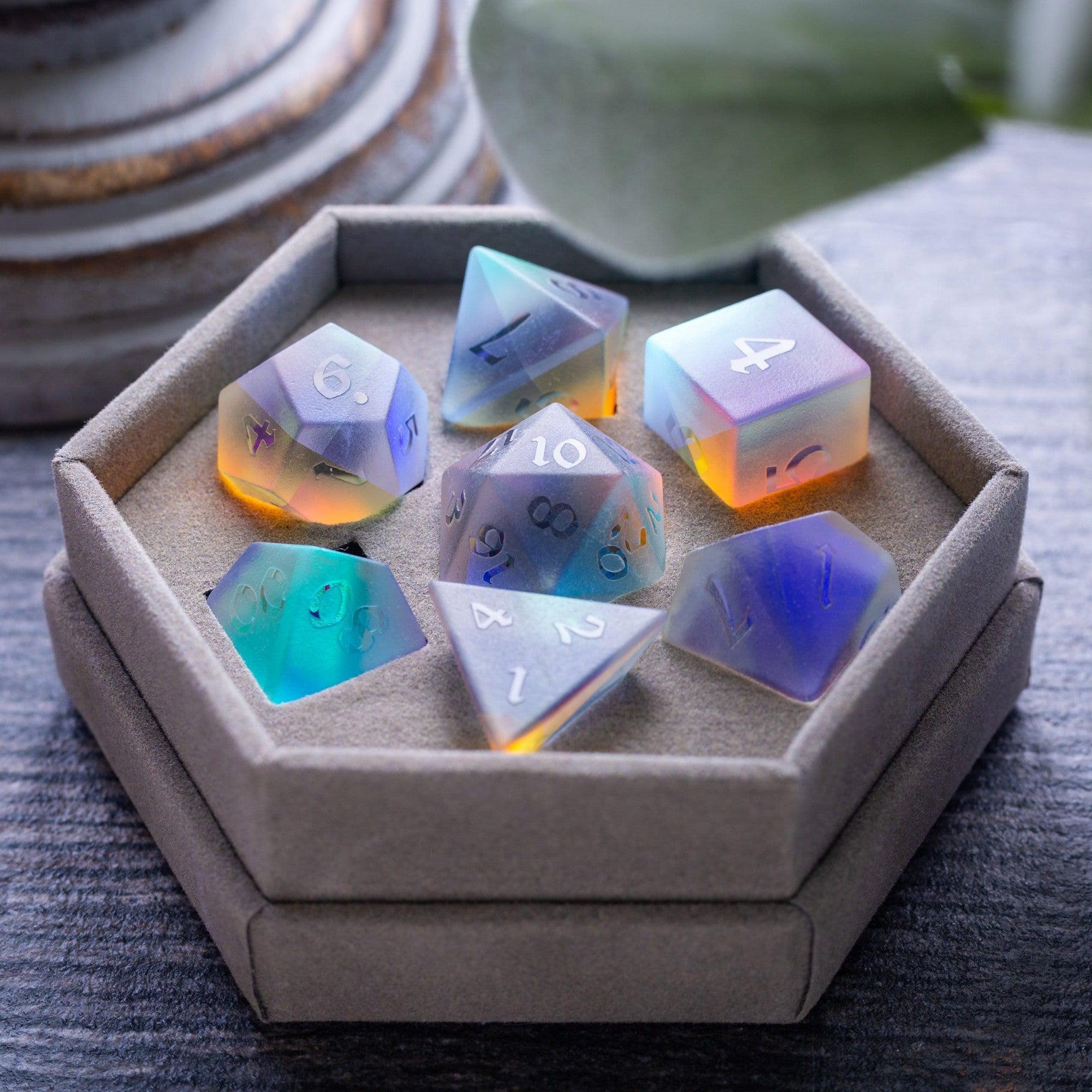
Whether you are preparing for your first Dungeons & Dragons campaign or expanding an established tabletop collection, a 7 piece dice set is one of the first accessories you'll need. These seven polyhedral dice have become the standard for many tabletop roleplaying games because they provide the variety of rolls required for combat, exploration, spellcasting, and skill checks.
While every die has a unique shape and purpose, choosing the right D&D dice set involves more than simply picking your favorite color. Material, readability, durability, and comfort all contribute to an enjoyable gaming experience.
This guide explains what a standard polyhedral dice set includes, how each die is used, and what to consider when selecting a set that matches your play style.
What Is a Standard 7 Piece Dice Set?
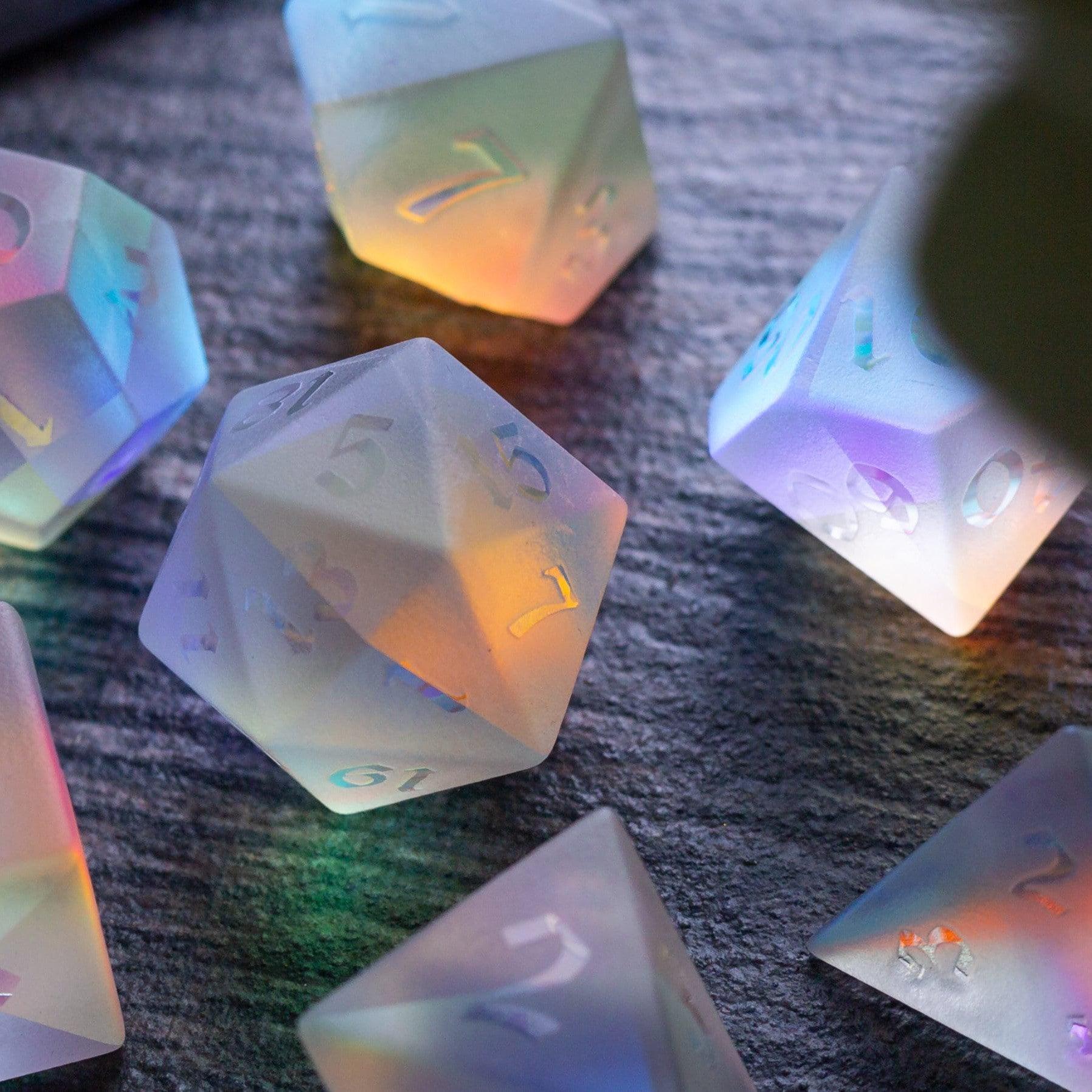
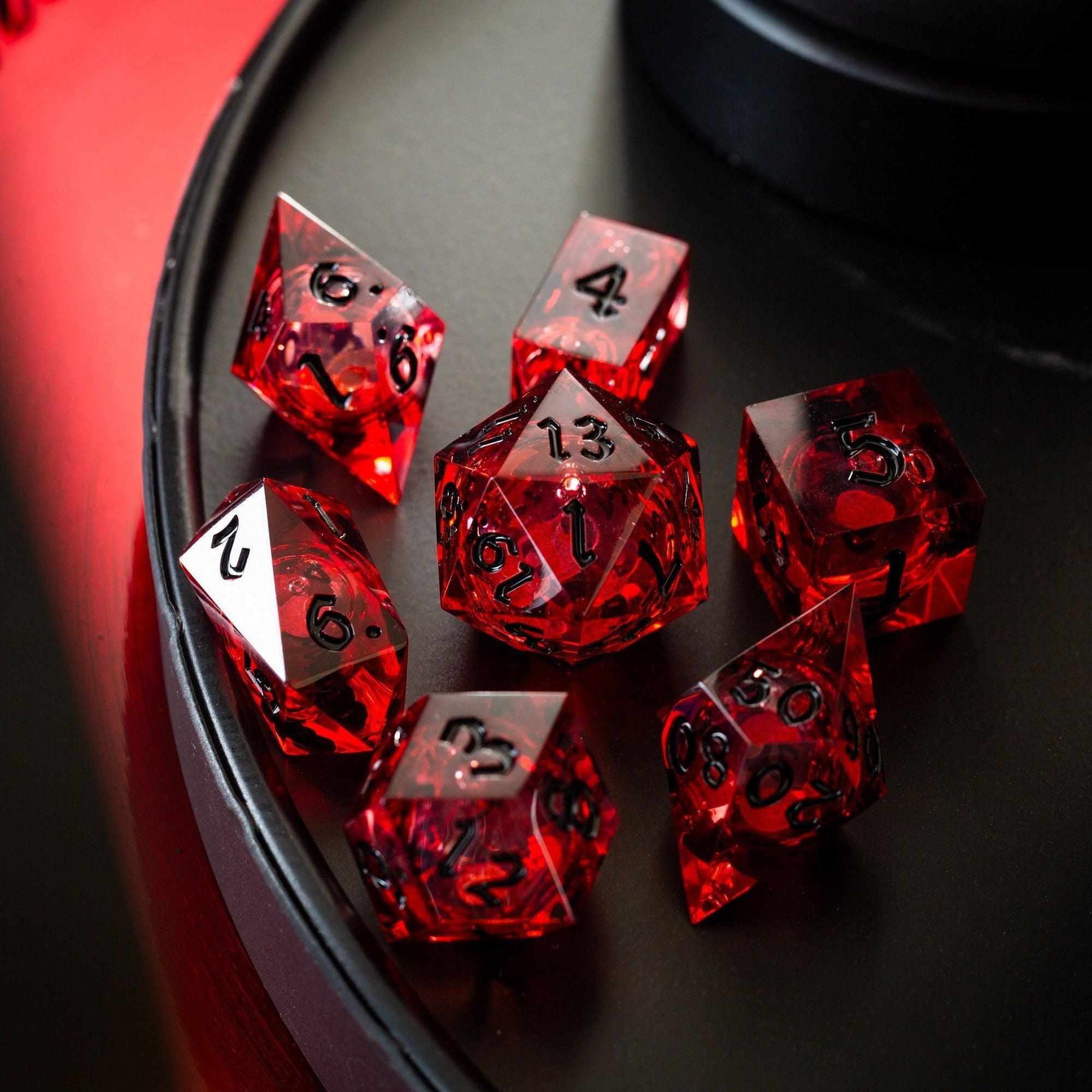
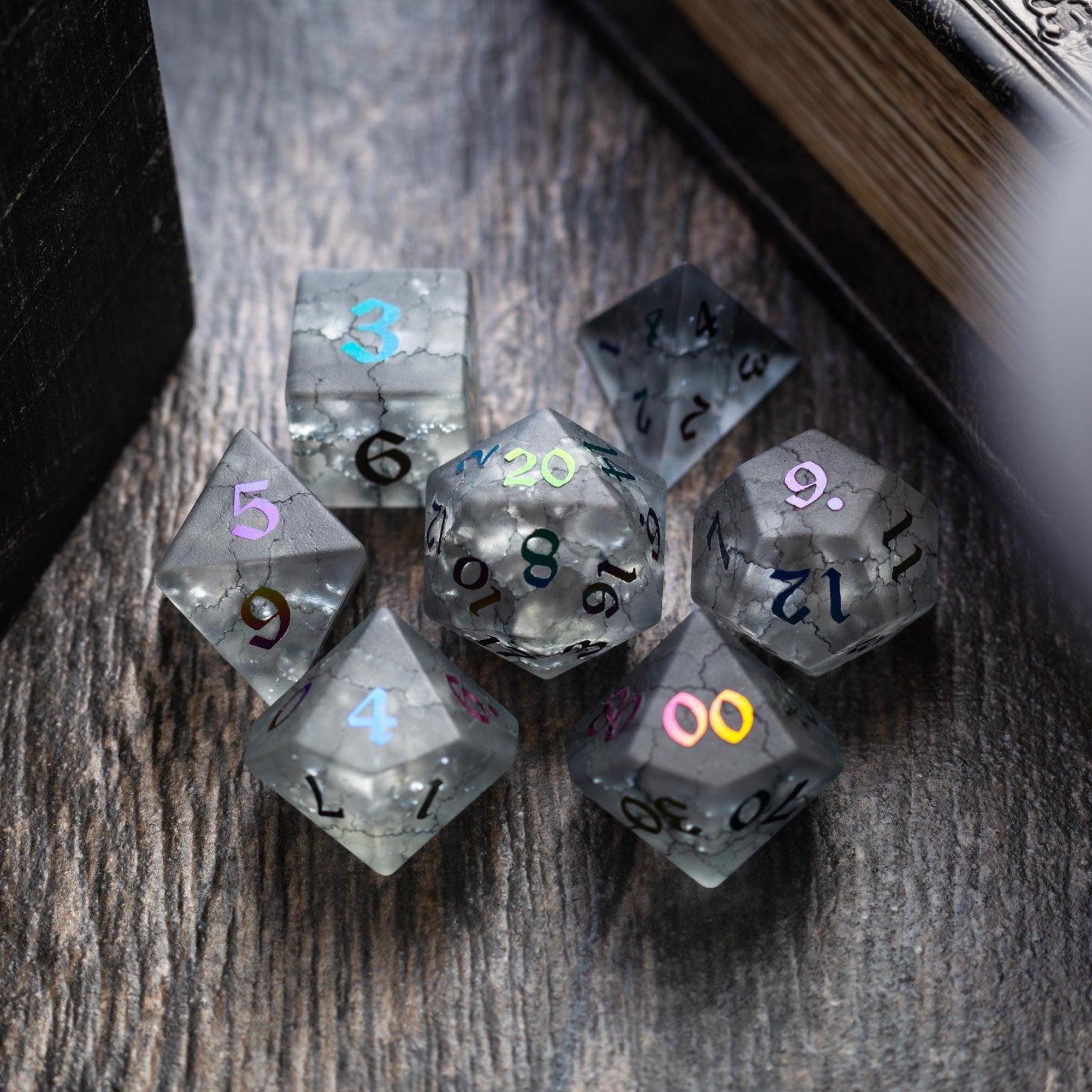
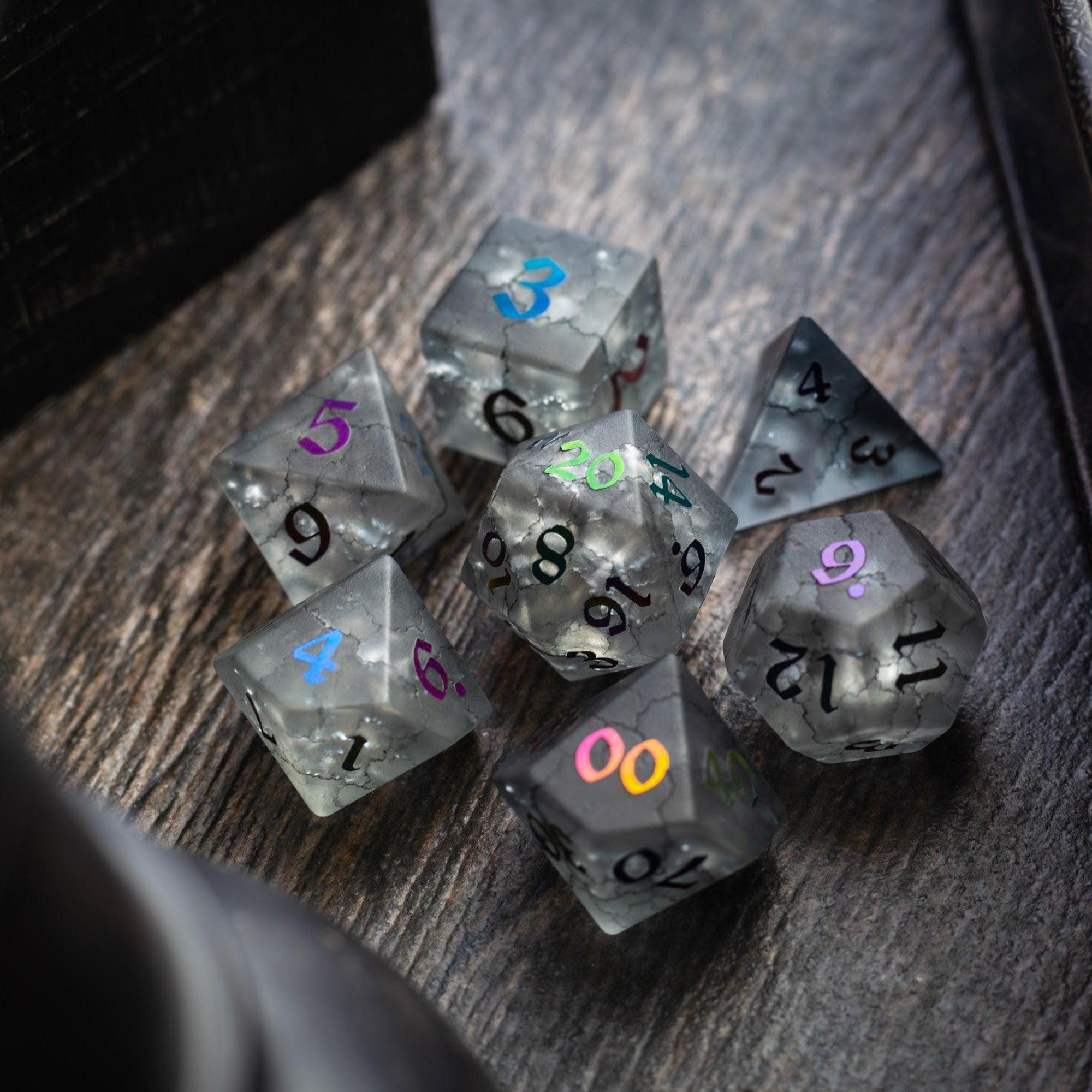
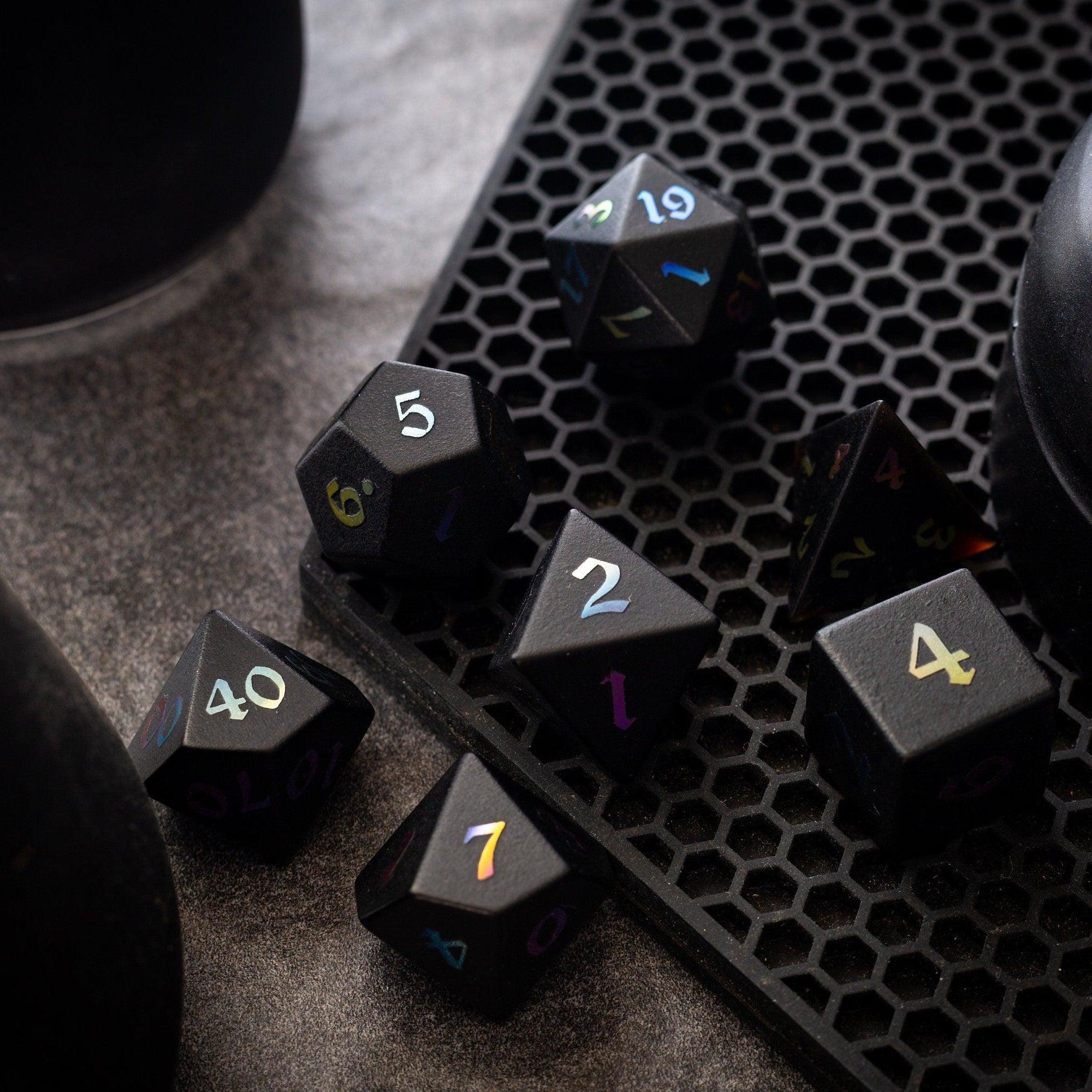
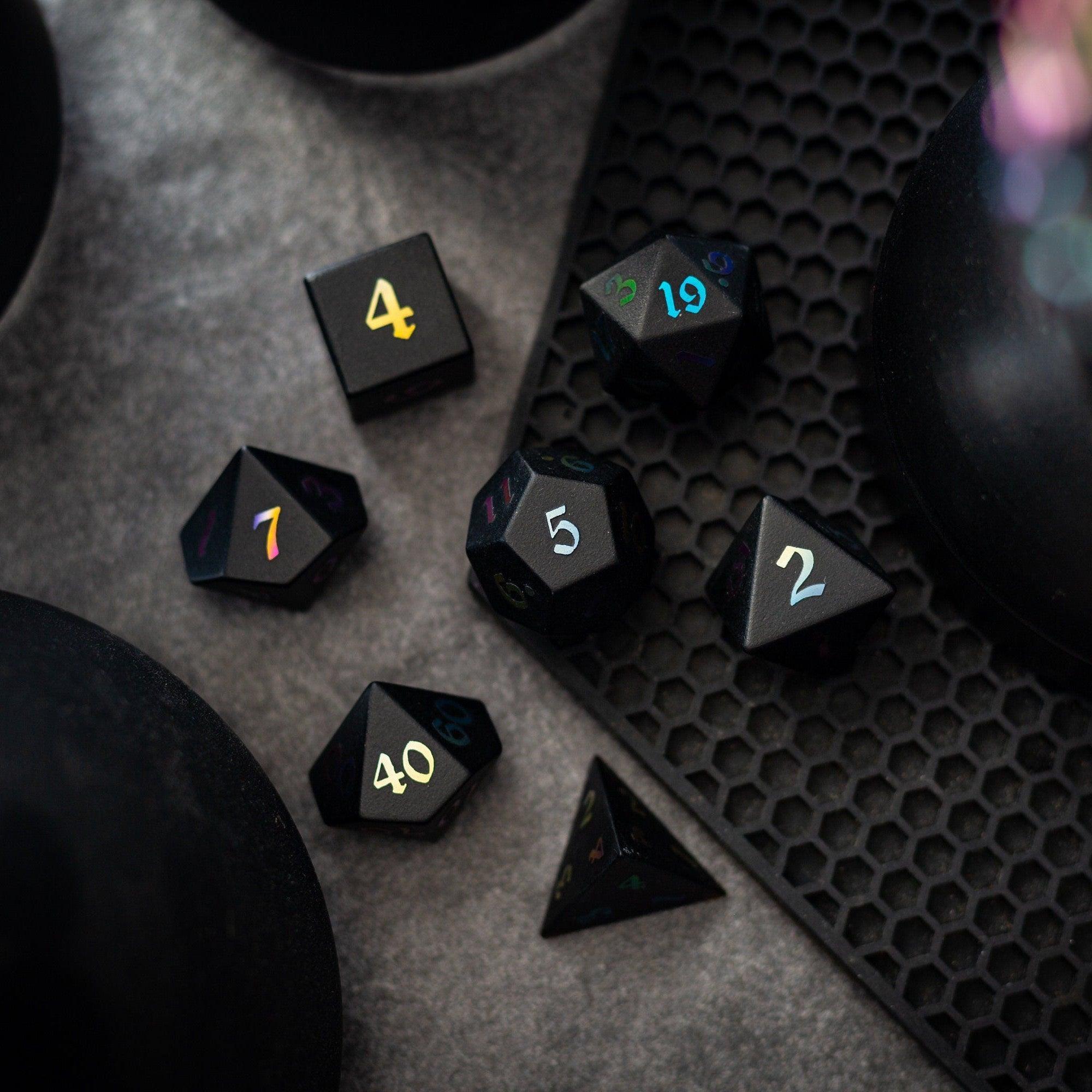
A standard 7 piece dice set contains seven different dice used across many tabletop roleplaying games. Together they are commonly known as polyhedral dice, referring to their many-sided shapes.
A complete set includes:
-
D4
-
D6
-
D8
-
D10
-
Percentile die (D%)
-
D12
-
D20
These dice appear in games such as Dungeons & Dragons, Pathfinder, and many other fantasy, science fiction, and horror RPGs. Although different systems use them in different ways, the same collection of dice serves as the foundation for countless adventures.
What Does Each Die Do?
Every die has a specific purpose during gameplay. Learning when each one is used makes the rules much easier to understand.
D4 (Four-Sided Die)
The D4 is the smallest die in terms of side count and has a distinctive pyramid shape.
Common uses include:
-
Small weapon damage
-
Healing spells
-
Magic missile damage
-
Minor bonuses
Because of its shape, the D4 is rolled differently than most dice. Many players gently toss or slide it rather than giving it a hard roll.
D6 (Six-Sided Die)
The D6 is the familiar cube found in many traditional board games.
In tabletop RPGs, it is commonly used for:
-
Weapon damage
-
Random tables
-
Ability score generation in some systems
-
Various game mechanics
Many RPG players eventually collect extra D6s since some spells and abilities require rolling several at once.
D8 (Eight-Sided Die)
The D8 resembles two pyramids joined together.
It often determines:
-
Medium weapon damage
-
Monster attacks
-
Healing abilities
-
Class features
It offers a balanced middle ground between lower and higher damage dice.
D10 (Ten-Sided Die)
The D10 has ten kite-shaped faces.
Players commonly use it for:
-
Certain weapon damage
-
Spell effects
-
Random number generation
-
Game-specific mechanics
Some RPG systems also use multiple D10s together for skill resolution.
Percentile Die (D%)
A percentile die looks almost identical to the D10 but displays numbers in increments of ten:
-
00
-
10
-
20
-
30
When rolled together with a standard D10, the two dice generate numbers from 1 to 100.
Percentile rolls often determine:
-
Random treasure
-
Rare encounters
-
Skill success
-
Loot tables
-
Character generation
D12 (Twelve-Sided Die)
The D12 is less common than some other dice but still plays an important role.
Typical uses include:
-
Heavy weapon damage
-
Powerful monster attacks
-
Barbarian weapons in Dungeons & Dragons
-
Random tables
Many players appreciate the D12 for its satisfying roll and distinctive shape.
D20 (Twenty-Sided Die)
The D20 is the most recognizable die in tabletop gaming.
It determines many of the most important rolls, including:
-
Attack rolls
-
Saving throws
-
Ability checks
-
Skill checks
-
Initiative in some systems
Because it decides so many key moments, many players develop a favorite D20 over time.
How Different RPGs Use Polyhedral Dice
Although Dungeons & Dragons dice are the most familiar example, many tabletop games rely on the same collection of dice.
Some games use:
-
D20-based systems
-
Percentile systems
-
Mixed polyhedral mechanics
-
Narrative dice mechanics alongside traditional dice
Even when rules differ, a standard RPG dice set usually provides everything needed to begin playing.
This versatility makes a beginner dice set a practical investment for players who enjoy trying different tabletop games.
Dice Reference Table
| Die | Number of Sides | Common Uses | Example During Play |
|---|---|---|---|
| D4 | 4 | Small damage, healing | Casting Magic Missile |
| D6 | 6 | Weapons, abilities, random tables | Rolling shortsword damage |
| D8 | 8 | Medium weapons, healing | Longsword damage |
| D10 | 10 | Damage, special abilities | Rolling a spell effect |
| Percentile (D%) | 10 (tens) | Percentile rolls | Finding treasure on a loot table |
| D12 | 12 | Heavy weapons, monster attacks | Greataxe damage |
| D20 | 20 | Attacks, checks, saves | Attempting to persuade a guard |
Choosing the Right Material for a 7 Piece Dice Set
A polyhedral dice set comes in many materials, each offering a different appearance and feel.
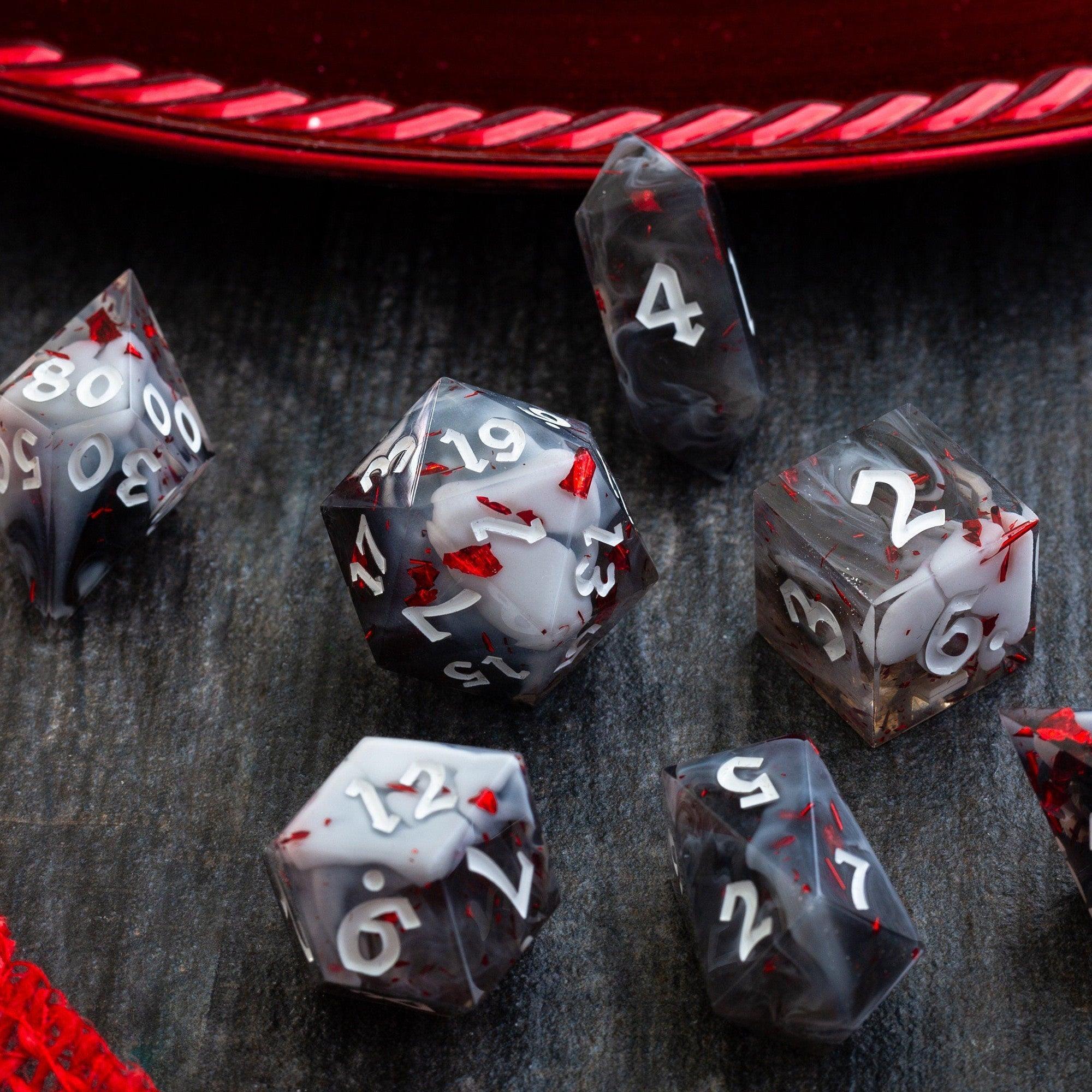
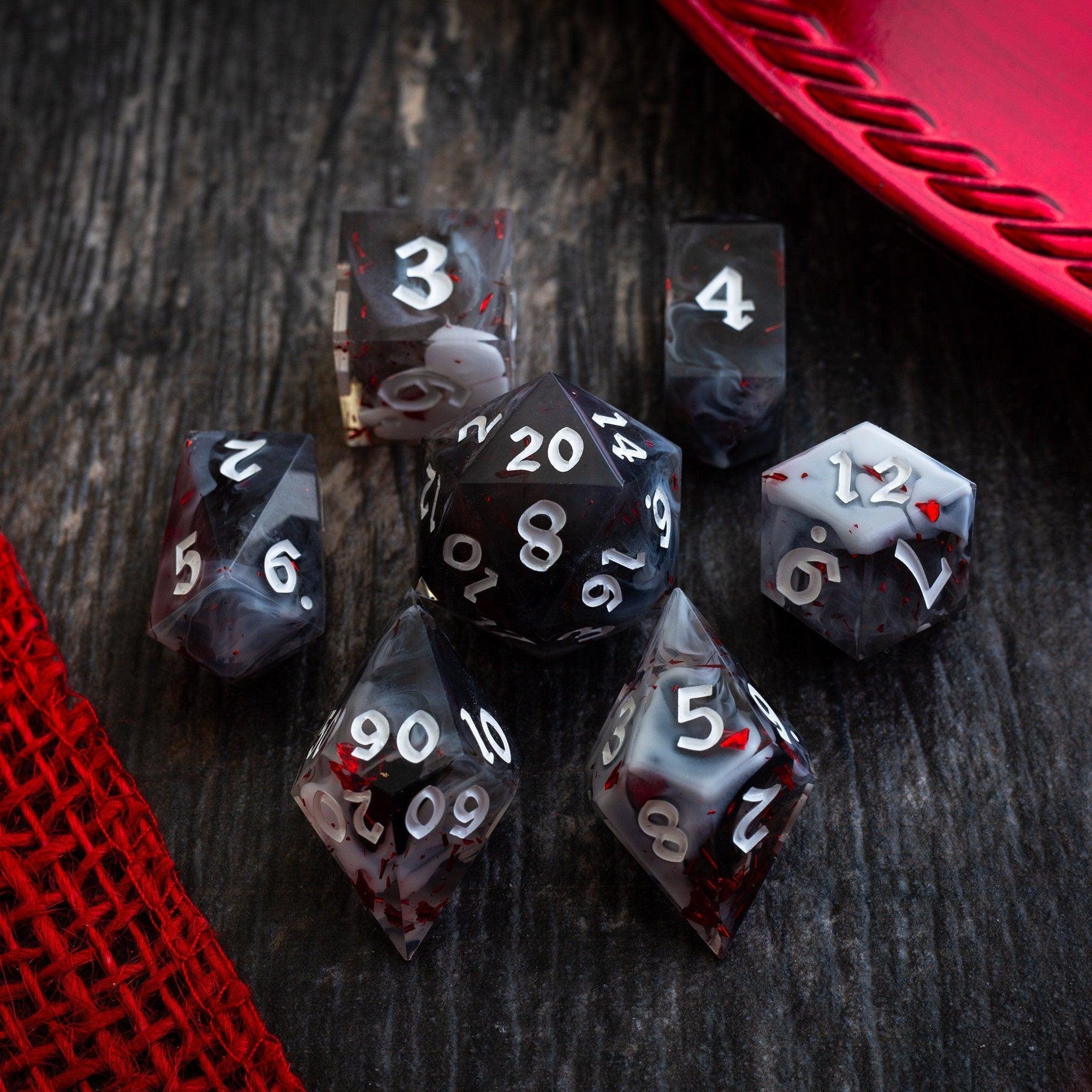
Resin Dice
Resin is one of the most popular choices.
Benefits include:
-
Lightweight
-
Wide variety of colors
-
Easy to read
-
Comfortable to roll
-
Suitable for beginners
Runic Dice offers resin 7 piece dice sets in styles ranging from simple translucent finishes to colorful fantasy-inspired designs.
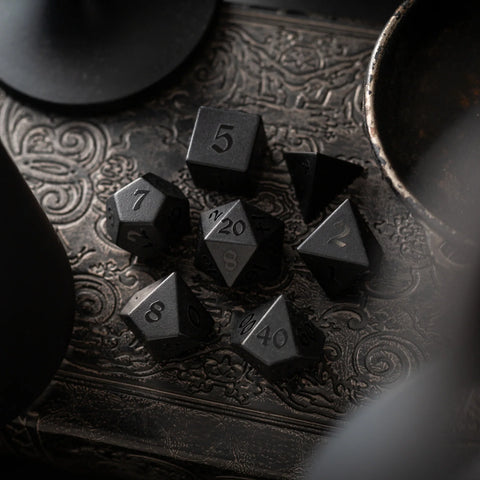
Metal Dice
Metal dice feel heavier in the hand and produce a satisfying roll.
Many players enjoy them for:
-
Premium feel
-
Distinctive appearance
-
Excellent durability
Because of their weight, using a dice tray helps protect gaming tables while reducing noise during play.
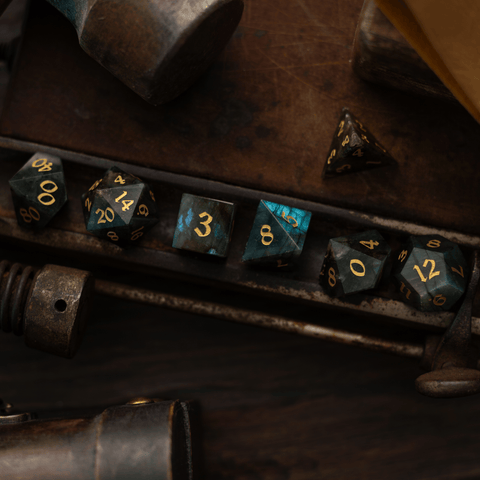
Gemstone Dice
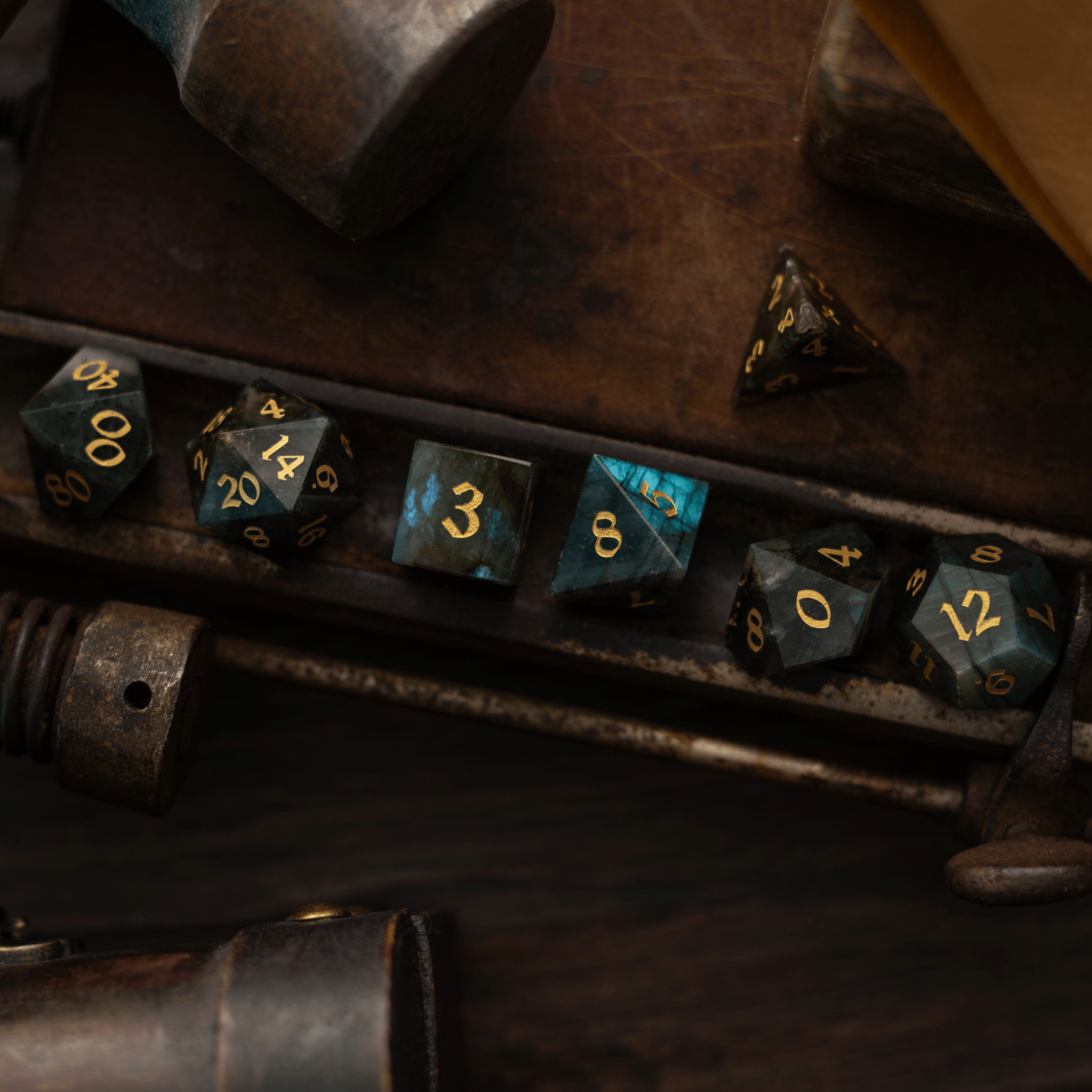
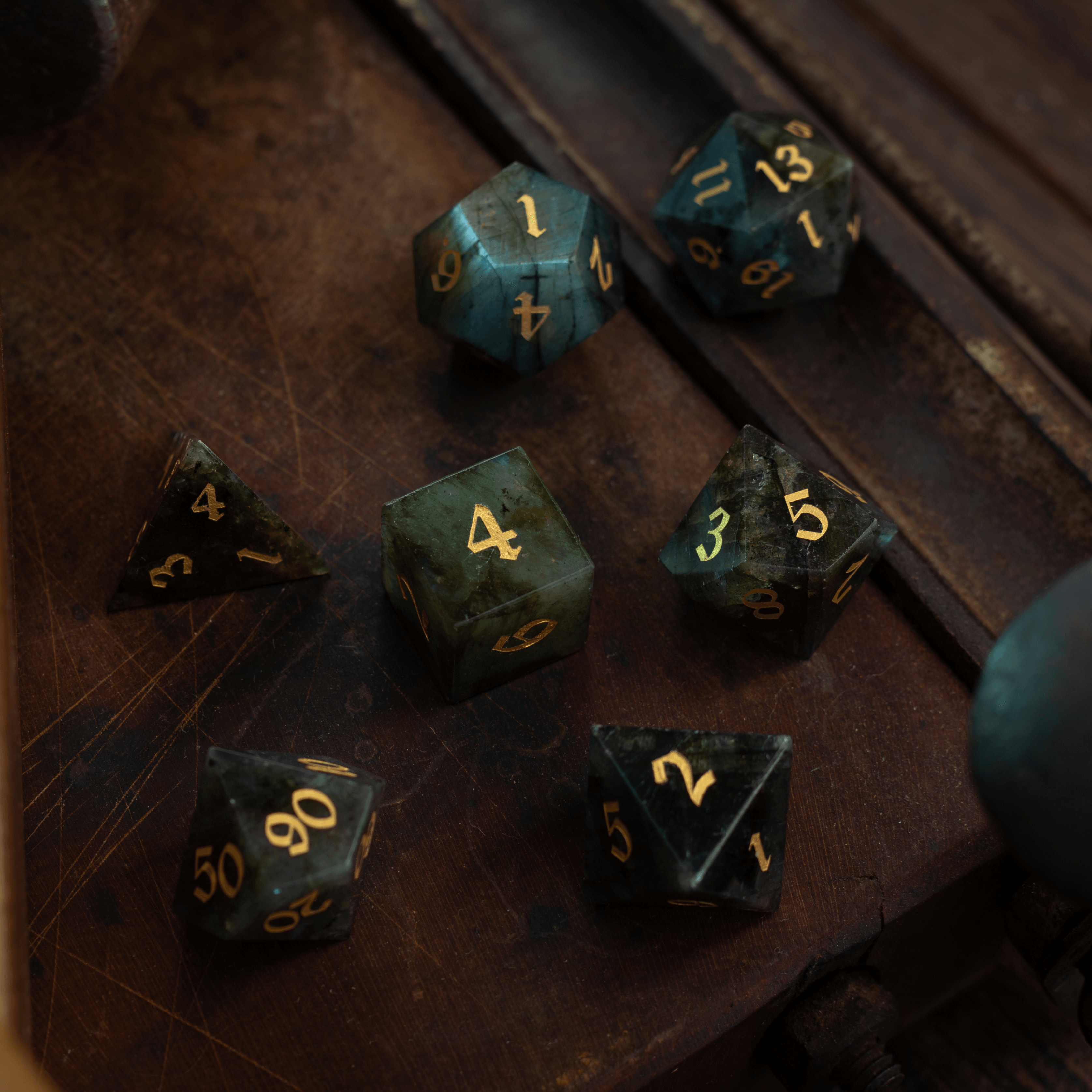
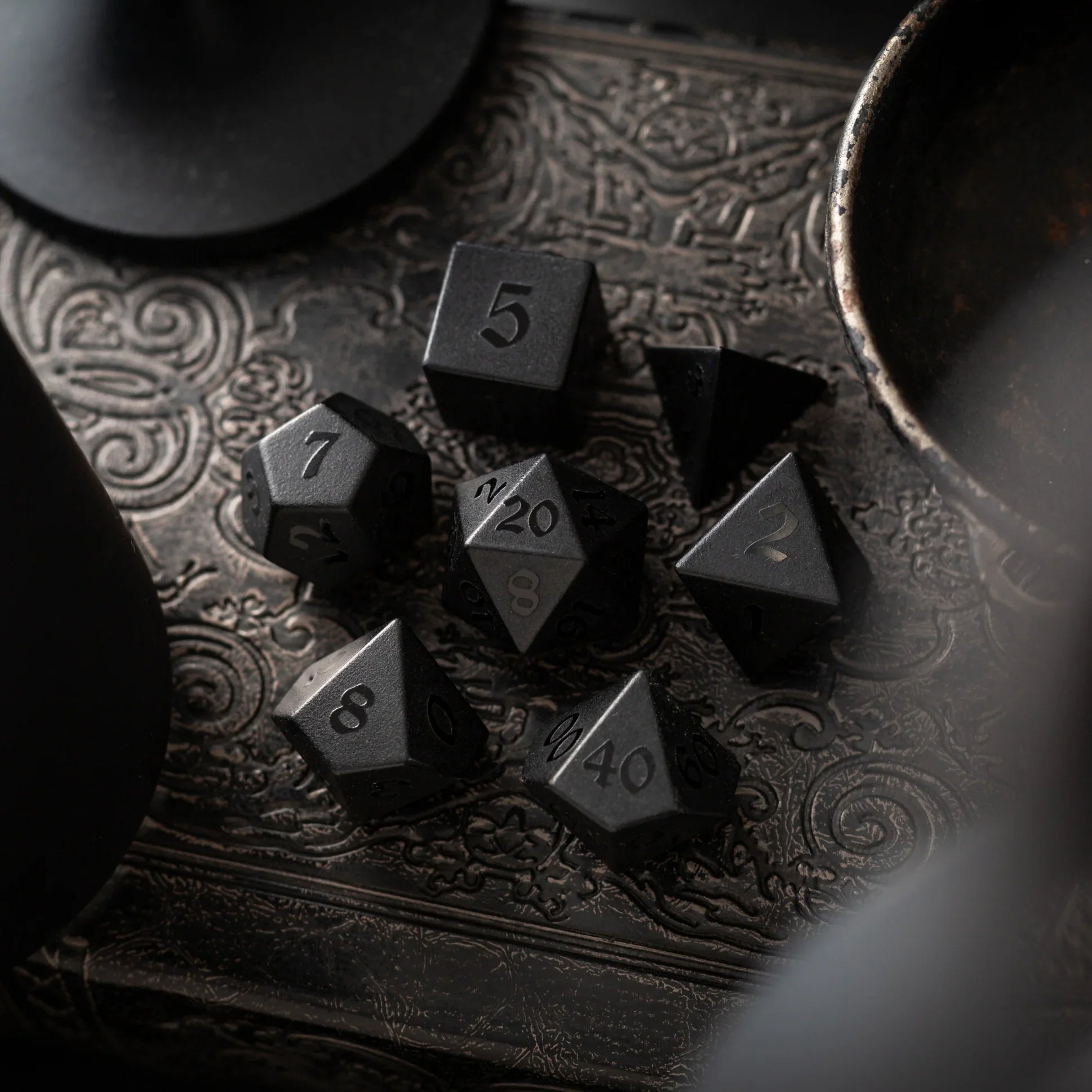
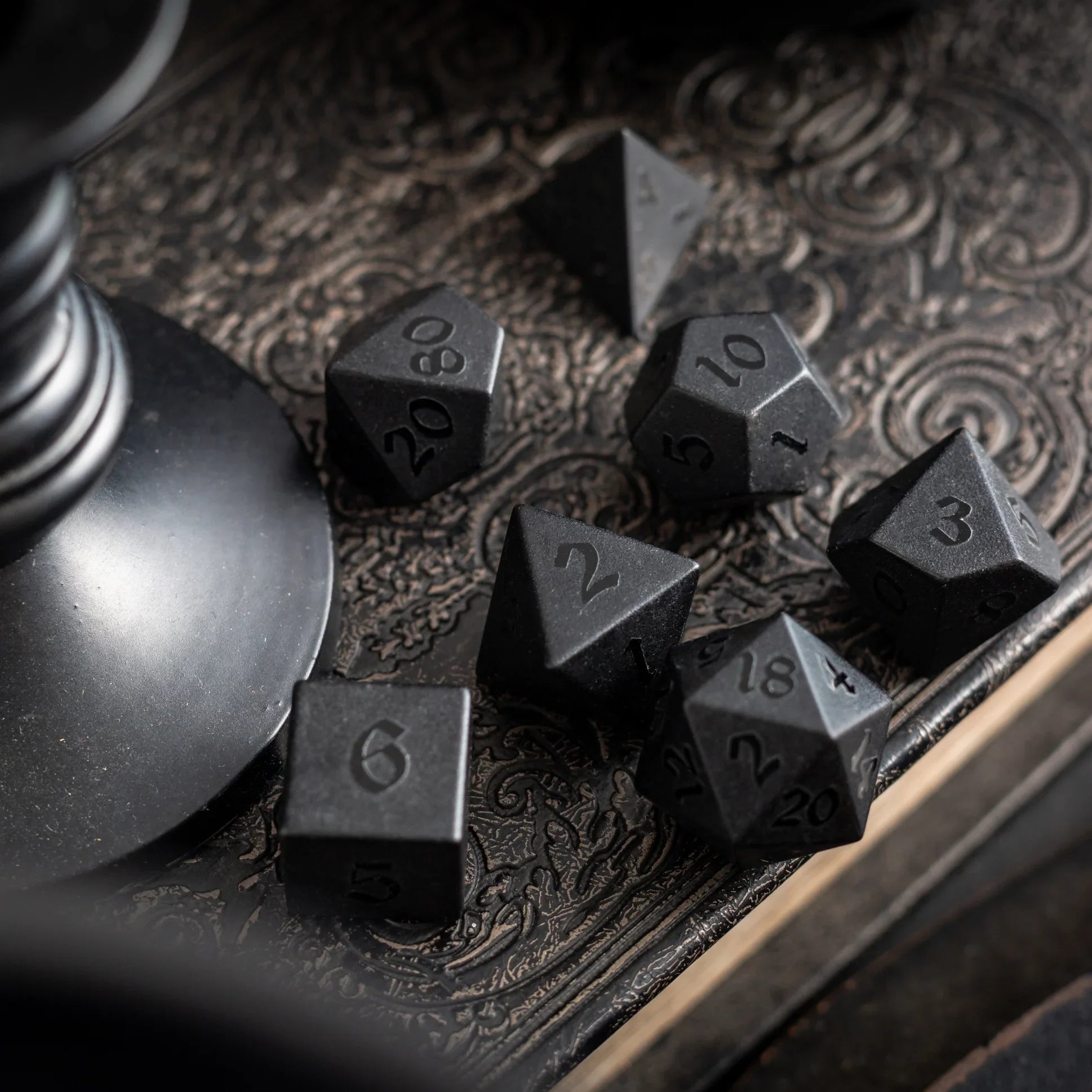
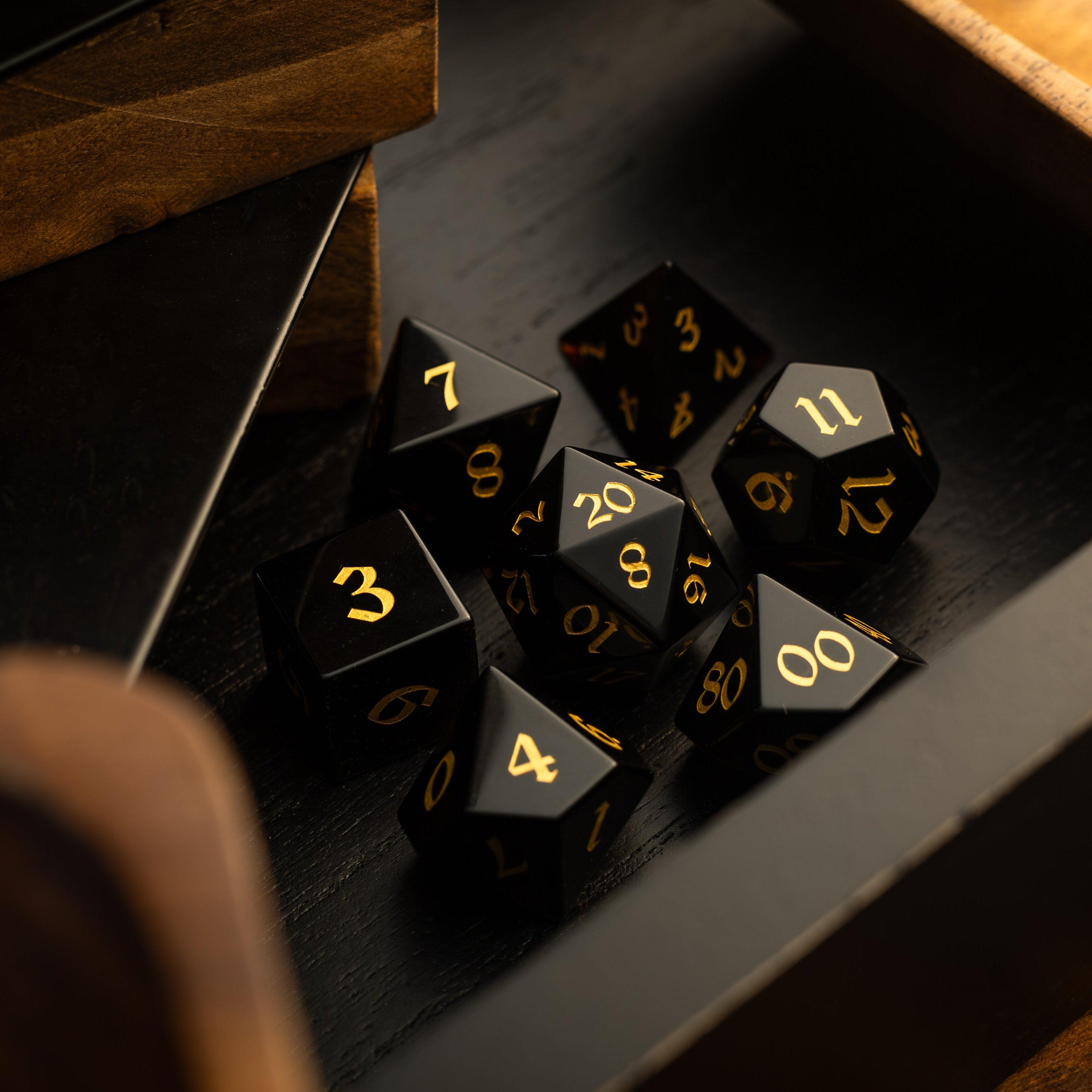
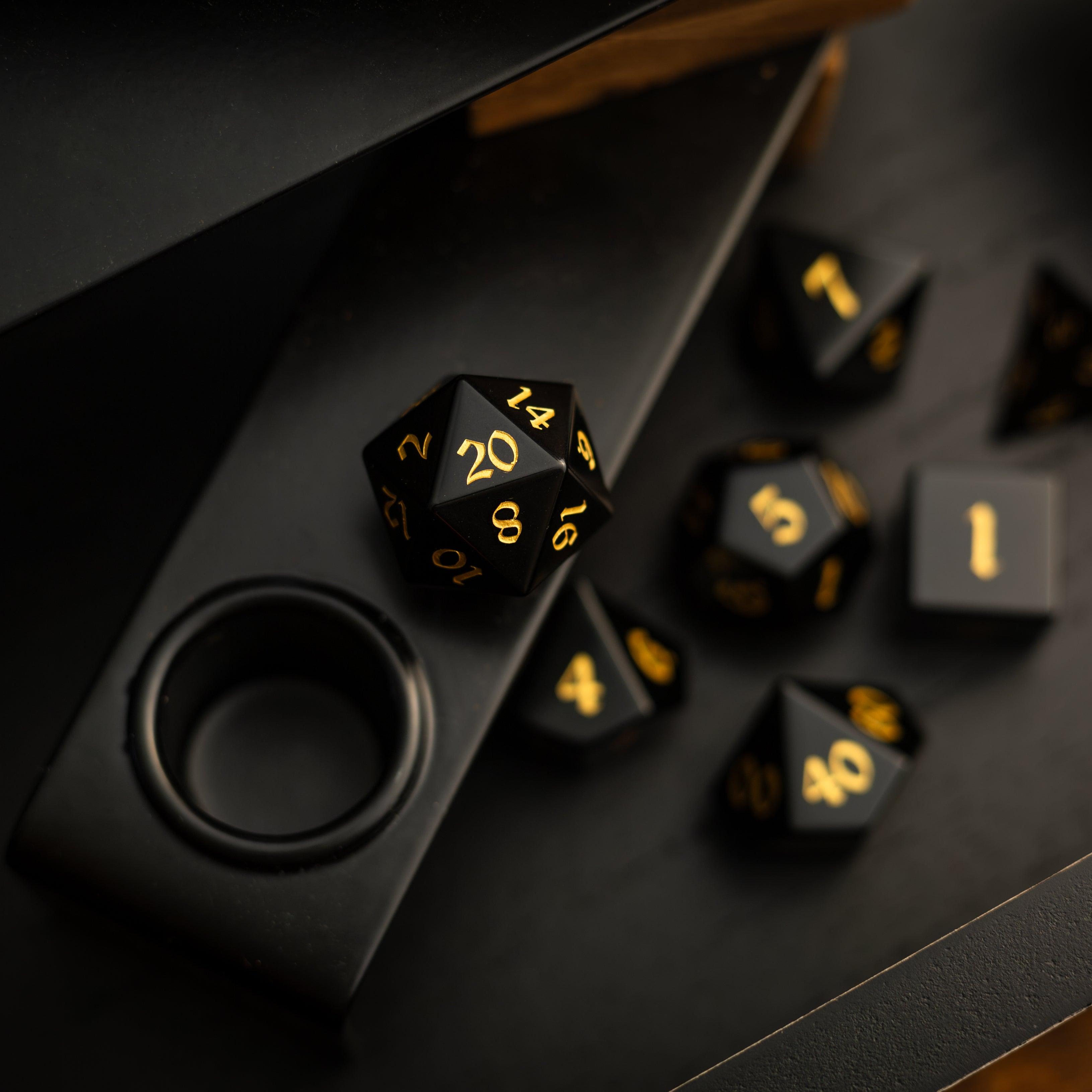
Gemstone dice showcase the natural beauty of materials such as obsidian, tiger's eye, or amethyst.
Collectors often appreciate them for:
-
Unique patterns
-
Natural variations
-
Elegant appearance
Since natural stone can chip if rolled on very hard surfaces, many players use padded dice trays and soft dice bags for added protection.
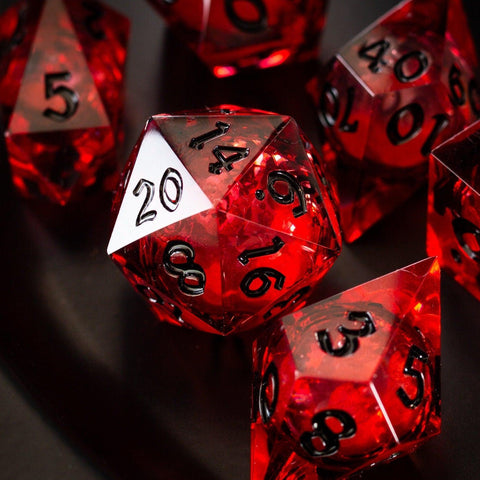
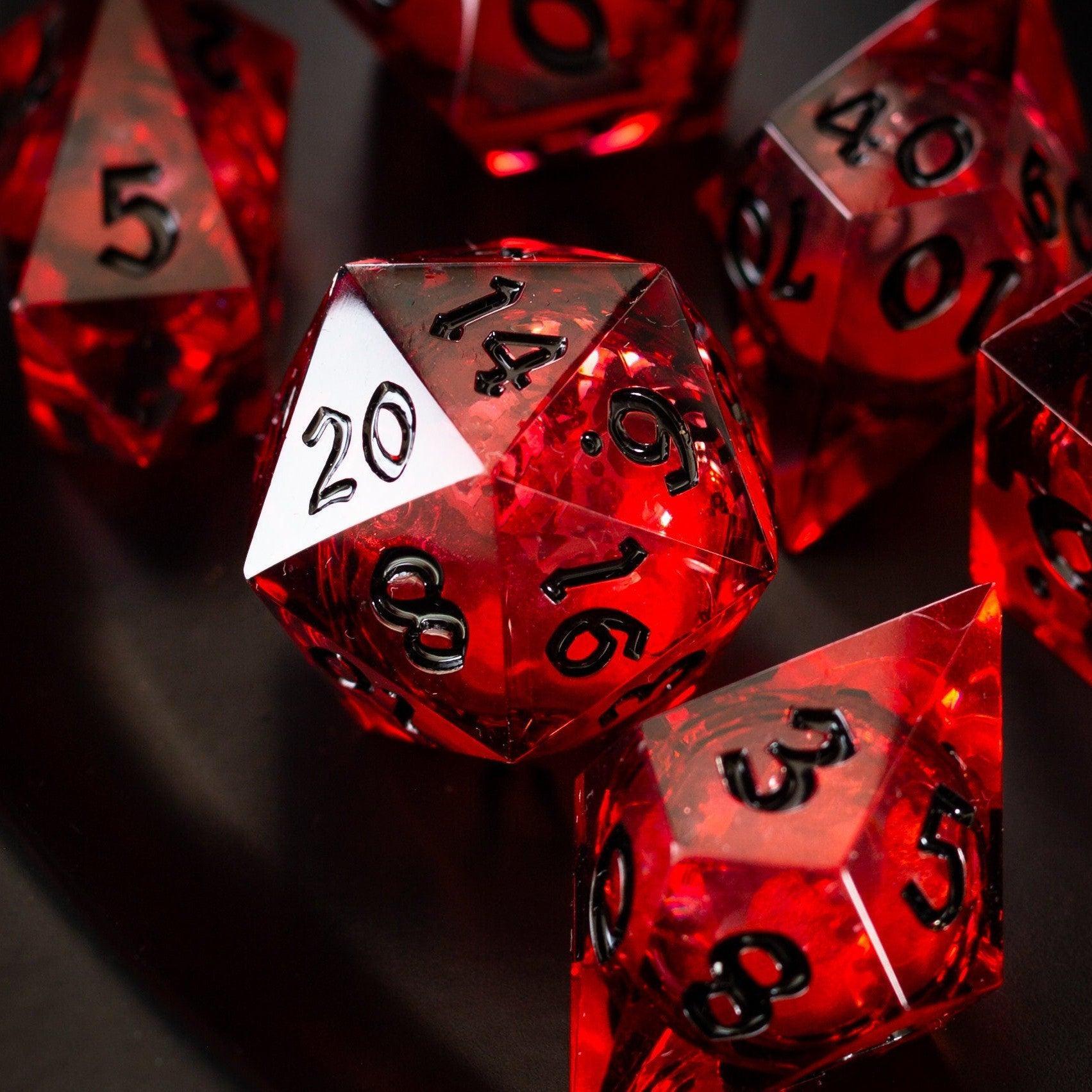
Liquid Core Dice
Liquid core dice feature a decorative suspended center that moves as the die rolls.
These sets provide:
-
Eye-catching motion
-
Vibrant visual effects
-
A distinctive tabletop appearance
Many players enjoy liquid core designs because they add a little extra excitement whenever the dice are rolled.
What to Look for When Buying Your First Dice Set
If this is your first dice buying guide, focus on qualities that improve usability rather than appearance alone.
Look for:
-
Clearly painted numbers
-
Good color contrast
-
Comfortable size
-
Consistent numbering
-
Smooth finish
-
Material that fits your budget
A beautiful set is always enjoyable, but readable numbers make gameplay faster, especially during exciting encounters.
Many new players also purchase a matching dice bag to keep the entire set together between sessions.
Proper Care, Storage, and Maintenance
A little care helps your dice stay looking great for years.
Helpful maintenance tips include:
-
Store dice in a dedicated dice bag.
-
Use a dice tray for rolling.
-
Keep gemstone dice separate from harder objects.
-
Wipe resin and metal dice with a soft cloth when needed.
-
Avoid exposing dice to prolonged extreme heat.
-
Check painted numbers occasionally for wear.
Organizing your tabletop gaming accessories also makes setup much easier. Dice trays help keep rolls contained, while dice towers provide controlled rolling during crowded game nights.
Common Misconceptions About 7 Piece Dice Sets
Several myths surround tabletop RPG dice. Understanding the facts helps players make better decisions.
Every player only needs one set.
Many players begin with one set, but additional sets can be helpful for spells or abilities that require rolling many dice simultaneously.
Metal dice are always better.
Metal dice offer a different feel, but resin, gemstone, and liquid core sets each have their own advantages depending on personal preference.
More expensive dice always roll better.
Price often reflects craftsmanship, materials, and appearance rather than guaranteed rolling performance.
Every RPG uses the dice the same way.
Different game systems assign different purposes to each die, even though they often share the same standard polyhedral dice.
Quick Dice Buying Checklist
Before purchasing your next D&D dice set, consider the following:
-
Does it include all seven standard dice?
-
Are the numbers easy to read?
-
Does the material suit your play style?
-
Will you use a dice tray with heavier dice?
-
Do you need a dice bag for storage?
-
Does the design fit your personal style?
-
Is it appropriate for your budget?
-
Will it work well across multiple tabletop RPGs?
Taking a few minutes to answer these questions makes choosing a 7 piece dice set much easier.
Ready for Your Next Adventure
A standard 7 piece dice set is more than a collection of colorful shapes. It is the toolkit that helps bring stories, heroes, and memorable moments to life at the gaming table. From the dependable D20 that decides daring attacks to the humble D4 that powers a healing spell, every die has an important role to play.
Whether you prefer lightweight resin, solid metal, elegant gemstone, or eye-catching liquid core designs, the best RPG dice set is the one that feels comfortable to use and fits the adventures you enjoy most. Pair it with practical accessories like a dice tray, a protective dice bag, or a dice tower, and you'll be well prepared for campaigns that may last for years. As your collection grows and your adventures become more ambitious, choosing quality tabletop RPG dice that match your favorite games and personal style will make every roll feel like part of the story.

Leave a comment
This site is protected by hCaptcha and the hCaptcha Privacy Policy and Terms of Service apply.