

Understanding Dungeons and Dragons Dice for Balanced Rolls
Updated on: 2026-01-05
Ready to level up your tabletop experience? This friendly guide breaks down how to choose, care for, and store your dice so they roll true and look great for years. We’ll cover materials, readability, balance, and the little habits that keep your collection in peak shape. Whether you love glittery liquid cores or classic gemstones, you’ll find simple steps and answers to common questions. If you’re hunting for Dungeons & Dragons dice that feel as good as they look, you’re in the right place.
- Choosing Dungeons & Dragons dice: A Practical Guide
- How-To: Pick, Protect, and Personalize Your RPG Dice
- Care and Storage Tips for Long-Lasting Dice
- Popular Styles and Materials
- FAQ

Choosing dice should be fun, not stressful. Think of this as advice from a fellow player who has rolled everything from budget starter sets to premium gemstone and liquid core beauties. The right set does more than determine outcomes; it sets the mood at the table, reflects your character’s vibe, and feels satisfying in your hand. In this guide, you’ll learn how to spot quality, decide which materials fit your style, and keep every polyhedral piece in game-ready shape. I’ll also share quick fixes for common issues, like tough-to-read numerals and scuffed storage, so your rolls stay smooth and your collection keeps its sparkle.
Choosing Dungeons & Dragons dice: A Practical Guide
Your ideal set balances three things: readability, reliability, and personality. Start with readable faces. High-contrast ink and crisp edges make a real difference when the action moves fast. If your table is dim, lighter faces with dark inking are your friend; if you play in bright spaces, darker faces with light numbers pop nicely.
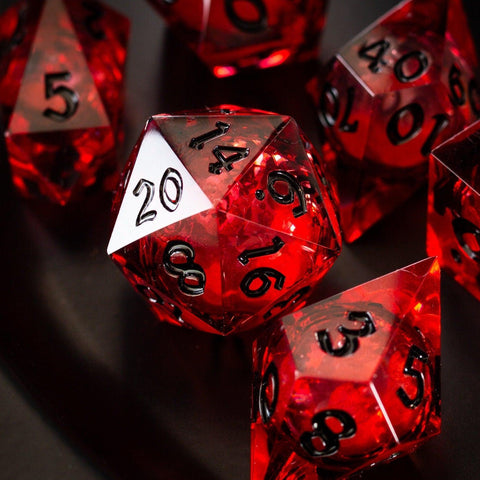
Next, consider reliability. Most modern polyhedral sets are excellent for casual play, but materials vary. Resin is lightweight and versatile; metal feels substantial and satisfying; glass and gemstone offer premium heft and stunning clarity. When you shop, look for even edges and consistent numbering. If a die has visible voids, bubbles on edges, or misaligned faces, set it aside.
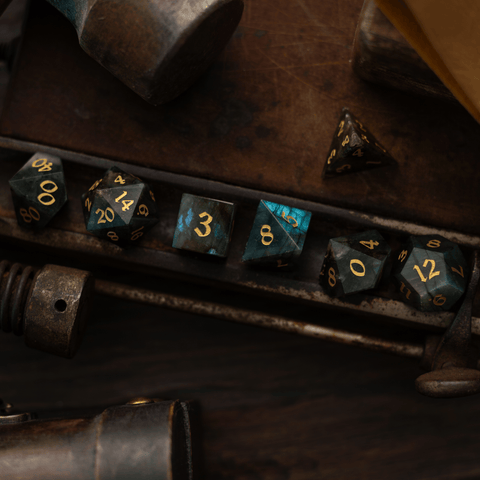
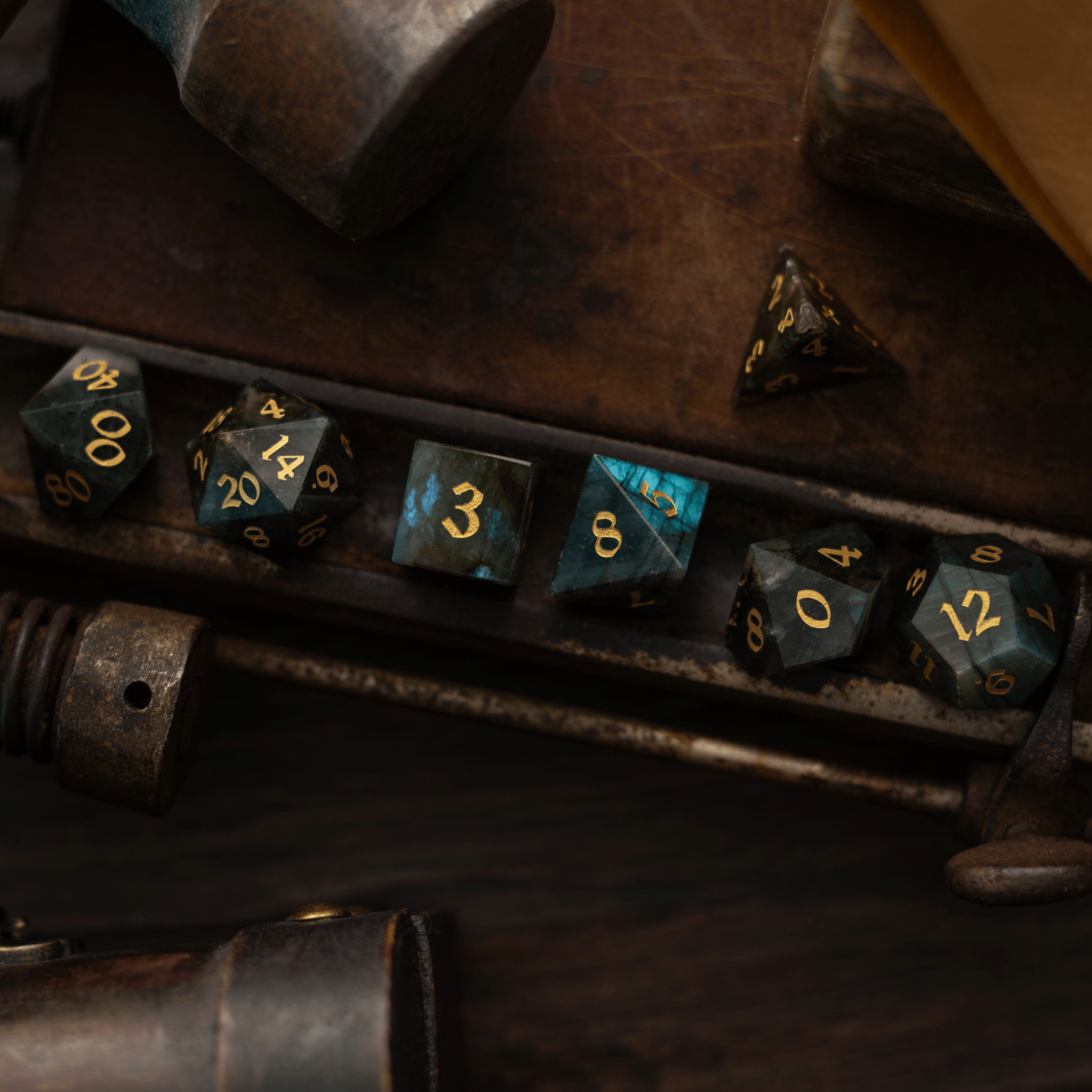
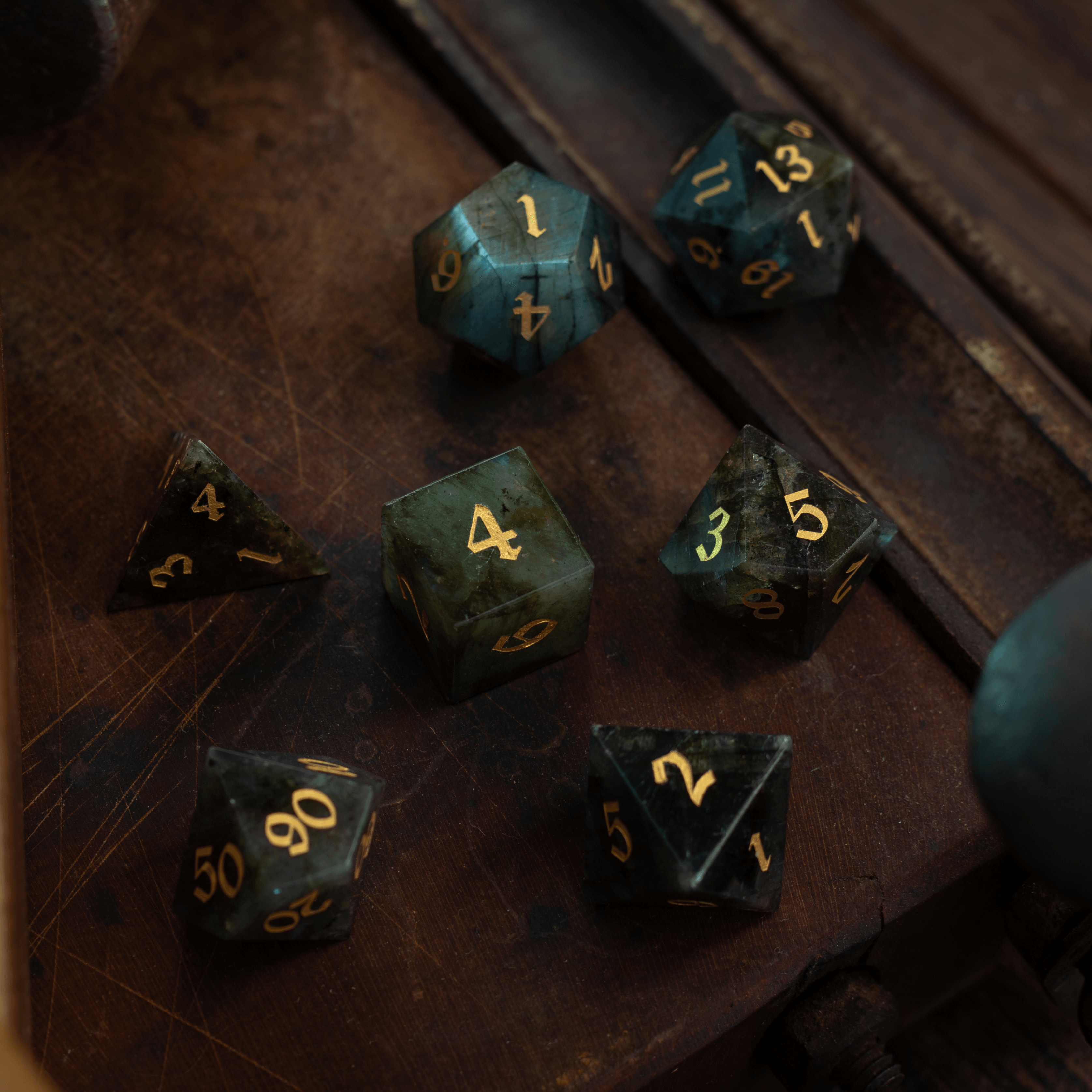
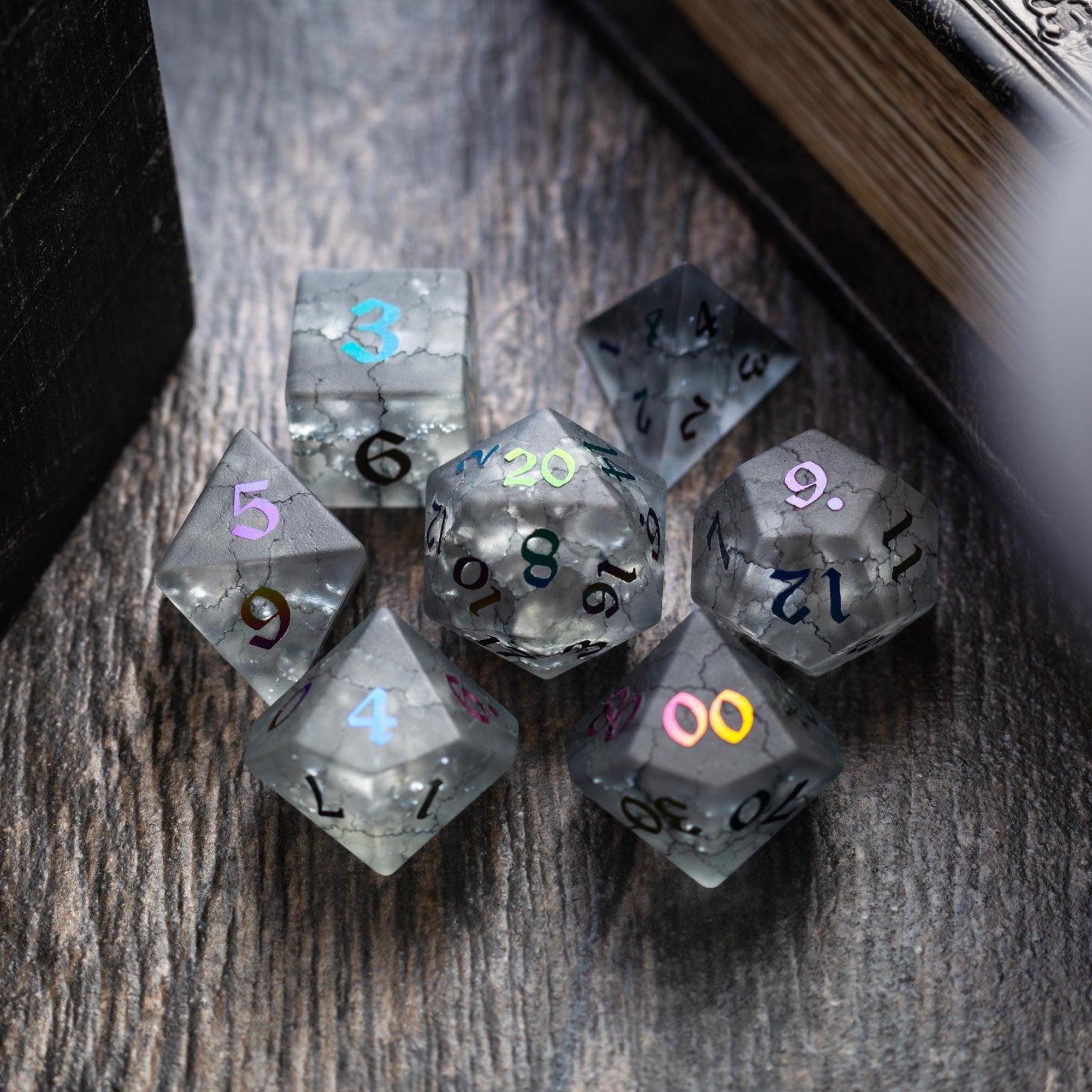
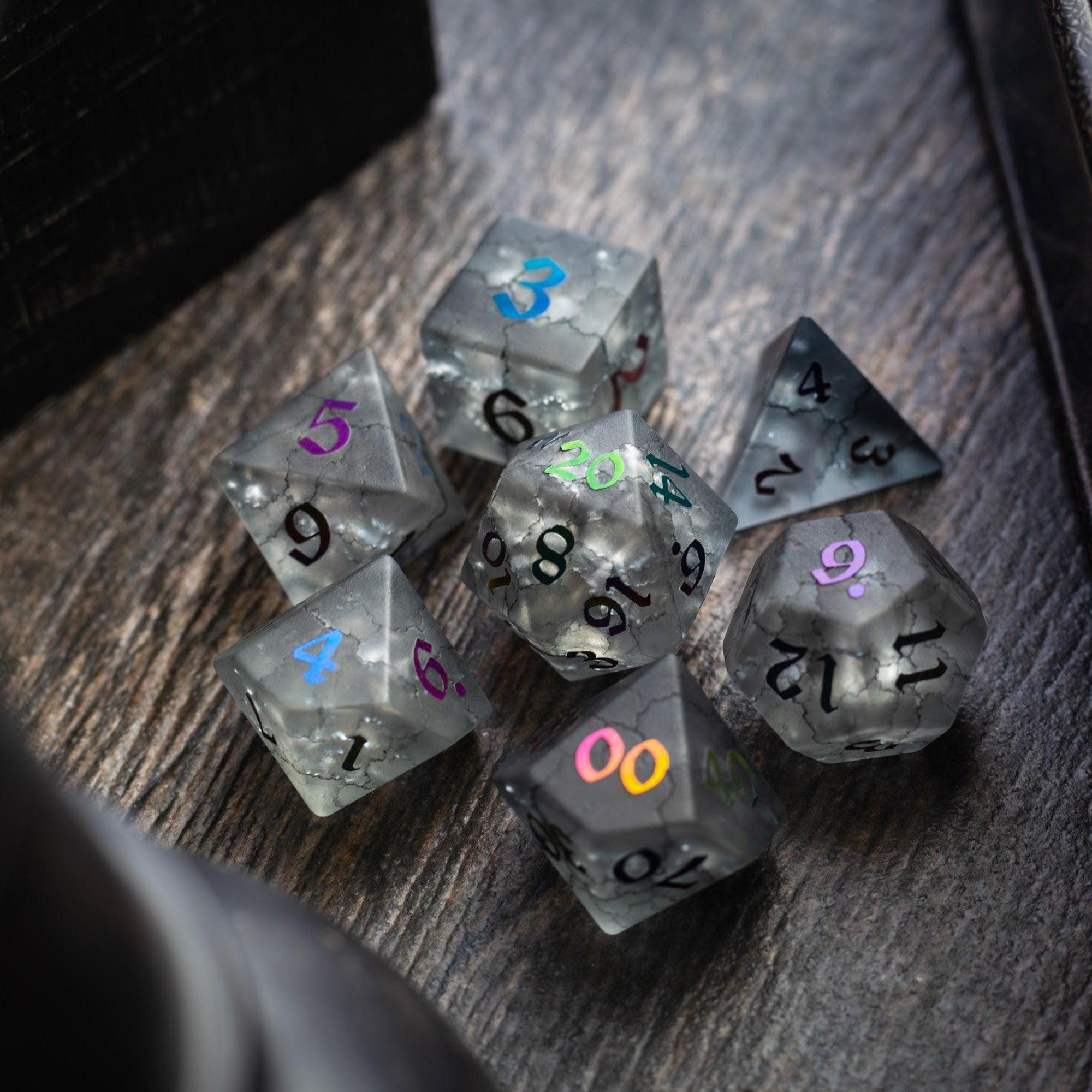
Finally, personality. What colors and textures mirror your character or campaign tone? If you love natural shine, explore gemstone dice. If you prefer a bold, weighty feel, browse metal dice. For table showstoppers that sparkle in motion, check out liquid core sets. Want a conversation piece with luminous play-of-color? The Labradorite set pairs striking looks with a satisfying roll feel.
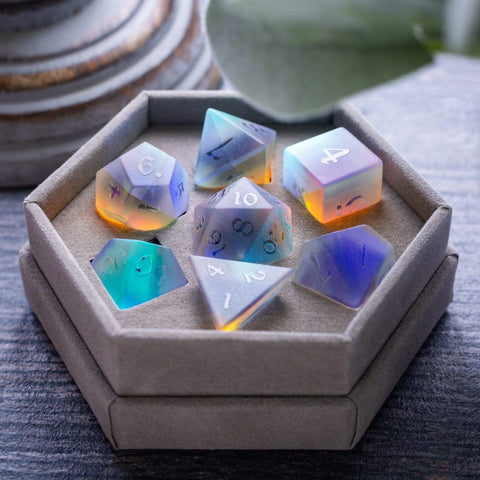
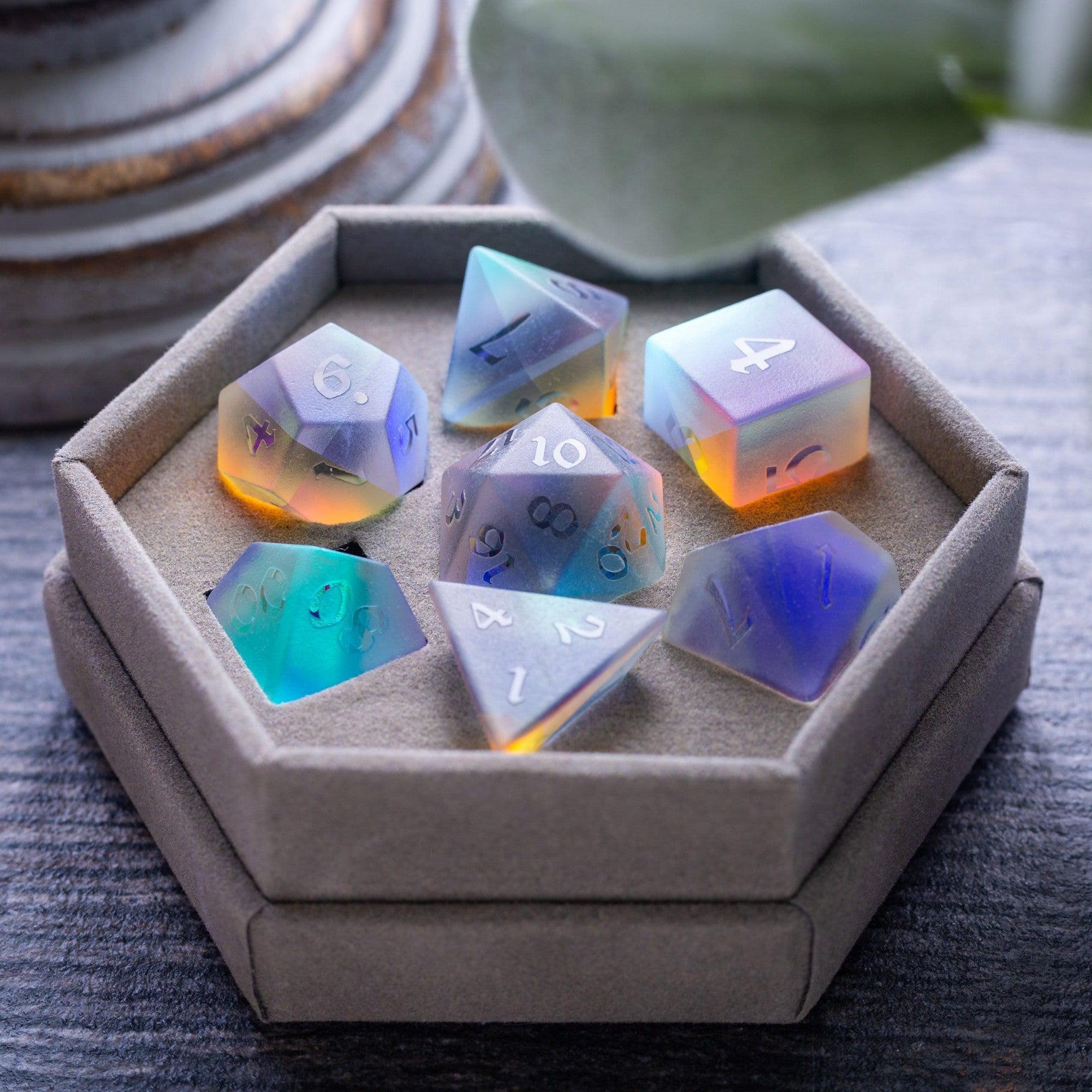
Also confirm you’re getting a complete set: d4, d6, d8, d10, percentile d10, d12, and d20. If your build relies on many d6s (rogue sneak attacks, for example), consider a booster pack of extra d6s so you’re not re-rolling the same die repeatedly.
How-To: Pick, Protect, and Personalize Your RPG Dice
1. Define your play style:
Fast-paced battles benefit from high-contrast numbering; narrative-heavy groups can prioritize aesthetics and theme.
2. Set a simple budget:
Decide what you’re comfortable spending before you browse, then focus on sets that meet your criteria so you avoid impulse splurges.
3. Pick a material that fits:
Resin for versatility and color variety, metal for weight and presence, glass or gemstones for premium looks and feel.
4. Check legibility:
Hold a d20 at arm’s length. If the 20, 1, and mid-range numbers are easy to read, you’re set.
5. Test roll consistency:
Roll each die 10–20 times on a padded surface. You’re looking for no obvious bias (nothing like five 1s in a row).
6. Build a care routine:
Wipe with a soft microfiber after sessions. A quick clean keeps oils from dulling surfaces.
7. Use gentle storage:
Pouches are fine; trays or slotted cases reduce scuffs. Avoid tossing premium pieces into backpacks without protection.
8. Personalize your kit:
A matching tray or tower keeps rolls fair and protects tables. Pick a style that matches your favorite set.
9. Rotate sets by campaign:
Keep a couple of go-to sets on hand and rotate to reduce wear while keeping the vibe fresh.
10. Track what you love:
Note which sets feel best and read best at your table. That log will guide future purchases with confidence.
Care and Storage Tips for Long-Lasting Dice
Good habits go a long way. The simplest routine is the most effective: after each session, give your dice a quick wipe with a clean, dry microfiber cloth. This removes skin oils and dust that reduce shine over time. For stubborn smudges on resin or glass, slightly dampen the cloth with plain water and dry immediately.
Avoid extremes. Don’t leave dice in hot cars or right next to heaters. Temperature swings can stress materials, especially blends with inclusions or liquid cores. The same goes for moisture; sealed cases help keep humidity changes at bay.

Roll on a forgiving surface. A felt-lined tray or leather mat protects edges and keeps noise down. This is particularly helpful for metal and gemstone sets, which can chip or scratch harder surfaces—or leave marks on soft wooden tables. A tray also keeps dice from flying off the table and picking up dings.
Store thoughtfully. Separate heavy pieces from delicate ones so they don’t knock into each other in transit. If your case doesn’t have individual slots, wrap premium pieces in soft pouches. Labeling or color-coding your cases helps you grab the right set fast when game night starts.
Popular Styles and Materials
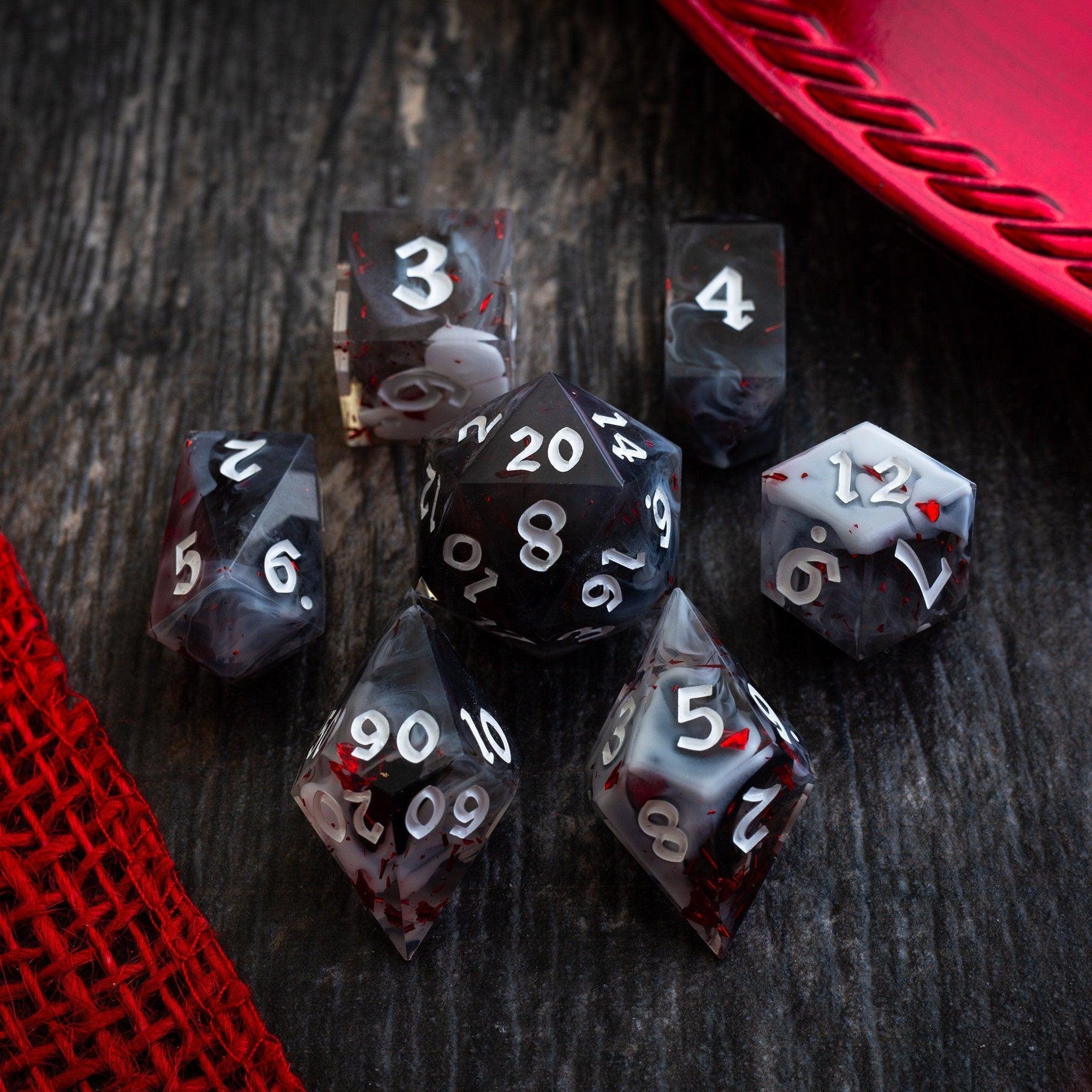
Resin: Lightweight, budget-friendly, and wildly creative. You’ll find sharp-edge designs, swirling colors, and layered effects. Good for players who want standout looks without extra care requirements.
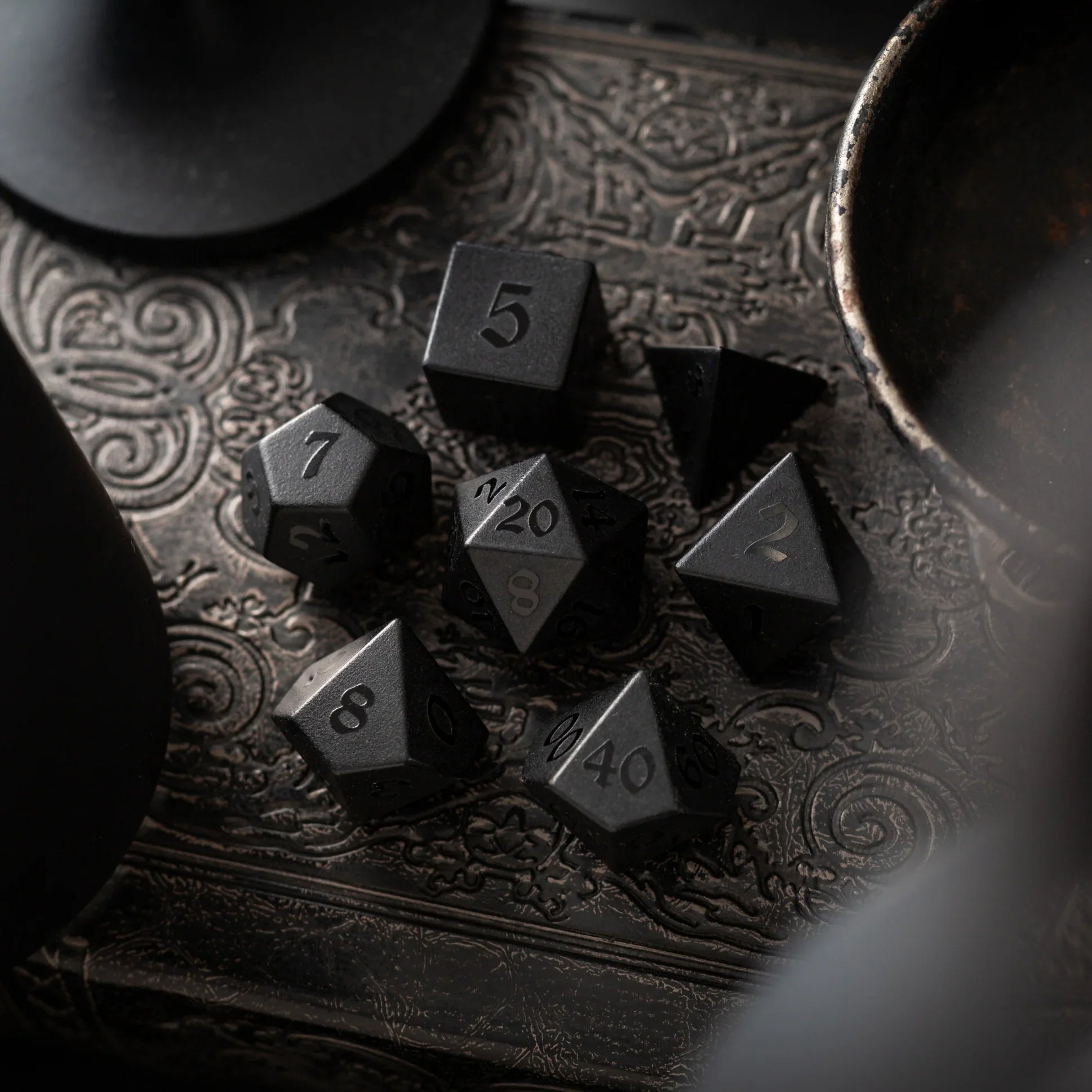
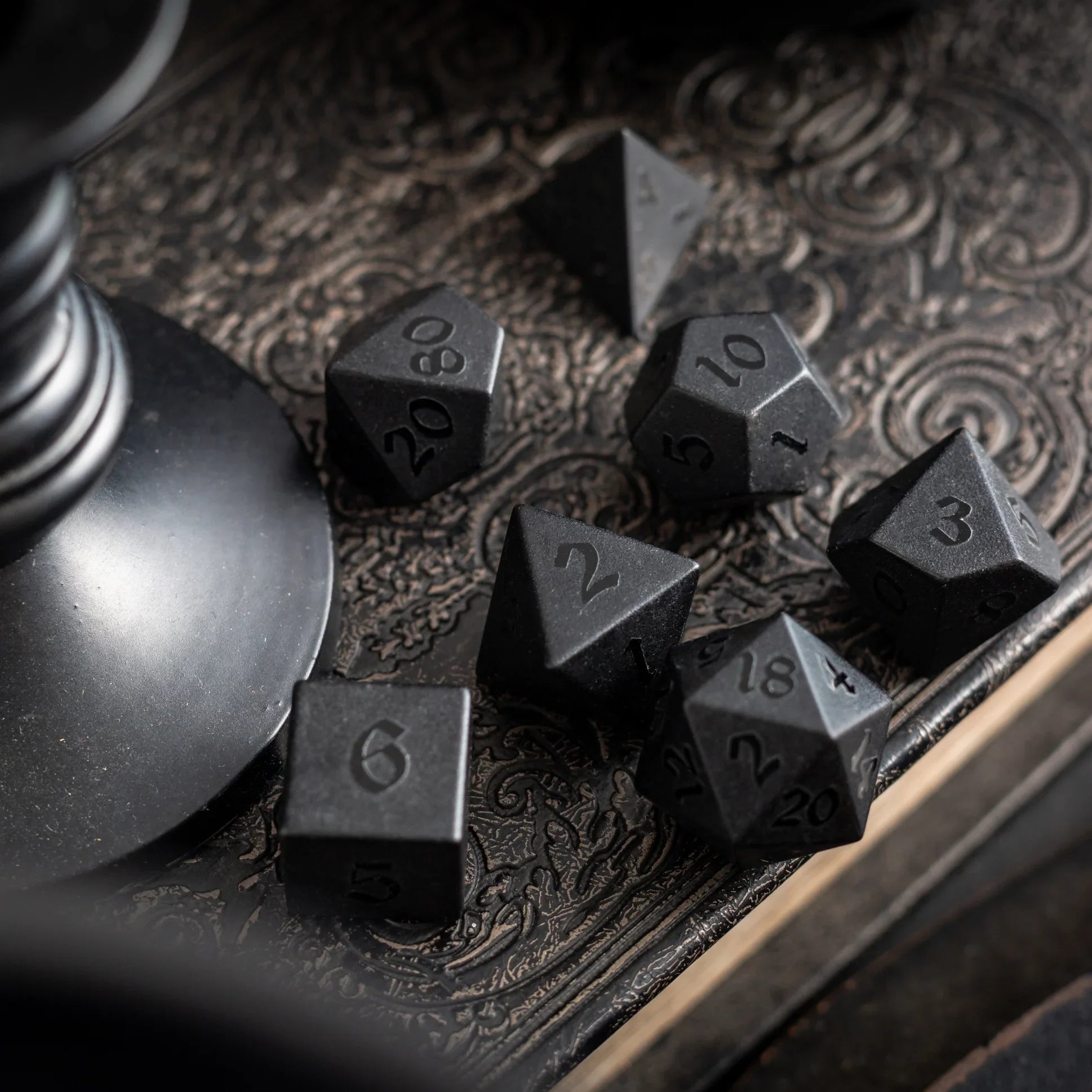
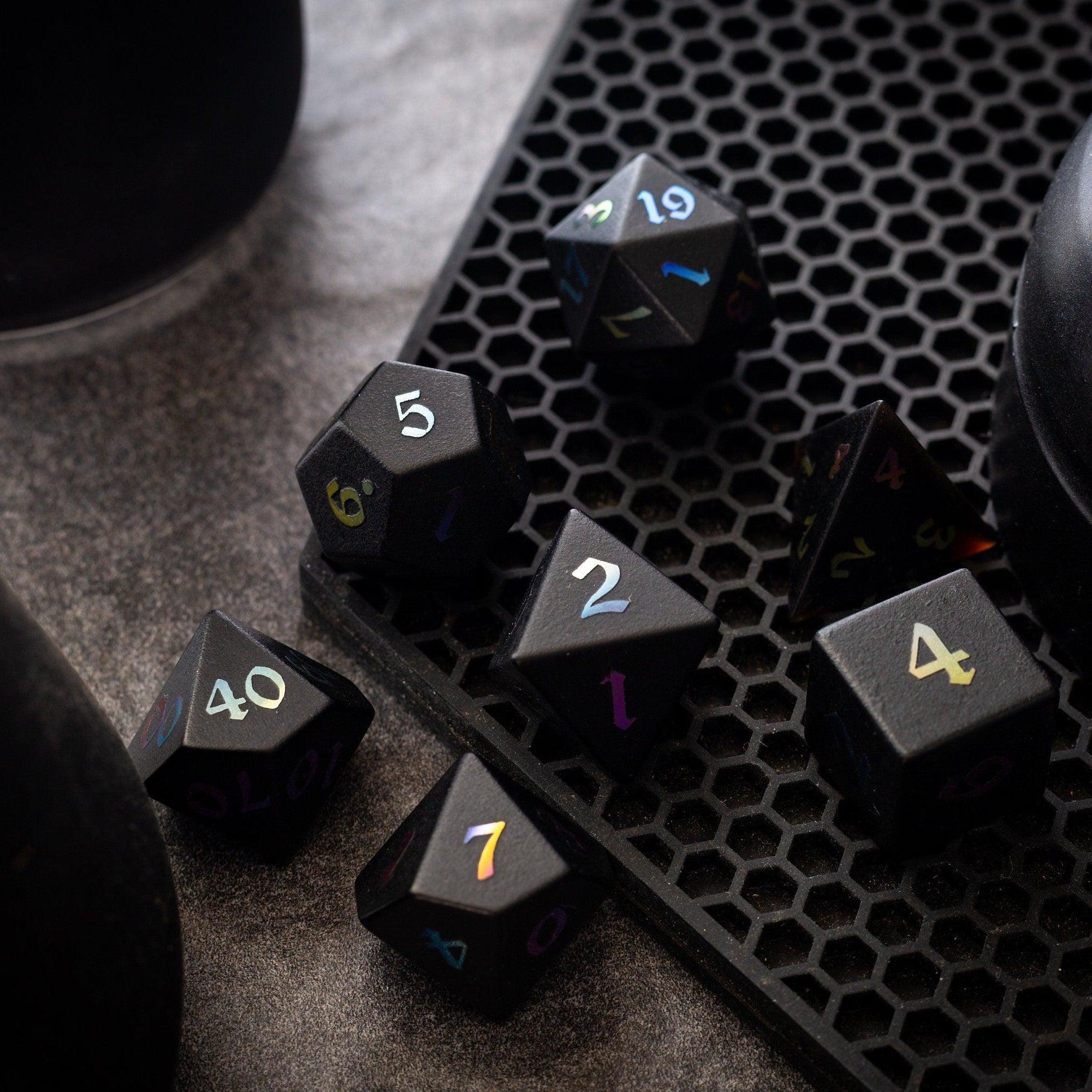
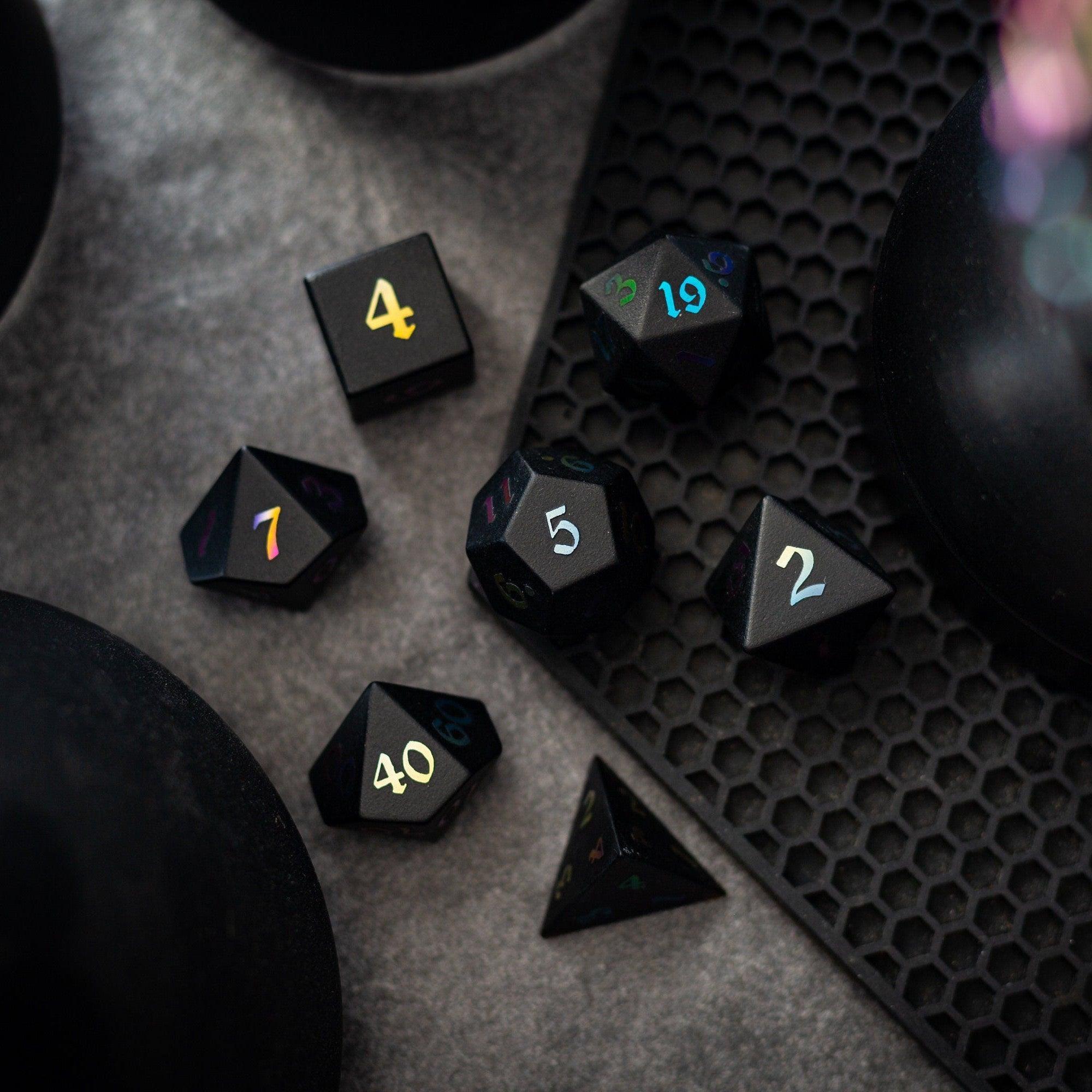
Metal: Bold, hefty, and satisfying. Metal d20s feel impactful, but they demand a tray to protect tables. If you love dramatic clacks and a premium presence, metal is hard to beat.
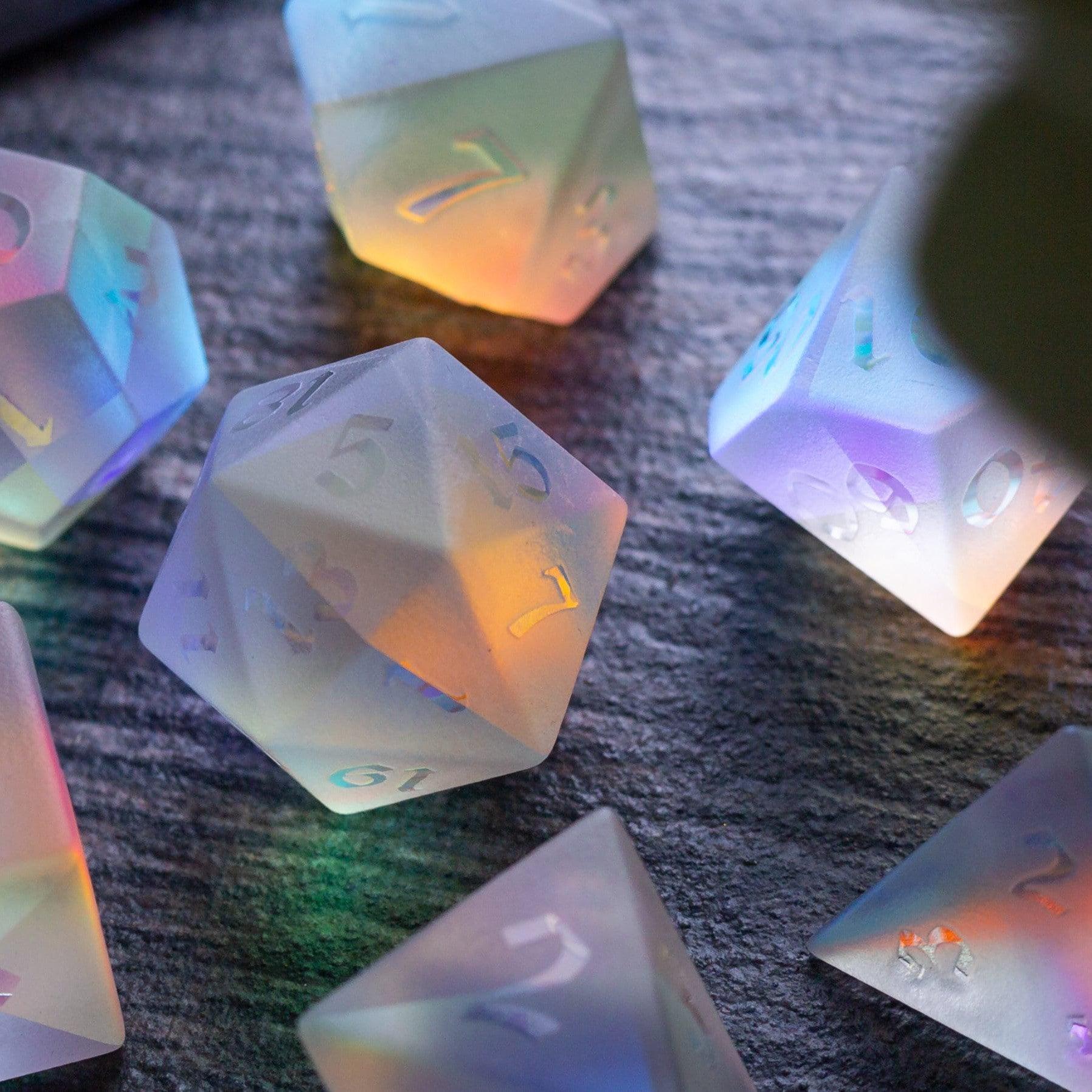
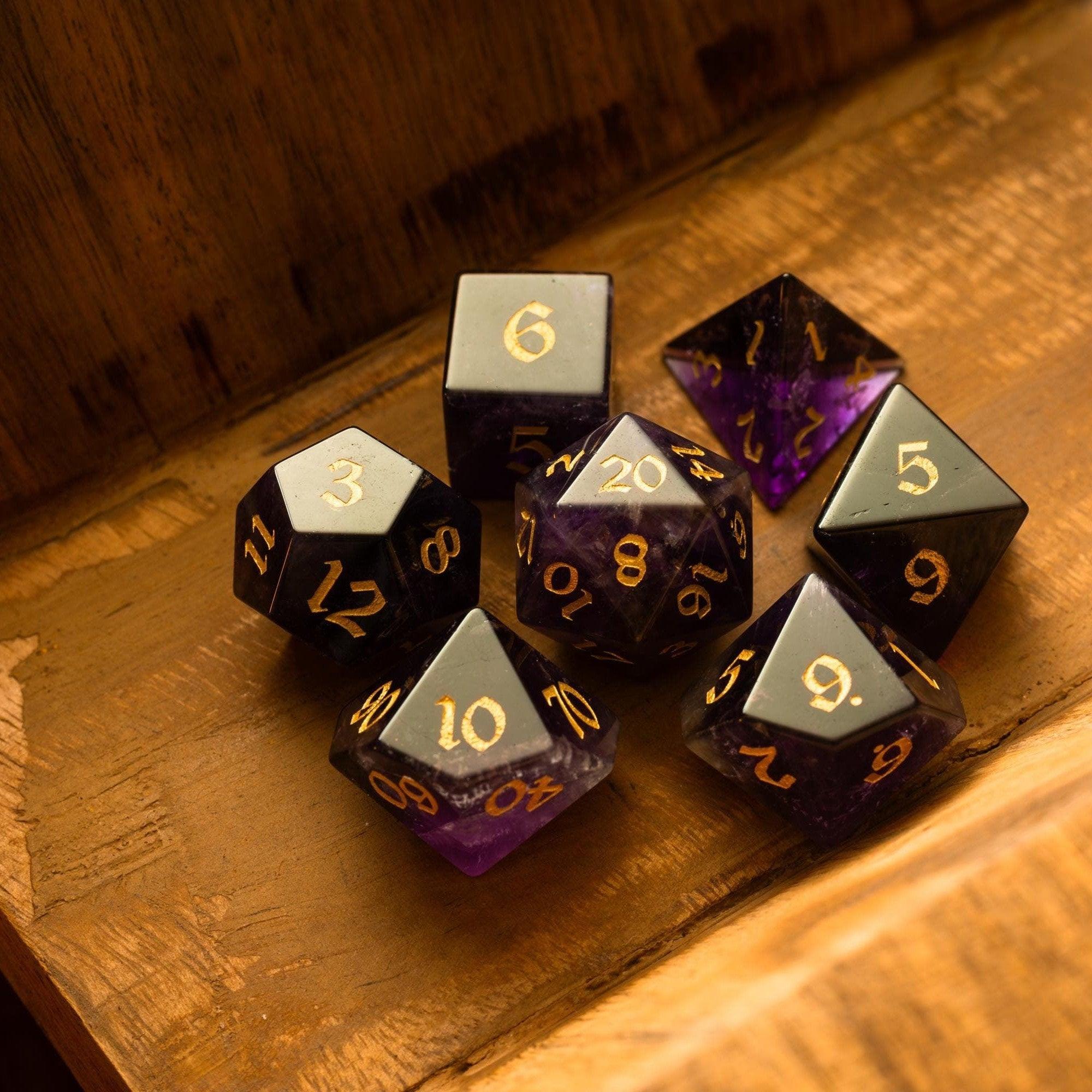
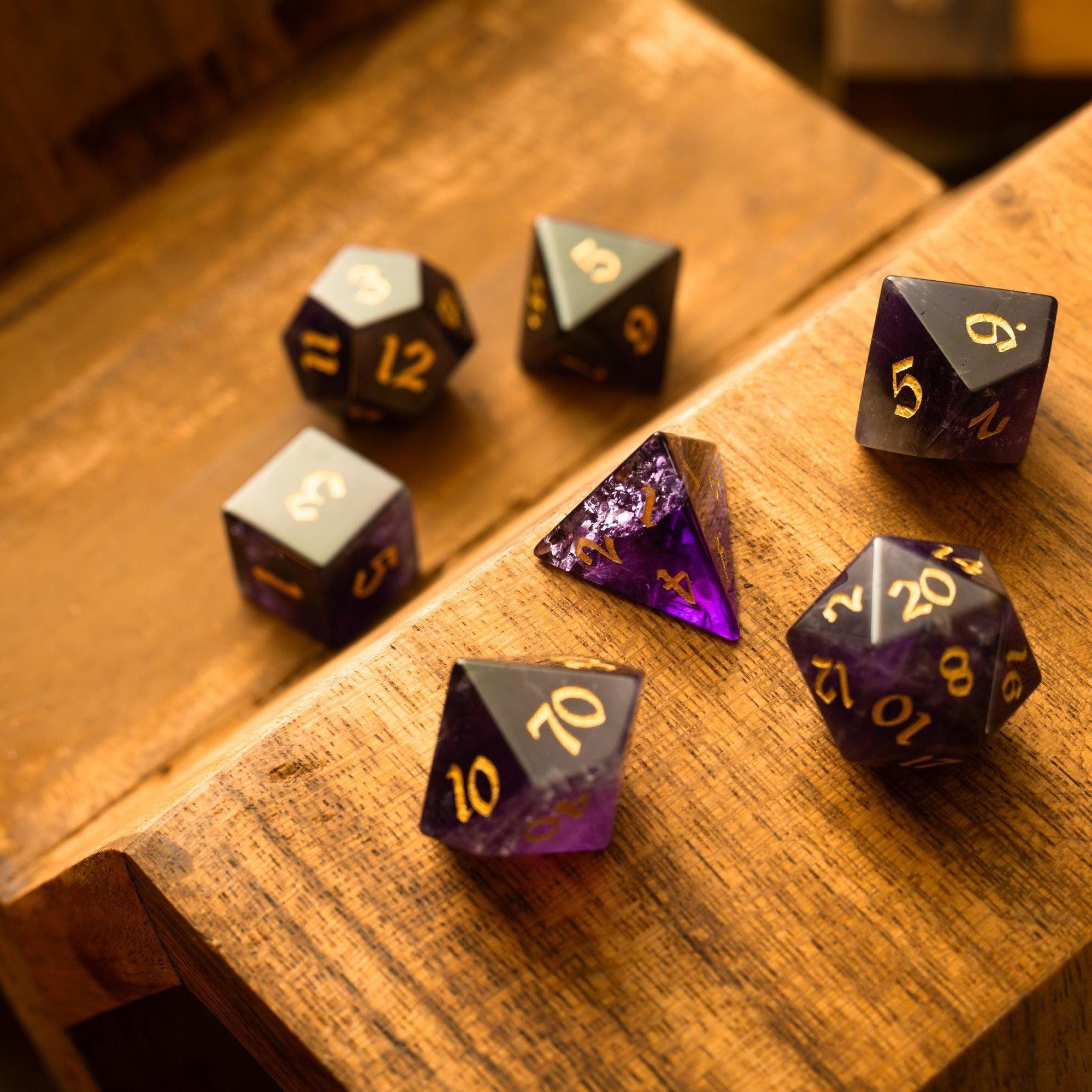
Glass and Gemstone: Gorgeous clarity, depth, and natural textures. These sets elevate any table and reward gentle handling. They’re perfect for milestone campaigns or as a signature character piece.
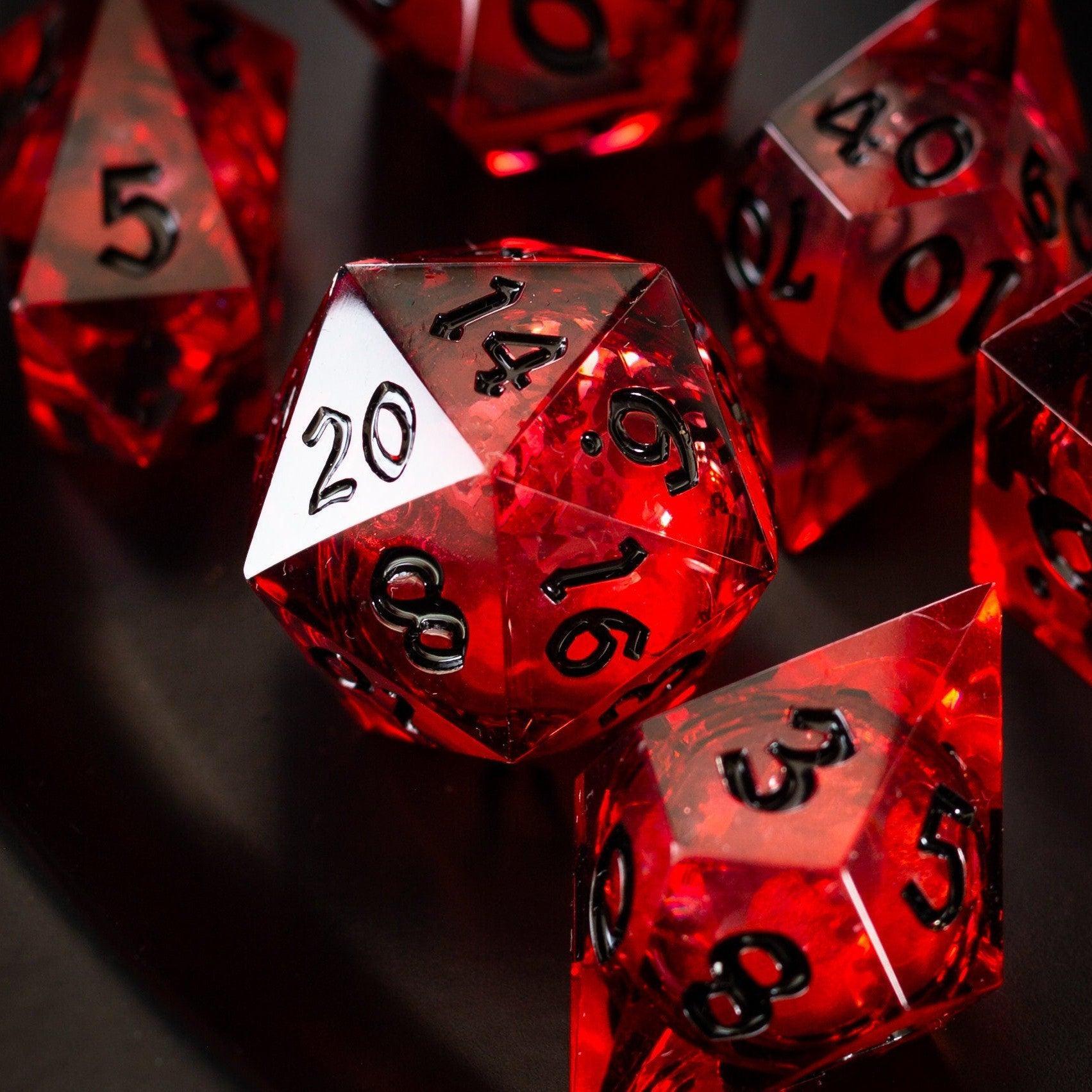
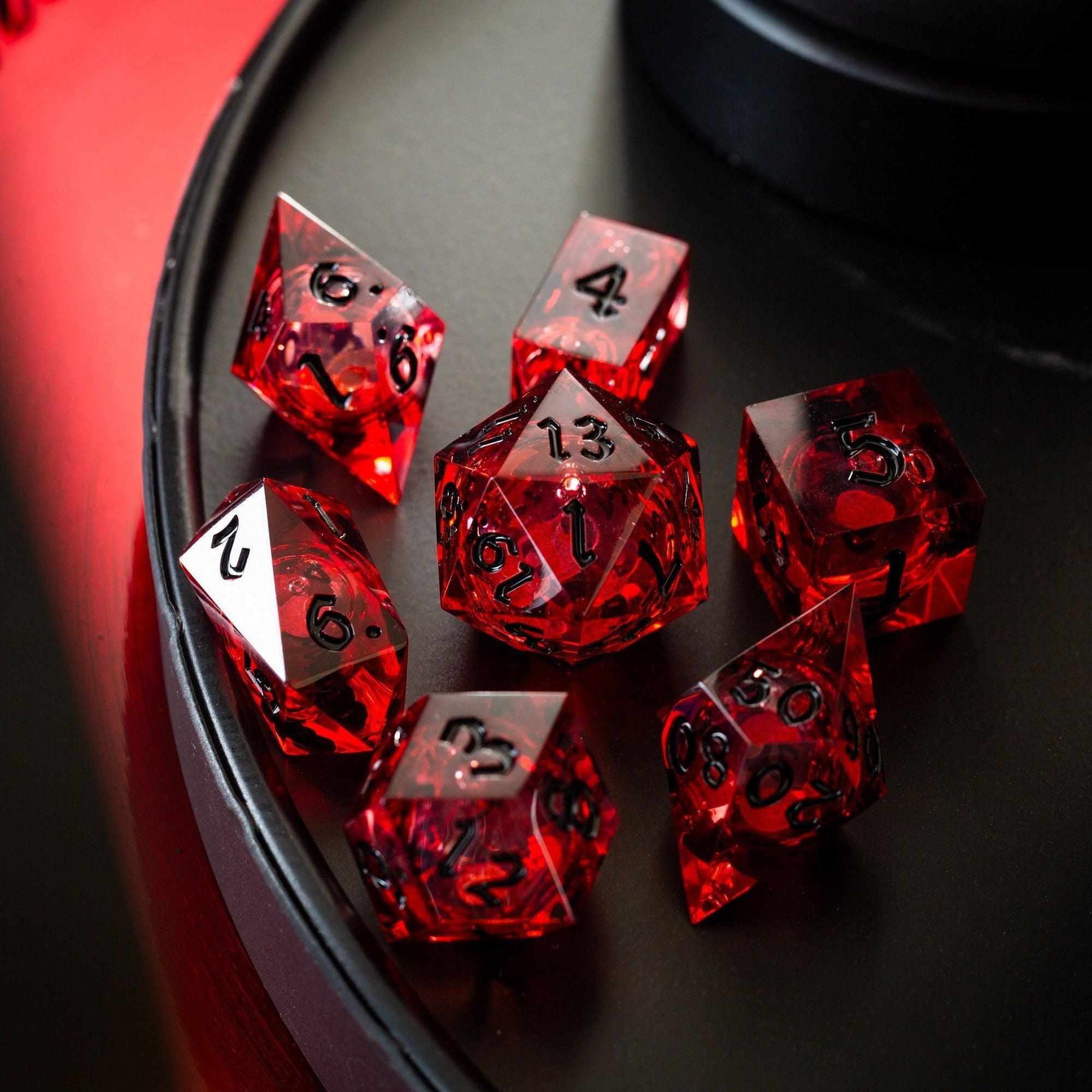
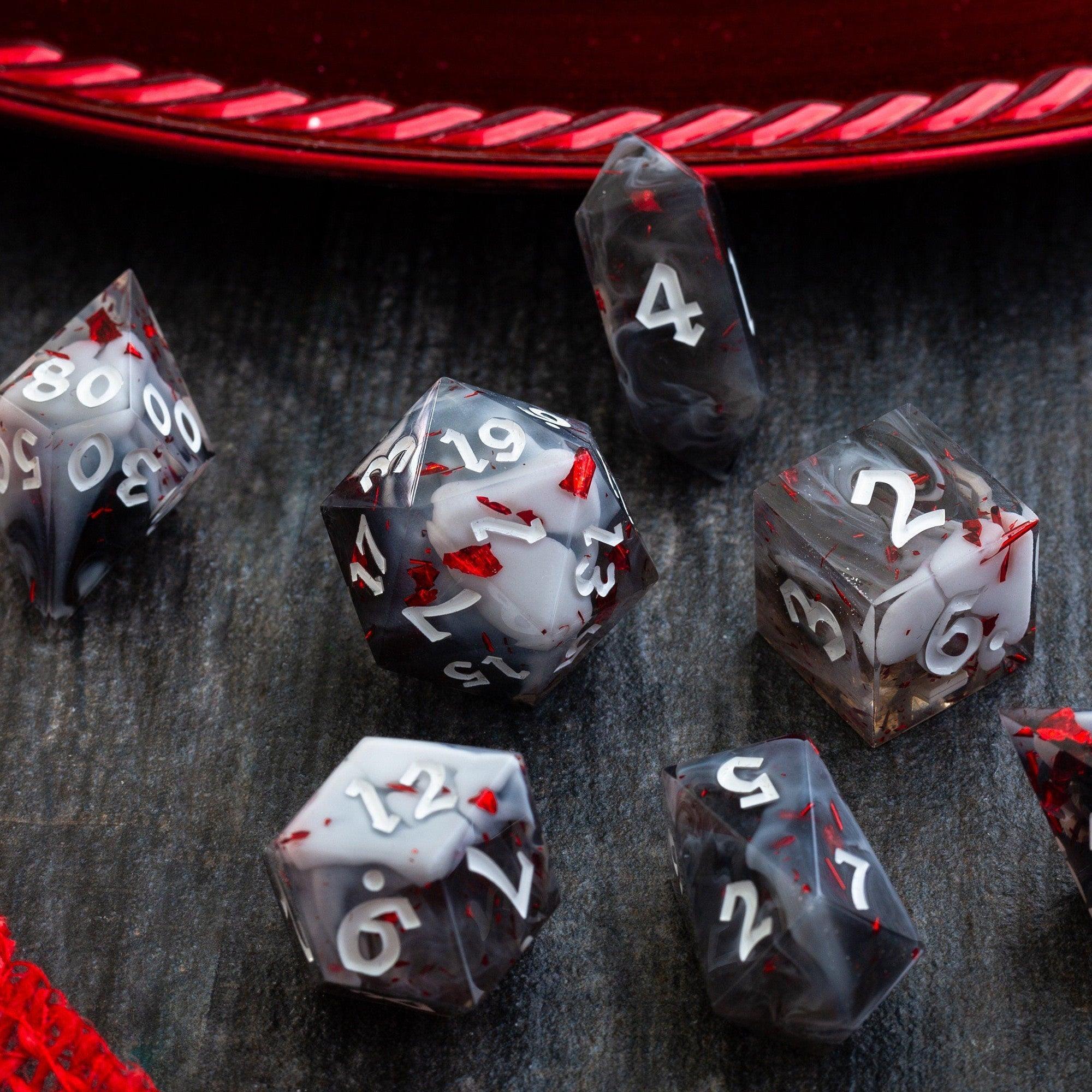
Special Effects: From glittery swirls to liquid cores, these designs bring movement and sparkle to every roll. They’re ideal for players who want their set to be a centerpiece as well as a tool.
When in doubt, start with a versatile resin set and add one premium set that matches your main character’s vibe. That combo covers everyday play and special sessions, while keeping your budget and storage simple.
FAQ
How many dice do I need for a standard session?
A classic seven-piece polyhedral set is enough for most tables: d4, d6, d8, d10, percentile d10, d12, and d20. Players who roll many damage dice (like rogues or blasters) often bring extra d6s or d8s to speed up turns. If you’re new, start with one complete set and add a small bundle of matching d6s once you see your character’s needs.
Are resin sets balanced enough for fair rolls?
Quality resin sets are great for everyday play. Minor visual inclusions don’t automatically create bias; issues usually show up as uneven faces or obvious voids. A quick at-home check is to roll each die 10–20 times on a padded surface and look for outlier streaks. If you don’t see a pattern, you’re good to go. For extra peace of mind, use a flat tray and roll with consistent technique.
What’s the safest way to clean gemstone pieces?
Keep it gentle. Use a dry or slightly damp microfiber cloth and avoid harsh chemicals. Dry immediately to prevent water spots. Store gemstone dice separately or in padded slots so they don’t clack against metal or other hard materials in transit. And always roll on a soft surface to protect both the dice and your table.


Leave a comment
This site is protected by hCaptcha and the hCaptcha Privacy Policy and Terms of Service apply.