
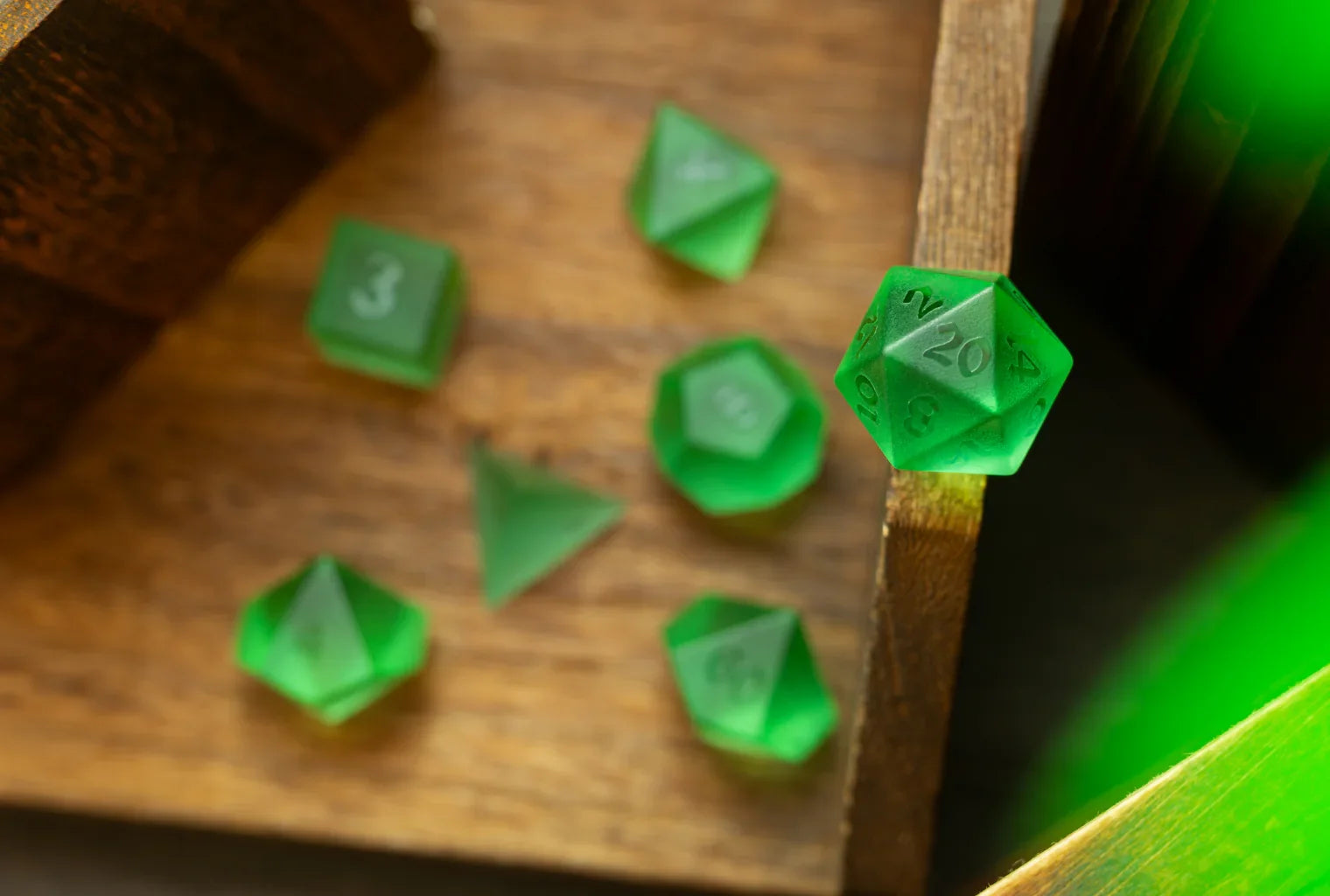
Tabletop Dice Mastery Improve Rolls with Balance and Feel
Updated on: 2025-12-02
Want gear that rolls true, looks stunning, and lasts? This guide shows you how to pick, test, and care for tabletop dice without the guesswork. You’ll learn how materials affect feel and balance, how to spot quality, and how to store your set so it ages well. Plus, you’ll get a quick process for home testing and pro tips for longer life and better rolls.
- Introduction
- Myths vs. Facts
- Step-by-Step Guide
- How to Choose and Care for Tabletop Dice
- Frequently Asked Questions
- Summary & Key Takeaways
Whether you roll for crits every week or you’re curating a personal hoard, picking the right polyhedrals can feel overwhelming. There are so many finishes, edge styles, and materials—resin, gemstone, glass, and metal—that it’s tough to know what actually matters. Good news: a few simple checks make the choice easy. We’ll cover how to judge quality at a glance, run quick home tests for consistency, choose materials that match your playstyle, and keep your set in great shape. With the right set, your rolls feel consistent, your table looks amazing, and your gear lasts for years.
Myths vs. Facts
-
Myth: Heavier always means fairer.
Fact: Weight alone doesn’t equal fairness. Consistency comes from uniform density, precise edges, and even inking—not just mass. -
Myth: Sharp edges guarantee perfect balance.
Fact: Sharp edges help reduce “rounding bias,” but balance also depends on mold quality, interior voids, and polishing method. -
Myth: Hand-poured sets are always less accurate.
Fact: Premium, hand-finished resin can be extremely consistent. Skilled makers pressure-cure pieces to remove bubbles and hand-polish edges for uniformity. -
Myth: Gemstone sets chip easily during normal use.
Fact: Quality stone is durable when rolled on a tray or mat. Chips are rare with reasonable care and proper storage. -
Myth: All glass sets are fragile.
Fact: Many glass options are toughened or use specialized cuts. Use a padded surface and you’ll be fine. -
Myth: If a die fails a single salt test, it’s ruined.
Fact: Simple tests can be inconsistent. Run multiple trials and use several methods before judging.
Step-by-Step Guide
-
Set your priorities. Do you want maximum durability, display-worthy sparkle, or the smoothest roll? Choose a primary goal to guide decisions.
-
Pick a material that matches playstyle. Resin is versatile and light. Gemstone and metal feel premium and weighty. Glass offers luminous depth.
-
Check build quality fast. Look for crisp numerals, even inking, clean edges, and no visible bubbles or voids under strong light.
-
Run simple fairness checks. Use repeated rolls on a tray, spin tests on a smooth surface, and optional salt-water floats to observe biases.
-
Match edge style to preference. Sharp-edges feel precise; rounded edges feel smooth and forgiving. Neither is “best” for everyone.
-
Protect your table and your set. Roll on a mat or tray. Avoid glass-on-glass impacts and keep heavy sets off delicate surfaces.
-
Store and clean correctly. Use a padded case, keep pieces dry, and clean gently with a soft cloth to preserve finish and legibility.
How to Choose and Care for Tabletop Dice
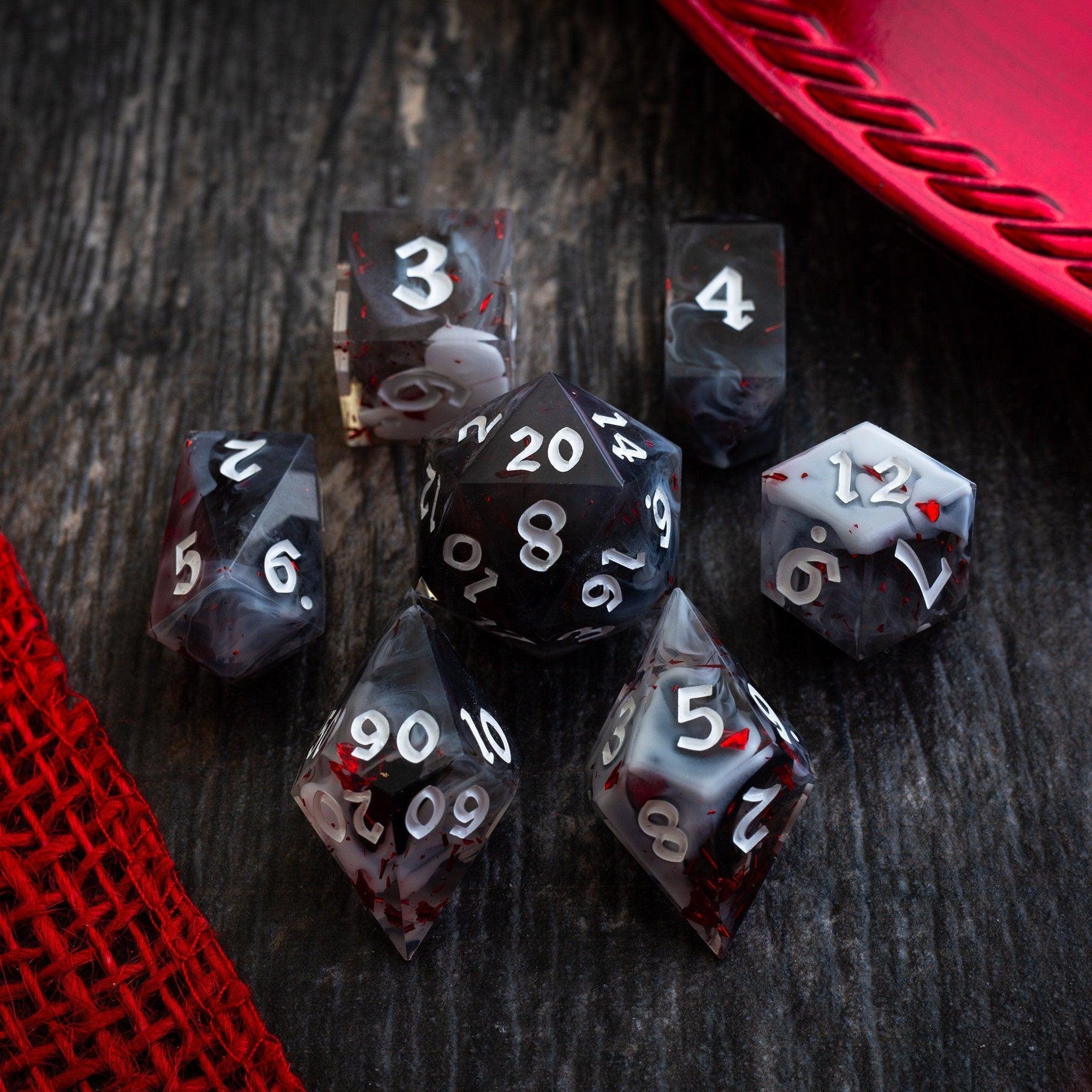
Material matters, but only in context. Resin is a great all-rounder: it’s lightweight, comes in endless styles (from clear to swirling inclusions), and is gentle on most surfaces. Stone and metal bring satisfying heft and presence. Glass sets deliver unique brilliance and depth, especially with dichroic or cracked effects. If you love premium stone looks, browse finely crafted gemstone sets that pair beauty with durability.
Balance comes from precision, not just the substance. Look closely at edge symmetry and numeral depth. Inclusions should be centered and uniform. Hold a d20 up to light and check for obvious bubbles or uneven color bands. Then roll it 30–50 times on a padded tray. Record results loosely. You’re watching for dramatic outliers, not perfect lab stats.
Think about where you play. If you’re on a wood table or glass surface, roll on a mat or tray to protect both the table and your set. A dice tower or padded tray adds consistency by reducing angle and force variation. Heavier pieces feel amazing, but they can scuff delicate surfaces if used raw.
Care is simple. Wipe pieces with a soft microfiber cloth after play. Avoid solvents and harsh cleaners that can cloud finishes or loosen paint fill. Keep sets in a padded box to prevent scratches and keep numerals sharp. If you love statement pieces, the Labradorite set with box pairs display-ready looks with protective storage. For playful motion and sparkle, explore liquid core options. And when in doubt, Shop all collections to compare styles side by side.
When you pick tabletop dice with care—checking precision, choosing the right surface, and storing them safely—you’ll enjoy consistent results and long-term durability without sacrificing style.
Frequently Asked Questions
Are metal sets safe on wooden or glass tables?
They can be, with the right surface. Use a padded tray or mat and you’ll protect both the table and your set. Avoid rolling heavy pieces directly on bare wood or glass. A dice tower or felt-lined tray reduces impact and noise while preserving edges and finishes.
How can I test balance at home?
Use a multi-method approach. First, roll your d20 30–50 times on a padded tray and note if any face appears far too often. Second, spin it gently on a smooth surface; a wobble that consistently favors one side can hint at imbalance. Third, try a salt-water float for a quick visual check—if the same faces tend to surface repeatedly, there may be a bias. Run each test more than once before judging.
What’s the difference between handmade and mass-produced?
Mass-produced sets often use injection molding and automated polishing, which can yield consistent sizing at scale. Handmade and small-batch resin pieces may use pressure curing and hand-finishing for crisp edges, unique designs, and excellent balance. Quality varies in both categories, so inspect edge symmetry, numeral clarity, and interior uniformity rather than assuming one method is always superior.
Summary & Key Takeaways
-
Start with your priorities: durability, display value, feel in hand, or roll consistency.
-
Judge quality at a glance by checking crisp numerals, clean edges, and even inking under strong light.
-
Balance is about precision—uniform density, centered inclusions, and consistent finishing—not just weight.
-
Protect both your gear and your table with a padded tray or tower, especially for heavier or glass sets.
-
Care is simple: soft cloth, gentle storage, no harsh chemicals. Treat your set well and it will treat your rolls well.
-
When you’re ready to compare styles, materials, and finishes, browse curated lines to find a set that matches your playstyle and your vibe.

















Leave a comment
This site is protected by hCaptcha and the hCaptcha Privacy Policy and Terms of Service apply.