
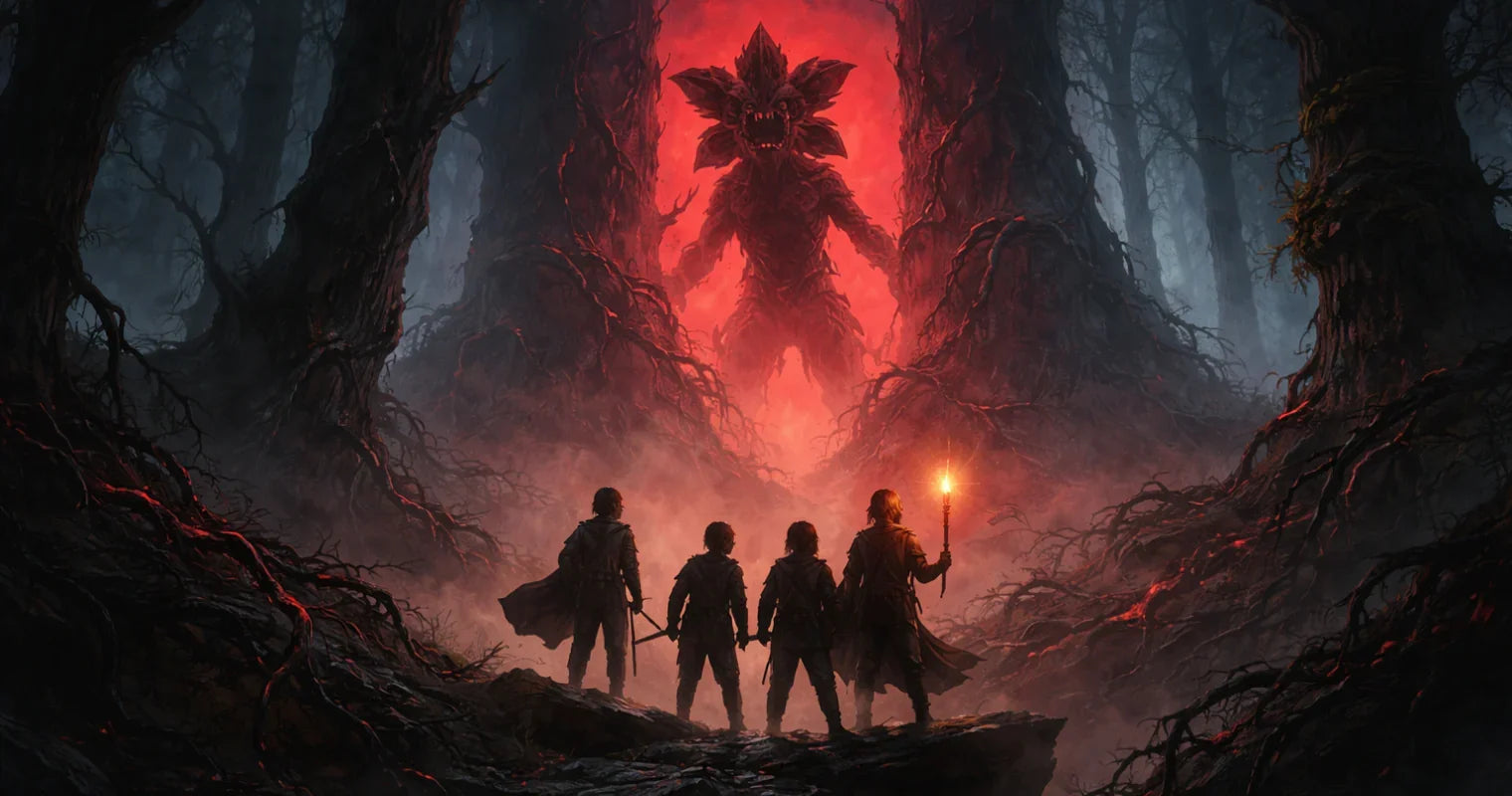
Stranger Things X D&D: How to Use ‘Welcome to the Hellfire Club’ in Your Campaign

Hellfire Club energy is about belonging first, rules second.
The Hellfire Club didn’t just remind people that Dungeons & Dragons exists. It reminded a whole generation why it matters.
When Stranger Things put a group of loud, passionate, slightly unhinged teenagers around a D&D table, it captured something many players recognize instantly: that feeling of finally being seen. The dice weren’t the point. The story wasn’t even the point. The point was that, for a few hours, the world made sense, and you belonged somewhere.
This guide is about helping you bring that same feeling to your own table. Not by copying the show, but by understanding what Welcome to the Hellfire Club represents and translating that spirit into a playable, emotionally charged D&D campaign or one-shot.
1. Why the Hellfire Club Resonates
The Hellfire Club hits hard because it reflects a real truth about tabletop gaming, especially for people who felt like outsiders growing up.
In the show, the club isn’t just a game group. It’s a refuge. A place where intensity is allowed, creativity is celebrated, and being “too much” is suddenly the point. For many viewers, especially D&D players, that felt deeply familiar.
D&D has always been more than a ruleset. It’s a social ritual. A shared language. A way to turn anxiety, imagination, and friendship into something powerful.
That’s why the Hellfire Club didn’t feel like a joke or a novelty cameo. It felt earned.
2. What Welcome to the Hellfire Club Really Is
Within the canon of Stranger Things, Welcome to the Hellfire Club refers to the introduction of the Hellfire Club and its Dungeon Master during Season 4, as well as the expanded storytelling seen in the official comic miniseries Stranger Things: Welcome to the Hellfire Club.
At the center of it all is Eddie Munson.
Eddie isn’t portrayed as a joke DM or a caricature. He’s intense, theatrical, demanding, and deeply invested in his players. His style is loud and dramatic, but it’s rooted in care. He wants his players to feel epic. He wants them to rise to the moment.
What makes the Hellfire Club powerful is the contrast between:
- The fear outsiders project onto the game
- And the joy and trust inside the table
That tension is pure storytelling fuel.
3. Core Themes to Bring Into Your Campaign
If you want your campaign to feel Hellfire-inspired, focus on themes before mechanics.
Outsiders and Found Family
The characters at the table are not the heroes the world expects. They’re the ones pushed aside. At the table, that flips.
Let your campaign reward:
- Unlikely heroes
- Emotional bonds
- Loyalty over reputation
Moral Panic and Misunderstood Heroes
In Stranger Things, the Hellfire Club is feared because it’s misunderstood. You can bring that same pressure into your world.
Towns that fear adventurers. Authority figures who see danger instead of heroism. Rumors that spiral out of control.
Friendship Under Pressure
The best Hellfire moments aren’t about winning fights. They’re about standing your ground when things get scary.
Put relationships at risk. Let characters argue, doubt, and choose each other anyway.
High-Stakes Roleplay Over Rules Mastery
The Hellfire Club doesn’t feel like a rules lecture. It feels like a performance.
Encourage bold choices. Let emotional decisions matter, even if they’re not optimal.
4. Translating the Hellfire Club Into D&D Play
This isn’t about changing editions or banning rules. It’s about table culture.
Campaign Tone
Aim for:
- Intensity without cruelty
- Stakes without hopelessness
- Drama without cynicism
Let failure be meaningful, not punishing.
Table Culture
Set expectations early:
- Big reactions are welcome
- Character voices and gestures are encouraged
- Emotional scenes get space to breathe
Make it clear that caring deeply is not “cringe.” It’s the point.
Encourage Dramatic Choices
When a player hesitates between a safe option and a risky, emotional one, reward the risk with spotlight time, narrative weight, or long-term consequences.
5. Campaign & One-Shot Ideas Inspired by the Hellfire Club
Here are story frameworks that capture the vibe without copying the show.
Campaign Hooks
|
Hook |
Core Conflict |
Why It Works |
|
The Feared Club |
A local group is blamed for supernatural events |
Mirrors moral panic themes |
|
The Last Game |
One final ritual or trial decides a town’s fate |
High stakes, emotional urgency |
|
The Wrong Heroes |
The party is blamed while real evil hides |
Encourages roleplay and investigation |
|
The Hidden Door |
A secret world beneath a familiar place |
Nostalgia meets horror |
Villain Concepts
- A creature that feeds on fear and rumor
- A charismatic authority figure manipulating panic
- An ancient force awakened by collective belief
Community-Based Adventures
Set your story in one town, one school, one neighborhood. Let NPCs matter. Let gossip spread. Let choices echo.
6. Character Archetypes Inspired by Stranger Things
These are archetypes, not copies. Use the emotional role, not the character details.
The Bold DM (NPC or PC)
- Loud, theatrical, fiercely protective
- Believes in the story more than the odds
- Pushes others to be brave
The Reluctant Hero
- Doesn’t want the spotlight
- Steps up anyway
- Grounds the story emotionally
The Skeptic
- Questions everything
- Acts as moral or logical anchor
- Slowly learns to trust the group
The Loyal Friend
- Not the strongest or smartest
- Always shows up
- Holds the party together
These roles help players understand how they fit into the story emotionally, not just mechanically.
7. Tips for Running a Hellfire-Style Table
Get Player Buy-In
Tell your players what kind of story you’re telling. Emotional. Character-driven. Sometimes intense.
Not everyone wants that. That’s okay. The right table makes all the difference.
Safety and Trust
Big emotions require trust.
- Use safety tools
- Check in after heavy scenes
- Respect boundaries
Intensity should feel exhilarating, not uncomfortable.
Embrace Intensity Without Railroading
Let players surprise you. Don’t script outcomes. The Hellfire Club feels alive because anything can happen.
If they derail your plans, follow them. That’s where the magic is.
8. Why This Kind of D&D Matters
At its core, D&D has always been about belonging.
The Hellfire Club reminds us that the table can be a sanctuary. A place where weirdness is power, friendship is heroic, and stories help us survive hard things.
You don’t need demogorgons or 1980s nostalgia to make that work. You just need players who care, a DM who believes in them, and a willingness to let the story get a little messy and very human.
That’s the real legacy of the Hellfire Club.













Leave a comment
This site is protected by hCaptcha and the hCaptcha Privacy Policy and Terms of Service apply.