
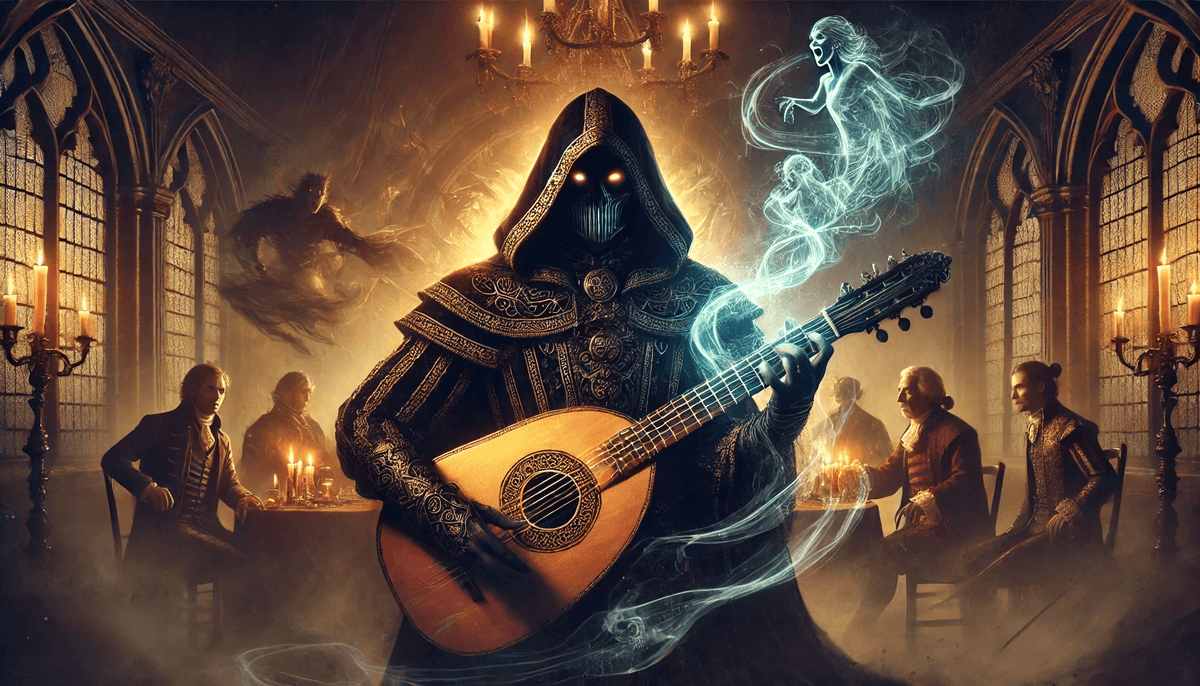
College of Whispers Bard Guide for Beginners: Mastering the College of Whispers in D&D 5e

The College of Whispers Bard is one of the darkest Bard subclasses in Dungeons & Dragons 5e. Introduced in Xanathar’s Guide to Everything, it focuses on espionage, intimidation, stolen identities, and sudden psychic damage. In 2026, the subclass is legacy material, but it can still be paired with the revised 2024 Bard rules, often called D&D 5.5e, because College of Whispers was not replaced by a new version in the 2024 Player’s Handbook.
Why Play a College of Whispers Bard?
Key Benefits:
- Psychological Warfare: Frighten or pressure people through conversation instead of relying only on direct combat.
- Espionage Expertise: Use disguises, social skills, Expertise, and Mantle of Whispers to infiltrate places other characters may struggle to enter.
- Psychic Burst Damage: Psychic Blades lets you spend Bardic Inspiration to add extra psychic damage to a successful weapon attack.
- Strong Roleplay Potential: The subclass naturally fits spies, informants, blackmailers, covert agents, and morally complicated performers.
College of Whispers works best in campaigns where conversations, secrets, factions, and identity matter. Several signature features are far more useful when the story gives you people to investigate, deceive, or influence.
Core Features
Key Mechanics and Abilities
- Psychic Blades: At Bard level 3, when you hit a creature with a weapon attack, you can spend one use of Bardic Inspiration to deal an extra 2d6 psychic damage. You can use it only once per round on your turn. The damage rises to 3d6 at Bard level 5, 5d6 at level 10, and 8d6 at level 15.
- Words of Terror: At level 3, if you speak alone with a Humanoid for at least 1 minute, it must make a Wisdom saving throw against your spell save DC. On a failure, it becomes Frightened of you or another creature you choose for up to 1 hour. The effect can end early if the target is attacked or damaged, or sees its allies attacked or damaged. After you use the feature, you must finish a Short or Long Rest before using it again.
- Mantle of Whispers: At level 6, when a Humanoid dies within 30 feet of you, you can use your Reaction to capture its shadow. You can later use an action to take on that person’s appearance for 1 hour and gain enough general information to impersonate them. A creature trying to see through the disguise contests your Charisma (Deception) with Wisdom (Insight), and you gain a +5 bonus to the Deception check.
- Shadow Lore: At level 14, you can use an action to whisper to a creature within 30 feet that can hear and understand you. On a failed Wisdom save, the creature is Charmed by you for up to 8 hours and believes you know a secret that could ruin it. The target may grant favors, but the feature does not automatically make it fight for you or risk its life.
The revised Bard makes Psychic Blades easier to fuel after level 5. The 2024 Bard still has Bardic Inspiration uses based on Charisma, and Font of Inspiration now restores those uses on a Short or Long Rest and also lets you spend a spell slot to recover one expended use. That gives a Whispers Bard more flexibility when deciding whether Bardic Inspiration should support an ally or power Psychic Blades.
Suggested Ability Scores
- Charisma (Primary): Your spellcasting, Bardic Inspiration uses, social checks, Words of Terror, and Shadow Lore all benefit from strong Charisma.
- Dexterity (Secondary): Dexterity improves AC in light armor, initiative, Stealth, and attacks with Finesse or ranged weapons. This matters because Psychic Blades only works after a weapon attack hits.
- Constitution: More Constitution improves Hit Points and helps with Concentration saves when you are maintaining an important spell.
Recommended Species
- Human: The current Human gains an Origin feat, an extra skill proficiency, and Heroic Inspiration after a Long Rest, making it a flexible choice.
- Tiefling: Tiefling lineages provide innate magic and damage resistance that can suit a magical spy.
- Elf: Elf lineages offer Darkvision, Fey Ancestry, and magical traits useful to many Bard concepts.
- Kenku: If compatible older species are allowed, Kenku has strong thematic potential for mimicry and covert roleplay.
Playing as a Whispers Bard
Role in a Party
Whispers Bards can move between social scenes and tactical support. Common party roles include:
- Infiltrator: Use Expertise, Stealth, Deception, disguises, and Mantle of Whispers to enter restricted spaces.
- Controller and Debuffer: Use Bard spells to Charm, distract, disable, or reposition enemies, while saving Words of Terror for longer conversations.
- Burst Attacker: Add Psychic Blades when a weapon hit needs extra damage. You are still a full spellcaster, so weapon attacks are only one part of the build.
Tips for New Players
- Do not treat Words of Terror like a combat fear button. You need a private conversation lasting at least 1 minute before the saving throw happens.
- Save Psychic Blades for a hit that matters, especially before level 5 when Bardic Inspiration only returns after a Long Rest under the revised Bard rules.
- Use Mantle of Whispers when impersonating a specific dead Humanoid would solve a real problem. The disguise gives useful general knowledge, but it does not reveal every secret the person knew.
- Talk with your DM before building heavily around infiltration. The subclass is more rewarding in campaigns with factions, investigations, or covert missions.
Roleplay Suggestions
- The Shadowy Spy: A performer who quietly collects names and secrets for a hidden employer.
- The Silver-Tongued Manipulator: A Bard who prefers rumors and leverage to direct threats.
- The Haunted Minstrel: A storyteller whose knowledge of the dead makes every performance unsettling.
Whispers Bards fit naturally into adventures built around hidden groups and divided loyalties. Remarkable Cults & Their Followers can support that style of campaign by giving a GM factions, beliefs, motives, and internal tensions to work into social encounters.
Gear and Dice Recommendations
Suggested Equipment
- Weapons: Under the revised Bard rules, Bards are proficient with Simple weapons. Daggers are a straightforward Finesse option for a Dexterity-focused Whispers Bard. If you gain Martial weapon proficiency from another source, weapons such as a rapier can also support Psychic Blades.
- Armor: Light armor is the Bard’s standard armor training and works well with a good Dexterity score.
- Adventuring Gear: A Disguise Kit, Forgery Kit if you can gain proficiency with it, writing supplies, costume pieces, and ordinary travel gear can all be useful in infiltration-heavy sessions.
Dice Recommendations from Runic Dice
The College of Whispers Bard has a secretive style, so darker or color-shifting DND dice can fit the character. Whether you prefer gemstone dice or glass dice, readability matters more than matching a theme.
- Hidden Identity: The Black Night Raised Obsidian Gemstone DND Dice Set uses genuine black obsidian and raised numbers, which suits a character built around secrecy and infiltration.
- Unsettling Presence: The Dark Nox Forge Fire Glass DND Dice Set combines dark glass with fiery tones for a sharper, more ominous look.
- Shifting Persona: The Gemstone Raised Dichroic Glass DND Dice Set changes appearance with the light, which fits a Bard whose identity can change from one scene to the next.
Gemstone and glass dice can chip if dropped onto hard surfaces, so a padded dice tray or playmat is a practical choice during regular sessions.
Advanced Tips and Tricks
Optimization Strategies
- Feats: Actor can support an impersonation-focused character, while Alert helps if acting early matters to your plan. Use the feat versions allowed by your table.
- Spell Choices: Enchantment and Illusion spells give you options when subclass features are too slow for the scene. Words of Terror, Mantle of Whispers, and Shadow Lore still follow their own rules.
- Multiclassing: Rogue can add skill tools and Sneak Attack, but levels outside Bard delay spell progression and later Whispers features.
Advanced Builds
- Combat Whisperer: Keep Charisma high but invest enough in Dexterity to land weapon attacks reliably, then use Psychic Blades for occasional burst damage instead of trying to fight like a dedicated martial class.
- Manipulator Bard: Prioritize Charisma, Expertise in social skills, and spells that give you several ways to influence a scene when Words of Terror or Shadow Lore is not appropriate.
- Infiltrator Bard: Combine Stealth, Deception, Expertise, ordinary disguises, and Mantle of Whispers so the character has multiple approaches instead of depending on one feature.
The College of Whispers Bard remains one of D&D 5e’s most distinctive subclasses for espionage and social pressure. In a 2026 game using the revised Bard, it benefits from the newer Bardic Inspiration and Font of Inspiration rules while keeping its original Whispers features from Xanathar’s Guide to Everything. It is at its best when the campaign gives secrets real value and lets clever preparation matter as much as damage.




















Leave a comment
This site is protected by hCaptcha and the hCaptcha Privacy Policy and Terms of Service apply.