

War Domain Cleric Guide for Beginners: Mastering the War Cleric in D&D 5e

The War Domain Cleric is a divine warrior, a champion of battle who wields the power of the gods to crush enemies, inspire allies, and lead the charge into war. Introduced in the Player’s Handbook and substantially revised in the 2024 Player’s Handbook, the current War Domain is ideal for players who want to combine divine magic with martial prowess, excelling in weapon combat while retaining full Cleric spellcasting.
Unlike Clerics that focus primarily on healing or protection, War Clerics specialize in weapon mastery, accurate attacks, martial support, and battle-focused divine magic. If you love the idea of a heavily armored warrior-priest who fights with steel and divine power, this subclass is for you!
Why Play a War Domain Cleric?
Key Benefits
- Strong Melee Combatant – Choose the Protector Divine Order for Martial weapon proficiency and Heavy armor training, while War Priest adds Weapon Mastery and extra attacks.
- Extra Attacks from Divine Power – Use War Priest to make a weapon attack or Unarmed Strike as a Bonus Action.
- Battlefield Leader & Support – Combine Cleric spells such as Bless and Spirit Guardians with War Domain Spells and martial abilities.
- Reliable Attacks with Channel Divinity – Guided Strike can turn a missed attack from you or a nearby ally into a hit with a +10 bonus.
- Great for Roleplay as a Holy Warrior – Be a divine champion of justice, conquest, honor, destruction, or disciplined warfare.
Compared to other Clerics, War Clerics are among the most martial-focused options in current D&D, combining weapon combat, full spellcasting, Weapon Mastery, and powerful battle support.
Core Features
Key Mechanics and Abilities
Bonus Proficiencies (Level 1)
- 5e (2014): War Domain originally granted Martial weapon and Heavy Armor proficiency as a subclass feature at level 1.
- Current 5.5e: Those proficiencies are handled by the base Cleric’s Divine Order feature instead.
- Choose Protector at Cleric level 1 to gain Martial weapon proficiency and Heavy armor training.
- Choose Thaumaturge instead if you prefer a more spell-focused War Cleric.
- Example: A Protector War Cleric can wield a greatsword, warhammer, or other Martial weapon while wearing Heavy armor.
The revised War Domain also receives an updated list of always-prepared War Domain Spells, including battle-focused options such as Guiding Bolt, Magic Weapon, Shield of Faith, Spiritual Weapon, Crusader’s Mantle, Spirit Guardians, Fire Shield, Freedom of Movement, Hold Monster, and Steel Wind Strike as you gain Cleric levels. D&D Beyond confirms that Guiding Bolt, Fire Shield, and Steel Wind Strike replaced several spells from the 2014 list.
War Priest (Level 3)
- You gain War Priest when you choose the War Domain at level 3.
- You can use the Mastery property of one Simple or Martial weapon with which you have proficiency.
- You can change your chosen Mastery weapon after finishing a Long Rest.
- You can also make one weapon attack or Unarmed Strike as a Bonus Action.
- You can use this Bonus Action a number of times equal to your Wisdom modifier, with at least one use.
- You regain all expended uses after a Short or Long Rest.
- Unlike the 2014 version, you do not need to take the Attack action first.
- Example: Cast an Action spell and then, if appropriate, spend a use of War Priest to make a Bonus Action weapon attack.
The Short Rest recharge makes War Priest significantly easier to use throughout an adventuring day than its 2014 counterpart.
Channel Divinity: Guided Strike (Level 3)
- When you or a creature within 30 feet of you misses with an attack roll, you can use your Reaction and expend one use of Channel Divinity.
- Add +10 to the attack roll, potentially turning the miss into a hit.
- Unlike the old version, Guided Strike can now benefit an ally as well as yourself.
- Because it triggers after an attack misses, you do not need to spend the feature on an attack that would have hit anyway.
- Example: Your Rogue narrowly misses with an important Sneak Attack. Guided Strike can add +10 to the roll and potentially turn that miss into a hit.
This current feature effectively incorporates the ally-support role that the old War God’s Blessing used to provide.
War God’s Blessing (Level 6)
- 5e (2014): War God’s Blessing allowed you to spend Channel Divinity to give another creature +10 to an attack roll.
- Current 5.5e: That functionality has moved into the revised Guided Strike.
- War God’s Blessing is now focused on battle magic.
- It allows you to cast Shield of Faith or Spiritual Weapon without expending a spell slot, with additional benefits that remove the normal Concentration requirement for the supported effect.
- This allows you to combine defensive or offensive divine magic with other Concentration spells more easily than a normal Cleric.
- Example: You can use War God’s Blessing to bring one of these battle spells online without spending a spell slot while preserving Concentration for another important effect.
This is one of the largest changes to the current War Domain. D&D Beyond specifically identifies the redesigned War God’s Blessing as a major upgrade from the old attack-roll bonus feature.
Divine Strike (Level 8)
- 5e (2014): War Clerics originally received a subclass-specific Divine Strike at level 8, adding extra weapon damage once per turn.
- Current 5.5e: The old subclass Divine Strike has been replaced by the base Cleric’s Blessed Strikes at level 7.
- Choose Divine Strike to deal an additional 1d8 Radiant or Necrotic damage when you hit with an attack roll once on each of your turns.
- Or choose Potent Spellcasting if you prefer to strengthen Cleric cantrips.
- At level 14, Improved Blessed Strikes increases Divine Strike to 2d8 or improves Potent Spellcasting.
- A weapon-focused War Cleric will often prefer Divine Strike, but the current rules no longer force that choice.
Avatar of Battle (Level 17)
- Gain Resistance to Bludgeoning, Piercing, and Slashing damage.
- 5e (2014): The old version applied only against qualifying damage from nonmagical weapons.
- Current 5.5e: The revised feature no longer has that nonmagical restriction.
- This makes Avatar of Battle significantly more reliable against high-level enemies whose attacks would bypass the old feature.
- Example: Whether an enemy’s sword, claw, or other attack is magical or nonmagical, qualifying Bludgeoning, Piercing, or Slashing damage is reduced by your Resistance.
These abilities make War Clerics durable and dangerous martial spellcasters, capable of fighting near the front while still using the Cleric’s healing, control, support, and offensive magic.
Suggested Ability Scores
- Primary: Wisdom – Powers your Cleric spellcasting, spell save DC, spell attacks, War Priest uses, and other important class abilities.
- Secondary: Strength or Constitution – Strength supports Heavy armor and Strength-based weapon builds, while Constitution improves Hit Points and Concentration.
- Tertiary: Dexterity – Useful for initiative and Dexterity saving throws, but typically less important for a Protector War Cleric relying on Heavy armor and Strength.
Recommended Races
Since War Clerics focus on melee combat and battlefield durability, several species work particularly well:
- Orc – The current Orc provides useful frontline traits such as Relentless Endurance and Adrenaline Rush. Current character creation does not use the old Half-Orc species-based Strength bonus.
- Goliath – The current Goliath’s Giant Ancestry options provide several useful martial and defensive abilities that fit a War Cleric.
- Dwarf – The current Dwarf offers strong defensive traits such as Dwarven Resilience and Dwarven Toughness. Heavy armor now comes from the Protector Divine Order rather than the species.
- Human – The current Human gains an additional Origin Feat, making it highly flexible for a martial Cleric. This replaces the old Variant Human approach in current 5.5e character creation.
Playing as a War Domain Cleric
Role in a Party
- Frontline Tank & Damage Dealer – Protector, Weapon Mastery, War Priest, Heavy armor, and Blessed Strikes support an aggressive martial style.
- Battlefield Leader & Support – Buff allies, heal when needed, and use Guided Strike to help important attacks land.
- Divine Enforcer – Combine weapons with battle-focused spells such as Guiding Bolt, Spirit Guardians, Spiritual Weapon, and Hold Monster.
Compared to other Clerics, War Clerics excel at combining martial combat with full divine spellcasting, making them one of the most aggressive subclasses in the current Cleric lineup.
Tips for New Players
- Use War Priest throughout the adventuring day – Its uses now recharge on a Short or Long Rest, so you do not need to hoard every use for a final encounter.
- Save Guided Strike for meaningful misses – The feature now triggers when you or a nearby creature misses, so use it on attacks where turning the miss into a hit has real tactical value.
- Use Spirit Guardians strategically – It remains one of the Cleric’s strongest close-range control and damage spells, making it a natural fit for a durable War Cleric who fights near enemies.
- Choose your Weapon Mastery carefully – War Priest gives you access to a weapon’s Mastery property, so select a weapon whose Mastery effect complements the way you want to control or damage enemies.
Roleplay Suggestions
- The Holy Crusader – A divine warrior on a mission shaped by faith, duty, or conquest.
- The Battle Priest – A soldier-cleric who leads warriors into battle through courage and divine inspiration.
- The Avenging Champion – A warrior of faith who sees combat as the means through which divine judgment is carried out.
Gear and Dice Recommendations
Suggested Equipment
Weapons
- Greatsword or Warhammer – Strong Martial weapon choices for a War Cleric using the Protector Divine Order. Choose according to your preferred Weapon Mastery property and whether you want to carry a Shield.
- Mace or Spear – Simple weapon choices that work naturally with a Shield and do not require Martial weapon proficiency.
Armor
- Plate Armor – Excellent protection for a Protector War Cleric who meets its requirements.
- Shield – Provides +2 AC, making sword-and-board or warhammer-and-shield builds particularly durable.
Magic Items
- Gauntlets of Ogre Power – Set your Strength to 19 while worn, helping a War Cleric make effective Strength-based weapon attacks without investing as heavily in Strength.
- Cloak of Protection – Provides a +1 bonus to Armor Class and saving throws.
- Amulet of the Devout – Improves Cleric spell attack rolls and spell save DC while also supporting Channel Divinity, making it especially useful for a subclass built around Guided Strike.
Dice Recommendations from Runic Dice
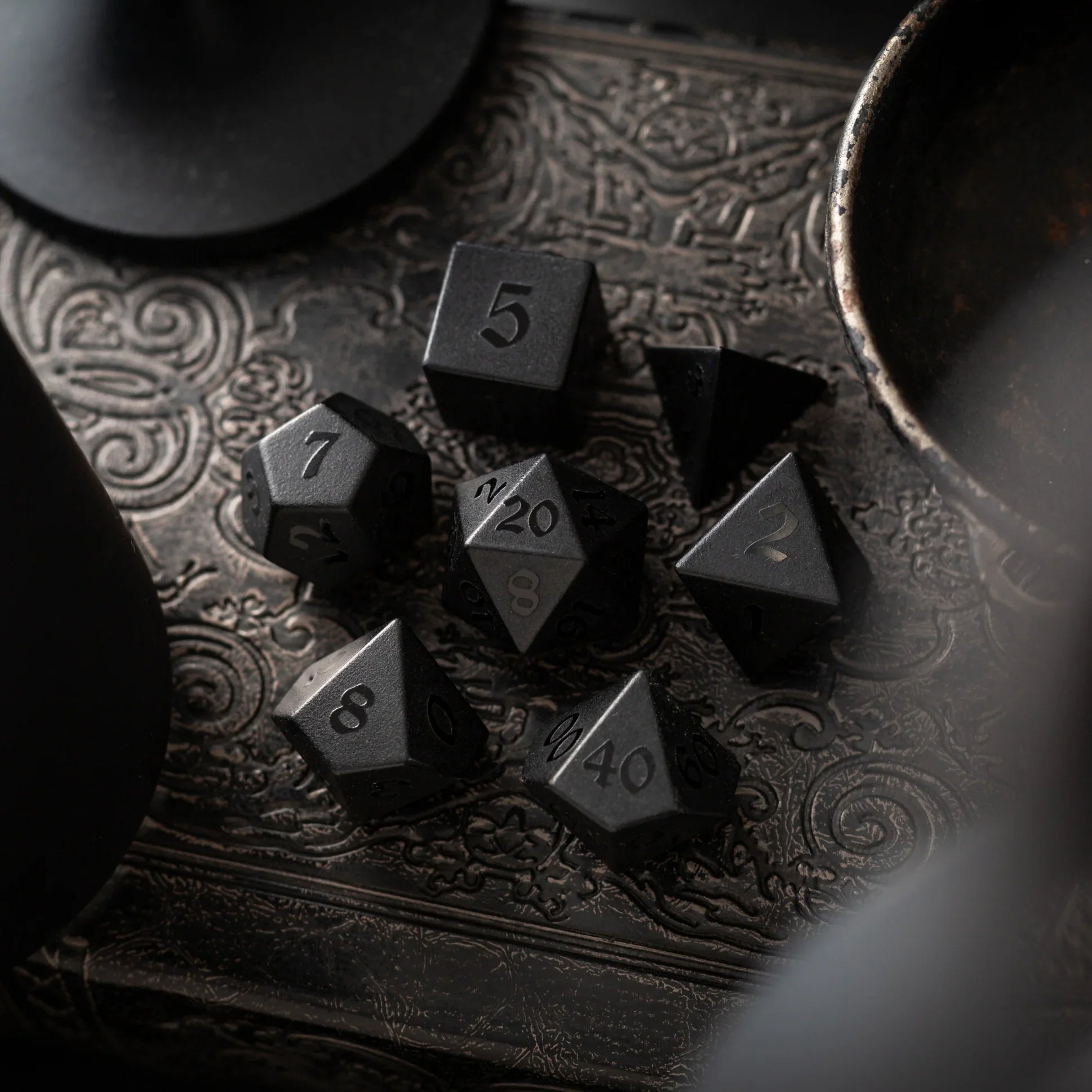
A War Cleric strikes with both faith and force, so your DND dice set should feel as powerful as your battlefield presence. At Runic Dice, gemstone dice, resin dice, and liquid core dice sets can all fit the martial and divine themes of this subclass.
- Crimson Crusader: For red and gold hues evoking a warrior’s holy fury, consider the Blood Red Glitter Liquid Core Resin DND Dice Set. This set features deep red tones with a dynamic liquid core that fits the imagery of a battle-hardened divine champion.
- Stormforged Steel: To resemble a divine war hammer with dark metallic tones, the Black Inked Lightning Cracked Glass DND Dice Set is a fitting choice. Its fractured glass appearance evokes the force and impact of a weapon forged for battle.
- Holy Avenger: For white and gold colors representing divine judgment, the Gemstone Opalite (Gold Font) DND Dice Set offers a luminous appearance that fits a War Cleric devoted to honor, justice, or sacred duty.
Rolling these polyhedral dice can reinforce the War Cleric’s combination of martial strength and divine authority without changing how the character functions mechanically.
Advanced Tips and Tricks
Optimization Strategies
-
Feats:
- Great Weapon Master – The current feat supports characters fighting with Heavy weapons and can complement a two-handed Protector War Cleric.
- War Caster – Helps protect Concentration on important Cleric spells and improves spellcasting while fighting with weapons and a Shield.
- Sentinel – Can help a frontline War Cleric control enemy movement and punish creatures that try to disengage from nearby allies.
-
Multiclassing:
- Fighter – Can add features such as a Fighting Style and Action Surge, but the War Cleric already gains strong martial tools, so multiclass only when those Fighter abilities justify delaying Cleric spell progression.
- Paladin – Can deepen the holy-warrior theme and add Paladin-specific martial abilities, but requires additional ability-score investment and delays higher-level Cleric spells and War Domain features.
The War Domain Cleric is one of the best frontline battle Clerics in current D&D 5.5e, combining Weapon Mastery, Heavy armor through Protector, Bonus Action attacks, powerful Channel Divinity support, and full divine spellcasting. The revised subclass is noticeably more flexible than its 2014 predecessor because War Priest recharges on Short Rests, Guided Strike works on allies, and War God’s Blessing now enhances battle magic instead of duplicating Guided Strike.
If you want to play a divine warrior who fights at the front while supporting allies with sacred battle magic, the current War Domain is one of the strongest thematic choices for that role.



















Leave a comment
This site is protected by hCaptcha and the hCaptcha Privacy Policy and Terms of Service apply.