
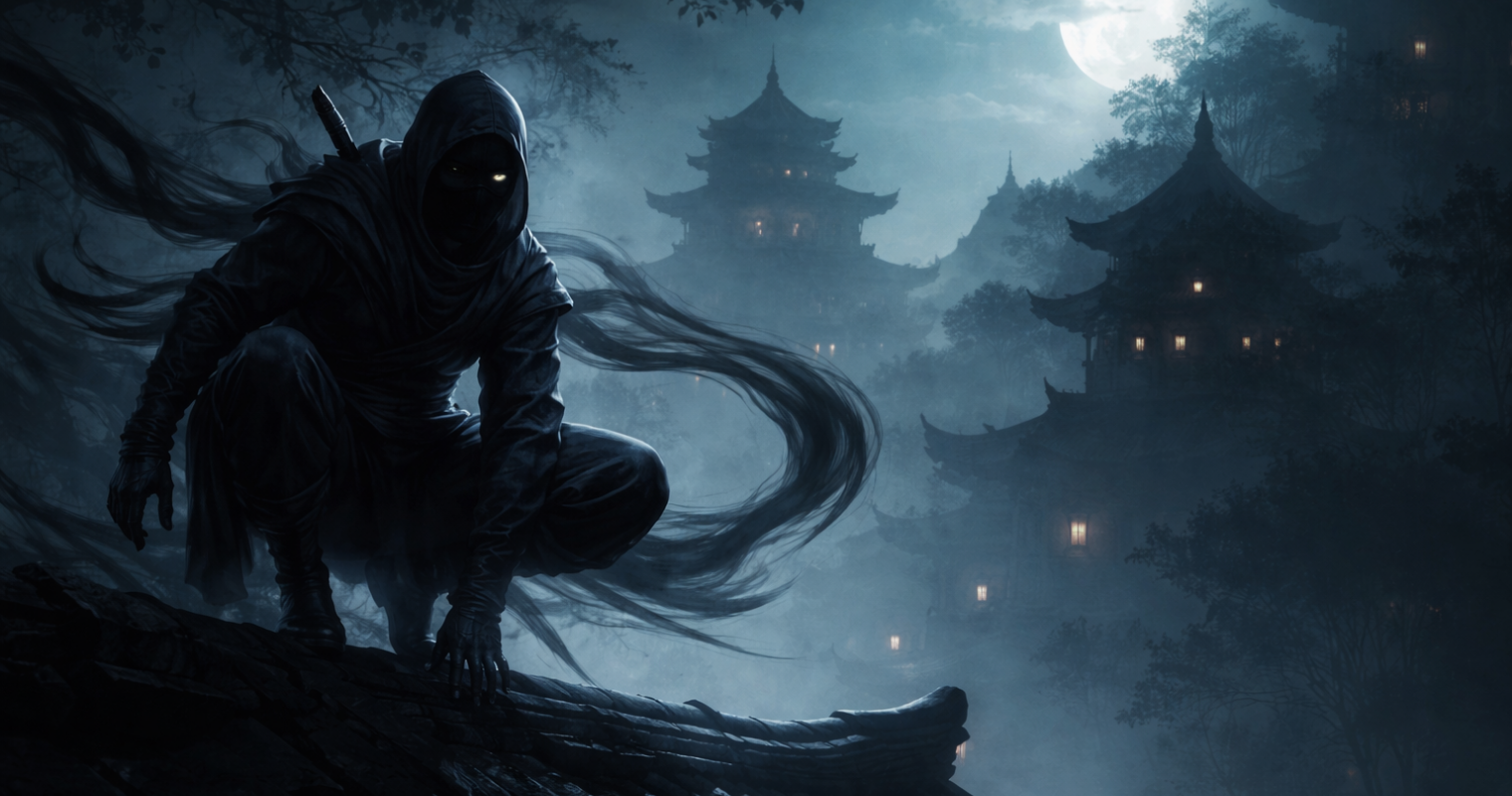
Way of Shadow Monk Guide for Beginners: Mastering the Shadow Monk in D&D 5e

The Way of Shadow Monk is a stealth-focused martial artist who uses darkness, misdirection, and quick movement to outmaneuver enemies. It suits players who enjoy scouting, surprise attacks, and quick escapes.
Which rules are you using? The original Way of Shadow appears in the 2014 Player's Handbook. The revised 2024 Player's Handbook calls it Warrior of Shadow and changes several abilities. In 2026, D&D Beyond labels the older rules 5e (2014) and the revised rules 5.5e (2024). This guide explains both versions, starting with the revised subclass. See the official Monk rules comparison for more details.
WHY PLAY A WAY OF SHADOW MONK?
Key Benefits
- Stealth and infiltration: Scout ahead, distract guards, and approach guarded areas carefully.
- Superior mobility: Shadow Step teleports you between dim or dark spaces without spending Focus or Ki points.
- Flexible combat: Reach enemy spellcasters, leave dangerous positions, or strike from a new angle.
- Memorable roleplay: Play a spy, masked guardian, or wandering shadow warrior.
Unlike a Rogue, a Shadow Monk relies on Martial Arts rather than Sneak Attack. Lighting, positioning, and teamwork matter.
Core Features
Key Mechanics and Abilities
Shadow Arts (Level 3, 2024 Rules)
- Darkness: Spend 1 Focus Point to cast Darkness without spell components. You can see through the magical darkness created by this feature and move its area to a space within 60 feet of yourself at the start of each of your turns while the spell lasts.
- Darkvision: Gain 60 feet of darkvision, or increase an existing darkvision range by 60 feet.
- Shadowy Figments: Learn Minor Illusion, using Wisdom as your spellcasting ability. Create a sound or image to distract a guard or draw attention elsewhere.
Darkness still requires concentration. Your allies do not automatically share your ability to see through it, and ordinary darkvision does not pierce magical darkness. Avoid blocking your party's view of enemies.
Shadow Step (Level 6)
- While entirely in dim light or darkness, use a bonus action to teleport up to 60 feet to an unoccupied space you can see that is also in dim light or darkness.
- Gain advantage on the next melee attack you make before the end of that turn.
- Example: Move from a shadowed doorway to a dark balcony, then attack a nearby enemy with advantage.
Improved Shadow Step (Level 11, 2024 Rules)
Spend 1 Focus Point when using Shadow Step to ignore the dim-light or darkness requirement. You can also make an Unarmed Strike immediately after teleporting as part of that bonus action. It works in bright light.
Cloak of Shadows (Level 17, 2024 Rules)
While entirely in dim light or darkness, spend 3 Focus Points and take a Magic action to become shrouded in shadows for up to one minute. You gain the Invisible condition, can move through occupied spaces as difficult terrain, and use Flurry of Blows without spending Focus Points. If you end your turn in an occupied space, you return to your last unoccupied space. The effect ends if you become incapacitated or end a turn in bright light. Attacking does not end this invisibility.
How the Original 2014 Way of Shadow Differs
- Level 3, Shadow Arts: Spend 2 Ki points to cast Darkness, Darkvision, Pass Without Trace, or Silence without material components. You also learn Minor Illusion. You cannot automatically see through your Darkness spell.
- Level 6, Shadow Step: Teleport between dim or dark spaces as a bonus action, as in the revised subclass.
- Level 11, Cloak of Shadows: Become invisible using an action while in dim light or darkness. The effect ends when you attack, cast a spell, or enter bright light.
- Level 17, Opportunist: Use your reaction to make a melee attack against a creature within 5 feet of you when someone other than you hits it with an attack.
The 2014 version favors support spells; the revision favors darkness and mobility.
Suggested Ability Scores
- Primary: Dexterity improves attacks, damage, Armor Class, initiative, and Stealth checks.
- Secondary: Wisdom improves Unarmored Defense and the save DC of features such as Stunning Strike.
- Tertiary: Constitution supports your hit points and helps you maintain concentration on Darkness.
Recommended Races
Under the 2024 rules, ability score increases come from your background, not your species. Ask your DM about species from older sourcebooks.
- Shadar-Kai Elf: Offers another teleportation option for escaping or repositioning.
- Tabaxi: Feline Agility and climbing help with scouting and quick movement.
- Human: The 2024 Human gains an additional Origin feat; the 2014 Variant Human can also start with a feat.
- Kenku: Skill options and mimicry suit a spy or infiltrator.
Playing as a Way of Shadow Monk
Role in a Party
- Stealth specialist: Scout hallways, distract guards, and report danger to the party.
- Battlefield striker: Use teleportation to reach dangerous enemies without remaining exposed.
- Supportive skirmisher: Draw attention away from allies, then retreat to safety.
Tips for New Players
- Check the lighting: Shadow Step requires your entire body to be in dim light or darkness and a visible destination with suitable light, unless you use the level 11 upgrade.
- Manage your bonus action: Shadow Step competes with Flurry of Blows, Patient Defense, and other bonus-action options. Teleport when position matters more than extra attacks or defense.
- Protect your allies' sight: Magical darkness can interfere with their attacks and spells. Coordinate before casting it.
- Know your edition: The 2014 Silence spell stops verbal spell components in its area, but a spellcaster may leave the area.
Beginner-Friendly Build Example
For a level 6 Warrior of Shadow, prioritize Dexterity, then Wisdom and Constitution. Choose Stealth proficiency and, if using the 2024 rules, consider a background that supports Dexterity. Before combat, use Minor Illusion to distract a guard and identify shadowed positions within 60 feet. In a fight, teleport with Shadow Step, make a melee attack with advantage, and save Focus Points for defense or Stunning Strike, which you can attempt only once per turn under the 2024 rules.
Roleplay Suggestions
- The Ninja Assassin: A disciplined agent who chooses missions carefully.
- The Silent Guardian: A protector who watches over vulnerable people from unseen places.
- The Cursed Shadow: A wanderer trying to understand an unsettling connection to darkness.
Gear and Dice Recommendations
Suggested Equipment
Weapons
- Shortswords: A finesse, Light weapon that qualifies as a Monk weapon.
- Quarterstaff: A simple melee Monk weapon for a traveling martial artist.
Armor
- No Armor (Unarmored Defense): Without armor or a shield, your base Armor Class equals 10 + your Dexterity modifier + your Wisdom modifier.
Magic Items
- Bracers of Defense: Provide +2 AC while you wear no armor and use no shield.
- Cloak of Elvenkind: Helps you hide and makes you harder to spot.
- Ring of Invisibility: A powerful, high-level option that lets you become invisible using the item's rules.
Dice Recommendations from Runic Dice
The right DND dice set can enhance the experience of playing a Shadow Monk, emphasizing stealth, mystery, and precision. Here are some perfect shadow-themed options:
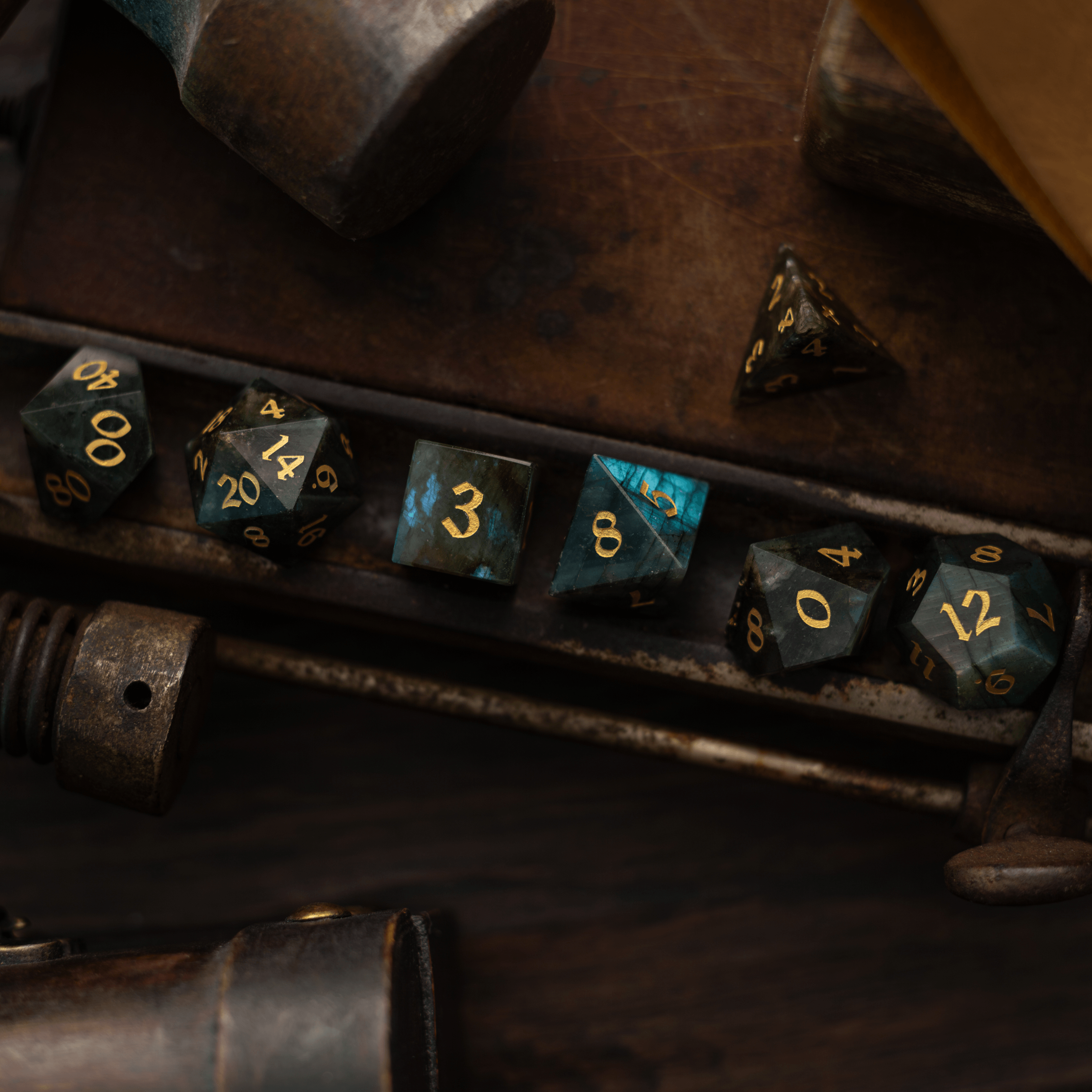
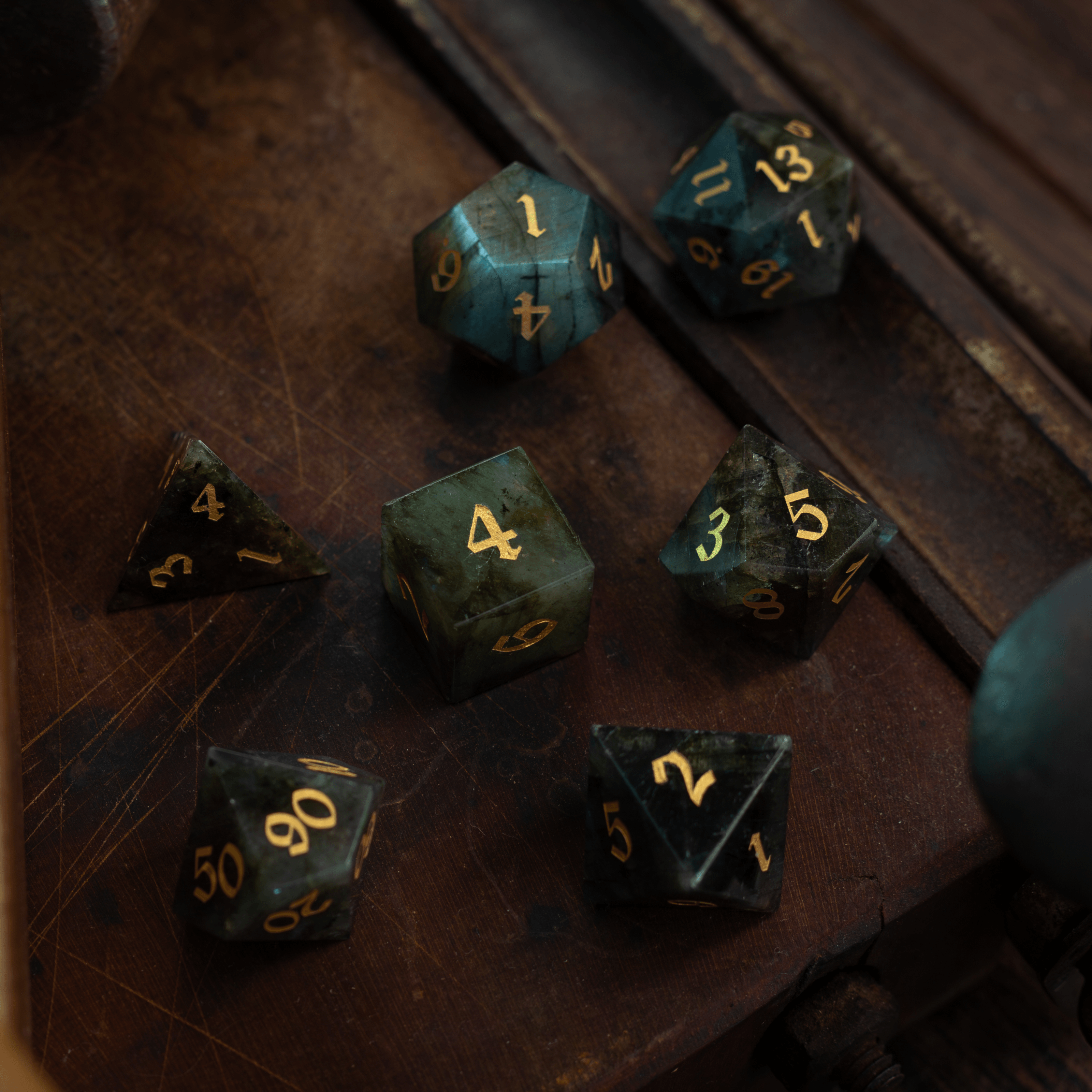
- Nightstalker: For dark purple and black hues symbolizing stealth and illusion, consider the Purple Gemstone Amethyst DND Dice Set. Handcrafted from genuine amethyst, these dice showcase deep purple tones, capturing the enigmatic presence of a nightstalker.
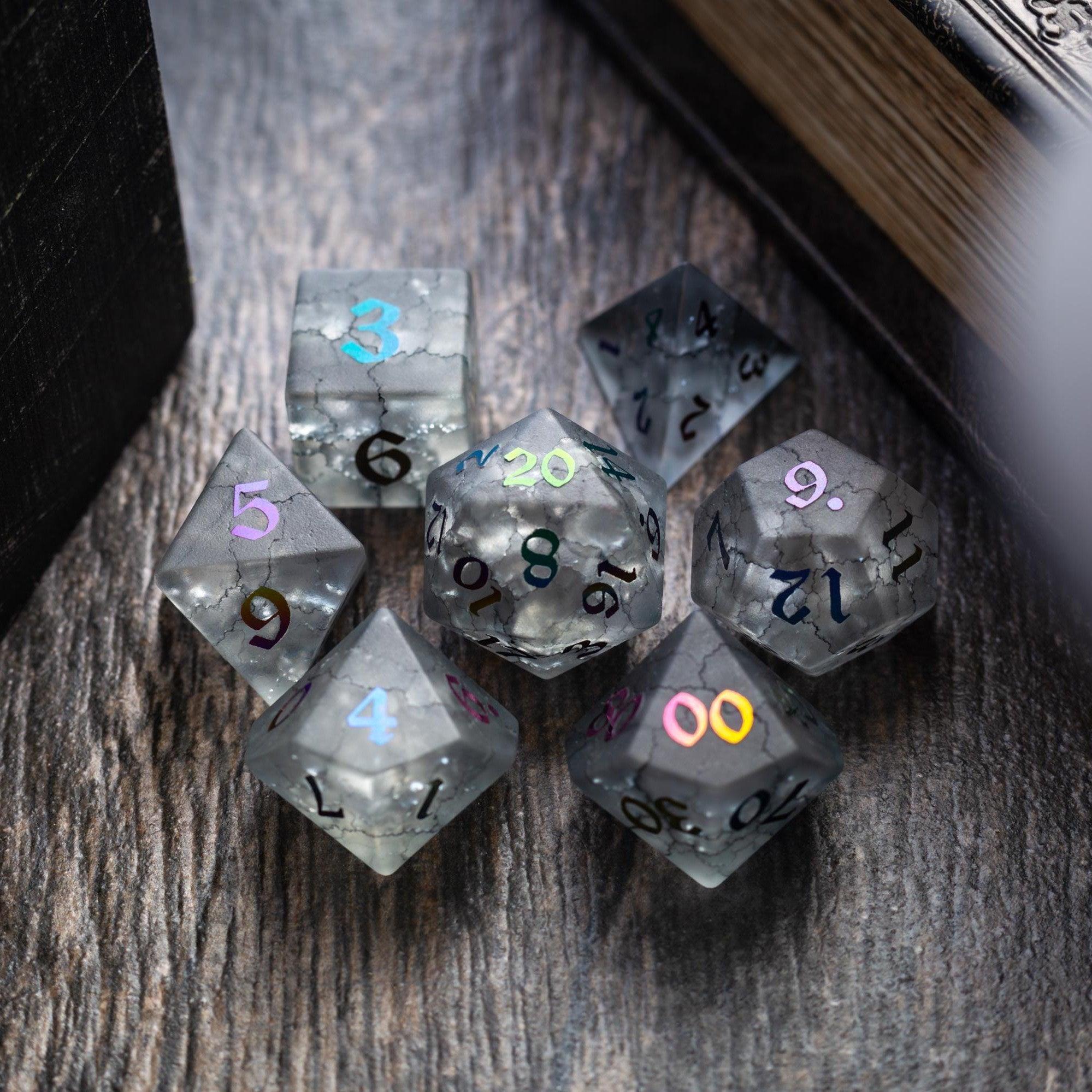
- Phantom’s Strike: To embody a shadowy warrior with swirling gray and dark blue colors, the Blue Sandstone Silver Font Gemstone DND Dice Set is an excellent choice. Made from blue sandstone with silver numbering, these dice reflect the mysterious allure of a phantom in the shadows.
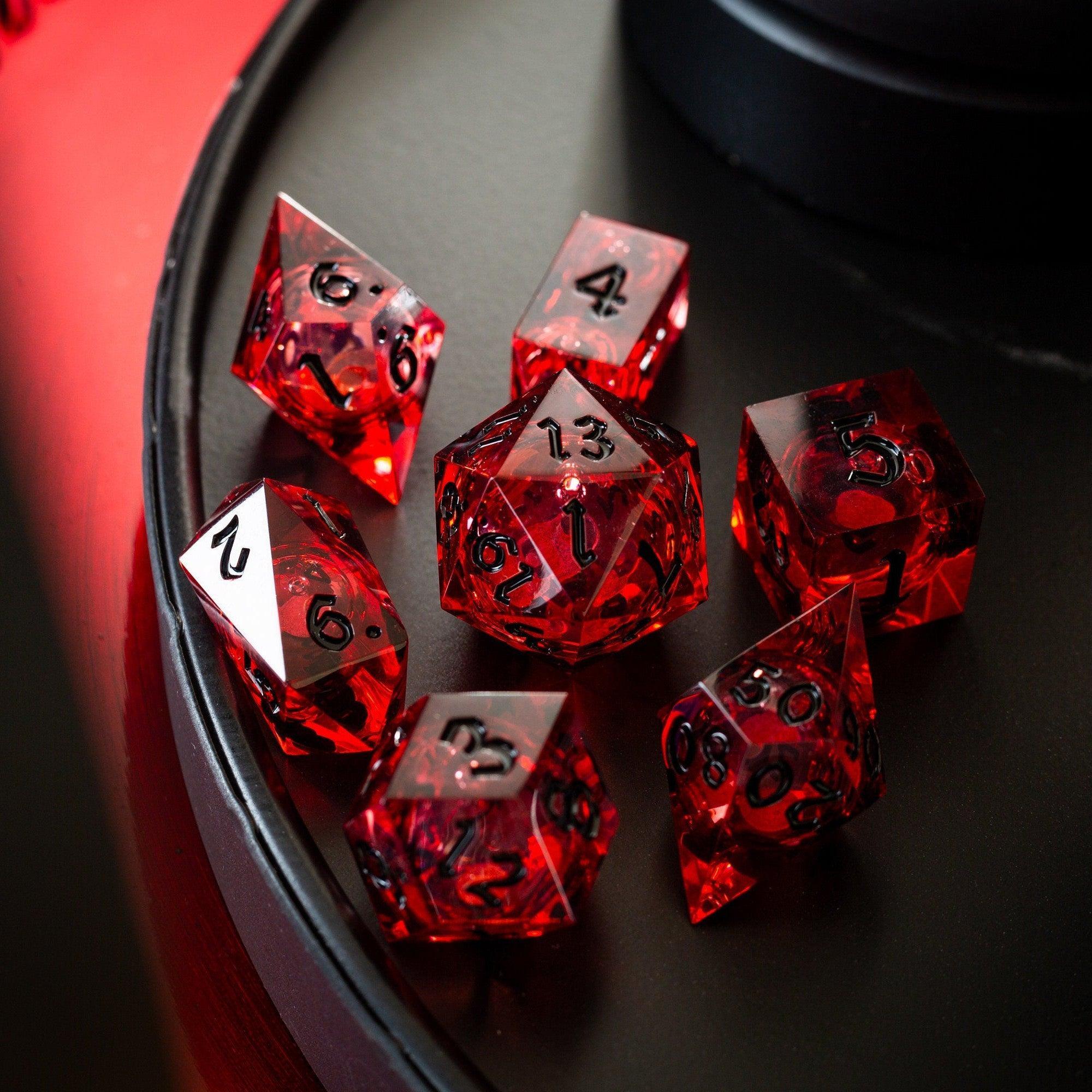
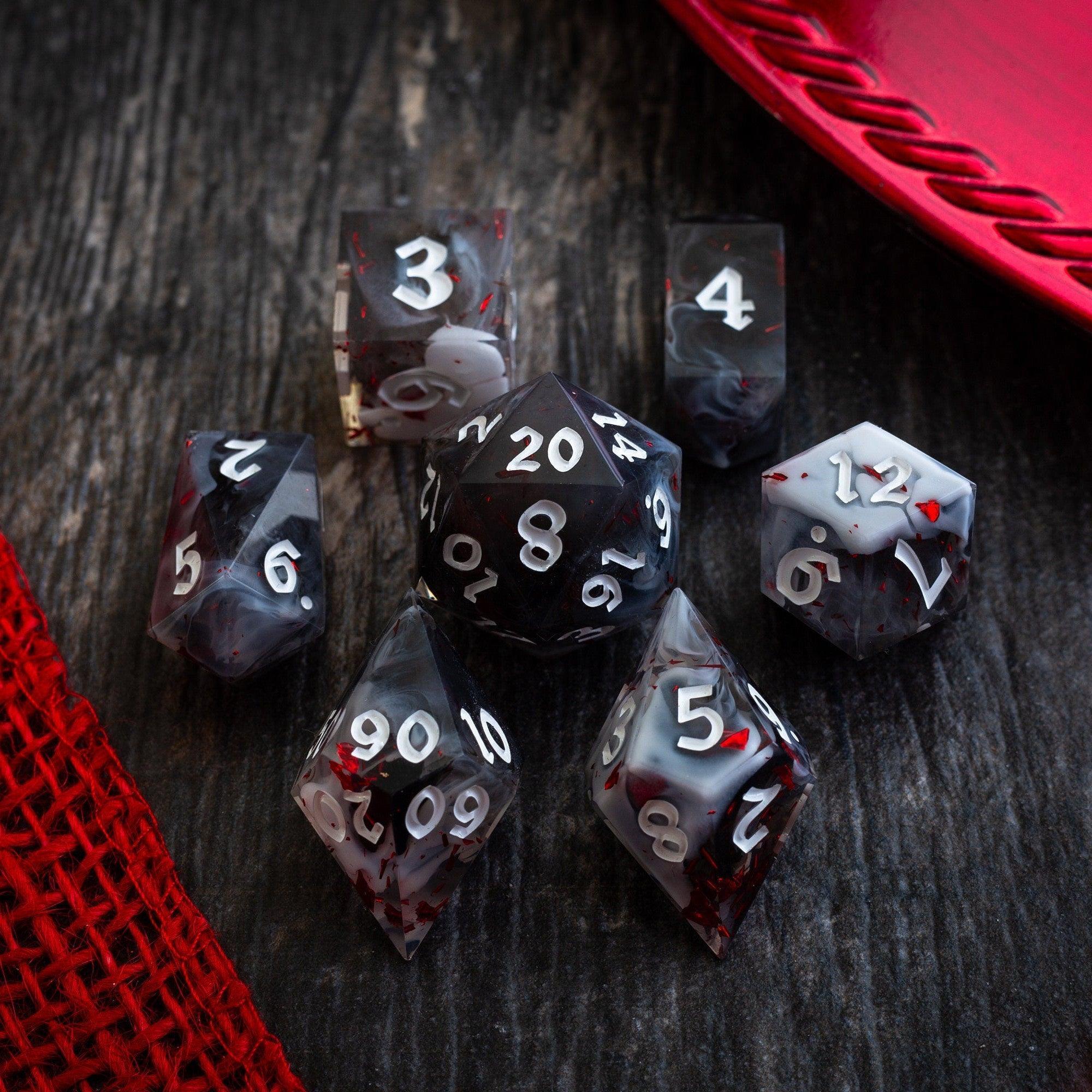
- Silent Death: For crimson and obsidian hues representing an assassin’s silent touch, the Blood Red Glitter Liquid Core Resin DND Dice Set offers a dynamic liquid core with rich red tones, symbolizing the lethal precision of a silent assassin.
These gemstone dice and resin dice sets not only enhance your tabletop aesthetics but also connect thematically to the Shadow Monk’s stealth-driven, mysterious identity. Every roll becomes an extension of your character’s silent precision.
Advanced Tips and Tricks
Optimization Strategies
- Feats: Alert helps you act early, Speedy improves movement under 2024 rules, and Skulker supports stealth. Mobile is a useful 2014 option. Check feat prerequisites before choosing.
- Multiclassing: Rogue adds Expertise and Sneak Attack, but Sneak Attack needs a Finesse or Ranged weapon, not an Unarmed Strike. Fighter offers Action Surge and, with enough levels, Battle Master maneuvers. Staying single-classed is simpler for beginners.
- Build ideas: A Nightblade focuses on Dexterity and positioning; a Silent Striker values Wisdom and control; a Master Assassin adds Rogue skills for espionage.
The Way of Shadow Monk, called Warrior of Shadow under the 2024 rules, rewards careful planning. Know where the shadows fall, keep an escape route open, and remember that teleportation does not automatically make you hidden. Aim to leave your party in a better position next turn.















1 comment
What are your thoughts with multiclassing this Shadow Sorcerer.
Unfortunately, I am not able to copy/paste the character. If you respond to my post, I’ll send it to you. I am curious to have feedback as I have not played D&D is years. I believe the Shadow Sorcerer/Shadow Monk would be a great multiclass character.
Patrick Chappell
Leave a comment
This site is protected by hCaptcha and the hCaptcha Privacy Policy and Terms of Service apply.