
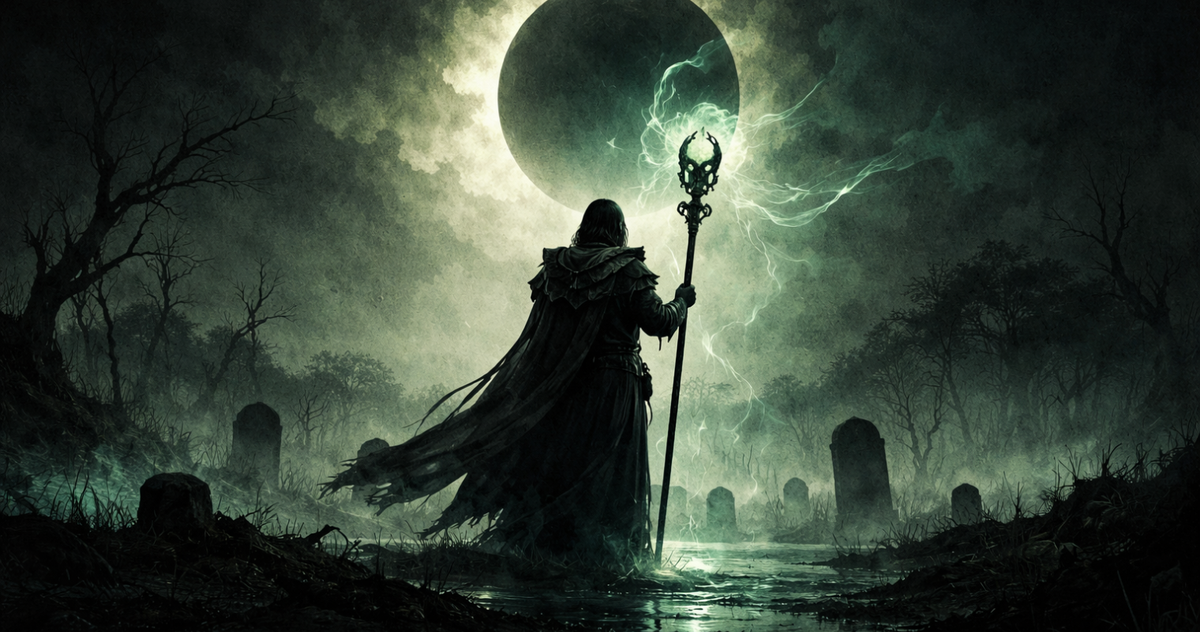
Grave Domain Cleric Guide for Beginners: Mastering the Grave Cleric in D&D 5e

The Grave Domain Cleric is a divine guardian of the balance between life and death, ensuring that souls pass on as they should. Originally introduced in Xanathar’s Guide to Everything, the Grave Domain received an updated 5.5e version in 2026’s Ravenloft: The Horrors Within. The current subclass excels at rescuing fallen allies, weakening enemies, preventing lethal damage, and wielding Necromancy magic, making it one of the most distinctive support Cleric options in D&D 5e.
Unlike healing-focused Clerics that specialize primarily in restoring Hit Points, current Grave Clerics focus on controlling the boundary between life and death, strengthening healing for creatures at 0 Hit Points, punishing already-wounded enemies, and protecting vulnerable allies. If you love the idea of a mystical protector who stands between the worlds of the living and the dead, this subclass is for you!
Why Play a Grave Domain Cleric?
Key Benefits
- Powerful Emergency Healing – Maximize healing dice when restoring Hit Points to a creature at 0 Hit Points.
- Weakens Dangerous Enemies – Path to the Grave imposes Disadvantage on an enemy’s attack rolls and saving throws while setting up additional Radiant or Necrotic damage.
- Strong Against Death and Undeath Themes – Grave Clerics combine their subclass abilities with the base Cleric’s Turn Undead and Sear Undead features.
- Support Without Wasting Spell Slots – Features such as Circle of Mortality, Path to the Grave, and Sentinel at Death’s Door provide valuable support beyond normal spellcasting.
- Dark & Mysterious Roleplay Potential – Play as a guardian of the dead, a reaper, or a divine hunter of those who defy the natural cycle.
Compared to other Clerics, Grave Clerics are particularly effective when allies or enemies are already wounded, giving them powerful tools to pull companions back from death while pushing weakened foes closer to it.
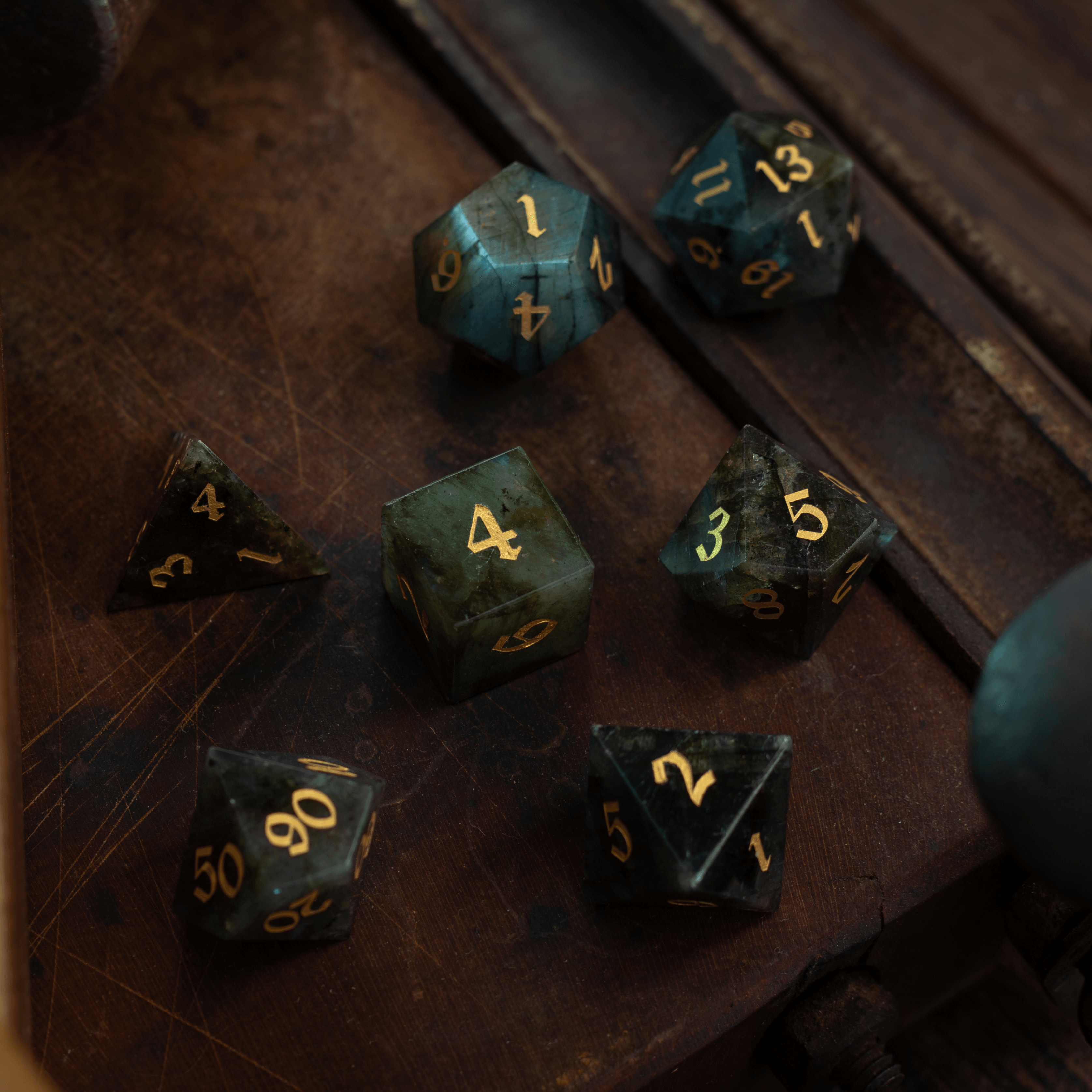
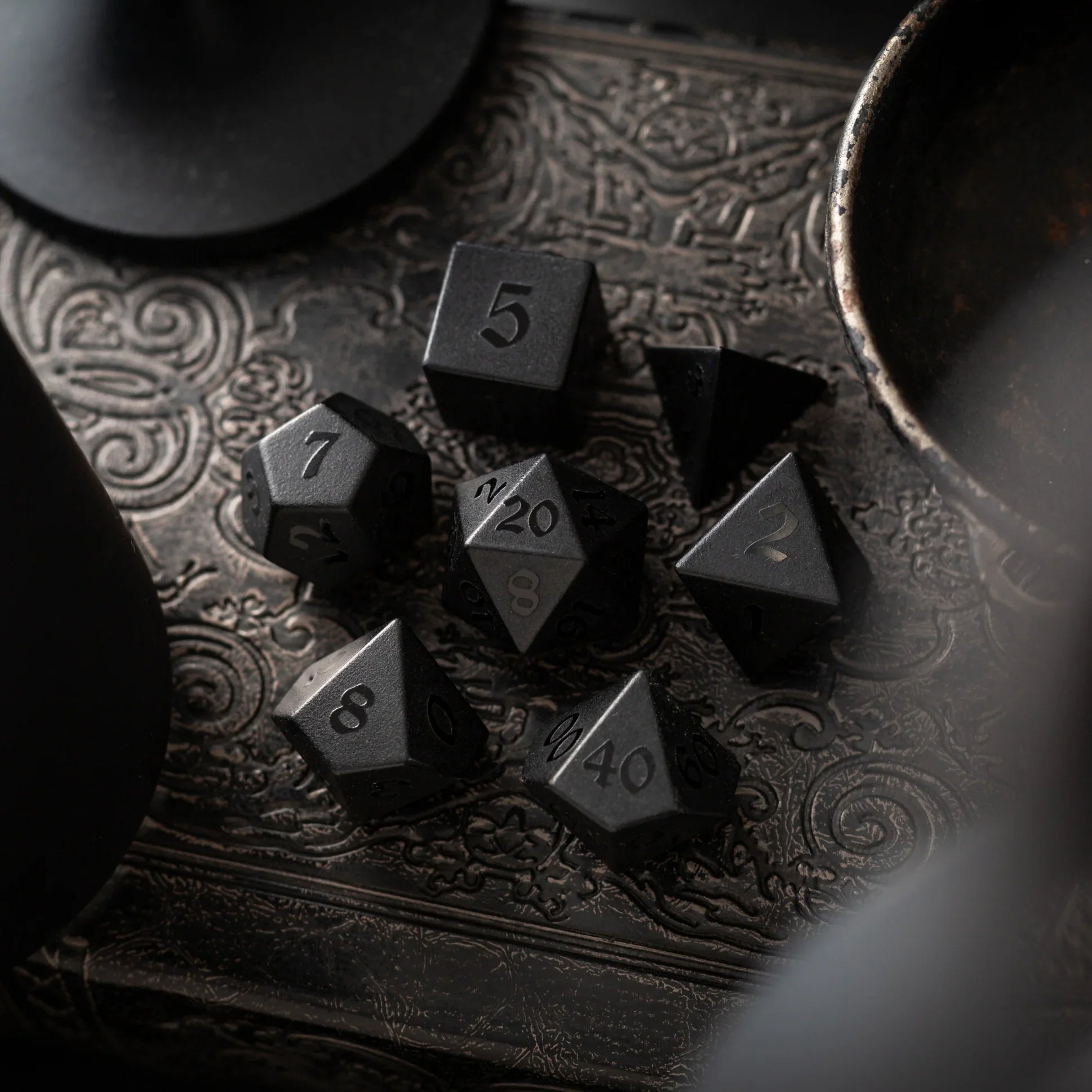
Grave clerics keep watch at the threshold. Let your Dungeons & Dragons dice mirror that calm resolve so every ward, binding, and saving throw feels deliberate.
Core Features
Key Mechanics and Abilities
Circle of Mortality (Level 3)
- The current Circle of Mortality gives you two benefits: Pull of Death and Return to Life.
- Pull of Death: Once per turn, when you damage a creature that is missing any Hit Points by casting a spell or hitting it with an attack roll, it takes an additional 1d4 Necrotic damage.
- Return to Life: You can cast Spare the Dying as a Bonus Action.
- When you would normally roll dice to restore Hit Points to a creature at 0 Hit Points using a spell or Channel Divinity, you instead use the highest possible result for each healing die.
- Example: If a healing effect would restore 2d8 Hit Points to an ally at 0 Hit Points, Circle of Mortality treats those dice as 16 Hit Points before applying any other relevant modifiers.
Eyes of the Grave (Level 1)
- 5e (2014): The original Grave Domain gained Eyes of the Grave, allowing the Cleric to sense certain nearby Undead.
- Current 5.5e: Eyes of the Grave is not part of the revised Grave Domain.
- Instead, the updated subclass receives a revised list of Grave Domain Spells, including options such as Detect Evil and Good, Gentle Repose, Ray of Enfeeblement, Revivify, and Vampiric Touch as the Cleric advances.
- The base Cleric also receives Turn Undead at level 2 and Sear Undead at level 5, so every current Cleric retains strong tools for confronting Undead creatures.
Channel Divinity: Path to the Grave (Level 3)
- As a Bonus Action, present your Holy Symbol and expend one use of Channel Divinity to curse one creature you can see within 30 feet until the start of your next turn.
- While cursed, the creature has Disadvantage on attack rolls and saving throws.
- When you or an ally you can see hits the cursed creature with an attack roll, you can end the curse early without taking an action.
- That attack then deals additional Necrotic or Radiant damage equal to your Cleric level.
- 5e (2014): The original version instead gave the creature Vulnerability to all damage from the next attack. That older double-damage mechanic is no longer the current Grave Domain rule.
- Example: Curse a dangerous enemy before your Wizard casts a saving-throw spell, or let an ally land an attack and trigger the extra Radiant or Necrotic damage.
Sentinel at Death’s Door (Level 6)
- When you or a Bloodied creature you can see within 60 feet is hit by an attack roll, you can use your Reaction to halve the attack’s damage.
- If the triggering attack is a Critical Hit, its Critical Hit effects are also canceled.
- You can use this feature a number of times equal to your Wisdom modifier, with at least one use, and regain all uses after a Long Rest.
- This makes Sentinel at Death’s Door useful much more often than the old feature, which only triggered when a creature suffered a Critical Hit.
- Example: An already-wounded ally is struck by a powerful monster. You use your Reaction to halve the incoming damage and potentially prevent them from dropping to 0 Hit Points.
Potent Spellcasting (Level 8)
- 5e (2014): Grave Clerics received Potent Spellcasting at level 8, adding their Wisdom modifier to Cleric cantrip damage.
- Current 5.5e: This is handled by the base Cleric’s Blessed Strikes feature at level 7.
- You can choose Potent Spellcasting to add your Wisdom modifier to the damage of Cleric cantrips, or choose Divine Strike to add 1d8 Radiant or Necrotic damage to a weapon hit once on each of your turns.
- At level 14, Improved Blessed Strikes strengthens the option you selected.
Keeper of Souls (Level 17)
- Keeper of Souls is now part of the broader Divine Reaper feature.
- Enhanced Necromancy: When you cast certain Necromancy spells of level 5 or lower that normally target one creature, or an appropriate Grave Domain spell, you can expend Channel Divinity to target a second creature within the spell’s range.
- Keeper of Souls: When an enemy dies within 60 feet of you, you or one creature you can see within 60 feet regains Hit Points equal to twice your Cleric level.
- Once used, Keeper of Souls normally recharges after a Short or Long Rest. At high level, you can also expend a spell slot of level 6 or higher to restore its use.
- Example: At Cleric level 17, Keeper of Souls can restore 34 Hit Points when an enemy dies, providing substantial healing without requiring your Action.
These abilities make Grave Clerics powerful support casters under the current 5.5e rules, combining emergency healing, enemy debuffs, damage prevention, Necrotic damage, and high-level Necromancy.
Suggested Ability Scores
- Primary: Wisdom – Powers your Cleric spellcasting, spell save DC, spell attacks, and several Cleric features.
- Secondary: Constitution – Increases survivability and helps you maintain Concentration on important spells.
- Tertiary: Dexterity – Improves initiative, Dexterity saving throws, and Armor Class when using Medium armor.
Recommended Races
Since Grave Clerics focus on healing, damage control, and the boundary between life and death, several species fit particularly well:
- Aasimar – The current Aasimar provides Healing Hands, Celestial Resistance, and Celestial Revelation. The old Fallen and Protector Aasimar subrace structure is no longer used for current 5.5e characters.
- Firbolg – A compatible option from earlier fifth-edition material with useful magical and defensive traits. Current character creation does not rely on the old species-based +2 Wisdom bonus.
- Shadar-Kai Elf – A thematic option from compatible fifth-edition material, with teleportation and defensive abilities that suit a Cleric closely connected to death and the Shadowfell.
- Human – The current Human receives flexible traits and an additional Origin Feat. This replaces the old Variant Human approach for characters built using current 5.5e rules.
Playing as a Grave Domain Cleric
Role in a Party
- Healing & Enemy Debuffs – Restore downed allies efficiently while weakening dangerous enemies through Path to the Grave.
- Support & Control – Reduce incoming damage with Sentinel at Death’s Door and use Cleric spells to control the battlefield.
- Life-and-Death Specialist – Punish wounded enemies with Pull of Death while using Return to Life to make emergency healing more reliable.
Compared to other Clerics, Grave Clerics are excellent at managing dangerous turning points in combat, especially when allies are Bloodied or unconscious and enemies are already wounded.
Tips for New Players
- Use Path to the Grave wisely – The current feature no longer doubles the next attack’s damage. Use its Disadvantage on saving throws to support an important spell, or trigger its additional damage when an ally lands an attack.
- Heal unconscious allies efficiently – Return to Life maximizes the healing dice of qualifying spells or Channel Divinity effects when restoring Hit Points to a creature at 0 HP.
- Protect wounded allies – Sentinel at Death’s Door is particularly valuable when a Bloodied character is targeted by a dangerous attack.
- Use Cleric anti-undead tools – The revised Grave Domain no longer has Eyes of the Grave, but the current Cleric’s Turn Undead and Sear Undead features remain powerful against Undead enemies.
Roleplay Suggestions
- The Silent Watcher – A mysterious figure who ensures the dead stay dead.
- The Divine Reaper – A guardian of the afterlife, preventing unnatural defiance of death.
- The Death-Touched – A priest who survived death and now walks the line between life and the grave.
Grave Clerics stand at the line between life and death, making sure that balance is respected and nothing lingers where it shouldn’t. That role becomes even more meaningful when it’s tied to forces in the world that challenge or support that balance. Remarkable Cults & Their Followers is a great way to build those connections.
It introduces groups with powerful beliefs and rituals, many of which can be adapted into death-focused orders or organizations that interfere with the natural cycle. Maybe your Cleric is working to stop a group that refuses to let the dead rest, or perhaps they’re tied to a sacred tradition that honors the passing of souls. These elements add depth and give your DM strong story hooks to explore.
Gear and Dice Recommendations
Suggested Equipment
Weapons
- Mace or Quarterstaff – Simple weapons available to a Cleric and thematic choices for a divine protector.
- Warhammer – A Martial weapon option if you choose the Protector Divine Order at Cleric level 1.
Armor
- Scale Mail or Half Plate – Strong Medium armor choices for Clerics who do not choose Heavy armor training.
- Shield – Clerics have Shield training, making a Shield a useful defensive option.
Magic Items
- Amulet of the Devout – A Cleric-focused magic item that can improve spell attacks and spell save DC while also supporting Channel Divinity.
- Cloak of Protection – Provides a +1 bonus to Armor Class and saving throws.
- Periapt of Wound Closure – Helps stabilize you when dying and improves the Hit Points restored when you spend Hit Point Dice.
Dice Recommendations from Runic Dice
Enhance your mystical, death-themed character with these Grave-inspired dice sets:
- Ethereal Requiem: For dark and silver swirls evoking a ghostly presence, consider the Black and Silver Glitter Liquid Core Resin DND Dice Set. This set features a shadowy black exterior infused with swirling silver glitter, capturing the essence of ethereal spirits.
- Obsidian Mortis: For deeper themes of mortality and the boundary between life and death, the Blood Red Glitter Liquid Core Resin DND Dice Set showcases deep red hues with a dynamic liquid core.
- Moonlit Grave: Representing twilight and the afterlife, the Smoke and Blood Resin DND Dice Set offers a blend of smoky grays and deep reds, evoking the mysterious transition between life and death.
Advanced Tips and Tricks
Optimization Strategies
-
Feats:
- War Caster – Helps protect Concentration on important Cleric spells.
- Lucky – The current Lucky Origin Feat grants Luck Points that can provide Advantage on D20 Tests or impose Disadvantage on attacks against you.
- Alert – An Origin Feat that improves your Initiative options and can help you act early enough to establish battlefield control.
-
Multiclassing:
- Rogue – Can provide mobility and skill benefits, but the old Assassin combination is much less important now that Path to the Grave no longer grants Vulnerability to double an attack’s damage.
- Sorcerer – Can expand your spellcasting options, but requires Charisma investment and delays higher-level Cleric spells and Grave Domain features.
The Grave Domain Cleric is an exceptional support and control subclass, helping fallen allies return to the fight while weakening enemies and protecting companions from lethal attacks. The current 2026 Grave Domain is substantially different from the original Xanathar’s Guide version, with Pull of Death, a redesigned Path to the Grave, a stronger Sentinel at Death’s Door, and the new Divine Reaper feature.
If you want to walk the line between life and death, healing and destruction, this subclass remains one of the most thematic Cleric choices in current D&D.


















Leave a comment
This site is protected by hCaptcha and the hCaptcha Privacy Policy and Terms of Service apply.