


College of Eloquence Bard Guide for Beginners: Mastering the College of Eloquence in D&D 5e

The College of Eloquence Bard is a master of persuasion, clever speech, and party support in Dungeons & Dragons 5e. Published in Mythic Odysseys of Theros and Tasha’s Cauldron of Everything, this subclass can also be used with the updated D&D 5.5e Bard class. It is a strong choice for players who enjoy negotiations, roleplay, and helping allies succeed when the stakes are high.
Unlike Bards who focus on weapons or performance alone, Eloquence Bards use words to influence a scene. They can make social checks more reliable, weaken an enemy’s saving throw, and stretch the value of Bardic Inspiration. Your Dungeons & Dragons dice still matter, but this subclass helps you make better use of each roll.
Why Play a College of Eloquence Bard?
Key Benefits
- Unrivaled Persuasion: Silver Tongue raises low Persuasion and Deception d20 rolls to 10, making trained social skills remarkably dependable.
- Consistent Support: Unfailing Inspiration lets an ally keep an Inspiration die if adding it still does not make a roll succeed.
- Debuff Specialist: Unsettling Words can lower a target’s next saving throw, creating an opening for a control spell.
- Roleplay Focus: Diplomacy, bluffing, mediation, and public speaking all fit the subclass without requiring your Bard to be a musician.
The trade-off is that you remain a relatively fragile spellcaster. You will often help more by controlling an encounter from a safe position than by rushing into melee.
Core Features
Key Mechanics and Abilities
- Silver Tongue (Level 3): When making a Charisma (Persuasion) or Charisma (Deception) check, treat a d20 roll of 9 or less as a 10. Add your normal modifiers afterward. This improves consistency but does not guarantee that an NPC agrees with you.
- Unsettling Words (Level 3): As a Bonus Action, expend a use of Bardic Inspiration and choose a creature you can see within 60 feet. Roll your Bardic Inspiration die. The target subtracts that number from its next saving throw before the start of your next turn. The feature does not say the target must hear you.
- Unfailing Inspiration (Level 6): If a creature uses one of your Bardic Inspiration dice on a check, attack, or saving throw and still fails, it keeps the die for a later attempt. This works with the updated Bardic Inspiration rules for failed D20 Tests.
- Universal Speech (Level 6): As an action, choose up to your Charisma modifier in creatures within 60 feet, minimum one. For one hour, they can understand what you say in any language. You can use this once per Long Rest, or again by spending a spell slot. It does not automatically let you understand their replies.
- Infectious Inspiration (Level 14): When a creature within 60 feet succeeds after using your Bardic Inspiration, you can use your Reaction to inspire a different creature that can hear you within 60 feet, without spending a normal use. You can do this a number of times equal to your Charisma modifier, minimum once, per Long Rest.
How the 5.5e Bard Rules Affect This Subclass
With the updated Bard, allies normally roll Bardic Inspiration after failing a D20 Test. At level 5, Font of Inspiration restores your expended uses on a Short or Long Rest and lets you spend a spell slot to regain one use. Countercharm at level 7 helps an ally reroll a failed save against being Charmed or Frightened. At level 10, Magical Secrets broadens your spell choices. These are Bard class features, not new Eloquence subclass features. See the updated Bard rules for the full progression.
Suggested Ability Scores
- Charisma (Primary): Increases your spell save DC, social checks, and number of Bardic Inspiration uses. Raise it first.
- Dexterity (Secondary): Helps your Armor Class, initiative, Dexterity saves, and attacks with suitable weapons.
- Constitution: Adds Hit Points and improves saves to maintain Concentration when you take damage.
Recommended Races
- Human: Flexible skills and an additional Origin Feat make this a practical choice for a new Bard.
- Tiefling: Innate magic and resistance options offer useful tools beyond your Bard spells.
- Elf: Different elven lineages provide useful magic, movement, or defensive traits.
- Kenku: A legacy species option whose mimicry and skill-related traits suit an unusual negotiator. Check with your DM before mixing older species with 5.5e rules.
In the 5.5e character creation rules, ability score increases normally come from your background rather than your species. Pick the species you want to roleplay, then choose a background that supports your build.
Playing as an Eloquence Bard
Role in a Party
A College of Eloquence Bard handles conversations outside combat and supports the team during fights. You can take several roles depending on the group:
- Face of the Party: Lead negotiations with strong Charisma, Expertise, and Silver Tongue.
- Debuffer: Use Unsettling Words before someone forces the enemy to make a saving throw.
- Support Specialist: Share Bardic Inspiration, protect allies with spells, and help turn failed rolls into successes.
Tips for New Players
- Time Unsettling Words: Use it just before Hold Person or another saving-throw spell. Its penalty expires at the start of your next turn, so coordinate with teammates.
- Choose Expertise carefully: Persuasion is an obvious pick; Deception is valuable if your character lies often. Insight can also help you judge whom to trust.
- Balance your spells: Suggestion and Calm Emotions suit your theme, while Healing Word gives you a way to help a fallen ally from a distance.
- Respect the limits of speech: Silver Tongue improves a check, not what is possible. A guard still needs a believable reason to let someone into a restricted vault.
Roleplay Suggestions
- The Silver-Tongued Orator: A speaker who unites frightened townspeople before a dangerous mission.
- The Charming Diplomat: A negotiator trying to keep rival factions from starting a war.
- The Cunning Manipulator: A schemer who gathers secrets and knows when silence is more useful than a speech.
An Eloquence Bard works especially well when a campaign includes memorable conversations. Remarkable Inns & Their Drinks gives DMs ideas for taverns, characters, and story hooks that encourage these moments.
A meeting in an inn might begin with a simple request for information and become a tense negotiation with a suspicious traveler. This kind of setting gives your Bard chances to persuade, listen, and build relationships rather than relying on combat in every scene.
Gear and Dice Recommendations
Suggested Equipment
- Weapons: A dagger or shortbow gives you a backup attack. Under the 5.5e rules, Bards are proficient with simple weapons; a rapier requires proficiency from another source.
- Armor: Wear light armor and stay out of reach of enemies whenever possible.
- Adventuring Gear: Carry a musical instrument, writing supplies, or a disguise kit if it fits your character and proficiencies.
Dice Recommendations from Runic Dice
Enhance your Eloquence Bard's theme with these dice sets:
- Persuasive Charm: Capture your refined charisma with the Gemstone Opalite (Gold Font) DND Dice Set. Handcrafted from opalite with gold numbering, these dice exude a luminous quality, symbolizing your captivating presence.
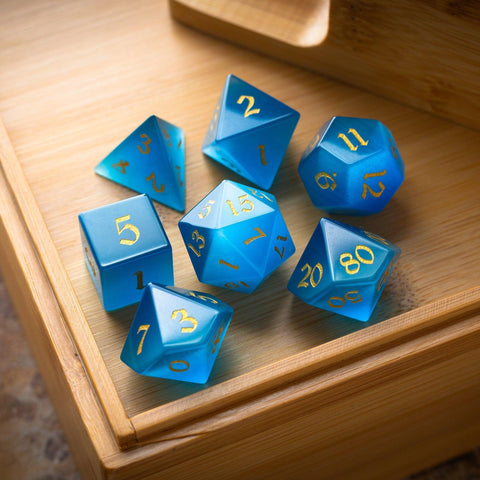
- Subtle Manipulation: Embody your cunning with the Blue Glitter Liquid Core Sharp Edge Resin DND Dice Set. Featuring vibrant blue hues with a dynamic liquid core, this set reflects the depth and subtlety of your persuasive tactics.
- Rhetorical Flourish: Reflect your mastery of words with the Purple Gemstone Amethyst DND Dice Set. Crafted from genuine amethyst, these dice possess a rich, regal hue, mirroring the elegance and precision of your eloquence.
Advanced Tips and Tricks
Optimization Strategies
- Feats: Actor suits impersonation-focused characters. War Caster can help protect Concentration on important spells when you qualify for it.
- Spell Combos: Use Unsettling Words as a Bonus Action before casting Hold Person with your action. Choose targets carefully, since the spell only affects Humanoids.
- Multiclassing: Sorcerer offers additional spellcasting options, but every level outside Bard delays spells and subclass features. Staying single-classed is simpler for beginners.
Advanced Builds
- Supportive Orator: Prioritize Charisma, Inspiration, healing, and defensive spells for the group.
- Manipulator Bard: Build around Expertise, Persuasion, Deception, and spells that open up conversations.
- Combat Strategist: Coordinate Unsettling Words with your party’s strongest saving-throw effects.
Beginner-Friendly Build Example
For a level 3 Bard, make Charisma your highest ability, followed by Dexterity and Constitution. Take Persuasion proficiency and use Expertise to improve it. Prepare a mix of support and control spells, such as Healing Word, Suggestion, and Hold Person. During combat, stay behind tougher allies and spend Unsettling Words when an important saving throw is coming. Outside combat, let Silver Tongue support thoughtful roleplay, not replace it.
The College of Eloquence Bard is an excellent fit for players who want their words to matter in every session. With reliable social skills, flexible support, and strong battlefield control, this Bard can help a party solve problems before swords are drawn and survive when talking is no longer enough.



















Leave a comment
This site is protected by hCaptcha and the hCaptcha Privacy Policy and Terms of Service apply.