

From Tabletop to Victory: How Choosing the Right Dice Can Elevate Your D&D Game

Whether you are a longtime Dungeon Master or sitting down for your first Dungeons & Dragons session, dice are part of the rhythm of the game. Under the current D&D rules, the d20 is used for D20 Tests such as ability checks, attack rolls, and saving throws, while other dice commonly determine damage, healing, and random results. That makes your dice more than table decoration. They need to be readable, comfortable to roll, and practical for the surface you play on.
Choosing the right DND dice sets comes down to a few simple questions: Can you read the numbers quickly? Do you like the weight and feel? Will the material hold up to regular play? And can you roll them without damaging your table or the dice themselves? This guide covers those basics so you can choose a set that fits the way you actually play.
Why the Right Dice Matter
A good dice set should make play easier, not more distracting. The best choice is not always the most expensive material or the most detailed design. It is the set you can use comfortably through an entire session.
Readability Keeps the Game Moving
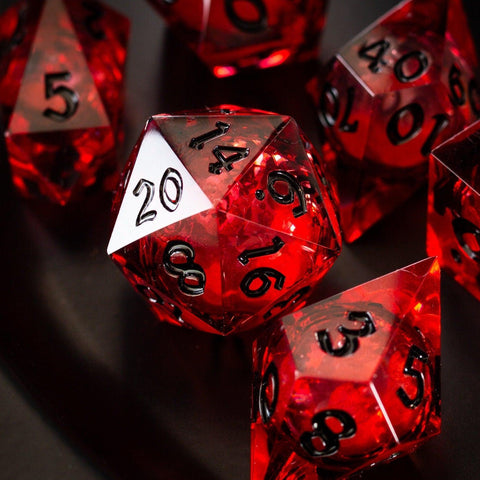
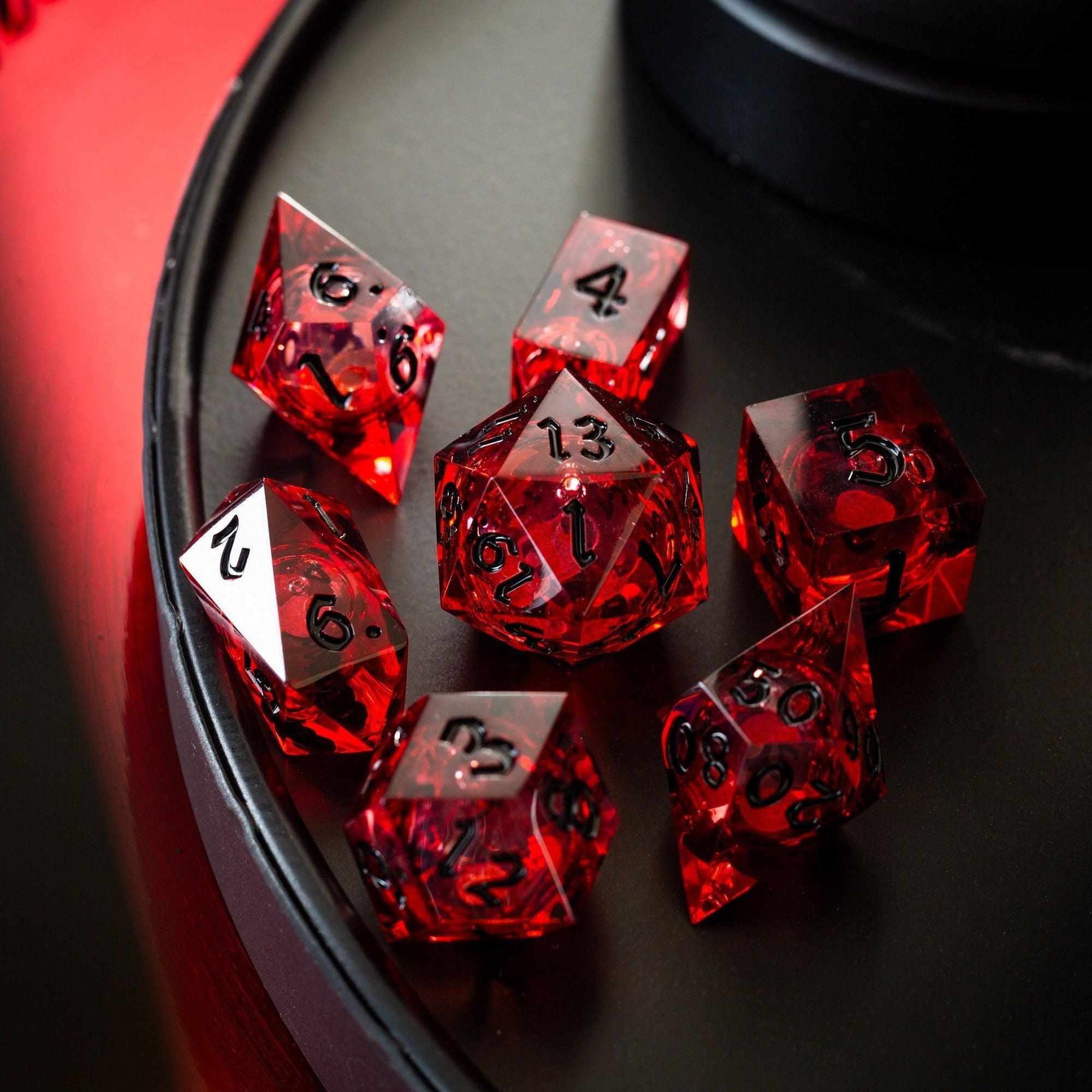
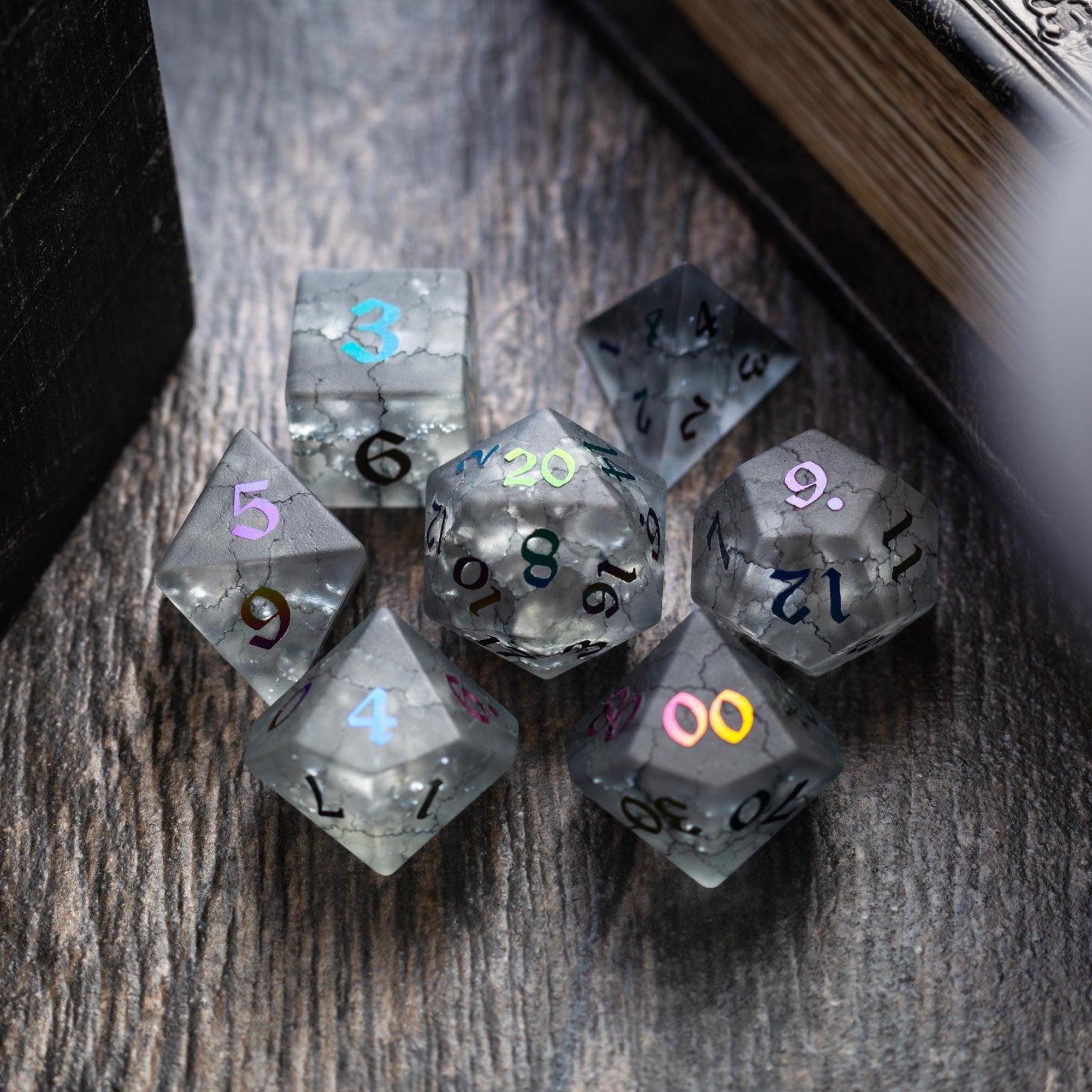
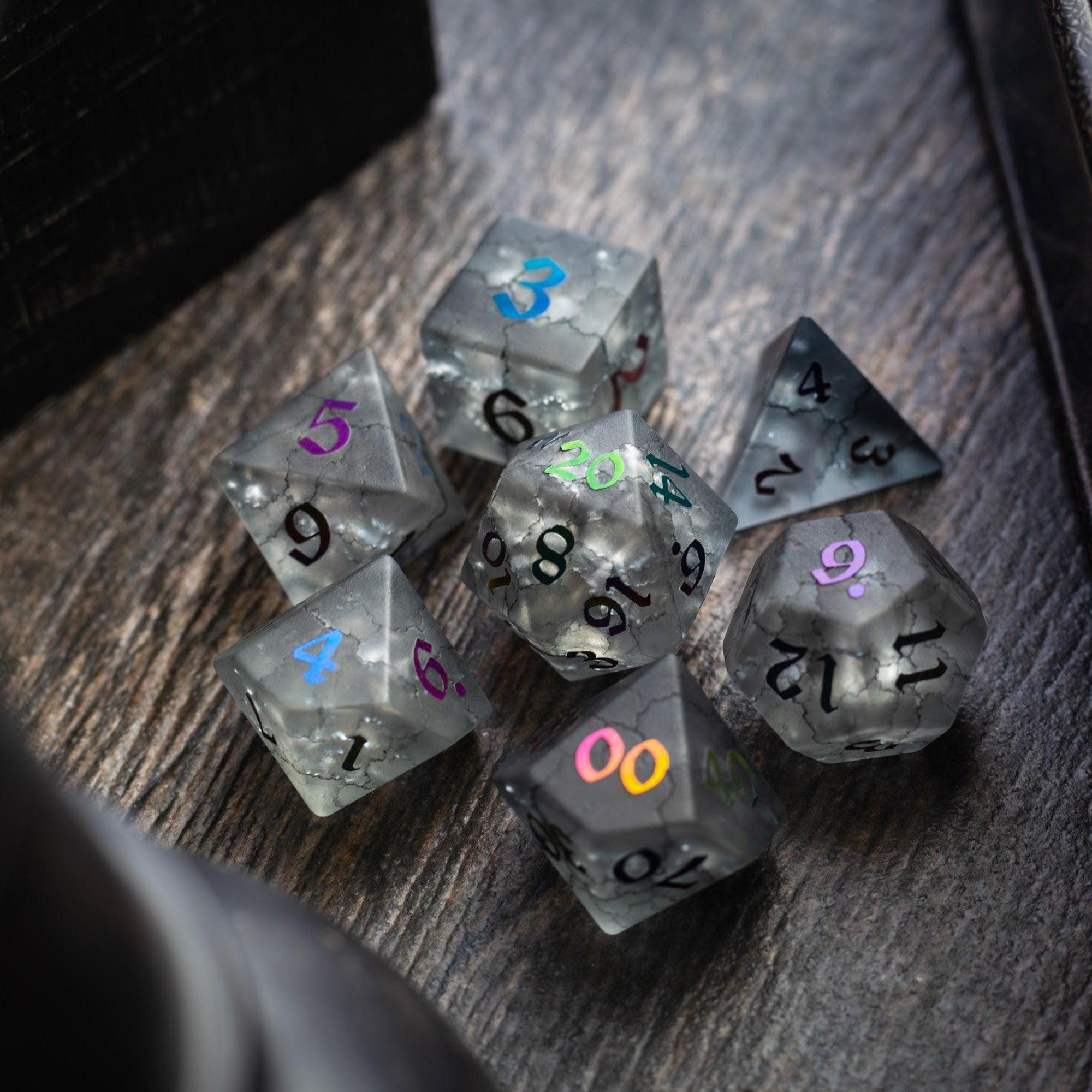
Clear numbers matter during fast combat, tense saving throws, and repeated damage rolls. High contrast between the number color and the die face usually makes results easier to read from across the table. Very detailed patterns, glitter, transparent layers, liquid cores, or low-contrast ink can look impressive but may take an extra second to read. That small delay becomes noticeable when several players are rolling at once.
Weight Changes the Feel of a Roll
Material affects how dice feel in your hand and how they land. Resin and acrylic dice are usually lighter and easy to roll in smaller trays. Metal dice have much more weight and create a firm impact. Gemstone and glass sets also feel substantial, but their hard surfaces can be less forgiving if they strike each other or a bare tabletop. None of these materials is automatically better. The right choice depends on your preferences and your gaming setup.
Reliable Dice Should Be Free of Obvious Defects
For normal tabletop play, look for dice with clean faces, readable numbering, and no obvious warping, cracks, or badly damaged edges. No physical die can promise perfectly random results, and material alone does not guarantee better balance. What matters is using well-made dice in good condition and rolling them in a normal way on a suitable surface.
Choosing the Best Dice for Your D&D Game
Most players can narrow their options by looking at material, set contents, readability, and where they plan to roll.
1. Choose a Material That Fits Your Table
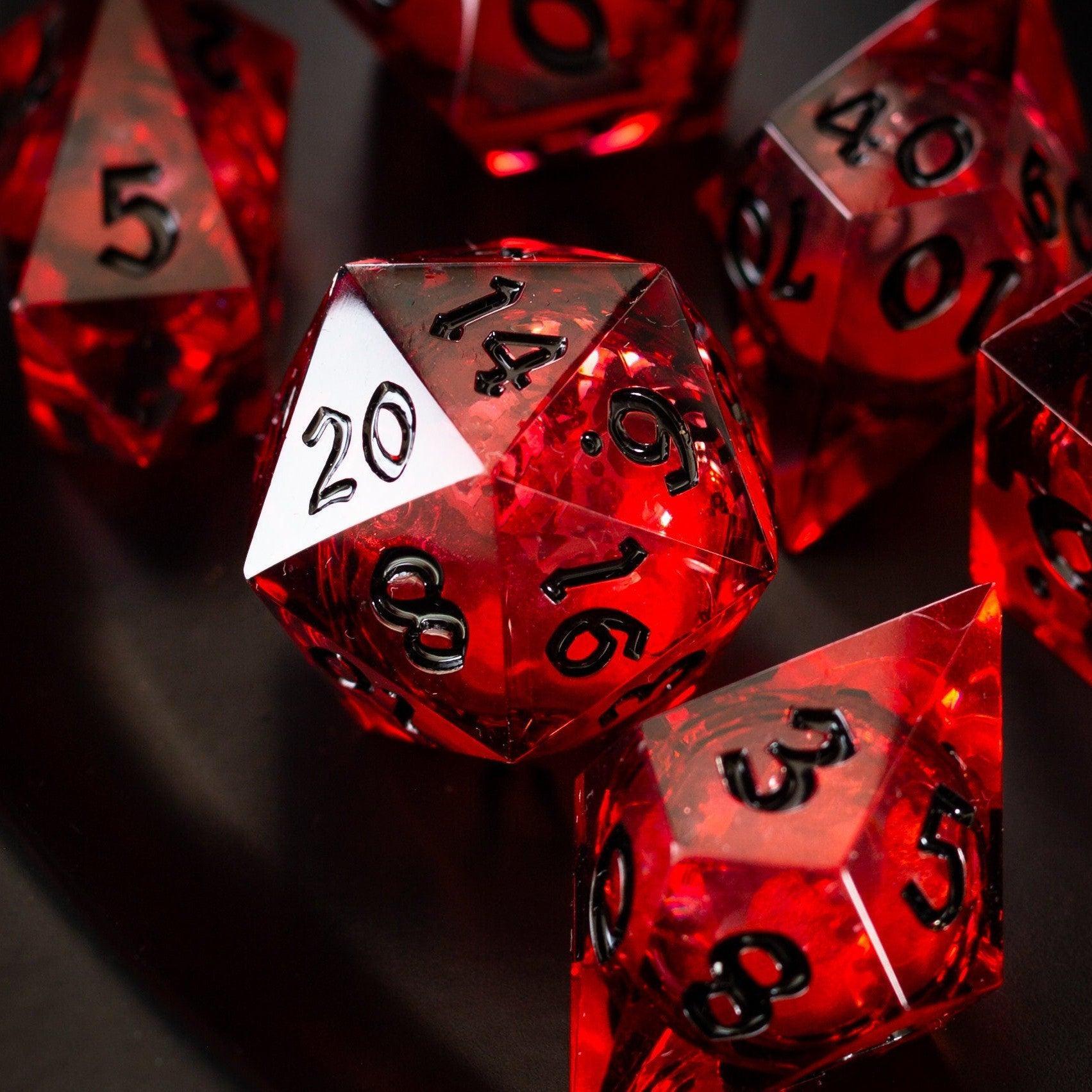
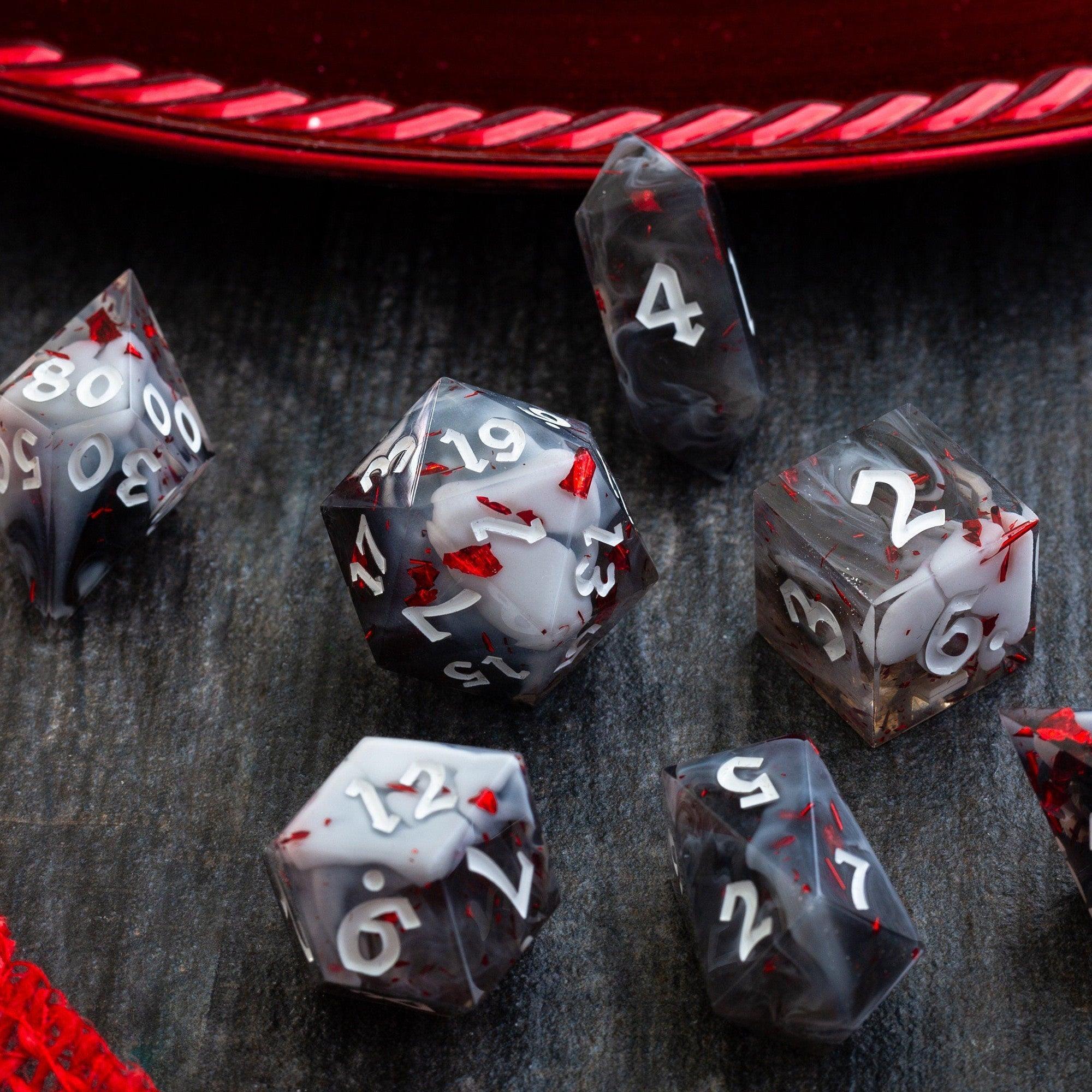
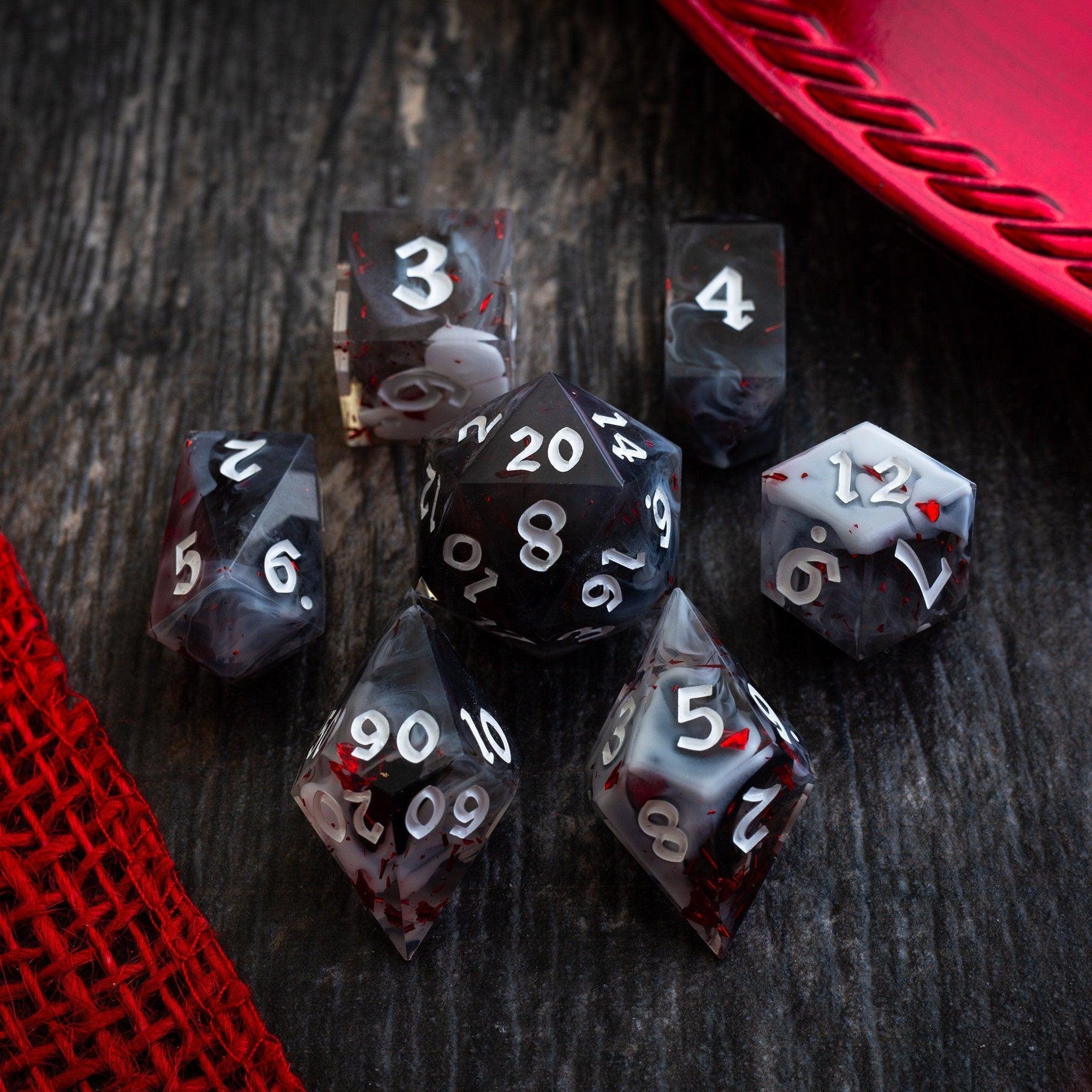
- Resin dice: Resin allows detailed colors, inclusions, sharp edges, and layered designs. These sets are generally lighter than stone or metal and work well for everyday play. Sharp-edge resin dice can look crisp, but they should still be rolled on a tray or mat to protect the points and edges.
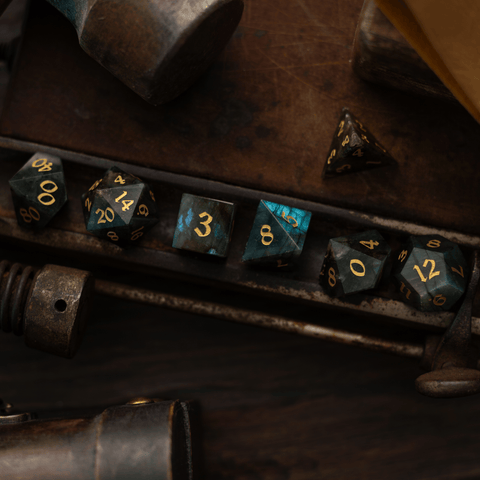
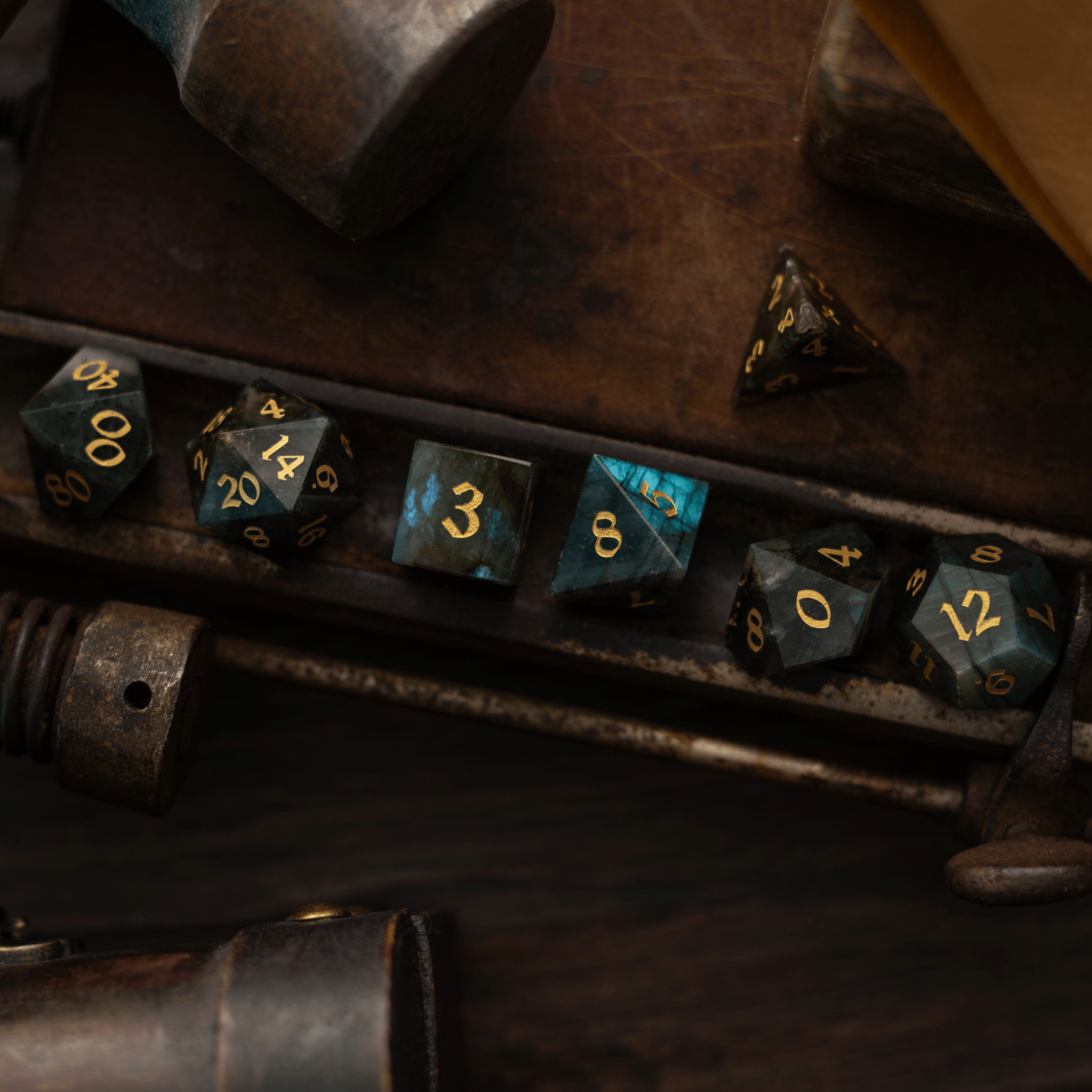
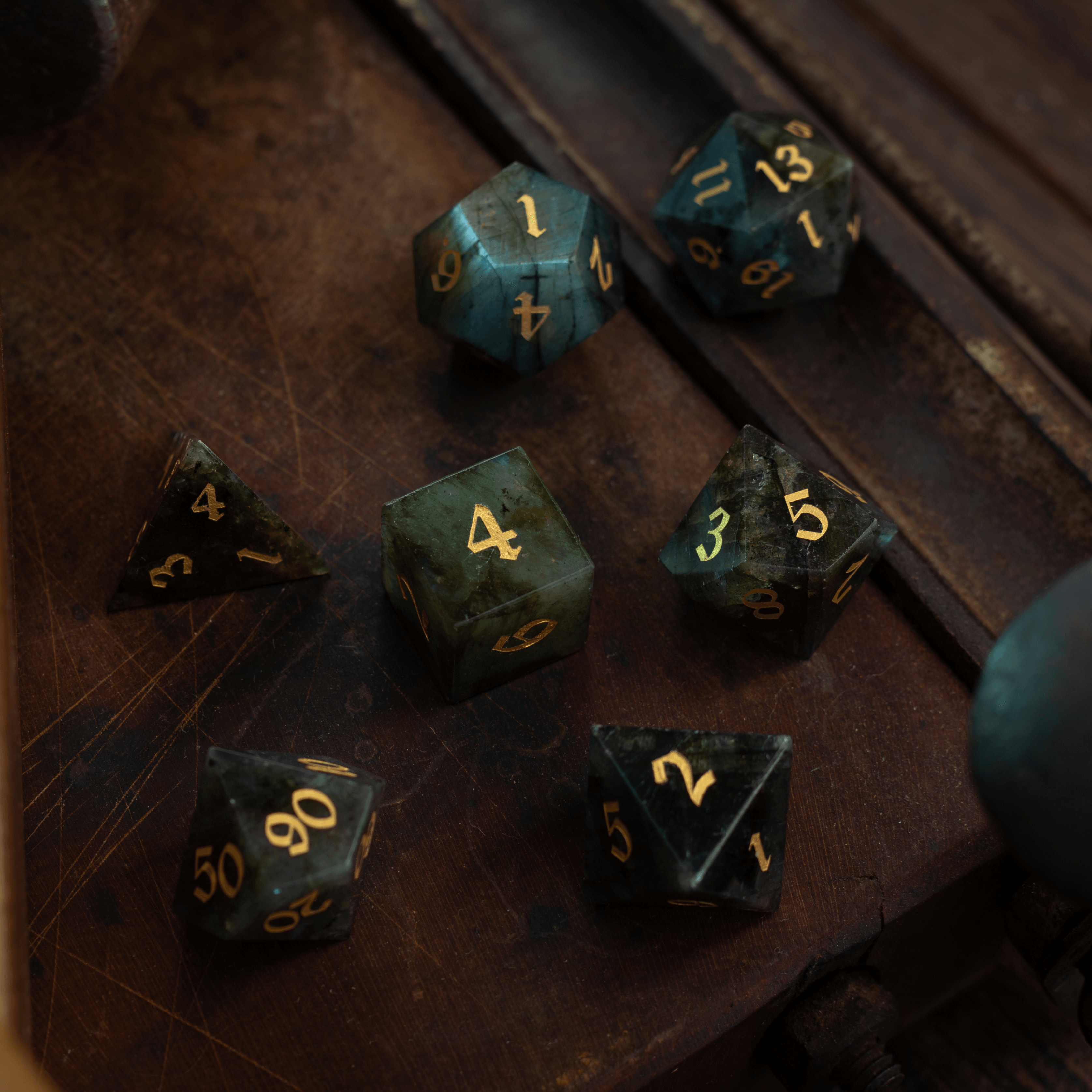
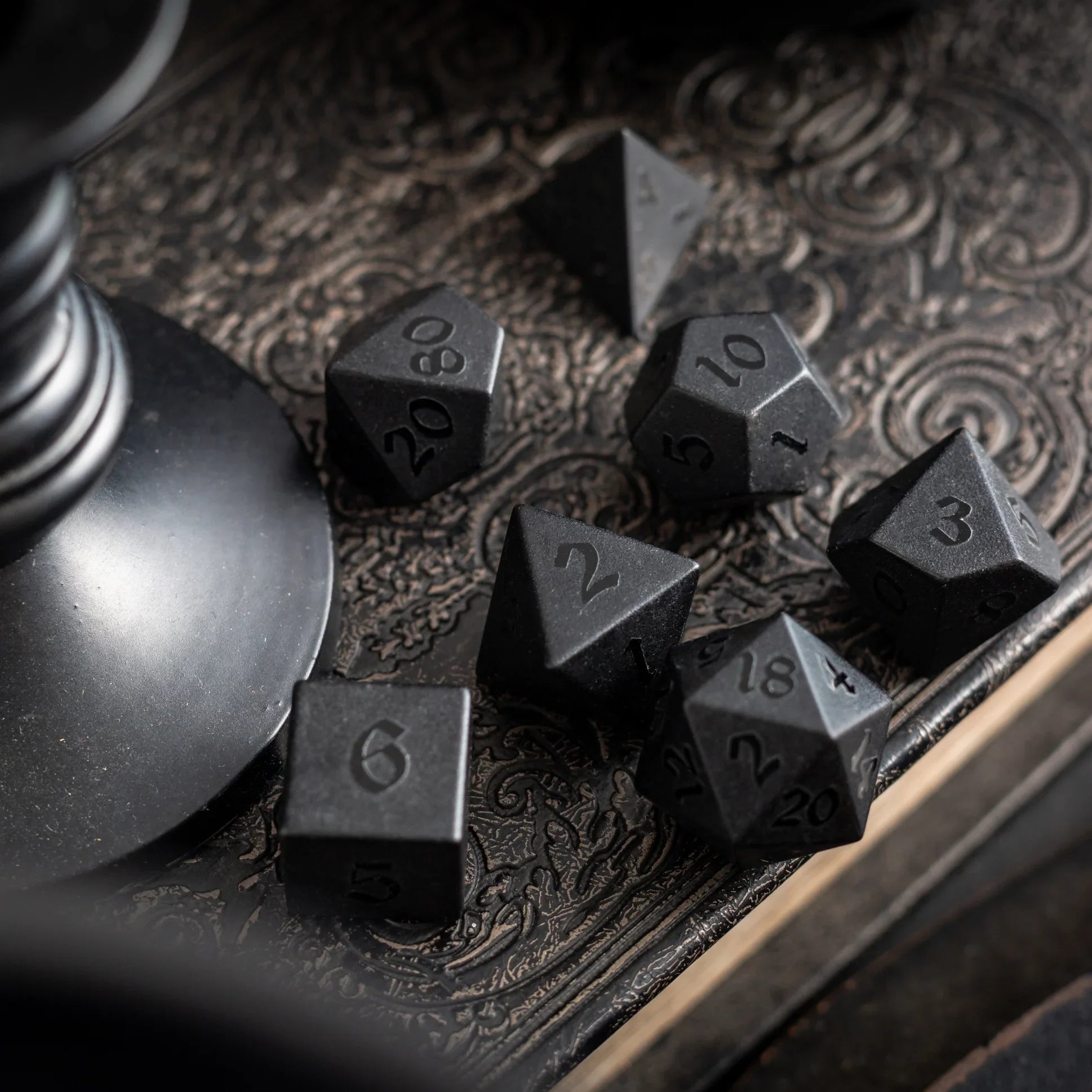
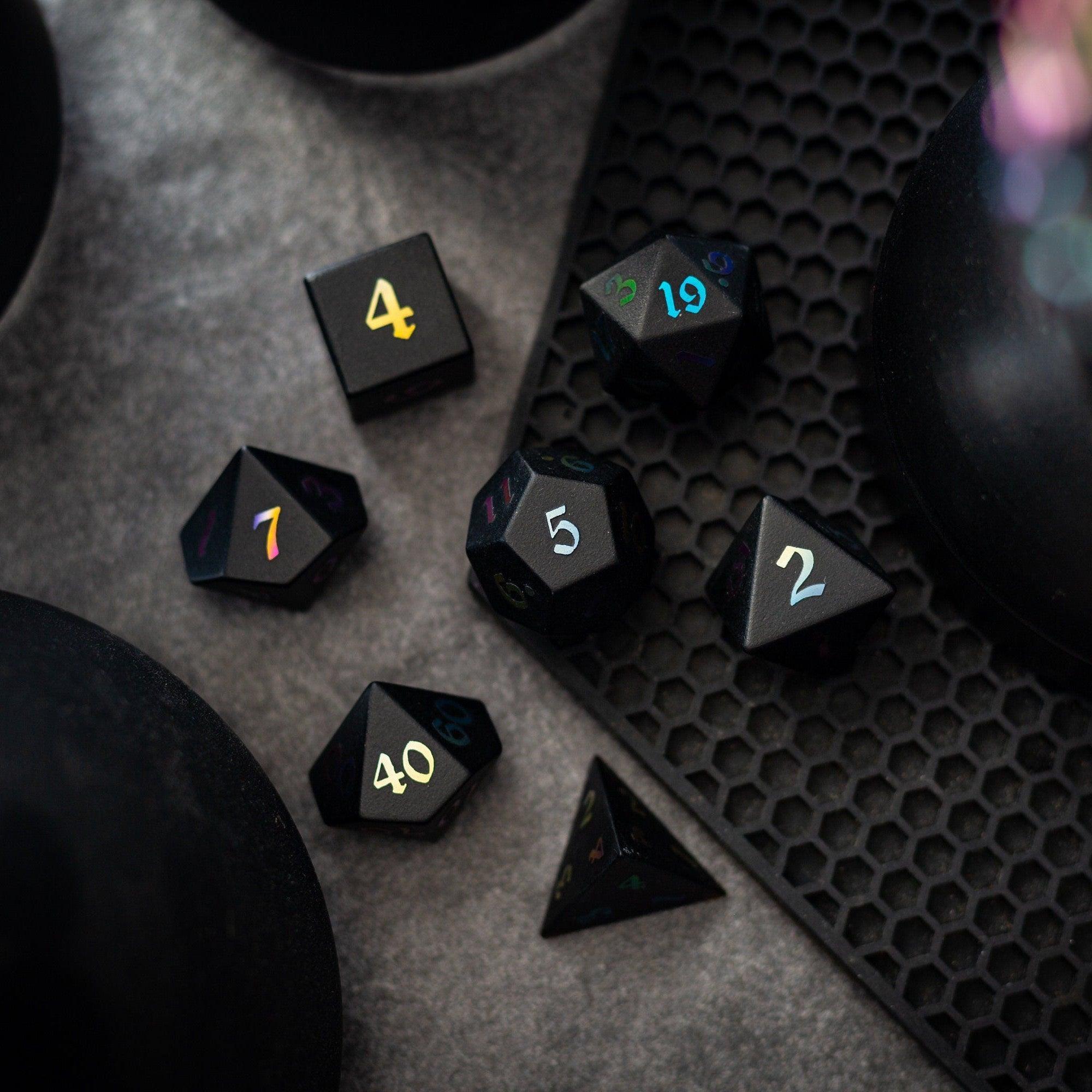
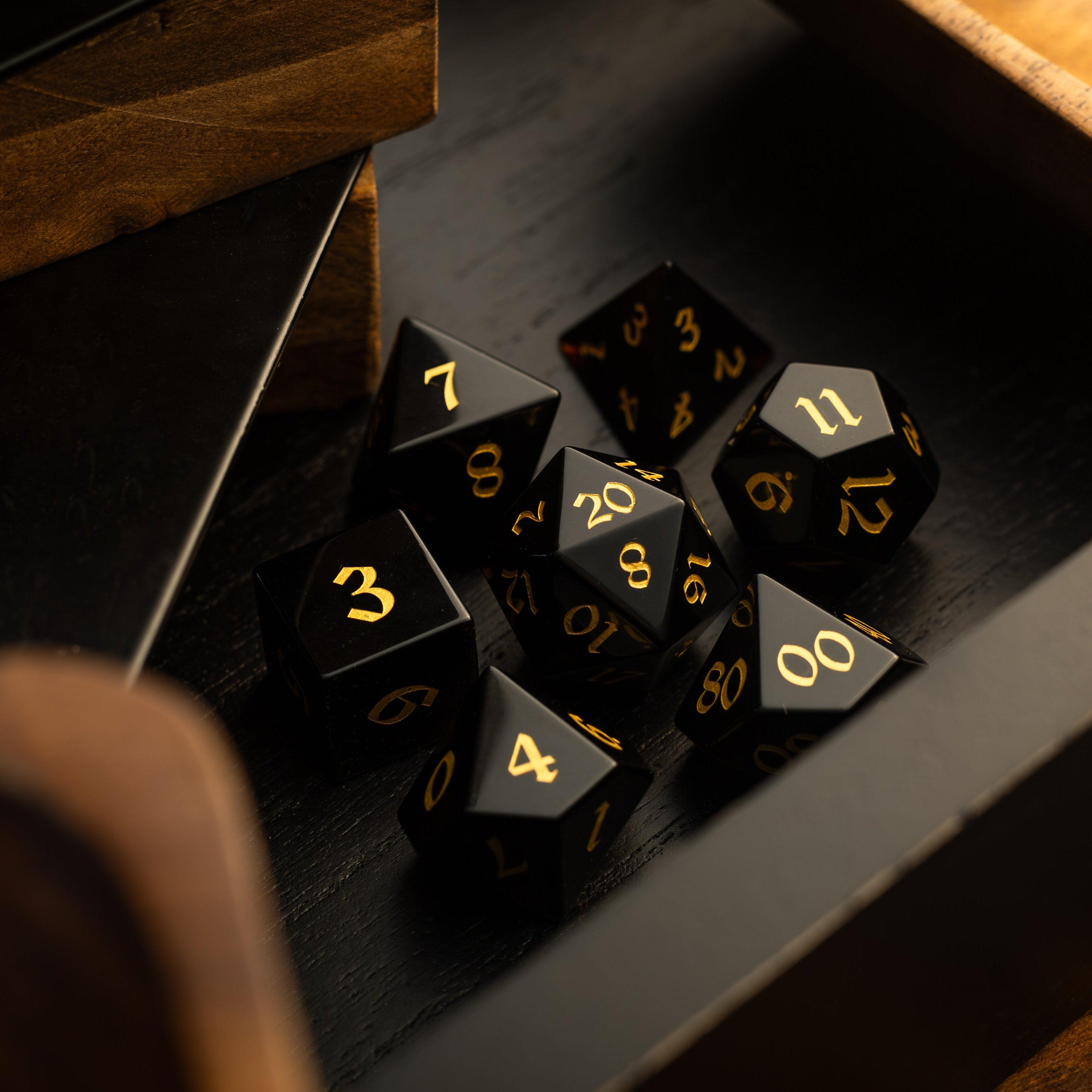
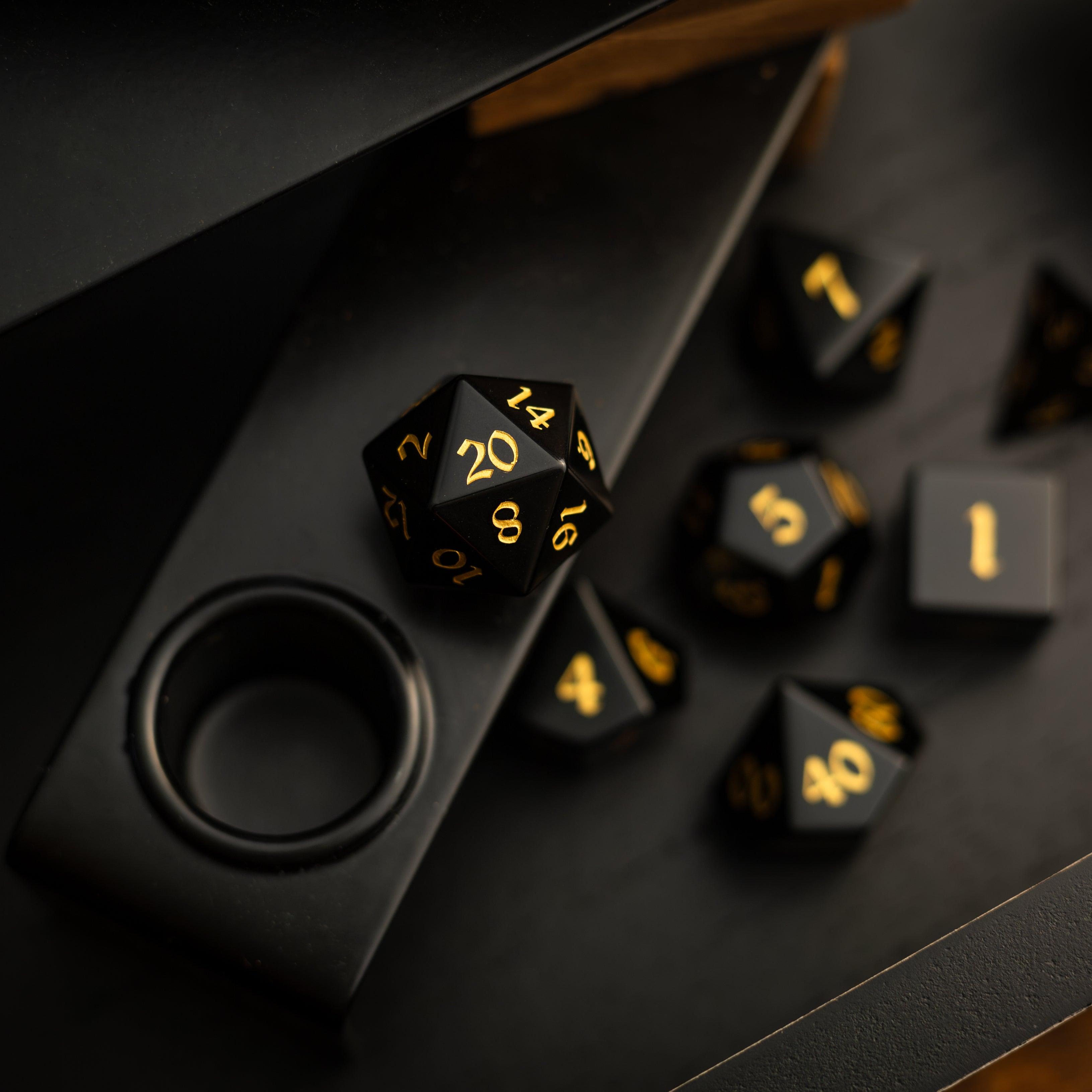
- Gemstone dice: Stone sets such as amethyst, obsidian, labradorite, or tiger's eye have natural variations that can make each die look different. They are usually heavier than resin dice and can chip if dropped onto a hard floor or rolled forcefully against other hard dice.
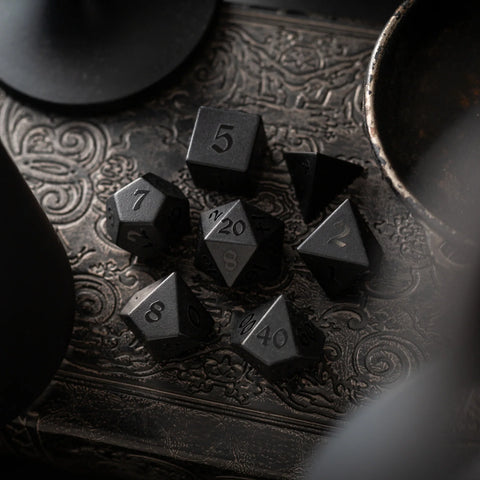
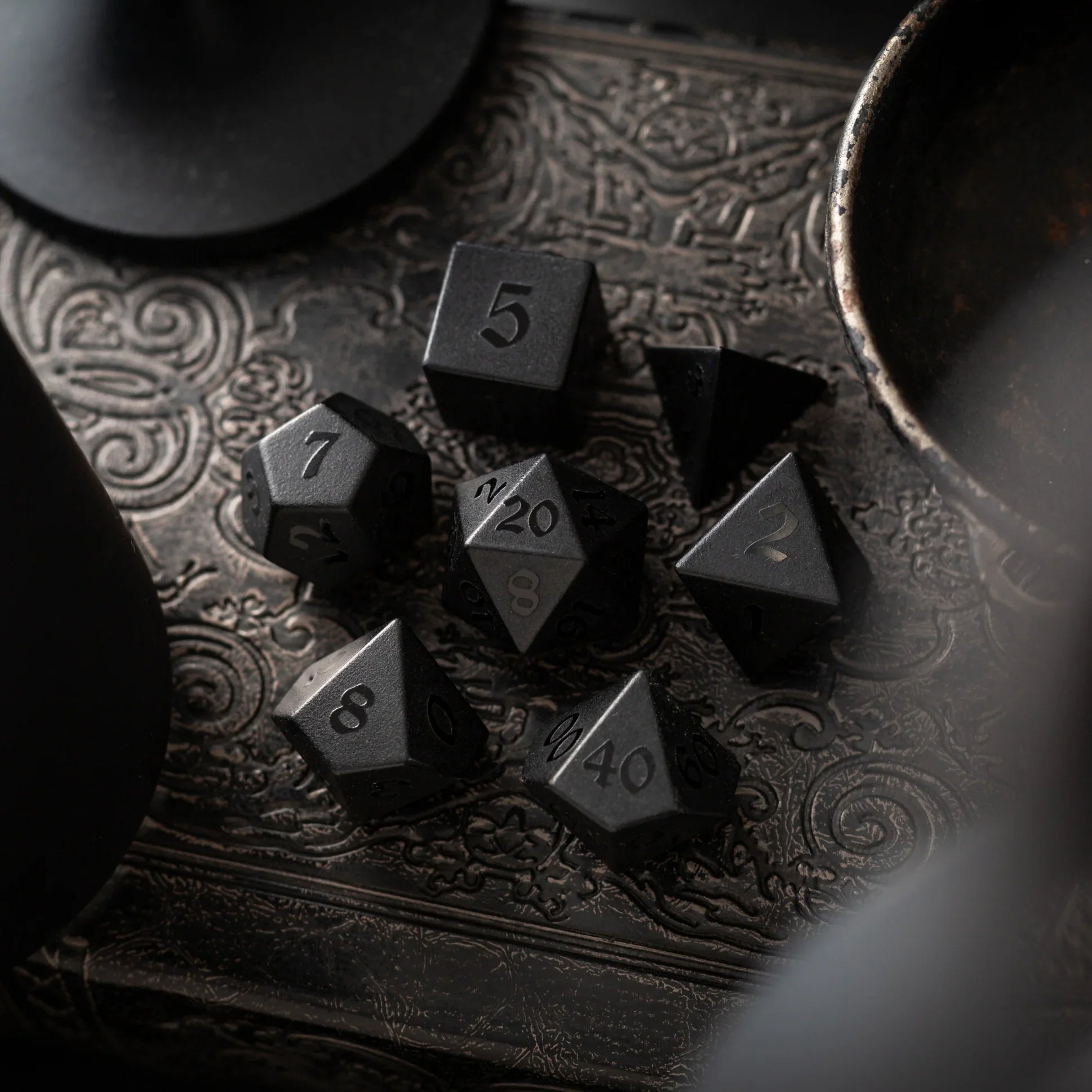
- Metal dice: Metal sets are known for their weight and solid feel. They are durable in normal use, but they can dent softer tables, damage trays without enough padding, or mark other dice if stored loose together.
- Glass dice: Glass can provide clean, polished surfaces and striking transparency or color effects. Like gemstone dice, glass sets deserve a padded rolling surface and careful storage because hard impacts can cause chips or cracks.
2. Make Sure You Have the Dice You Need
Current D&D rules use the familiar polyhedral dice: d4, d6, d8, d10, d12, and d20. A typical seven-piece set also includes a second ten-sided die marked in tens so the two d10s can be rolled together as percentile dice, often written as d100.
- d20: Used for ability checks, attack rolls, and saving throws.
- d12, d10, d8, d6, and d4: Commonly used for weapon damage, spell damage, healing, Hit Dice, and other game effects.
- Percentile dice: Two ten-sided dice can generate a number from 1 to 100 when a rule calls for a d100 roll.
One complete set is enough to start, but having extra dice can speed up rolls that require several of the same type. A spell that deals multiple d6s, for example, is faster to resolve when you can roll several d6s together instead of rerolling one die repeatedly.
3. Check Number Contrast Before Style
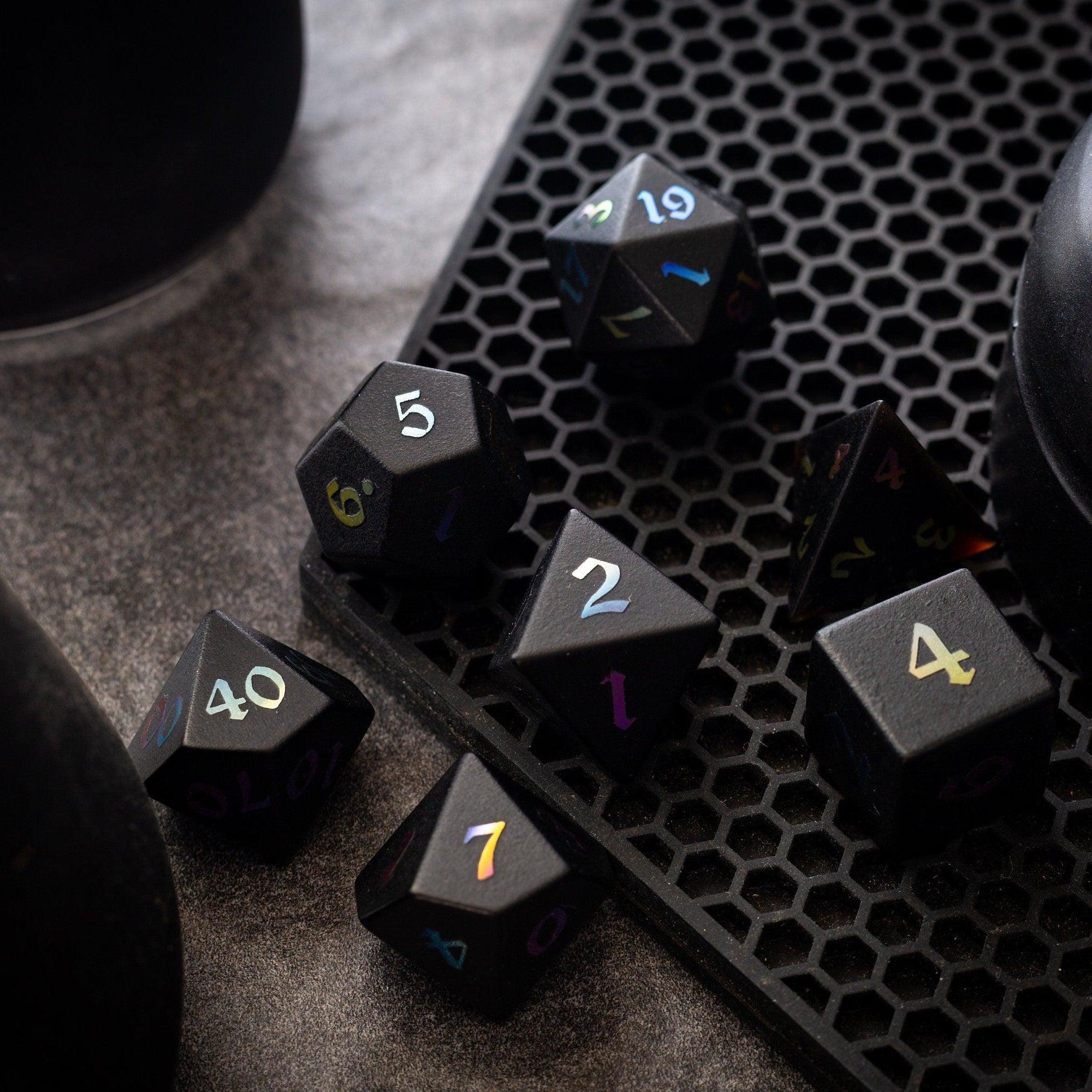
If you are choosing between two sets, compare the number color against the background. Bright numbers on dark dice or dark numbers on light dice are usually easier to read. Swirls, glitter, inclusions, and translucent effects can still work well when the numbering stands out clearly. If you play in dim rooms, at crowded tables, or during long sessions, readability becomes even more important.
4. Match the Dice to the Rolling Surface
A soft or padded surface helps control noise and protects both dice and furniture. This matters most for metal, gemstone, and glass dice. A dice tray, rolling mat, or padded dice tower keeps rolls contained and reduces the chance of a heavy die striking a laptop, miniature, drink, or wooden tabletop. Lighter resin dice are more forgiving, but they also benefit from a defined rolling area when table space is tight.
Tips for Caring for Your Dice
Different materials need slightly different care, but a few habits work well for almost every collection.
- Store dice securely: Use a bag, case, compartment box, or padded tray so dice are not bouncing around loose in a backpack.
- Separate heavy or fragile sets: Metal dice can scratch softer materials, while gemstone and glass dice can chip when they strike each other. Individual compartments or small cloth pouches help.
- Use a soft rolling surface: Felt, leather, neoprene, or another padded surface reduces hard impacts and keeps rolls contained.
- Clean gently: For routine cleaning, a soft dry or slightly damp cloth is usually enough. Avoid harsh cleaners, especially on natural stone, painted numbers, or specialty finishes.
- Check for damage: If a die develops a crack, deep chip, or badly damaged corner, retire it from regular play rather than risking further damage to the set.
Do Expensive Dice Roll Better?
Not necessarily. Higher-priced dice may use costlier materials, more complex manufacturing, hand-finishing, or decorative techniques, but price alone does not guarantee more random results. For most D&D groups, the practical difference comes from craftsmanship, readability, condition, and how well the set suits the player.
A premium set can still be worthwhile if you enjoy the material, collect dice, want a particular look for a character, or simply prefer the feel of heavier or sharper-edged dice. The important part is knowing what you are paying for. A beautiful set that is hard to read may be better for display than a four-hour session, while a simple resin set with clear numbering may become the dice you reach for every week.
Choose Dice That Fit the Way You Play
The right dice will not make your character roll more natural 20s, but they can make your sessions smoother and more enjoyable. Start with readability and comfort, then think about material, weight, durability, and the surface you use. If you prefer light, colorful sets, resin may be the easiest fit. If you enjoy a heavier feel, metal or gemstone dice may suit you better, provided you use a padded tray.
Dice also become personal over time. Players remember the set that survived a difficult boss fight, the d20 that came through on an important saving throw, or the dice they received from a friend. That connection is part of the fun, but the best set is still the one that works well at the table. Choose dice you can read quickly, roll comfortably, and care for easily, and they can stay part of your games for years.



Leave a comment
This site is protected by hCaptcha and the hCaptcha Privacy Policy and Terms of Service apply.