

Obsidian Dice: Buying, Care, and Gift Guide for D&D Players

Dice are at the heart of tabletop gaming. They decide whether a risky attack lands, a saving throw succeeds, or a last-minute plan falls apart. For many players, dice also become personal collectibles tied to favorite characters, campaigns, and game-night memories.
Among the many materials used for tabletop dice, obsidian dice stand out because they are made from natural volcanic glass. Their dark color, smooth polish, and natural variation appeal to collectors, D&D players, and gift buyers who want something different from ordinary resin or metal dice. This guide explains what obsidian is, how obsidian dice compare with other materials, what to look for when buying a set, and how to care for them properly.
What Is Obsidian?
Obsidian is a naturally occurring volcanic glass, not a crystal. It forms when silica-rich molten rock cools quickly enough that large mineral crystals do not have time to develop. The result is an amorphous glass with a smooth, glossy appearance. When broken, obsidian can produce a conchoidal fracture, creating curved surfaces and very sharp edges. That property is one reason people used obsidian for cutting tools and projectile points for thousands of years.
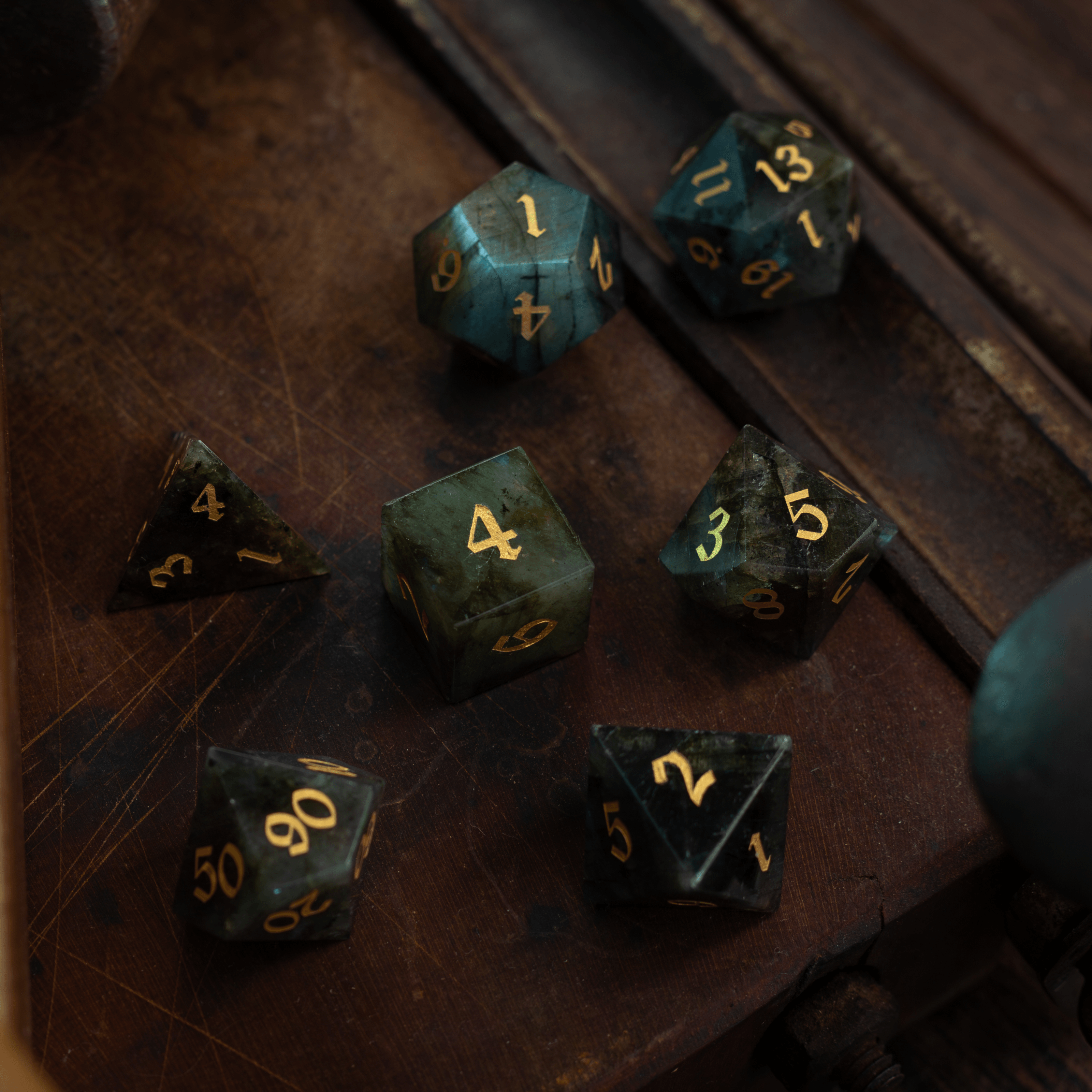
Most obsidian is black or very dark, although natural varieties can show brown tones, snowflake-like patterns, golden or silvery sheen, and rainbow effects. These differences come from the material's composition and internal structures. Because obsidian is natural, finished dice may show small differences in tone, pattern, or translucency. That variation is normal and is part of what separates natural-material dice from molded synthetic sets.
Why Players Choose Obsidian Dice
When obsidian is cut and polished into polyhedral dice, it combines a dramatic appearance with the feel of a natural material. Players often choose an obsidian dice set for a few practical and visual reasons:
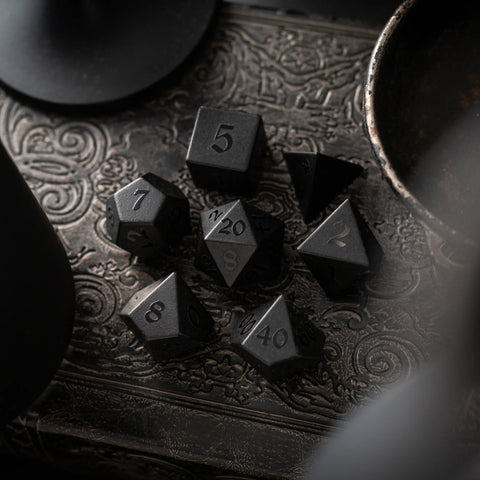
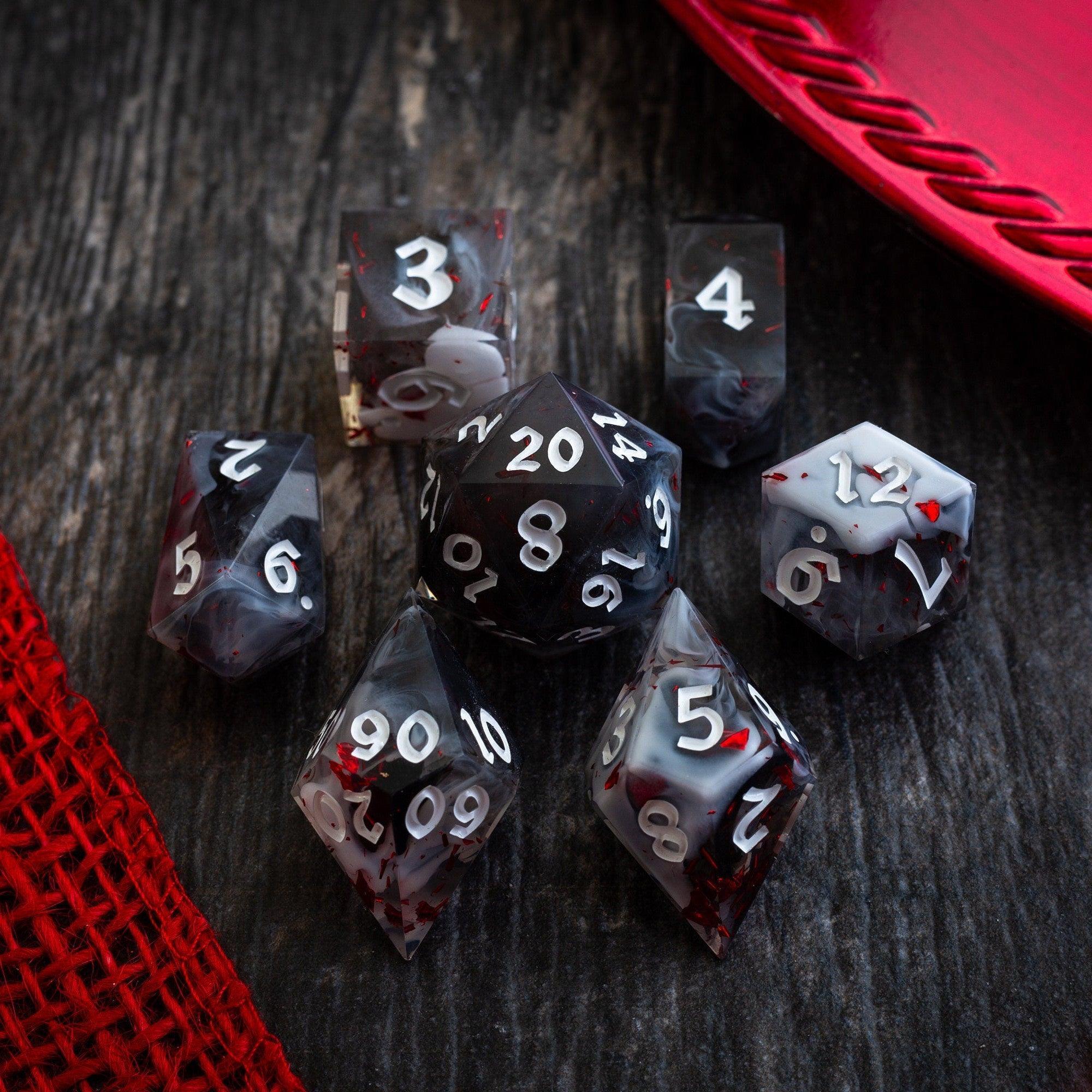
- Distinct appearance: Polished black obsidian has a glassy surface that reflects light without the glitter, swirls, or embedded effects common in resin dice.
- Solid feel: Obsidian feels substantial in the hand compared with many lightweight plastic or resin dice, while usually feeling less heavy than metal sets.
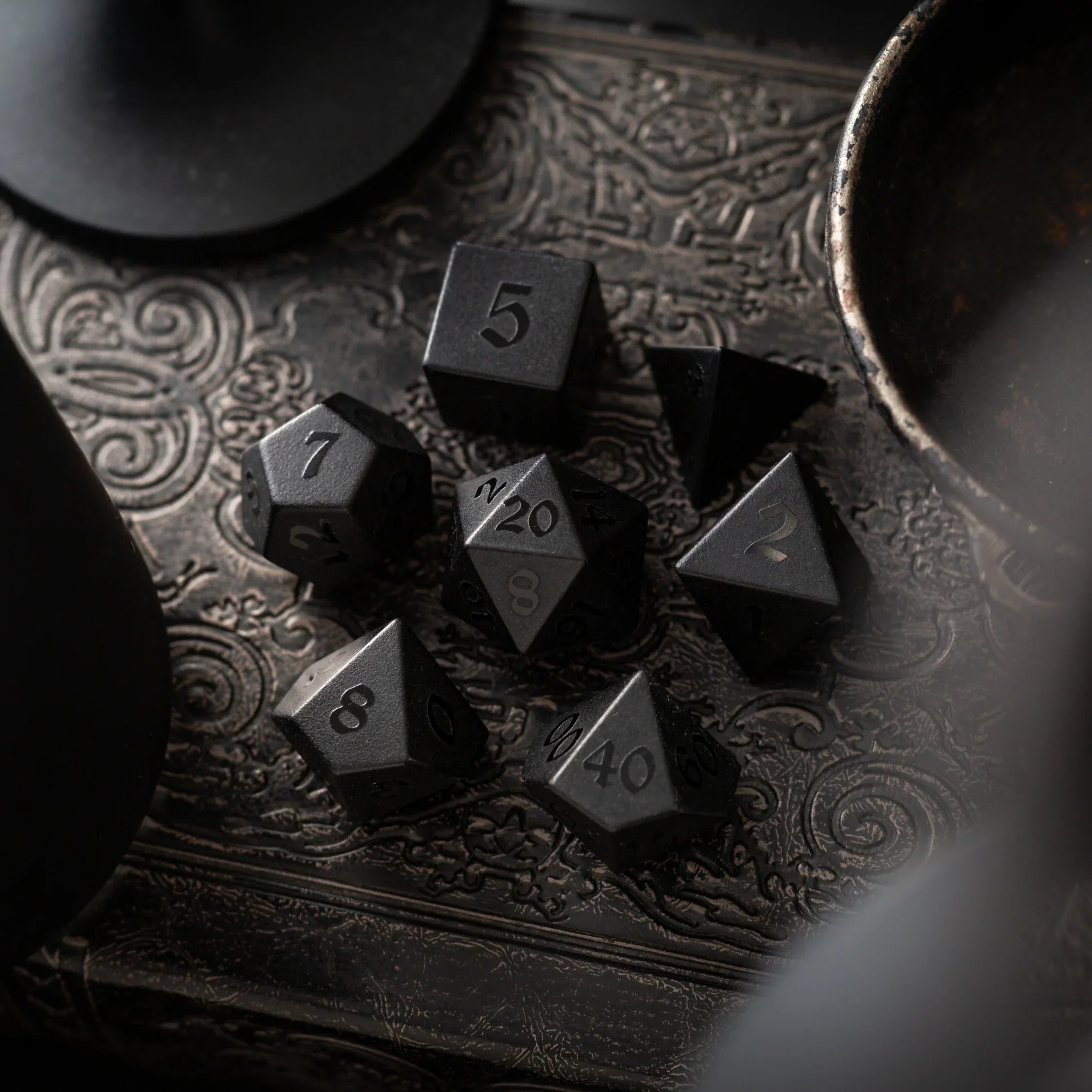
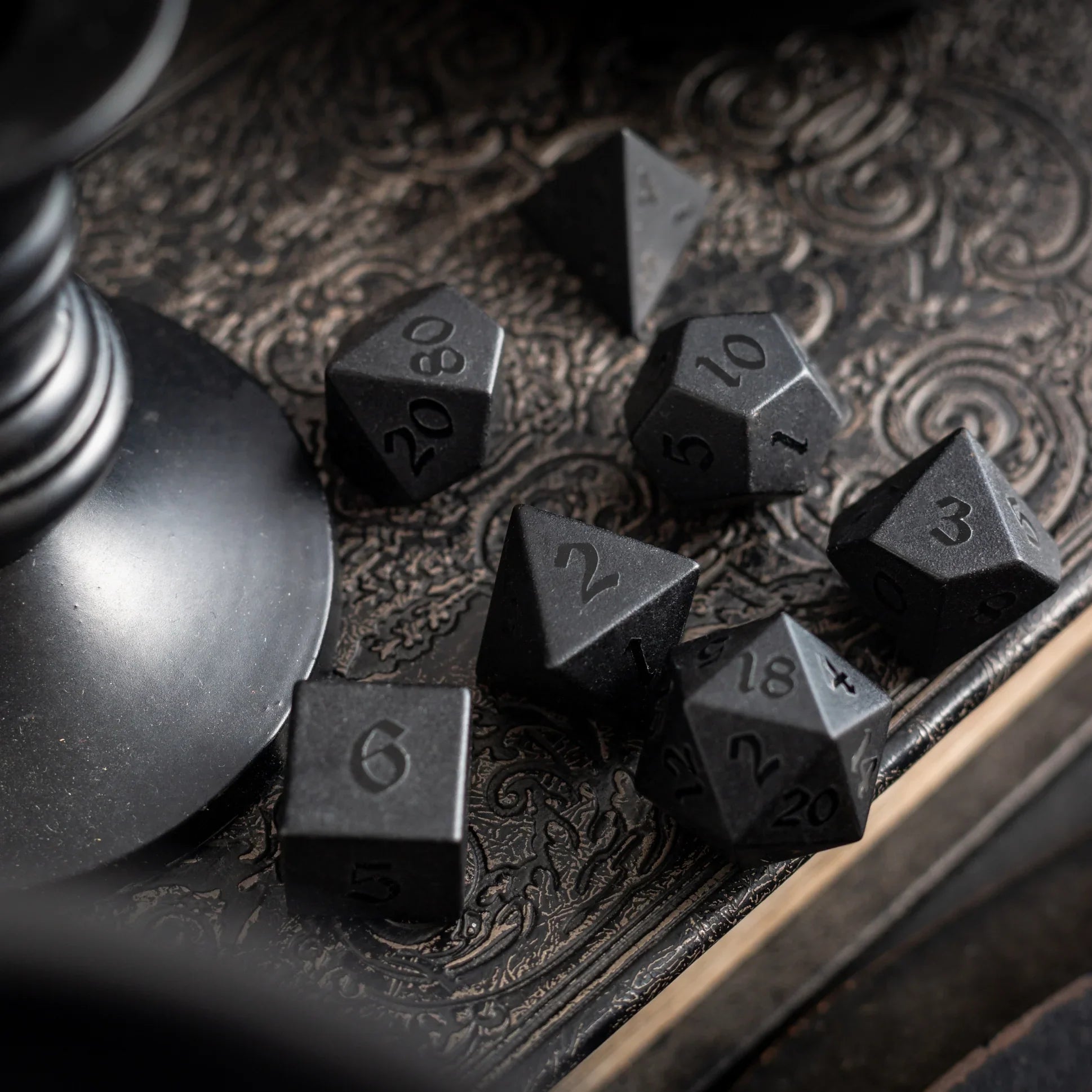
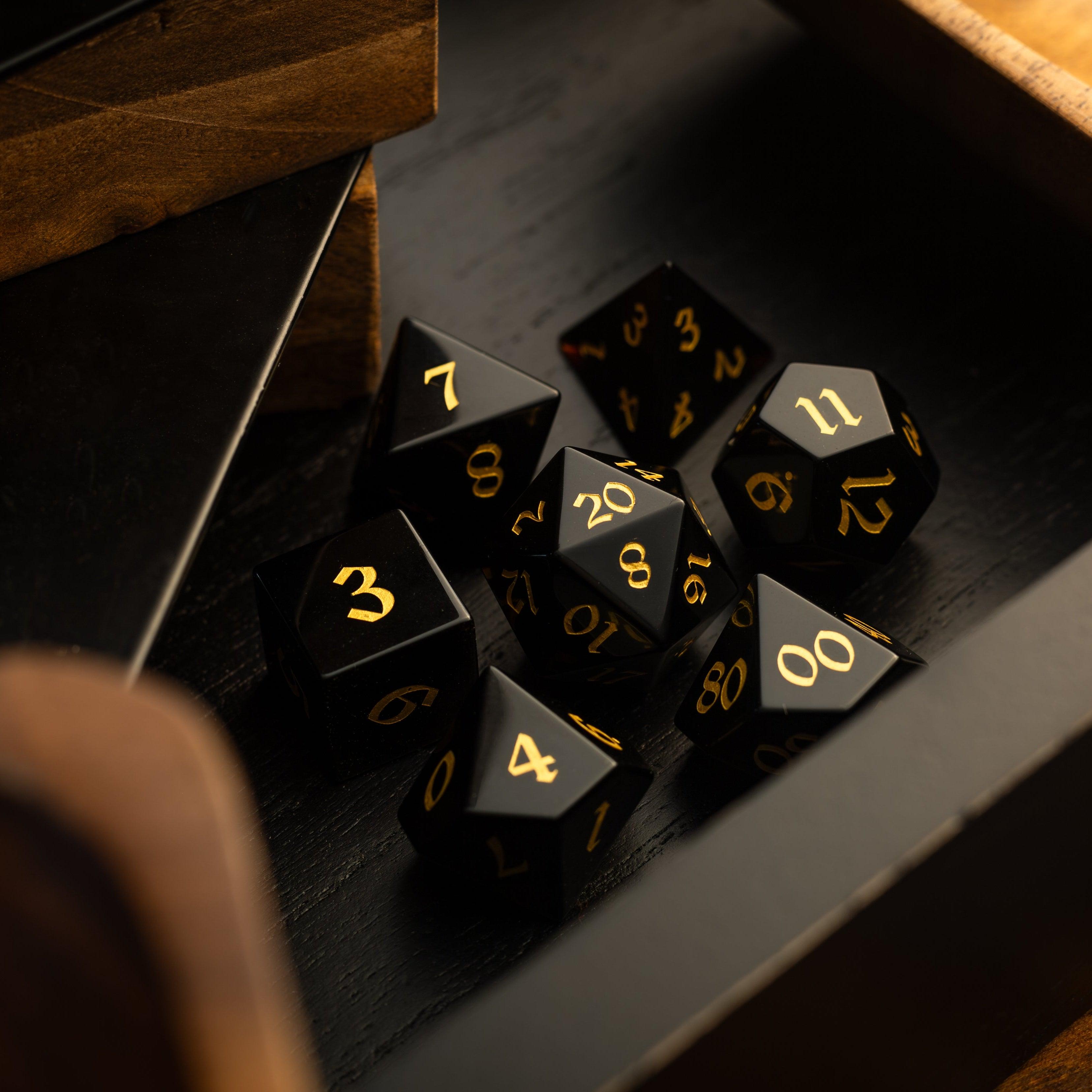
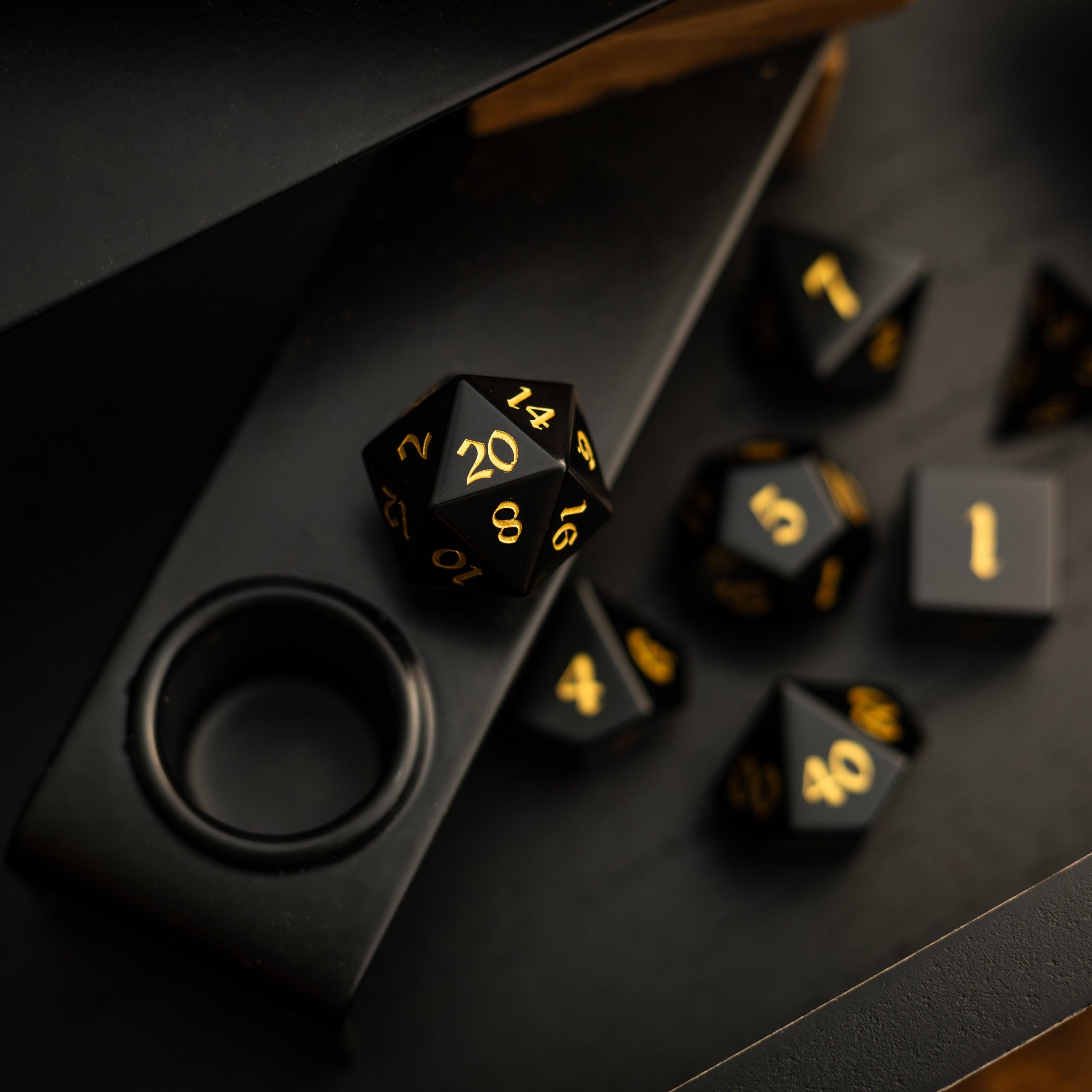
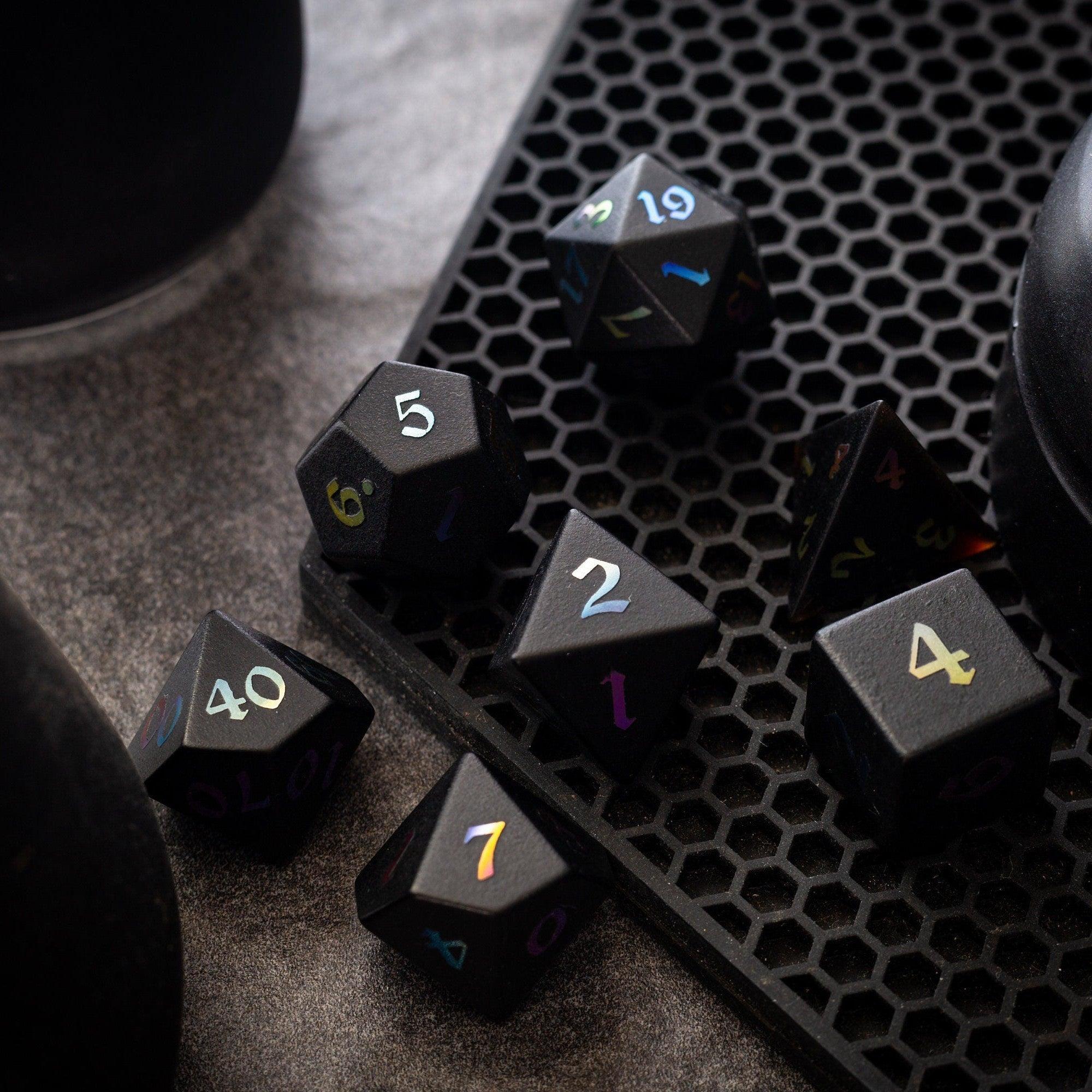
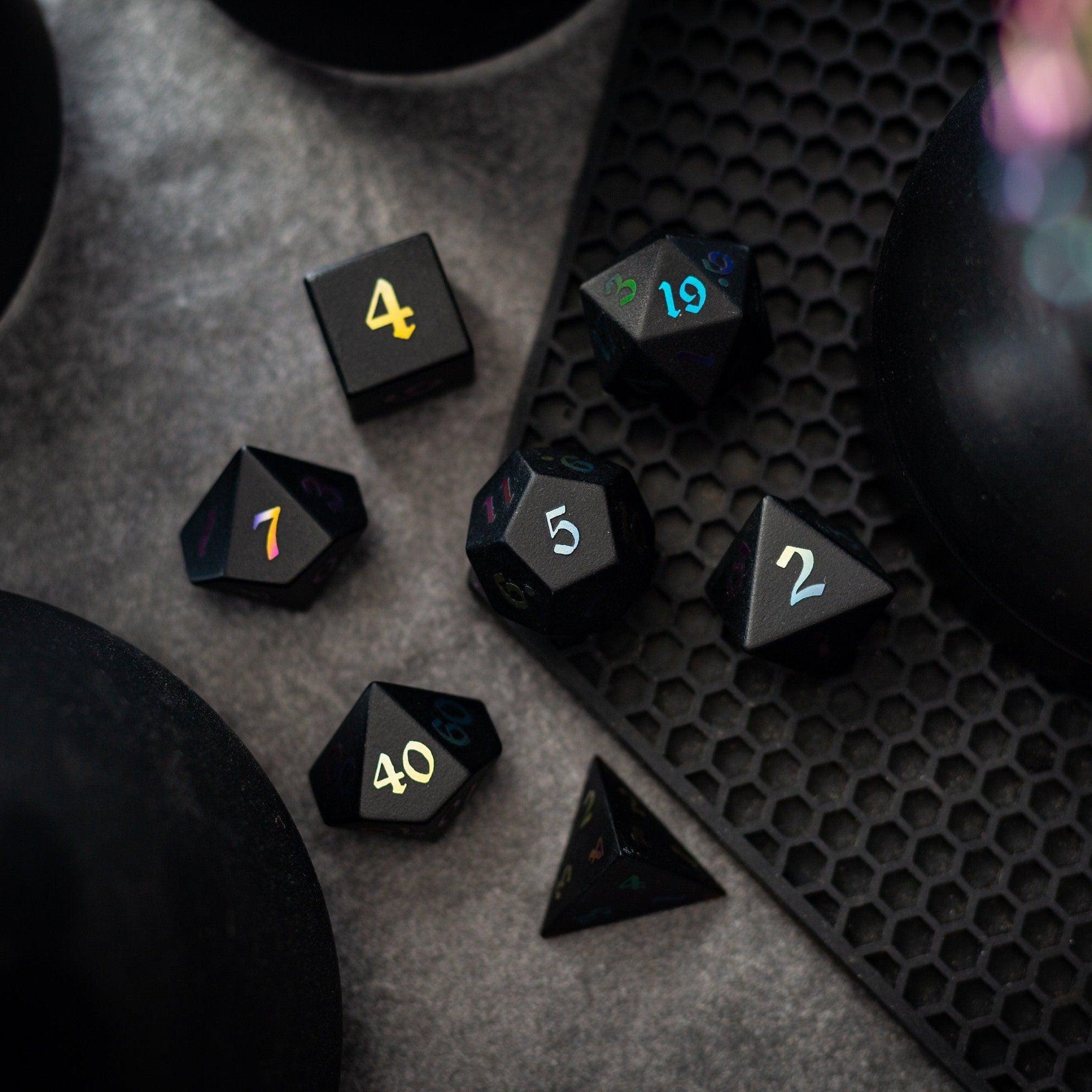
- Craftsmanship: Shaping brittle volcanic glass requires careful cutting and polishing. Runic Dice's Black Night Raised Obsidian set is described as hand-carved genuine black obsidian with raised obsidian numbers.
- Natural character: Each die can show slight visual differences because the material was formed naturally rather than poured into a mold.
Obsidian also fits many character and campaign themes. A black obsidian set can suit rogues, warlocks, necromancers, volcanic settings, gothic adventures, or underworld campaigns, but it works just as well for a player who simply likes dark, understated accessories.
Obsidian vs. Other Dice Materials
Obsidian is not automatically better than other dice materials. The right choice depends on how often the dice will be used, how carefully they will be handled, and what kind of weight and appearance the player prefers.
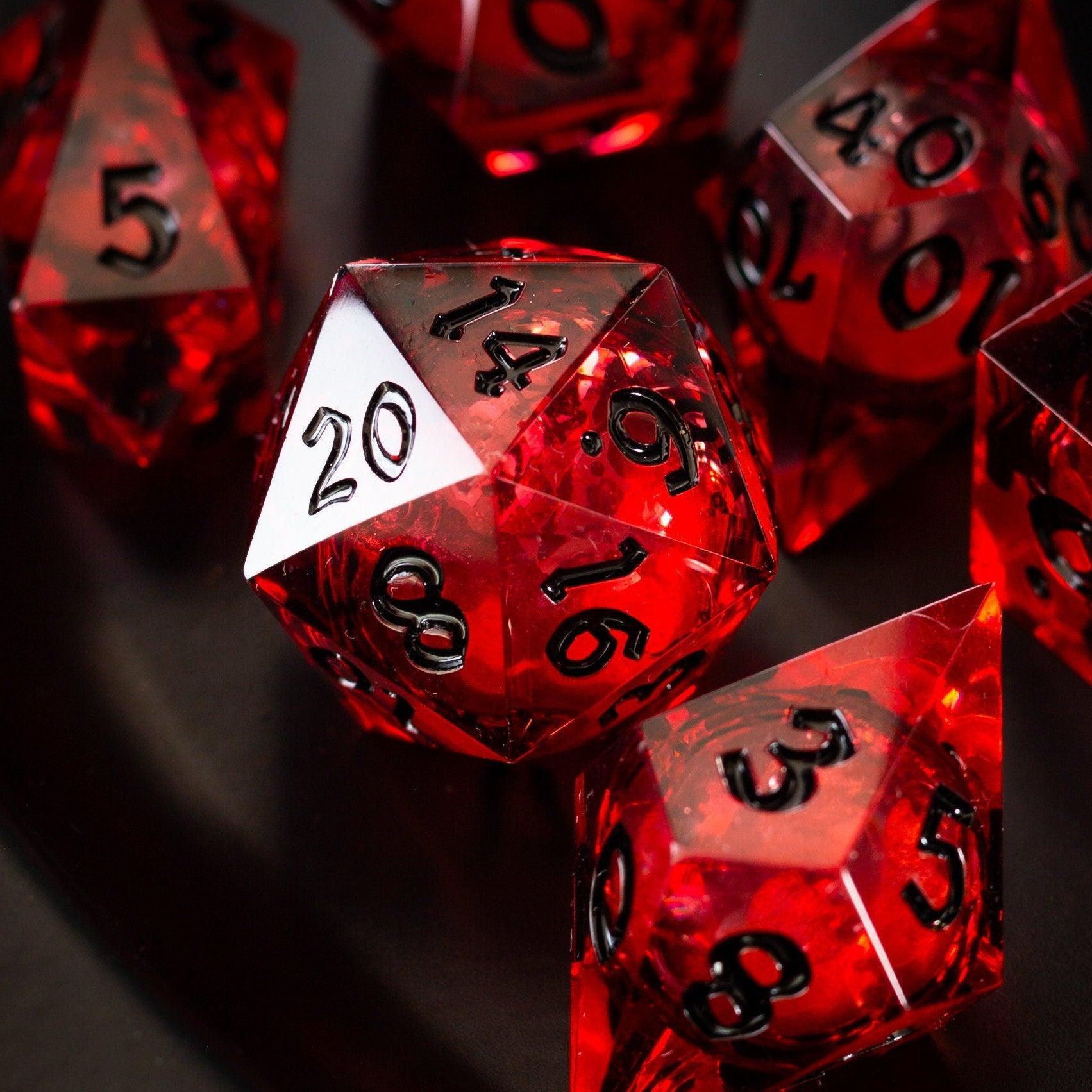
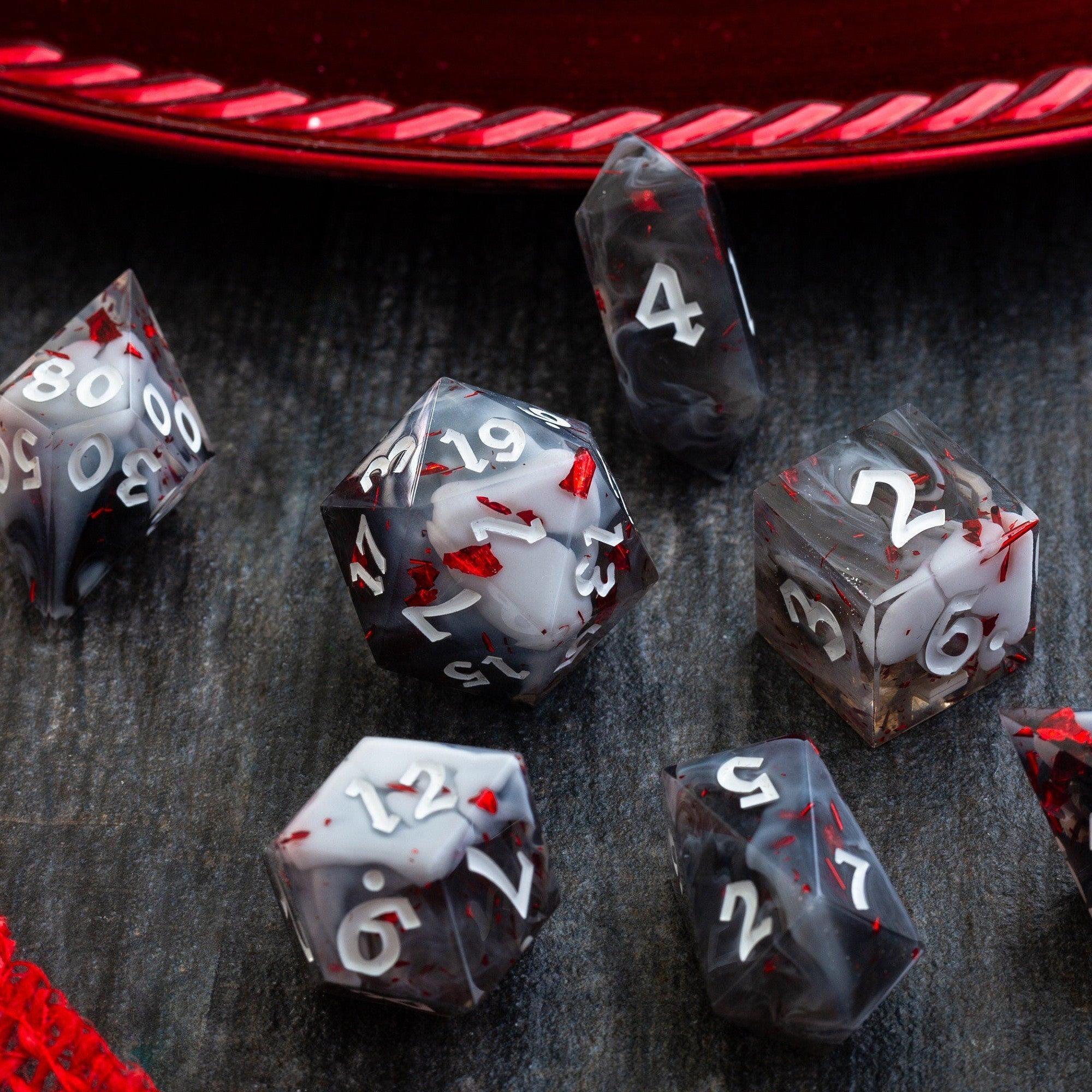
- Resin Dice: Resin sets are generally lighter, less vulnerable to impact damage, and available in a wider range of colors and embedded designs. They are often a practical choice for frequent play and travel.
- Metal Dice: Metal dice are much heavier and can strike a table or tray with more force. A padded rolling surface helps protect the dice, the table, and nearby accessories.
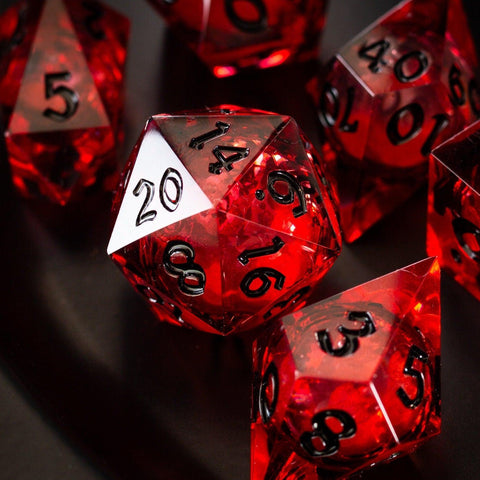
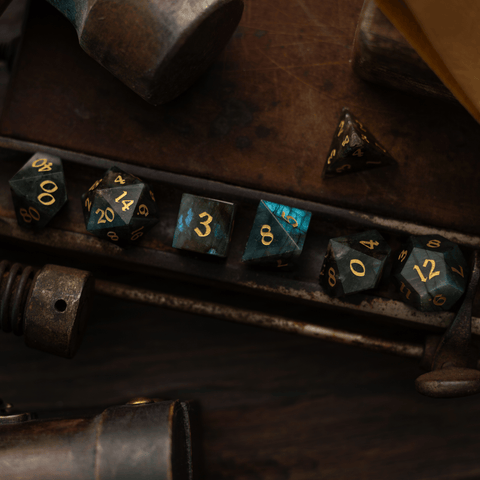
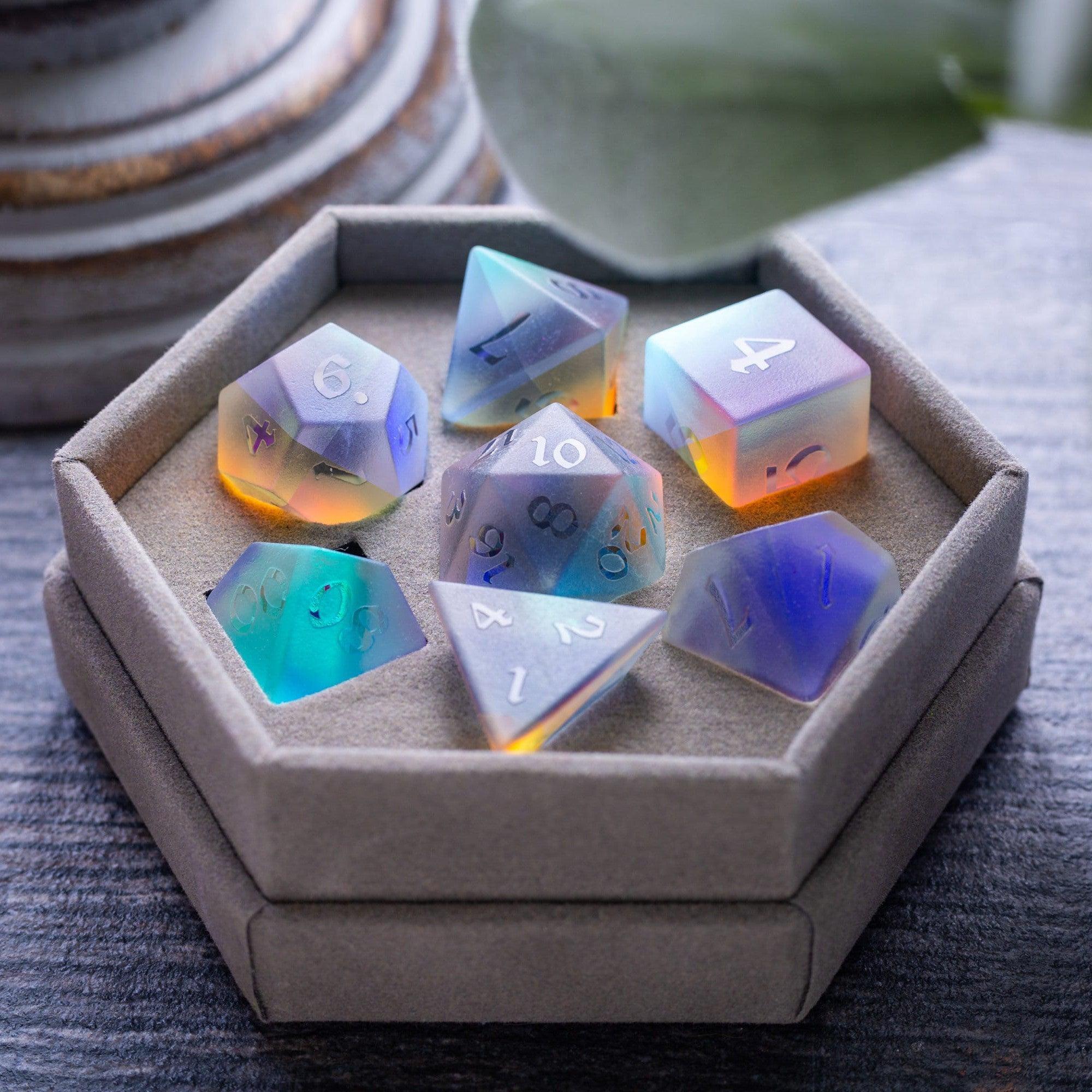
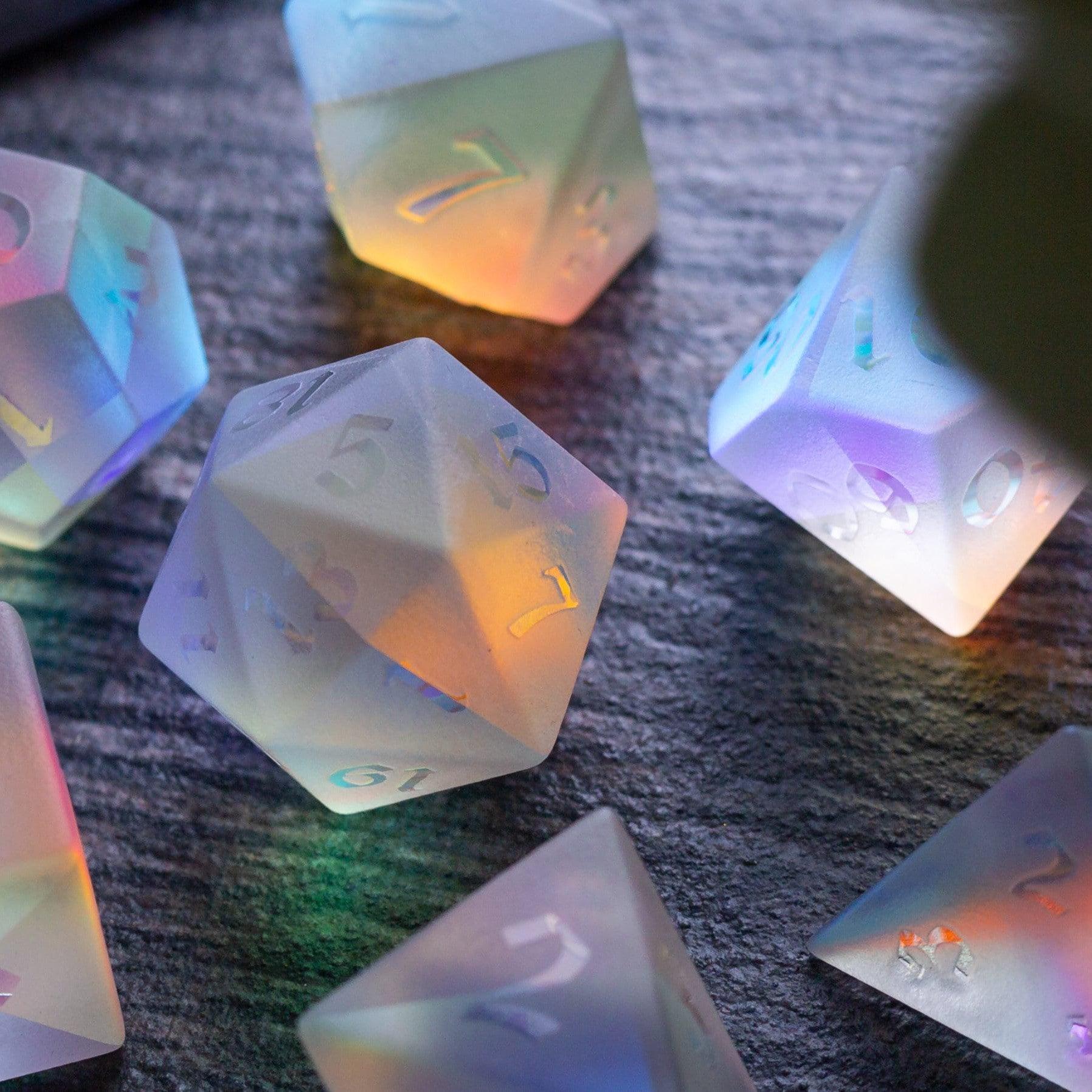
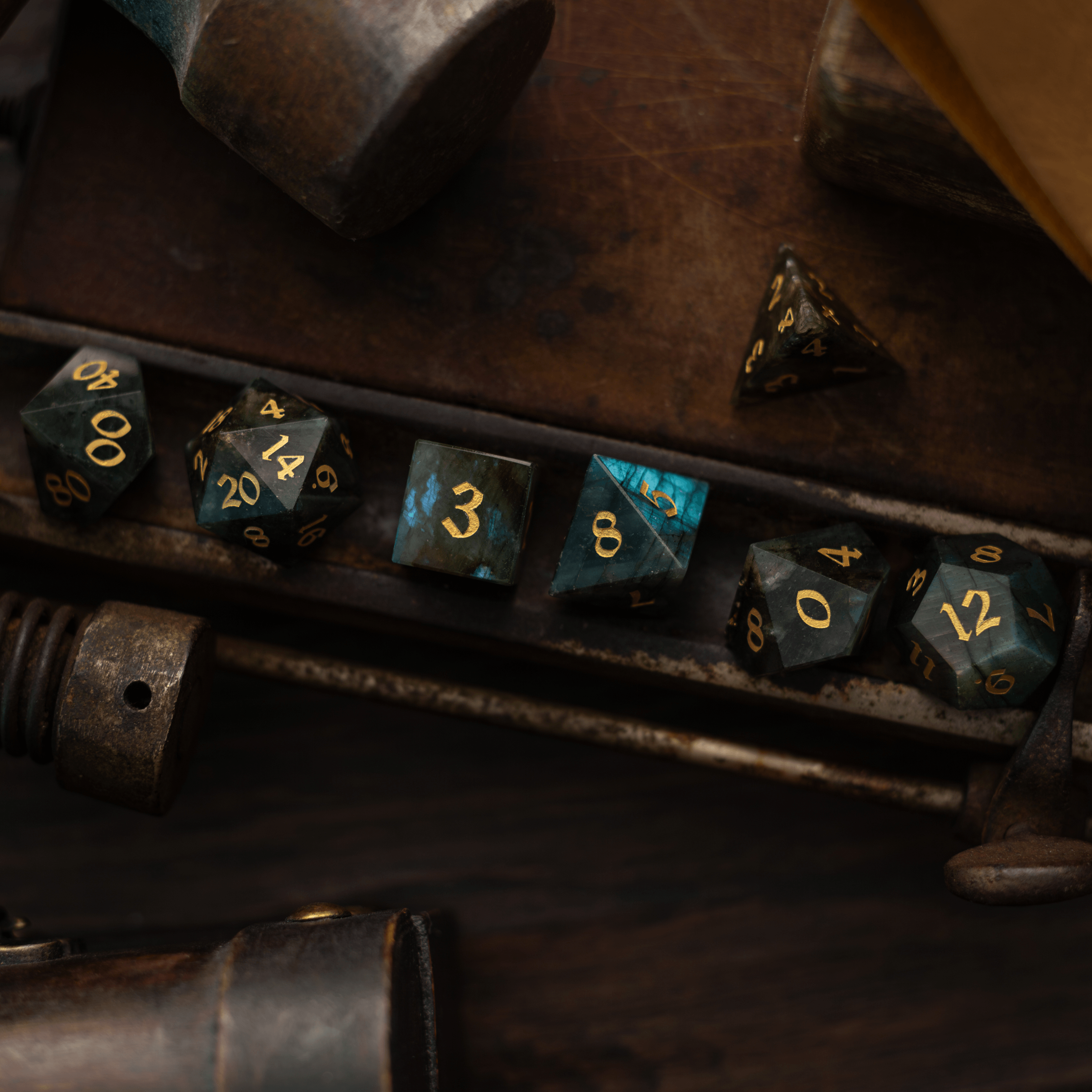
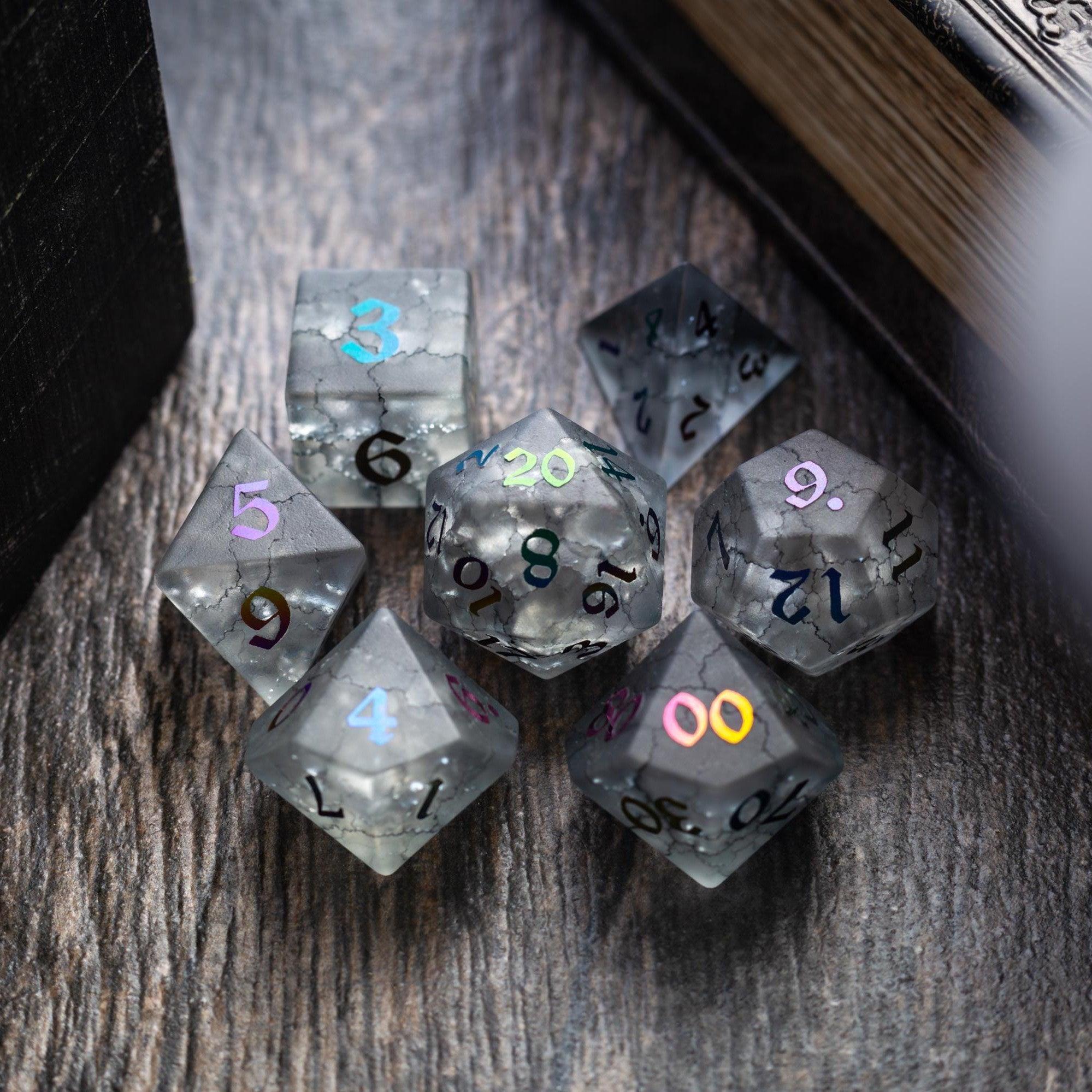
- Gemstone Dice: Natural stone and glass-based sets can have unique colors, patterns, and polished surfaces, but many are more vulnerable to chips than resin. Obsidian is often grouped with gemstone dice for shopping purposes even though it is technically volcanic glass rather than a mineral crystal.
For everyday use, resin may be easier to carry and replace. Metal appeals to players who enjoy extra weight. Obsidian works best for someone who values natural material, dark styling, and collectibility and is comfortable giving the set a little more care.
What to Know Before Buying or Gifting Obsidian Dice
A good-looking set is not automatically the right set for every player. Before buying obsidian D&D dice for yourself or as a gift, consider how they will actually be used at the table.
- Fragility: Obsidian is brittle. A hard drop or a collision with another dense die can cause chips or cracks. Roll it on a felt, leather, neoprene, or other soft surface rather than directly on stone, tile, or another hard tabletop.
- Readability: Black dice need numbers that are easy to see at normal table distance. Check the number style, contrast, engraving, inking, or raised design before buying, especially for players who want quick results during combat.
- Storage: Keep obsidian dice in a padded box, divided case, or soft-lined container. Avoid carrying them loose with metal dice, miniatures, coins, or other hard accessories.
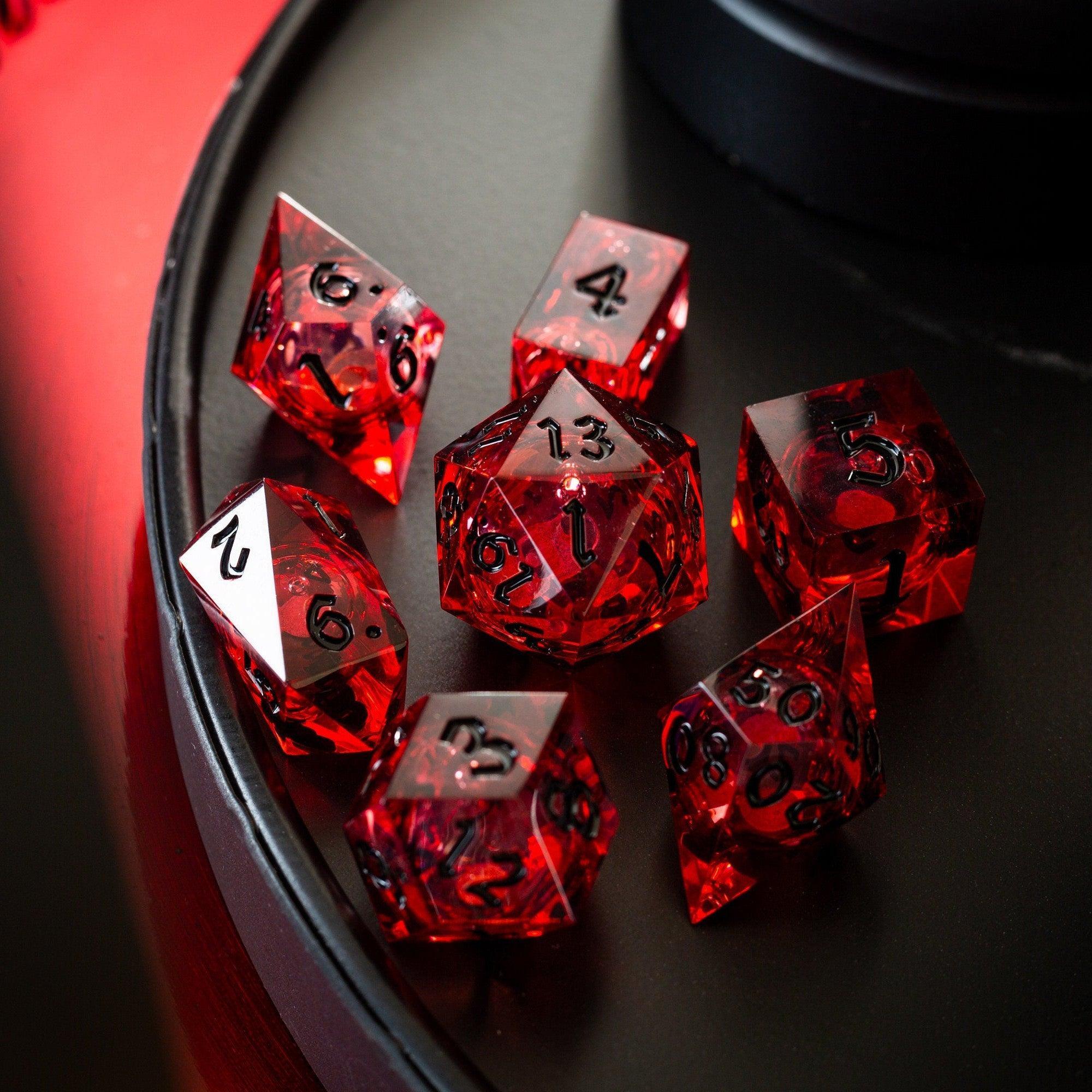
- Set contents: A standard D&D polyhedral set normally includes a d4, d6, d8, d10, percentile die, d12, and d20. Check the product description so you know whether you are buying a full seven-piece set or a single die.
- Tabletop balance: Hand-carved natural-material dice are made for roleplaying games, not casino-grade precision. Small differences can occur during cutting and polishing. For casual D&D or Pathfinder play, look for well-shaped faces, clear numbering, and consistent craftsmanship rather than expecting laboratory-level uniformity.
How to Choose an Obsidian Dice Set
Before ordering, look beyond the first product photo. A well-made obsidian dice set should be attractive, readable, and appropriate for the way you plan to use it.
- Confirm the material: Look for a clear description identifying the dice as genuine obsidian or volcanic glass.
- Check the number design: Raised, engraved, or inked numbers should be easy to distinguish quickly. Decorative numbers may look impressive but can slow play if the digits blend into the surface.
- Inspect the finish: Product photos should show smooth faces, clean edges, and a consistent polish. Natural color variation is expected, but visible chips or damaged corners are different from normal variation.
- Review the storage: Fragile dice benefit from a protective box or case that prevents repeated contact with other hard objects.
- Match the player: Some players love deep black dice, while others prefer bright, translucent, or high-contrast sets. A premium material only makes a good gift when it matches the recipient's taste and play habits.
How to Care for Obsidian Dice
Obsidian dice do not need complicated maintenance. The most important rule is to reduce impact. Use a soft dice tray or playmat, keep the dice away from hard floors and bare stone surfaces, and store them separately from heavy metal dice. When the surface collects fingerprints or dust, wipe each die gently with a soft microfiber cloth.
If deeper cleaning is needed, use a small amount of mild soap with lukewarm water, then rinse and dry the dice thoroughly with a soft cloth. Avoid abrasive scrubbers, harsh cleaners, and aggressive polishing compounds. Even when the obsidian itself can tolerate ordinary water, painted, inked, coated, or decorative number treatments may require gentler care.
Why Obsidian Dice Make Memorable Gifts
Obsidian dice can make a thoughtful gift because they combine a usable gaming tool with an unusual natural material. A set can be rolled during a campaign, displayed between sessions, or added to a larger collection. The dark polish also suits players who prefer simple, dramatic designs instead of bright or glitter-heavy styles.
The main tradeoff is fragility. Obsidian should be handled more carefully than ordinary resin dice, so a soft rolling surface and protective storage are worth considering at the same time as the dice themselves. For a collector or regular tabletop player who appreciates natural materials, that extra care can be reasonable.
If you are choosing a set, focus on genuine material, readable numbers, careful finishing, and protective storage. You can browse Runic Dice for obsidian and other gemstone dice, then compare each design with the player's preferences and gaming habits. The best obsidian dice set is not simply the rarest or most expensive one. It is the set that feels good to use, is easy to read, and suits the person who will bring it to the table.

Leave a comment
This site is protected by hCaptcha and the hCaptcha Privacy Policy and Terms of Service apply.