
Guide to Choosing the Best Dice Sets for Tabletop Games
Updated on: 2025-12-02
Want your game night to feel smoother, faster, and more personal? This guide walks you through materials, readability, balance, and care so you can choose dice that fit your table, your style, and your budget. We also clear up common myths, answer top questions, and spotlight a few standout sets. If you're shopping for dice sets for tabletop games, you'll find practical tips and confident picks right here—no gatekeeping, just friendly advice.
- Product Spotlight
- Materials and feel
- Readability and accessibility
- Care and durability
- Size, weight, and rolling
- Myths vs. Facts
- Frequently Asked Questions
- Final Recommendations for dice sets for tabletop games
Whether you’re prepping a new campaign or refreshing your kit, the right polyhedral set does more than look cool. It supports clarity at the table, speeds up play, and makes every roll feel intentional. Below, we’ll break down how to pick a set that matches your vibe and your needs—without overcomplicating it. You’ll learn how materials affect durability and feel, why number contrast matters more than you think, and how to keep your favorite pieces pristine for years.
Product Spotlight
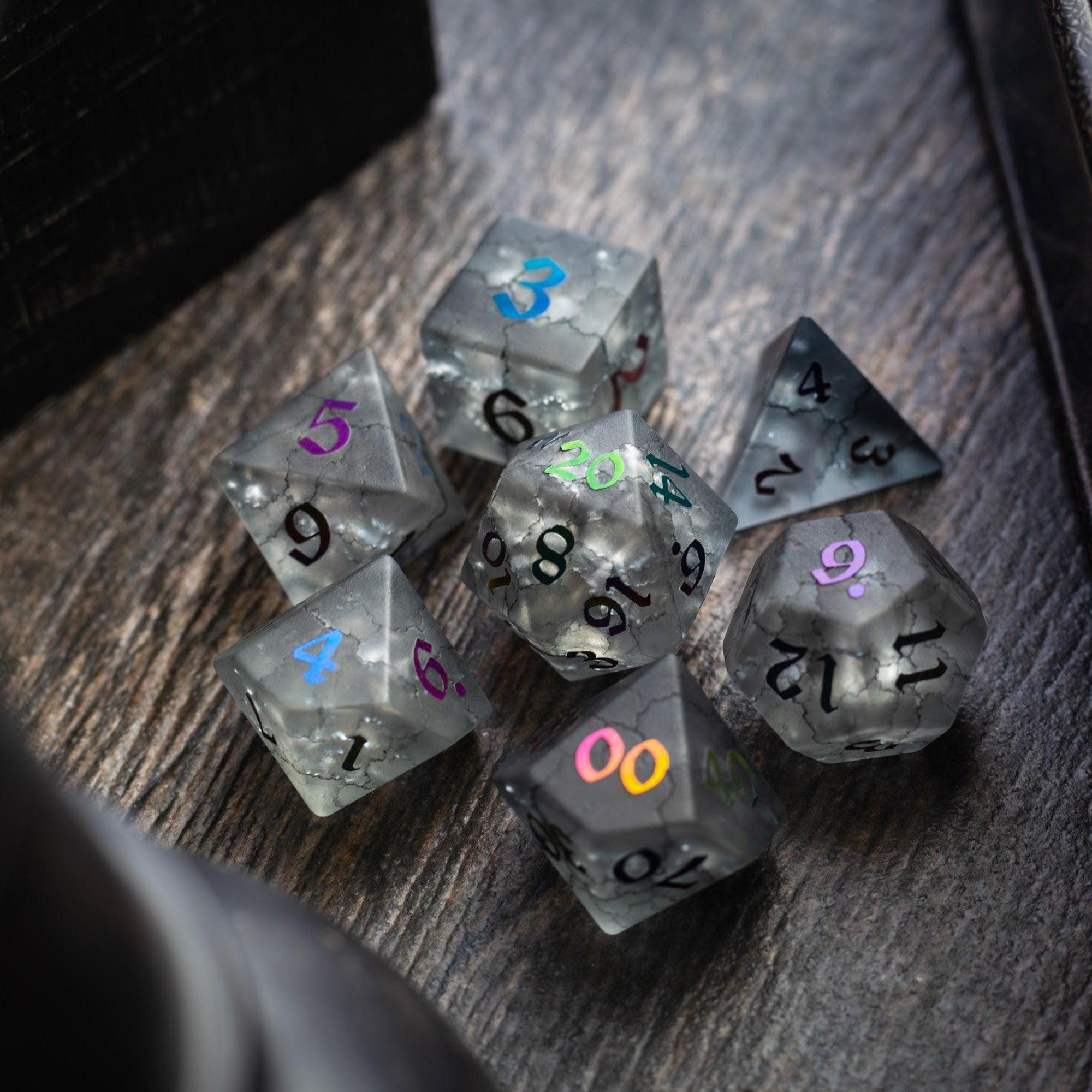
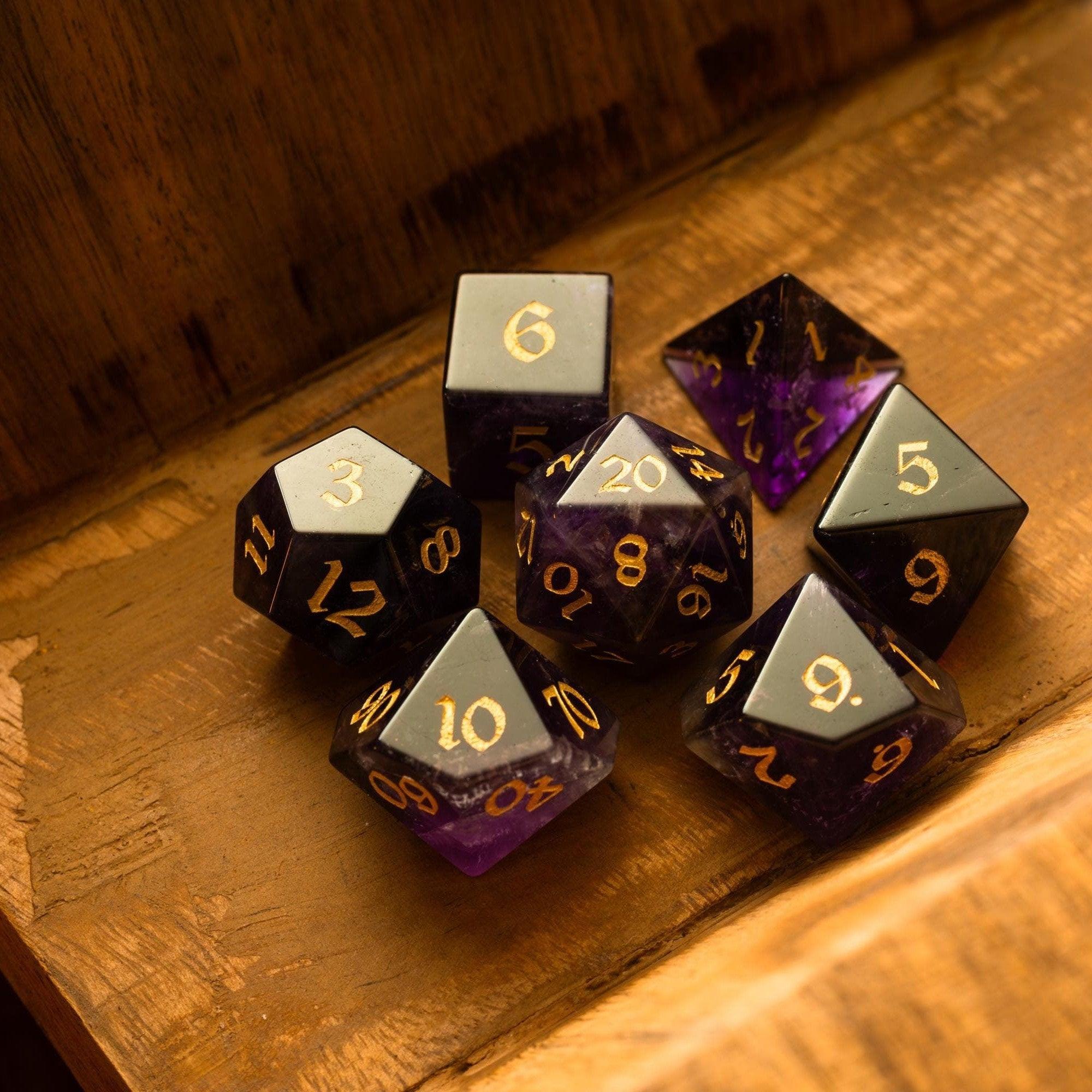
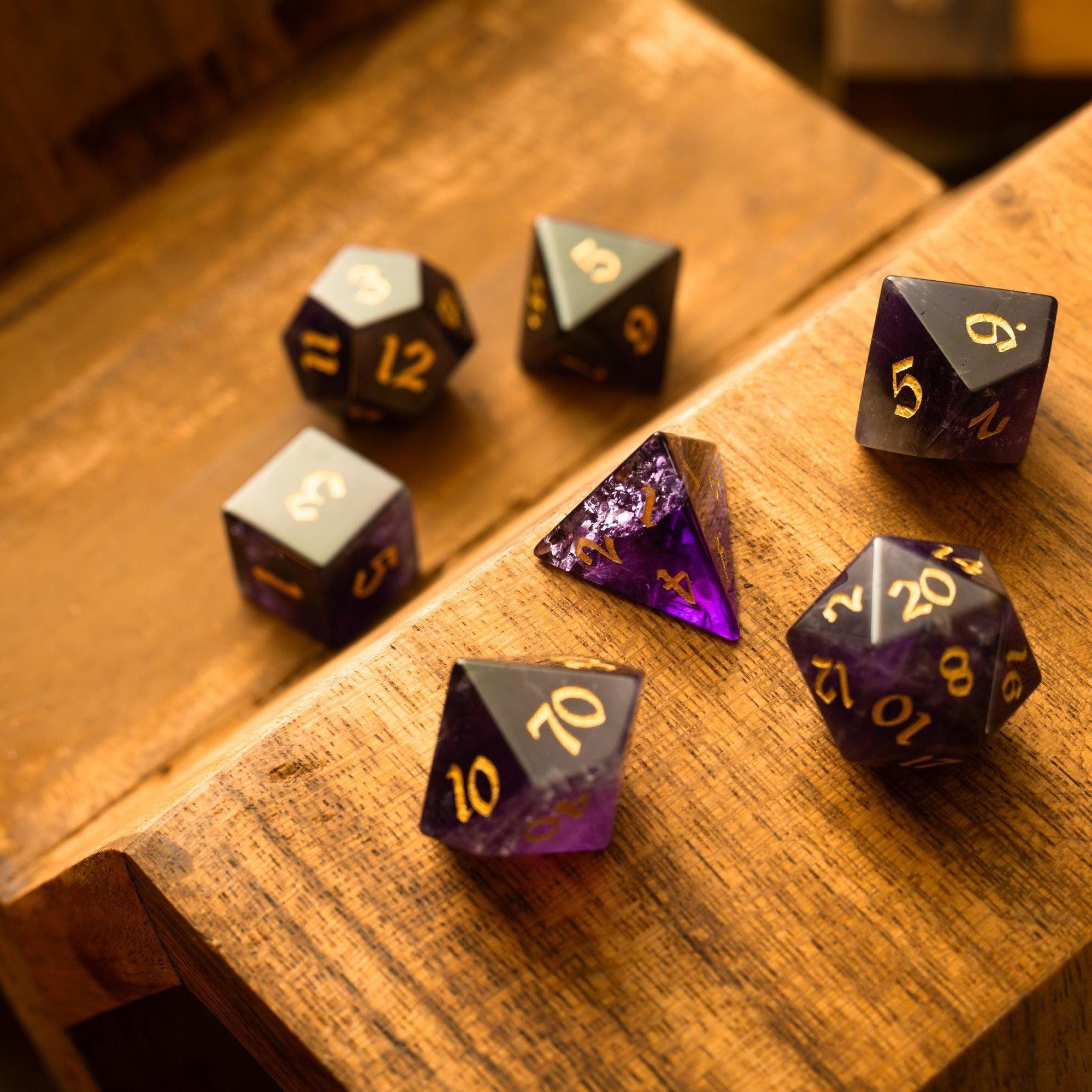
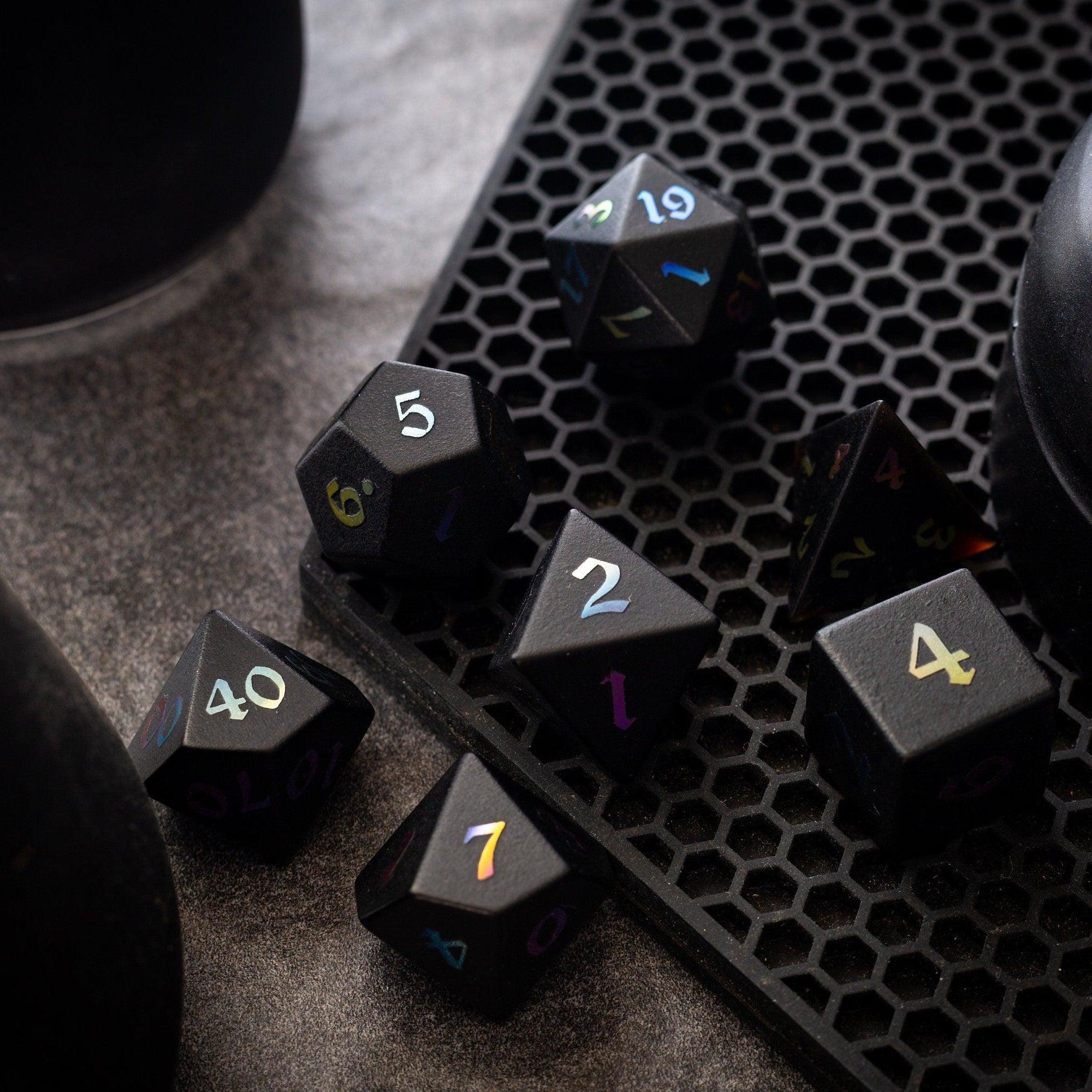
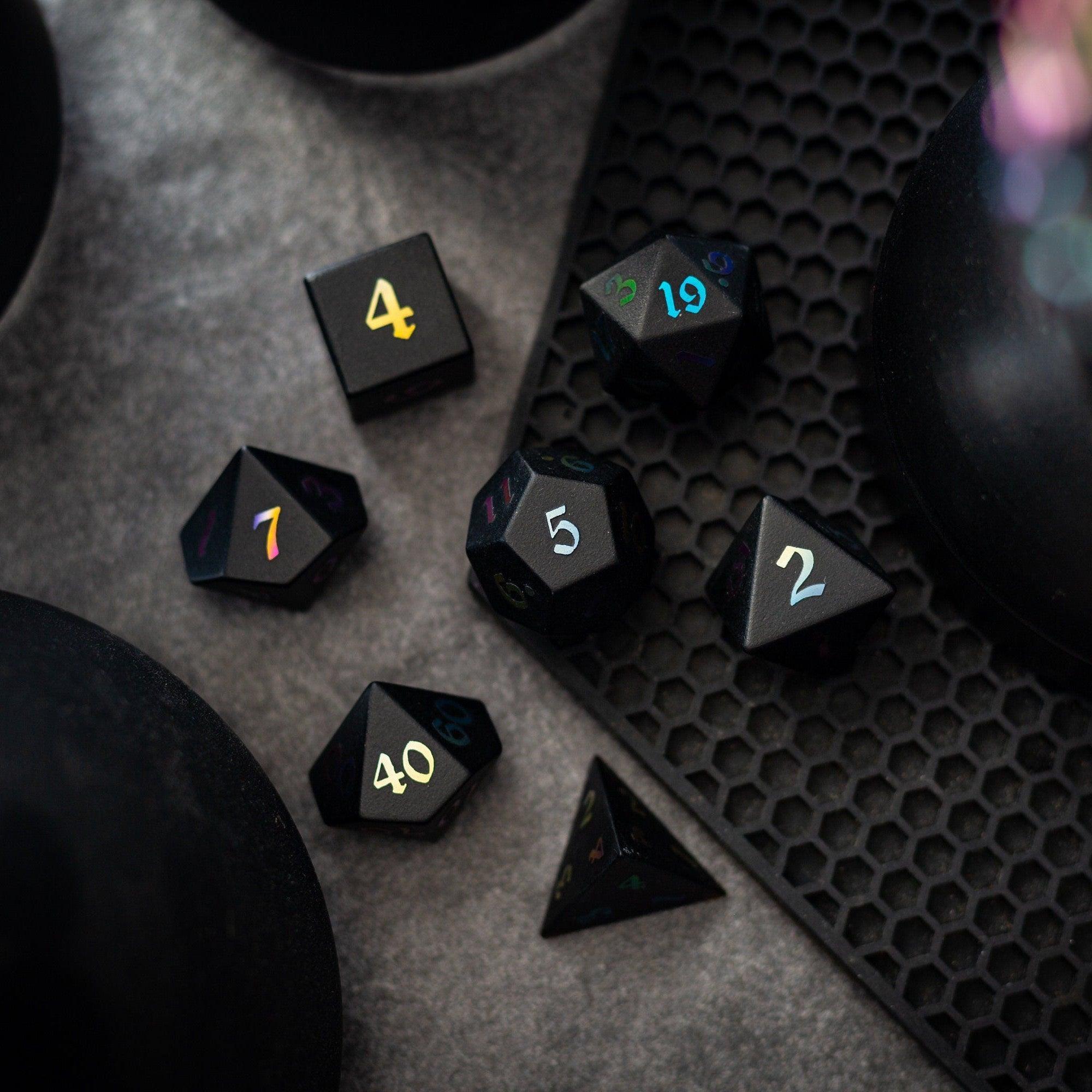
Looking for a quick shortlist before deep-diving into the details? Here are a few options that balance style, legibility, and build quality—useful whether you’re upgrading your main set or adding a themed backup. If you’re browsing broadly, start with the curated collections page to compare materials and finishes side by side.
Materials and feel
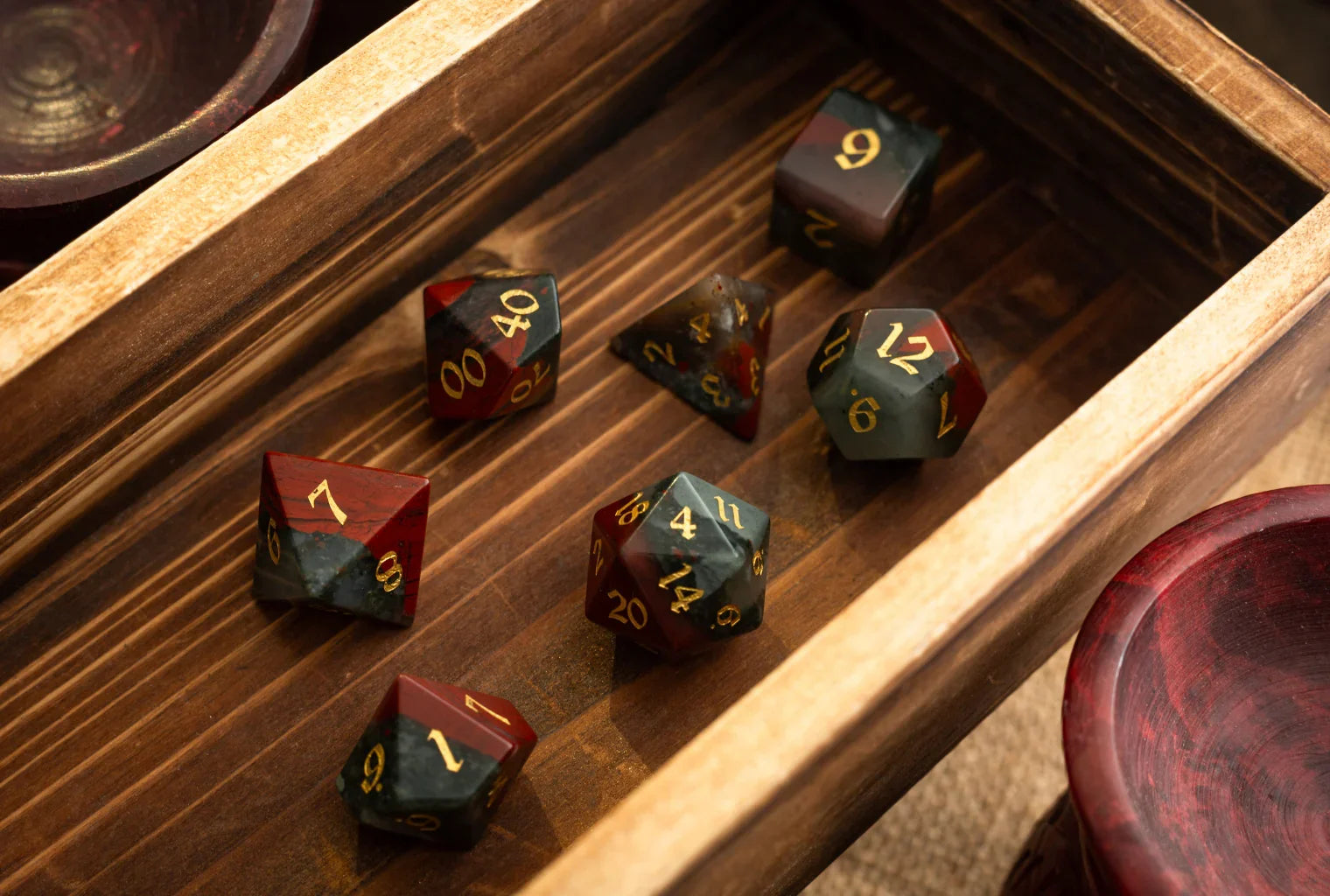
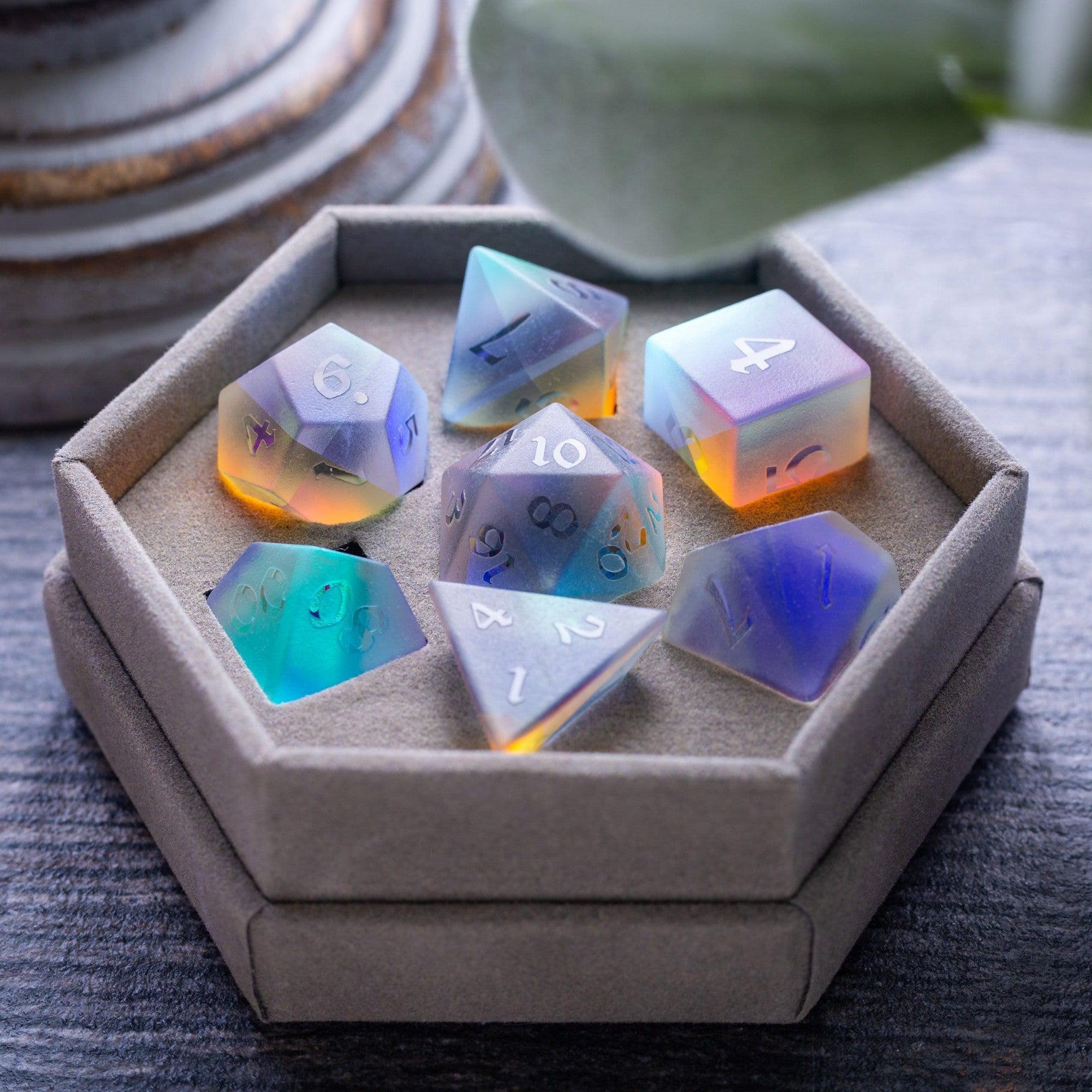
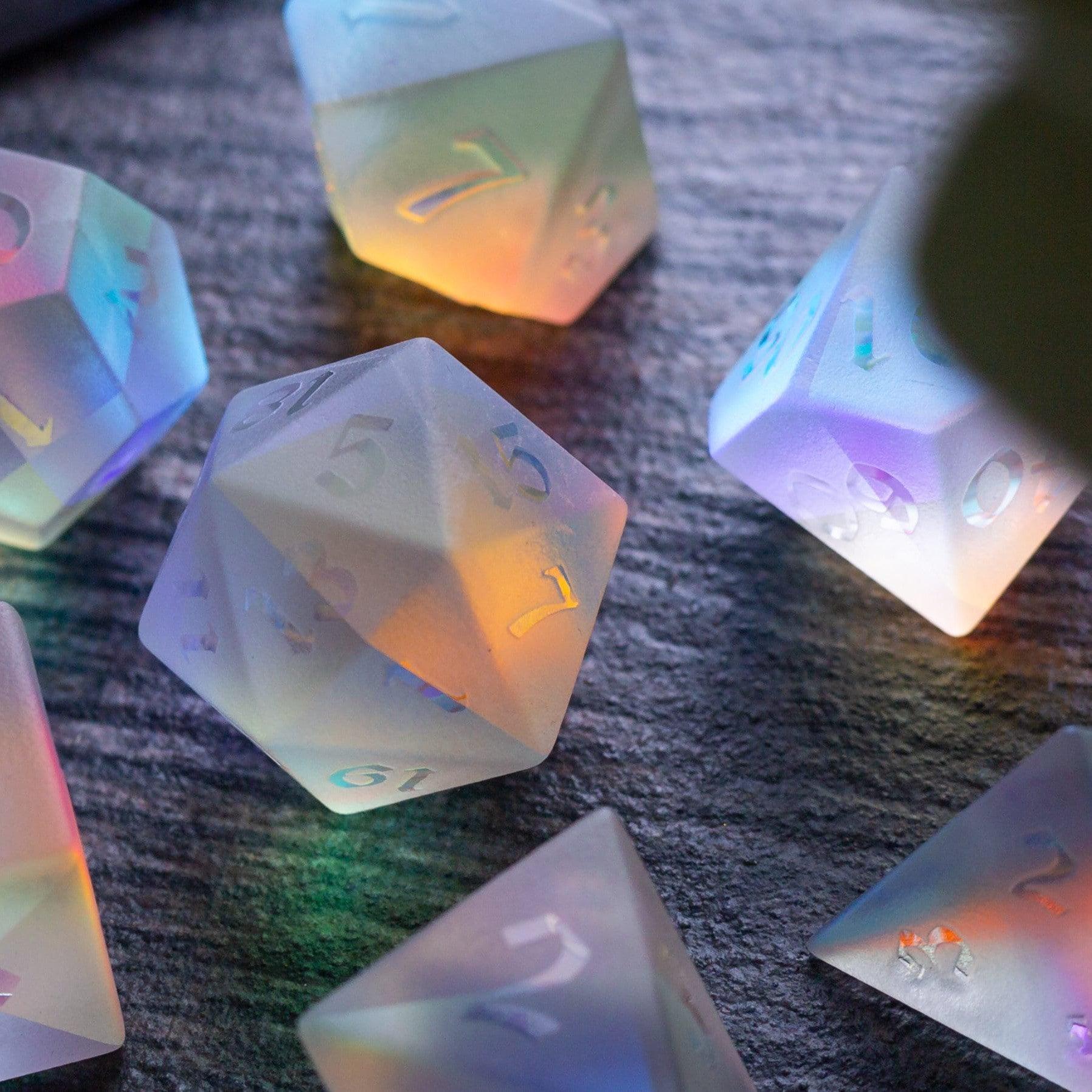
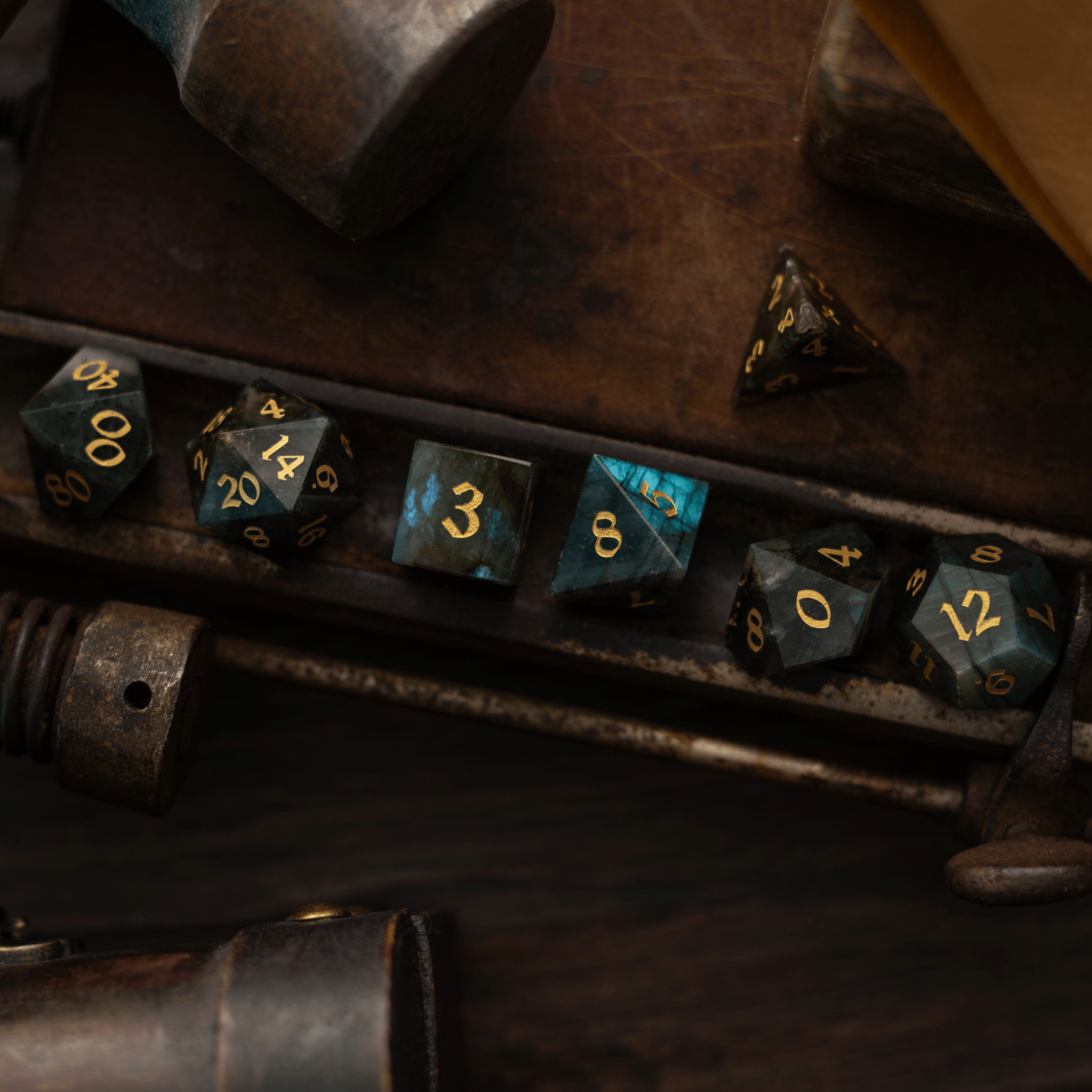
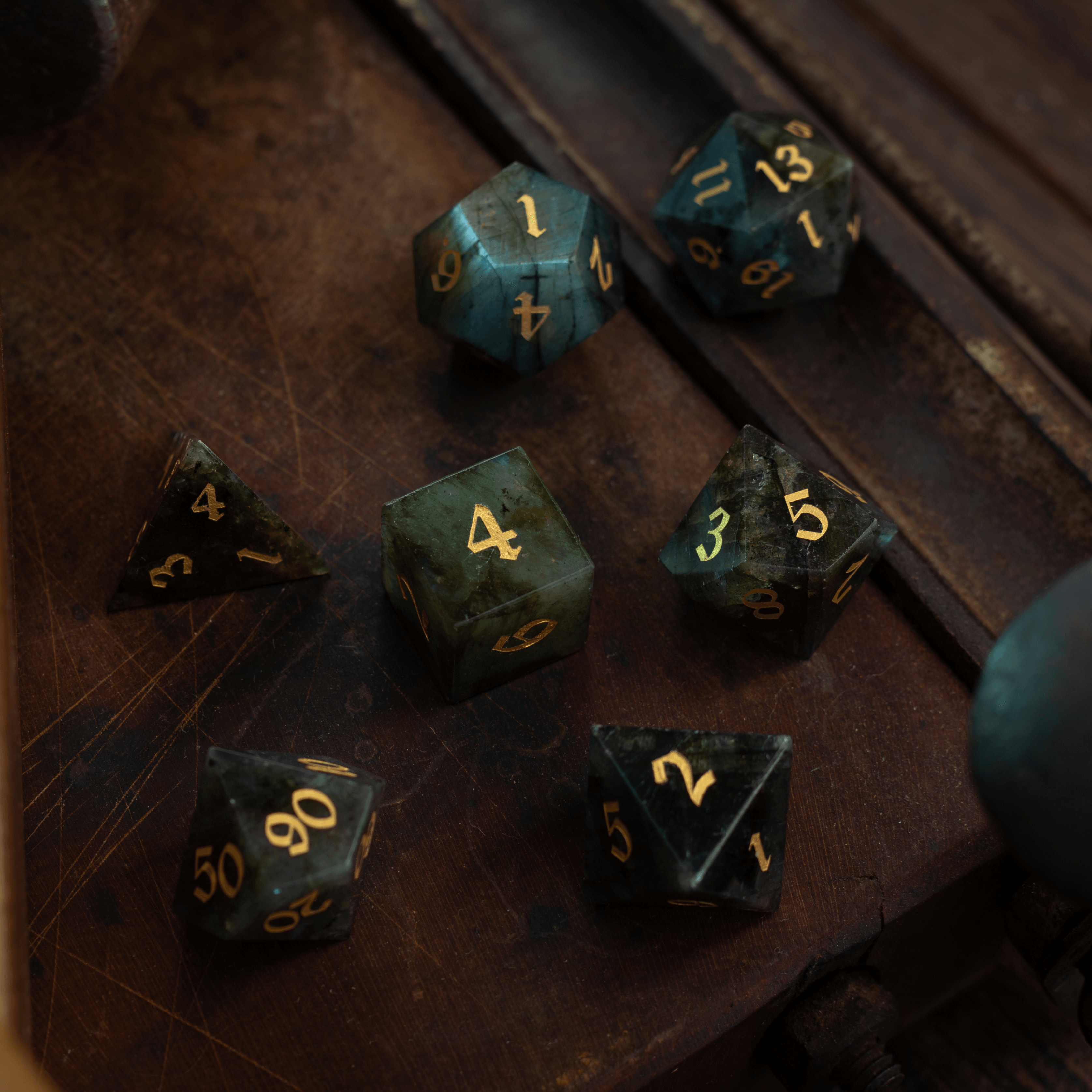
Material changes everything—sound, heft, and how satisfying each roll feels. Resin is lightweight and versatile, perfect for sharp-edge clarity and wild color ways. Glass and gemstone bring a premium hand-feel with a heavier, more deliberate roll. If you prefer a crisp, tactile experience, gemstone or glass can feel amazing in the hand. For a balanced blend of beauty and everyday practicality, consider a standout gemstone option like the Labradorite set. If you love mesmerizing motion and a touch of drama, check out fluid-filled designs in the liquid core dice category—these add visual flair without sacrificing usability.
Readability and accessibility
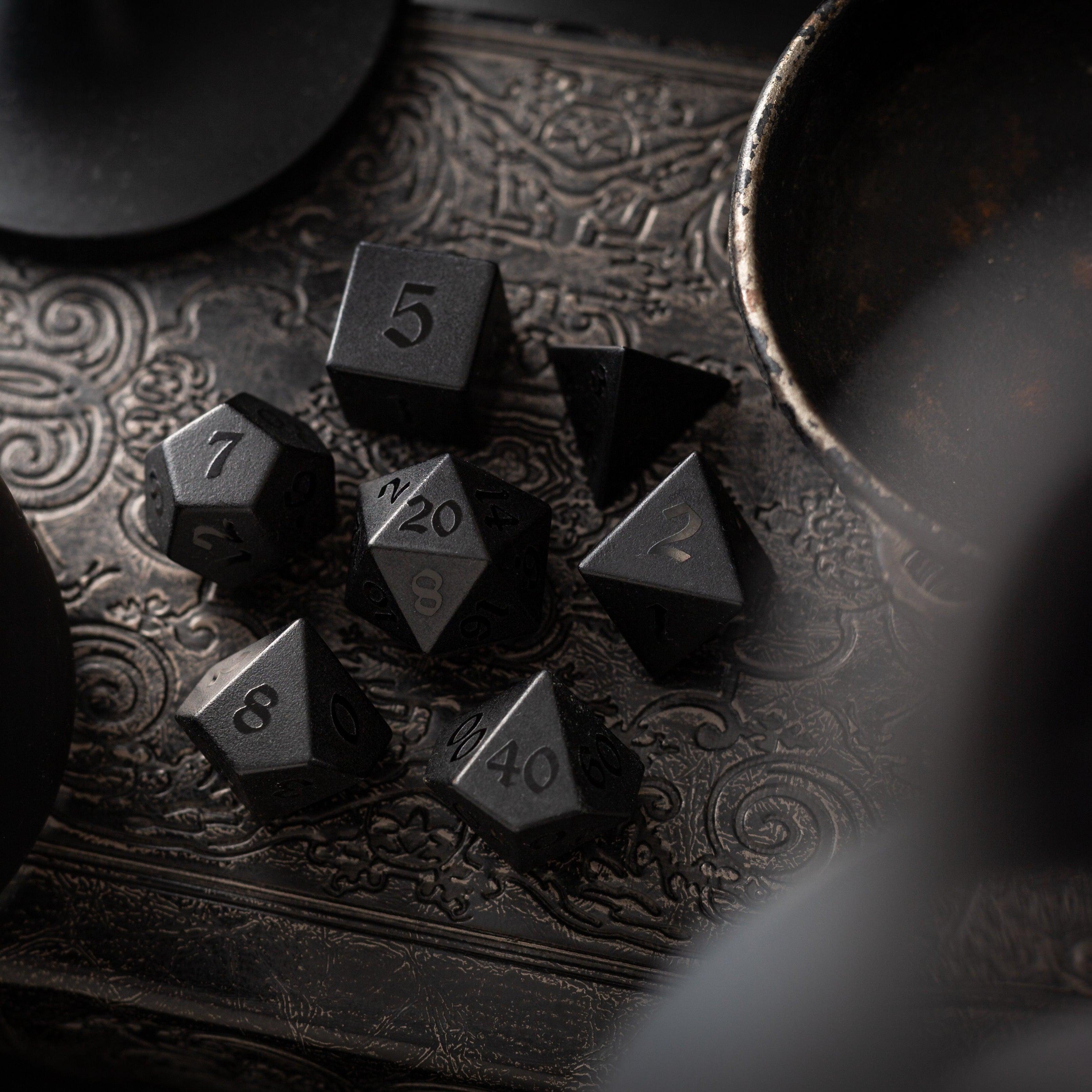
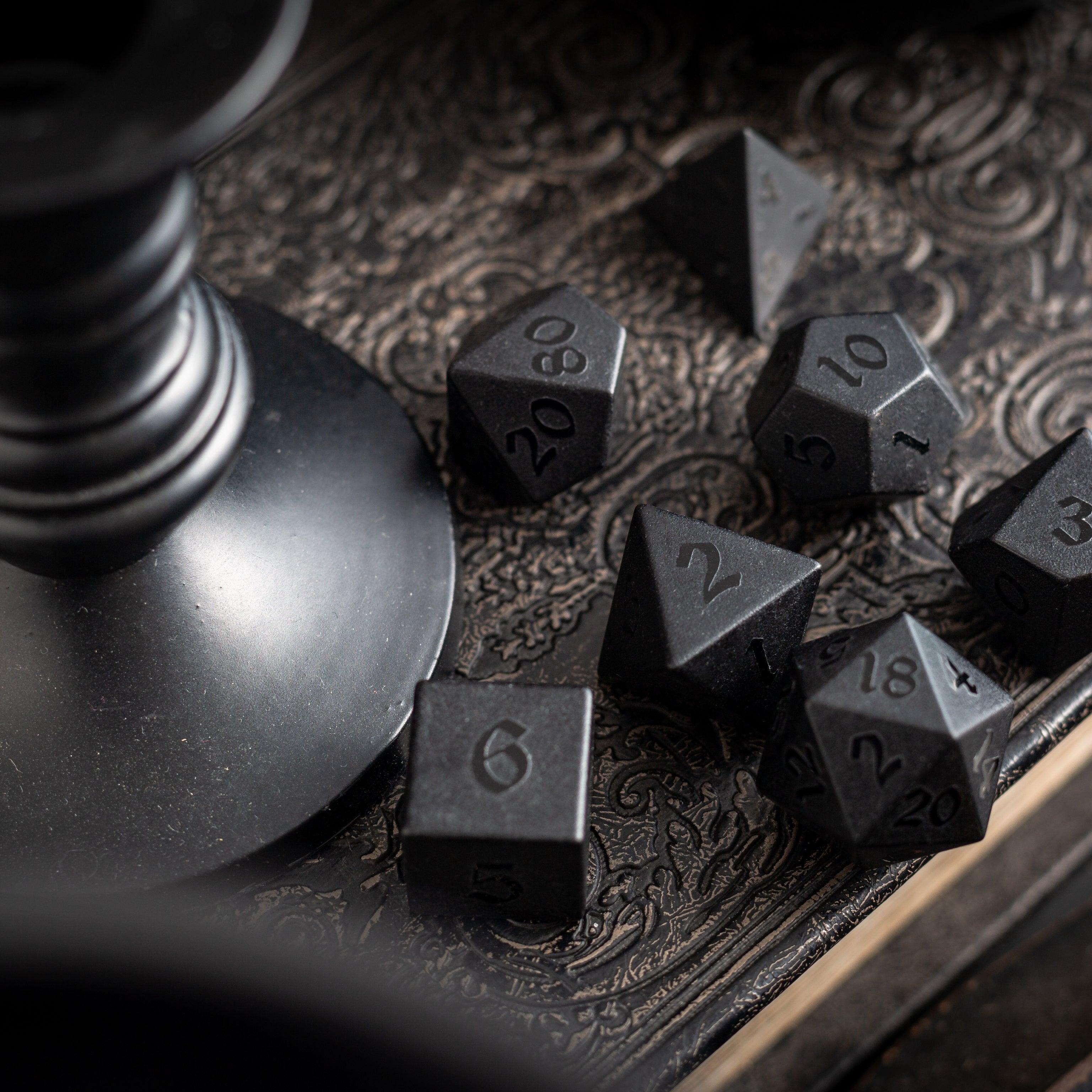
At the table, clarity beats everything. High-contrast numbering, clean fonts, and legible faces reduce friction so players can read results instantly. Sharp-edge resin often produces very crisp faces and clear numerals, which helps at longer tables and in low light. If you’ve ever slowed a session because you had to double-check a die, consider a design with bold ink and strong background differentiation. For a reliable, readable workhorse, browse sharp-edge resin. If you favor glass or gemstone aesthetics, choose sets with large numerals and contrasting inking to keep results obvious at a glance.
Care and durability
Resin sets are resilient and travel well with minimal fuss. Glass or gemstone deserve a soft roll surface and a storage case to protect edges and polish. If you often roll on wood or painted terrain, add a tray or tower to preserve both your table and your dice. It isn’t just about protection—it also makes rolling more consistent and fair. A well-designed tower keeps rolls random and saves space. You can pair your set with a neat solution from dice towers to keep your play area tidy and your dice safe between sessions.
Size, weight, and rolling
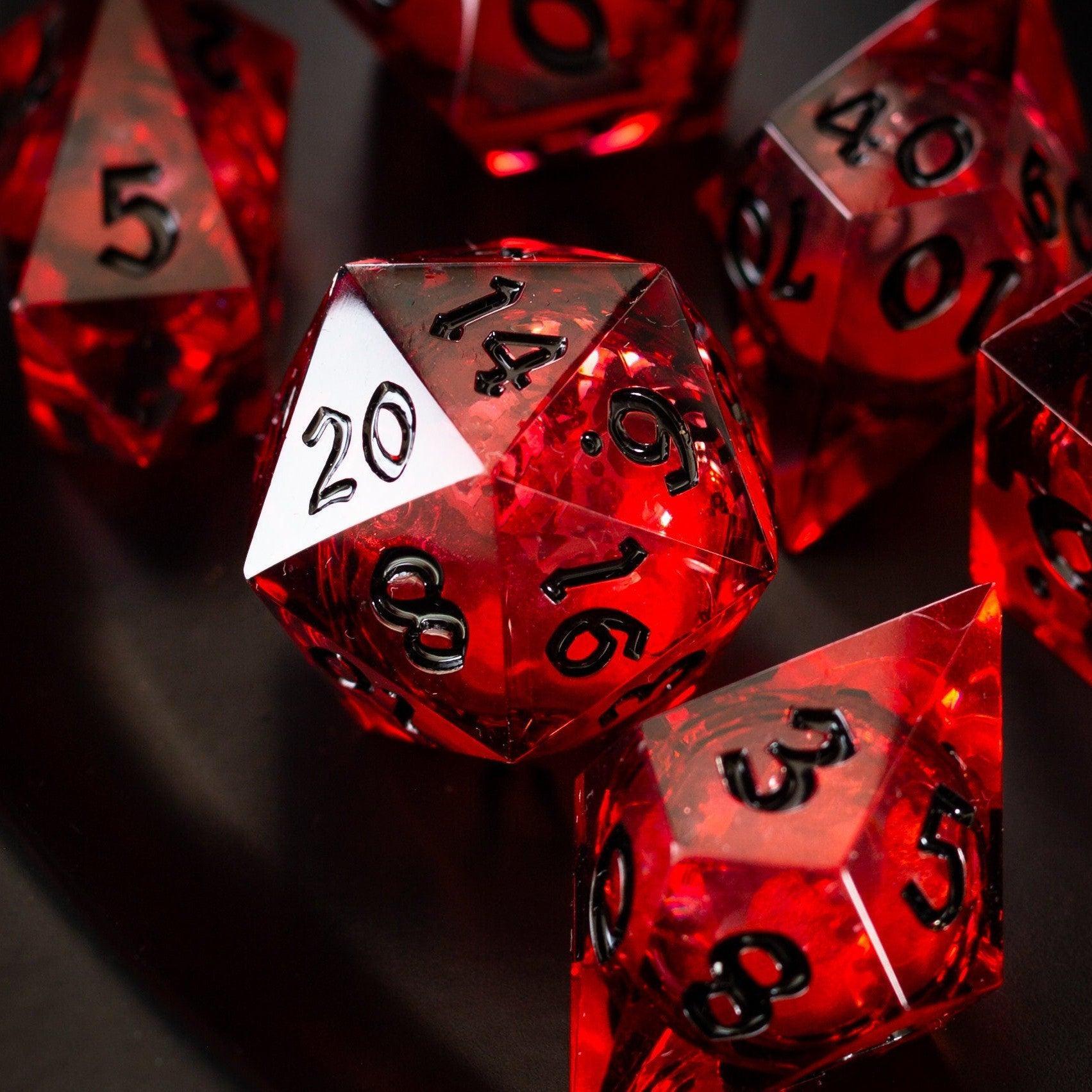
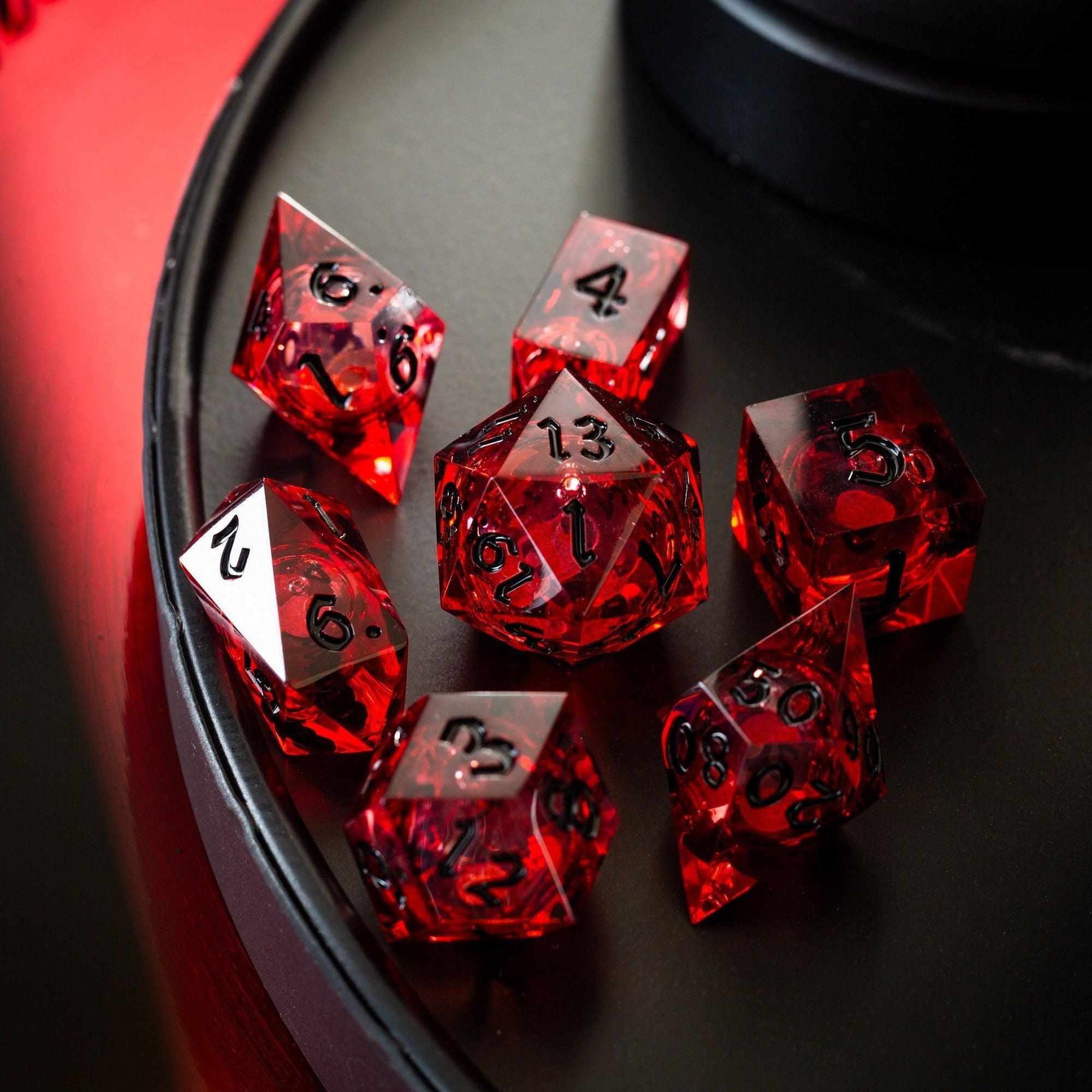
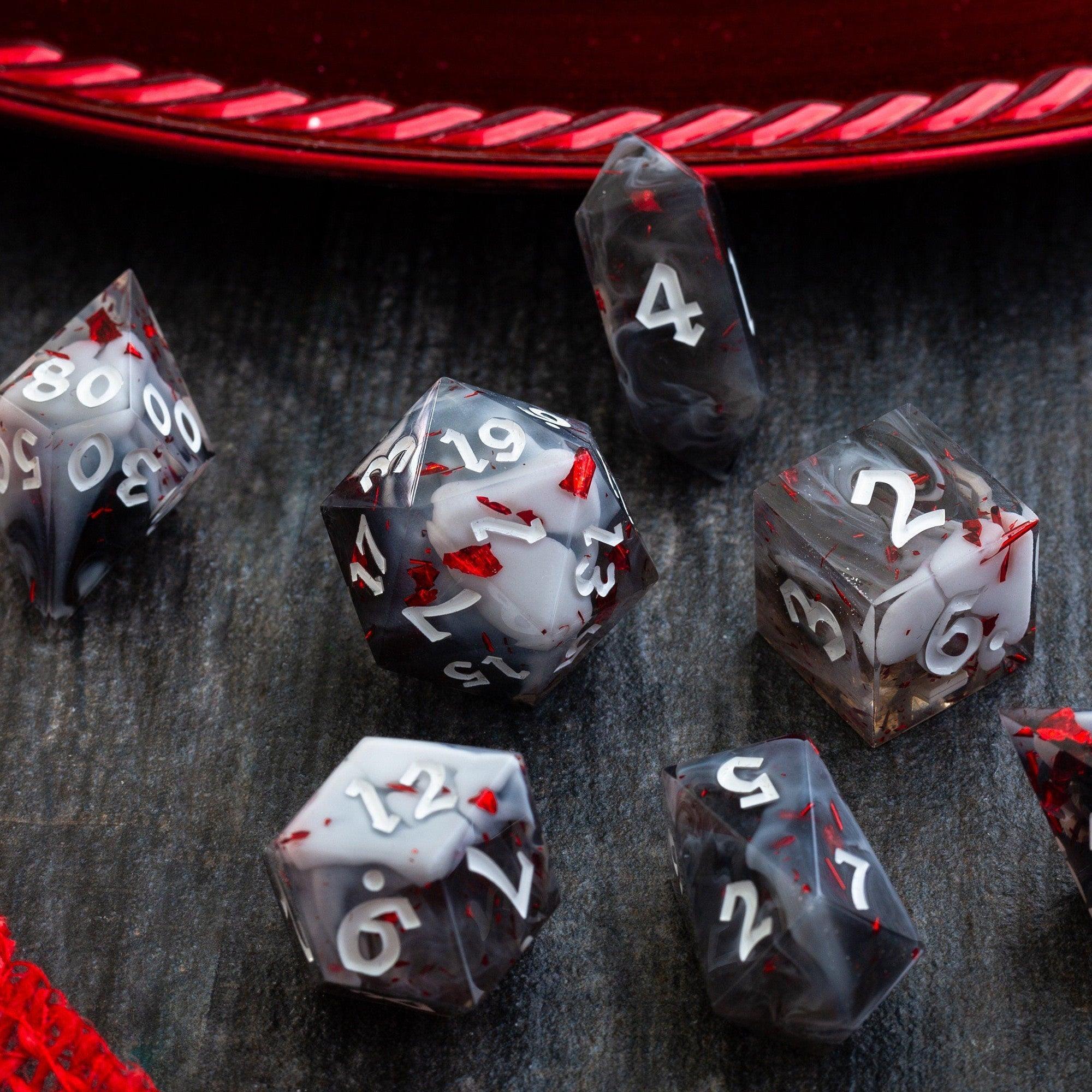
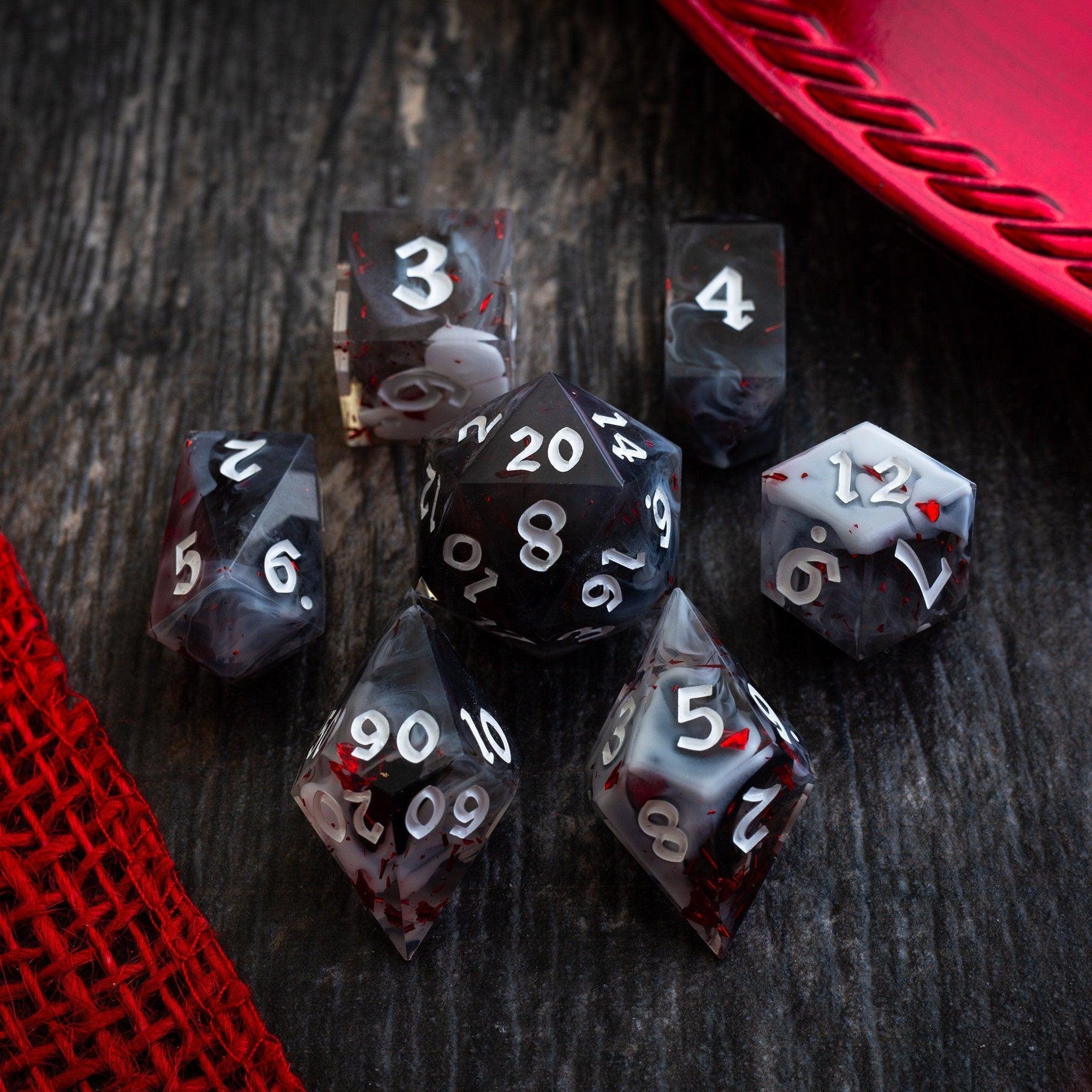
Lighter resin tends to tumble farther, while heavier glass or gemstone lands decisively. Neither is “better”; it comes down to comfort and table setup. If you enjoy big, easy-to-read numbers and a commanding feel, heavier materials may be more satisfying. Meanwhile, resin excels when you want a compact case and easy travel set. For dramatic tableside flair with smooth rolls, a fluid-filled design like the Blood Red Liquid Core brings animation to the center of the table without sacrificing practical performance.
Myths vs. Facts
- Myth: Heavier dice are always luckier. Fact: Weight changes feel, not outcomes. Surface, tower use, and technique matter more than mass.
- Myth: Sharp-edge sets chip easily. Fact: With a tray and proper storage, sharp edges hold up well for regular play.
- Myth: Fancy materials are only for display. Fact: Gemstone and glass can be everyday drivers if you use a padded surface.
- Myth: High-contrast numbers are bland. Fact: You can have bold contrast and striking designs; many sets blend both.
- Myth: One set is enough. Fact: A backup speeds play for advantage rolls, damage bursts, and spell-heavy turns.
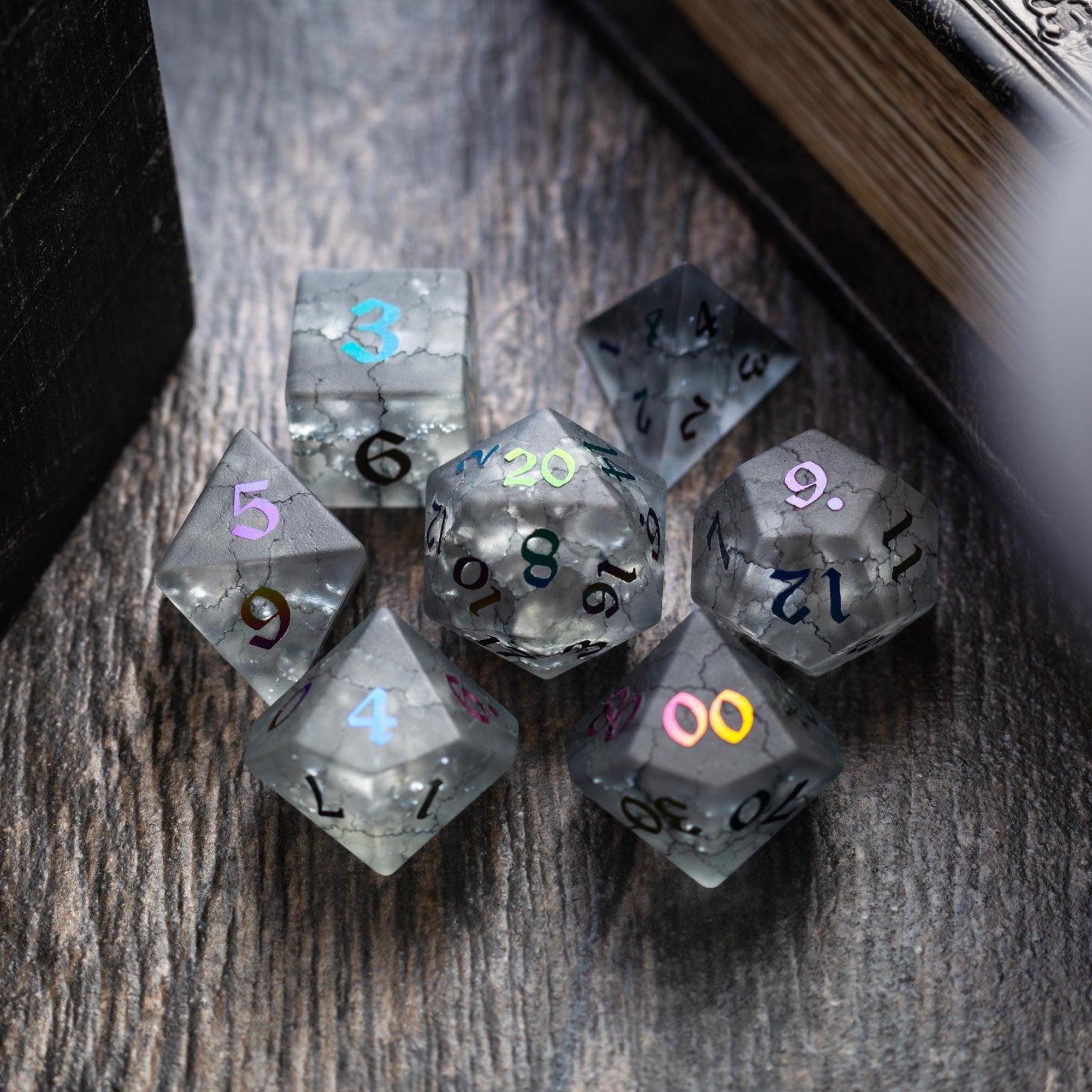
- Myth: Clear dice are hard to read. Fact: With thick inking and crisp faces, even translucent designs read cleanly.
Frequently Asked Questions
How many dice do I really need for an RPG session?
A standard polyhedral set includes a d4, d6, d8, two d10s (percentile), a d12, and a d20. That covers most systems. Still, you’ll save time with a few extras. Martial builds appreciate additional d6s or d8s for damage. Casters benefit from spare d4s, d6s, and d8s for multi-dice spells. If you want a streamlined kit, pack one primary set plus a small pouch of duplicates—especially d6s. You’ll speed up repeated rolls and keep the session moving without passing dice around the table.
Are heavier materials safe for my table and minis?
Yes, with the right surface. Use a padded tray, felt mat, or a tower to protect wood finishes and painted terrain. Heavier sets—like gemstone or glass—feel amazing but deserve a soft landing. A rolling surface also prevents wild bounces and keeps results contained, which helps everyone see outcomes quickly. If you travel or play at different venues, tuck a compact tray into your bag. It’s a simple upgrade that protects your gear and keeps the play area tidy.
How can I make sure my dice are easy to read at a busy table?
Look for strong color contrast between faces and numbers, clean fonts, and large numerals. Sharp-edge faces tend to display numbers crisply. Avoid sets where glitter, inclusions, or dark ink obscure the digits. If your group plays in low light, pick designs with high-contrast inking or pale faces with dark numbers. A quick test: set the die at arm’s length and glance down for a second—if you can read the number instantly, it’s a win.
Should I pick resin, glass, or gemstone for my first premium upgrade?
If you want maximum versatility and easy care, resin is a safe step up—especially in sharp-edge formats with bold inking. If you crave presence and a weighty roll, gemstone or glass feels fantastic and looks stunning at the table. For a dramatic, animated effect, liquid core designs add motion and spectacle. Start by prioritizing readability and feel, then layer in aesthetics. If you’re browsing, compare a few side by side on the collections page to see what clicks.
Final Recommendations for dice sets for tabletop games
Here’s the simplest path to a set you’ll love: start with readability, then choose the material that matches your vibe. If you like crisp faces and bold digits, a sharp-edge resin kit is a reliable baseline that travels well. If you want a premium feel and a commanding roll, gemstone or glass delivers—just add a tray or tower. For a showpiece that still plays fast, explore fluid-filled options; they’re eye-catching and table-friendly with good contrast. To build a flexible kit, pair one everyday set with a themed backup. That second set handles advantage rolls and damage bursts while letting you lean into character style. Ready to browse? Compare designs across categories in collections and, if you’re drawn to kinetic designs, take a closer look at liquid core dice. Want a premium, tactile upgrade? Try a refined gemstone option like the Labradorite set or a dramatic fluid showpiece such as the Blood Red Liquid Core.
Note: Product availability and designs can change. Examples above are for inspiration; always choose what suits your play style and table setup.


Leave a comment
This site is protected by hCaptcha and the hCaptcha Privacy Policy and Terms of Service apply.