
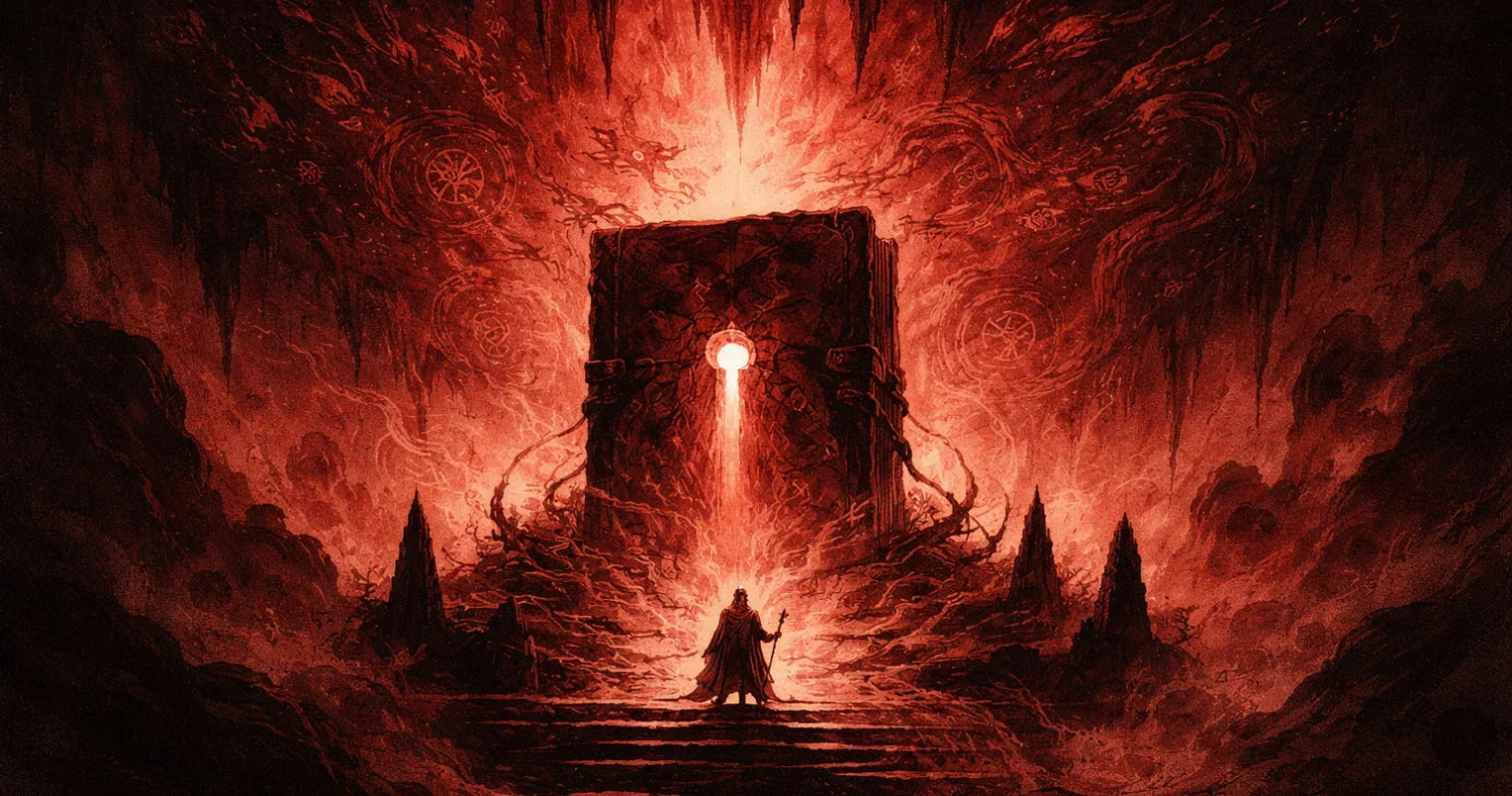
Dungeons and Dragons Lore and History Explored Deeply
Dungeons & Dragons is more than a set of rules for fighting monsters, casting spells, and exploring dungeons. It is both a real-world game with more than fifty years of publishing history and a vast collection of fictional worlds filled with ancient empires, magical disasters, gods, dragons, wars, heroes, villains, and forgotten secrets.
That gives Dungeons and Dragons history two meanings. The first is the real-world story of how the game was created and changed over time. The second is the fictional history found within its many campaign settings.
Understanding both sides of D&D history helps explain why the game feels so large and flexible. Every edition inherits ideas from the past, while every campaign can create something new.
The Real-World Origins of Dungeons & Dragons
The history of Dungeons and Dragons begins with miniature wargaming. Traditional wargames placed players in control of armies, but experiments with fantasy scenarios gradually shifted attention toward individual heroes and their adventures.
Gary Gygax and Dave Arneson were central to the creation of Dungeons & Dragons. Their ideas helped establish a new kind of game in which players controlled individual characters while a referee described the world, presented challenges, and decided how the fictional environment responded.
The original Dungeons & Dragons was published in 1974.
Its foundations still shape tabletop roleplaying today:
-
Exploration of dangerous places
-
Individual characters who improve over time
-
Improvised decisions
-
Dice-based uncertainty
-
A referee, later commonly called the Dungeon Master
-
Shared storytelling shaped by player choices
Instead of following a fixed story from beginning to end, players could attempt unexpected solutions. The referee interpreted the results, the dice introduced uncertainty, and the campaign changed because of what happened at the table.
That basic idea remains at the heart of D&D.
How D&D Changed Through Its Editions
Dungeons & Dragons has changed considerably since 1974. Different editions revised character creation, combat, classes, skills, magic, monsters, and campaign design.
Original D&D established the foundation. Advanced Dungeons & Dragons expanded and organized many parts of the game. Second Edition revised that framework. Third Edition introduced a more unified core mechanic and the d20 System. Fourth Edition placed strong emphasis on tactical combat and clearly defined character roles. Fifth Edition, released in 2014, aimed for broader accessibility while drawing inspiration from earlier traditions.
Beginning in 2024, revised core rulebooks updated the Fifth Edition rules rather than presenting the game as a completely separate numbered edition.
Older rules and books did not suddenly become meaningless when new editions appeared. Many players still use classic adventures, settings, monsters, and ideas from earlier periods. This is one reason Dungeons and Dragons lore can feel layered. Material created decades apart may still influence modern campaigns.
A Brief Dungeons & Dragons Timeline
| Period | Development | Why It Matters |
|---|---|---|
| 1974 | Original Dungeons & Dragons published | Established the foundation of fantasy roleplaying |
| Late 1970s | Advanced Dungeons & Dragons developed | Expanded rules, classes, monsters, and campaign play |
| 1980s | Settings and novels grew in prominence | D&D lore expanded far beyond individual adventures |
| 1989 | Second Edition began | Revised and reorganized the AD&D rules |
| 2000 | Third Edition released | Introduced a unified core mechanic and the d20 System |
| 2008 | Fourth Edition released | Emphasized tactical combat and defined character roles |
| 2014 | Fifth Edition released | Made the game more approachable while drawing from earlier traditions |
| 2024 | Revised core rulebooks began releasing | Updated Fifth Edition rules and character options |
This Dungeons and Dragons timeline shows the major stages of the game's development, but publication history is only half the story.
What Does Dungeons & Dragons Lore Include?
D&D lore is not one continuous history shared identically by every campaign.
Instead, it includes:
-
Campaign setting histories
-
Gods and religions
-
Planes of existence
-
Magical traditions
-
Ancient civilizations
-
Heroes and villains
-
Monsters and their origins
-
Wars and political conflicts
-
Artifacts and legendary objects
-
Published adventures, novels, and games
Two D&D campaign settings can use similar game rules while presenting completely different worlds.
Magic might be part of transportation and industry in one setting. In another, it may be feared, tightly controlled, or connected to ancient disasters. Gods may openly influence one world's history while remaining distant or uncertain elsewhere.
This variety is one of the foundations of D&D worldbuilding.
The D&D Multiverse
The D&D multiverse provides a broad framework for worlds and planes beyond an ordinary mortal realm.
Depending on the edition and setting, adventurers may encounter the Material Plane, elemental realms, the Astral Plane, the Ethereal Plane, divine domains, and other strange dimensions. The Inner and Outer Planes have also played important roles in several versions of D&D cosmology.
However, cosmology has changed over time. Not every campaign setting uses every planar concept in exactly the same way.
For new players, the important idea is simple: a D&D world does not always exist alone. Other realities may contain gods, spirits, elemental forces, fiends, celestial beings, and entire civilizations.
Forgotten Realms Lore
The Forgotten Realms is one of the most widely recognized D&D settings. Much of its action takes place on Faerûn, a continent filled with kingdoms, city-states, ancient ruins, powerful organizations, active gods, and magical conflicts.
Forgotten Realms lore has grown through sourcebooks, adventures, novels, and video games. Locations such as Waterdeep and the Underdark have become familiar to generations of players, while figures such as Drizzt Do'Urden and Elminster are closely associated with the setting.
Its long publication history also means the Realms has changed. Major fictional events and edition transitions have altered parts of its timeline, divine order, and magical landscape.
Greyhawk and the Roots of Classic Adventure
Greyhawk is one of D&D's earliest major settings and remains closely connected to classic dungeon exploration, dangerous ruins, political conflict, and powerful wizards.
Many familiar names preserved in spells and lore have connections to Greyhawk. Mordenkainen, Bigby, and Tenser are examples of characters whose names became part of D&D's wider vocabulary.
Greyhawk shows how the game's earliest campaigns helped create traditions that continued long after their original adventures.
Dragonlance and the History of Krynn
Dragonlance lore centers on the world of Krynn and explores themes of war, faith, friendship, tragedy, dragons, and heroic sacrifice.
The setting became known through both adventures and novels. Its history is shaped by major wars, divine influence, catastrophic events, and groups of companions whose choices affect the wider world.
Dragonlance demonstrates how D&D lore can be deeply character-driven. Large historical events matter, but friendship, loyalty, and personal choices remain central to the story.
Ravenloft and the Domains of Dread
Ravenloft brings gothic horror into Dungeons & Dragons.
Its Domains of Dread are associated with curses, tragic histories, moral corruption, isolated realms, and Darklords trapped within prisons shaped by horror. Strahd von Zarovich is one of the game's most recognizable villains.
Ravenloft stories often focus less on conquering a kingdom and more on surviving fear, confronting corruption, and understanding the tragedy behind a cursed place.
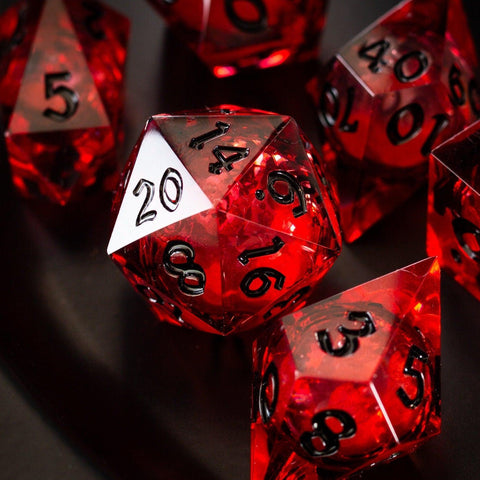
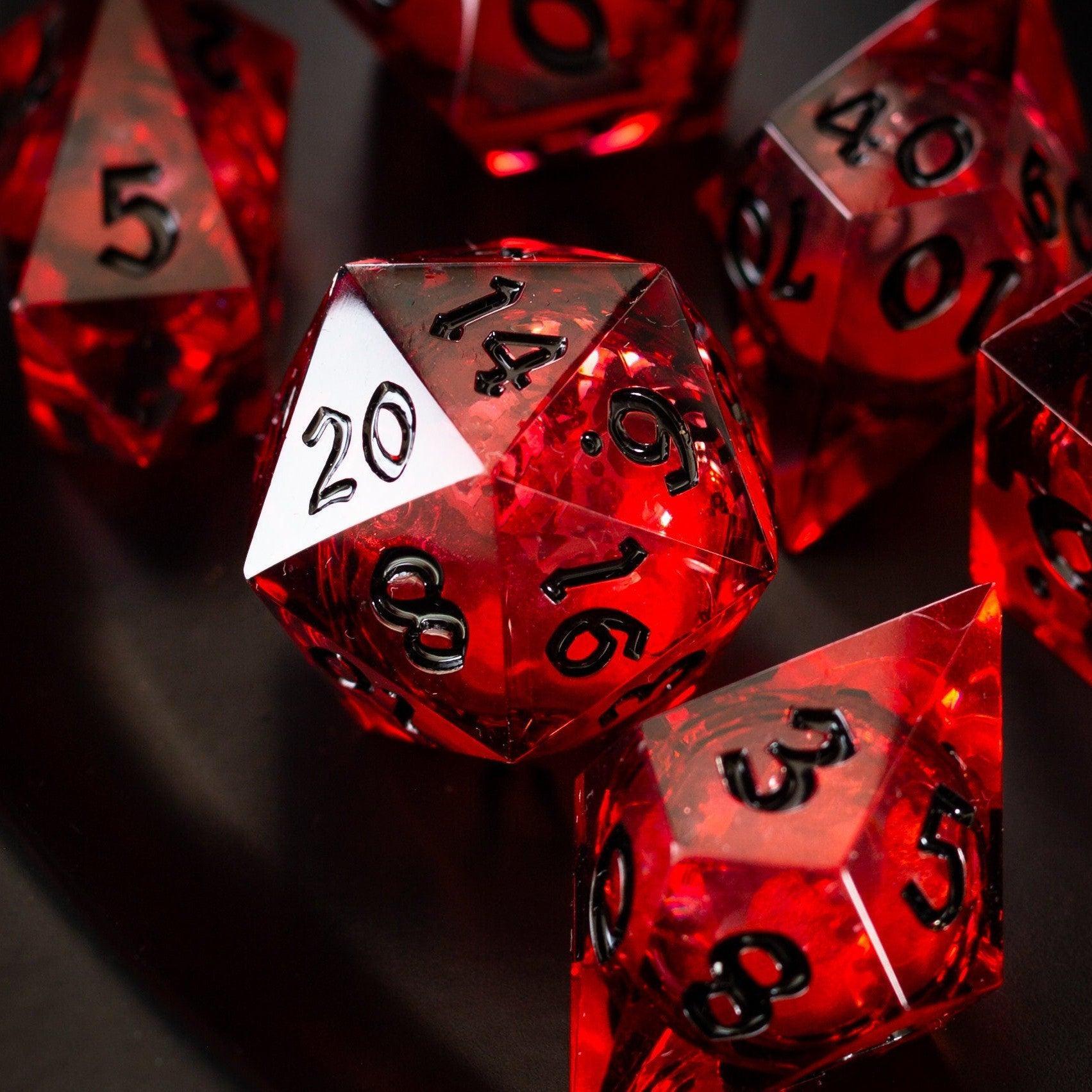
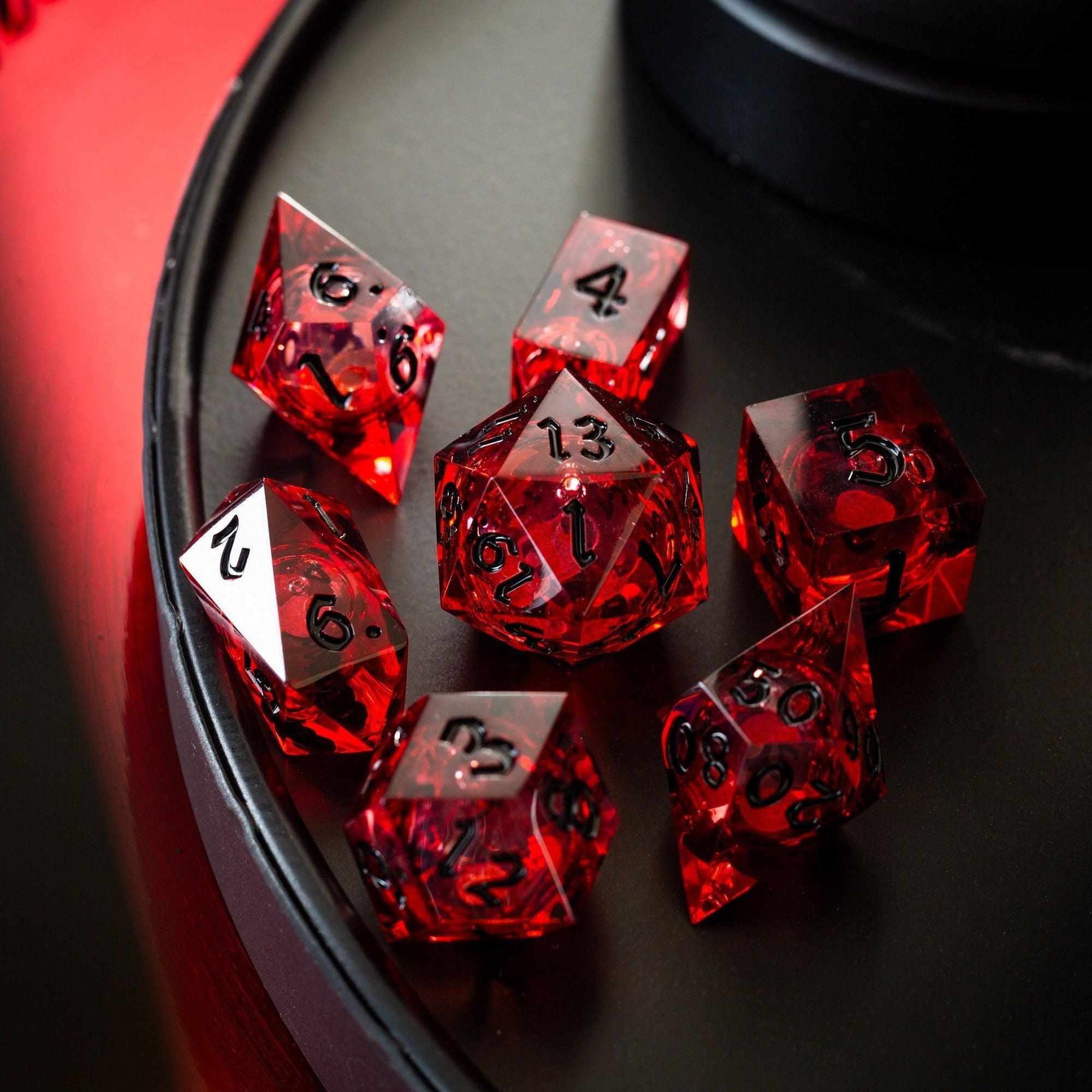
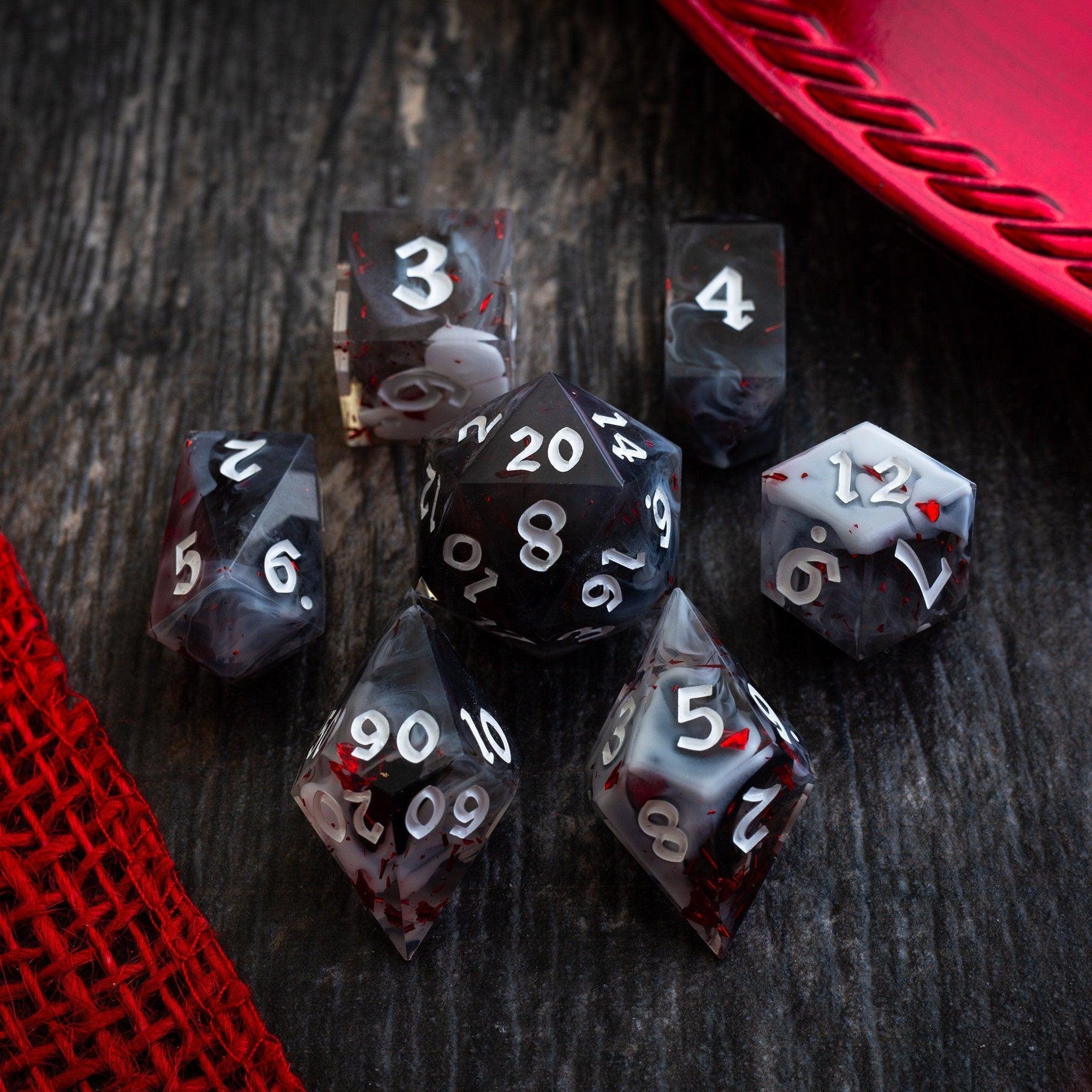
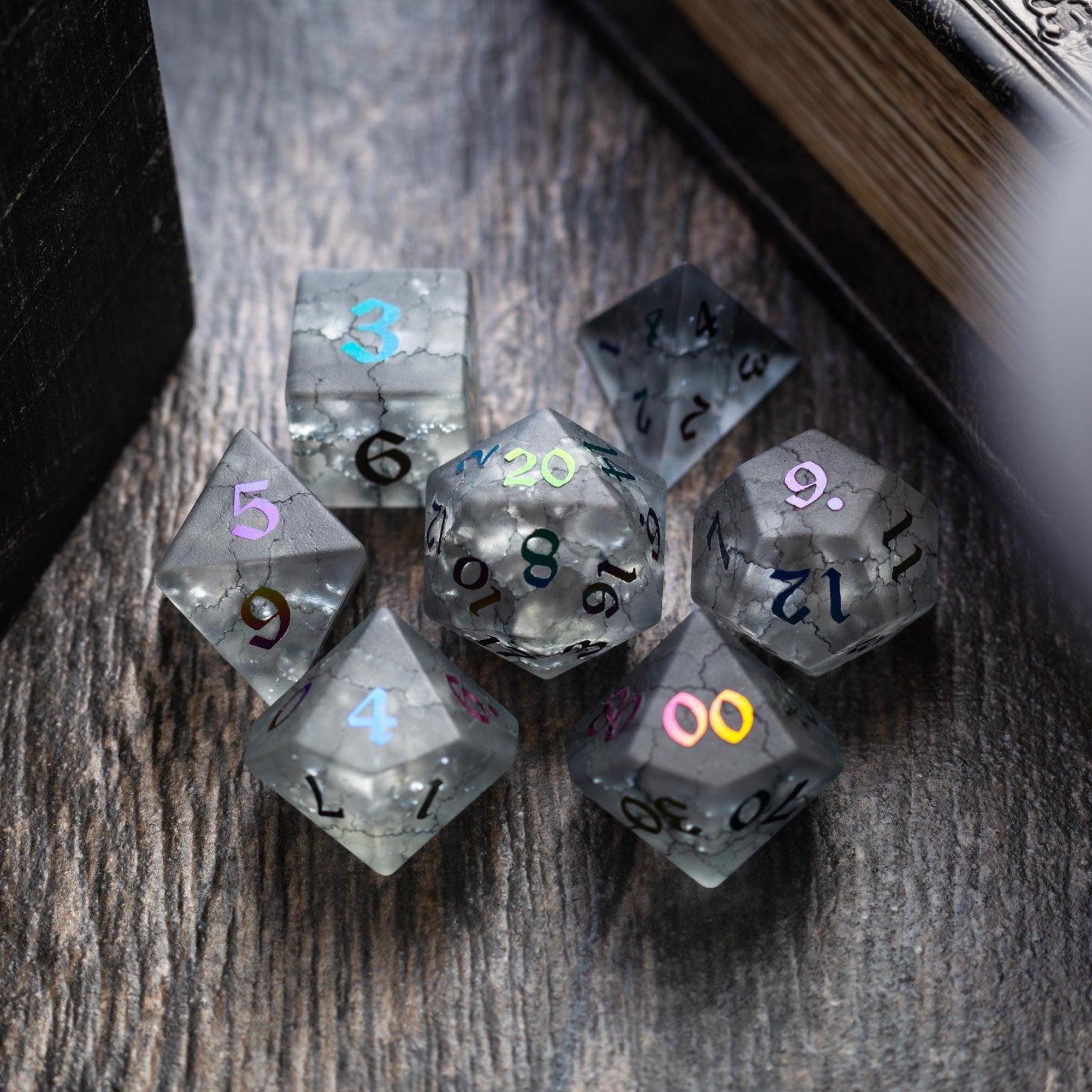
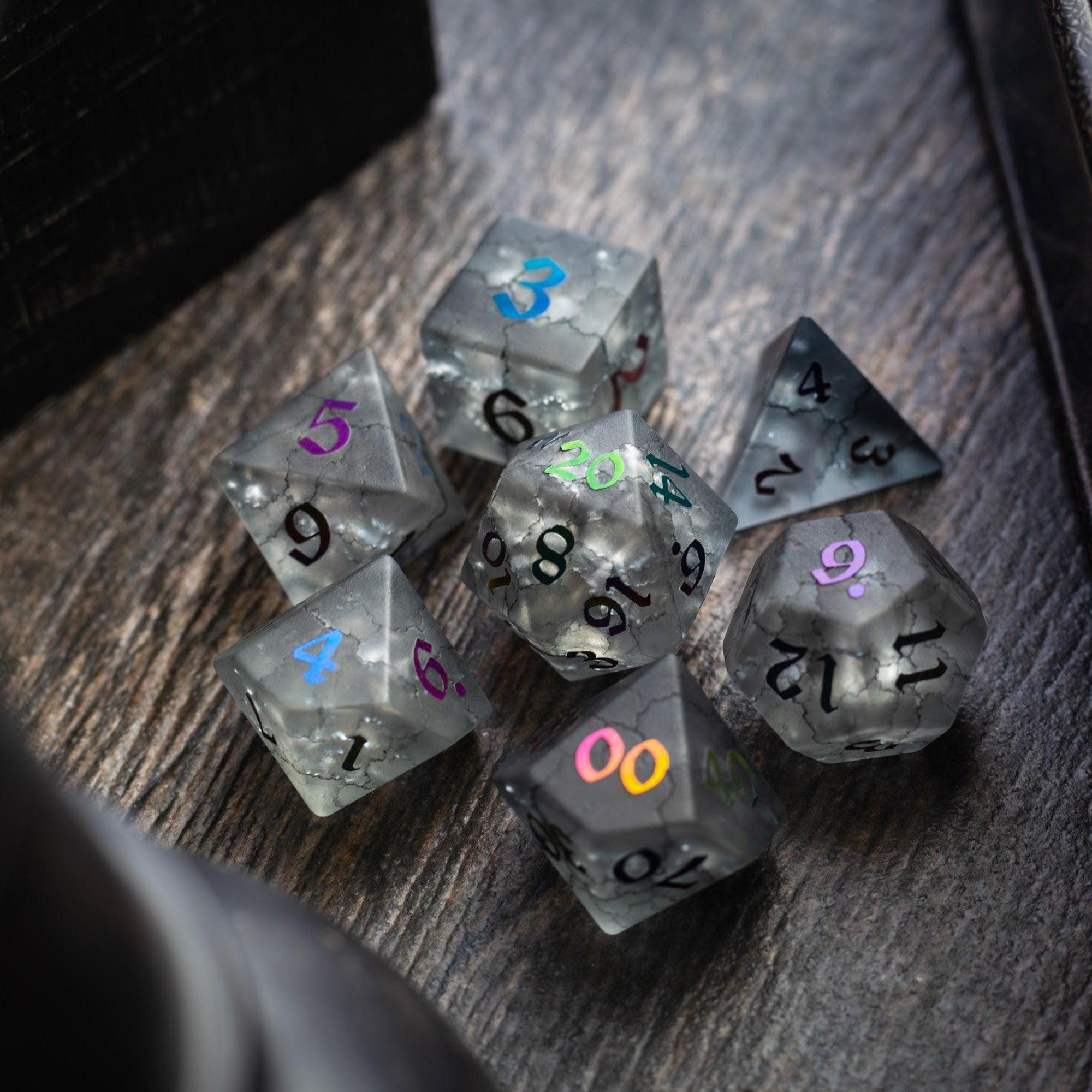
Atmosphere can reinforce that style at the table. A Dungeon Master might prepare dark maps and weathered notes while players use Black Obsidian or Smoke and Blood Resin dice as small visual details that suit the campaign's gothic mood.
Eberron and a Different Kind of Fantasy History
Eberron takes familiar D&D concepts and places them within a different social and historical structure.
The setting is shaped by the aftermath of the Last War. Nations remain tense, Dragonmarked Houses hold enormous influence, magical transportation connects distant places, and the Warforged face questions about identity and their place in a world that created them for conflict.
Mystery, espionage, pulp adventure, and political tension are central themes.
Eberron demonstrates that Dungeons and Dragons lore does not require every world to treat magic, religion, monsters, or character species in the same way.
Other Important D&D Settings
Dark Sun
Dark Sun presents a harsh world shaped by environmental destruction, scarce resources, tyranny, and survival.
Spelljammer
Spelljammer takes fantasy adventure beyond conventional worlds through magical vessels, strange creatures, and journeys across extraordinary environments.
Planescape
Planescape focuses on planes, philosophies, factions, belief, and strange realities. Ideas can become as important as swords.
Mystara
Mystara is a classic setting connected to earlier D&D products, featuring diverse nations, ancient mysteries, exploration, and extensive world history.
D&D Campaign Setting Comparison
| Setting | Core Identity | Major Lore Themes | Best For |
|---|---|---|---|
| Forgotten Realms | Expansive heroic fantasy | Gods, empires, magic, adventurers | Broad traditional fantasy |
| Greyhawk | Classic sword and sorcery | Dungeons, politics, ancient threats | Old-school adventure |
| Dragonlance | Epic war and companionship | Dragons, faith, sacrifice, friendship | Character-driven fantasy |
| Ravenloft | Gothic horror | Curses, tragedy, fear, corruption | Horror campaigns |
| Eberron | Magical innovation and intrigue | War, identity, industry, espionage | Mystery and pulp adventure |
| Dark Sun | Harsh survival fantasy | Tyranny, scarcity, environmental ruin | Survival stories |
| Planescape | Planar philosophy | Belief, factions, strange realities | Cosmic campaigns |
| Spelljammer | Fantasy beyond worlds | Travel, discovery, unusual civilizations | Unconventional adventure |
Gods, Ancient Empires, and Fallen Civilizations
D&D gods can shape kingdoms, temples, holidays, wars, moral traditions, and beliefs about death. A Cleric's faith or a Paladin's sacred commitment may connect a character directly to centuries of fictional history.
Pantheons differ between settings, however. A deity important in one world may be absent from another.
Fallen civilizations are equally important to D&D worldbuilding. Ancient empires explain why adventurers find ruined cities, forgotten languages, dangerous artifacts, and magical secrets.
For Dungeon Masters, the most useful question is not simply, "What happened a thousand years ago?" It is, "Why does that event matter now?"
Perhaps an old magical disaster poisoned a region. Perhaps two kingdoms still argue over the legacy of a fallen empire. History becomes valuable when it creates present-day consequences.
Famous Monsters and Villains in D&D History
Dragons, beholders, mind flayers, liches, mimics, owlbears, and displacer beasts have become recognizable parts of D&D's identity.
Their rules, artwork, names, and stories have sometimes changed between editions. The most memorable monsters, however, are rarely memorable because of statistics alone.
A lich connected to a destroyed kingdom or a dragon guarding evidence of an ancient betrayal becomes part of the world's history. Lore gives encounters context.
Why D&D Canon Changes
D&D lore can change because of new creative directions, revised rules, timeline advancement, retcons, updated presentation, or setting-specific interpretations.
A retcon, short for retroactive continuity, occurs when later material changes or reinterprets something previously established.
This can make D&D history confusing, but it also reflects decades of creative development. Official books do not always fit together perfectly, and separate settings may follow different assumptions.
Older material still has value. Dungeon Masters can choose the version of a story that best serves their campaign.
How Dungeon Masters Can Use Official Lore
The easiest way to use lore is to focus on what affects the current adventure.
-
Choose one setting or region.
-
Create a short timeline of relevant events.
-
Select a few active factions.
-
Turn historical conflicts into present-day quests.
-
Reveal history through ruins, NPCs, artifacts, and consequences.
-
Change details that do not fit the campaign.
-
Leave room for players to create new history.
Avoid long lectures whenever possible. Let players discover the past through play.
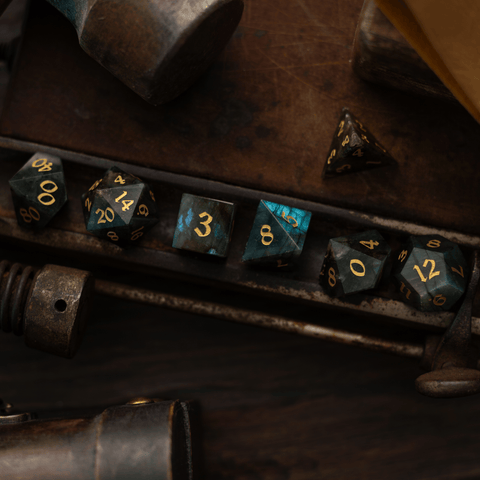
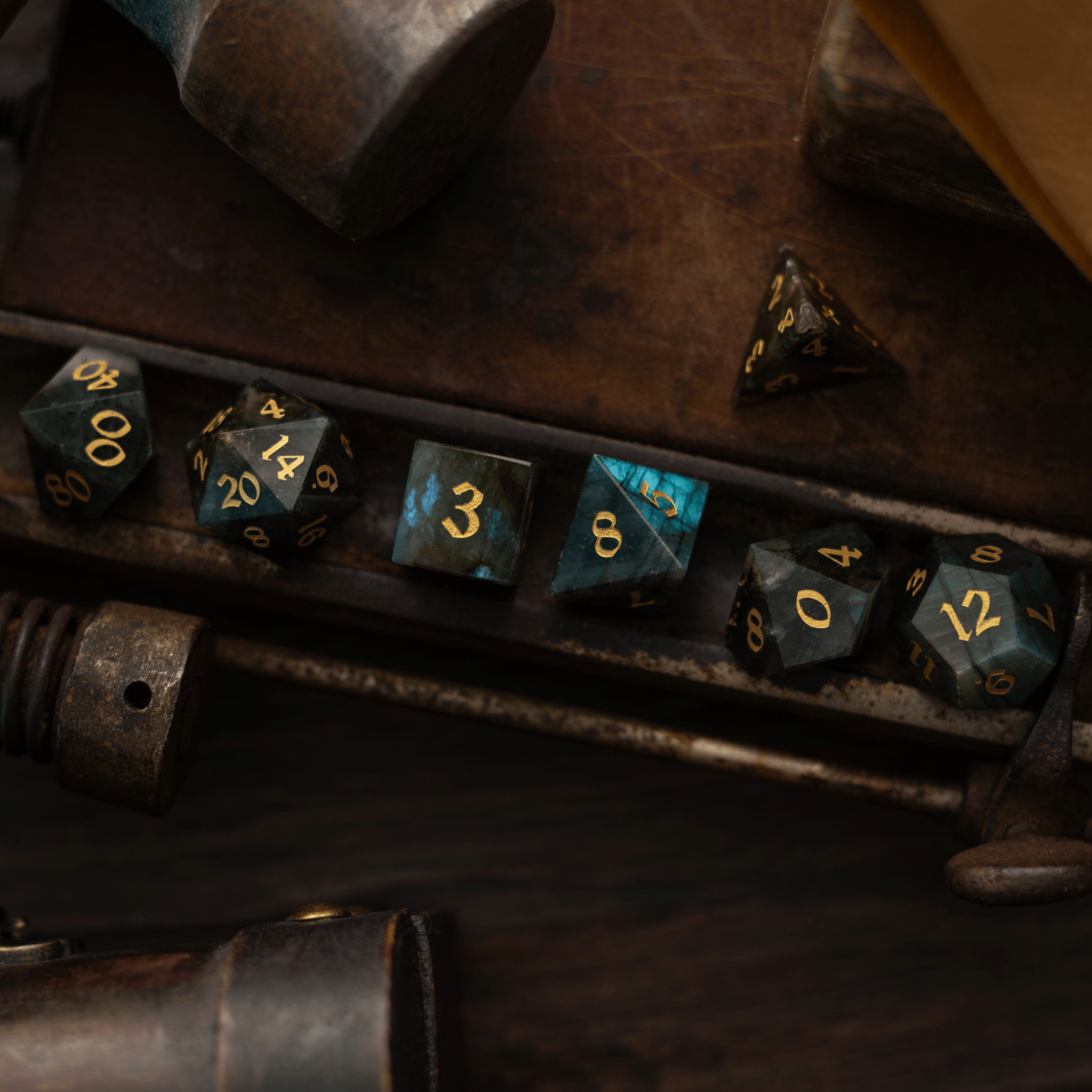
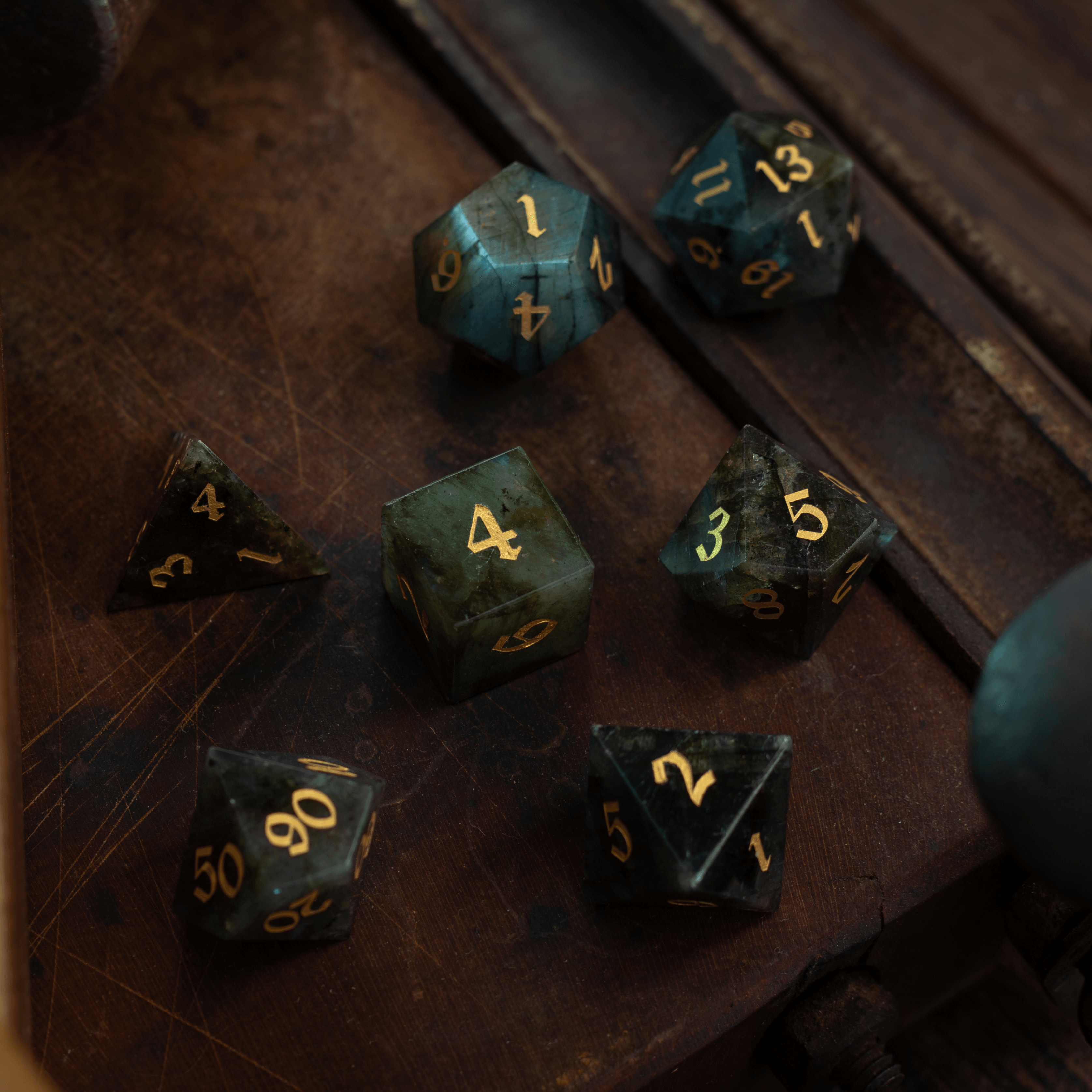
A Dungeon Master preparing an arcane mystery might keep a sourcebook, regional map, handwritten timeline, dice tray, and Labradorite dice nearby while organizing clues. The physical setup is secondary. What matters is making the history useful at the table.
How Players Can Use Lore for Better Characters
Players do not need to memorize an entire setting.
Choose a few meaningful connections, such as a homeland, religion, faction, historical conflict, family tradition, or magical school.
A Wizard might study at an institution shaped by an ancient magical disaster. A Paladin could belong to an order founded after a forgotten war. Even small character details can reinforce that identity, such as Purple Amethyst dice for an arcane scholar or Dark Nox Forge Fire Glass for a hero connected to ruined forges and elemental history.
The goal is not to know everything. It is to know enough to give your character a place in the world.
Common Mistakes When Learning D&D Lore
The biggest mistake is trying to learn everything at once.
Do not assume every setting shares the same history. Pay attention to edition changes, avoid treating a single source as the answer to every continuity question, and remember the difference between real-world publication history and fictional events.
Most importantly, do not let canon become more important than the campaign.
Lore should create possibilities, not arguments.
A History That Keeps Growing
Dungeons & Dragons has two connected histories.
Its real-world history tells the story of how a fantasy roleplaying game first published in 1974 developed across generations of players, designers, books, and editions. Its fictional history contains countless gods, kingdoms, civilizations, monsters, wars, disasters, heroes, and mysteries.
No player needs to master all of it.
Begin with one setting, one conflict, one character, or one historical event that sparks your curiosity. Follow that thread and see where it leads.
The deepest strength of D&D lore is that history never ends with the sourcebook. Every campaign can add another ruined temple, forgotten hero, lost kingdom, legendary weapon, or story remembered by the people who gathered around the table.











Leave a comment
This site is protected by hCaptcha and the hCaptcha Privacy Policy and Terms of Service apply.