

Dice Rolling Mat Guide for Fair and Consistent Rolls

A great tabletop session depends on more than the adventure itself. The surface where you roll can affect noise, comfort, table protection, and how often dice end up under a chair. A dice rolling mat gives you a dedicated place to roll while helping cushion dice and protect the furniture underneath.
Whether you play Dungeons & Dragons every week or only occasionally, a good rolling surface can make the table easier to manage. It will not make a die more random or guarantee fair results, but it can reduce impacts, control noise, and create a cleaner space around other game pieces.
This guide explains how to choose an RPG dice mat, which materials are commonly used, what size and thickness to consider, how mats compare with dice trays, and how to care for the surface after regular play.
Why Use a Dice Rolling Mat?
Every gaming table is different. Some groups play on polished wood, others use folding tables, and many gather around dining tables that need to stay in good condition between sessions. A dice rolling surface creates one consistent place for dice to land without taking over the whole setup.
Common benefits include:
- Reducing the sharp clatter of dice on hard surfaces
- Helping protect wood, glass, and finished tabletops from repeated impacts
- Cushioning premium dice during regular use
- Creating a clear area for rolling away from papers, miniatures, and drinks
- Limiting how far dice travel across the table
- Making shared tables easier to organize
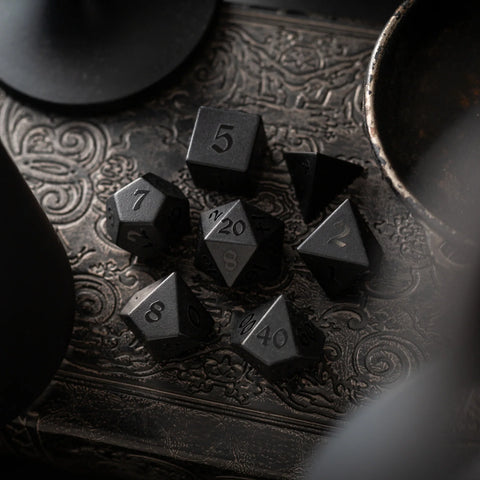
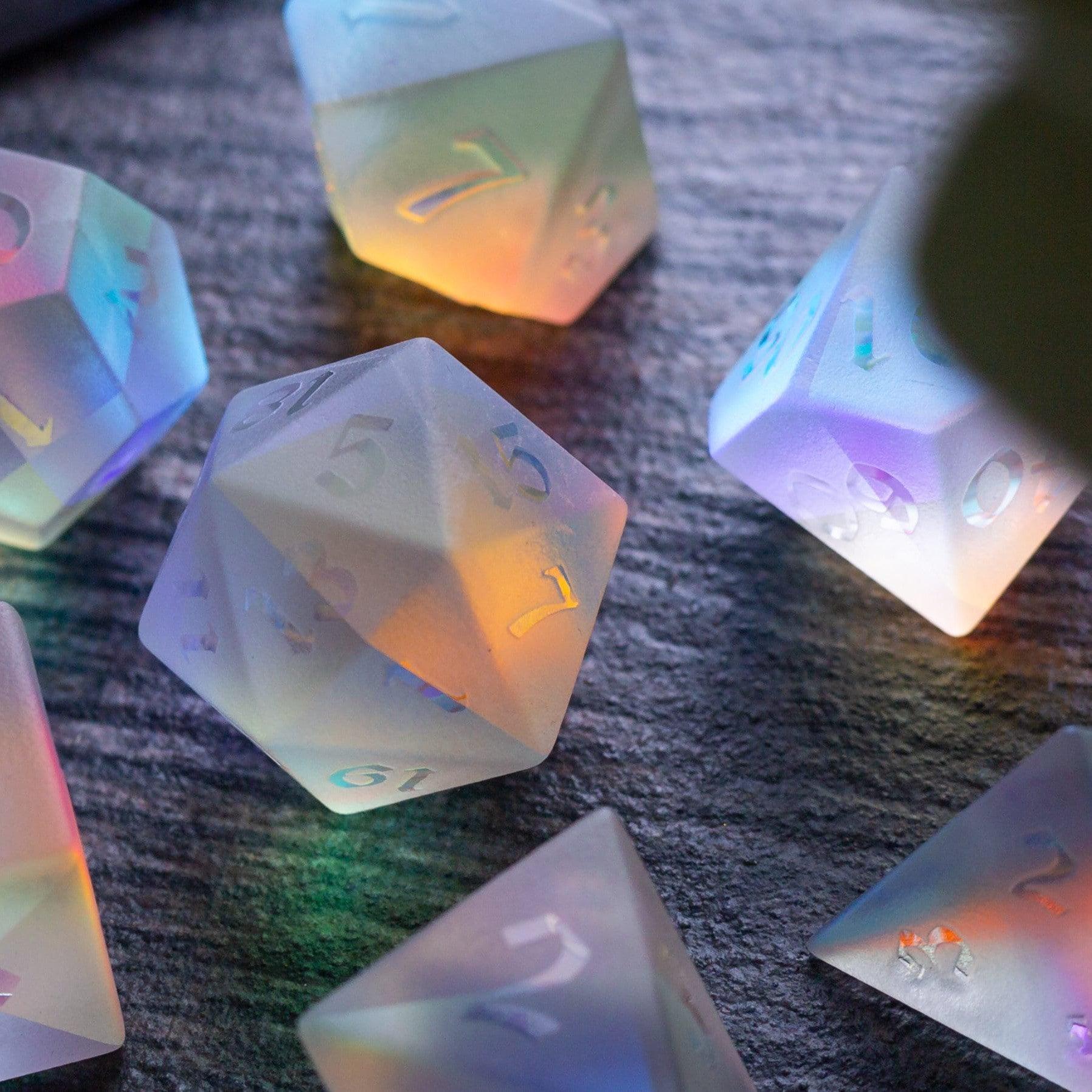
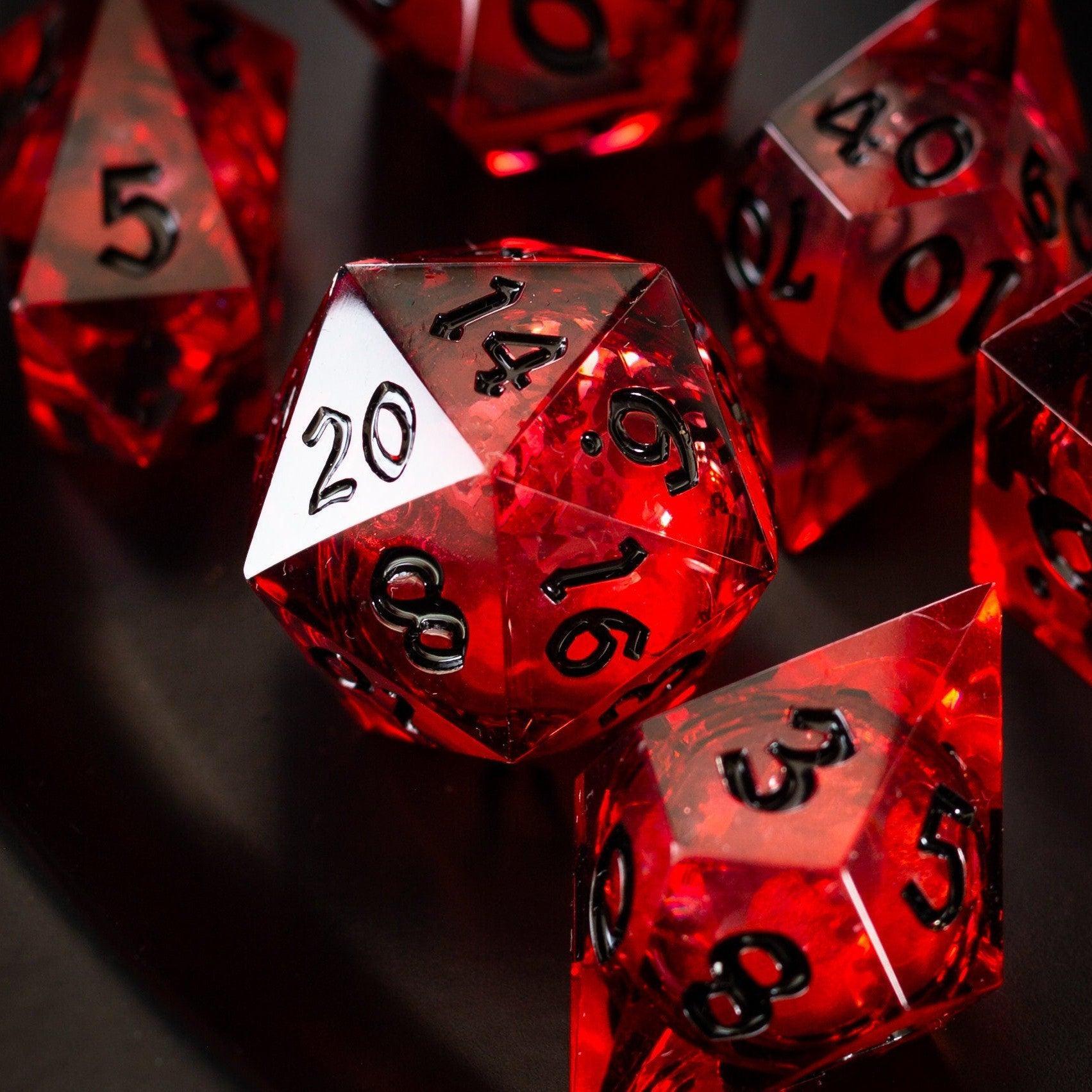
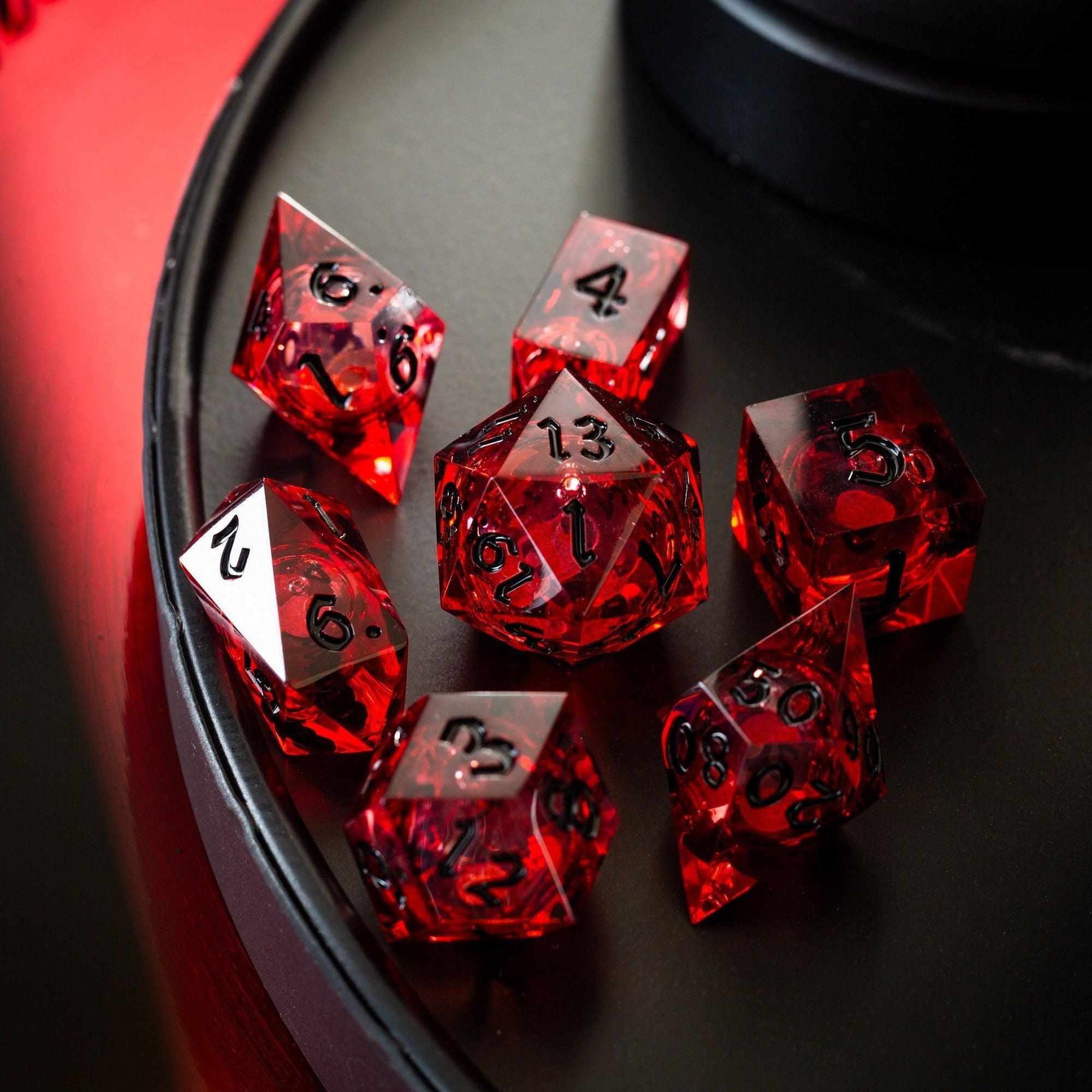
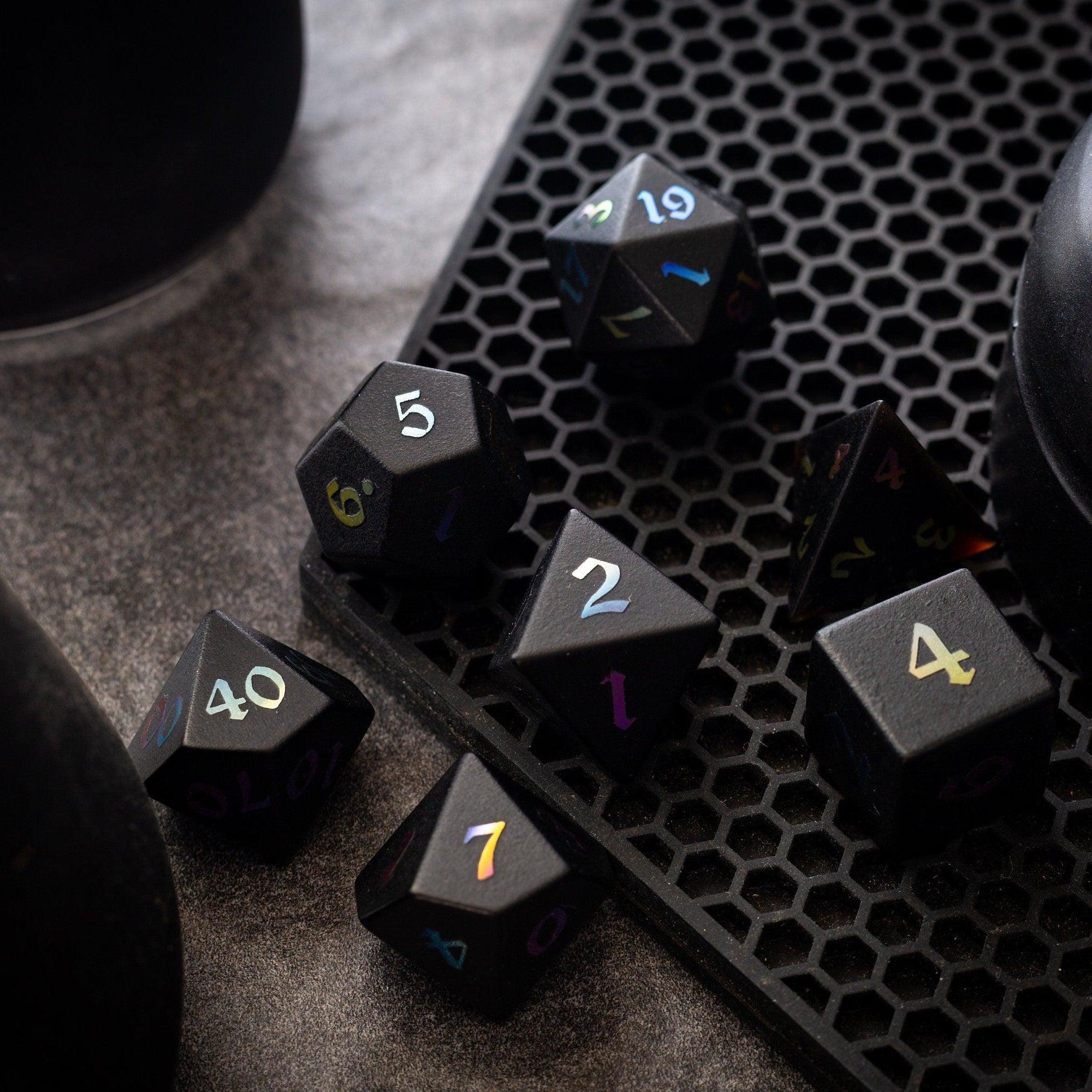
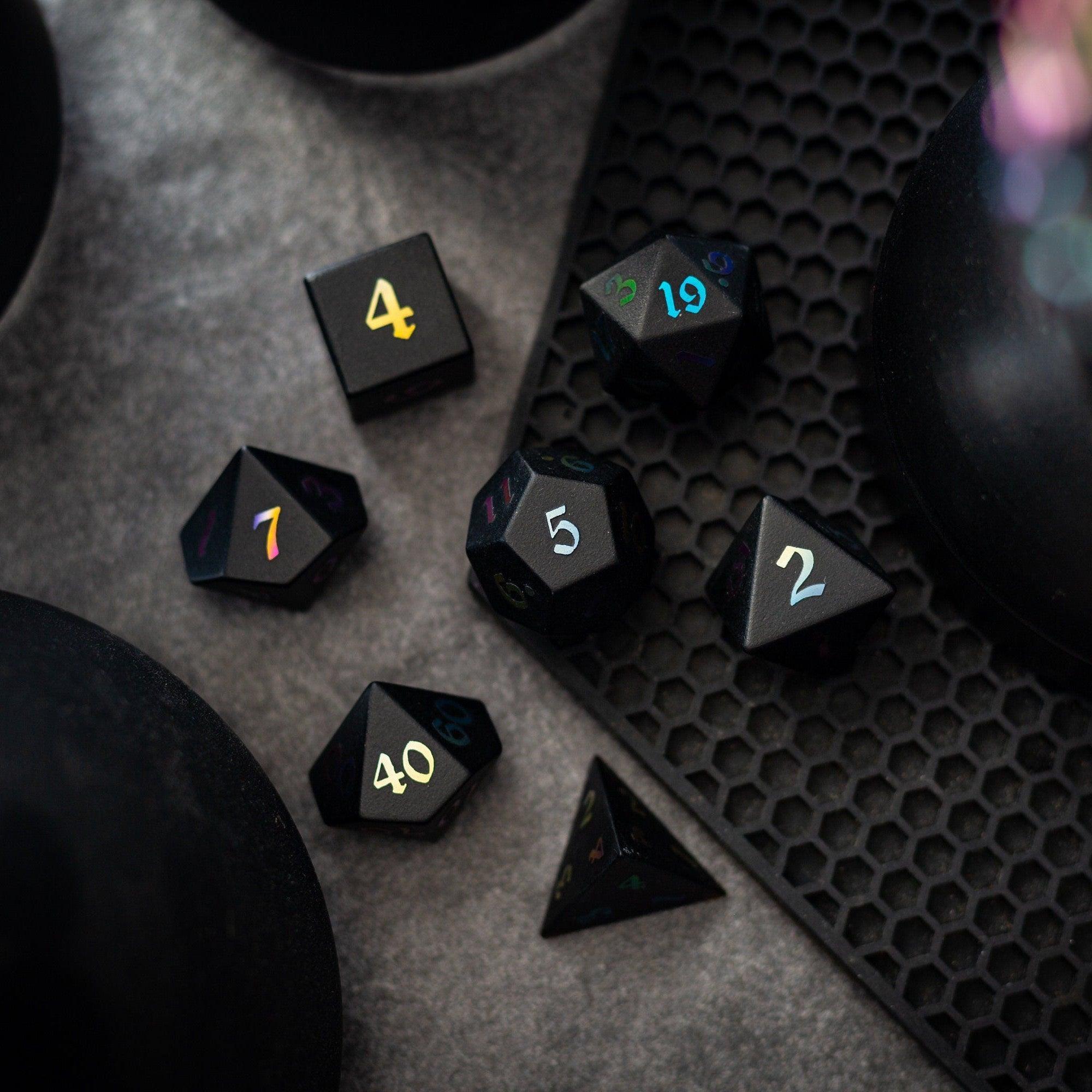
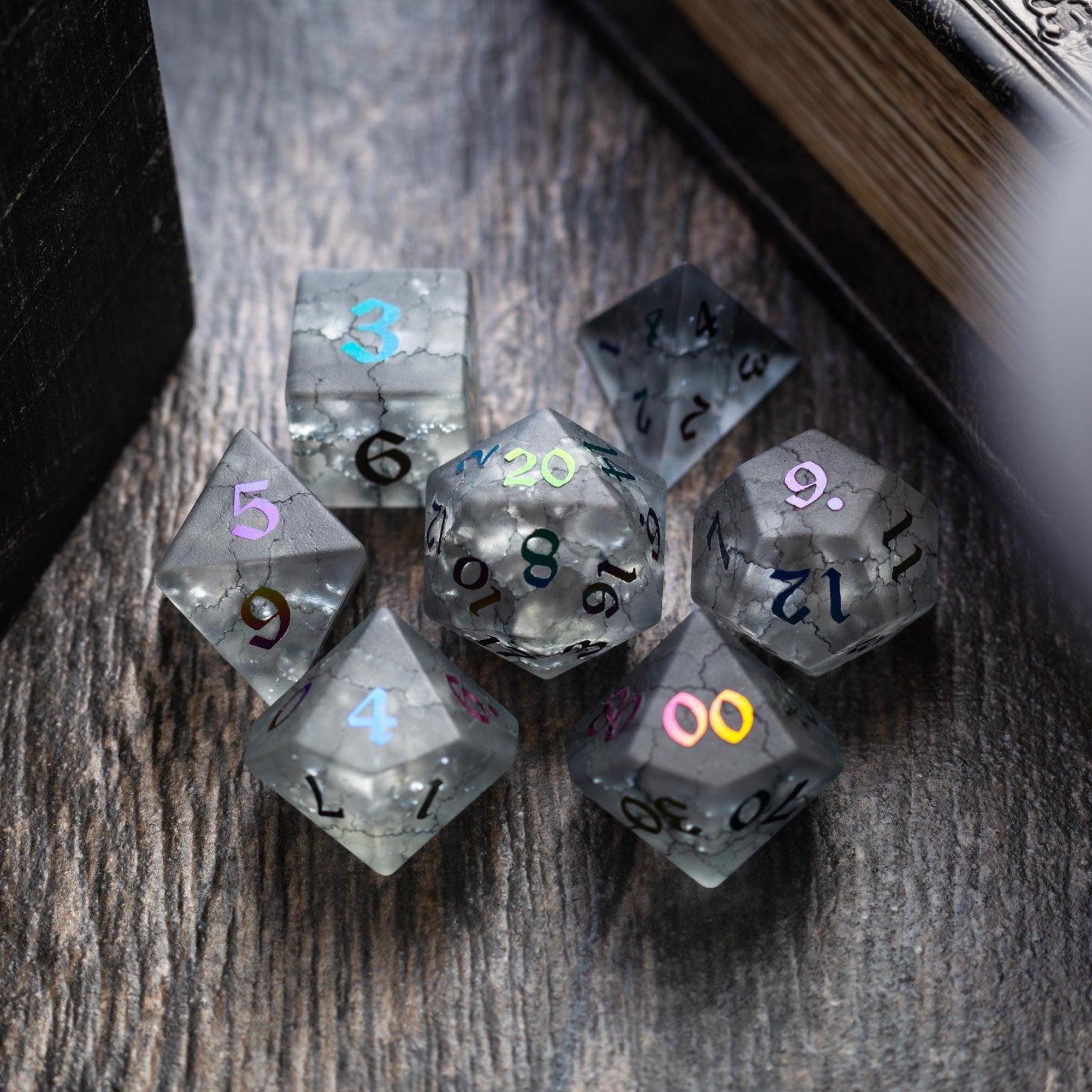
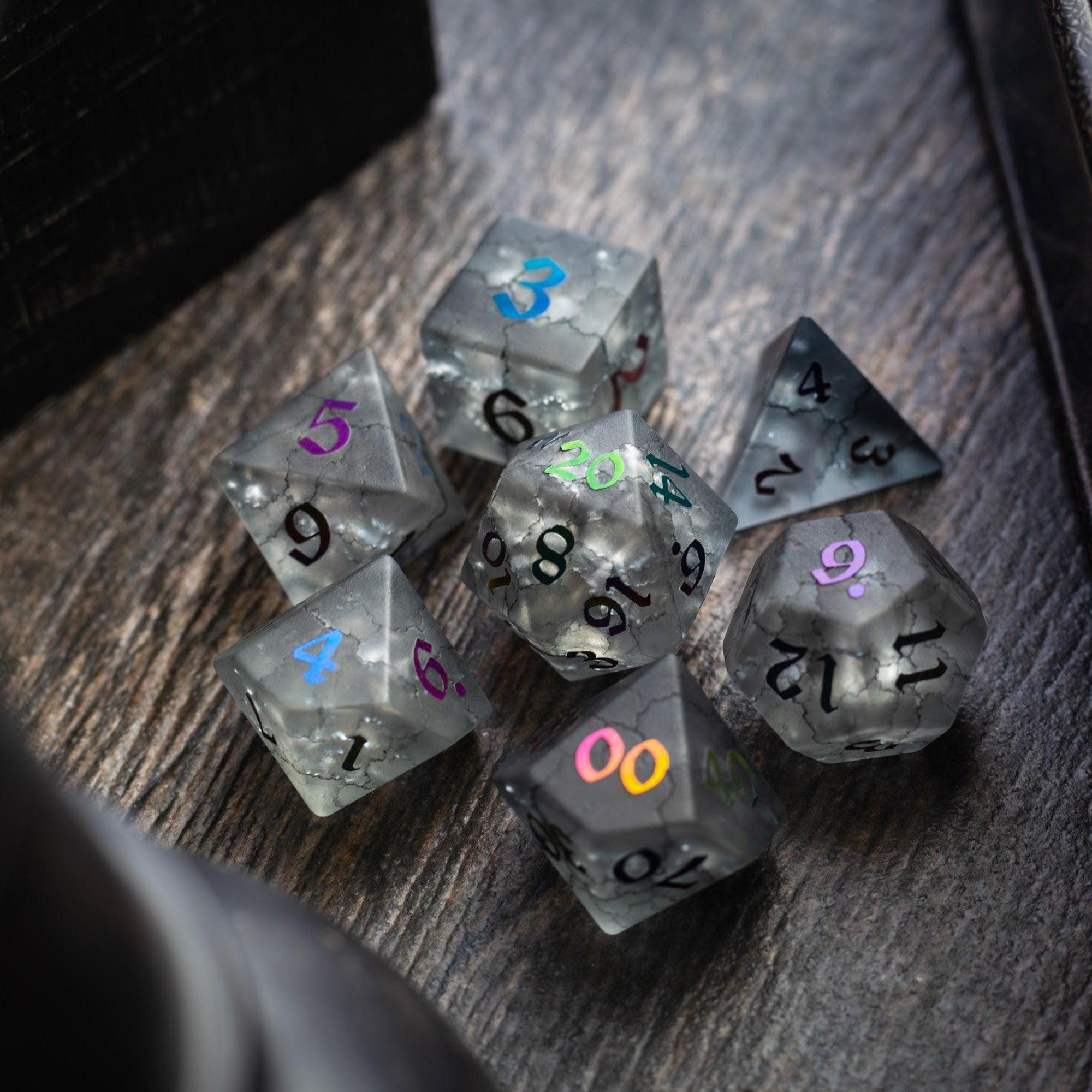
Players using gemstone dice, sharp-edge resin dice, or metal dice may especially appreciate a softer landing area. Glass and natural stone dice also need careful handling because hard drops can chip or damage them.
What a Dice Rolling Mat Does and Does Not Do
A D&D dice rolling mat changes the physical environment around the roll, not the game rules or the mathematics of the die. A padded or textured surface can soften impact, reduce bouncing compared with a hard tabletop, and help keep the dice in a defined area.
A rolling mat does not:
- Guarantee that a die is balanced or fair
- Repair chipped, warped, or damaged dice
- Change D&D rules or dice results
- Make one player luckier than another
Surface texture can change how far a die rolls or how quickly it stops, so choose a mat for protection, comfort, containment, and noise control rather than as a way to influence outcomes.
Common Dice Rolling Mat Materials
The material affects cushioning, sound, texture, cleaning, and portability. There is no single best option for every player, so consider where you play and which dice you use most often.
Neoprene
Neoprene is common in gaming mats because it combines flexible padding with easy storage. It can usually be rolled for transport and helps soften the sound and impact of dice.
Felt
Felt creates a soft, quiet rolling surface and is also common as a liner in dice trays. It can be gentle on dice, but lint, dust, crumbs, and pet hair may collect more easily than on smoother materials.
Microfiber or Soft Fabric
Microfiber and similar fabrics are often paired with a padded backing. They can provide a smooth rolling feel, although cleaning instructions vary by construction.
Leather or Synthetic Leather
Leather and synthetic leather can provide a firmer, classic-looking surface. The feel varies because thickness and padding matter as much as the outer material.
How to Choose the Right Size and Thickness
The best gaming mat is large enough for your normal rolls without crowding the rest of the table. Before buying, think about how many dice you usually roll, how much open space you have beside your character sheet, and whether the mat needs to fit into a gaming bag.
Small Mats
Small mats work well for individual players, travel, conventions, and tables with limited space. They are easy to carry, but they can feel cramped if you regularly roll several dice at once.
Medium Mats
Medium mats are a practical choice for many home campaigns. They offer enough room for standard polyhedral rolls while still leaving space for character sheets, books, miniatures, and snacks.
Large Mats
Large mats can serve as shared rolling spaces or Game Master stations. They are useful for larger dice pools or setups where the mat also holds tokens, notes, condition markers, or other frequently used accessories.
Thickness
Thicker mats generally provide more cushioning and can reduce impact noise, but they also take up more storage space. Thinner mats are easier to pack and may feel firmer under the dice. Neither is automatically better. Match the thickness to your table, dice, storage space, and preferred rolling feel.
Dice Rolling Mat Comparison Table
| Material | Cushioning | Portability | Noise Control | Best Fit |
|---|---|---|---|---|
| Neoprene | Good | Excellent | Very Good | Home play and travel |
| Felt | Good | Good | Excellent | Quiet indoor gaming |
| Microfiber or soft fabric | Varies by backing | Very Good | Good | Regular tabletop play |
| Leather or synthetic leather | Varies by construction | Good | Moderate to Good | Permanent or themed setups |
Construction matters as much as the top material. Backing thickness, stitching, edge finish, and overall stiffness can all change how a mat feels, so compare the complete build rather than choosing by surface material alone.
Dice Rolling Mat vs. Dice Tray
A mat and a tray solve similar problems in different ways. A mat gives you a broad, flat rolling area that is easy to place beside your character sheet. A tray adds raised edges that help contain energetic rolls in a smaller space.
If dice regularly bounce into miniatures or off the table, one of Runic Dice's dice trays may provide more containment. If you prefer a larger open area, a mat may feel less restrictive. Some players use both, especially when they want a soft landing surface plus raised sides.
How to Clean and Store a Dice Rolling Mat
Cleaning depends on the material and construction, so follow the manufacturer's care instructions whenever they are available.
- Shake off loose debris after each session.
- Use a soft cloth for light surface cleaning when appropriate.
- Avoid soaking or scrubbing unless the manufacturer says the material can handle it.
- Let the mat dry completely before storing it.
- Roll rather than fold the mat when recommended to reduce creases.
- Keep leather and specialty surfaces away from cleaners that are not approved for that material.
Store the mat in the way recommended for its construction to reduce creases, curled edges, or surface damage.
Common Mistakes When Buying a Dice Rolling Mat
Choosing a Mat That Is Too Small
If you often roll several damage dice at once, a very small mat can feel cramped. Measure the open space on your table before buying and leave enough room for a natural rolling motion.
Ignoring Storage and Travel
A large home mat may be awkward to carry. If you regularly play at a game store, convention, or friend's house, check how easily the mat rolls and whether it fits your usual bag.
Assuming Softer Is Always Better
More padding can reduce noise, but some players prefer a firmer surface that lets dice move more before stopping. Rolling feel is personal, so cushioning should match your preference rather than a general rule.
Expecting a Mat to Fix Damaged Dice
A rolling surface can reduce future impacts, but it cannot repair chipped edges, cracks, warping, or other damage. Inspect specialty dice regularly and replace any die that is no longer suitable for play.
Quick Dice Rolling Mat Buying Checklist
Before choosing your next RPG dice mat, ask:
- Will it fit comfortably on my gaming table?
- Is the surface appropriate for the dice I use most often?
- Does it provide enough cushioning for heavier or more delicate dice?
- Is it quiet enough for my play environment?
- Is it easy to clean and store?
- Can I transport it without creasing or damaging it?
- Do I need raised edges for better containment?
- Will it work with my dice tray, tower, or other tabletop accessories?
The best D&D dice rolling mat is the one that fits your actual playing habits. A compact mat may be ideal for travel, while a larger padded surface may make more sense for a permanent home setup. Focus on size, cushioning, noise, storage, and cleaning instead of appearance alone. A well-chosen dice rolling surface can make sessions quieter, protect the table, give dice a safer landing area, and keep the space around your character sheet or Game Master station easier to manage.








Leave a comment
This site is protected by hCaptcha and the hCaptcha Privacy Policy and Terms of Service apply.