
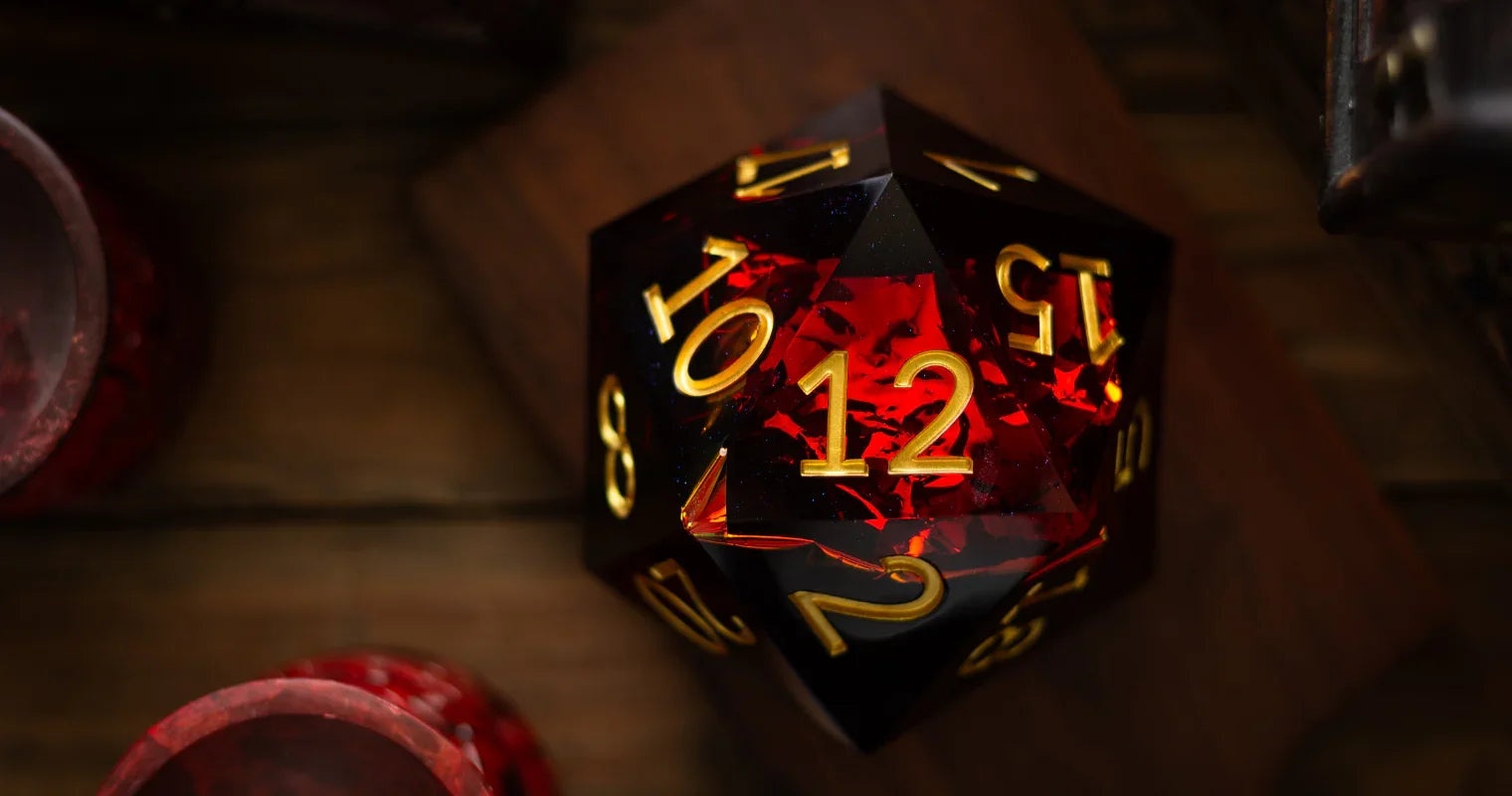
Baldurs Gate 3 dice sets practical rolling guide for games
One of the most recognizable moments in Baldur’s Gate 3 happens when a d20 appears on the screen. A conversation may depend on Persuasion. A trap might require a Dexterity check. An attack can hit or miss because of a single roll.
Baldur’s Gate 3 handles many of these calculations automatically, but the system behind them comes from tabletop Dungeons & Dragons. Around a physical table, players pick up the dice themselves, make the roll, add the appropriate modifiers, and wait for everyone to see the result.
For Baldur’s Gate 3 fans moving into tabletop gaming, choosing physical dice is part of that transition. Baldur’s Gate 3 dice sets can reflect a favorite character, class, spell style, or color palette, but they also need to be practical.
So, what should you look for in your first BG3 dice set? Start with understanding what the dice actually do.
How Dice Work in Baldur’s Gate 3
Baldur’s Gate 3 is based on Dungeons & Dragons 5th Edition, although the video game adapts and changes some rules for digital play.
The d20 is the most visible die because it resolves many uncertain actions. It is commonly involved in:
-
Ability and skill checks
-
Attack rolls
-
Saving throws
-
Initiative
-
Advantage and disadvantage
A roll is usually combined with bonuses or penalties and compared with a target number, such as an Armor Class or Difficulty Class.
Other dice work behind the scenes. Weapon damage, spell damage, healing, class abilities, and additional effects may use d4s, d6s, d8s, d10s, or d12s. The game often rolls these automatically.
At a tabletop, you may need to identify those dice and roll them yourself.
Baldur’s Gate 3 Dice vs. Physical Tabletop Dice
The biggest difference is how much work the computer does for you.
In Baldur’s Gate 3, the game calculates modifiers, handles many damage rolls, applies effects, and enforces its version of the rules. At a tabletop, players and the Dungeon Master manage more of that process.
You might roll a d20, add your modifier, and tell the Dungeon Master the total. If an attack hits, you then roll the correct damage dice. The group tracks resources, conditions, spell effects, and other details together.
Physical D&D dice require more attention, but that is also part of their appeal. Picking up a d20 before an important saving throw creates a different kind of suspense than watching a digital calculation.
What Is Included in a Standard D&D Dice Set?
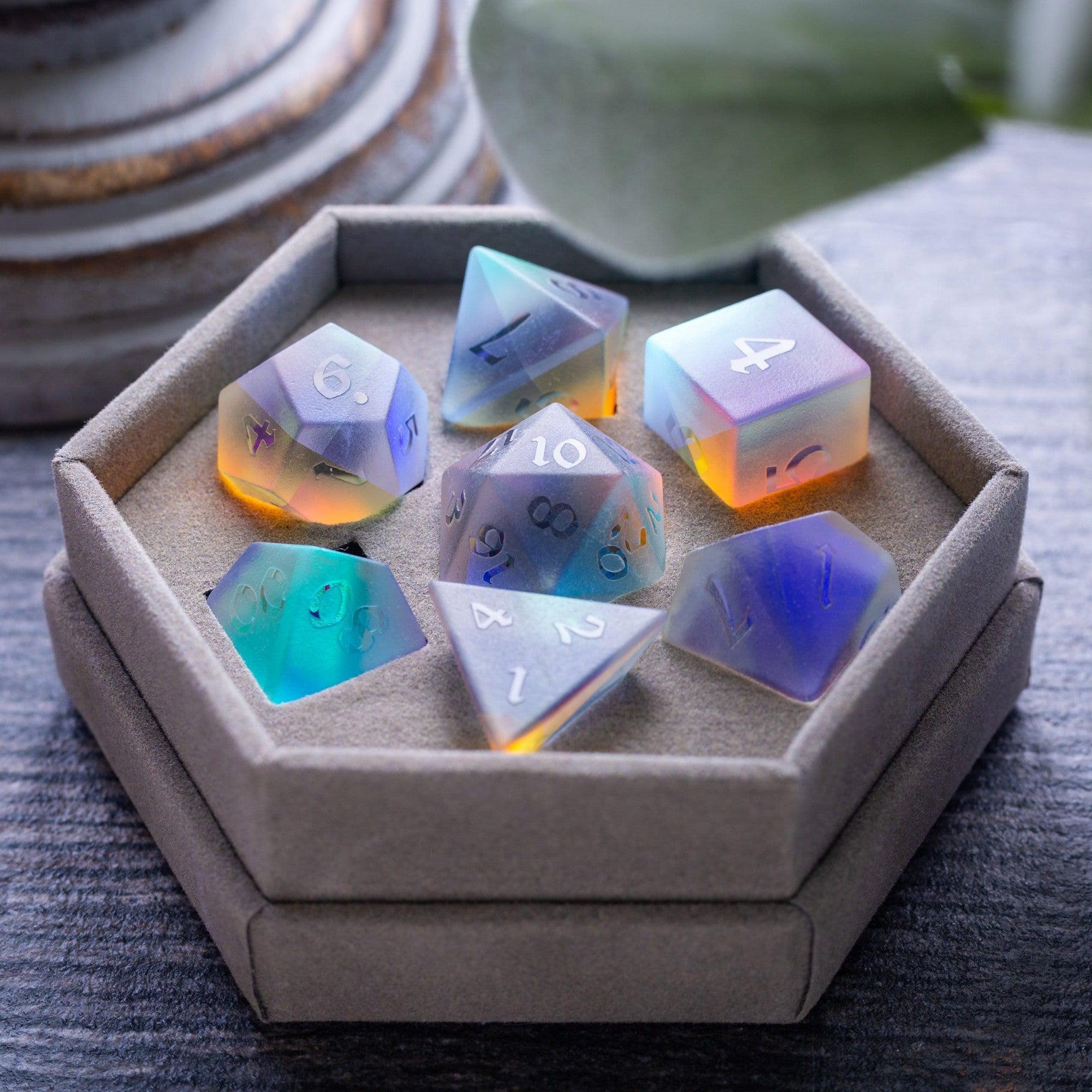
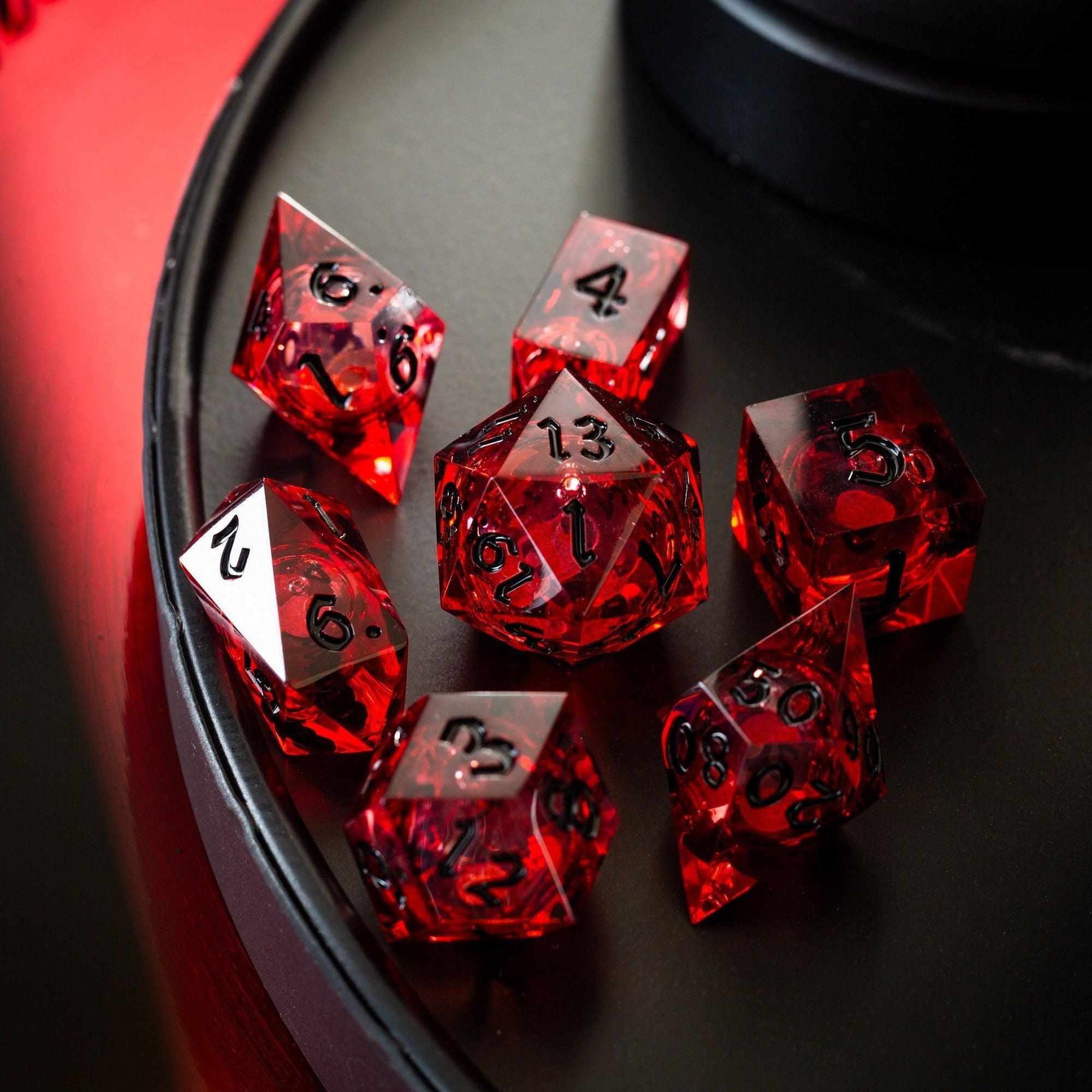
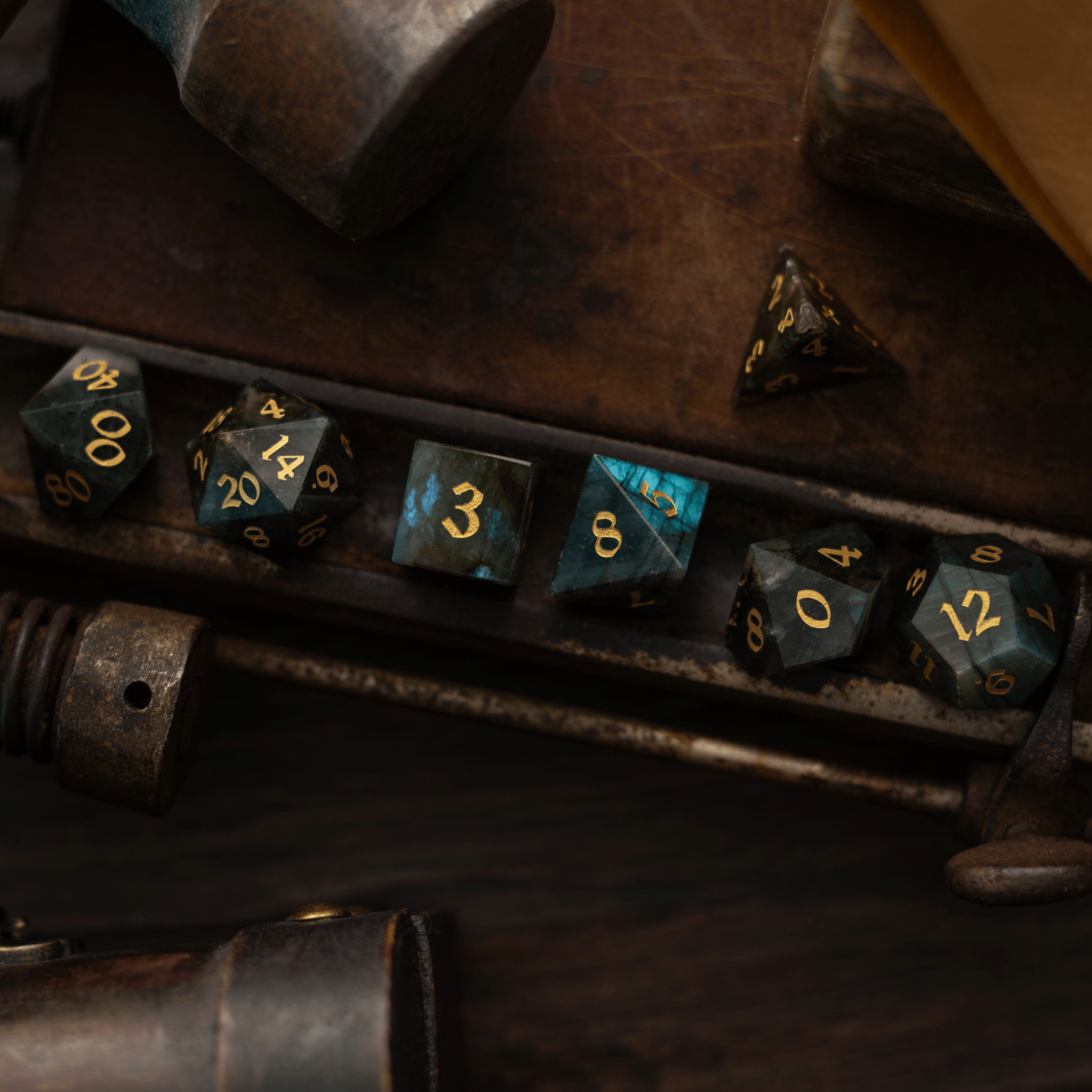
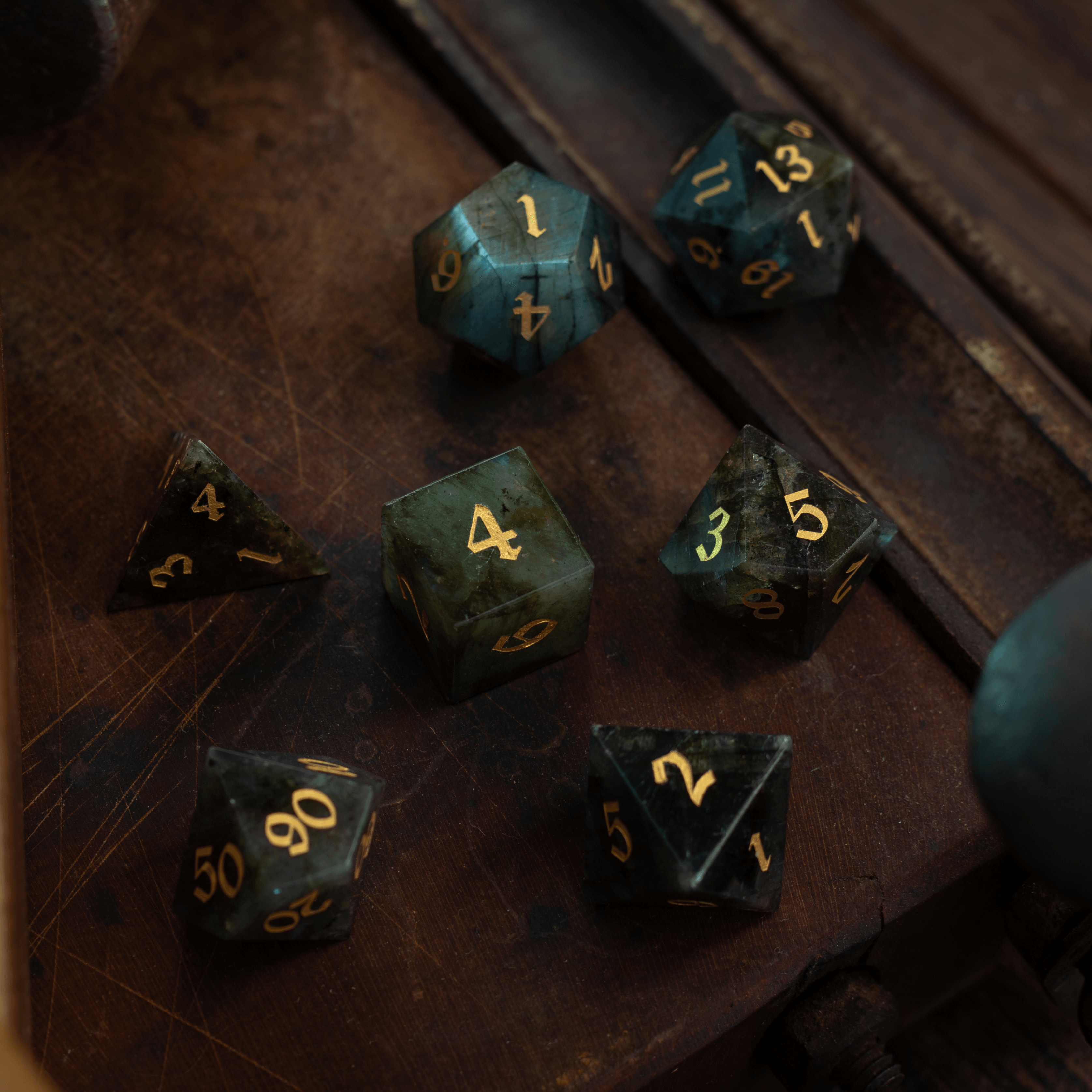
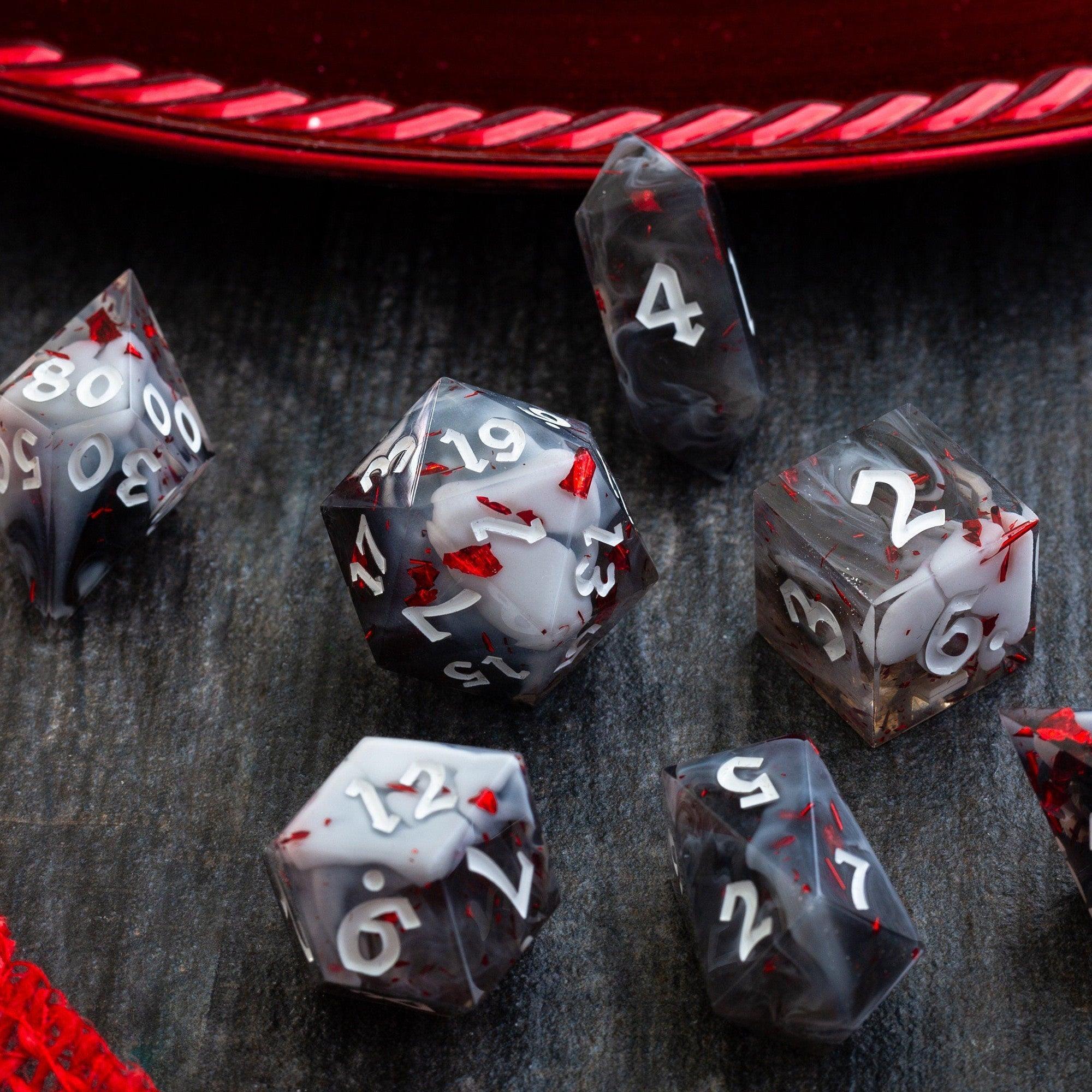
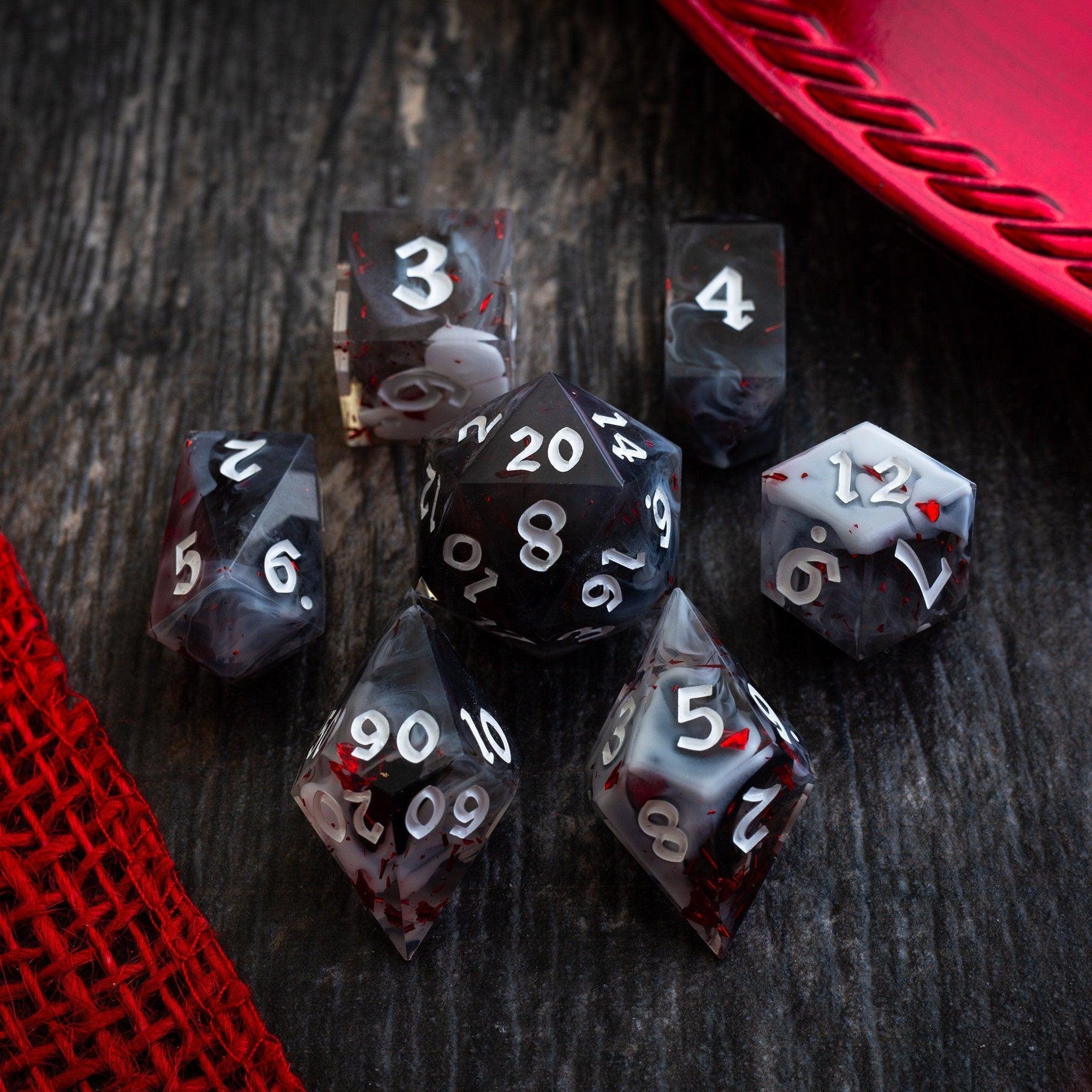
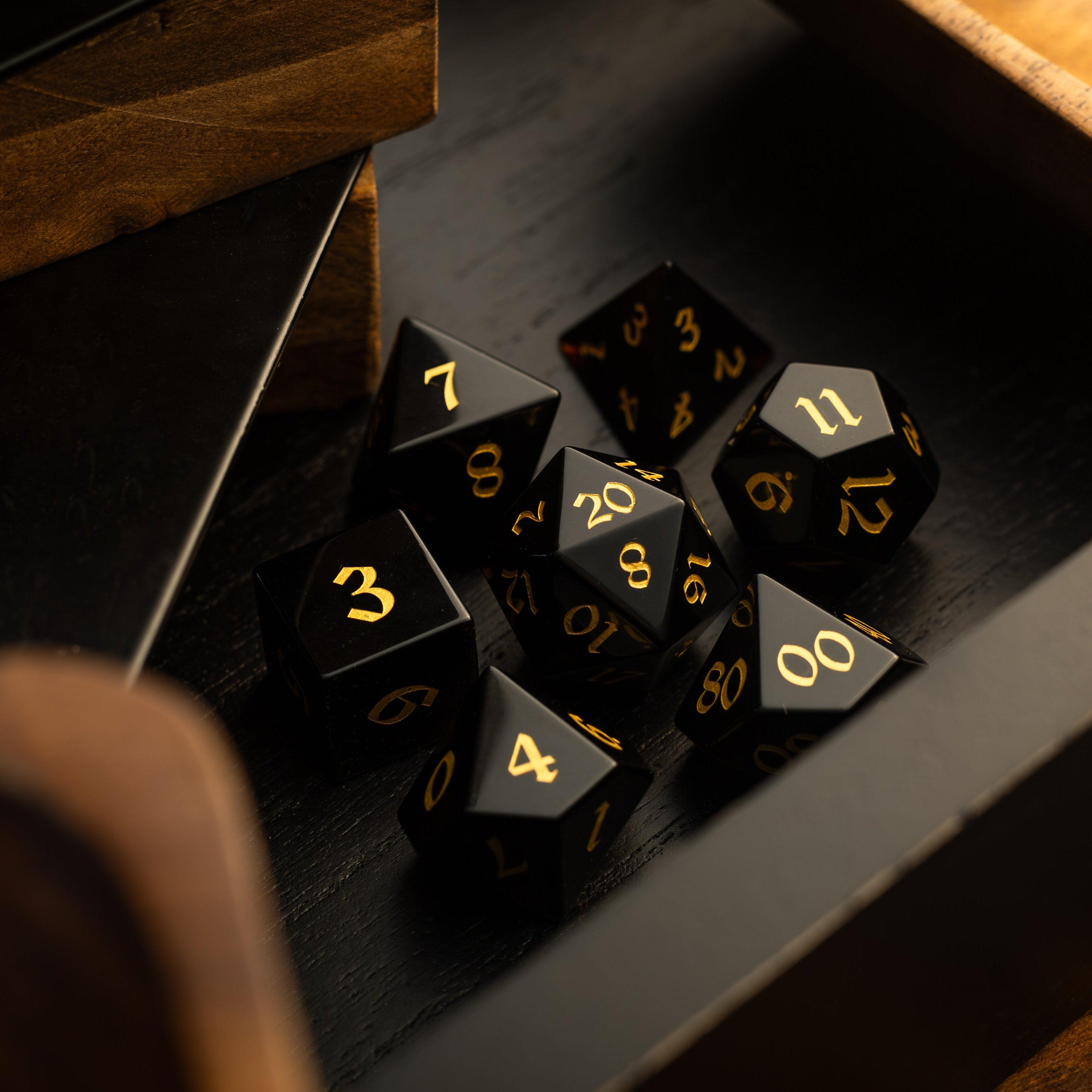
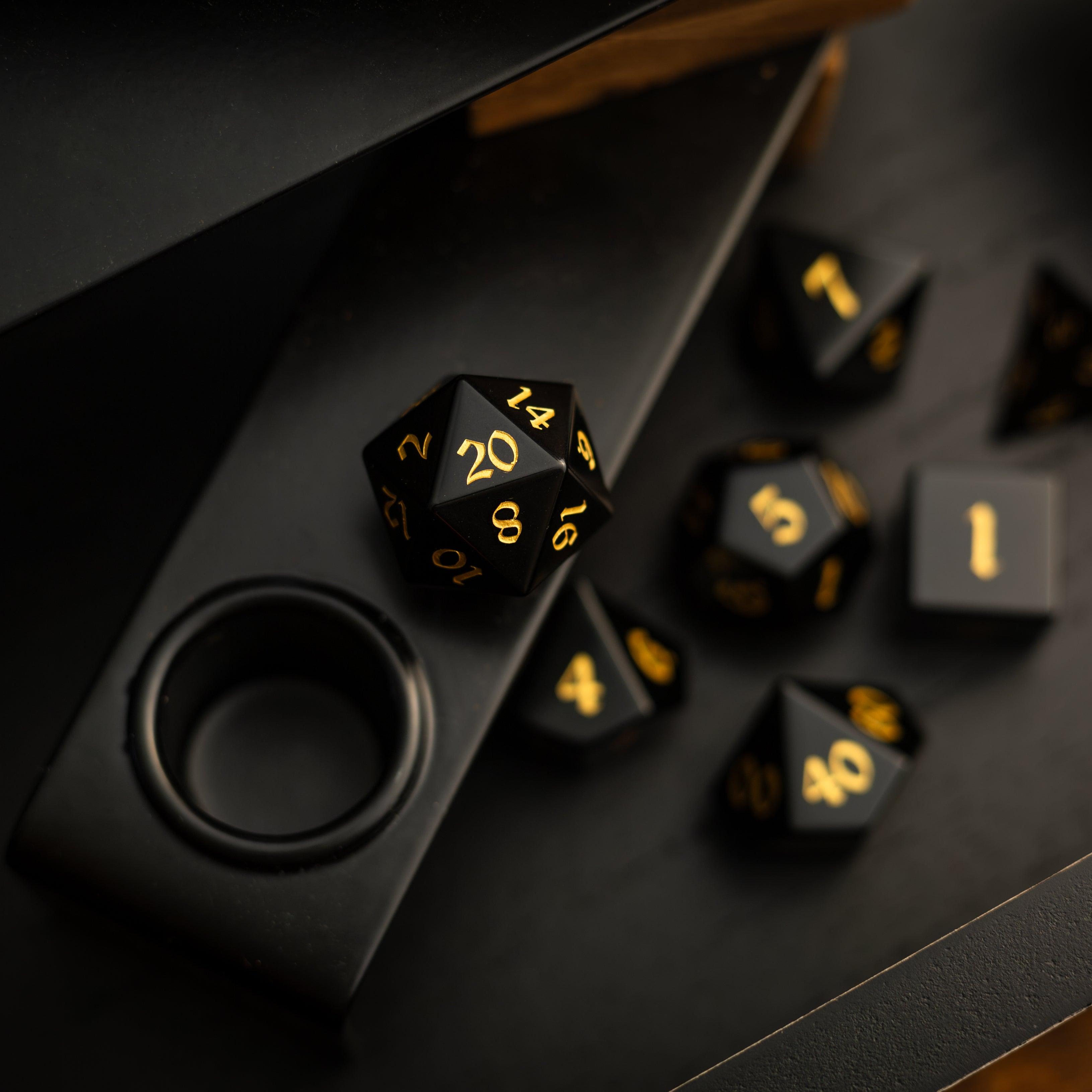
A standard seven-piece dice set gives most players the basic tools needed to begin.
| Die | Common Uses | Example at the Table |
|---|---|---|
| d4 | Small weapon damage, healing, minor effects | Dagger damage |
| d6 | Weapon damage, spells, class abilities | Shortbow damage or Sneak Attack |
| d8 | Weapons, healing, class features | Longsword damage |
| d10 | Weapon and spell damage | Certain heavy weapons or spells |
| Percentile d10 | Percentile rolls and random tables | Generating a result from 1 to 100 |
| d12 | Heavy weapon and class damage | Greataxe damage |
| d20 | Attacks, checks, saves, and initiative | Persuasion check or weapon attack |
The percentile die is usually marked in tens, such as 00, 10, 20, and 30. It is paired with the standard d10 when a game calls for a percentage result.
One seven-piece D&D dice set is enough to start playing. Many players eventually add more dice because certain spells and class abilities require several of the same type.
Why the d20 Gets Most of the Attention
The d20 is the symbol most closely associated with Dungeons & Dragons because it determines the outcome of many important actions.
In tabletop D&D, you may use d20 dice for attacks, ability checks, skill checks, saving throws, initiative, and death saving throws.
A natural 20 can be especially exciting, but its exact meaning depends on the type of roll and the rules being used. Critical hit rules primarily apply to attack rolls. A natural 20 does not automatically guarantee success on every possible ability check.
Likewise, a natural 1 is not automatically a catastrophic failure on every check. Some Dungeon Masters use house rules that add special consequences, but those should not be confused with universal rules.
Advantage, Disadvantage, and Multiple d20s
Advantage and disadvantage are simple concepts that Baldur’s Gate 3 players will already recognize.
With advantage, roll two d20s and use the higher result. With disadvantage, roll two and use the lower result.
This is one reason many tabletop players carry two d20s. They might use two matching dice, contrasting colors, or a primary d20 and a backup. The color does not affect the probability. Having two dice simply makes these rolls more convenient.
Choosing a Baldur’s Gate 3-Inspired Dice Theme
Character-themed dice are about personal style, not mechanical benefits.
An arcane spellcaster might inspire purple or dark blue dice. A stealth-focused Rogue could suggest black, silver, smoke, or obsidian designs. Nature-themed adventurers may suit green stone or earthy resin, while divine characters might inspire bright, gold, or radiant colors.
None of these choices are requirements. A Wizard can use red dice. A Barbarian can use delicate glass dice. A Rogue can carry bright pink resin dice.
Your dice do not know your class.
Character-Inspired Dice Pairing Guide
| Character or Playstyle Theme | Dice Style | Why It Fits | Practical Consideration |
|---|---|---|---|
| Arcane spellcaster | Purple liquid core or sharp-edge resin | Suggests magical energy | Check number readability |
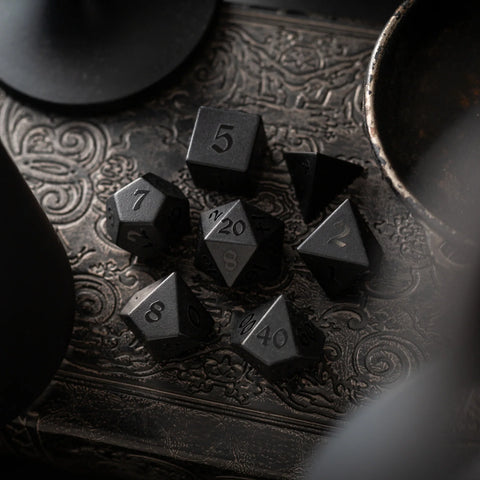
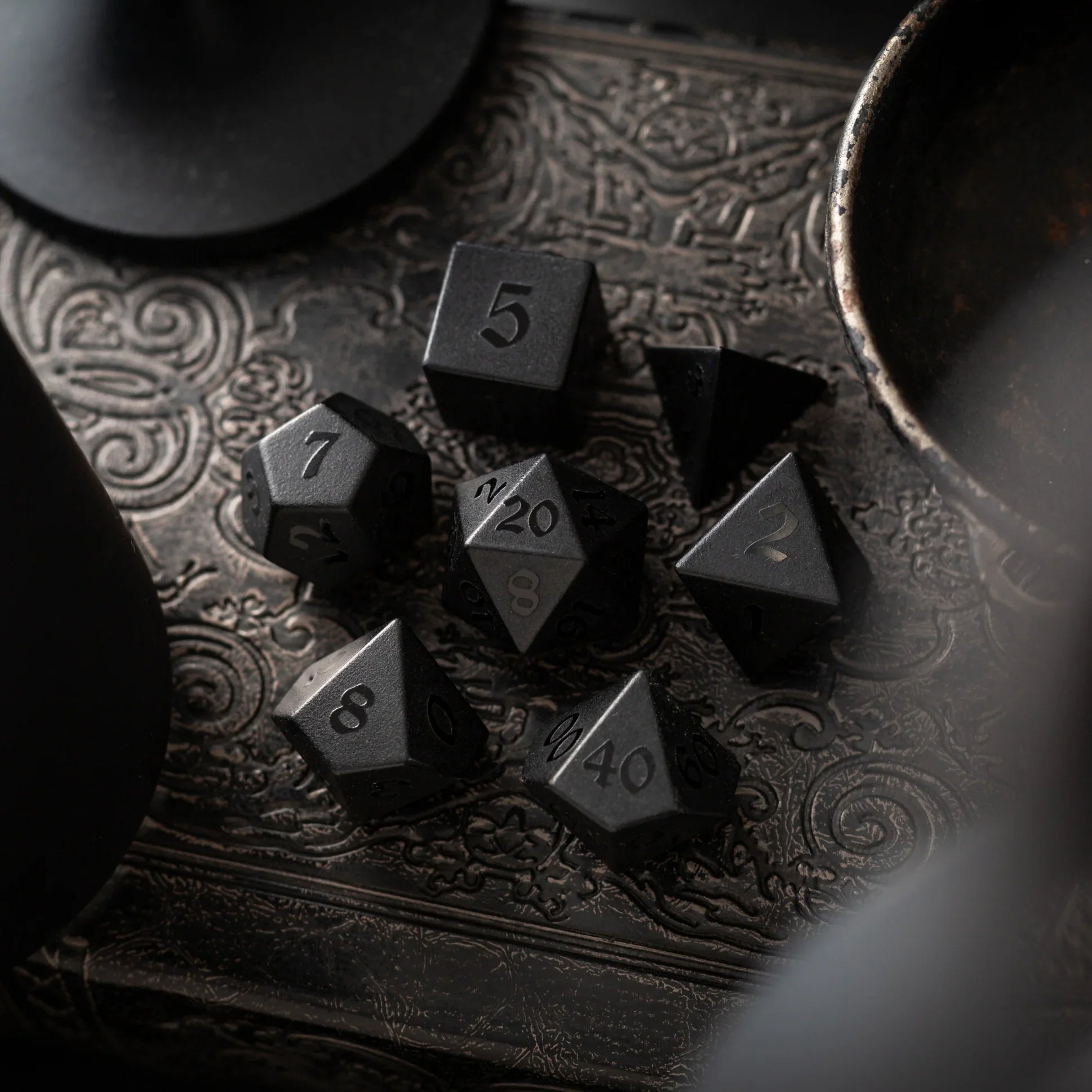
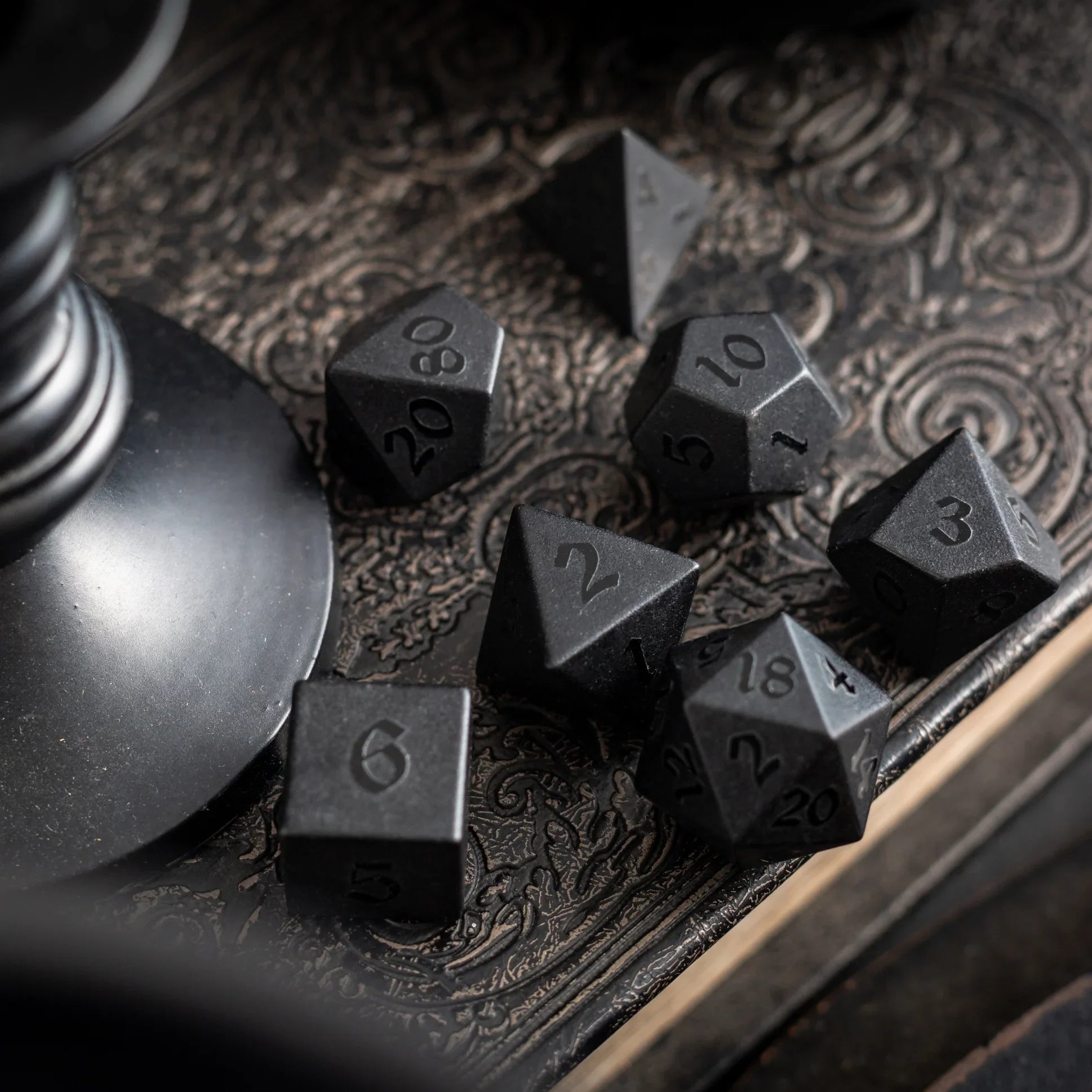
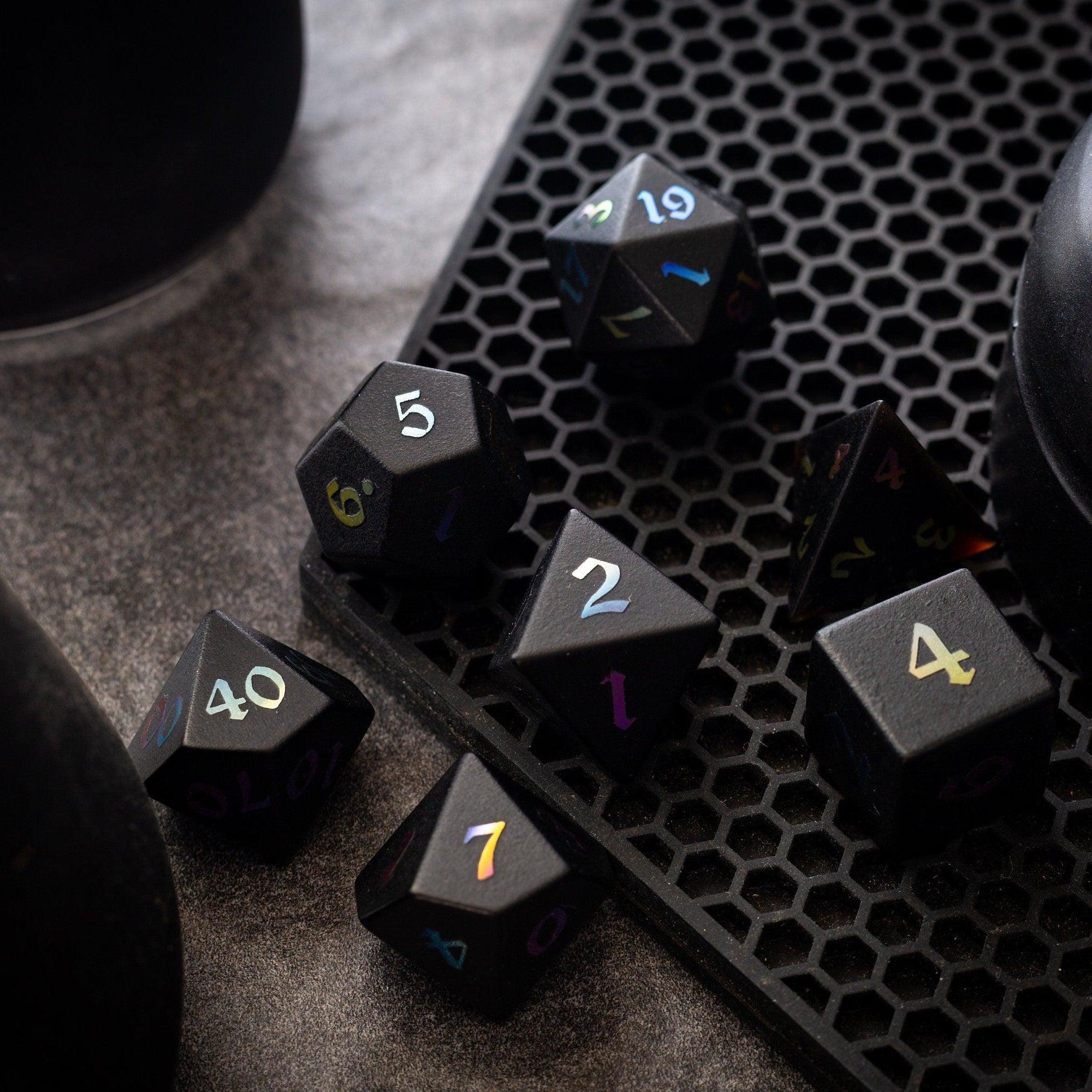
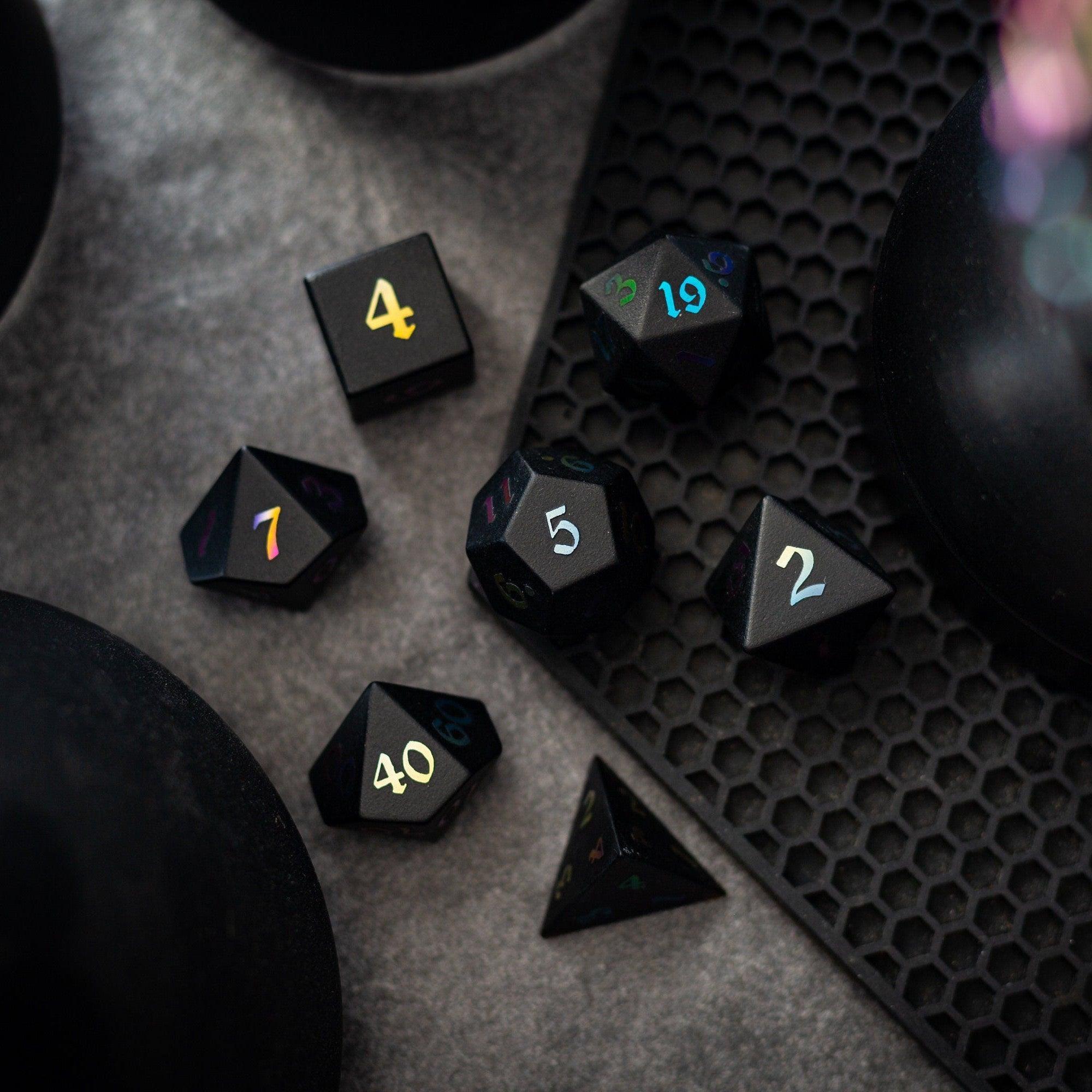
| Stealth-focused Rogue | Dark glass, obsidian, or smoke resin | Fits a shadowy theme | Use a padded tray for stone or glass |
| Armored warrior | Metal dice | Provides a heavy rolling feel | Protect the table |
| Nature-focused adventurer | Green gemstone or earthy resin | Matches wilderness themes | Store gemstone dice carefully |
| Radiant hero | Gold or bright resin | Fits divine imagery | Choose strong number contrast |
| Chaotic magic user | Multicolored or glitter liquid core | Creates a shifting magical look | Make sure the faces remain readable |
These are fan-inspired visual ideas, not official Baldur’s Gate 3 character products or mechanical recommendations.
Understanding RPG Dice Materials
The best dice for D&D depend on how you like your dice to feel, look, and travel.
Resin Dice
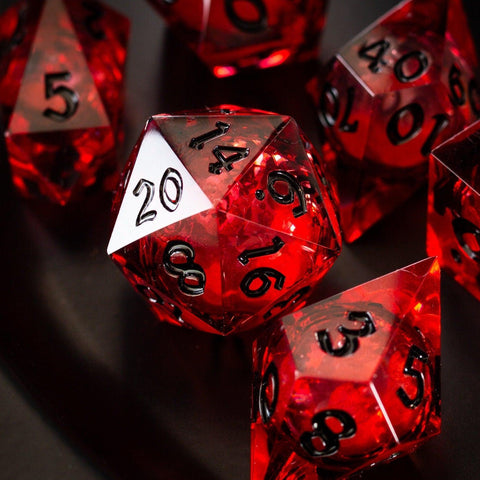
Resin is a practical starting material. It offers a wide range of colors, inclusions, finishes, and edge styles while remaining comfortable for regular play.
Both rounded and sharp-edge resin dice are common. Their variety makes resin useful for creating character-themed dice without requiring special handling.
Liquid Core Dice
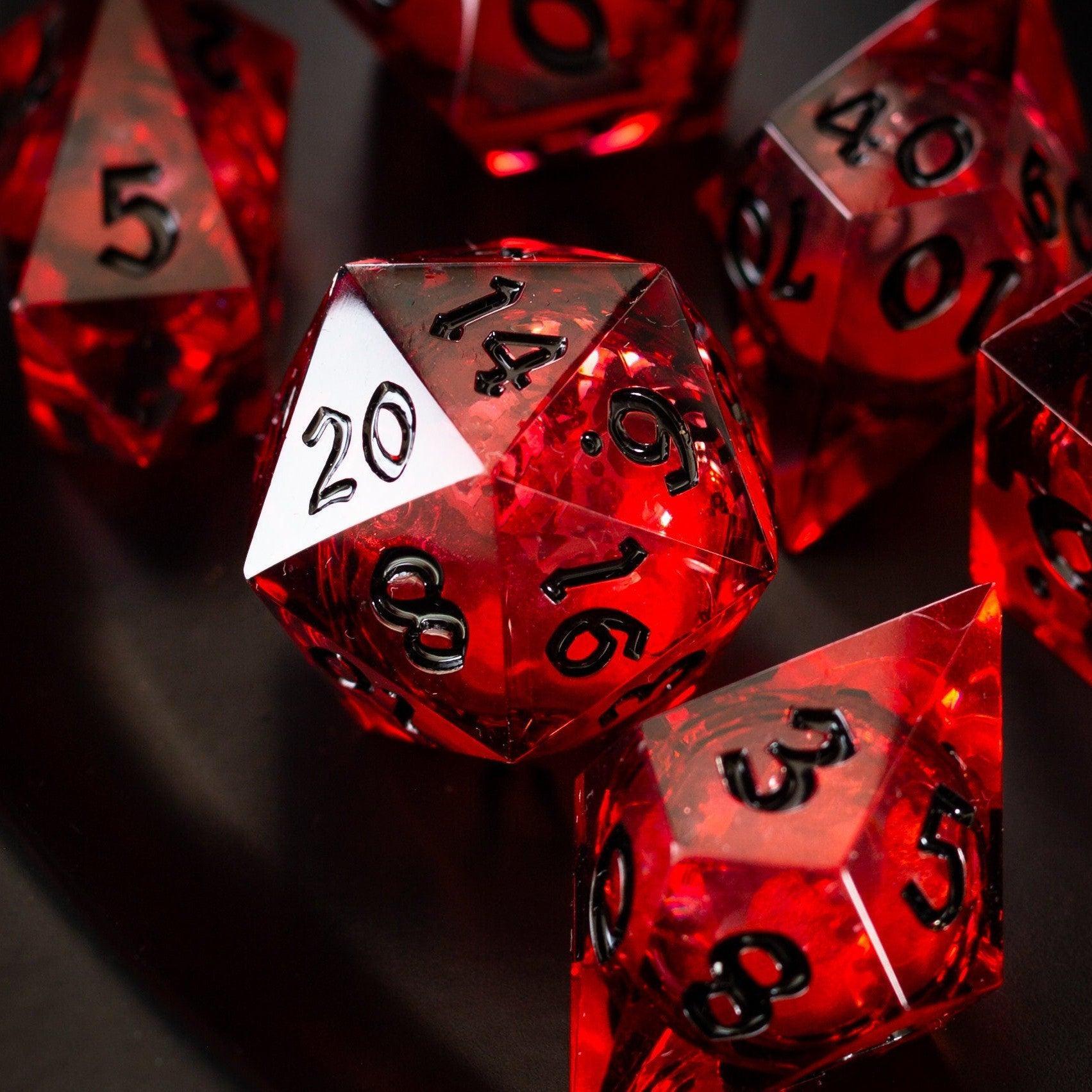
Liquid core dice are typically made with a resin shell surrounding an internal liquid chamber. Glitter or pigment moves when the die is rolled.
They are visually striking, especially for magical character themes, but readability still matters. A dramatic moving core is less useful during play if the numbers disappear against the design.
Gemstone Dice
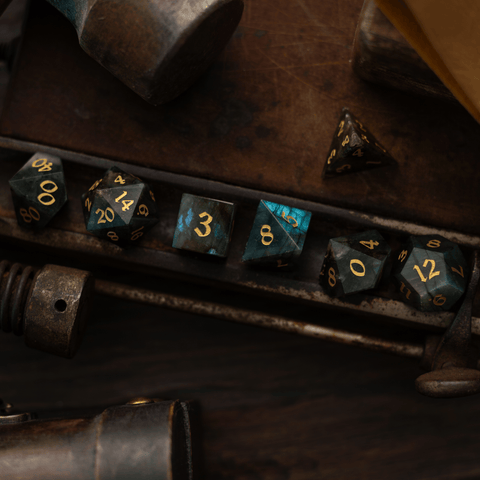
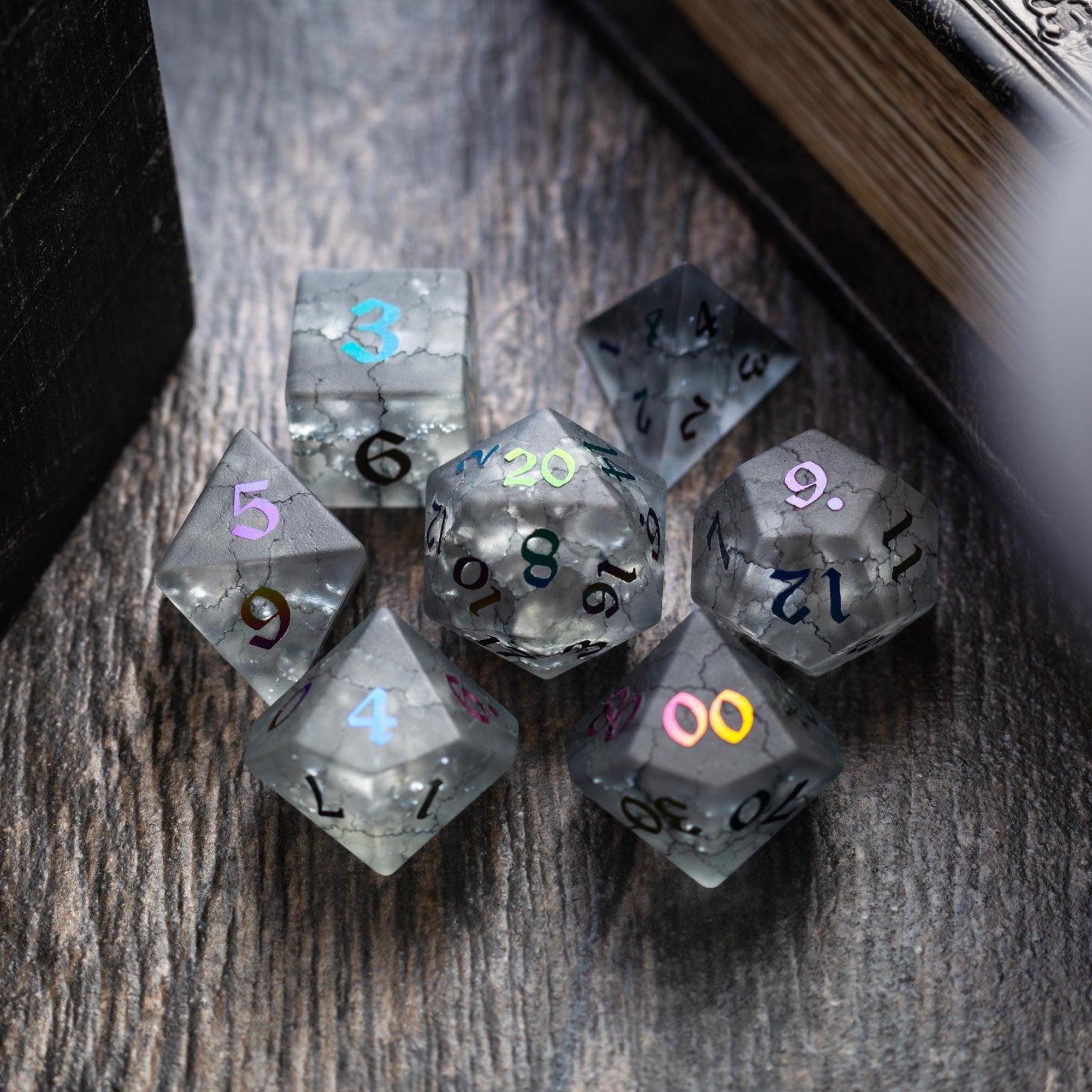
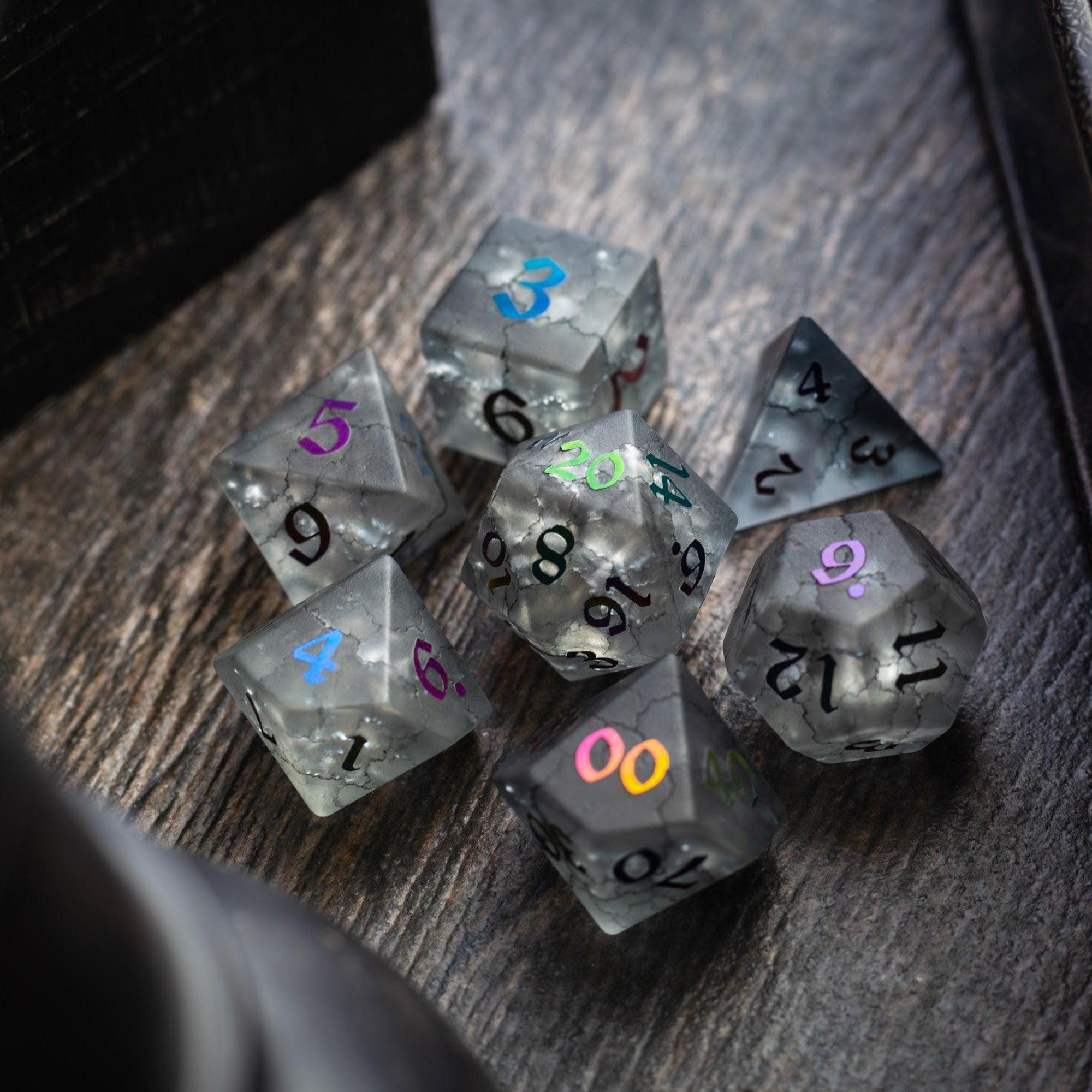
Gemstone dice feature natural patterns and variations, meaning individual pieces may look slightly different. They have a solid feel and strong collector appeal.
They also require more care. Hard impacts can cause chips or damage, so a padded dice tray and separate storage are sensible choices.
Metal Dice
Metal dice are much heavier than most resin sets. Some players enjoy their substantial feel, but that weight can damage wooden tables and other surfaces.
A protective dice tray should be part of the setup when using metal dice.
Glass Dice
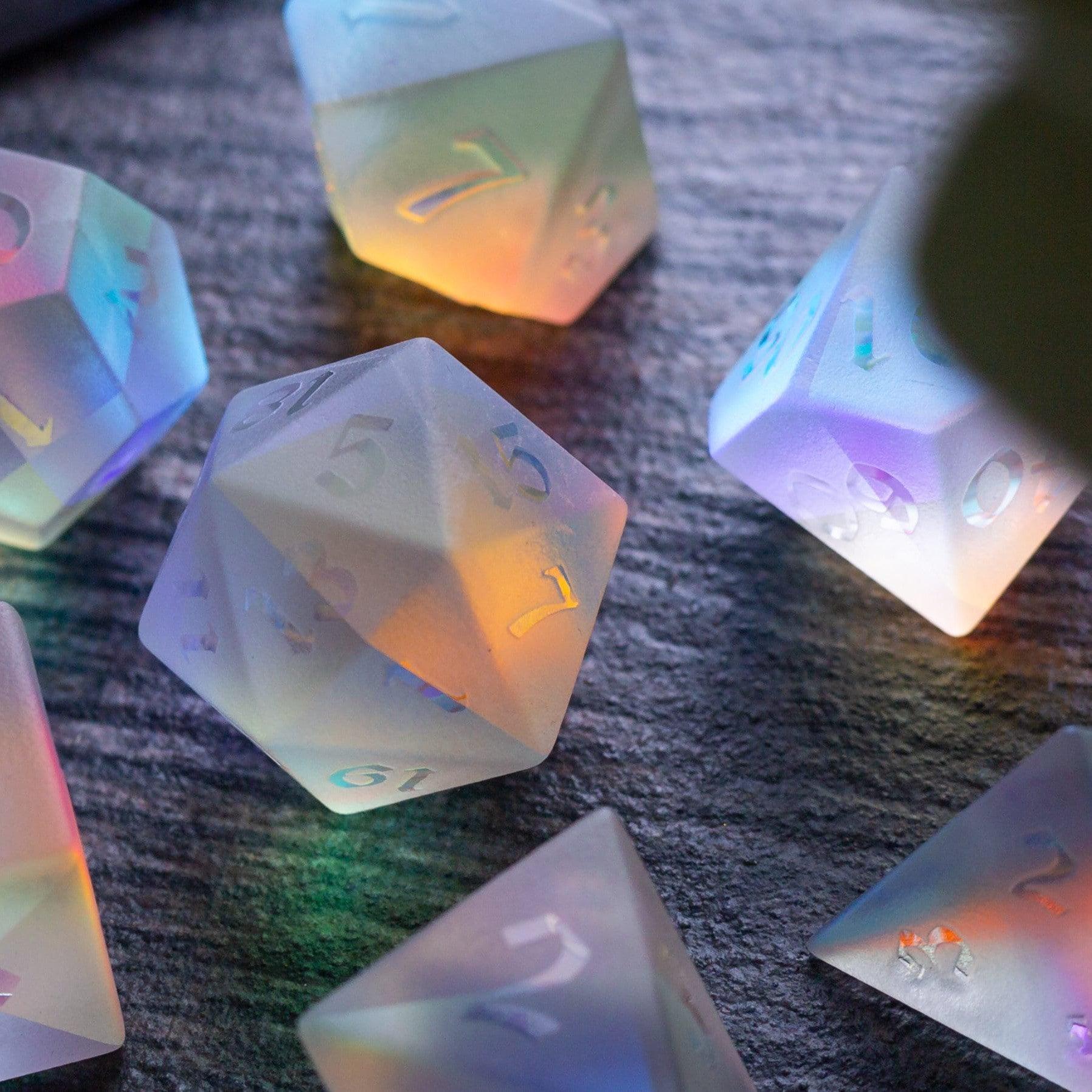
Glass dice can have clear, reflective, or layered appearances with crisp shapes. Like gemstone dice, they should be handled carefully and rolled on a padded surface to reduce the risk of chipping.
Dice Material Comparison
| Material | Weight | Visual Variety | Care Level | Rolling Surface | Best For |
|---|---|---|---|---|---|
| Resin | Light to medium | Very high | Low to moderate | Most suitable surfaces | Beginners and everyday play |
| Liquid core | Medium | High with moving effects | Moderate | Tray recommended | Visual collectors and magical themes |
| Gemstone | Medium to heavy | Natural variation | High | Padded tray strongly recommended | Collectors and natural-material fans |
| Metal | Heavy | Moderate to high | Moderate | Protective tray required | Players who enjoy substantial rolls |
| Glass | Medium | Clear or reflective | High | Padded tray strongly recommended | Careful players and collectors |
No material is universally better. Choose according to your preferred weight, appearance, care requirements, and playing environment.
Readability Matters More Than Appearance
A beautiful BG3 dice set can become frustrating if nobody can read the result.
Before choosing a primary set, consider the number size, font clarity, contrast, reflections, glitter, and inclusions. Think about the lighting where you normally play.
Low-contrast gaming dice sets can look impressive in photographs but slow down actual sessions. For regular play, a readable primary set is often more useful. Highly decorative dice can still be saved for special rolls or display.
Sharp-Edge vs. Rounded-Edge Dice
Sharp-edge dice have crisp faces and defined shapes. Rounded-edge dice usually feel familiar in the hand and can be more resistant to minor edge wear during everyday handling.
Neither style is automatically fairer.
Manufacturing quality matters more than whether the edges are sharp or rounded. Choose the style that feels comfortable and suits how you play.
How to Roll Physical Dice Fairly
A fair physical roll does not require an elaborate ritual. The goal is simply to give the die enough movement to tumble and produce a clear result.
For consistent tabletop rolling:
-
Roll from a reasonable height.
-
Let the die tumble across a flat surface.
-
Keep the result visible to the group.
-
Agree on rules for cocked dice and dice that leave the table.
-
Avoid simply dropping a die without movement.
-
Use a tray when table space is limited.
-
Keep rolls away from drinks, miniatures, and fragile accessories.
Group rules matter. If your table rerolls dice that land on the floor, establish that expectation before an important roll.
Why a Dice Tray Helps
A dice tray keeps physical D&D dice contained while protecting the surrounding play area.
It can prevent dice from knocking over miniatures, disappearing beneath furniture, or damaging a wooden table. Padded trays are particularly useful for gemstone and glass dice, while sturdy trays help contain heavy metal dice.
A tray can also reduce noise and make results easier for everyone to see.
How Many Dice Sets Does a Player Need?
One complete seven-piece dice set is enough for a beginner.
Two sets can make advantage and disadvantage faster, while certain classes benefit from extra damage dice. Rogues often use several d6s for Sneak Attack. Spellcasters may need handfuls of dice for damage spells. Paladins can roll additional dice for Divine Smite, and Fighters may appreciate extra d20s when making repeated attacks.
Exact needs depend on your class, level, weapons, spells, and ruleset.
Large dice collections are optional. Start with one readable set and add specific dice when your character actually needs them.
Bringing a Baldur’s Gate 3 Character to the Table
A favorite companion or custom Tav can provide inspiration for a tabletop character without being copied exactly.
Think about the character’s:
-
Class and party role
-
Background
-
Personality
-
Color palette
-
Spell effects
-
Armor style
-
General moral outlook
Tabletop campaigns may use different subclasses, character creation methods, level progression, and party compositions. Baldur’s Gate 3 DnD mechanics are closely related to tabletop rules, but they are not identical.
Character-themed dice can preserve a visual identity even when the tabletop build changes.
Caring for Physical Dice
Good care depends on the material.
Store gemstone and glass dice so they do not strike each other during travel. Padded bags, divided cases, and protective trays can help. Avoid dropping delicate dice onto hard floors.
Clean most dice gently with a soft cloth and avoid harsh chemicals unless you know they are safe for the specific material. Keep dice away from extreme heat, and avoid unnecessary impacts to liquid core designs.
Metal dice should also be checked occasionally for rough edges that could mark a rolling surface.
Common Beginner Dice Mistakes
New players often focus entirely on appearance. A better approach is to consider how the dice will actually be used.
Common mistakes include buying unreadable numbers, rolling metal dice directly on furniture, using gemstone or glass dice on hard surfaces, and assuming expensive dice produce better results.
Other mistakes include confusing the percentile die with a second standard d10, buying oversized dice without considering table space, or assuming Baldur’s Gate 3 rules always work exactly like tabletop D&D.
Licensing matters too. If a product is presented as official Baldur’s Gate 3 merchandise, check the licensing claim rather than assuming every character-themed product is authorized.
FAQ: Baldur’s Gate 3 Dice Sets
What dice are used in Baldur’s Gate 3?
Baldur’s Gate 3 uses the familiar dice system associated with D&D, including d20 rolls for many checks, attacks, and saves, plus other dice for damage, healing, and effects.
What dice do I need to play tabletop D&D?
A standard seven-piece set containing a d4, d6, d8, two forms of d10, d12, and d20 is enough to begin.
Is one seven-piece dice set enough?
Yes. Extra dice improve convenience but are not required for a new player.
Can I buy official Baldur’s Gate 3 dice?
Official product availability can change. Check current licensing and product information before assuming a dice set is officially connected to Baldur’s Gate 3.
Are Baldur’s Gate 3 dice different from D&D dice?
The physical dice shapes are the same types commonly used in tabletop D&D. The major difference is that Baldur’s Gate 3 handles many rolls and calculations digitally.
What is the best dice material for beginners?
Resin is often practical because it is widely available, relatively easy to handle, and offered in many readable designs. Other materials can also work well with proper care.
Do metal dice damage tables?
Their weight can mark or dent some surfaces. Use a protective dice tray.
Are gemstone dice good for regular play?
Yes, if handled carefully and rolled on an appropriate padded surface.
Why do D&D players need multiple d20s?
Multiple d20s are convenient for advantage, disadvantage, repeated attacks, and lending dice to other players.
Do expensive dice roll better?
Not automatically. Price, material, craftsmanship, and appearance do not guarantee better results.
Can physical dice change my odds?
No. A character’s statistics and the game’s rules determine modifiers and probabilities. A particular color or theme does not improve your chances.
What dice should I choose for my Baldur’s Gate 3 character?
Choose a readable set with a material and visual theme you enjoy. Class colors and character themes can inspire the design, but they have no mechanical effect.
Take Your Next Roll Beyond the Screen
Baldur’s Gate 3 gives video game players a clear introduction to the suspense of a d20 roll. Moving to physical tabletop dice adds something different: the feel of the die in your hand, the visible result, and the shared reaction around the table.
Begin with a complete seven-piece dice set. Prioritize readable numbers. Choose a material suited to how often and where you play. Use a protective rolling surface for heavy or delicate dice, and add extra dice only when your character benefits from them.
Most importantly, choose Baldur’s Gate 3 dice because you enjoy using them, not because you expect them to change the odds.
The excitement of a Baldur’s Gate 3 roll does not disappear when the screen is gone. Around a tabletop, the die lands in full view of the party, and everyone discovers the result together.

Leave a comment
This site is protected by hCaptcha and the hCaptcha Privacy Policy and Terms of Service apply.