
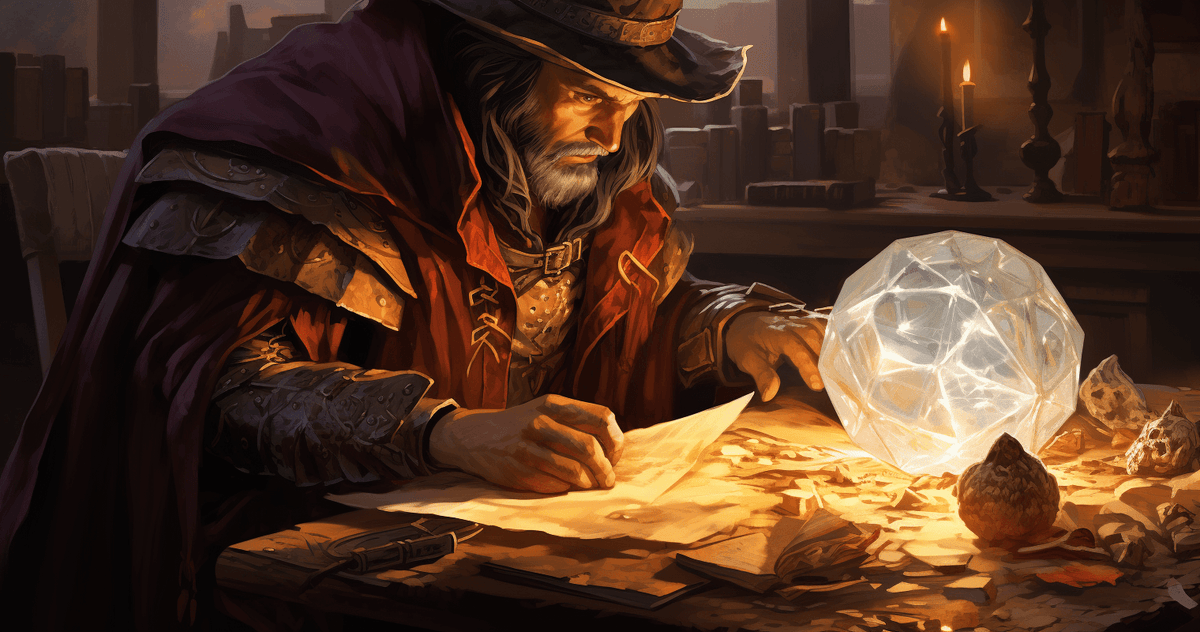
History of Dice: From Ancient Games to Modern D&D
Dice have been part of human culture for roughly 5,000 years. Long before they became standard tools in board games and tabletop role-playing games, people used marked objects to create random outcomes in games and other activities. Across centuries, dice changed in shape, material, and purpose, but their basic appeal stayed the same: one roll can create a result no player can fully control.
The history of dice stretches from the ancient Near East to Roman gaming tables, medieval Europe, the rise of probability, modern board games, and Dungeons & Dragons. Following that history helps explain why dice remain so closely connected with chance, suspense, strategy, and storytelling.
Ancient Beginnings: Where Dice Came From
Cubic dice were in use in the Near East by the third millennium BCE. Ancient players also used other randomizing objects, including throwing sticks and knucklebones. Surviving dice and gaming pieces were made from materials such as bone, stone, clay, ivory, and metal.
It is difficult to identify one single place where dice were “invented.” Similar chance devices appeared in several ancient cultures, and archaeologists cannot always tell whether an isolated object was used for a game, divination, or another purpose. What is clear is that dice-like objects were already part of organized play thousands of years ago.
In ancient Egypt, cubic dice became more common over time, especially during the Greco-Roman period. Knucklebones were also widely used as game pieces and randomizers. Their presence in both daily life and burials shows that games of chance had a long cultural life.
Dice in Ancient Greece and Rome
Dice and knucklebones were familiar parts of Greek and Roman life. Gambling and gaming were common social activities, and archaeological sites have produced dice, game boards, counters, and even devices designed to make rolls harder to manipulate.
Some surviving Roman dice look surprisingly familiar. They use the arrangement in which opposite faces total seven: 1 opposite 6, 2 opposite 5, and 3 opposite 4. That system became more common in later antiquity, so it did not first appear in the Renaissance as is sometimes claimed.
Ancient polyhedral dice also existed. The Metropolitan Museum of Art holds twenty-sided examples from Ptolemaic and Roman Egypt. Their exact purpose is uncertain. Some may have been connected with games, while others may have been used for divination. This matters to the history of dice because it shows that many-sided randomizers existed long before modern tabletop RPGs.
Dice in Medieval Europe
Dice remained common throughout medieval Europe. They were portable, required little equipment, and could be used almost anywhere. Archaeological collections include medieval dice made from bone, ivory, and other materials.
Their popularity was closely tied to gambling, which often brought criticism and regulation. Games of chance could be associated with lost money, cheating, and disorder. Even so, dice did not disappear. They remained part of recreation and continued to appear in art, objects, and written records.
One reason dice lasted so well is their simplicity. A die can settle movement, determine a wager, or create a random result in seconds. That made dice useful across many games and cultures without requiring a large board or complicated setup.
Dice, Mathematics, and the Rise of Probability
By the early modern period, dice were not only gaming tools. They also became useful examples for mathematicians studying chance. In 1654, Blaise Pascal and Pierre de Fermat exchanged letters about gambling problems and uncertain outcomes. Their work is widely treated as a major starting point for mathematical probability. Christiaan Huygens followed with a published work on games of chance in 1657.
Dice are especially useful for thinking about probability because their possible outcomes are easy to count. A fair six-sided die has six face results. With two dice, some totals can be produced in more ways than others. This simple idea helped turn questions about games into broader mathematical questions about risk, expectation, and probability.
Dice in Modern Board Games
During the 19th and 20th centuries, mass-produced board games helped make dice a familiar household object. Games used them for movement, combat, scoring, resource production, and other forms of uncertainty.
Modern designers still use dice in very different ways. In CATAN, for example, the total of two six-sided dice determines which numbered terrain hexes produce resources. Because some totals occur more often than others, players can make strategic decisions around probability rather than treating every result as equally likely.
Other games use custom dice with symbols instead of numbers. Some use dice as action markers, resources, or pieces that can be changed after a roll. The object is ancient, but designers continue to find new ways to combine randomness with player choice.
Tabletop Role-Playing Games and Polyhedral Dice
The release of Dungeons & Dragons in 1974 gave polyhedral dice a new cultural role. Instead of relying only on familiar six-sided cubes, tabletop RPGs made several die shapes part of regular play.
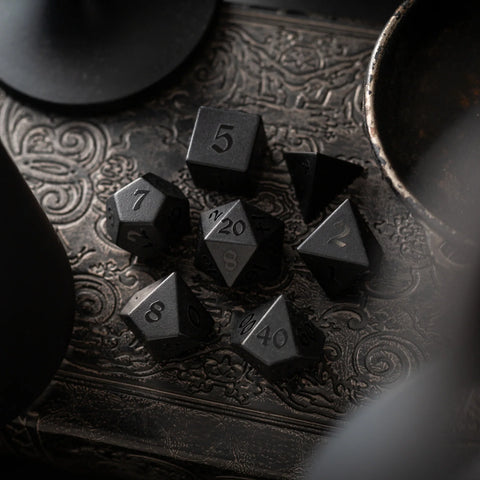
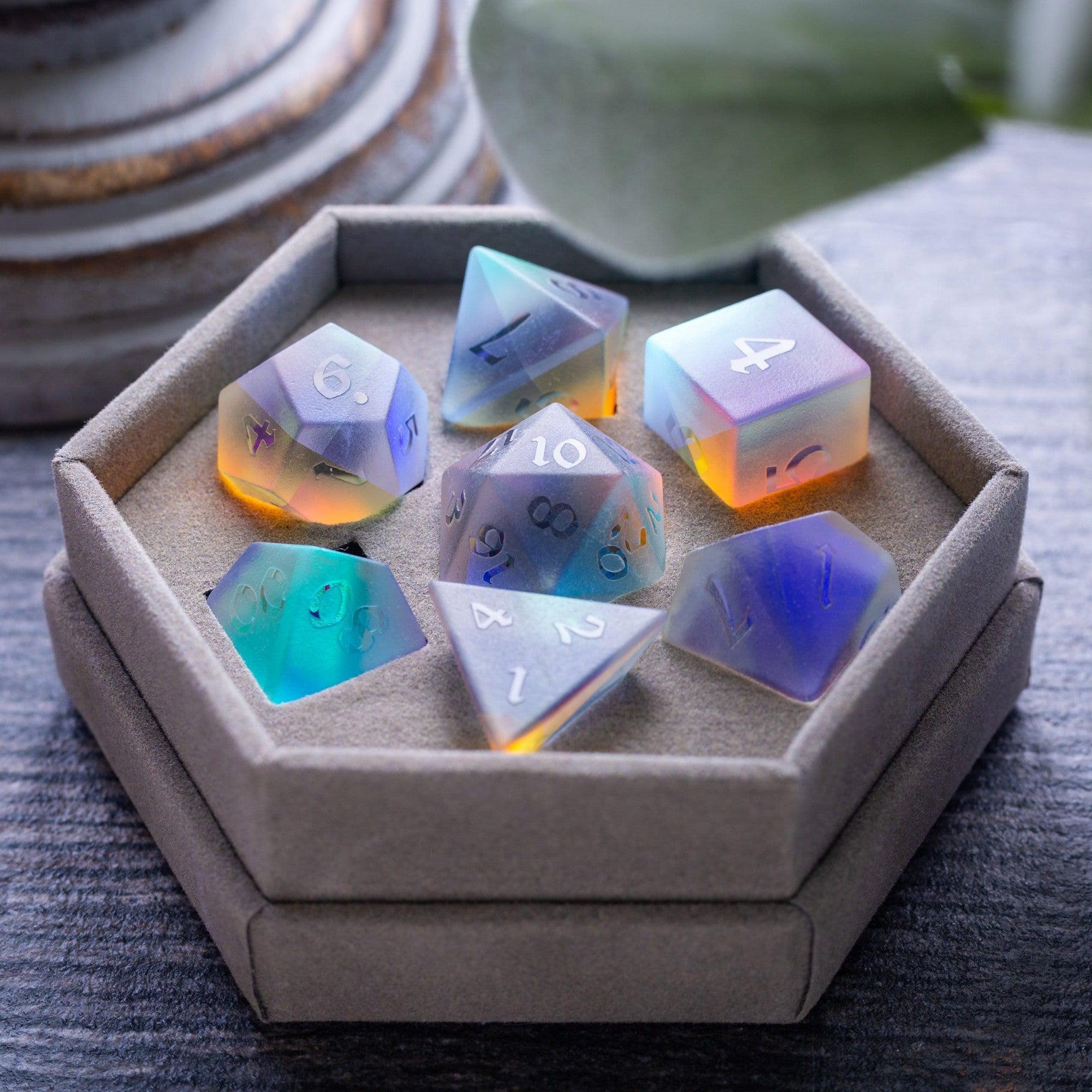
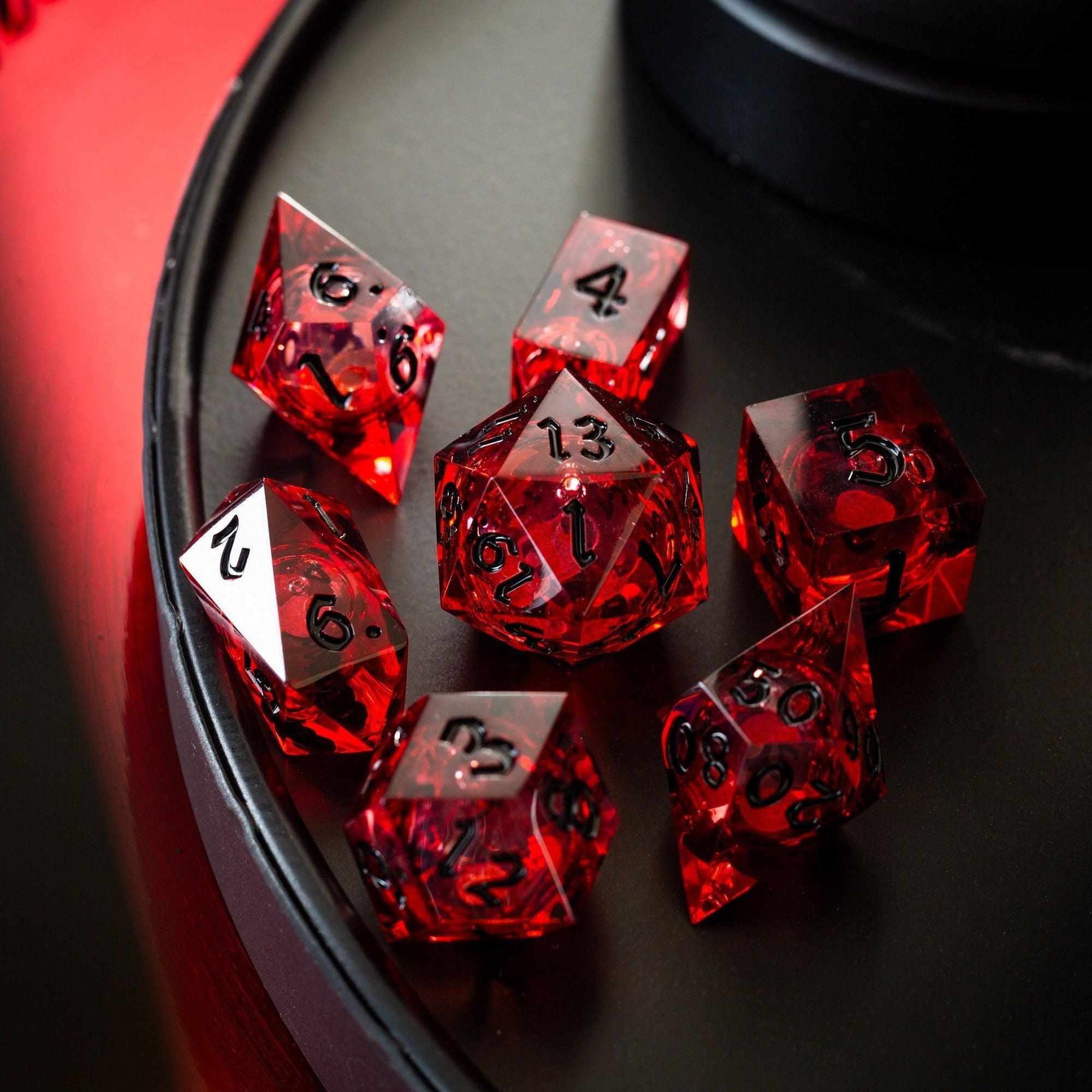
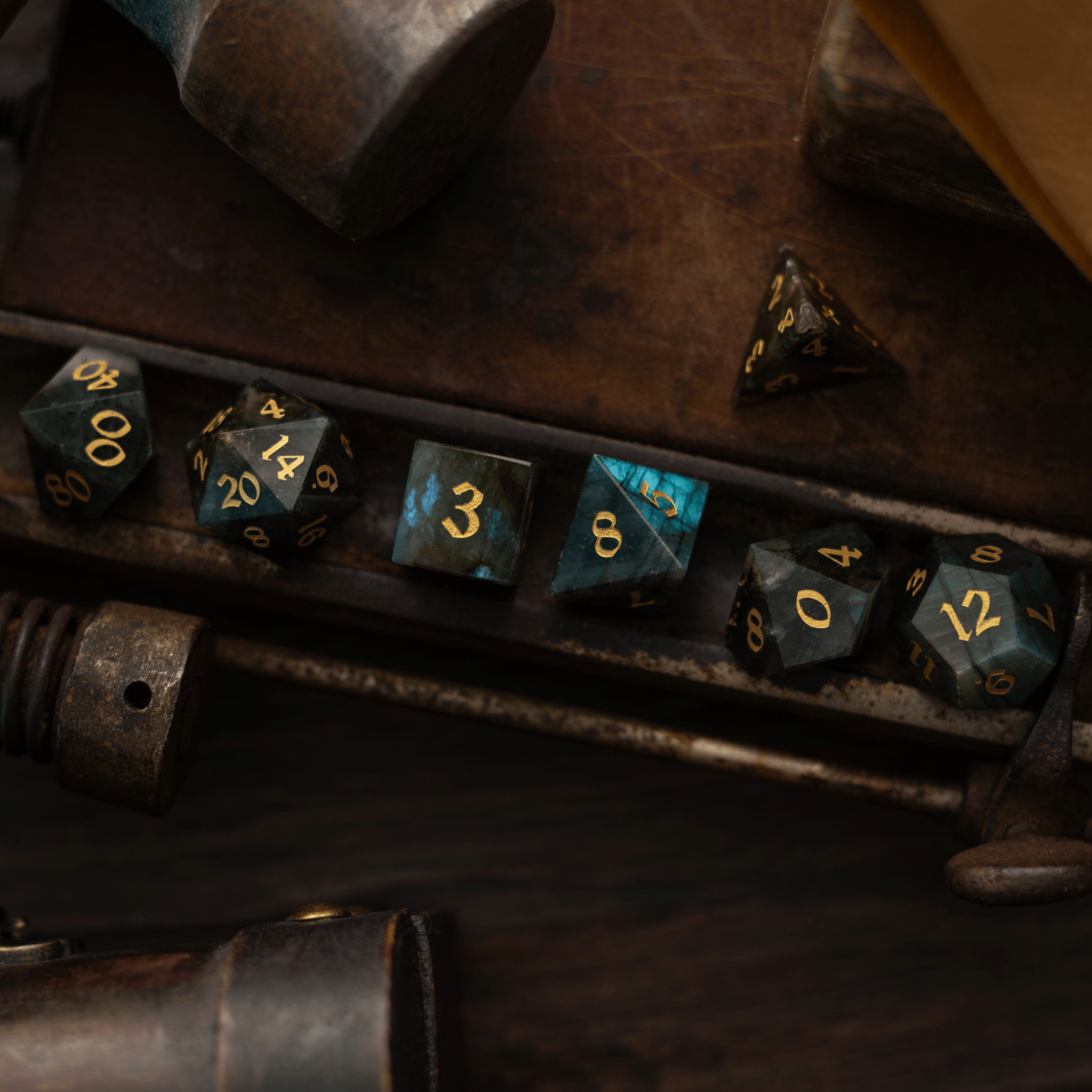
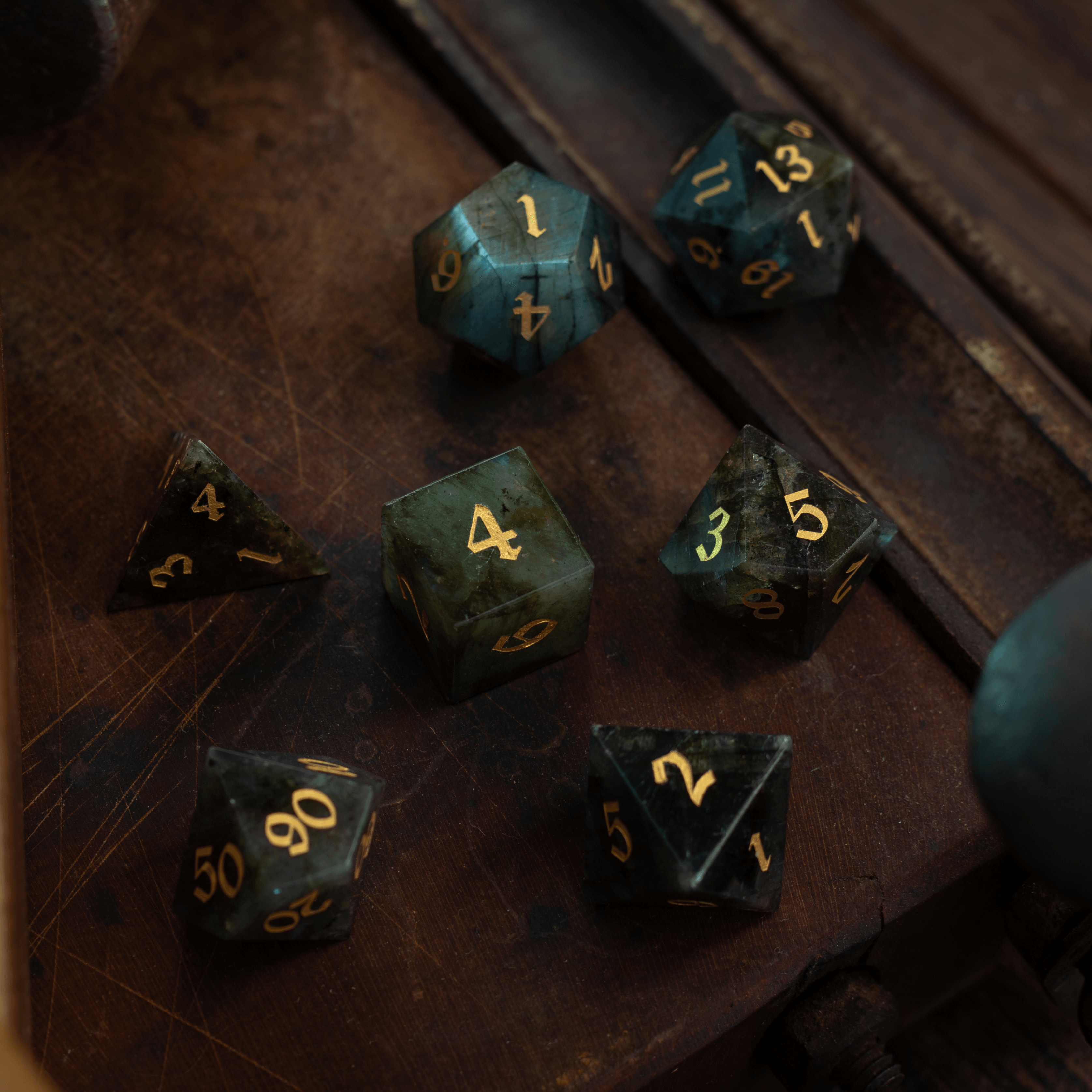
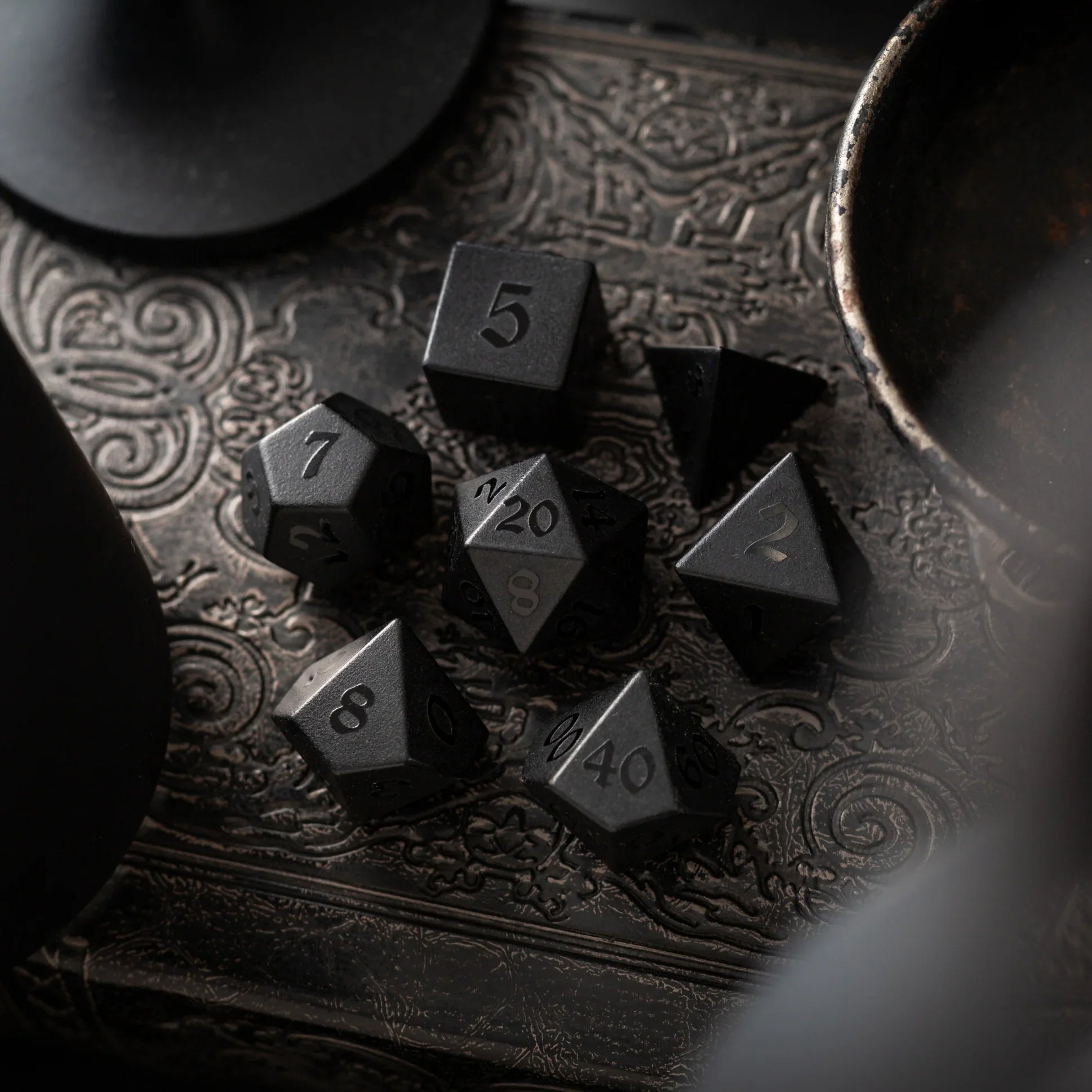
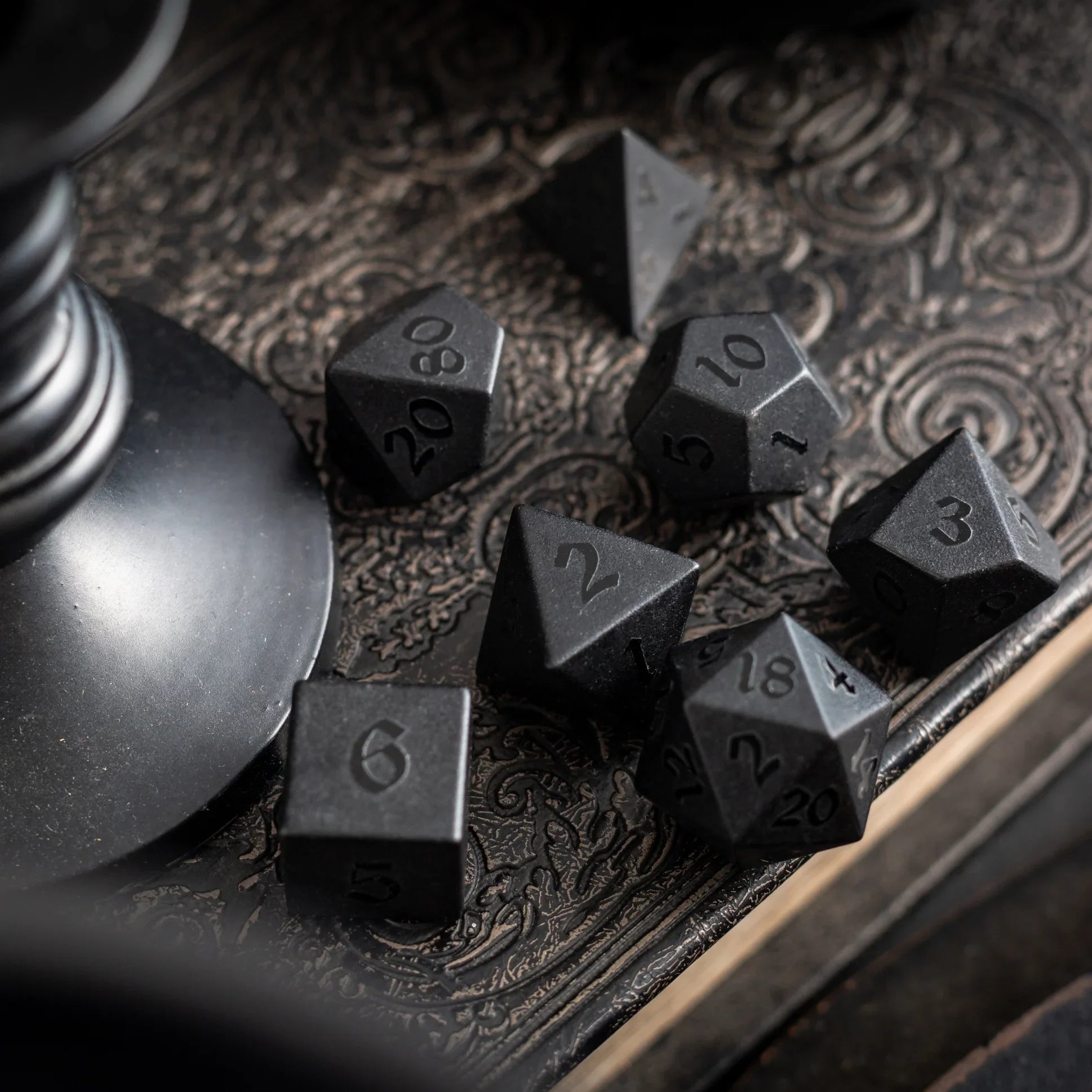
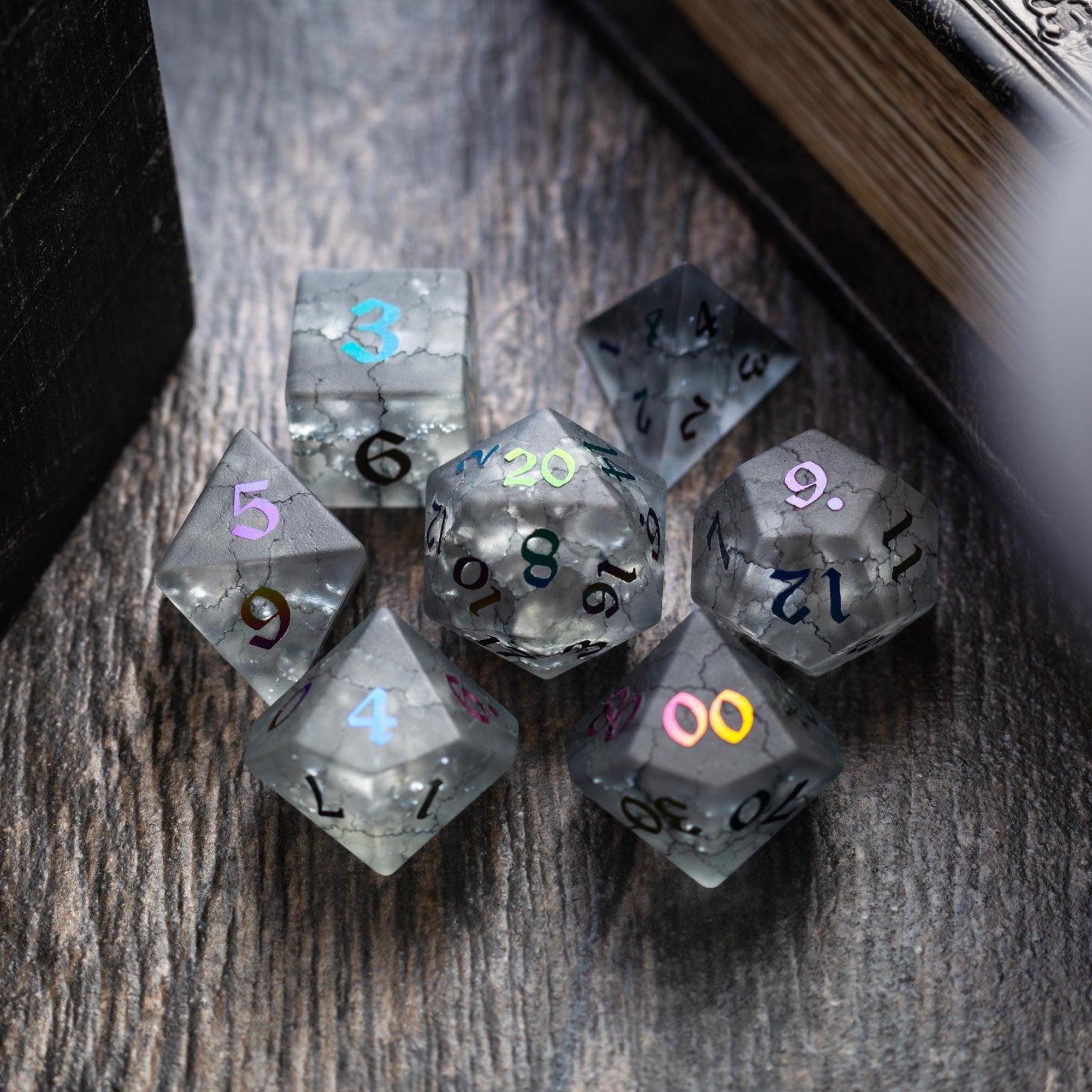
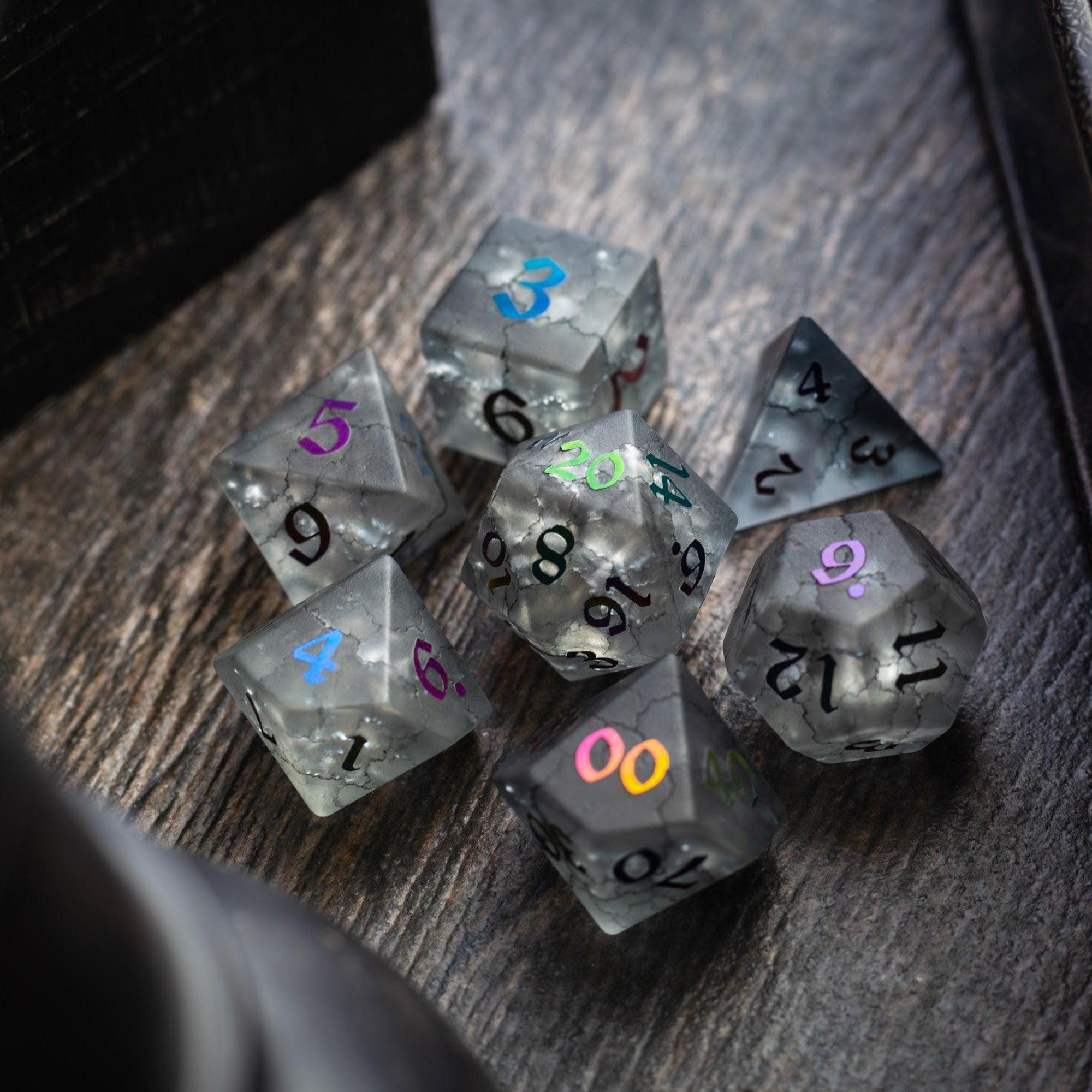
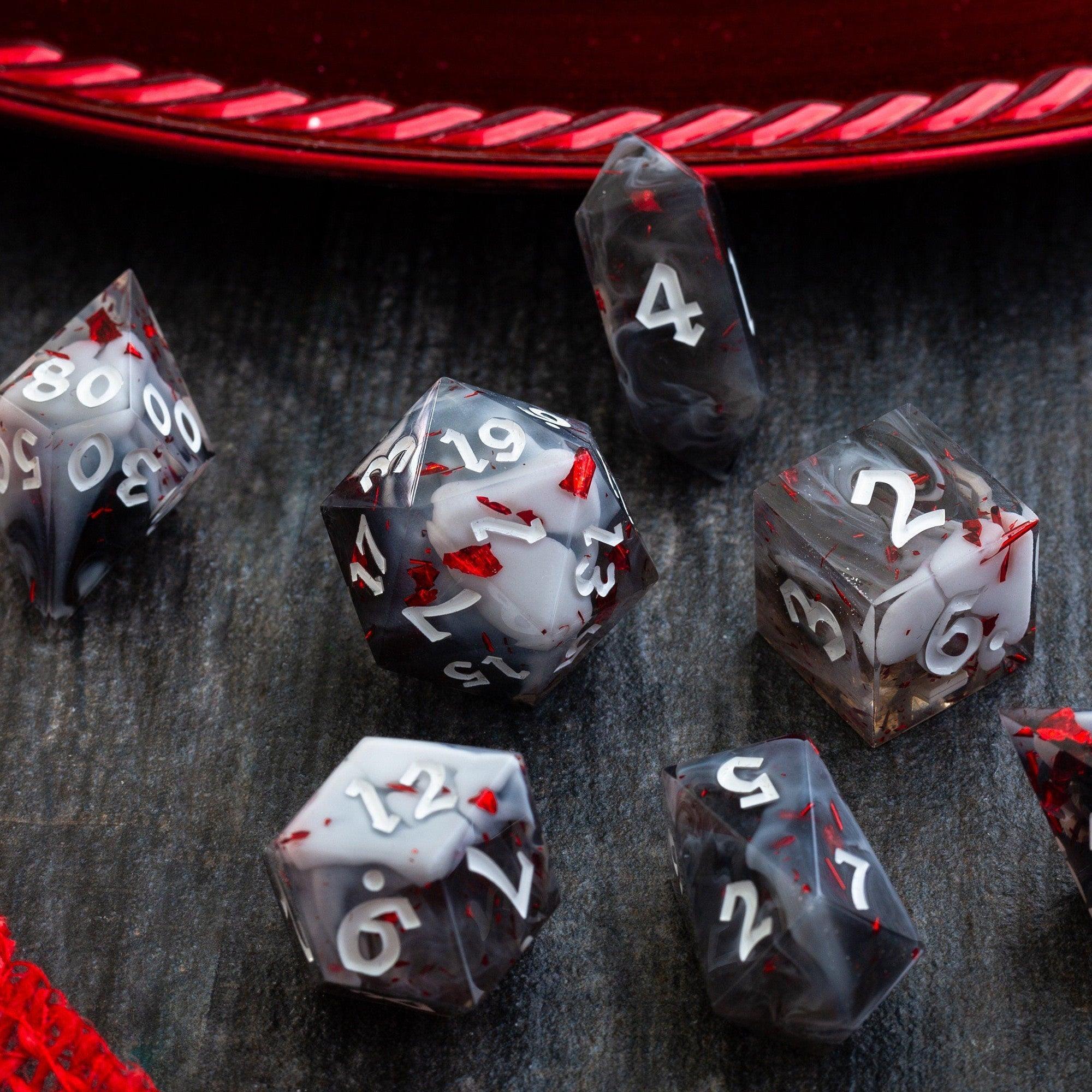
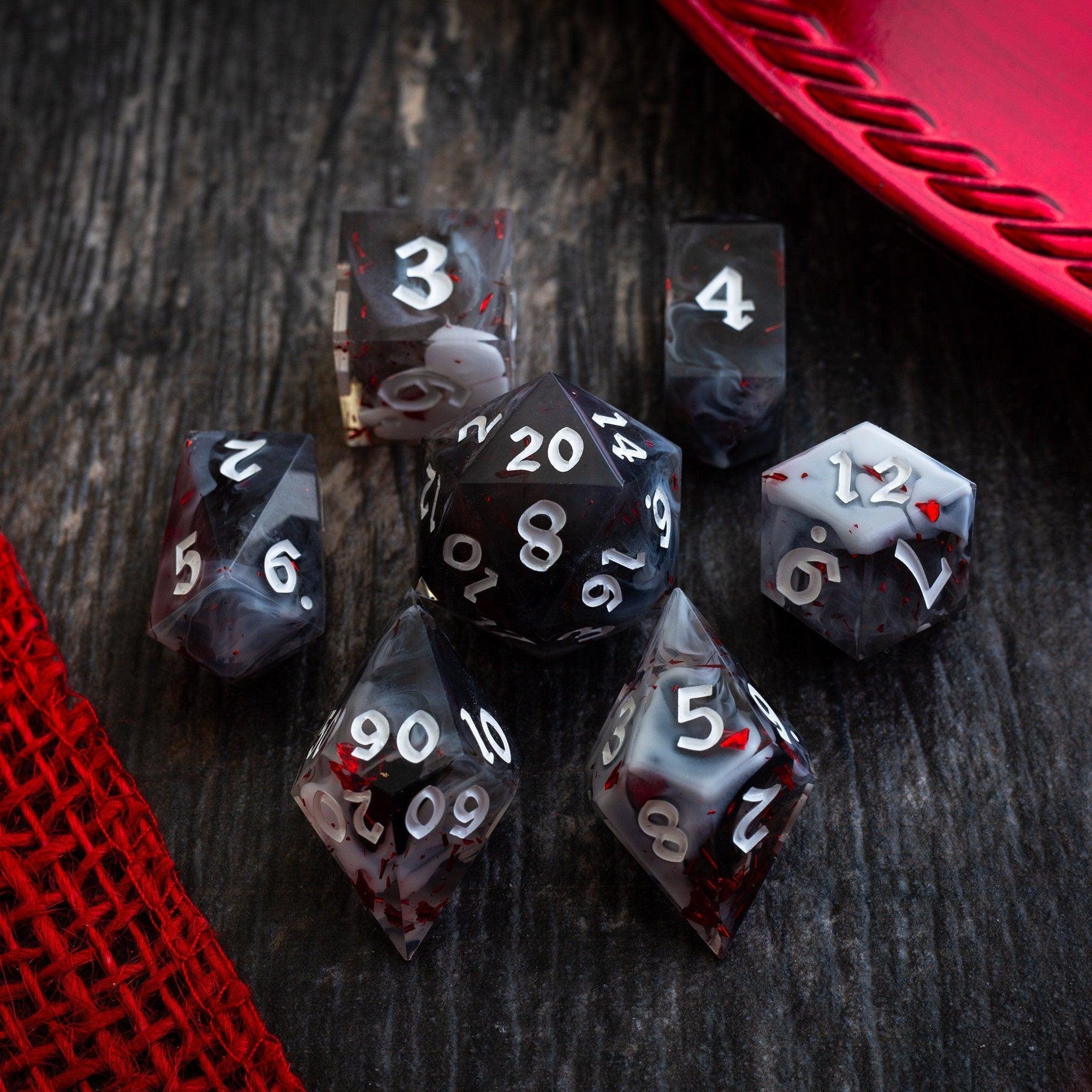
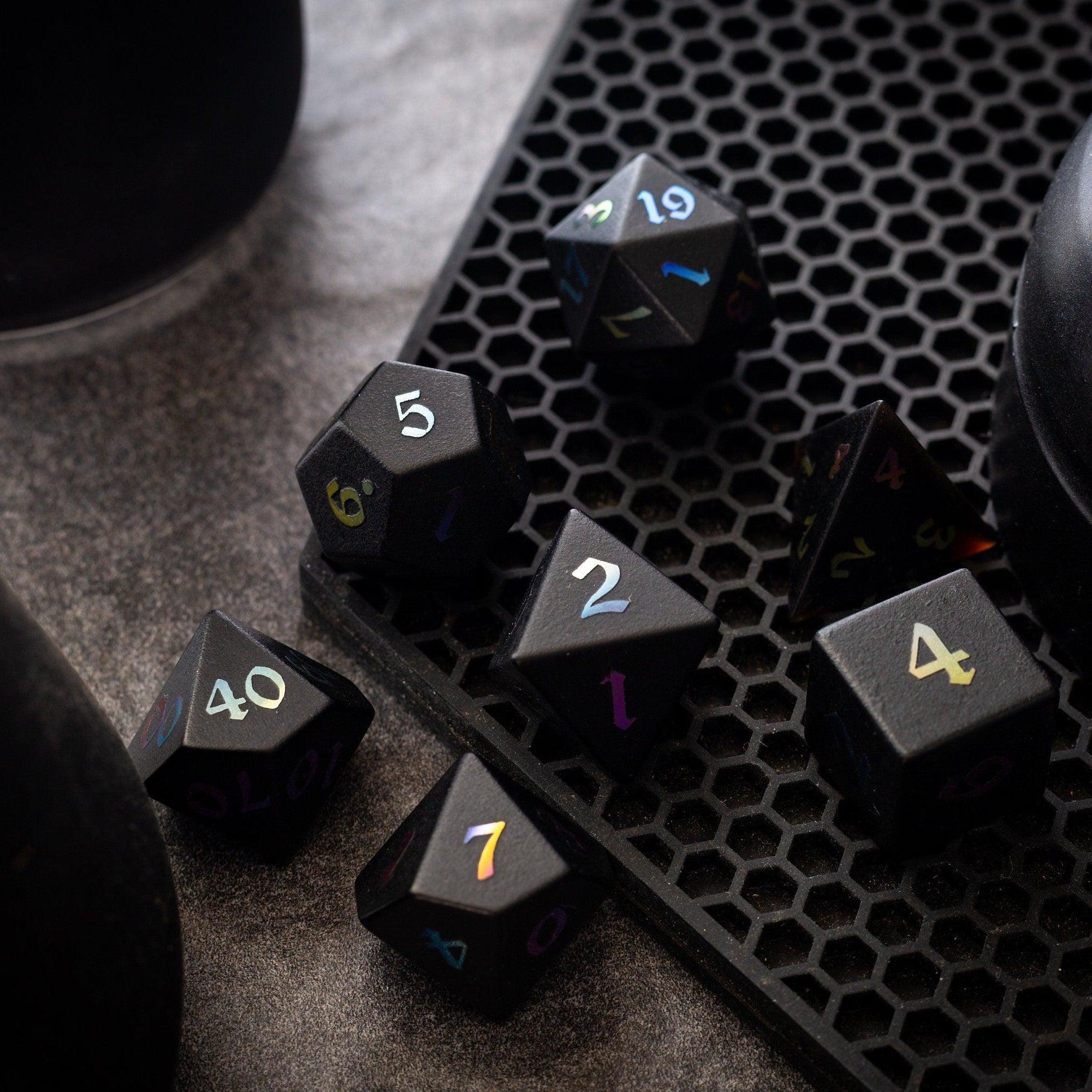
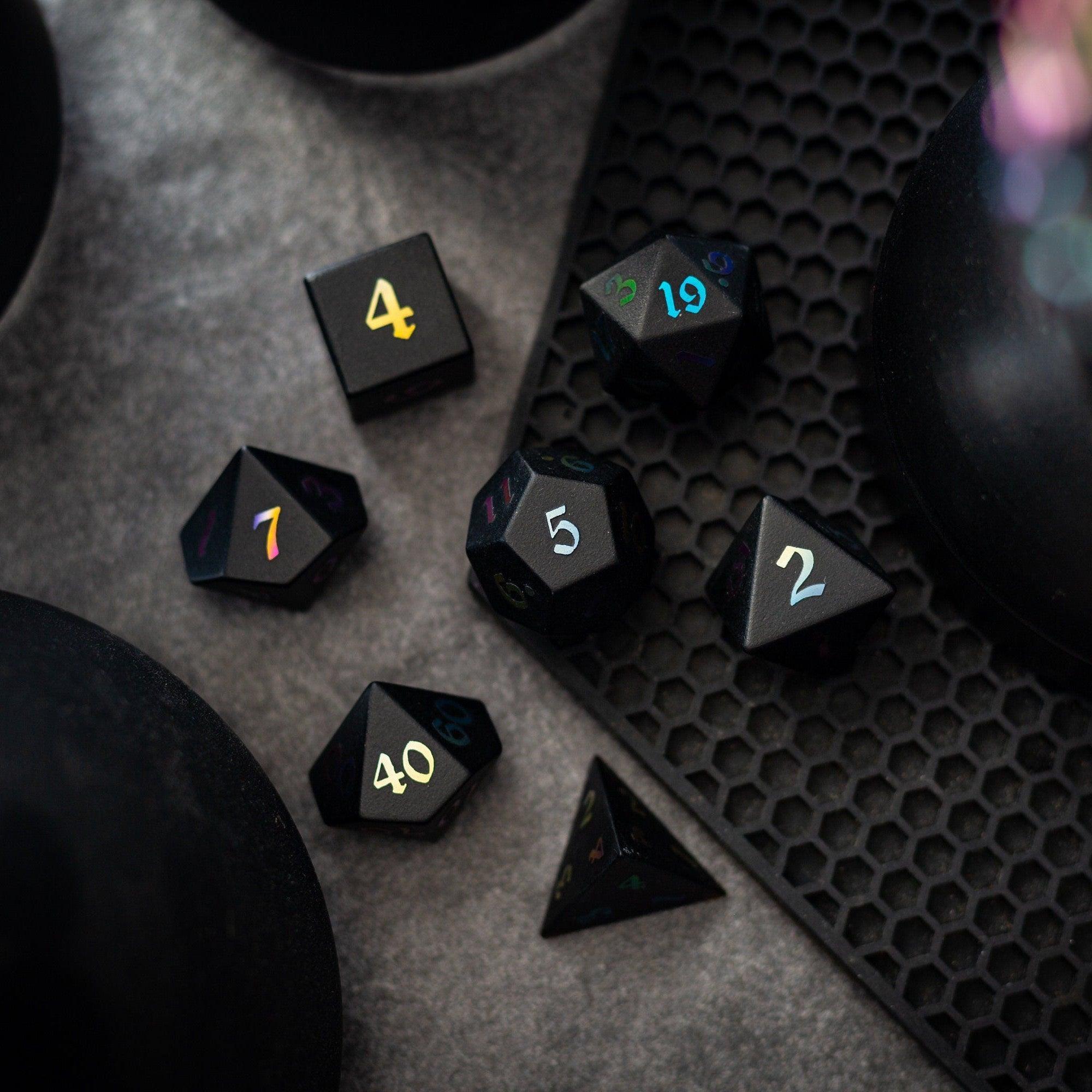
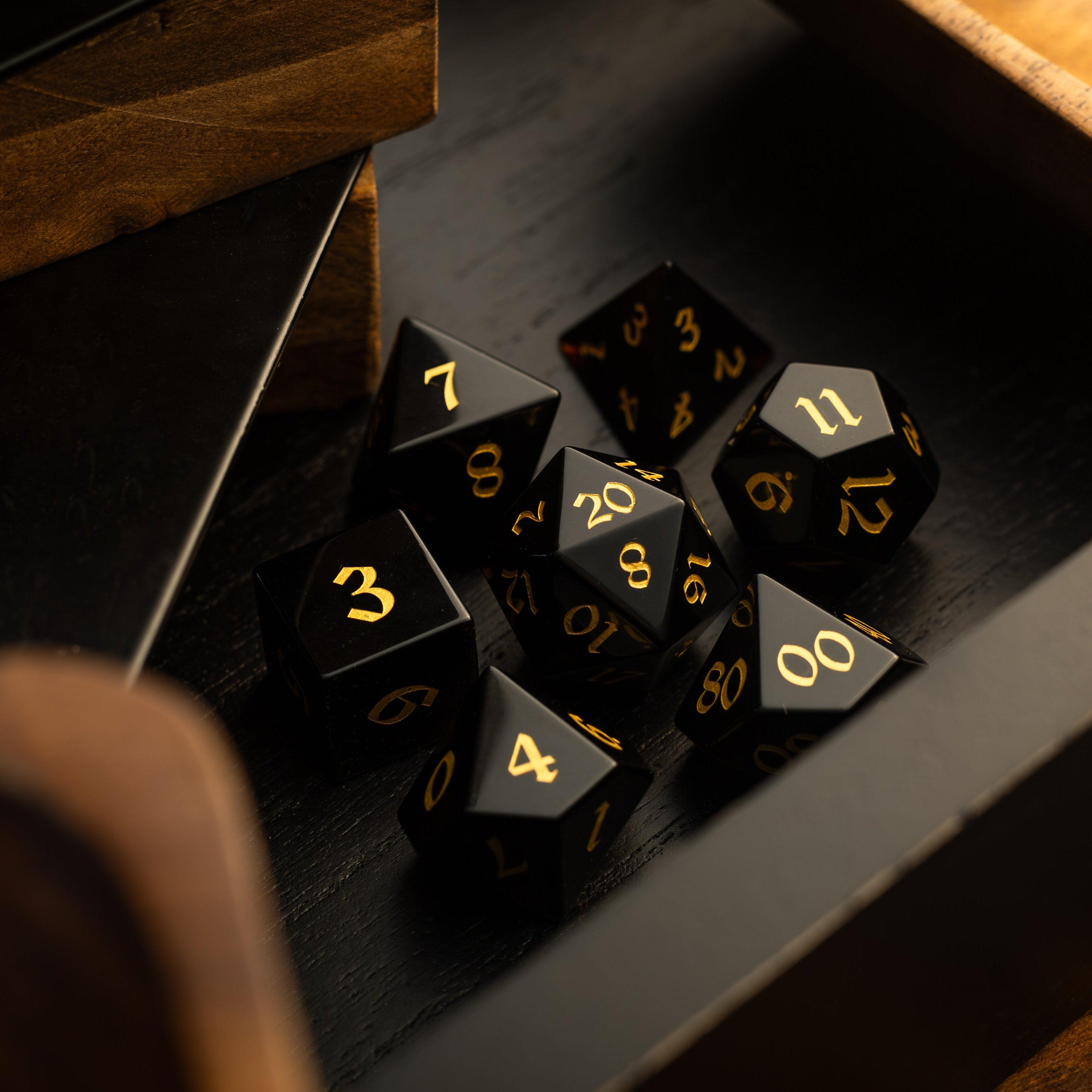
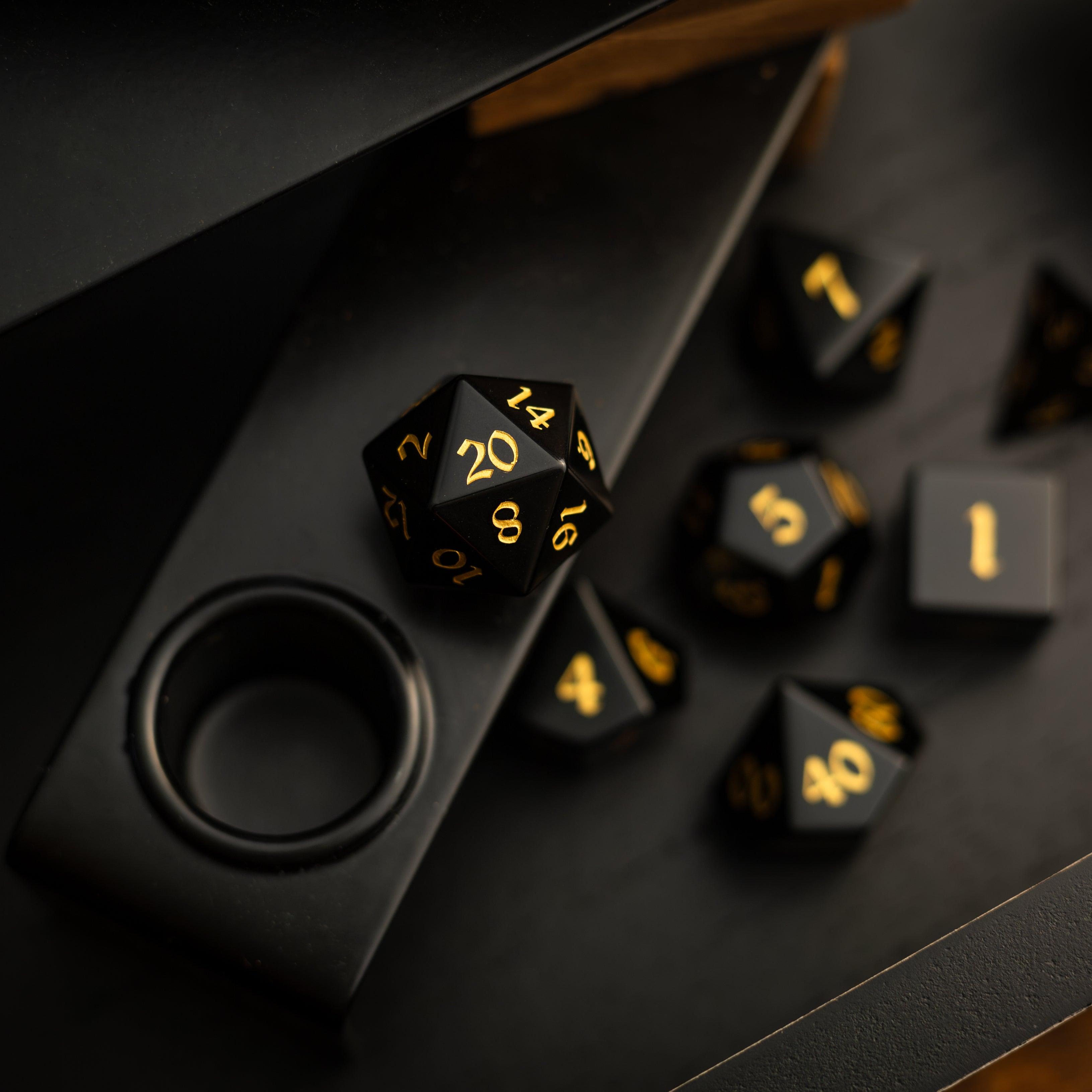
A typical DND dice set includes seven pieces: a D4, D6, D8, D10, percentile die, D12, and D20. In D&D, these dice handle different tasks. The D20 is central to many attack rolls, ability checks, and saving throws, while the other dice are commonly used for damage, healing, and random tables.
D&D did not invent polyhedral dice. Twenty-sided and other many-sided objects existed in antiquity. What D&D helped do was turn a mixed set of polyhedral dice into a recognizable symbol of modern tabletop gaming.
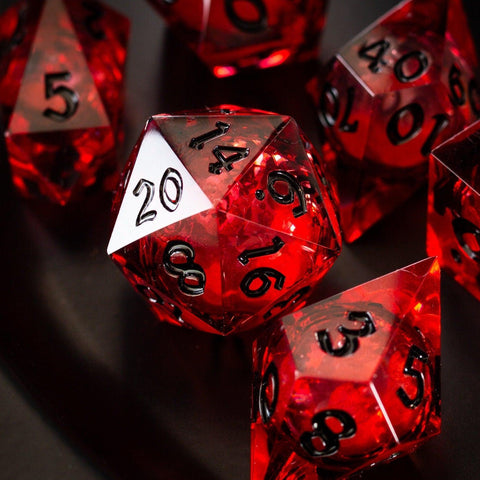
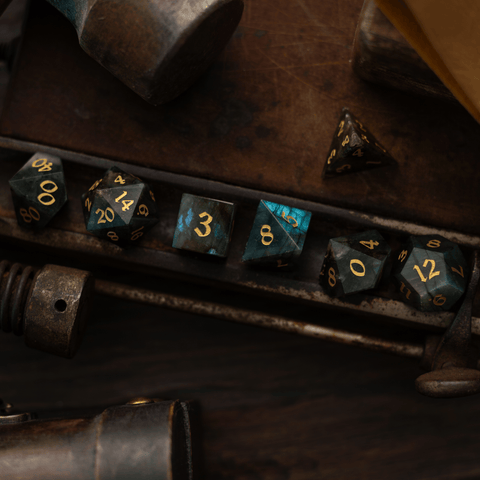
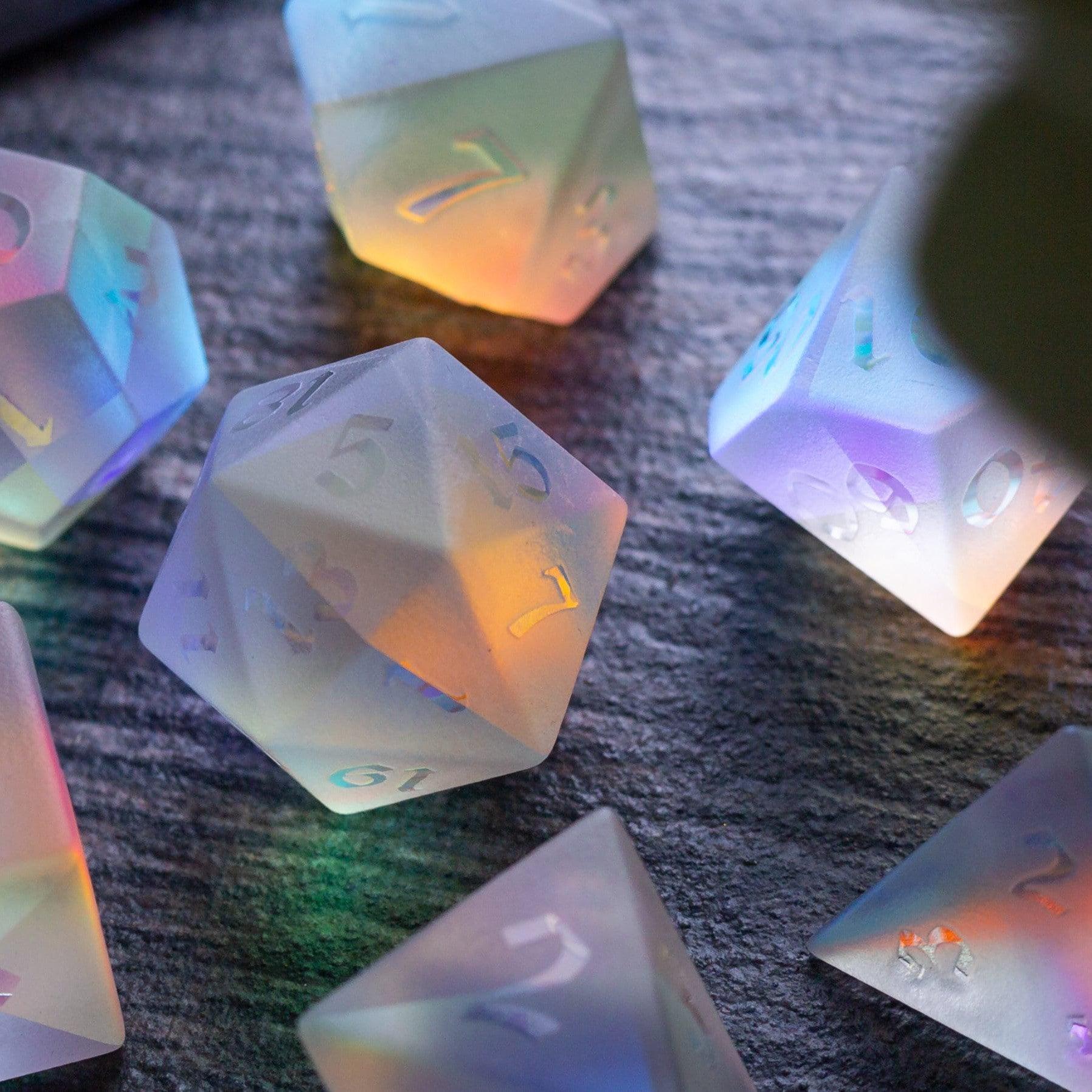
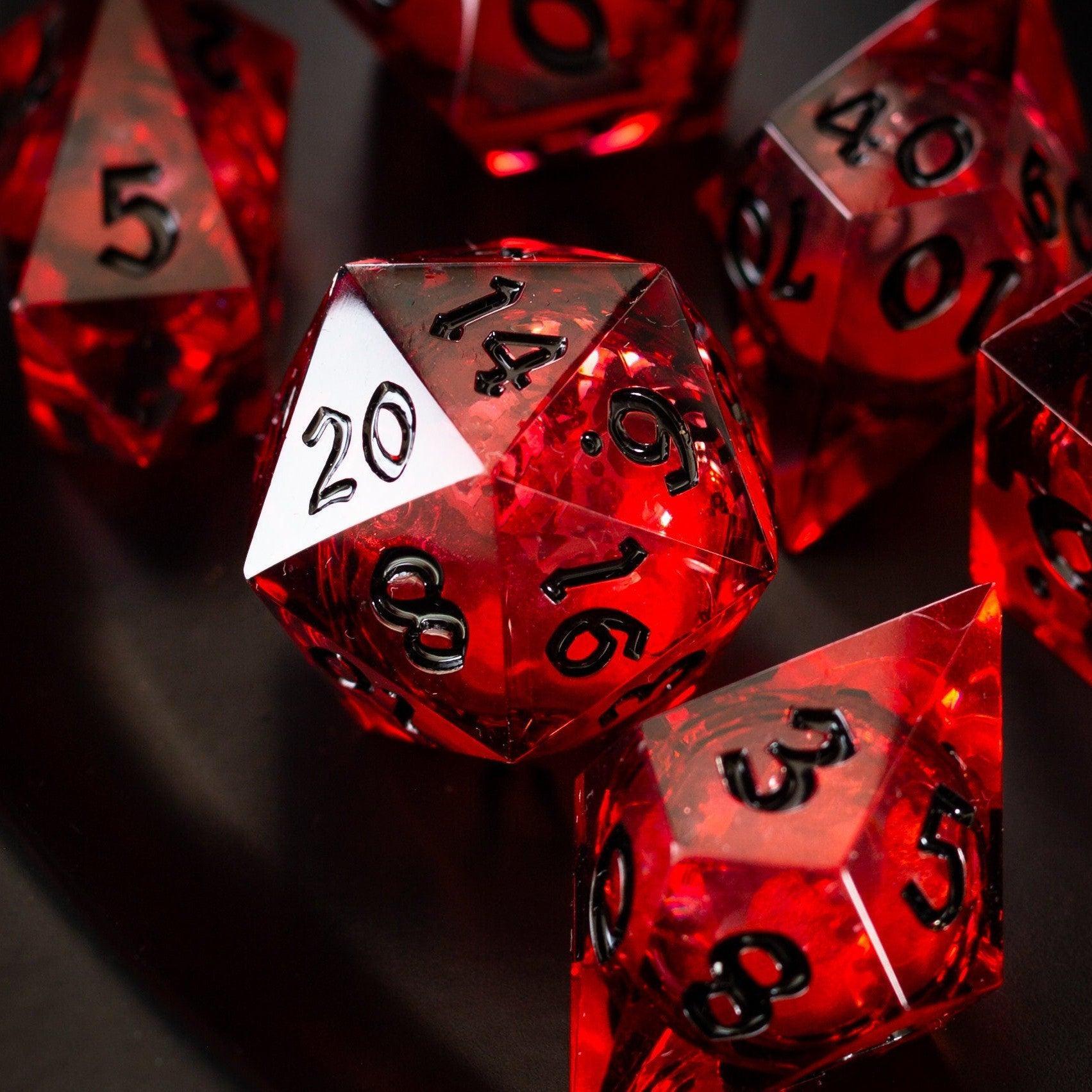
Dice also became part of character identity. Players now choose resin, metal, glass, liquid core, and gemstone dice based on readability, feel, durability, or personal style. Practical concerns still matter. Heavy metal dice can be hard on unprotected surfaces, while some glass or gemstone dice benefit from padded trays and careful storage.
Why Dice Matter in Role-Playing Games
In tabletop RPGs, dice do more than create random numbers. They introduce uncertainty into a shared story. A player may have a strong plan and a good modifier, yet the roll can still change what happens next. The rules define the possible outcomes, while the dice help determine which outcome occurs.
A natural 20 is a good example. Under the current D&D rules, rolling a natural 20 on an attack roll makes the attack hit and score a critical hit regardless of modifiers or the target’s Armor Class. A natural 20 does not automatically guarantee success on every kind of D20 Test. That distinction is important because dice work within specific rules, not as a universal “automatic success” system.
Digital Dice in the 21st Century
Physical dice are still central to tabletop play, but digital dice are now a normal part of online and hybrid gaming. Platforms such as Roll20 provide virtual rolling tools, while D&D Beyond includes 3D digital dice tied to its character and game tools.
In 2026, D&D Beyond expanded shared dice features across supported web and mobile experiences, allowing players to see one another’s digital rolls in real time. Digital rollers can handle modifiers, large dice pools, and remote play, while physical dice offer weight, sound, texture, and the visible suspense of waiting for a die to stop. Many groups use both.
Dice in Culture and Collecting
Outside games, dice have become symbols of chance, risk, and fate. The phrase “roll the dice” survives because it clearly expresses the idea of making a choice without knowing exactly how it will turn out.
Collectors approach dice from many directions. Some focus on historical pieces, while tabletop players may collect unusual materials, handmade designs, older gaming sets, or limited releases. Modern materials include acrylic, resin, metal, glass, and natural stone. The materials have changed dramatically, but the basic purpose of a die remains recognizable.
A Tradition That Still Rolls On
The history of dice is not a straight line from one inventor to one modern design. It is a long record of people using simple objects to create uncertainty in games, mathematics, ritual, and storytelling.
Cubic dice were used in the ancient Near East thousands of years ago. Greek and Roman players rolled dice and knucklebones. Medieval communities kept games of chance alive. Early modern mathematicians turned gambling problems into probability theory. Board games made dice a common household tool, and Dungeons & Dragons helped make polyhedral dice an icon of tabletop gaming.
Today, a player can roll a physical D20, click a digital roller, or choose a carefully made dice set and still take part in the same basic experience: waiting to see what chance decides. That moment of uncertainty is a major reason dice have lasted for roughly 5,000 years and remain at the center of so many games.

Leave a comment
This site is protected by hCaptcha and the hCaptcha Privacy Policy and Terms of Service apply.