
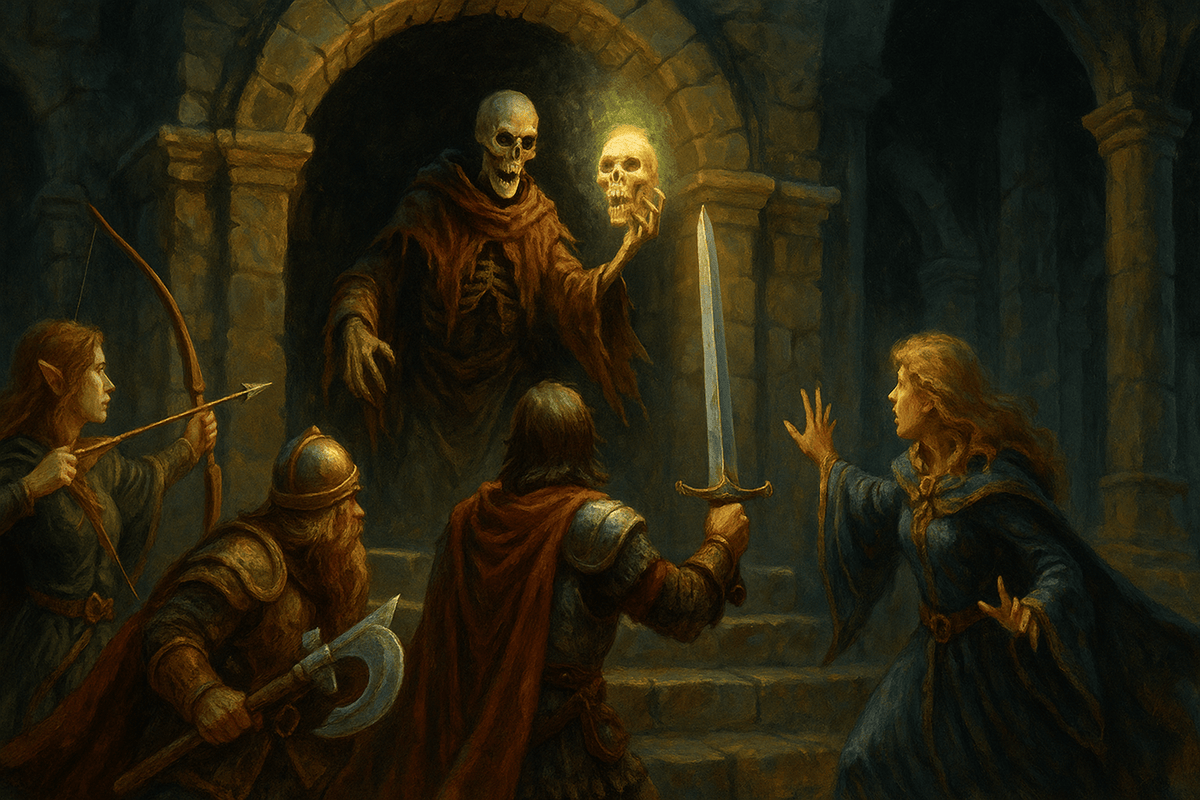
The Most Legendary D&D Modules You Need to Play Before You Die
10 Legendary D&D Modules Every Fan Should Play

Dungeons & Dragons has built decades of memorable adventures around haunted castles, lost mines, giant strongholds, infernal wastelands, frozen frontiers, and deadly dungeons. A published D&D module gives a group ready-made locations, villains, encounters, maps, and story hooks, making it easier to start a campaign without creating everything from scratch.
The best D&D modules are not all alike. Some focus on exploration and combat, while others lean into horror, mystery, survival, politics, or roleplay. Most adventures below were written for the 2014 fifth-edition rules. As of 2026, D&D Beyond labels the revised 2024 rules as 5.5e and the 2014 rules as 5e, with both versions still supported and compatible. Older adventures can therefore still be used with 5.5e characters, although a DM may need to check updated rules or monster statistics when they matter.
1. Lost Mine of Phandelver
Best for: New players, first-time DMs, and groups that want classic fantasy.
Lost Mine of Phandelver first appeared in the original fifth-edition Starter Set and takes characters from 1st to 5th level. The story begins with a simple job near Phandalin, then expands into missing allies, dangerous factions, ruined strongholds, and the search for Wave Echo Cave.
Its biggest strength is variety. Players get an introduction to travel, dungeon exploration, social encounters, combat, and open-ended decisions without being dropped into an enormous campaign. Phandalin also works as a useful home base with recurring NPCs and nearby adventure sites.
2. Curse of Strahd
Best for: Gothic horror fans, roleplay-heavy groups, and players who enjoy difficult choices.
Curse of Strahd sends characters into Barovia, a bleak domain ruled by the vampire Count Strahd von Zarovich. The adventure is designed for levels 1 through 10 and combines exploration, investigation, horror, social pressure, and dangerous encounters.
Strahd is memorable because he is not simply waiting at the end of the campaign. He can appear throughout the story, manipulate events, and make the characters feel watched. Because the book includes deliberately disturbing themes, a session zero and a discussion of player boundaries are especially useful before play begins.
3. Tomb of Horrors
Best for: Experienced groups, puzzle fans, and players who enjoy high-risk dungeon challenges.
Designed by Gary Gygax, Tomb of Horrors is one of the most famous deadly dungeons in D&D history. A fifth-edition version appears in Tales from the Yawning Portal and centers on the tomb of the demilich Acererak.
This is not a typical combat-focused dungeon. Progress depends heavily on observation, experimentation, caution, and puzzle solving. Some traps can punish a single bad decision severely, so it works best when the group knows they are entering an intentionally unforgiving challenge.
4. Out of the Abyss
Best for: Survival campaigns, Underdark exploration, and dark fantasy.
Out of the Abyss is an adventure for levels 1 through 15 that begins with the characters imprisoned by drow in the Underdark. Escaping is only the first problem. Powerful demon lords have entered the Underdark, spreading chaos across an already dangerous region.
The campaign stands out for strange environments, hazardous travel, unusual settlements, and a large supporting cast. Survival pressure matters early, while later chapters grow into a much larger conflict. It is a strong fit for DMs who enjoy travel, NPC management, and long campaigns.
5. Dragonlance: Shadow of the Dragon Queen
Best for: War stories, heroic fantasy, and players interested in Krynn.
Dragonlance: Shadow of the Dragon Queen takes characters from 1st to 11th level during the War of the Lance. The party faces the Dragon Armies while dealing with sieges, refugees, ruined settlements, and the dangers surrounding a major conflict.
The adventure uses the Fray to represent danger around battlefield encounters. It can also connect with the Warriors of Krynn board game, but the board game is optional. This module works well for players who want personal character stories set against a larger war.
6. Storm King’s Thunder
Best for: Open-world exploration, giant-themed adventures, and long journeys.
In Storm King’s Thunder, giant society has fallen into disorder, and giant attacks are threatening settlements across the Savage Frontier. The characters travel through a large section of the Forgotten Realms while investigating what has disrupted the giants and how the crisis can be stopped.
Towns, wilderness routes, giant strongholds, and distant locations give the party plenty of freedom. That scale is also the main challenge for the DM. The campaign often benefits from extra preparation and clear travel hooks so players know which locations and clues matter most.
7. Waterdeep: Dragon Heist
Best for: Urban campaigns, investigation, social play, and faction intrigue.
Waterdeep: Dragon Heist is designed for characters from 1st to 5th level and revolves around a hidden hoard of gold in Waterdeep. Despite the title, it is less about performing a traditional heist and more about clues, alliances, rival factions, and city politics.
The DM chooses from four main villains, and that choice changes the season and several parts of the adventure. It works especially well for players who enjoy NPCs, investigations, relationships, and solving problems without treating every obstacle as a combat encounter.
8. Baldur’s Gate: Descent into Avernus
Best for: Infernal fantasy, moral choices, and action-heavy campaigns.
Baldur’s Gate: Descent into Avernus is an adventure for levels 1 through 13. It begins in Baldur’s Gate before sending the party into Avernus, the first layer of the Nine Hells, where the characters become tied to the fate of Elturel and the fallen angel Zariel.
Infernal contracts, fiends, the Blood War, and infernal war machines give the campaign a distinctive identity. The story also deals with temptation, sacrifice, and dangerous bargains, so DMs should discuss tone and player comfort before the campaign starts.
9. Icewind Dale: Rime of the Frostmaiden
Best for: Survival horror, mystery, exploration, and sandbox play.
Icewind Dale: Rime of the Frostmaiden takes place in Ten-Towns and the frozen wilderness beyond it, where Auril the Frostmaiden has trapped the region in unnatural darkness. The campaign combines local quests, wilderness survival, secrets, ancient ruins, and supernatural threats.
Its early chapters are especially flexible, allowing the party to move between settlements and choose which problems to investigate. Cold weather, isolation, suspicious communities, and limited resources create tension before the larger mysteries come into focus.
10. Tales from the Yawning Portal
Best for: Dungeon crawls, episodic campaigns, and groups that want classic adventures.
Tales from the Yawning Portal collects seven classic D&D dungeon adventures updated for fifth edition: The Sunless Citadel, The Forge of Fury, The Hidden Shrine of Tamoachan, White Plume Mountain, Dead in Thay, Against the Giants, and Tomb of Horrors.
Because the book is an anthology rather than one continuous campaign, a DM can run one dungeon, connect several into a larger story, or use one as a side adventure. It is useful for groups that want different styles of classic dungeon design without committing to one long campaign.
How to Choose the Right D&D Module
The best D&D module for your table depends less on reputation and more on what your group enjoys. Before choosing, consider:
- Experience level: Lost Mine of Phandelver is easier for a new group to learn from than Tomb of Horrors.
- Tone: Choose gothic horror with Curse of Strahd, war fantasy with Dragonlance, urban intrigue with Dragon Heist, or frozen survival with Rime of the Frostmaiden.
- Campaign length: Some D&D adventures cover only a few character levels, while others can support months of play.
- Player freedom: Sandbox campaigns give players more control, but they can require more DM preparation.
- Content comfort: Horror, captivity, corruption, war, and infernal bargains appear in several famous D&D campaigns. Discuss boundaries before session one.
- Rules version: If your group uses 5.5e characters in an older 5e adventure, decide how you will handle updated spells, monsters, magic items, and terminology.
Make Published D&D Adventures Your Own
A published adventure is a framework, not a script. You can shorten travel, change an NPC’s motivation, move a clue, adjust an encounter, or add character-specific side stories when those changes make the campaign work better for your table. The strongest campaigns combine the book’s structure with the goals and decisions of the players.
Maps, initiative trackers, miniatures, condition rings, and a reliable dice tray can also make complicated sessions easier to manage. These tools are most useful when they reduce confusion and help everyone understand what is happening at the table.
Whether your group is uncovering secrets in Barovia, surviving the Underdark, hunting for treasure in Waterdeep, or facing giants across the North, these legendary D&D modules offer very different ways to experience the game. Pick the adventure that matches your group’s interests, talk through the tone before session one, and adapt the material as the campaign develops.
If you want more tabletop guides, campaign ideas, and D&D accessories for your next session, visit Runic Dice.

















Leave a comment
This site is protected by hCaptcha and the hCaptcha Privacy Policy and Terms of Service apply.