
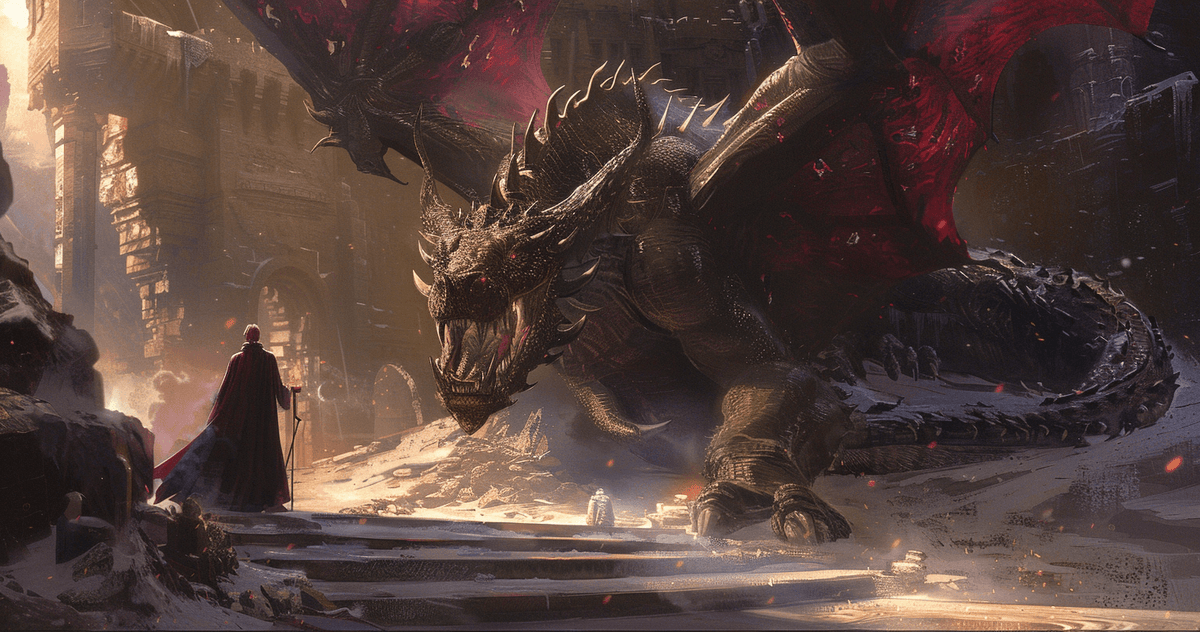
The Rise of Solo Tabletop: Exploring the One-Player RPG Trend

Tabletop RPGs are often pictured as group adventures, with friends gathered around a table while one person runs the world and everyone else plays a character. Solo TTRPGs take that same idea in a different direction. One person handles the character, the choices, and the unfolding world, using rules, prompts, random tables, or an oracle to create surprises.
A solo TTRPG is a tabletop role-playing game played by one person. Some games are designed specifically for solo play, while others use tools that let you adapt a traditional group RPG. The result can feel part game, part creative writing exercise, and part problem-solving challenge.
Solo tabletop RPGs are not simply a substitute for nights when your group cannot meet. They offer a different style of play with more control over pacing, character focus, and session length.
WHY TRY SOLO TTRPGS?
Playing alone changes the rhythm of a role-playing game. You do not have to coordinate schedules or wait for several players to agree on the next move. That makes solo RPGs useful for short sessions, long-running personal campaigns, and practice between group games.
- Play on your schedule: A session can last twenty minutes or several hours, depending on the game and your available time.
- Focus on one character: Solo play gives you room to explore a character’s goals, fears, relationships, and decisions without competing for table time.
- Practice GM skills: Random encounters, scene framing, improvisation, and pacing are easier to experiment with when nobody else is waiting on you.
- Explore different storytelling styles: Journaling, map drawing, survival play, mystery solving, and procedural exploration all work well in solo formats.
- Pause whenever you want: You can stop in the middle of a scene, make notes, and continue later without disrupting anyone else.
HOW DO SOLO RPGS WORK?
The biggest question for new solo players is simple: how can the story surprise you if you are both the player and the person running the world? Most solo systems solve this by giving some control to random or semi-random tools.
- Oracles: An oracle answers questions such as “Is the door locked?” or “Does the merchant recognize me?” The answer might be yes, no, yes with a complication, or something more unexpected.
- Random tables: Tables can generate locations, NPC attitudes, weather, encounters, clues, treasure, or complications.
- Cards and prompts: Some games use a deck of cards to decide which event or writing prompt appears next.
- Journaling: You record what your character experiences, often turning mechanical results into diary entries, letters, reports, or short scenes.
- Solo-focused rules: Games built for one player often combine these tools directly into their core mechanics, reducing the amount of preparation you need.
The key is to avoid planning every outcome. Decide what your character wants, ask the system what happens when the result is uncertain, then interpret the answer in a way that fits the story.
SOLO RPGS WORTH TRYING
There is no single style of solo role-playing. Some games feel like traditional fantasy adventures, while others focus on journaling, atmosphere, or survival. These well-known options show how varied the format can be.
| Game or Tool | Style | Good Starting Point For |
|---|---|---|
| Ironsworn | Dark fantasy adventure with solo, co-op, and guided play | Players who want a full fantasy RPG built to support solo play |
| Thousand Year Old Vampire | Prompt-driven solo role-playing and journaling | Players interested in memory, character change, and long-form storytelling |
| Apothecaria | Cozy solo journaling about a village witch making potions | Players who enjoy creative writing, worldbuilding, and lower-pressure play |
| The Wretched | Science-fiction survival journaling using cards and a tumbling-block tower | Players who want tension, isolation, and a focused one-shot experience |
| Mythic Game Master Emulator | GM-emulation toolkit using oracle-style questions and random tables | Players who want to adapt an existing RPG for solo play |
Ironsworn is especially approachable because its complete digital edition is available free and its rules directly support solo play. If you prefer reflective storytelling, Thousand Year Old Vampire and Apothecaria put more attention on prompts and written records. If you already own an RPG you enjoy, a GM emulator such as Mythic can help create uncertain outcomes without replacing the rules of that game.
CAN YOU PLAY D&D SOLO?
Yes, but it requires adaptation. Standard Dungeons & Dragons play assumes a Dungeon Master and other players, so the core game does not provide a dedicated solo mode. A solo player usually takes over some of the DM’s responsibilities and uses an oracle, random tables, or a GM emulator to handle information their character should not automatically know.
A simple solo D&D setup can work like this:
- Create one character, or control a very small party if you are comfortable managing several character sheets.
- Give the character a clear goal, such as finding a missing traveler or exploring a ruined watchtower.
- Prepare only the starting situation instead of writing the full plot.
- Use an oracle when the answer is uncertain.
- Use encounter and treasure tables when you need an unexpected event.
- Adjust combat difficulty when necessary, since encounters built for a full group can overwhelm one character.
For example, if your character enters an abandoned chapel, you might ask an oracle, “Is someone already inside?” A positive answer gives you a new fact, but you still interpret who that person is and why they are there. This keeps the session unpredictable without requiring you to prewrite every scene.
THE ROLE OF DICE IN SOLO PLAY
Dice are especially useful in solo games because they help separate your decisions from the world’s response. A roll can decide whether a rumor is true, whether an NPC is helpful, what appears beyond a doorway, or how dangerous an unexpected complication becomes.
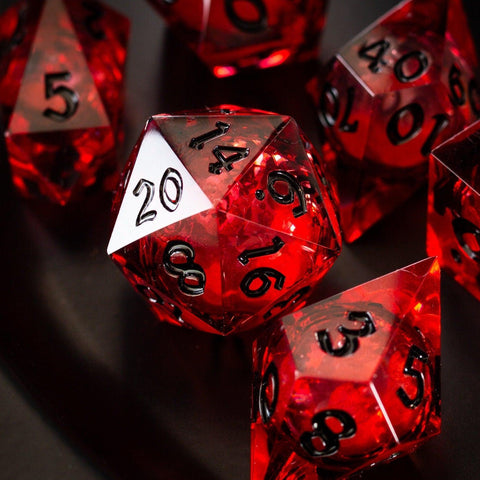
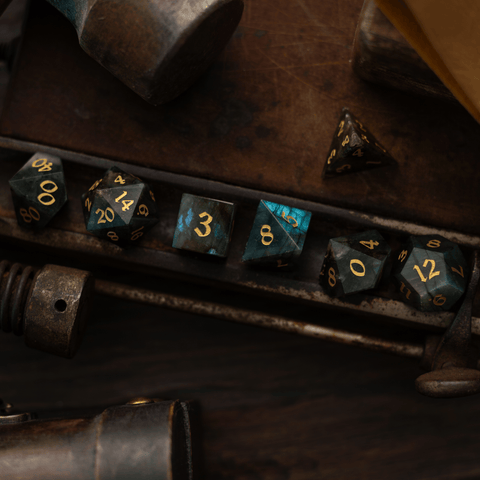
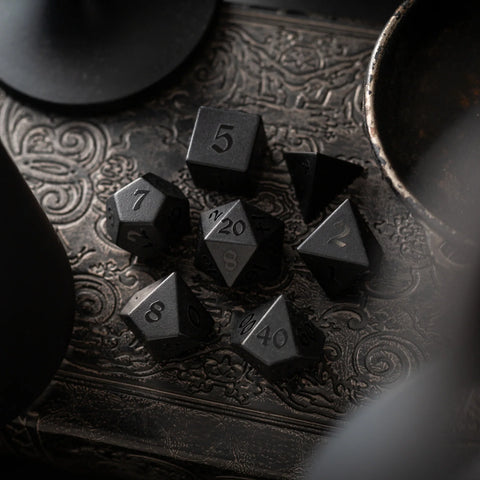
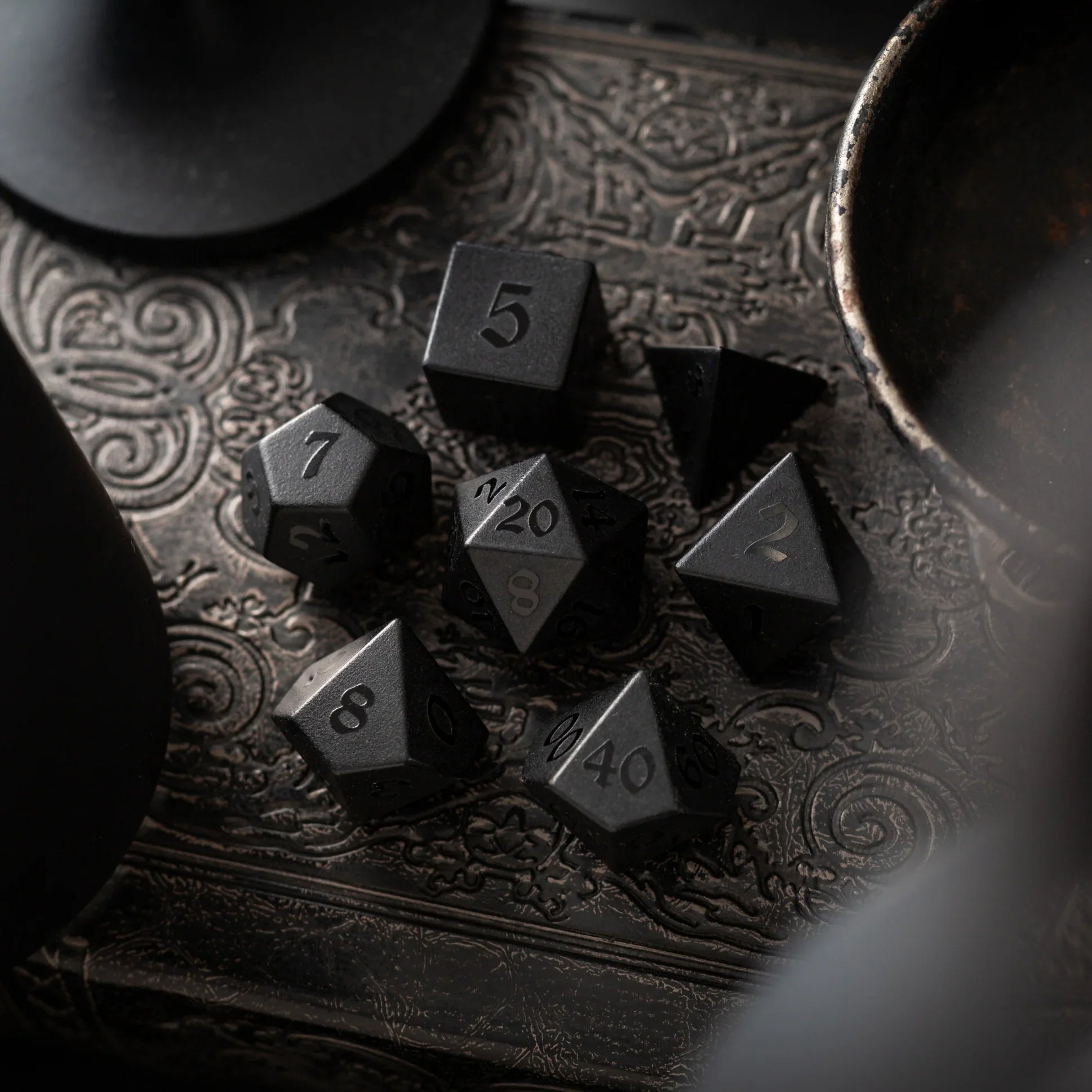
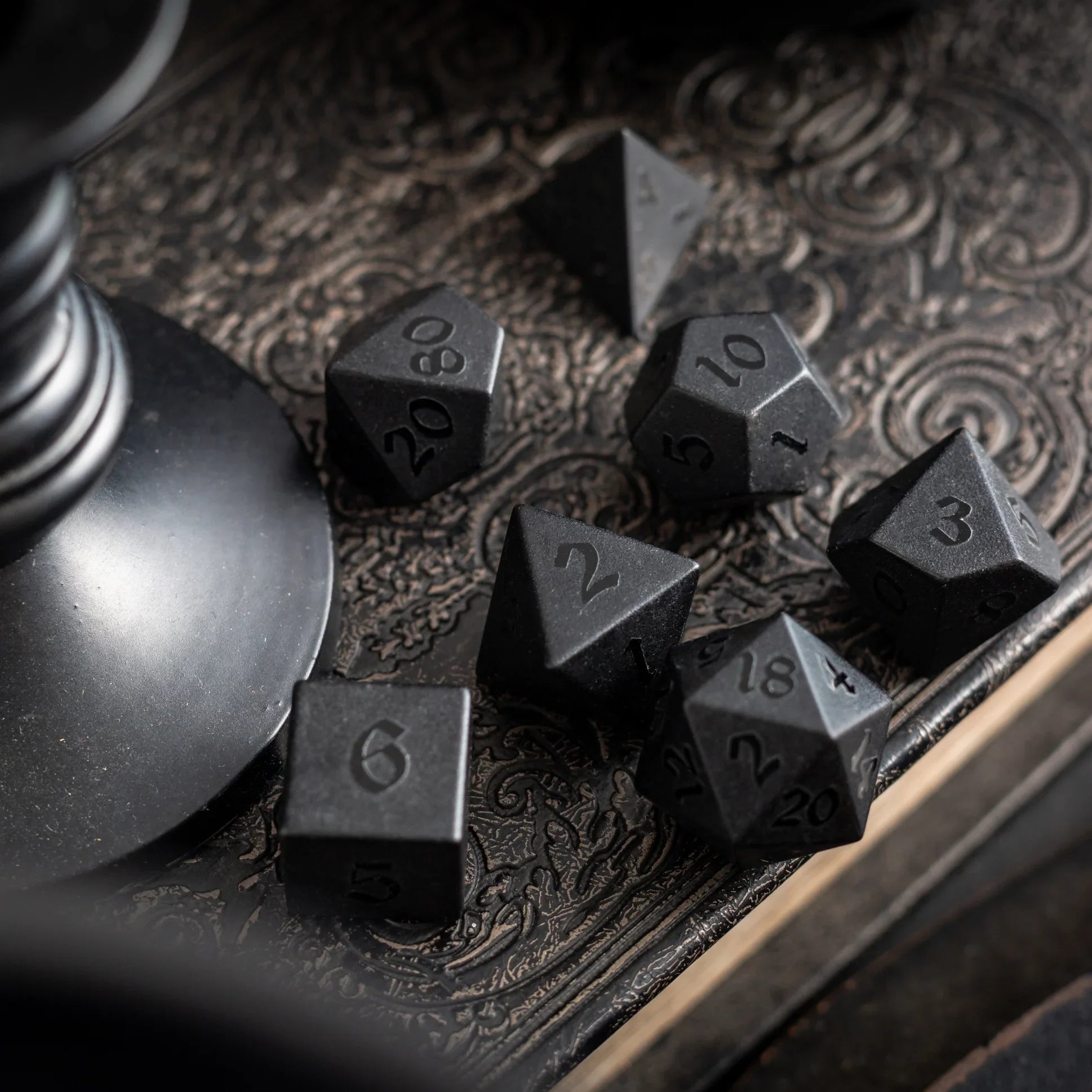
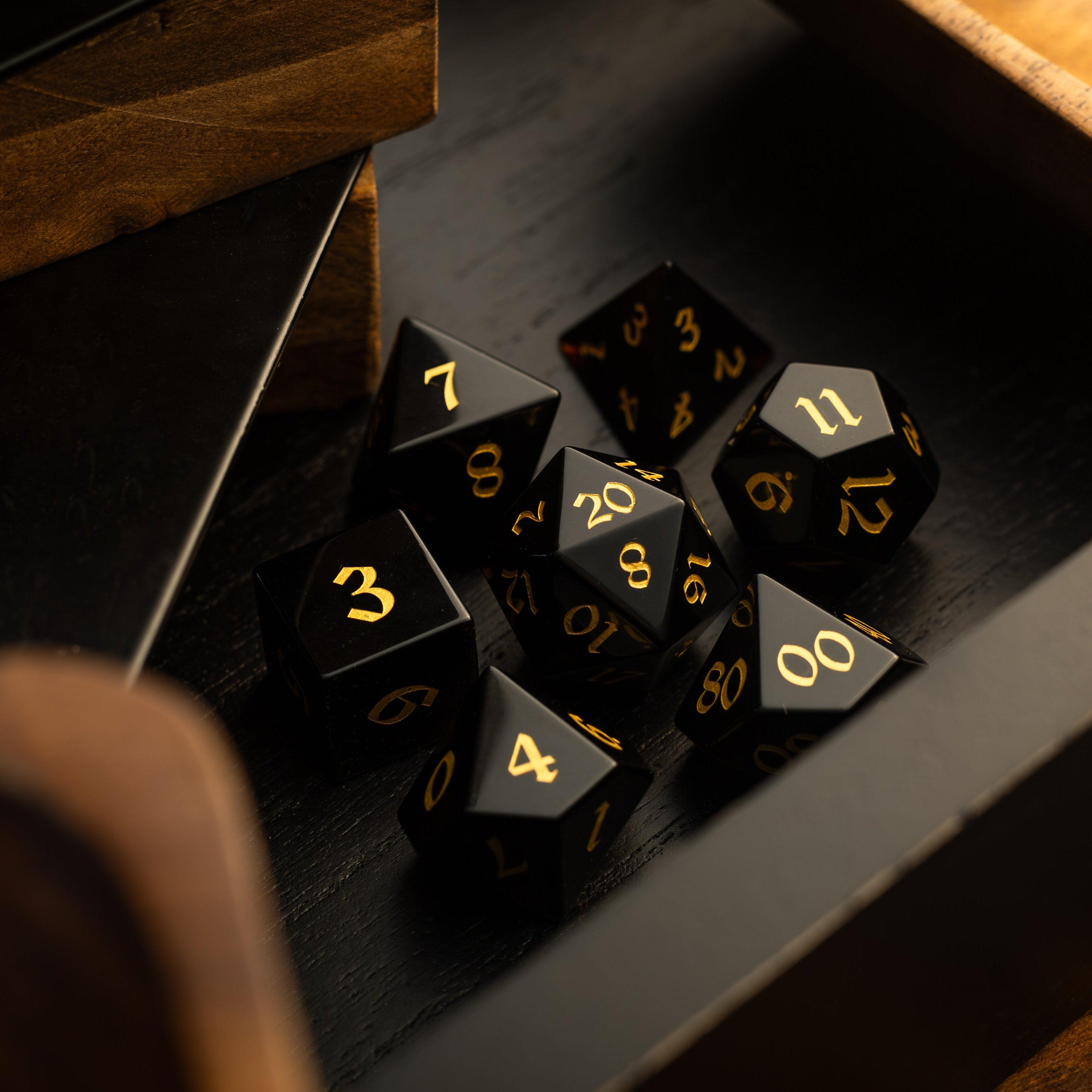
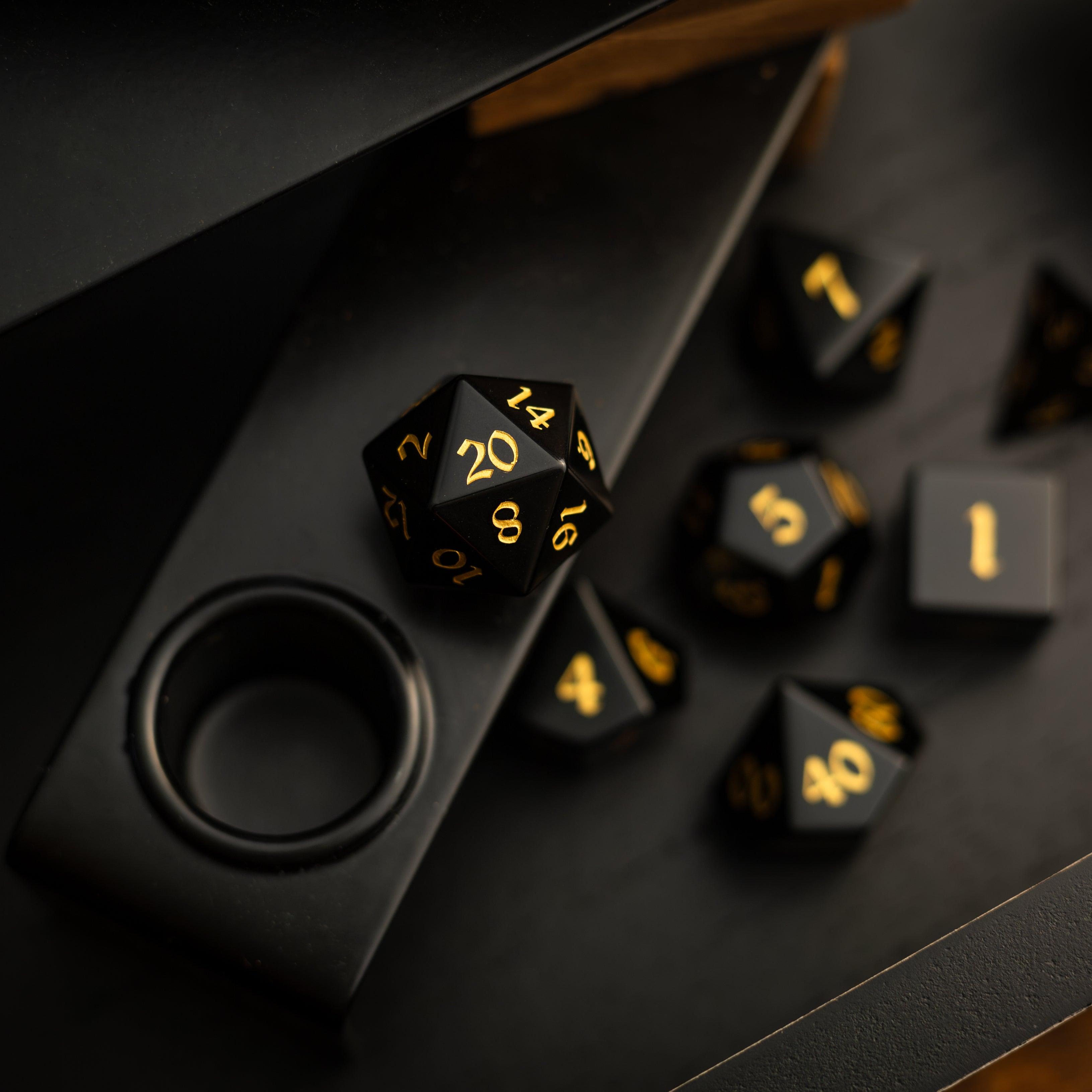
You do not need special dice for solo role-playing. A normal polyhedral set is enough for D&D and many fantasy RPGs. Some players do, however, like using different DND dice sets for different jobs. A main character might use one set, while a second set handles oracle rolls or random tables. The separation can make a busy solo session easier to follow.
Material is mostly a matter of preference. Gemstone dice, resin dice, and metal dice all work for solo sessions as long as the numbers are easy to read and the rolling surface is appropriate for the material.
HOW TO START YOUR FIRST SOLO SESSION
Your first game does not need a detailed campaign map or pages of background lore. Starting small usually makes solo play easier to learn.
- Choose one character with a clear problem.
- Pick one location, such as a village, ruin, forest, ship, or city district.
- Write down two or three questions you want the session to answer.
- Keep an oracle or a few random tables nearby.
- Record only enough notes to remember important people, places, and unfinished goals.
You can write full journal entries if that is enjoyable, but you do not have to. Bullet points, a campaign log, a map, or a few sentences after each scene can work just as well. The best method is the one that keeps the game moving.
RESOURCES FOR SOLO ADVENTURES
Playing alone does not mean learning alone. Communities such as Reddit’s r/Solo_Roleplaying share session reports, oracle ideas, game recommendations, and examples of how different players handle uncertainty. Designer websites and storefront pages are also useful because many solo games include free reference sheets, sample rules, or play aids.
Actual-play videos and podcasts can be helpful when written rules feel abstract. Watching someone ask an oracle question, interpret a random result, and turn it into a scene makes the process much easier to understand.
WHY SOLO TABLETOP RPGS CONTINUE TO MATTER
Solo TTRPGs give players another way to enjoy tabletop role-playing without replacing group play. They can support creative writing, help new GMs practice improvisation, give experienced players room to test characters, and make it possible to play when scheduling a full group is difficult.
They also show how flexible tabletop role-playing can be. A session can be a tactical dungeon crawl, a quiet journal about a potion-maker, a tense survival story, or a fantasy campaign built one uncertain answer at a time.
If you are curious about solo play, begin with one character and one immediate problem. Let the rules, dice, cards, or oracle answer the questions you do not want to decide yourself. You do not need a complete world before you begin. You only need enough uncertainty to make the next choice interesting.
Tell us in the comments: Have you tried a solo TTRPG? What kind of solo adventure would you want to play?













Leave a comment
This site is protected by hCaptcha and the hCaptcha Privacy Policy and Terms of Service apply.