
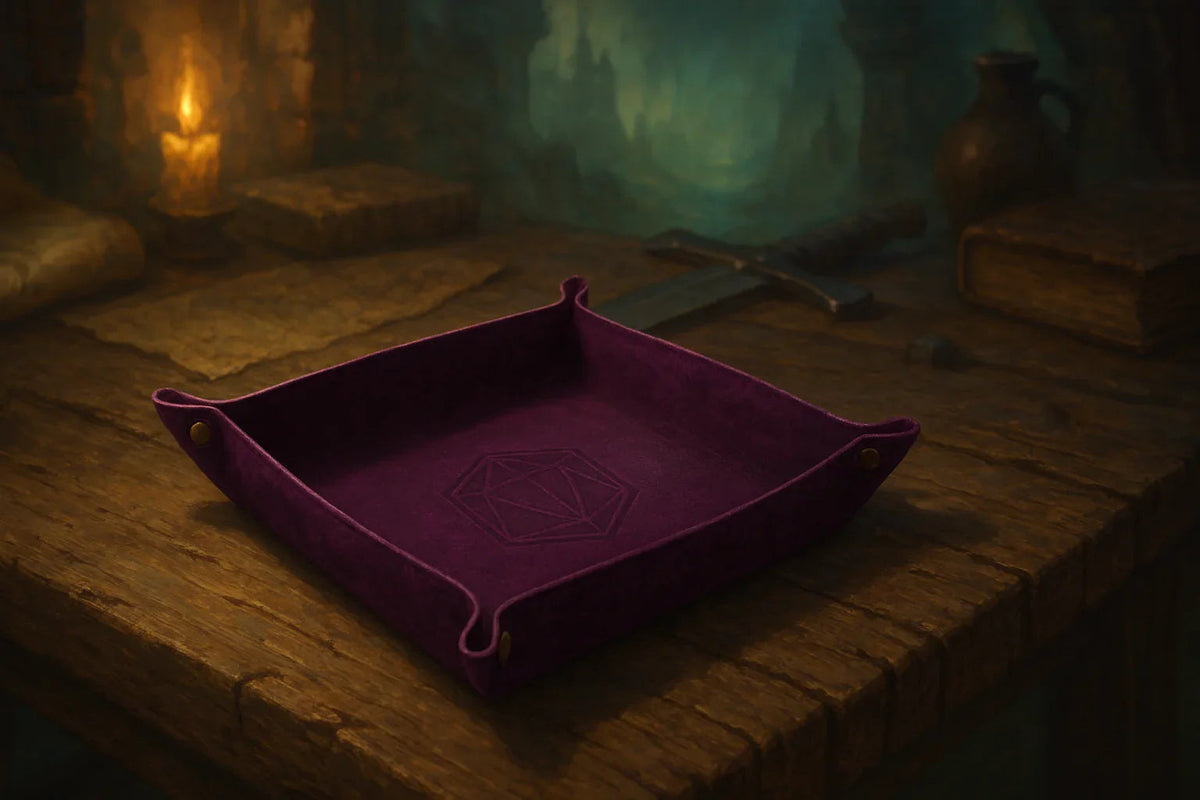
Why a Leather Dice Tray with Snap Corners Belongs in Every DnD Player’s Kit
A great tabletop gaming session is about more than character sheets, miniatures, and dice. The right accessories can make each game smoother and easier to manage. One of the simplest upgrades is a leather dice tray, which gives every roll a defined place to land.
Whether you are a new player or a veteran Dungeon Master, a dedicated rolling area helps keep dice under control, protects the table, and reduces interruptions caused by runaway rolls. A snap corner dice tray can be assembled for play, unsnapped after the session, and packed flat for storage or travel.
Why Every Tabletop Player Benefits from a Dedicated Rolling Area
Most tabletop players have seen a die bounce off the table, land on a character sheet, knock into a miniature, or disappear under a chair. A DnD dice tray solves a simple problem by giving dice a clear boundary.
Common dice tray benefits include:
- Keeping dice from rolling onto the floor
- Reducing the chance of disturbing miniatures, tokens, or terrain
- Making roll results easier for the table to see
- Protecting finished wood and other delicate surfaces
- Giving players a more organized rolling area
A dedicated dice rolling tray is especially useful during combat, when several rolls may happen quickly. Game Masters can also use a separate tray to keep their rolling area contained.
Why Leather Is a Popular Choice
Dice trays are made from leather, synthetic leather, fabric, wood, plastic, and other materials. Leather-style trays remain popular because they can combine a softer rolling surface with a structured shape and a classic tabletop look.
A well-made leather dice tray may offer:
- A cushioned surface that softens the impact of a roll
- Raised sides that help contain dice
- A durable body that holds its shape during play
- A portable design, especially with snap corners
- A surface that can be easier on premium dice than bare hardwood, stone, or glass
The exact feel and care requirements depend on the material. Genuine leather, bonded leather, and synthetic leather do not all respond to moisture or cleaning products in the same way, so checking the maker's care instructions is important.
How Snap Corner Designs Improve Portability and Storage
The biggest practical advantage of a snap corner dice tray is that many models can lie flat when not in use. Instead of carrying a rigid tray, you can pack a flat piece inside a gaming bag and snap the corners together when play begins.
Easier Travel
A flat tray can fit into a backpack, laptop bag, convention tote, or game master binder. This makes a portable dice tray useful for local game stores, conventions, and games at a friend's house.
Better Storage
Rigid trays usually need dedicated shelf or drawer space. A fold-flat tray takes up less room and can often be stored alongside dice bags, notebooks, or character folders.
Fast Setup
Snap corners make setup simple. Assemble the tray, place it near your character sheet, and you have a defined rolling space.
Protecting Dice, Tables, and Gaming Accessories
Protecting Premium Dice
Metal, glass, gemstone, and some sharp-edged resin dice can be harder or heavier than standard plastic dice. Repeated rolling on hard surfaces can increase the chance of scratches, chips, dents, or surface wear, depending on the dice material and table.
A leather or lined tray provides a more forgiving landing area. This matters most for natural stone and glass dice, which can chip if they strike another hard object with enough force. Premium dice should still be handled carefully and stored so they do not repeatedly knock against one another.
Protecting Furniture
Heavy metal dice can leave marks on softer wood finishes, while harder dice may scratch vulnerable surfaces. A dice tray for D&D helps absorb part of that impact and keeps repeated rolls in one protected area.
Keeping Accessories Organized
A tray helps define your personal space at the table. Dice can stay inside or beside it between turns instead of spreading across maps, notebooks, and character sheets. Some players also pair trays with dice towers, which direct rolls into a contained area on crowded tables.
Choosing the Right Leather Dice Tray for Your Gaming Style
Not every tray works equally well for every player. Before buying one, think about where you play, what kind of dice you use, and how much table space you usually have.
Size
A compact tray works well for travel, single-die rolls, and small tables. A larger tray gives you more room for damage pools, advantage or disadvantage rolls, and Game Master rolls involving several creatures.
Interior Surface
Look for a surface that gives dice room to tumble without feeling overly hard. Softer linings can also reduce some rolling noise, although the effect depends on the thickness and construction of the tray.
Corner Construction
For a fold-flat model, the snaps should close securely and keep the walls upright during play. Check the stitching, edge finishing, and hardware too, since those areas receive frequent handling.
Appearance
Color and finish are personal choices, but function should come first. A tray that fits your available space and holds its shape will usually be more useful than one chosen only to match other tabletop gaming accessories.
Dice Tray Comparison
| Material | Typical Strengths | Possible Drawbacks | Best Fit |
|---|---|---|---|
| Leather or synthetic leather | Portable, softer rolling surface, often fold-flat | Care needs vary by material | Travel, regular play, premium dice |
| Fabric | Lightweight, quiet, easy to pack | May provide less structure | Travel and casual play |
| Wood | Rigid, stable, attractive | Bulky and less portable | Permanent home setups |
| Plastic | Lightweight, easy to wipe clean | Hardness and noise vary | Budget-friendly or general use |
These are broad characteristics rather than guarantees. Construction quality, lining, wall height, and tray size can matter as much as the main material.
Using a Dice Tray at Home, Conventions, and While Traveling
An RPG dice tray works in many play environments. At home, it keeps rolls away from drinks, miniatures, terrain, and rulebooks. At local game stores, a compact tray creates a personal rolling zone when space is limited. At conventions, a fold-flat model is easy to carry between games.
For travel, keep the tray flat when possible and avoid placing heavy books or rigid objects on top of snaps or raised hardware. If the tray has a soft lining, keeping sharp objects away from the interior can help prevent damage.
Caring for and Maintaining Leather Dice Trays
Care depends on what the tray is actually made from. For genuine leather, frequent soaking, harsh household cleaners, and prolonged direct sunlight can damage the surface. For synthetic leather, strong solvents and abrasive cleaners can also cause wear.
For routine cleaning, start with a soft dry cloth. If more cleaning is needed, use a slightly damp cloth only if the manufacturer's instructions allow it, then let the tray dry naturally. Use conditioners or specialty cleaners only when they are appropriate for the exact material.
Store a snap-corner tray flat or loosely assembled in a cool, dry place. Avoid keeping it under heavy books for long periods, which can crease the material or stress the hardware.
Common Mistakes When Choosing or Using a Dice Tray
Buying One That's Too Small
If you often roll several damage dice at once, a very small tray can feel cramped. Choose enough interior space for your normal rolls without taking over the table.
Ignoring Portability
If you regularly travel to game stores or conventions, a snap corner dice tray may be easier to carry than a rigid wooden or plastic model.
Choosing Style Over Function
Look beyond color and decoration. Wall height, rolling area, surface feel, stitching, and reliable snaps affect how useful the tray will be during play.
Expecting Better Luck
A dice tray does not improve your odds or change the probability built into the game's dice mechanics. Its job is to contain rolls, protect surfaces, and help keep the table organized.
Quick Dice Tray Buying and Care Checklist
Before choosing a dice tray for D&D, check for:
- Enough rolling space for the dice you normally use
- Secure snaps or sturdy walls
- A rolling surface suited to your dice material
- A size that fits your usual gaming table
- Easy storage and transport if you travel often
- Clean stitching, edges, and hardware
- Care instructions that match the actual tray material
A Small Accessory That Makes Every Session Easier
The best tabletop accessories do not need to change the rules to be useful. A leather dice tray with snap corners gives your dice a consistent place to land, helps protect the table, reduces runaway rolls, and packs away easily after the session.
For players who use heavier metal dice, delicate gemstone or glass sets, or simply want a cleaner play area, a dedicated tray is a practical addition. Choose one based on size, surface, construction, and portability, and care for it according to the material it is actually made from. A reliable rolling space can make game night feel more organized without getting in the way of the story, strategy, or fun.














Leave a comment
This site is protected by hCaptcha and the hCaptcha Privacy Policy and Terms of Service apply.