
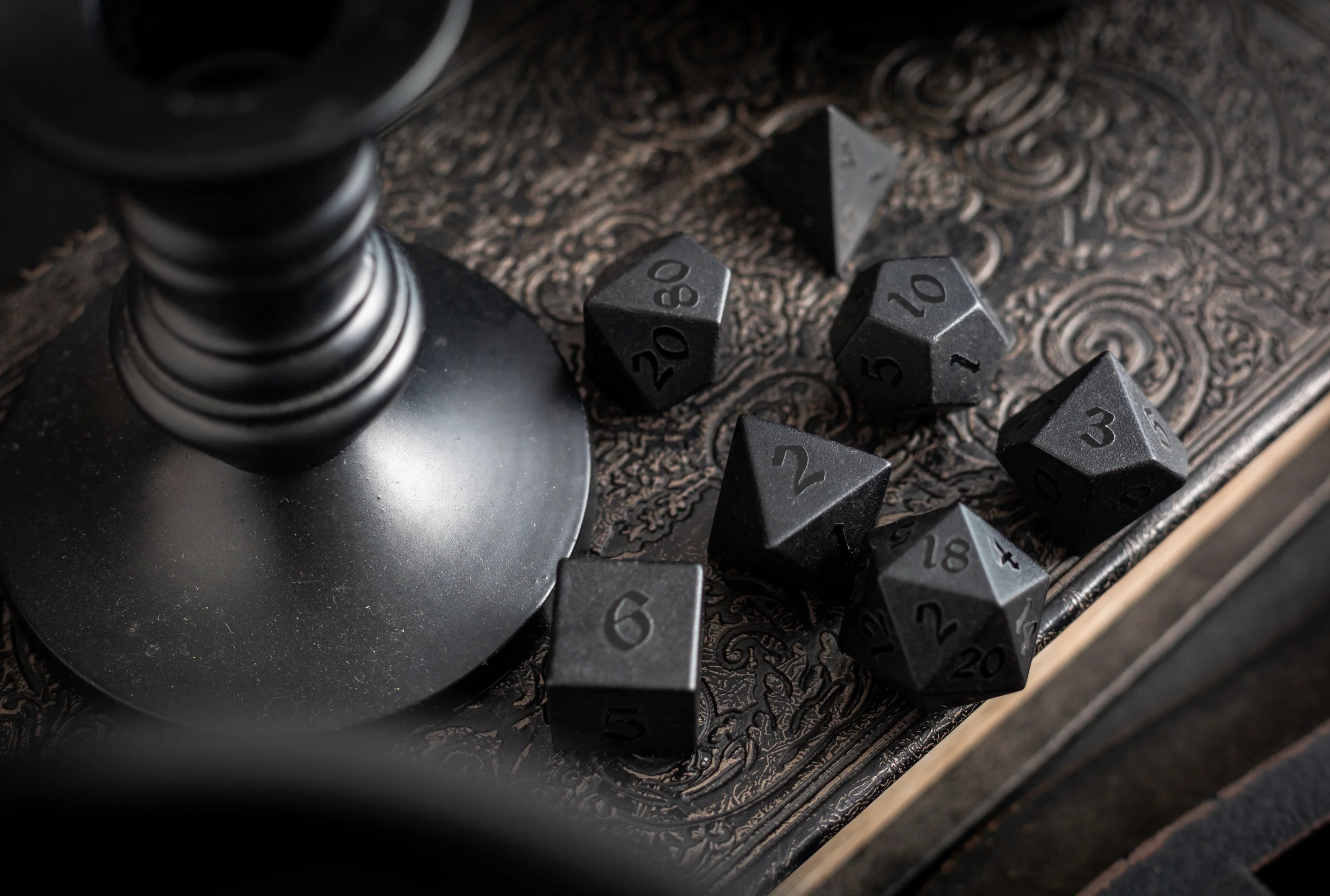
Obsidian Dice Set: Shaped by Volcanic Origins and Craft
An obsidian dice set brings together two worlds that seem far apart. One begins deep beneath the Earth's surface, where molten lava erupts from volcanoes. The other unfolds around a tabletop, where adventurers face dragons, uncover forgotten ruins, and roll for their next bold decision.
Unlike many D&D dice made from resin or metal, obsidian dice begin as a naturally occurring material created by volcanic activity. Each piece carries subtle variations formed by nature before skilled artisans transform it into a polished gaming accessory.
Whether you are interested in a gemstone dice set for its appearance, collecting natural stone dice, or searching for a meaningful gift, understanding how obsidian forms and how it becomes a finished die makes every roll even more fascinating.
What Is Obsidian?
Obsidian is a naturally occurring volcanic glass that forms when lava cools so quickly that crystals do not have time to develop.
Most minerals grow in organized crystal structures as they cool slowly beneath the Earth's surface. Obsidian forms differently. Because cooling happens almost instantly after an eruption, atoms become locked in place before crystals can grow. The result is a smooth, glass-like material rather than a mineral crystal.
This rapid formation gives obsidian several recognizable characteristics:
-
Deep black coloration
-
Smooth, glossy surfaces
-
Sharp natural fractures
-
Fine texture without visible crystals
These qualities make obsidian especially attractive for decorative objects, jewelry, and carefully crafted volcanic glass dice.
Why Obsidian Is Considered Volcanic Glass
Although obsidian often appears alongside gemstones, it is important to understand what makes it different.
Obsidian is not a mineral crystal. Instead, it is classified as naturally occurring volcanic glass because of how rapidly molten rock cools.
This glass-like structure explains many of its unique properties:
-
Reflective shine after polishing
-
Smooth texture
-
Ability to take crisp engraved details
-
Greater brittleness than many crystalline gemstones
Because of these characteristics, artisans treat obsidian differently from materials such as quartz or amethyst during the crafting process.
From Lava to Dice: Crafting an Obsidian Dice Set
Creating an obsidian dice set requires precision from beginning to end.
Not every piece of raw obsidian is suitable for dice making. Craftspeople first inspect rough material for large cracks, unstable sections, or flaws that could weaken the finished dice.
After suitable pieces are selected, they move through several carefully controlled stages.
Cutting the Rough Stone
Large pieces of obsidian are cut into manageable blocks using diamond cutting tools.
Each block is then shaped into rough polyhedral forms, preparing the material for the familiar geometry used in tabletop RPG dice.
Precision Shaping
Each die is gradually refined until every face and angle matches the intended dimensions.
Accurate shaping helps ensure readable faces and consistent geometry while preserving as much of the natural material as possible.
Polishing
Obsidian develops its distinctive shine during polishing.
Multiple polishing stages smooth away tiny scratches and create the reflective black finish many players associate with black obsidian dice.
Engraving and Inking
Once polished, artisans engrave each number.
Depending on the design, the engraved numbers may remain unfilled or receive contrasting paint for easier reading.
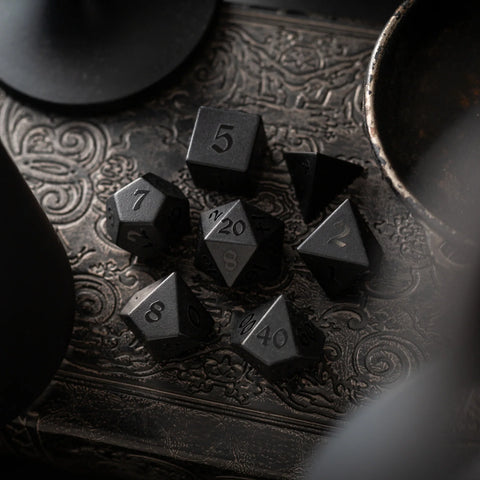
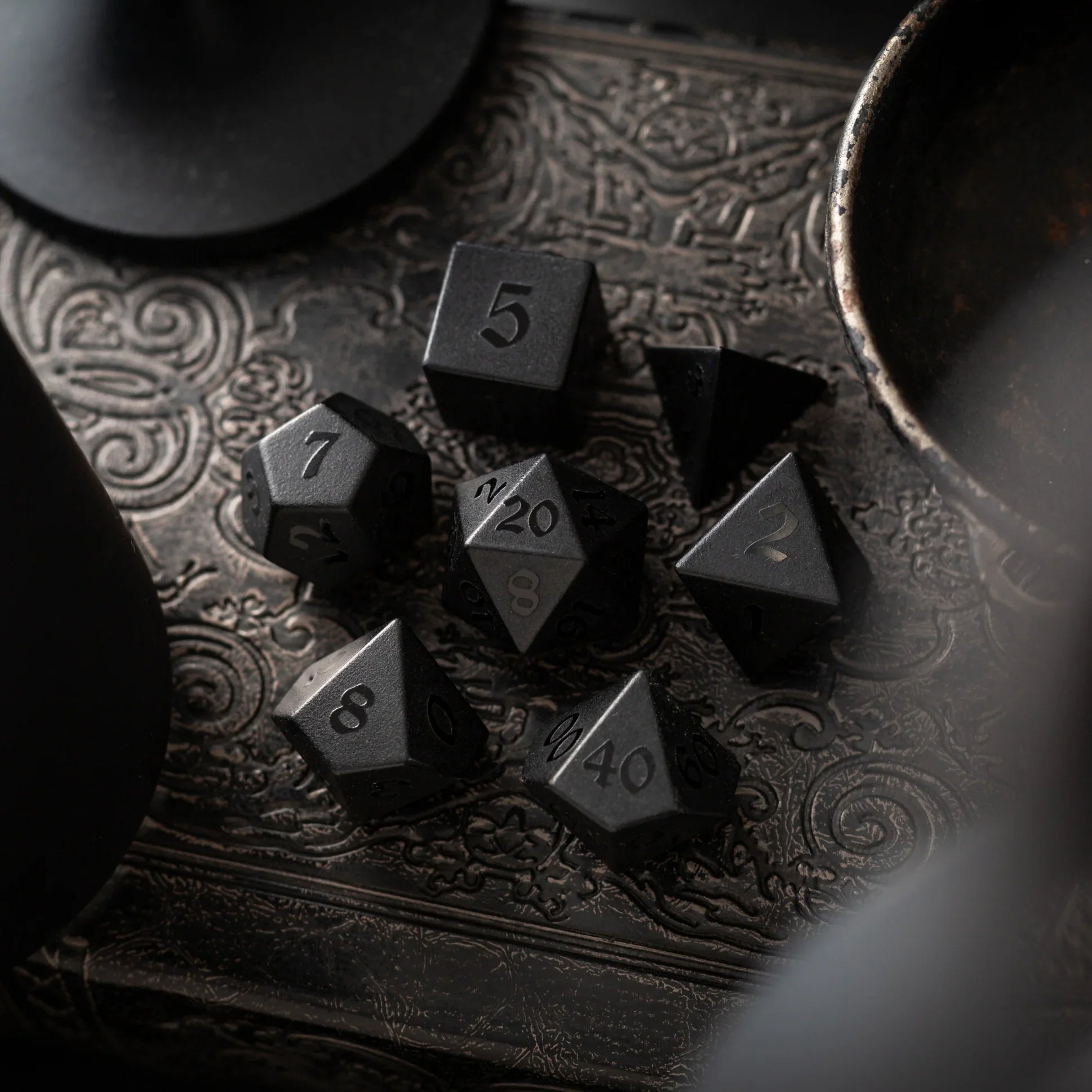
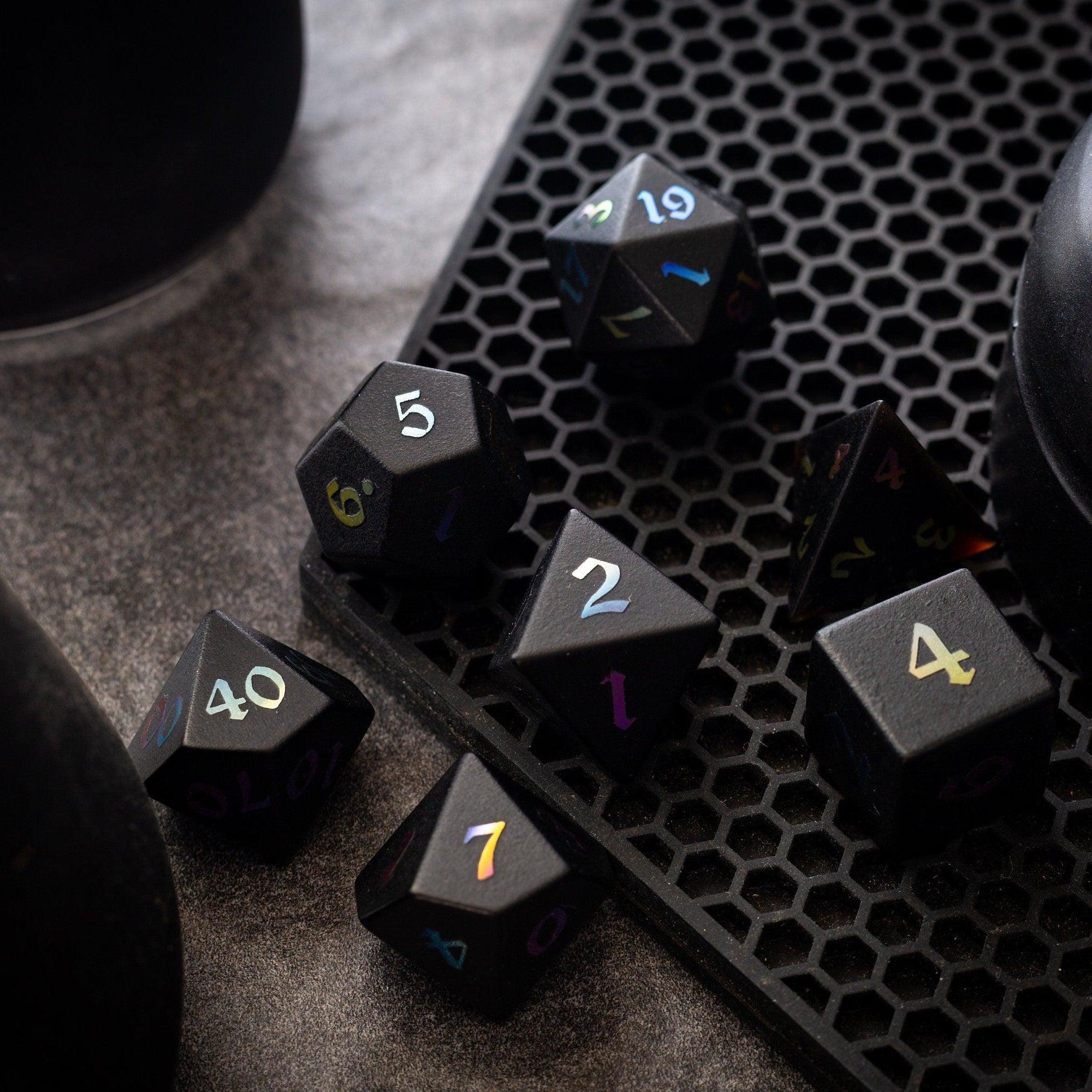
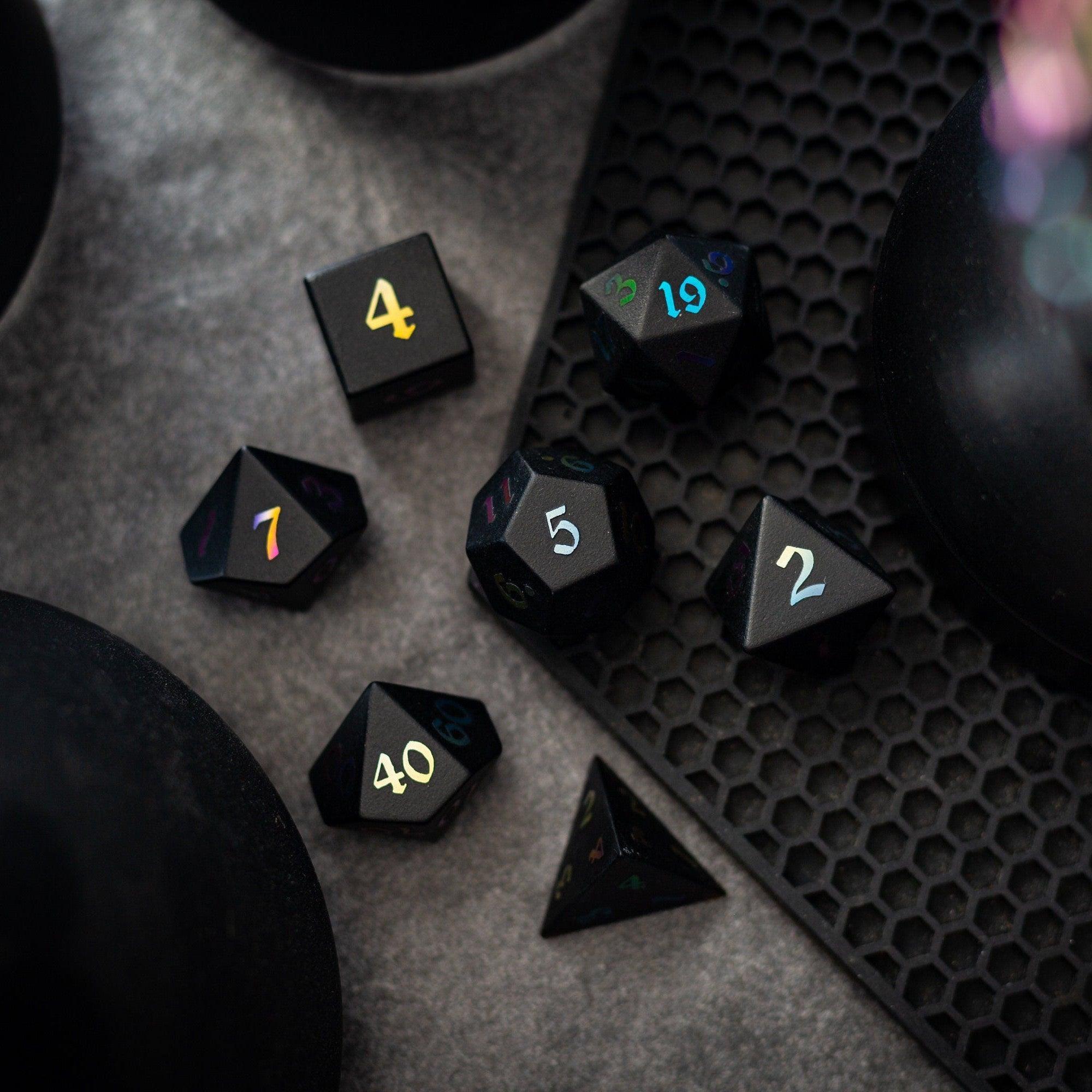
For example, the Black Night Raised Obsidian Dice with Inked Numbers use bright inking to make each face easier to read during gameplay, while maintaining the polished volcanic appearance.
Natural Colors and Variations
Many people imagine obsidian as completely uniform black, but natural obsidian is surprisingly varied.
Depending on its formation and mineral content, it may display:
-
Slight translucency around thin edges
-
Gray undertones
-
Brown highlights
-
Subtle streaking
-
Small natural inclusions
-
Variations in surface texture
These differences are completely natural and help make every obsidian dice set slightly unique.
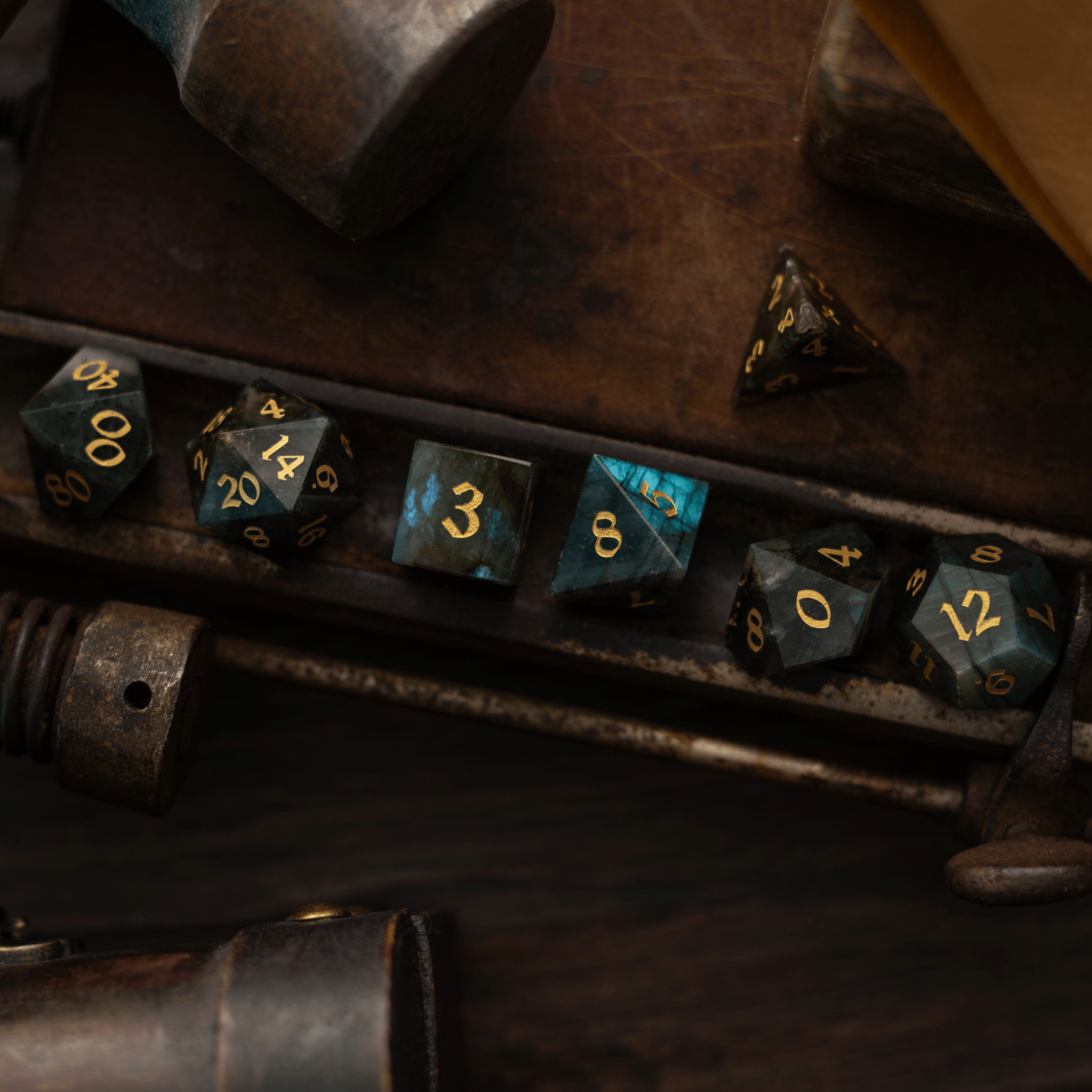
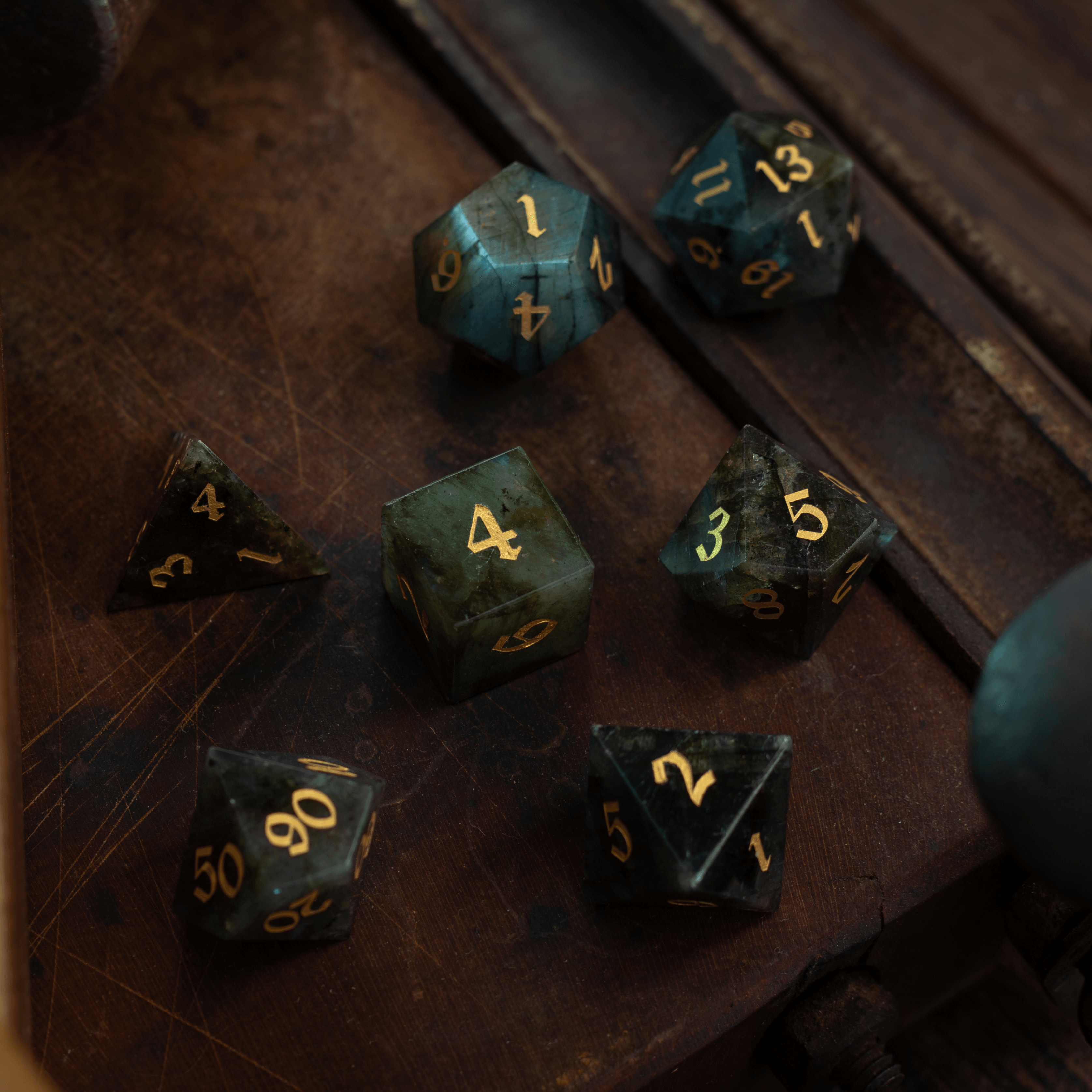
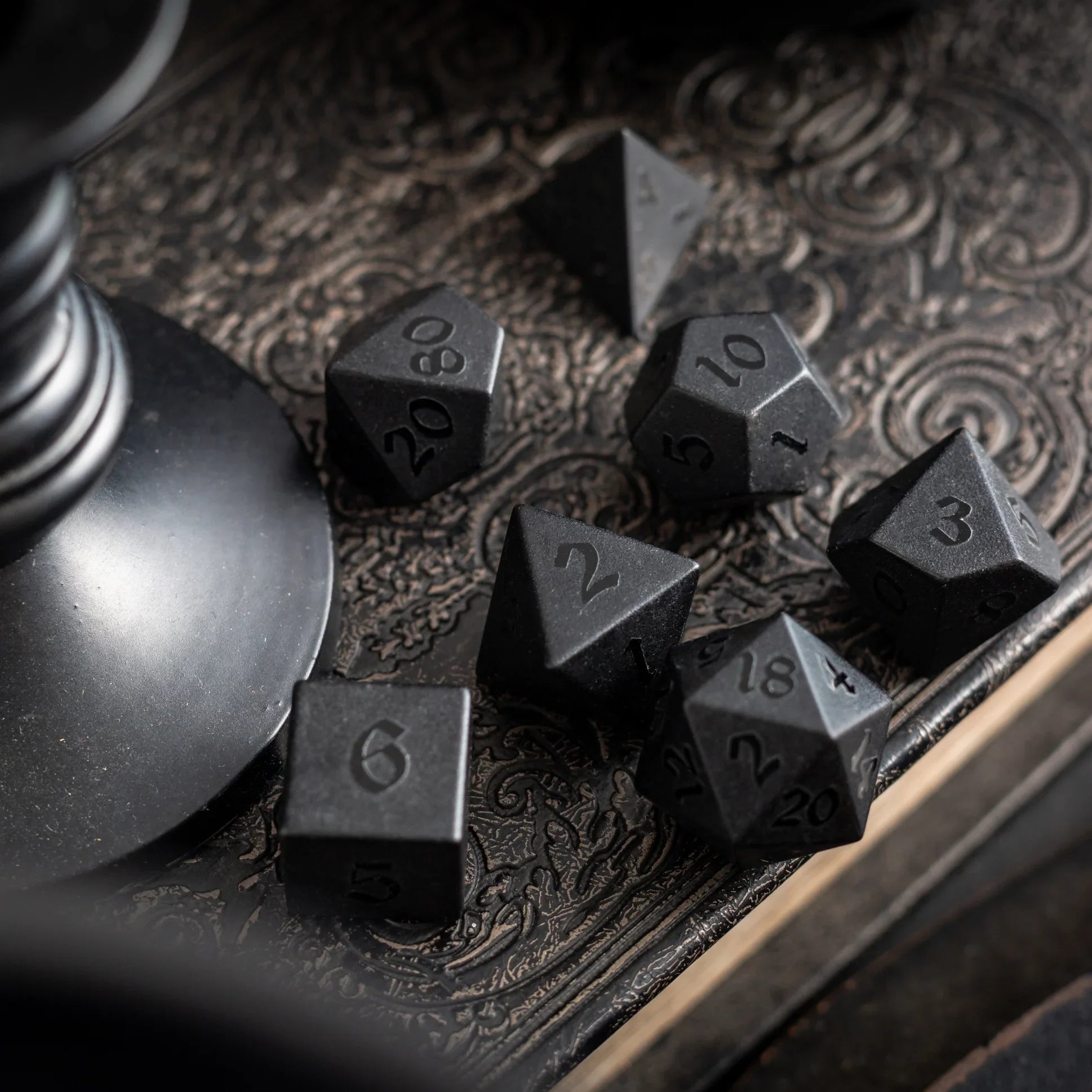
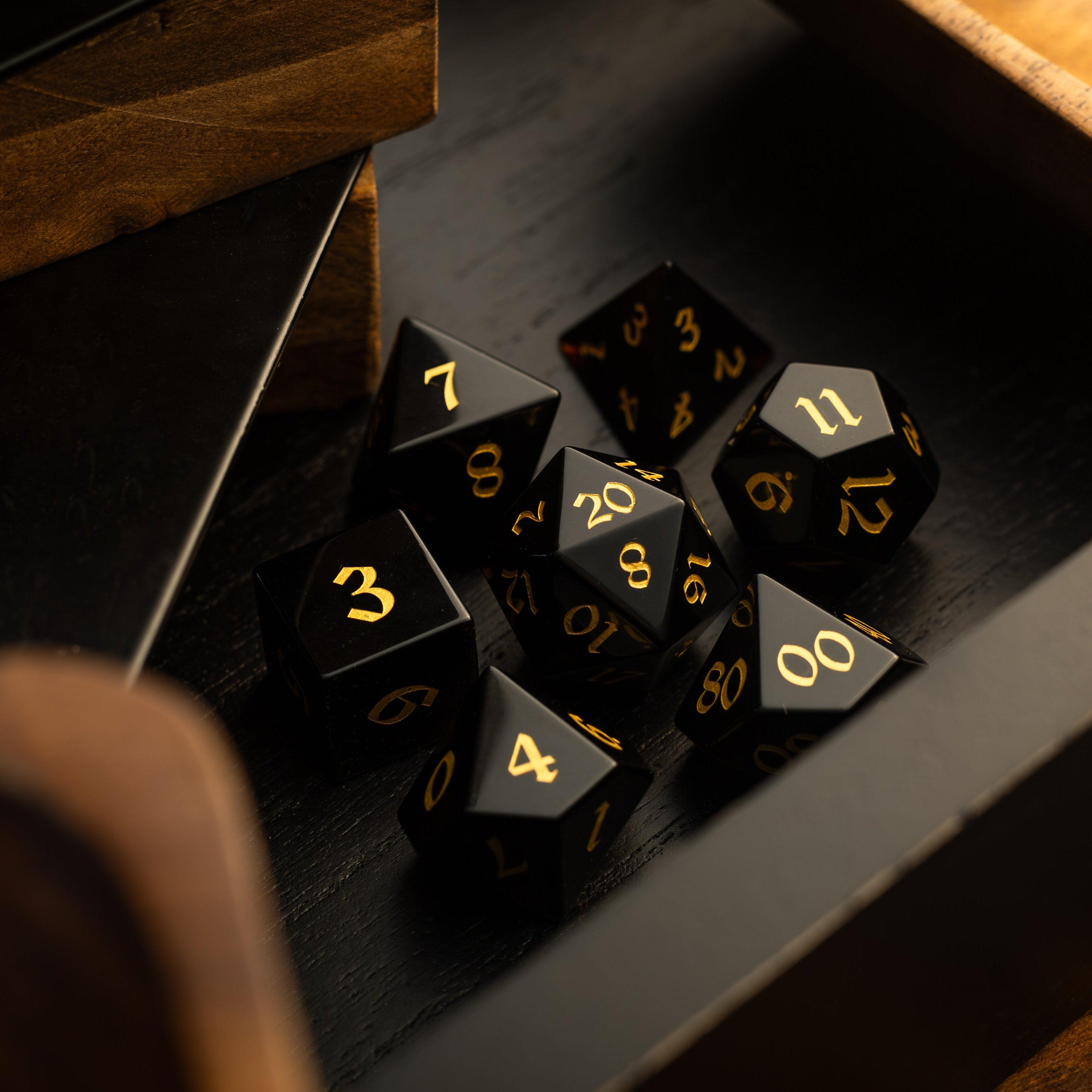
The Black Obsidian Dice and Black Night Raised Obsidian Dice both showcase the rich dark appearance that makes volcanic glass so recognizable while still preserving the natural character of the material.
How Obsidian Compares with Other Dice Materials
Players have many options when choosing a gemstone dice set or other premium dice material.
Each offers its own balance of appearance, weight, durability, and maintenance.
| Material | Feel | Appearance | Durability | Care |
|---|---|---|---|---|
| Obsidian | Smooth with moderate weight | Deep glossy black with natural variation | Can chip on hard surfaces | Use padded tray and careful storage |
| Resin | Lightweight | Nearly unlimited colors and effects | Very durable | Simple cleaning |
| Metal | Heavy | Metallic shine and engraved details | Extremely durable but may damage tables | Use padded rolling surface |
| Glass | Smooth and reflective | Bright transparent colors | Fragile | Store carefully |
| Crystal Gemstones | Dense and elegant | Natural mineral patterns | Varies by gemstone | Handle gently |
While obsidian shares some characteristics with glass, its volcanic origins and natural variations give it a distinctive appearance that many collectors appreciate.
How Obsidian Dice Feel During Play
Many players enjoy the satisfying weight of black obsidian dice.
They generally feel heavier than standard resin dice without becoming as heavy as solid metal sets.
Their polished finish also creates a smooth sensation when picked up, rolled, or gathered after a turn.
Because each face reflects light differently, engraved numbers often stand out beautifully under tabletop lighting, especially on designs like the Black Night Raised Obsidian Dice.
Why a Padded Dice Tray Matters
Although obsidian is durable enough for regular gaming with proper care, it remains a natural material that can chip or crack if repeatedly rolled onto hard surfaces.
A padded dice tray helps reduce the impact each time the dice land.
Benefits include:
-
Softer rolling surface
-
Less chance of chipped corners
-
Reduced wear over time
-
Quieter gameplay
-
Better protection for wooden tables
Many players pair gemstone dice with padded dice trays or protective dice storage to help preserve their condition through years of adventures.
Proper Storage and Cleaning
Good gemstone dice care is simple and helps preserve the polished finish.
After each game:
-
Wipe fingerprints away with a soft microfiber cloth.
-
Remove dust using a dry cloth.
-
Avoid abrasive cleaning products.
-
Store dice individually or in padded compartments.
-
Keep them away from hard objects that may strike the edges.
Protective dice storage also helps prevent gemstone dice from knocking together during travel.
With thoughtful handling, an obsidian set can remain beautiful through countless campaigns.
Character Themes That Suit Black Obsidian Dice
The appearance of black obsidian dice naturally complements many fantasy characters without suggesting any special in-game abilities.
They pair especially well with:
-
Shadow Sorcerers
-
Warlocks
-
Grave Domain Clerics
-
Oathbreaker Paladins
-
Assassins
-
Gloom Stalker Rangers
-
Necromancers
-
Dark fantasy Dungeon Masters
Campaigns featuring ancient ruins, volcanic kingdoms, haunted castles, forgotten temples, or mysterious underground realms also match the dramatic appearance of volcanic glass.
What to Look for Before Choosing an Obsidian Dice
Before selecting an obsidian dice set, examine both craftsmanship and the natural material.
Look for:
-
Even, symmetrical shapes
-
Clean engraved numbers
-
Easy-to-read numbering
-
Smooth polished surfaces
-
Consistent face alignment
-
Minimal surface flaws
-
Protective storage options
Remember that small natural variations in color or translucency are expected and reflect the origin of the stone rather than poor craftsmanship.
Common Mistakes to Avoid
Because obsidian differs from resin or metal, a few simple habits can help prevent unnecessary damage.
Avoid:
-
Rolling directly onto stone, tile, or concrete
-
Dropping dice into crowded metal containers
-
Allowing gemstone dice to collide during transport
-
Cleaning with harsh chemicals
-
Assuming volcanic glass is unbreakable
A little extra care goes a long way toward preserving both appearance and longevity.
From Volcanic Fire to the Gaming Table
Every obsidian dice set begins its story in extraordinary circumstances. Molten lava cools with remarkable speed, forming smooth volcanic glass instead of crystalline rock. Skilled artisans then transform that raw material through cutting, polishing, engraving, and finishing until it becomes a complete set of tabletop RPG dice ready for adventure.
The result is a gaming accessory that reflects both nature and craftsmanship. From the glossy finish of Black Obsidian Dice to the detailed engraving found on Black Night Raised Obsidian Dice and Black Night Raised Obsidian Dice with Inked Numbers, each set highlights the beauty of naturally formed volcanic glass.
With proper gemstone dice care, thoughtful storage, and the protection of padded dice trays, these distinctive dice can accompany players through countless campaigns. Every roll becomes a reminder that one of Earth's most dramatic natural processes has been carefully shaped into a companion for memorable stories around the gaming table.


Leave a comment
This site is protected by hCaptcha and the hCaptcha Privacy Policy and Terms of Service apply.