
Arcana Domain Cleric Guide for Beginners: Mastering the Arcana Cleric in D&D 5e

The Arcana Domain Cleric combines divine spellcasting with the practical tricks of wizardry. First introduced in Sword Coast Adventurer’s Guide, the subclass received a substantial update in Arcana Unleashed, released in September 2026. This guide covers that current version for D&D 5.5e, rather than the older subclass rules.
An Arcana Cleric can protect allies, interfere with hostile spells, and learn magic normally reserved for Wizards. You still have the Cleric's healing and support tools, but your subclass gives you new ways to make every spell count.
Why Play an Arcana Domain Cleric?
Key Benefits
- Expanded Spell Options: Learn two Wizard cantrips and gain useful Domain Spells, including Counterspell and Dispel Magic.
- Stronger Spell Support: Modify Magic can grant Temporary Hit Points to a spell's target or make a successful enemy saving throw less reliable.
- Anti-Magic Utility: Dispelling Recovery lets you combine restorative magic with Dispel Magic.
- Flexible Combat Style: Focus on healing, battlefield control, or consistent cantrip damage.
- Roleplay Potential: Play a divine librarian, temple researcher, or guardian of forbidden knowledge.
The biggest advantage is flexibility. You can contribute to an ordinary fight while remaining especially useful when enemies depend on magic.
Core Features
Key Mechanics and Abilities
Arcana Domain Spells (Levels 3–9)
These spells are always prepared once you reach the listed Cleric level, so they do not take up your normal prepared-spell choices.
- Level 3: Detect Magic, Magic Missile, Magic Weapon, and Nystul's Magic Aura.
- Level 5: Counterspell and Dispel Magic.
- Level 7: Arcane Eye and Leomund's Secret Chest.
- Level 9: Bigby's Hand and Teleportation Circle.
This updated list is more immediately useful against spellcasters than the original list. Counterspell can interrupt a spell being cast, while Arcane Eye helps you scout without exposing the party.
Student of Arcana (Level 3)
- Gain proficiency in Arcana, or choose another skill from the Cleric's starting skill options.
- Learn two Wizard cantrips of your choice. You can replace one of them whenever you gain a Cleric level.
- Consider Mage Hand for interacting with objects at a distance or Prestidigitation for minor magical effects.
Student of Arcana does not grant Expertise in Arcana. Unlike the original Arcane Initiate feature, it lets you replace one of its Wizard cantrips whenever you gain a Cleric level. Its strength is having more magical tools and being able to adjust your cantrip choices as the campaign changes.
Channel Divinity: Modify Magic (Level 3)
- Fortifying Spell: When casting a spell, spend a Channel Divinity use to grant one target Temporary Hit Points equal to 2d8 plus your Cleric level.
- Tenacious Spell: When a creature you can see succeeds on a saving throw against your spell, this option subtracts 1d6 from its first saving throw against that spell's effect. The penalty may turn success into failure.
Modify Magic uses no extra action. For example, you can add Temporary Hit Points when casting a spell on an injured ally, or use Tenacious Spell to improve the chance that an important control spell takes effect. It replaces the original Arcane Abjuration feature, so the 2026 subclass no longer uses Channel Divinity to turn Celestials, Elementals, Fey, or Fiends.
Dispelling Recovery (Level 6)
- After using a spell slot to cast a spell that restores Hit Points or ends a condition on a creature, you can cast Dispel Magic without another spell slot as part of the same action, Bonus Action, or Reaction.
- You can use this feature once per Short or Long Rest, and you can restore a use by spending Channel Divinity.
- Dispel Magic follows its normal rules. It does not automatically remove every magical effect or condition.
This is broader than the original Spell Breaker feature. You might heal a companion and also attempt to remove an enemy's magical enhancement or a troublesome magical effect elsewhere in range.
Blessed Strikes (Level 7)
The current Cleric class provides Blessed Strikes instead of the old Arcana subclass's level 8 Potent Spellcasting feature. Choose Potent Spellcasting to add your Wisdom modifier to damage from Cleric cantrips, or Divine Strike for extra weapon damage. Improved Blessed Strikes enhances your choice at level 14. Potent Spellcasting is usually the better fit for a spell-focused Arcana Cleric.
Magical Mastery (Level 17)
Choose four Wizard spells, one each of levels 6, 7, 8, and 9. You always have them prepared and may replace one with a Wizard spell of the same level whenever you gain another Cleric level. This updated feature, formerly called Arcane Mastery, offers powerful late-game choices without requiring a Wizard multiclass.
Suggested Ability Scores
- Wisdom: Your priority for Cleric spells, healing, and saving throw DCs.
- Constitution: Helps you survive attacks and maintain Concentration.
- Dexterity: Supports initiative, Dexterity saving throws, and Medium armor.
Recommended Species
- High Elf: Additional innate magic reinforces the scholarly spellcaster theme.
- Tiefling: Fiendish Legacy offers spells and elemental resistance.
- Firbolg: A compatible older option with useful magical tricks.
- Human: An extra Origin Feat gives you more room to customize your build.
Under current character creation rules, ability score increases come from your background, not your species.
Playing as an Arcana Domain Cleric
Role in a Party
- Support Caster: Heal allies, strengthen them with Fortifying Spell, and keep important buffs active.
- Damage and Control: Use Magic Missile, Cleric cantrips, and saving-throw spells to pressure enemies.
- Anti-Magic Specialist: Keep Counterspell and Dispel Magic available when enemy spellcasters appear.
Tips for New Players
- Start with utility cantrips: Mage Hand and Prestidigitation give you options without relying on attack rolls.
- Watch your Channel Divinity uses: Both Modify Magic and refreshing Dispelling Recovery draw from the same resource.
- Protect your Concentration: Stay behind sturdier allies when maintaining spells such as Spirit Guardians.
- Consider Thaumaturge: This level 1 Divine Order adds a Cleric cantrip and improves your Arcana or Religion checks.
Roleplay Suggestions
- The Scholar-Priest: Studies how divine miracles and arcane spells connect.
- The Celestial Archivist: Safeguards rare magical records.
- The Mystic Hunter: Tracks dangerous magical experiments and their creators.
Gear and Dice Recommendations
Suggested Equipment
Weapons
- Quarterstaff or Mace: Simple weapons that suit a scholar-priest.
- Dagger: A light backup weapon when spells are unnecessary.
Armor
- Scale Mail or Half Plate: Medium armor suited to a spell-focused Cleric.
- Shield: Improves Armor Class, though you should still check spell component requirements.
Magic Items
- Wand of the War Mage: Improves spell attack rolls and helps them ignore Half Cover.
- Amulet of the Devout: Improves Cleric spell attacks and save DCs and supports Channel Divinity.
- Cloak of Protection: Grants a +1 bonus to Armor Class and saving throws.
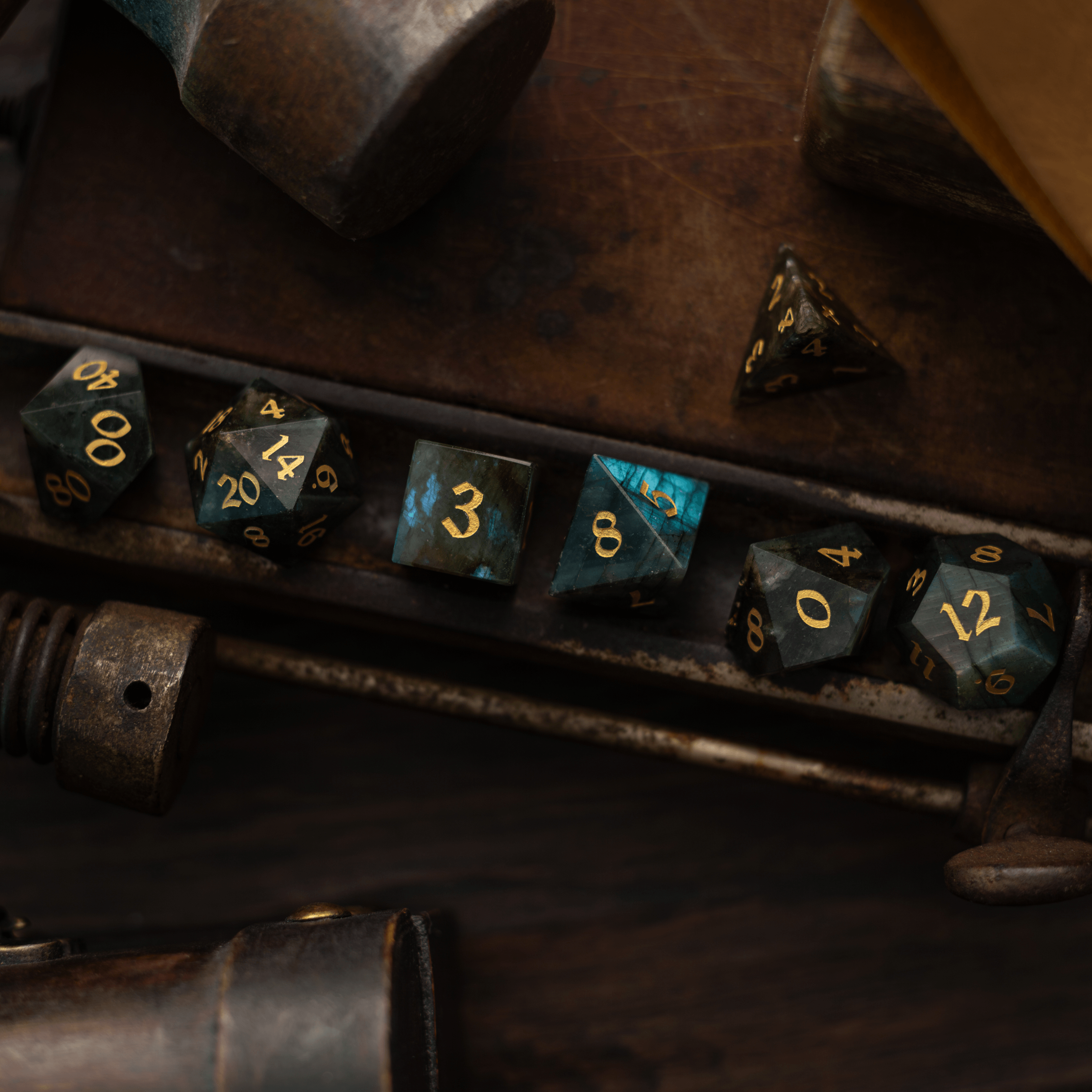
Dice Recommendations from Runic Dice
Arcana Clerics embody the balance between divine faith and arcane mastery. Your DND dice set should feel just as magical as your spellbook, channeling both wisdom and raw mystical energy. Here are some options that pair perfectly with this subclass:
- Mystic Arcana: For swirling blue and purple hues representing magical energy, consider the Blue Smoke Resin DND Dice Set. This resin dice features deep blue tones with swirling patterns, capturing the essence of arcane power.
- Runic Sage: To evoke an ancient wizard’s tome with gold and deep blue colors, the Blue Glitter Liquid Core Sharp Edge Resin DND Dice Set is an excellent choice. It showcases vibrant blue hues with a dynamic liquid core, reflecting the wisdom of a seasoned mage.
- Celestial Scholar: For silver and translucent hues fitting a divine academic, the Gemstone Opalite (Gold Font) DND Dice Set offers a luminous quality, symbolizing celestial insight and scholarly pursuits.
The Arcana Cleric is more than just a healer or spellcaster, they are a scholar of divine and mystical secrets. Choosing the right dice helps capture the theme of being a conduit of magical energy, adding style and immersion to every session.
Advanced Tips and Tricks
Optimization Strategies
- Feats: War Caster helps maintain Concentration, while Resilient (Constitution) improves Constitution saving throws. Magic Initiate (Wizard) offers extra magic, but make sure it adds something your subclass does not already provide.
- Multiclassing: Wizard adds arcane spells but calls for Intelligence and slows Cleric progression. Sorcerer offers different spell options, but requires Charisma and delays your domain abilities. Staying single-classed is usually simpler.
The 2026 Arcana Domain Cleric is strongest when you treat magic as a flexible toolkit. Prepare healing and control spells, save Channel Divinity for important moments, and use your Wizard options to solve problems a typical Cleric might struggle with. With the updated features from Arcana Unleashed, this divine scholar has more ways to support allies and challenge enemy spellcasters.



















Leave a comment
This site is protected by hCaptcha and the hCaptcha Privacy Policy and Terms of Service apply.