Dungeon Flow Tool Guide: Build Smarter D&D Dungeon Layouts
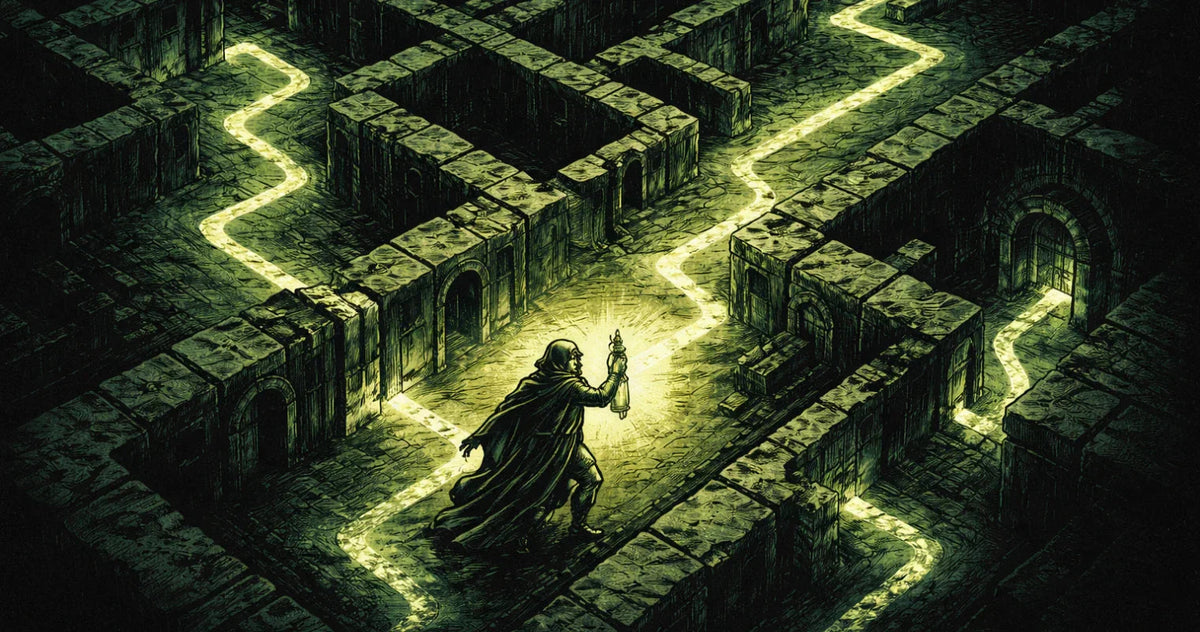
A dungeon can look impressive on a map and still feel dull during play. Detailed chambers and twisting corridors cannot fix a layout where every path feels the same or players have no meaningful decisions to make.
Good dungeon design starts with flow. Dungeon flow describes how players move through a location, where they make choices, when they encounter danger, and how exploration changes their options. A dungeon flow tool helps a Dungeon Master plan those relationships before drawing the finished map.
What Is Dungeon Flow?
Dungeon flow is the structure behind a playable dungeon. It shows where players can go, which areas connect, where choices occur, which routes are optional, where encounters and clues appear, and how the dungeon leads toward its main objective.
A dungeon flowchart can be simple. Boxes, circles, and connecting lines are enough. One box might represent a guard room, another a puzzle, and another an entire underground zone. The goal is to understand the adventure before worrying about exact room dimensions.
What Is a Dungeon Flow Tool?
A dungeon flow tool is any method that helps you organize rooms, zones, objectives, and connections before creating a complete dungeon map layout. It can be a hand-drawn flowchart, index cards, sticky notes, a whiteboard, a digital diagram, a spreadsheet, a node map, or mapmaking software.
The best dungeon design tool is usually the one you can change quickly. A simple workflow is:
- Define the dungeon objective.
- List the important rooms or zones.
- Give each area a gameplay purpose.
- Connect the areas with routes.
- Add meaningful choices, loops, or shortcuts.
- Place clues, hazards, and rewards.
- Test several possible player routes.
- Turn the flowchart into a playable map.
Why Plan Flow Before Drawing the Map?
Starting with flow makes revision easier. A detailed D&D dungeon map can take time to redraw, while a simple diagram can be rearranged quickly. Flow-first dungeon planning also helps reveal repetitive encounters, unnecessary corridors, weak choices, excessive backtracking, and important clues that appear on only one optional path.
Main Dungeon Layout Styles
| Layout Type | Best Use | Main Risk |
|---|---|---|
| Linear | One-shots and focused missions | Predictability |
| Branching | Exploration and optional objectives | Missed content |
| Looping | Shortcuts and tactical movement | Confusing navigation |
| Hub-and-spoke | Clues, keys, and multiple objectives | Repetitive hub visits |
| Multi-level | Large complexes and vertical play | Difficult spatial tracking |
Linear layouts work well when an adventure needs urgency or a clear sequence. Branching layouts create route choices, while loops let paths reconnect and reduce backtracking. Hub-and-spoke designs give players organized freedom by returning them to a recognizable central area. Multi-level dungeons use stairs, shafts, bridges, pits, or portals to create vertical connections.
Many smart dungeon layouts combine these structures. A dungeon might begin linearly, open into a hub, and use loops near the final area.
Give Every Room a Purpose
Not every room needs combat, treasure, or a puzzle, but each included area should contribute something to play. A room might introduce the location, present a clue, create a route choice, reward exploration, provide a shortcut, foreshadow danger, or host a major encounter.
Rooms become stronger when they serve more than one purpose. A combat encounter can reveal a clue. A puzzle can open a shortcut. A treasure room can force the party to choose between speed and risk.
Build Meaningful Route Choices
A choice matters when players have enough information to distinguish their options. “Left or right?” gives them little basis for deciding. A stronger choice might feature warm air and chanting from one corridor, while another passage is flooded but shows fewer tracks.
Players do not need complete information. They need enough to judge possible safety, speed, treasure, danger, or opportunity. Avoid making one route clearly better in every way.
Use Loops, Shortcuts, and Useful Dead Ends
Loops allow players to circle around enemies, escape danger, and understand how areas connect. Shortcuts might include locked doors, secret passages, elevators, tunnels, broken bridges, or one-way drops.
Dead ends can also work when they reward exploration with a clue, prisoner, safe resting place, optional enemy, hidden passage, or environmental detail. Ask: What does the party gain by exploring this area? Knowledge, safety, tension, and new choices can matter as much as treasure.
Use Dungeon Flow to Control Pacing
Dungeon encounter design is partly about sequence. Several similar battles in a row can become tiring unless the dungeon is intentionally a combat gauntlet. A varied sequence might move from exploration to a hazard, roleplaying scene, combat, discovery, puzzle, optional reward, and major confrontation.
The right rhythm depends on the location. A horror dungeon may use long periods of uncertainty, while a fortress may rely on patrols and alarms.
Place Important Clues in Multiple Locations
Essential information should rarely depend on one room, one route, or one successful roll. If the party needs information to understand the final chamber, place related clues in several parts of the dungeon.
A damaged mural, a prisoner’s warning, notes in a study, symbols on a key, and evidence from a failed ritual can each reveal part of the larger picture. This keeps one missed clue from stopping the adventure.
Design the Final Area Backward
One useful method in D&D dungeon design is to plan the final encounter before finishing the earlier rooms. Decide what the party is trying to accomplish, what terrain matters, how many entrances are available, whether enemies can call reinforcements, and whether the party can retreat.
Then place clues, tools, allies, alternate entrances, and hazards earlier in the dungeon that connect to those questions. Optional exploration might reveal an enemy weakness, disable a trap, free an ally, or block reinforcements.
A Simple Dungeon Flow Diagram
Consider this basic structure:
Entrance Hall → Guard Post → Central Junction
- Flooded Crypt for danger and a hidden clue
- Library for research and puzzle information
- Prison Cells for roleplaying and a possible ally
The branches reconnect near a ritual chamber, while a hidden tunnel creates a shortcut back toward the central junction. The final vault sits beyond the ritual chamber. This works because the party reaches a decision point early, each branch offers a different type of play, and the routes reconnect before the objective.
Turn the Flowchart Into a Playable Map
For every connection, decide what it physically represents. It might be a corridor, door, stairway, tunnel, bridge, shaft, portal, river, cliff, or secret passage.
Then consider room size, terrain, cover, elevation, entrances, lighting, hazards, and visible clues. A narrow passage creates a choke point. A balcony protects ranged enemies. A flooded chamber can limit movement. Multiple entrances create more ways to approach an encounter.
Test the Dungeon Before the Session
Trace several possible routes through the flowchart. Check whether players can reach the final encounter too early, whether important clues appear on multiple paths, whether one route is better than every alternative, and whether the party can retreat if needed.
Also look for repetitive encounters, pointless dead ends, excessive backtracking, and secret doors that are required for progress. Remove or combine rooms that do not contribute enough.
Common Dungeon Flow Mistakes
Common problems include drawing the full map before testing its structure, creating choices with no useful information, placing every clue in one room, making secret doors essential for progress, and filling every room with combat.
Other problems include excessive backtracking, identical chambers, unnecessary dead ends, and missing retreat routes. Most corrections involve simplification. Combine weak rooms, add alternate clues, create a useful shortcut, or give similar areas stronger identities.
FAQ: Dungeon Flow Tools and Smart Layouts
What is a dungeon flow tool?
It is a planning method used to show how rooms, zones, encounters, and objectives connect before creating the finished map.
What is the best dungeon layout for beginners?
A small branching or hub-based layout is often manageable because it provides player choice without requiring a huge amount of preparation.
How do I make a dungeon feel nonlinear?
Add meaningful branches, loops, alternate entrances, shortcuts, or optional objectives. Give players clues that help them understand the tradeoffs between routes.
Should every room contain an encounter?
No. Quiet rooms, clues, navigation choices, environmental storytelling, and safe spaces can all contribute to dungeon flow.
Design the Journey Before Drawing the Walls
Smart dungeon design begins with movement, choices, and purpose. Define the objective, list the important rooms, give each area a reason to exist, and connect those areas with meaningful routes.
Add branches, loops, shortcuts, clues, and optional discoveries only where they improve play. Design the final area backward, then test several possible player paths before turning the flowchart into a finished map.
The strongest dungeon layouts do more than move adventurers from an entrance to a treasure chamber. Every path, locked door, hidden passage, dangerous shortcut, and unexplored branch can give the party another decision to make. That is what turns a collection of rooms into an adventure.







Leave a comment
This site is protected by hCaptcha and the hCaptcha Privacy Policy and Terms of Service apply.