

Call of Cthulhu Dice Guide: What You Need and How to Choose
The door to the abandoned study has been locked for decades. Your investigator notices scratches around the frame, a strange symbol beneath the handle, and a faint smell that should not be there. The Keeper asks for a Spot Hidden roll. You reach for your percentile dice.
In Call of Cthulhu, dice are part of nearly every tense investigation. As of October 2026, Chaosium still identifies Call of Cthulhu 7th Edition as the latest edition, and its core system relies heavily on percentile rolls. The best Call of Cthulhu dice are easy to read, comfortable to handle, and simple to distinguish when the pressure is on.
What Dice Do You Need for Call of Cthulhu?
Chaosium's current rules list the following roleplaying dice for Call of Cthulhu 7th Edition:
- d4
- d6
- d8
- d20
- d100, normally rolled with two ten-sided dice
The percentile pair is the most important part of a Call of Cthulhu dice set. One d10 represents the tens digit and the other represents the units digit. An extra tens die is useful because the game's bonus and penalty dice rules can require an additional tens die.
Many standard seven-piece RPG sets also include a d12. That die is common in games such as Dungeons & Dragons, but Chaosium's core dice list for Call of Cthulhu does not include it. You can still keep the d12 in your set, but it is not normally required for play.
How Percentile Dice Work
Percentile dice generate results from 1 to 100. The tens die is usually marked 00, 10, 20, and so on through 90. The units die is marked 0 through 9. Read the dice together to create one number.
For example, 40 on the tens die and 7 on the units die is 47. A 20 and a 3 is 23. A 00 and a 3 is 3. If both dice show zero, with 00 on the tens die and 0 on the units die, the result is 100. That last combination is one of the easiest rules for new players to misread. In Call of Cthulhu, 00 and 0 together do not mean zero.
Most skill and characteristic checks use d100. A Regular success means rolling equal to or below the relevant skill or characteristic. A Hard success requires a result equal to or below half the value, while an Extreme success requires a result equal to or below one-fifth. Clear dice make those results faster to confirm without breaking the mood of the scene.
Choose Percentile Dice That Are Easy to Distinguish
If you use a dedicated percentile pair, the tens and units dice are easy to tell apart because their numbering is different. If you use two standard d10s instead, decide before rolling which die represents tens and which represents units.
Different colors, finishes, or sizes can make the roles obvious. The exact colors do not matter. What matters is that both the player and Keeper can tell which die is which at a glance.
How Bonus and Penalty Dice Affect Your Setup
Bonus and penalty dice use an extra tens die. You roll one units die with two tens dice, creating two possible percentile results. With a bonus die, you use the better, lower result. With a penalty die, you use the worse, higher result.
For example, if the units die shows 4 and the two tens dice show 20 and 40, the possible results are 24 and 44. A bonus die uses 24, while a penalty die uses 44. This is why a dedicated extra tens die is one of the most useful additions to a Call of Cthulhu dice setup.
Why Readability Matters More Than Appearance
Cosmic horror often builds tension around one roll. Constantly lifting dice toward a lamp, turning them around, or asking another player to read the numbers can weaken that moment.
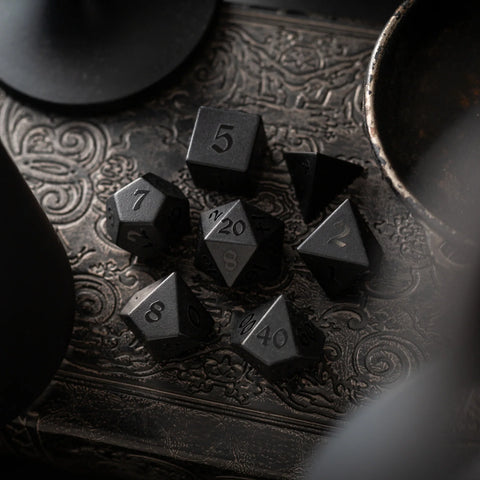
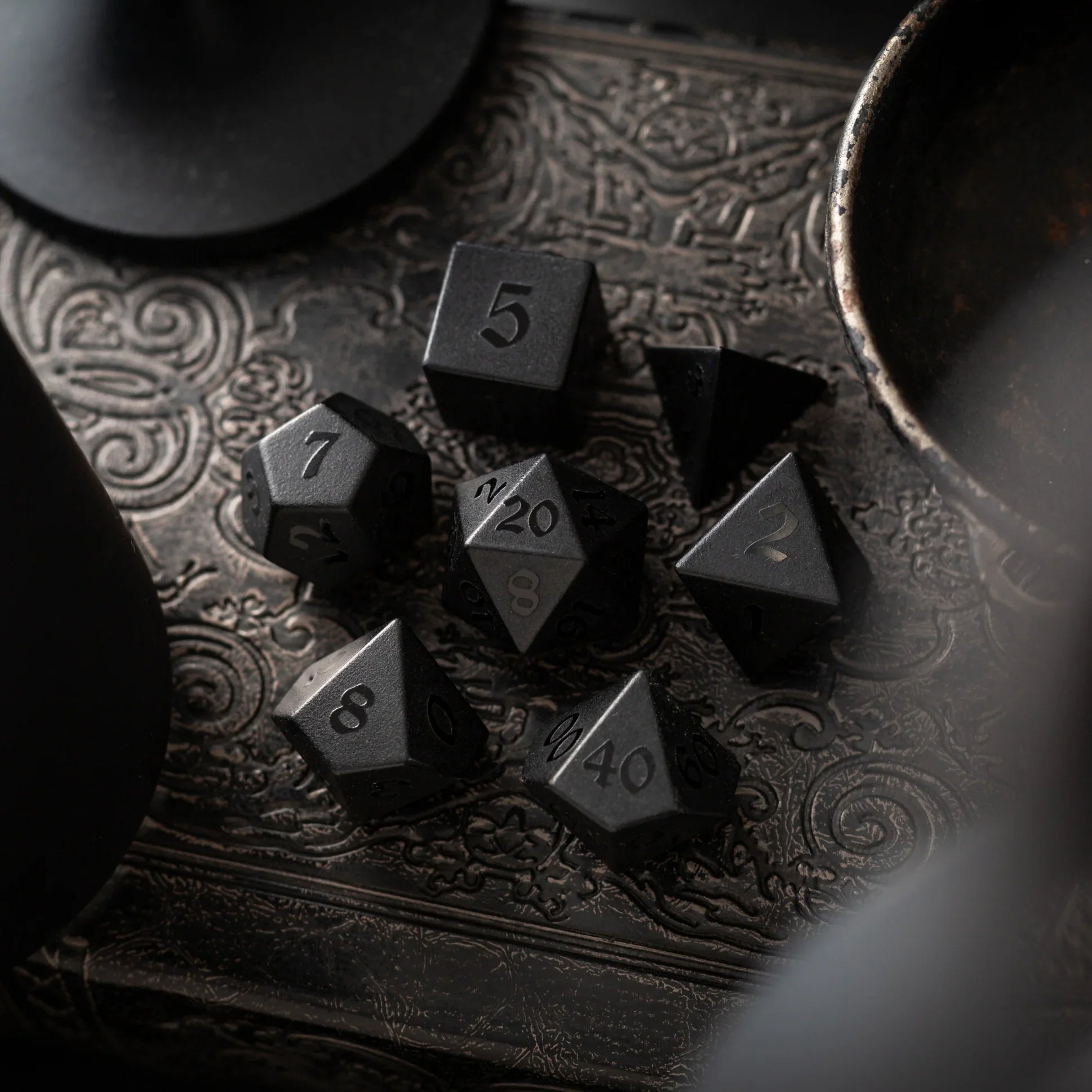
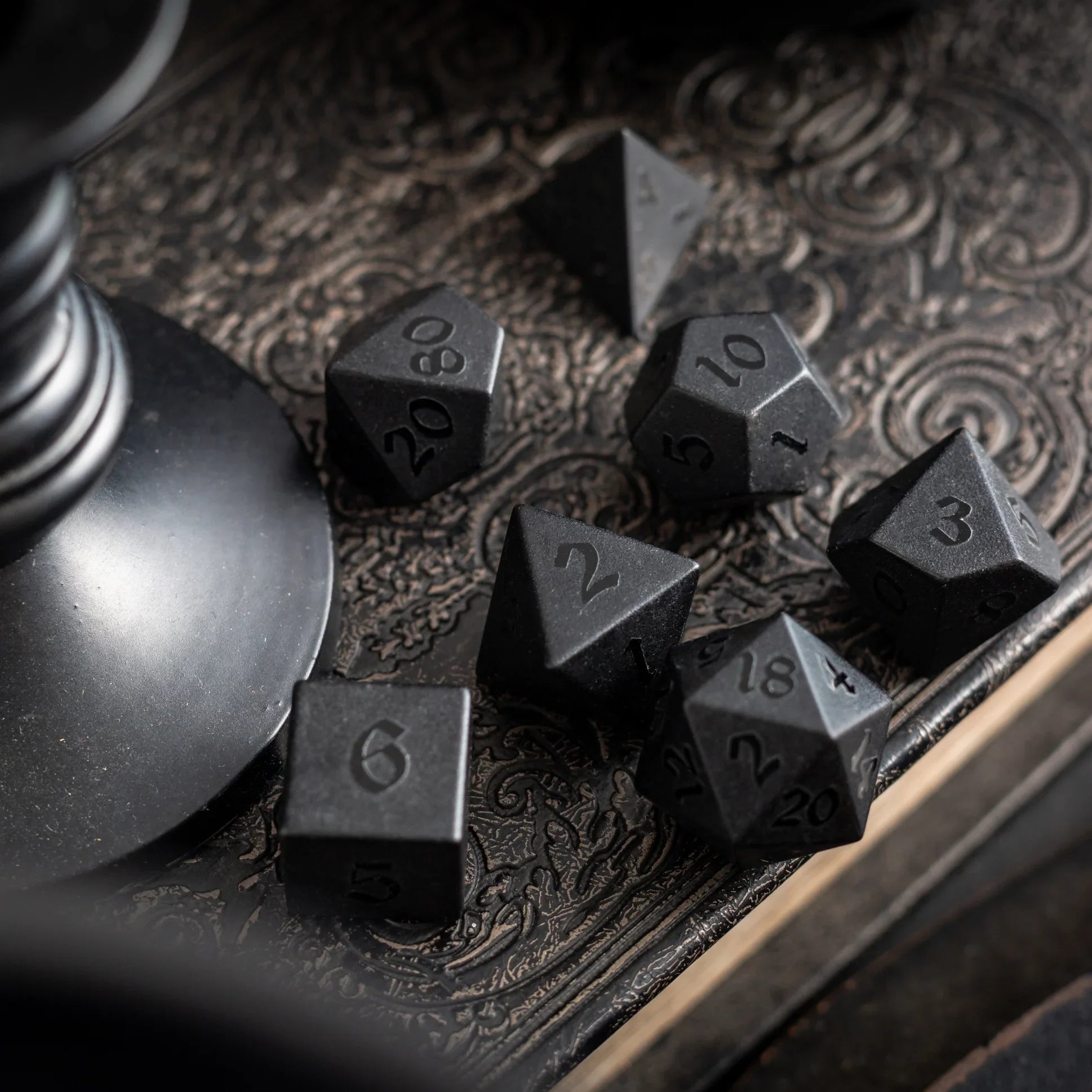
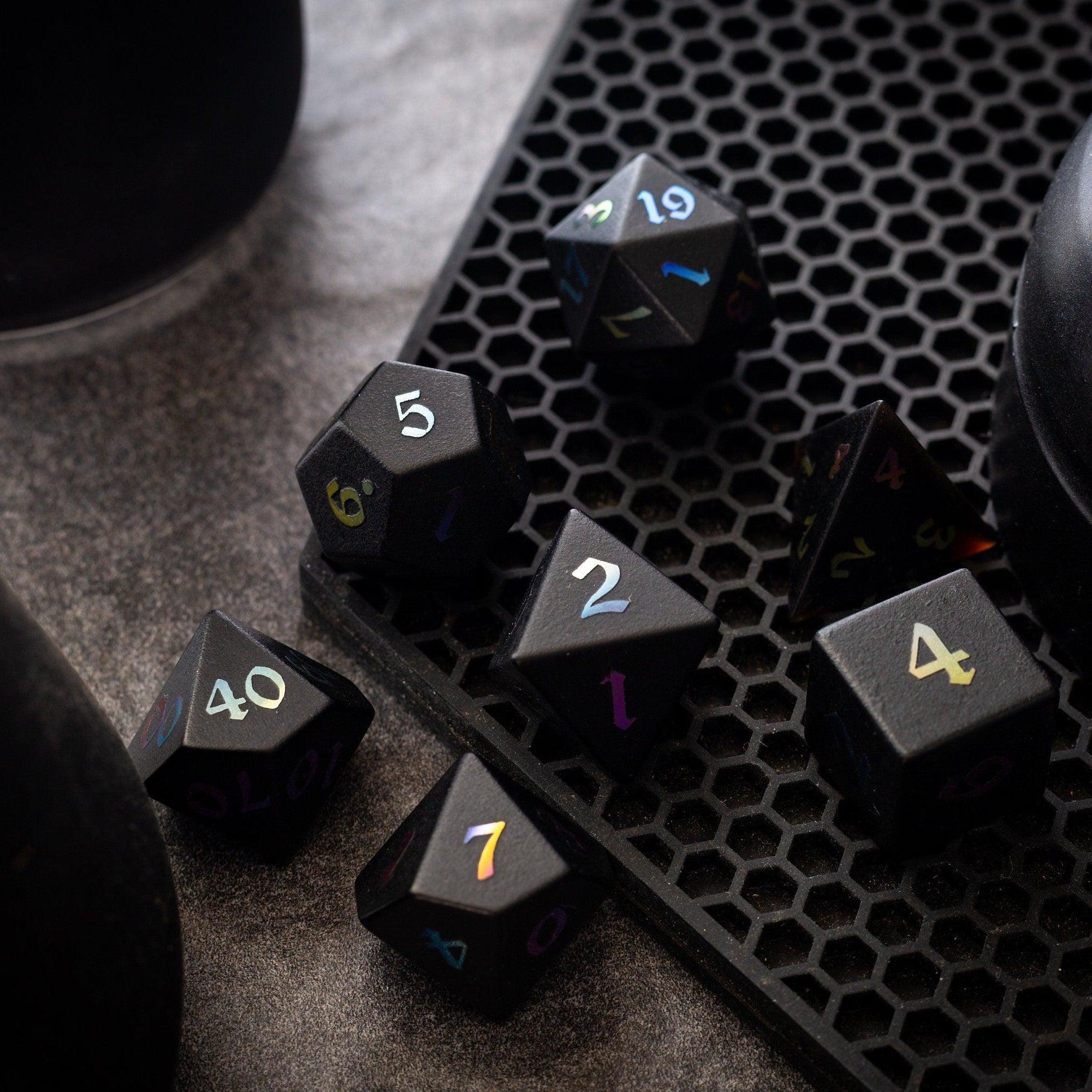
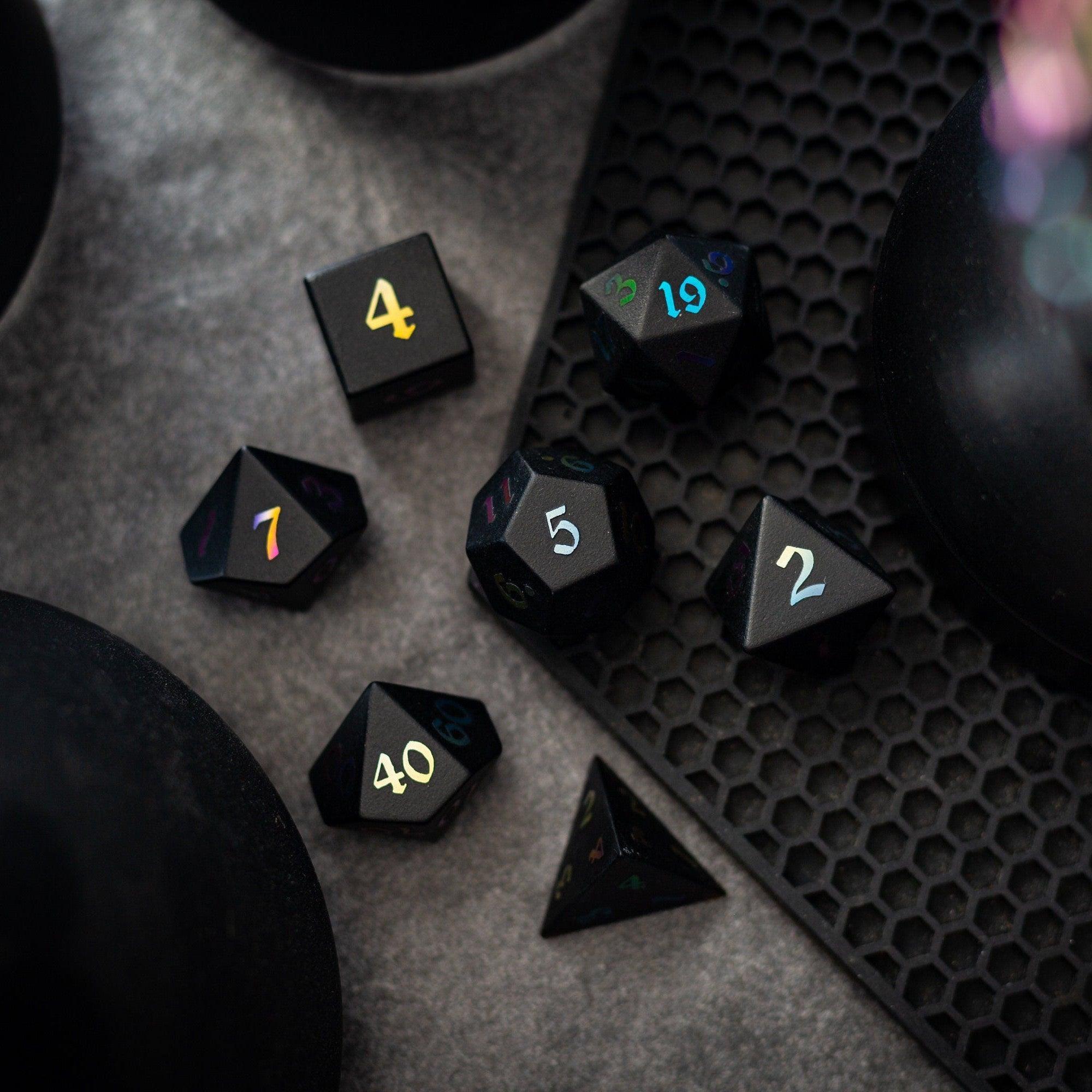
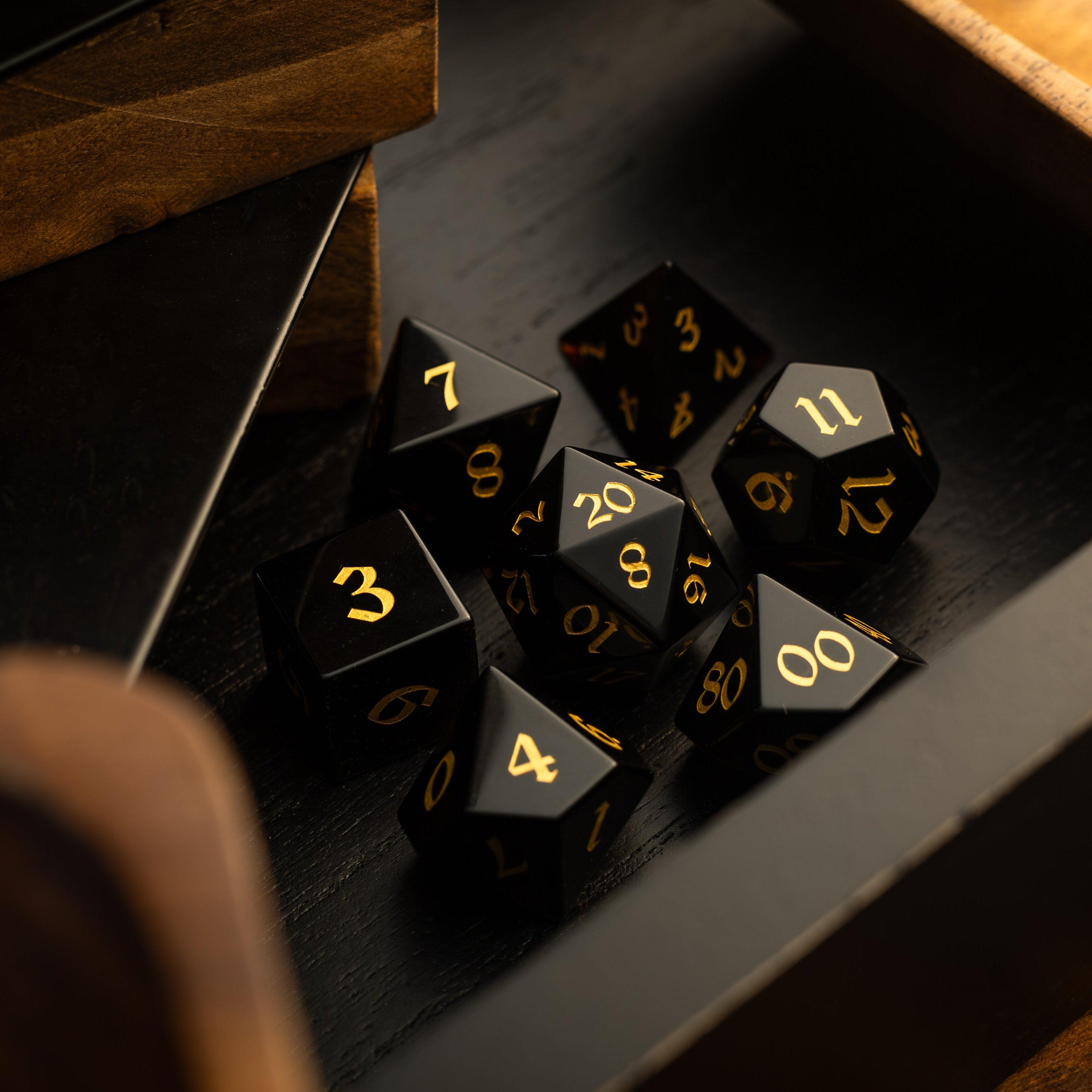
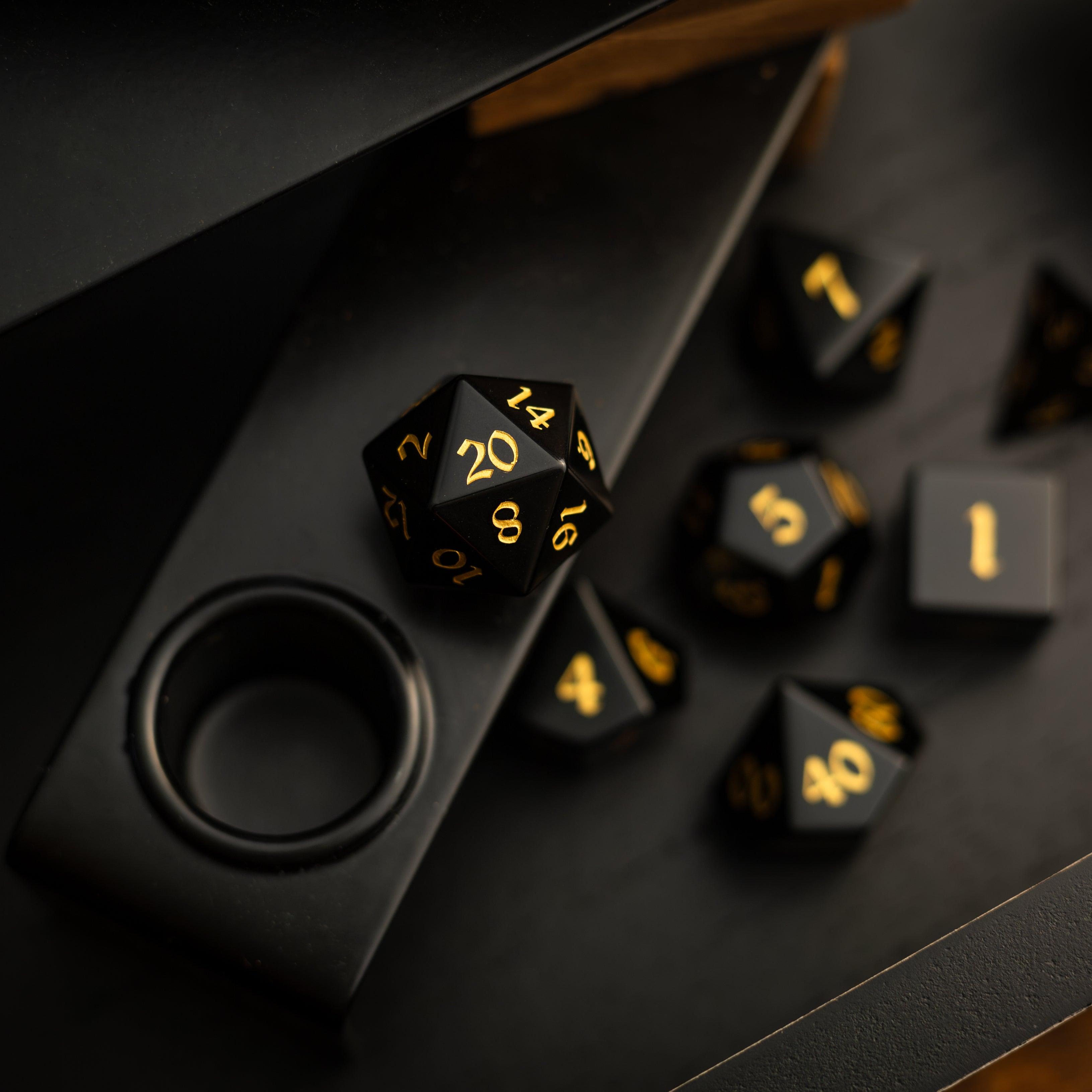
Look for dice for Call of Cthulhu with strong number contrast, clear fonts, and limited visual clutter. Dark horror RPG dice can work well, but dark faces need bright or clearly contrasting numbers.
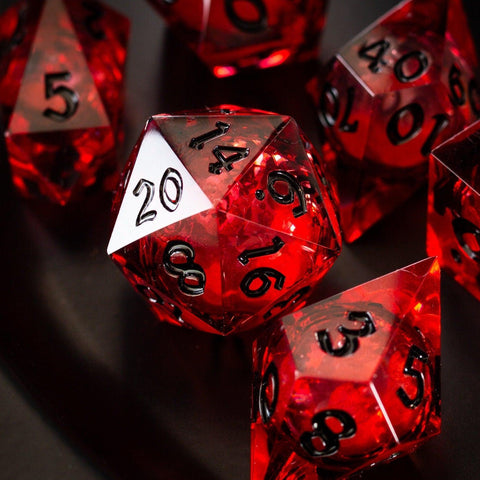
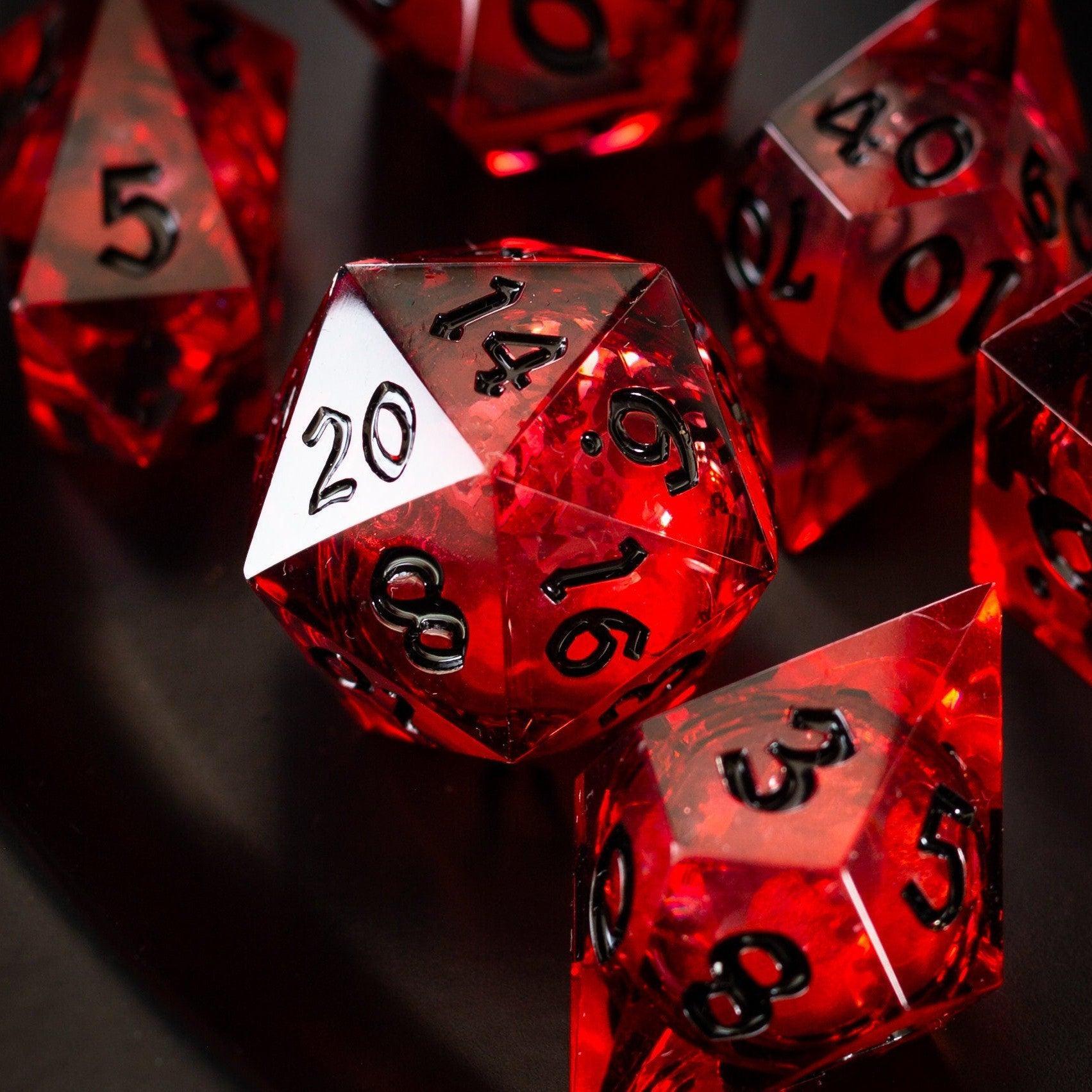
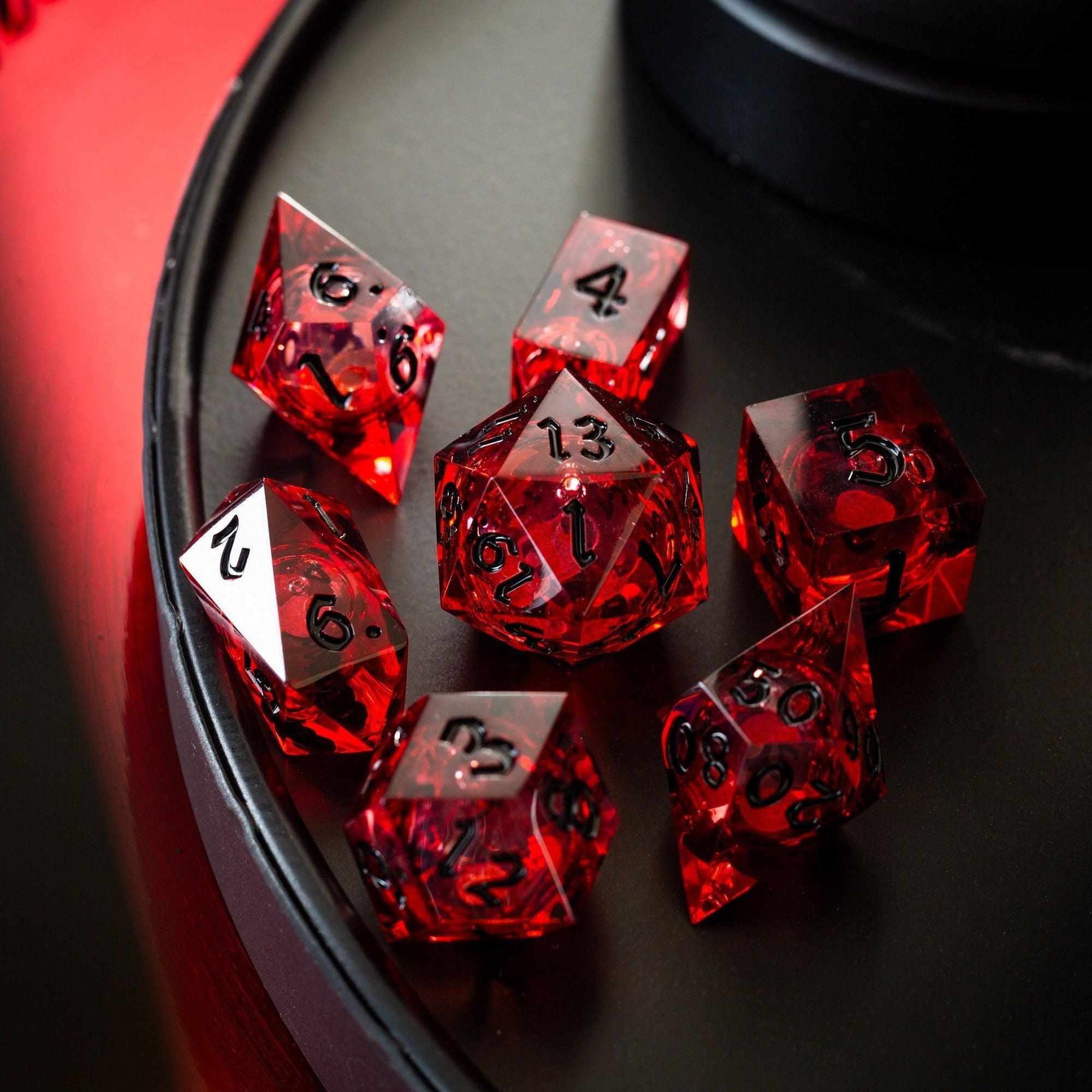
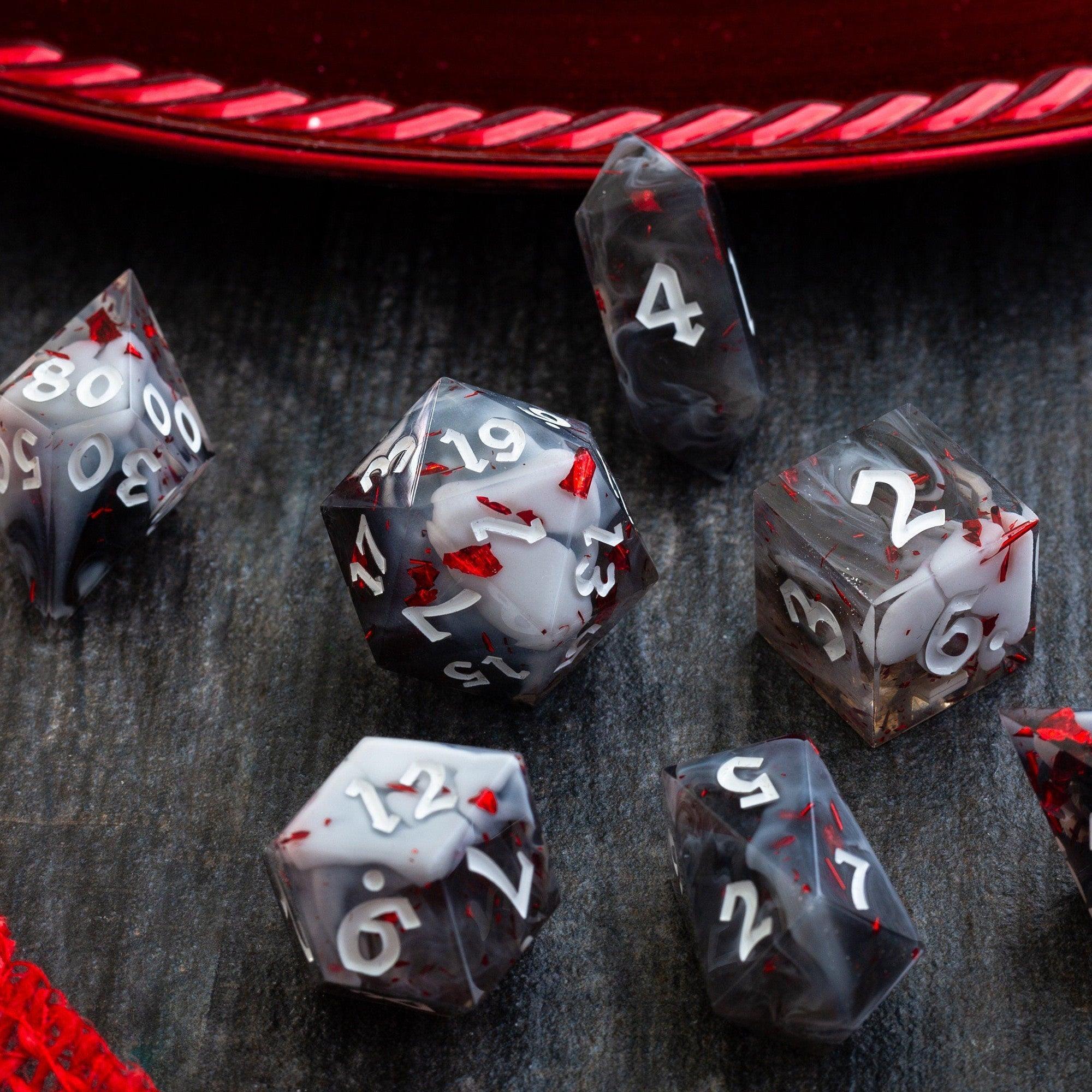
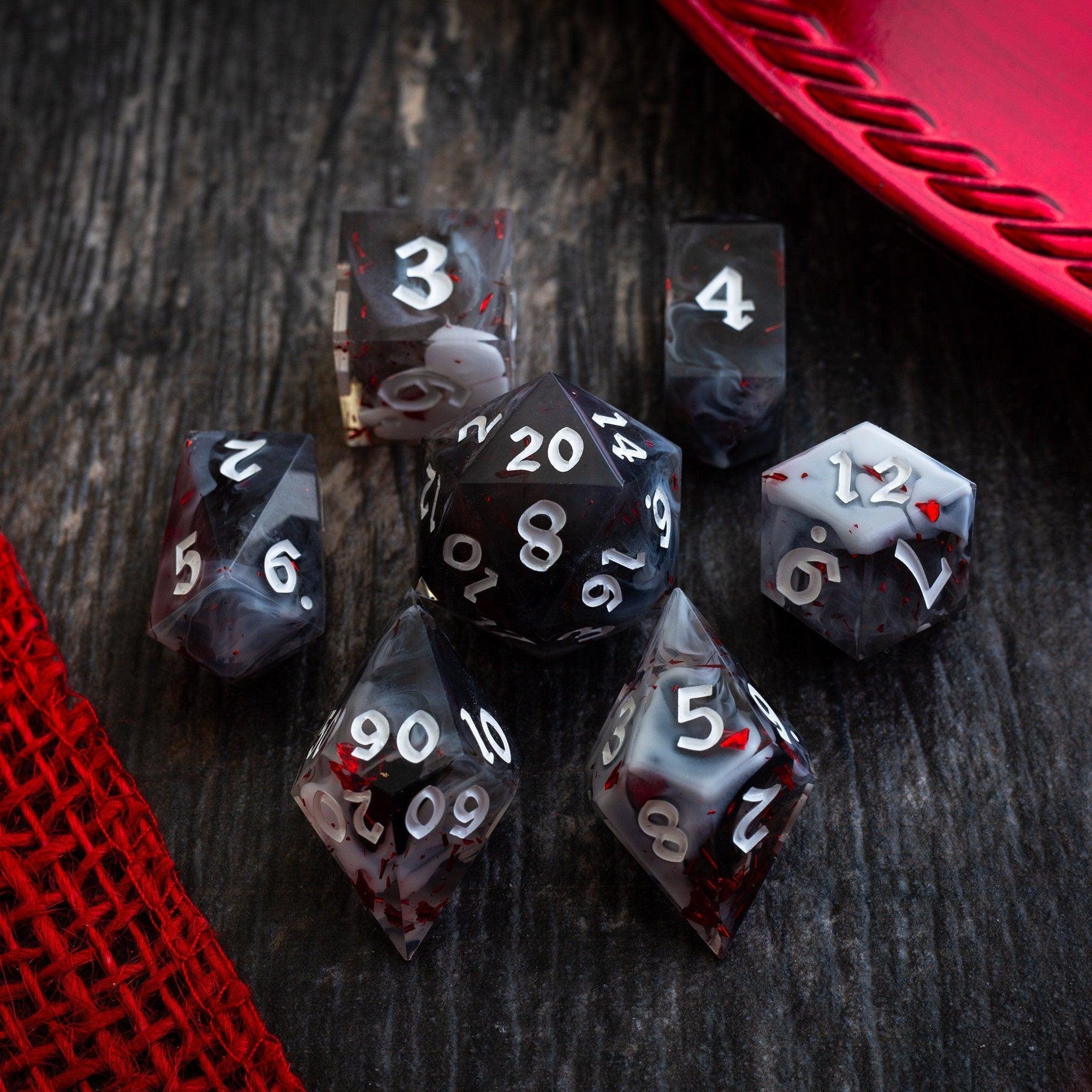
Theme can still be part of the fun. A Smoke and Blood Resin set can suit grim investigations, while Mystic Violet Resin fits dreamlike or occult scenes. If you use a standard seven-piece set, remember that you may still want a second percentile tens die for bonus and penalty rolls.
Compare Common Dice Materials
Material changes how dice feel, sound, roll, and need to be stored. No material is automatically the best dice for Call of Cthulhu, so choose based on your table and how often you play.
| Dice Type | Rolling Feel | Useful For | Main Consideration |
|---|---|---|---|
| Resin Dice | Light and familiar | Frequent play and travel | Check number contrast |
| Sharp-Edge Resin Dice | Crisp faces and corners | Detailed internal designs | Protect edges during storage |
| Metal Dice | Heavy and substantial | Players who prefer more weight | Use a padded rolling surface |
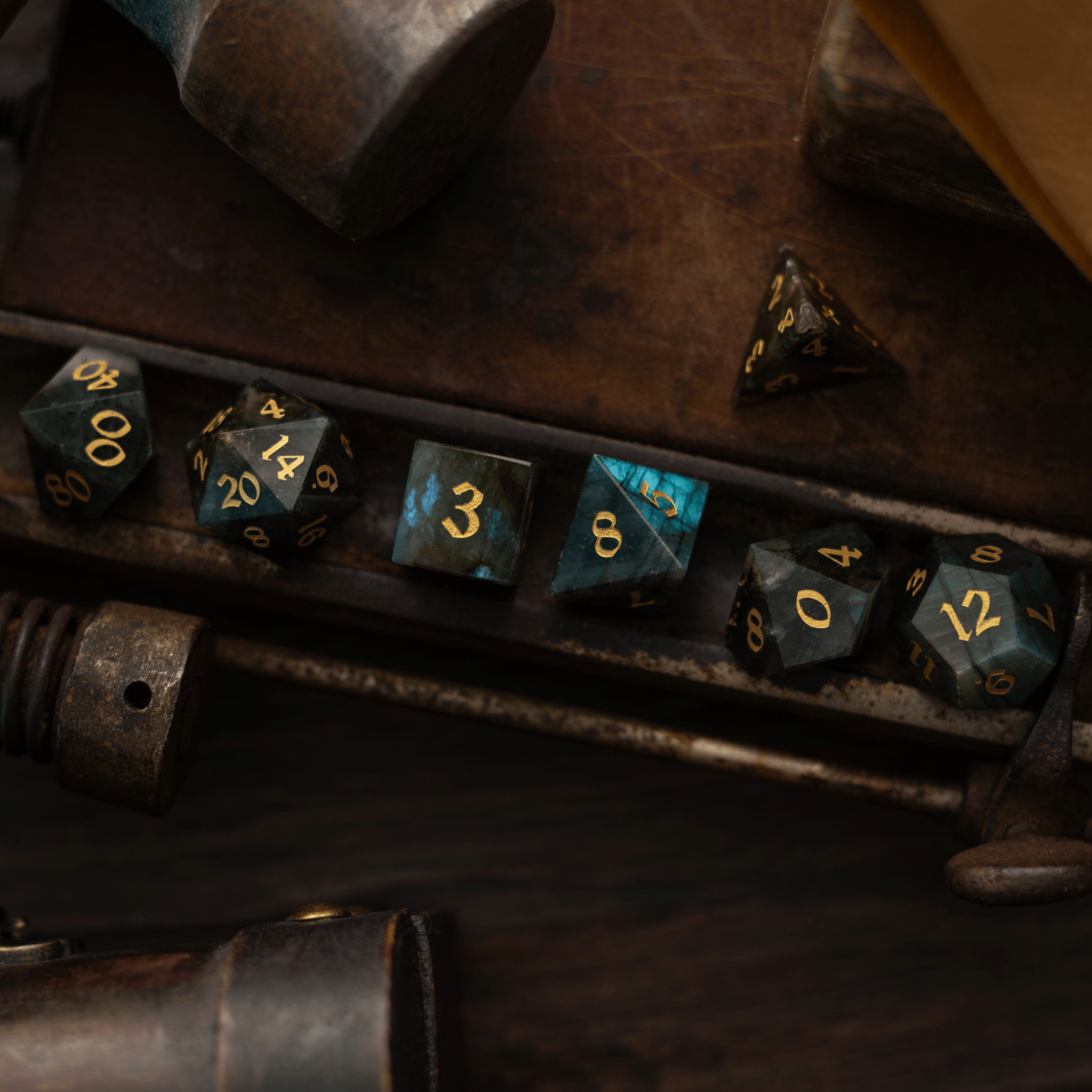
| Gemstone Dice | Dense with natural variation | Collectors and careful home play | Protect against chips |
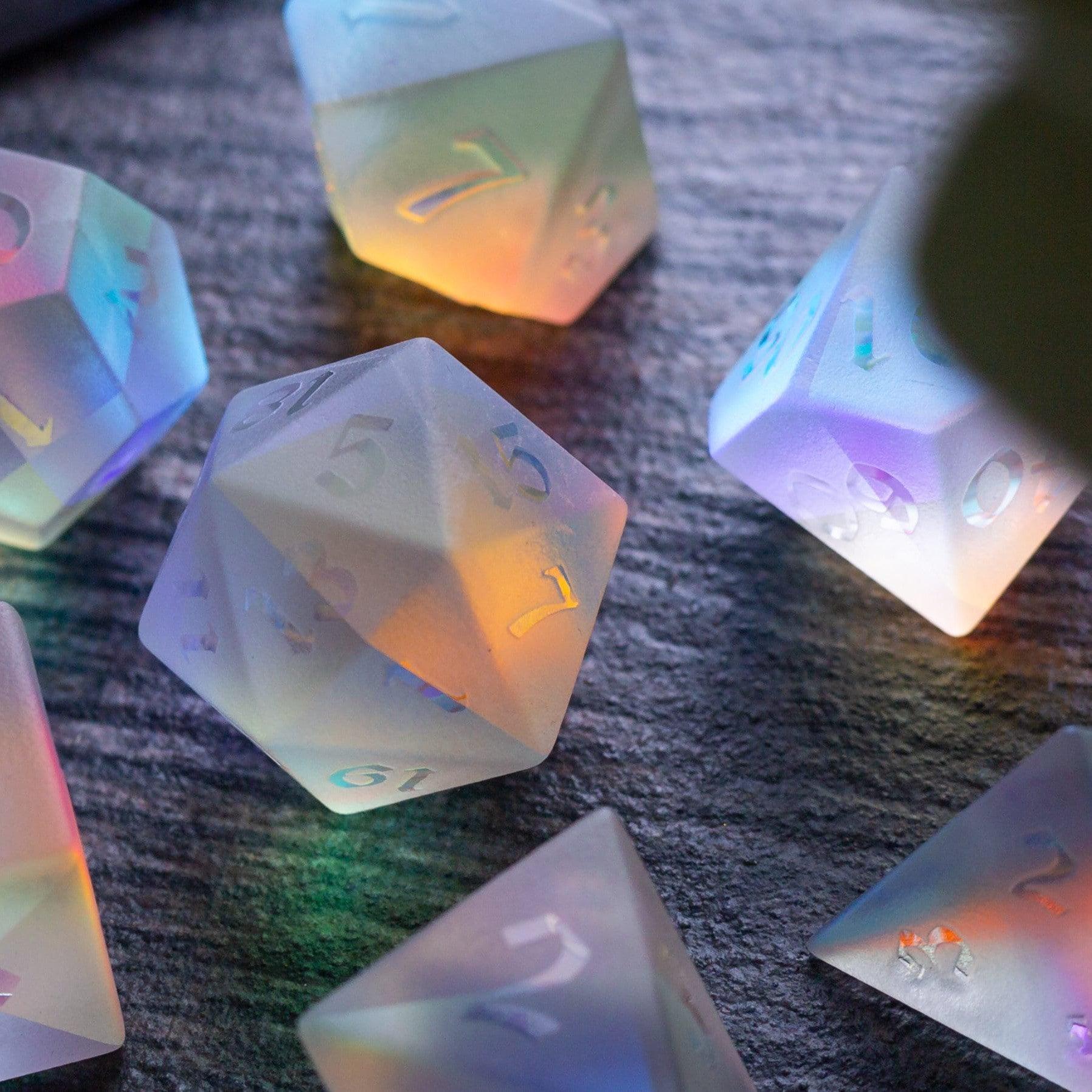
| Glass Dice | Smooth and distinctive | Atmospheric tables | Handle and store gently |
Resin and Sharp-Edge Dice
Resin dice are practical for regular sessions because they are relatively light and easy to transport. Sharp-edge resin dice have crisp corners and can show internal designs clearly, but careful storage helps prevent scratches and cosmetic edge damage.
Metal Dice
Metal dice are heavier and often louder on the table. A padded dice tray helps protect the surface underneath and keeps heavy rolls away from books, screens, miniatures, drinks, and handouts.
Gemstone and Glass Dice
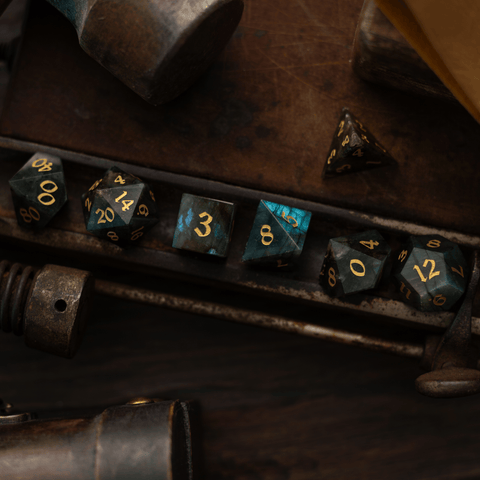
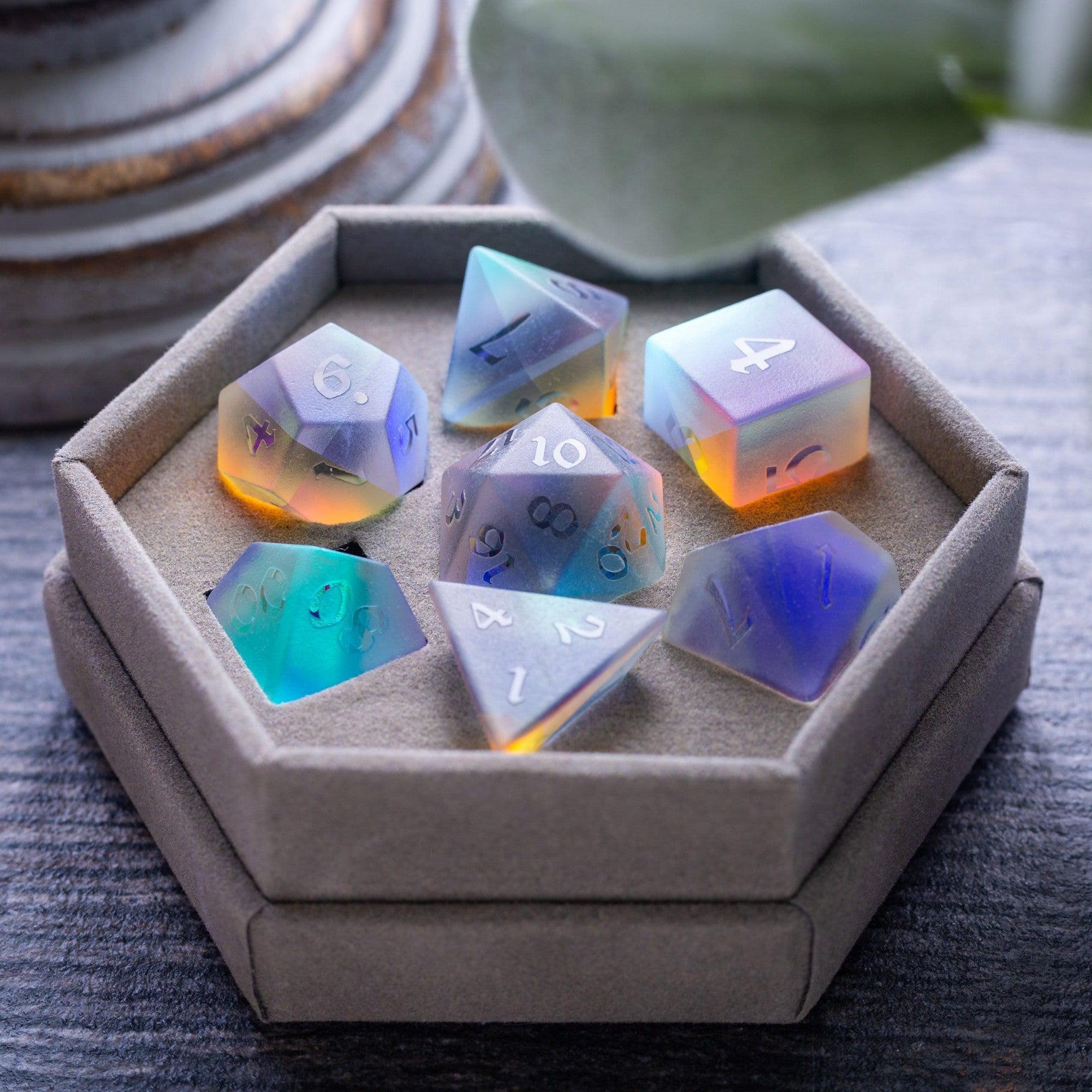
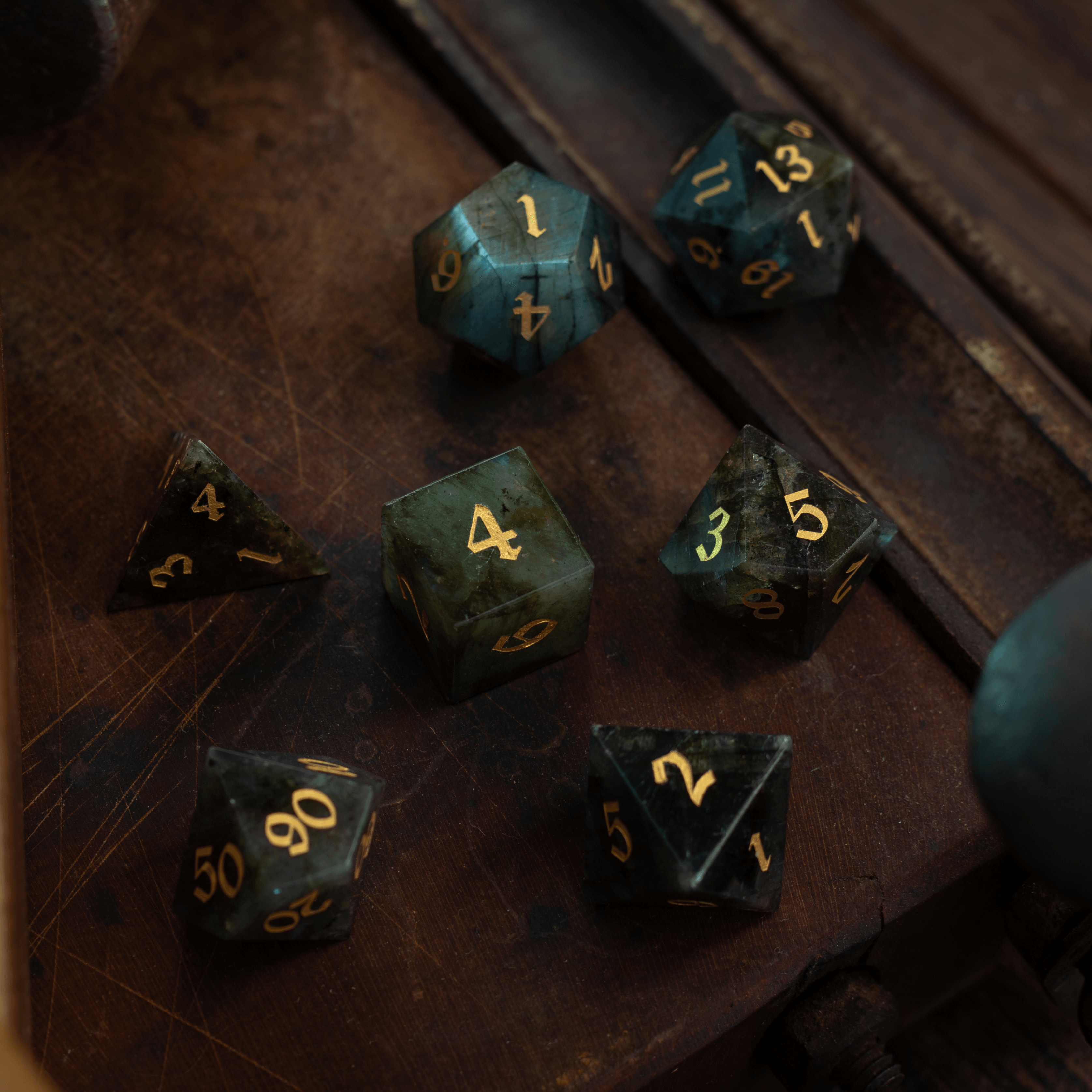
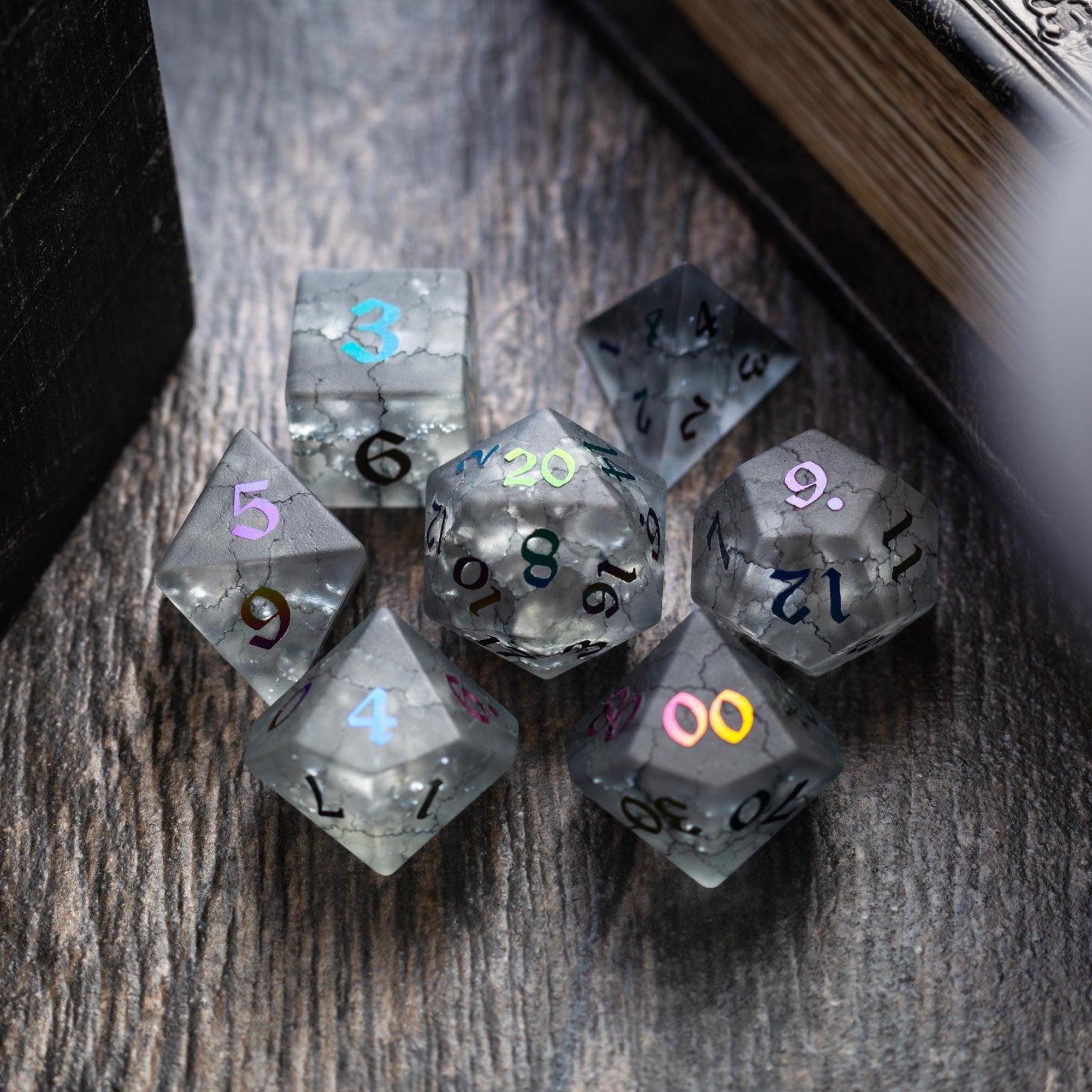
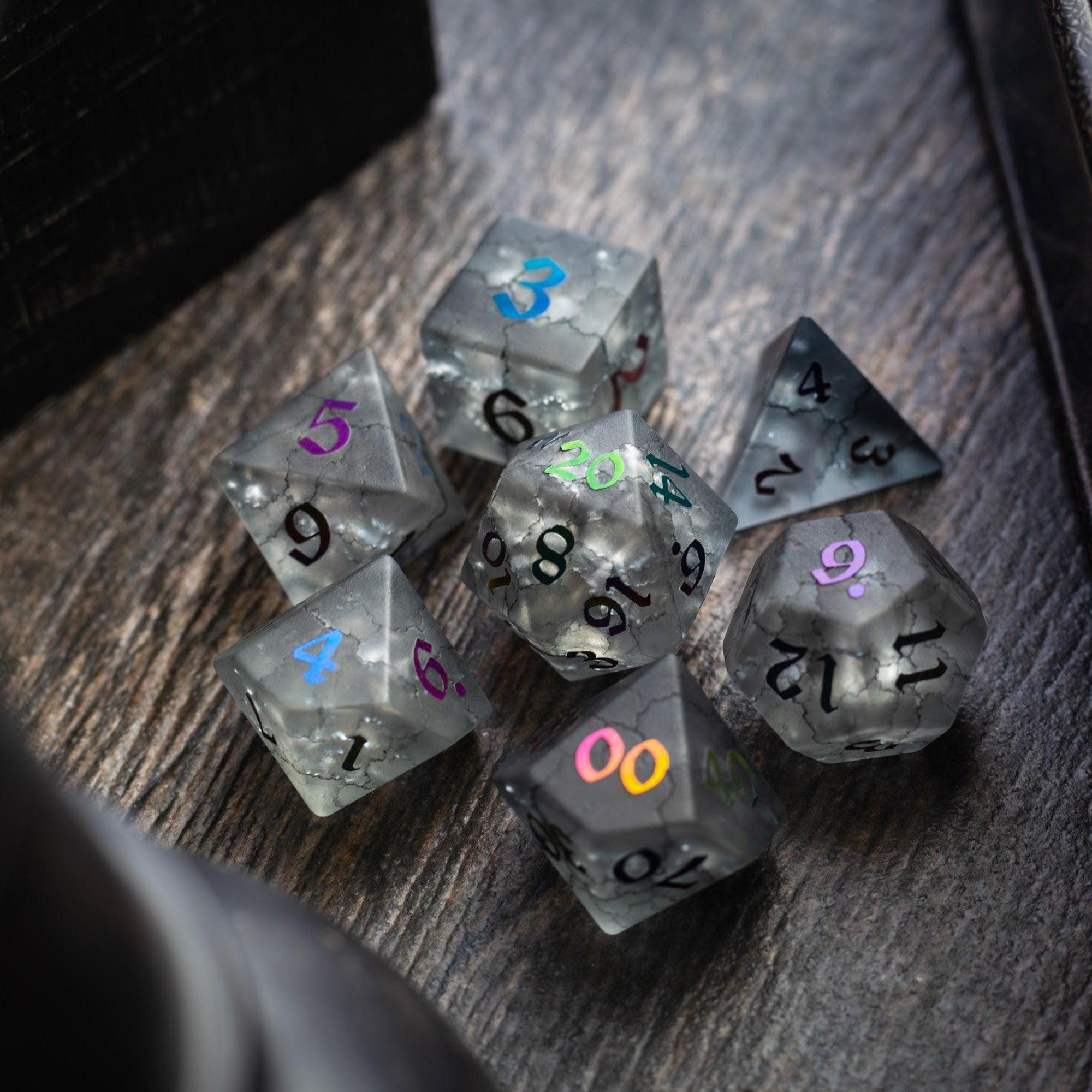
Gemstone and glass dice can add a strong visual mood to an investigation. Black obsidian or blood-red glass can fit occult mysteries and supernatural horror without making the numbers hard to read. These materials deserve gentler handling because hard impacts can chip edges or damage the dice.
What Does "Balanced Dice" Really Mean?
Players often describe good dice as balanced dice, but price, material, sharp edges, or appearance do not prove perfect mathematical balance. Decorative inclusions and natural materials can also introduce small variations.
For ordinary tabletop play, focus on obvious quality problems instead of trying to prove laboratory-level precision. Check for chips, cracks, badly formed faces, or damaged numbering. Roll on a flat surface with enough room for the die to tumble normally. No color, material, or price guarantees better luck.
Use the Right Size, Weight, and Rolling Surface
Standard-sized dice work well for most tables because they are easy to store and fit inside common trays. Oversized percentile dice can be easier to read, but they need more rolling space and may not fit every dice tower.
[Image: horror RPG dice rolling inside a padded dice tray beside notes and old documents]
A padded tray is especially useful for metal, gemstone, and glass dice. It protects the table, reduces noise, and helps keep rolls away from investigator sheets, notes, drinks, and the Keeper's handouts.
Keep Important Rolls Visible
Percentile results are easier to confirm when the dice stay where they land for a moment. This is useful for important skill checks, Sanity rolls, attacks, pushed rolls, and rolls involving bonus or penalty dice. Leaving the dice in place briefly gives everyone time to read the same result before the story moves forward.
Common Mistakes When Choosing Call of Cthulhu Dice
- Choosing dark dice with low-contrast numbers
- Confusing the tens die with the units die
- Reading 00 and 0 together as zero instead of 100
- Forgetting an extra tens die for bonus and penalty rolls
- Buying heavy dice without a suitable tray
- Rolling gemstone or glass dice on hard surfaces
- Choosing oversized dice for a crowded table
- Assuming expensive dice automatically roll more fairly
- Focusing on theme while ignoring readability
Most of these problems are easy to prevent before the first investigation begins.
Caring for Your Horror RPG Dice
Store gemstone and glass dice so they do not repeatedly strike one another. Use a padded tray for heavier materials. Wipe resin dice gently with a soft cloth, keep all dice away from extreme heat, and avoid harsh cleaners unless the maker specifically says they are safe for that material.
Inspect premium dice from time to time for chips, cracks, worn numbering, or other damage. Good storage protects the dice and the other accessories packed beside them.
Choose Dice That Keep the Mystery Moving
The best Call of Cthulhu dice are clear, practical, comfortable, and suited to your table. Start with an easy-to-read percentile pair, keep an extra tens die available for bonus and penalty rolls, and choose the remaining polyhedral dice based on the material and feel you prefer.
Theme can make a set feel right for cosmic horror, but function matters more. When the room is quiet, the clues have led somewhere they should not have, and the Keeper asks for a percentile roll, you should be able to read the result immediately, even when you desperately wish you had rolled something else.
:::

Leave a comment
This site is protected by hCaptcha and the hCaptcha Privacy Policy and Terms of Service apply.