
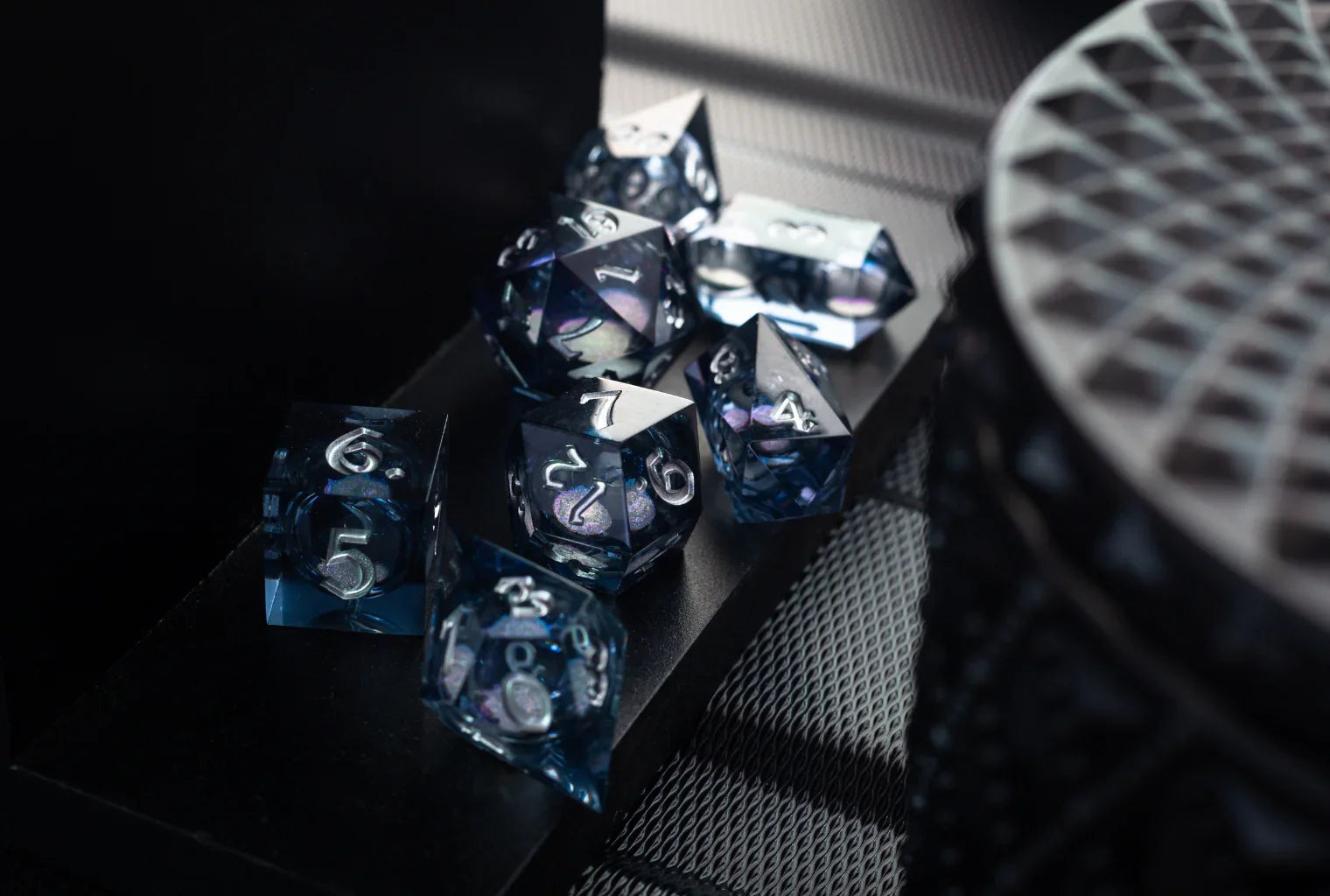
Polyhedral Dice Collection: Elevate Your Tabletop Rolls
Building a polyhedral dice collection is one of the most enjoyable parts of the tabletop RPG hobby. Some players are perfectly happy with a single set, while others enjoy collecting dice that match different characters, campaigns, or fantasy themes. There is no right or wrong approach. Collecting multiple dice sets is a personal choice that combines practicality with an appreciation for craftsmanship.
A thoughtfully built collection can make game nights more organized, help you quickly grab the right dice for a character, and add personality to every adventure. Whether you enjoy classic acrylic sets or prefer premium materials like gemstone, metal, glass, resin, or liquid core designs, every collection tells its own story.
Unlike game rules or character builds, collecting polyhedral dice is about finding pieces that fit your style rather than chasing better performance. Different materials change the appearance, weight, feel, and care requirements of the dice, but they do not inherently improve fairness or game mechanics.
Why Many Tabletop Players Collect Multiple Dice Sets
One complete set of D&D dice sets is enough to play most tabletop RPGs, but many players naturally expand their collections over time.
Common reasons include:
-
Matching dice to different character classes or personalities
-
Keeping extra sets for guests or new players
-
Speeding up gameplay by rolling multiple dice at once
-
Appreciating different materials and artistic designs
-
Collecting memorable souvenirs from campaigns or conventions
-
Enjoying the craftsmanship behind premium dice
For many hobbyists, collecting dice becomes another creative outlet alongside painting miniatures, building terrain, or designing characters.
Understanding the Standard Polyhedral Dice Set
Most polyhedral dice sets include seven dice, each serving a different purpose during gameplay.
| Die | Common Use |
|---|---|
| d4 | Small weapons, spells, and minor damage rolls |
| d6 | Weapons, abilities, healing, and many game mechanics |
| d8 | Martial weapons, spells, and class abilities |
| d10 | Damage rolls, percentages, and special abilities |
| Percentile Die (d%) | Used with a d10 to generate numbers from 1 to 100 |
| d12 | Heavy weapons and powerful effects |
| d20 | Attack rolls, saving throws, skill checks, and most major decisions |
The d20 is often the most recognized die because it determines whether many actions succeed or fail. However, every die in the set plays an important role during a campaign.
Some experienced players also collect duplicate dice for frequently rolled damage, allowing them to roll several dice at the same time instead of making repeated rolls.
Comparing Common Dice Materials and Craftsmanship
One of the pleasures of building a dice collection is exploring different materials. Each offers a unique appearance and tactile experience without changing the fairness of the game.
Resin Dice
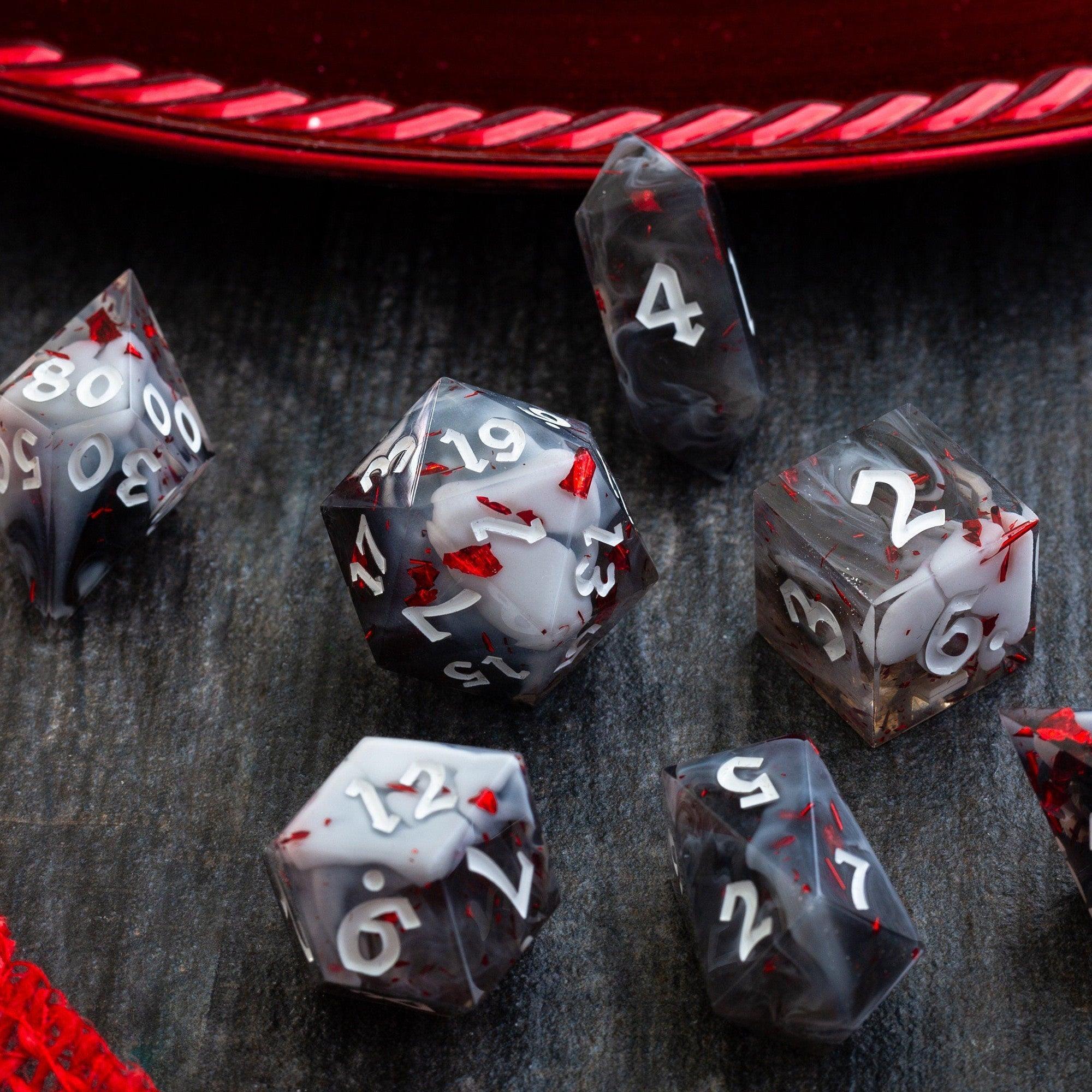
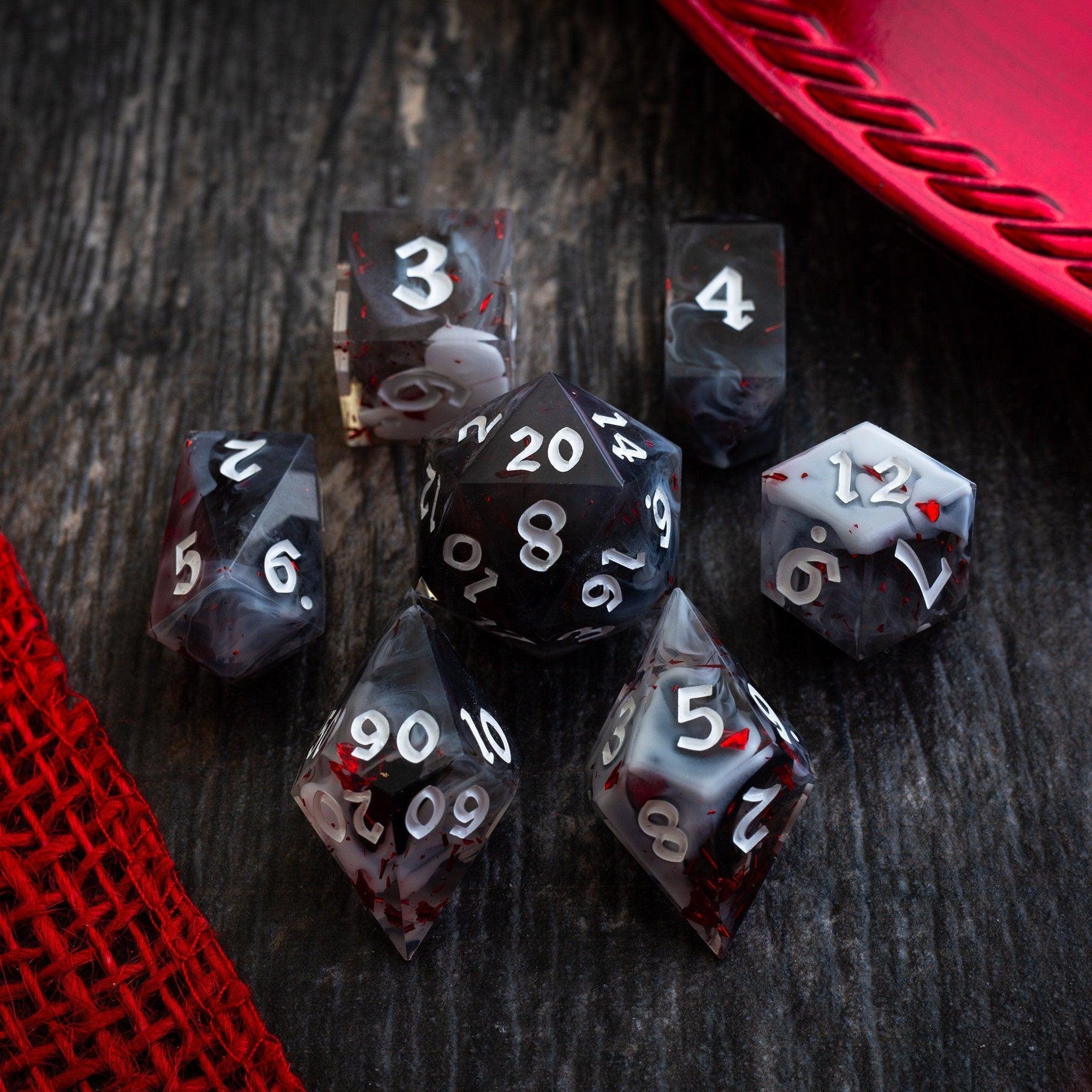
Resin remains one of the most popular choices because it offers vibrant colors, swirling patterns, glitter effects, and lightweight handling.
Runic Dice offers beautifully crafted resin collections such as the Space Bear Resin Dice, Starlit Rift Resin Dice, and Mystic Violet Resin Dice, each providing distinctive fantasy-inspired designs that are easy to read during long gaming sessions.
Metal Dice
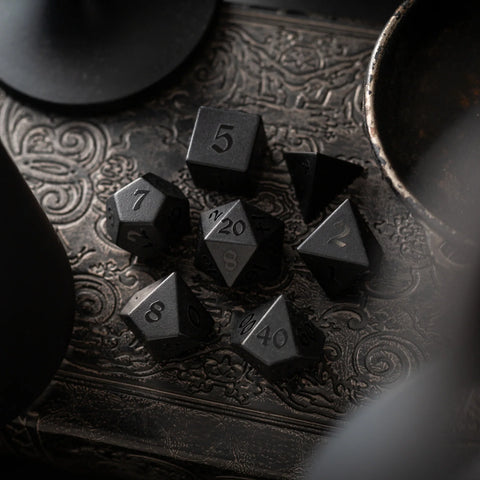
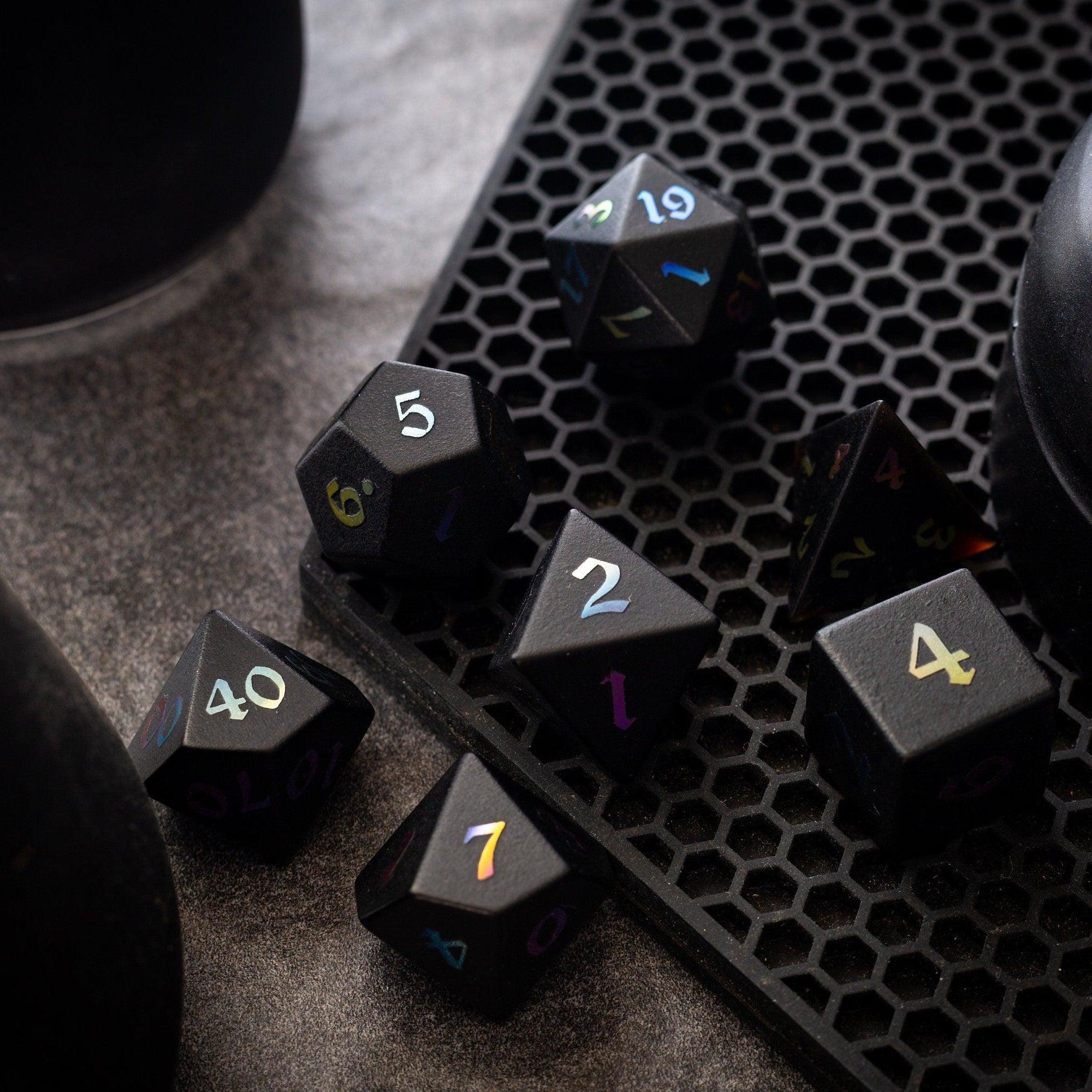
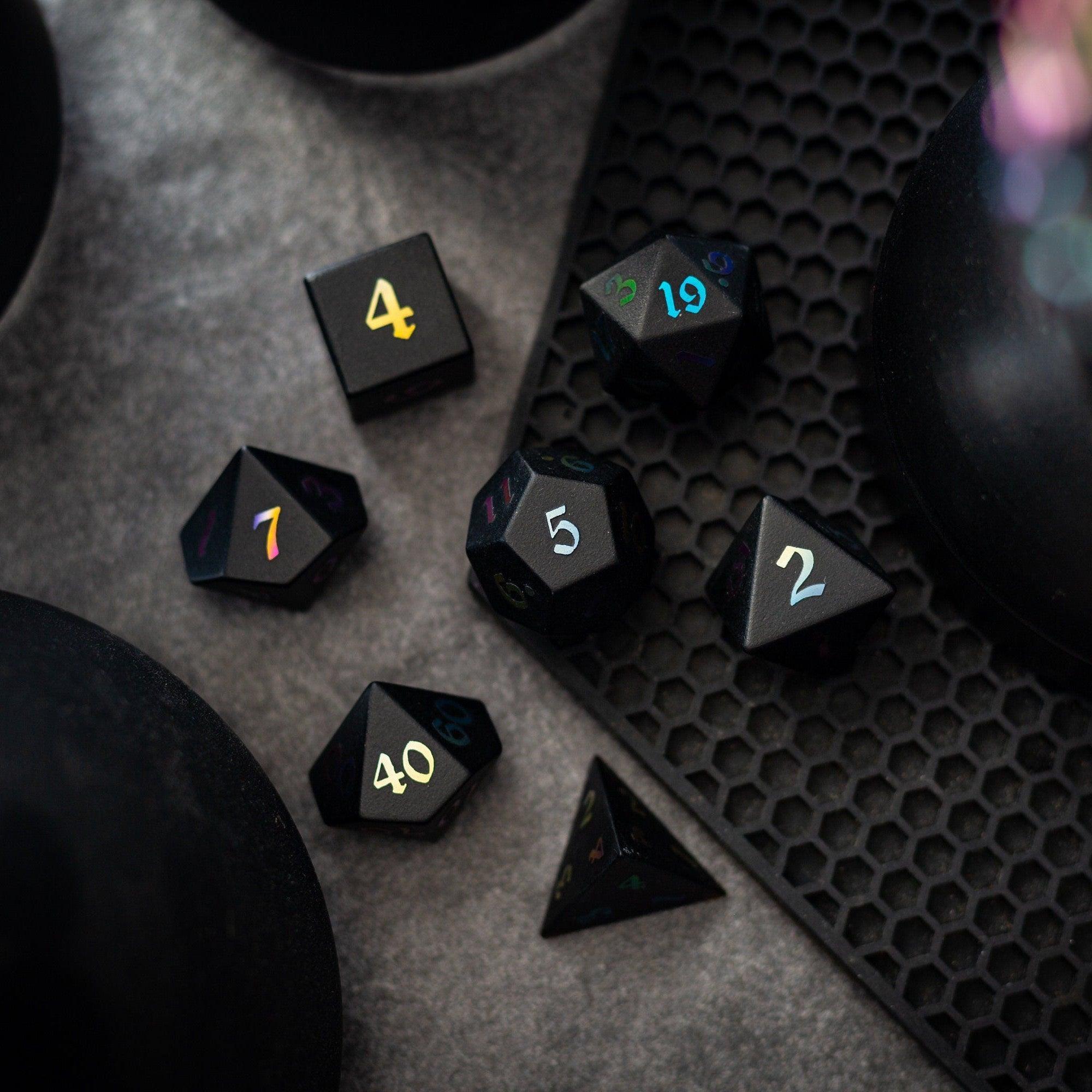
Metal dice provide a satisfying weight and crisp engraved numbers. Many collectors enjoy their solid feel and bold table presence.
Because metal dice are heavier than other materials, using a padded dice tray helps protect both the dice and the gaming surface.
Gemstone Dice
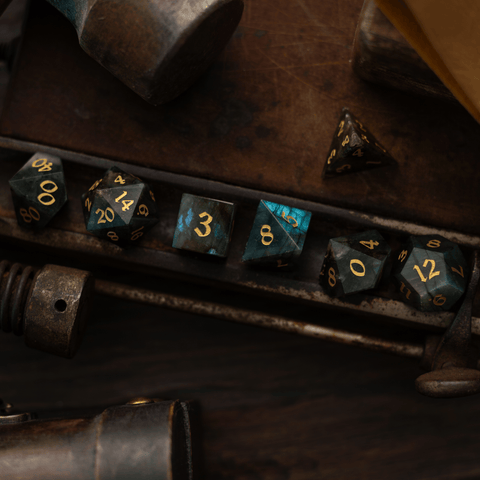
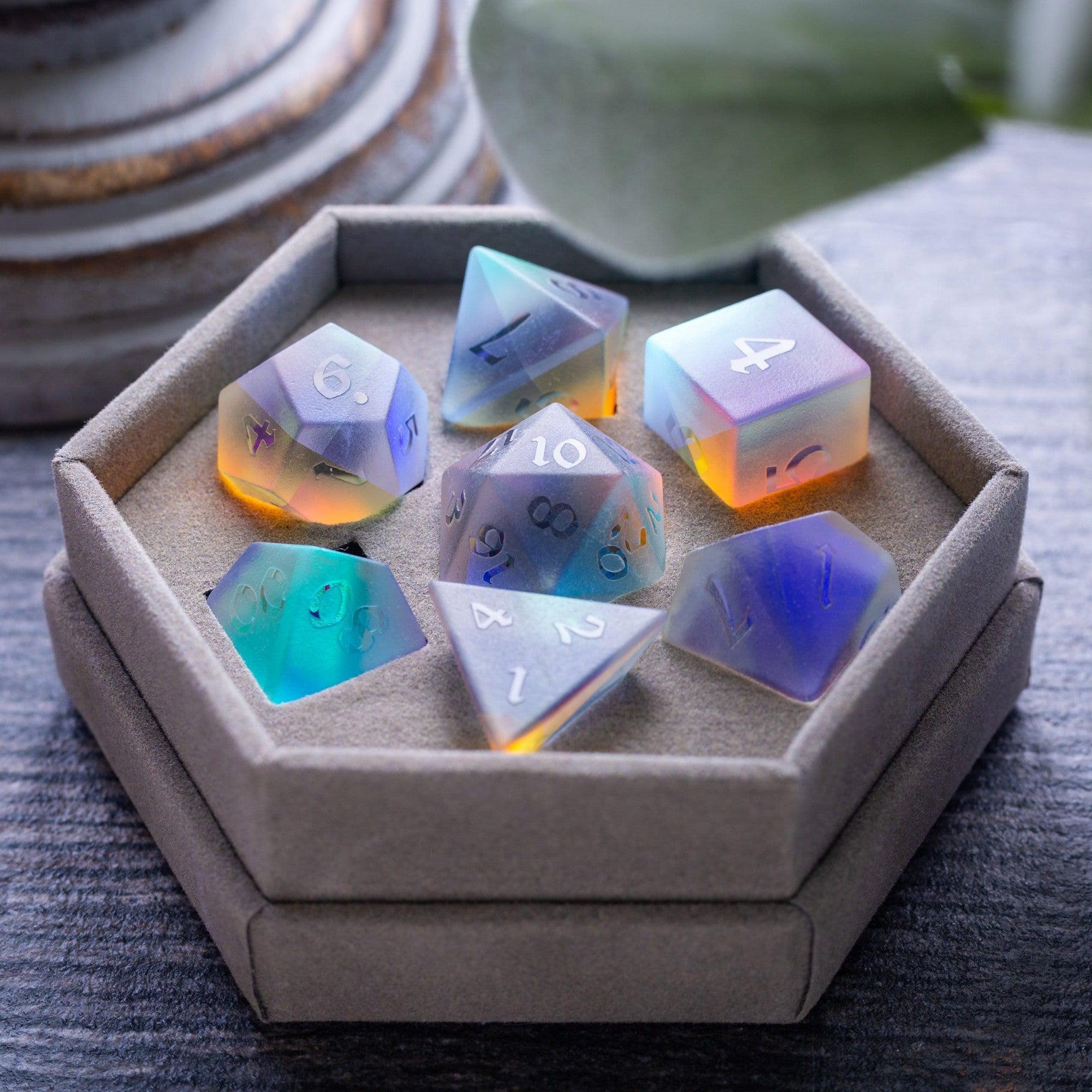
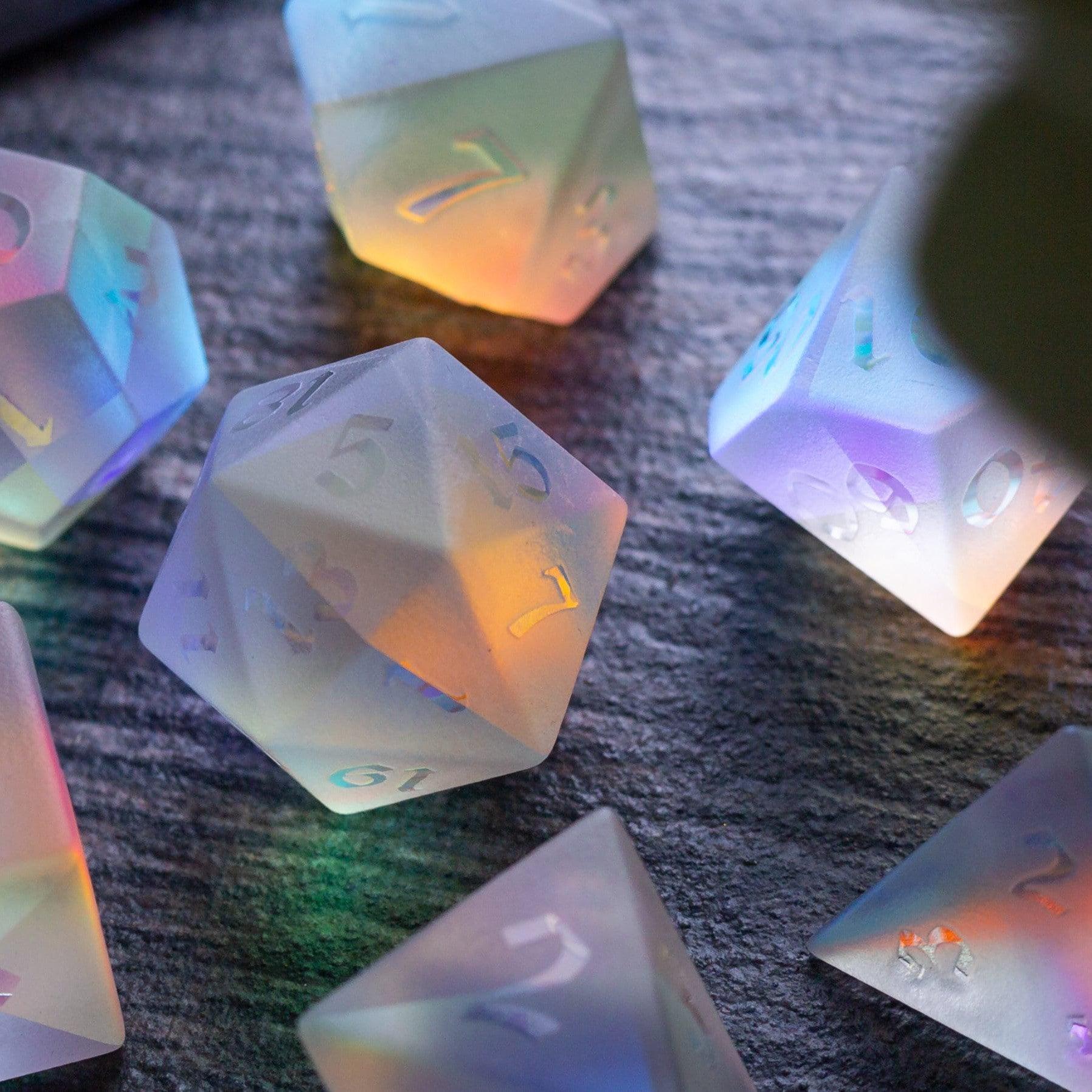
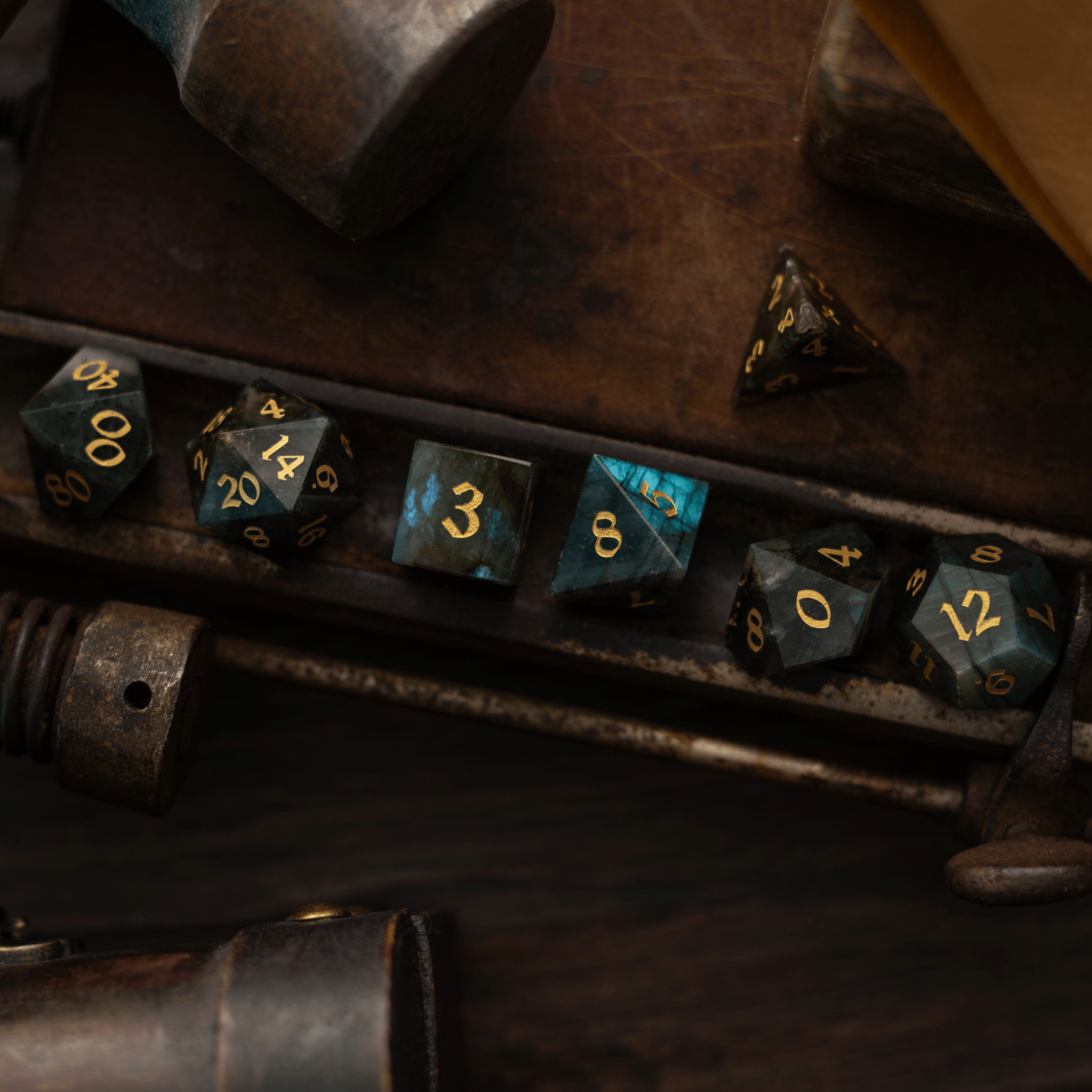
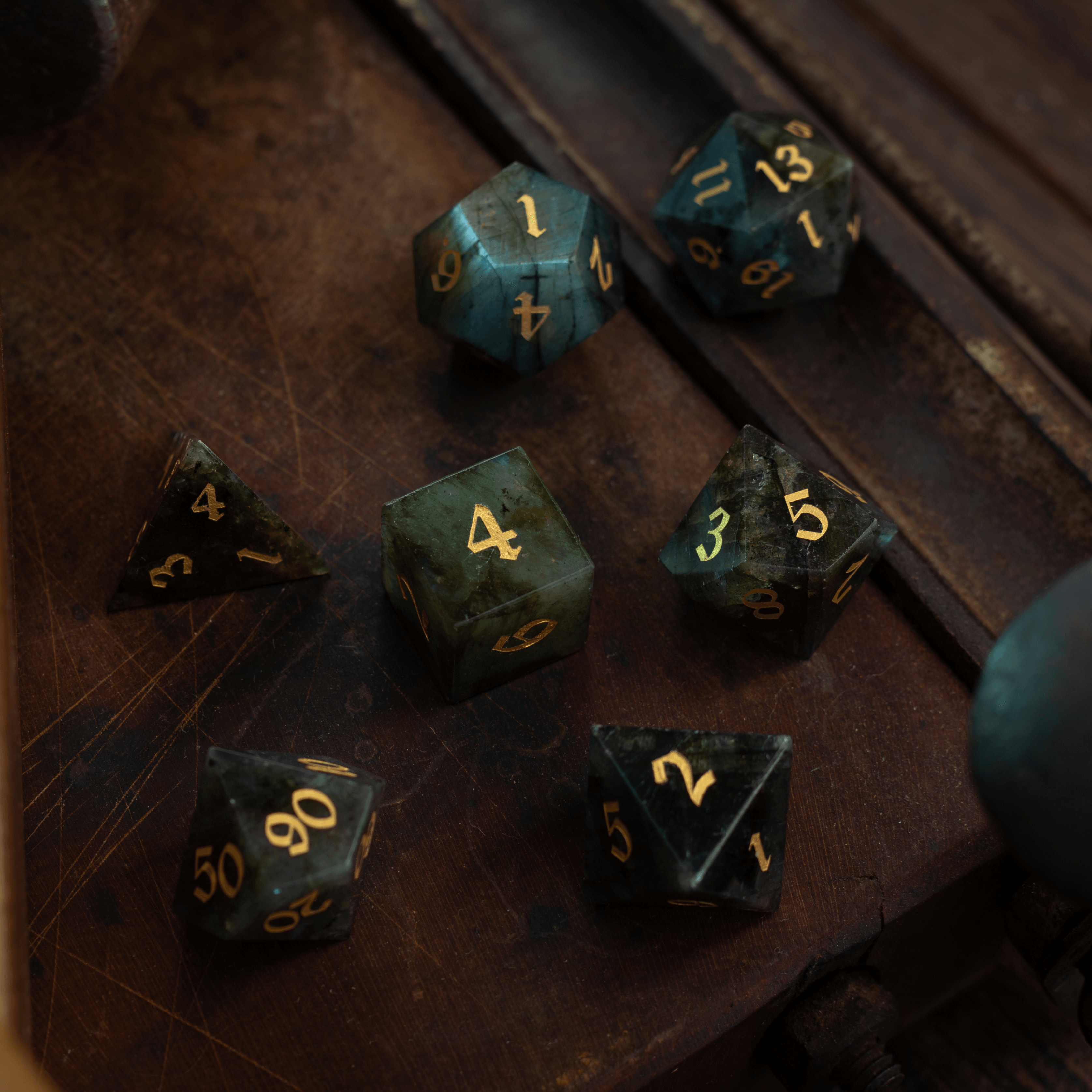
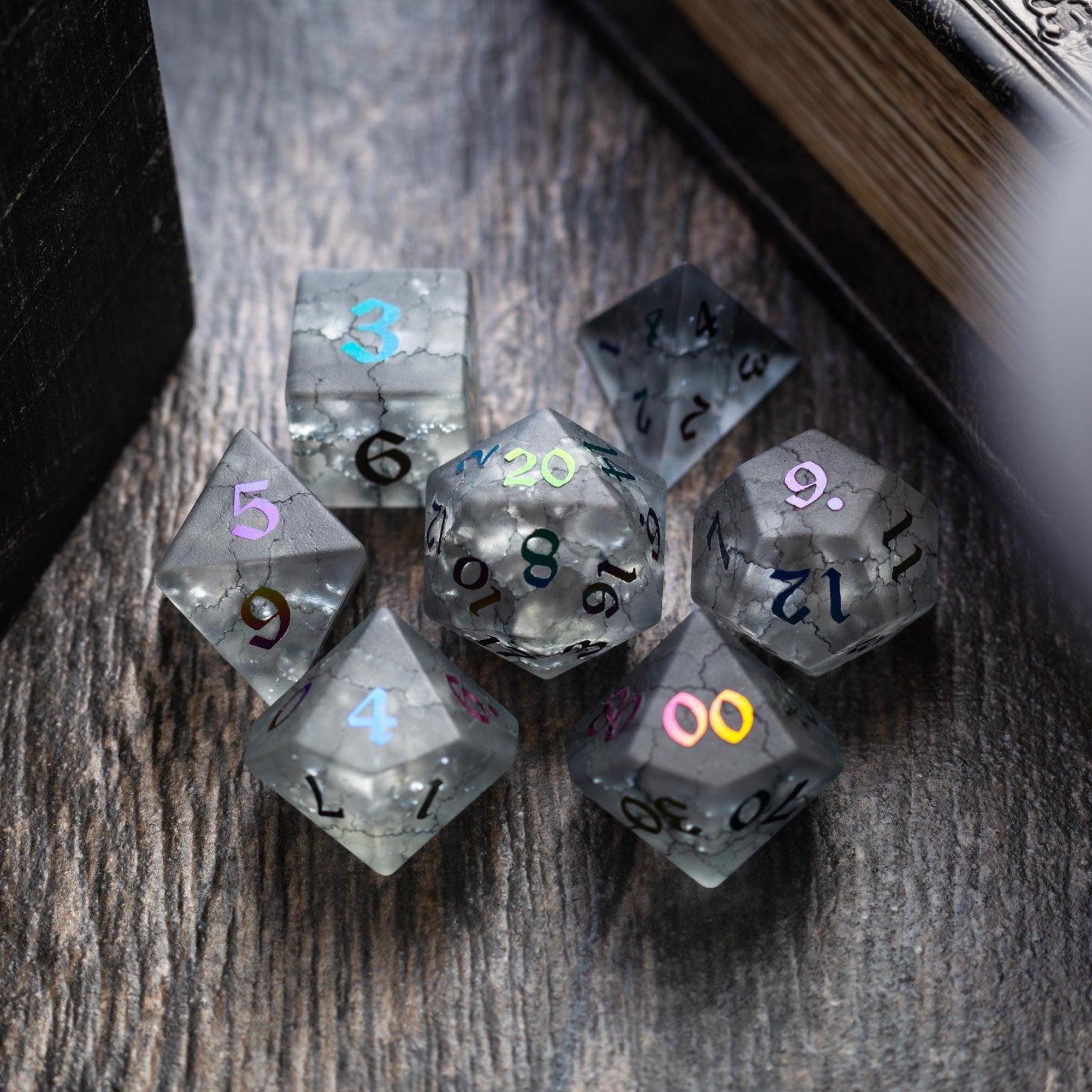
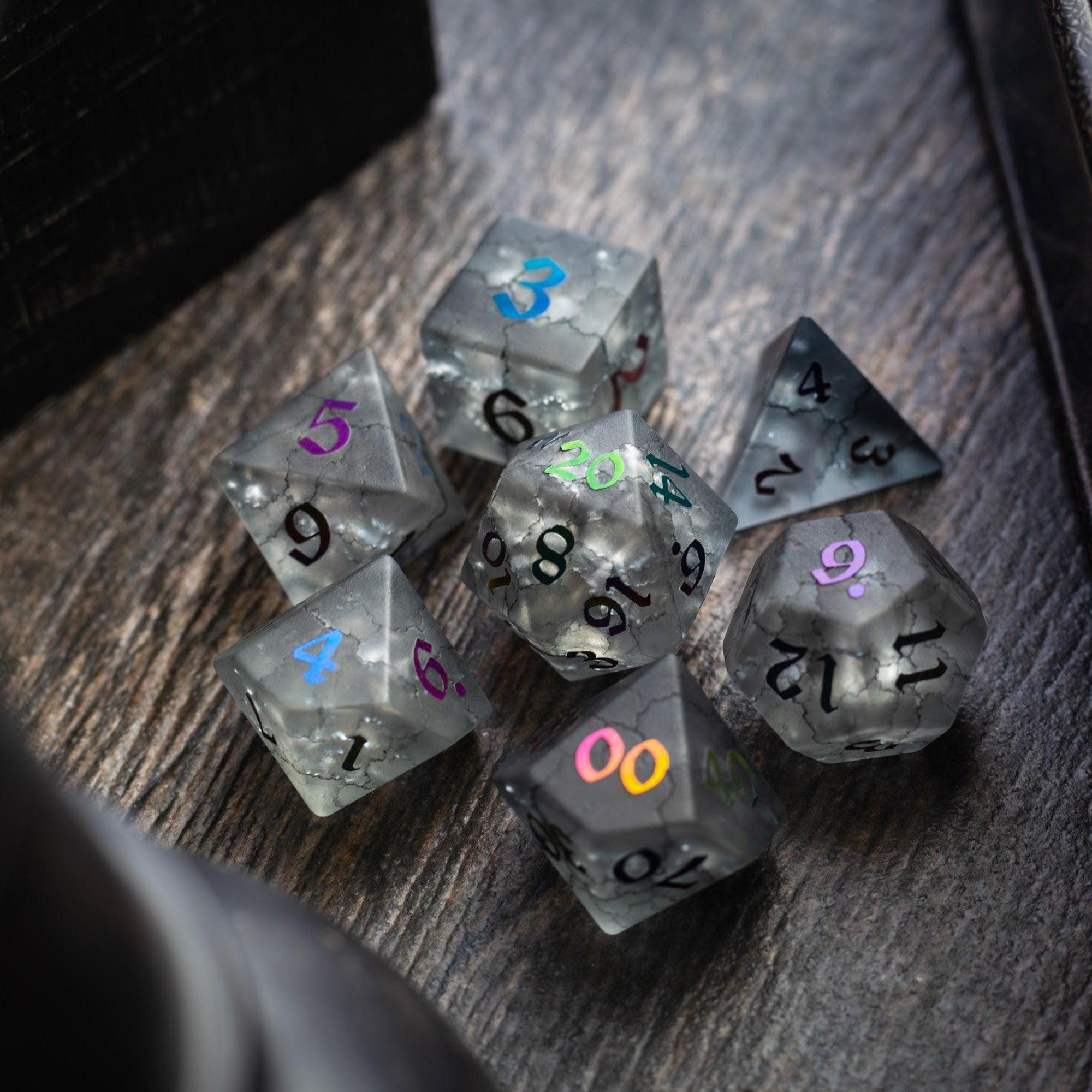
Natural gemstone dice showcase the beauty of materials formed over thousands of years. Every set has subtle variations in color and pattern.
Popular choices include:
-
Purple Amethyst
-
Labradorite
-
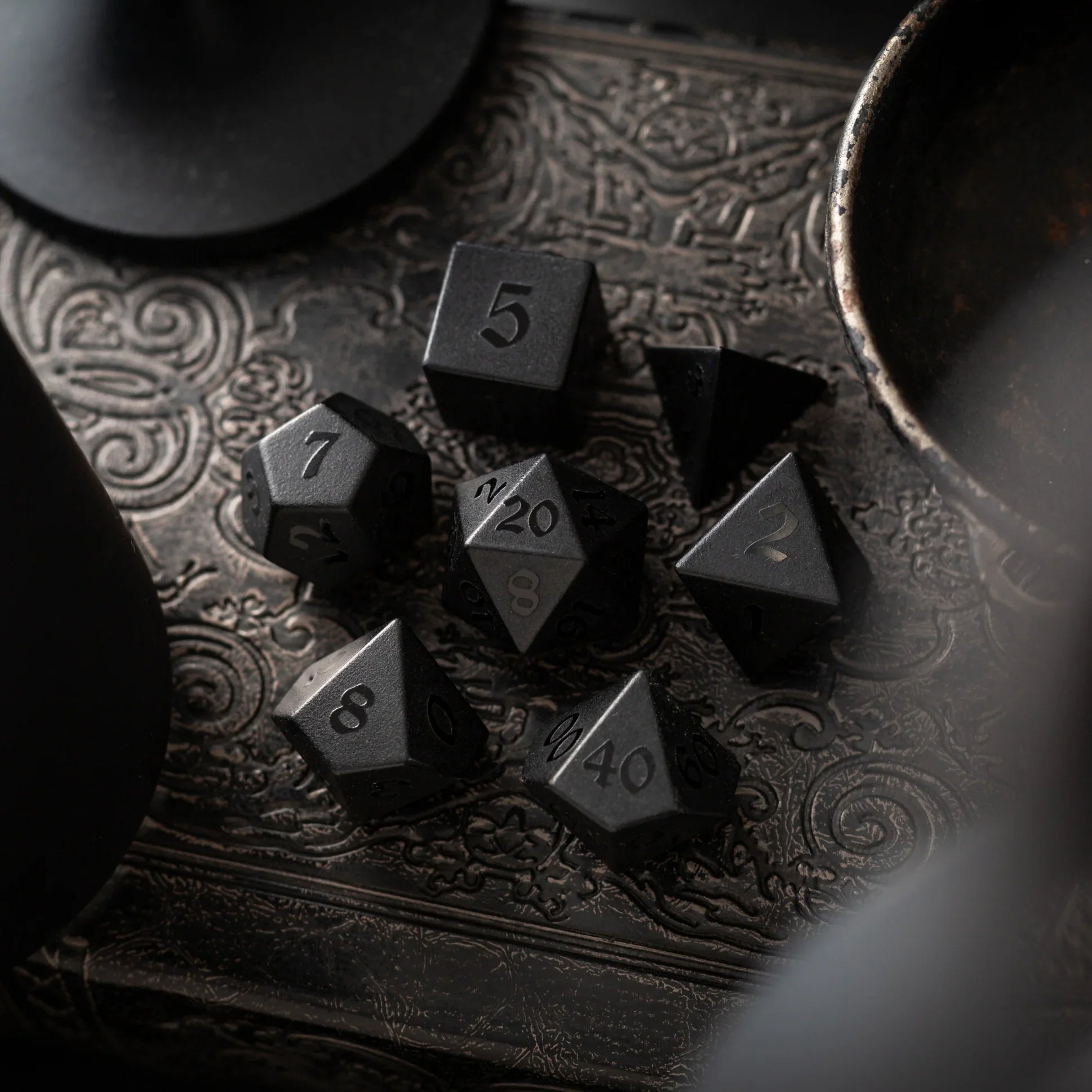
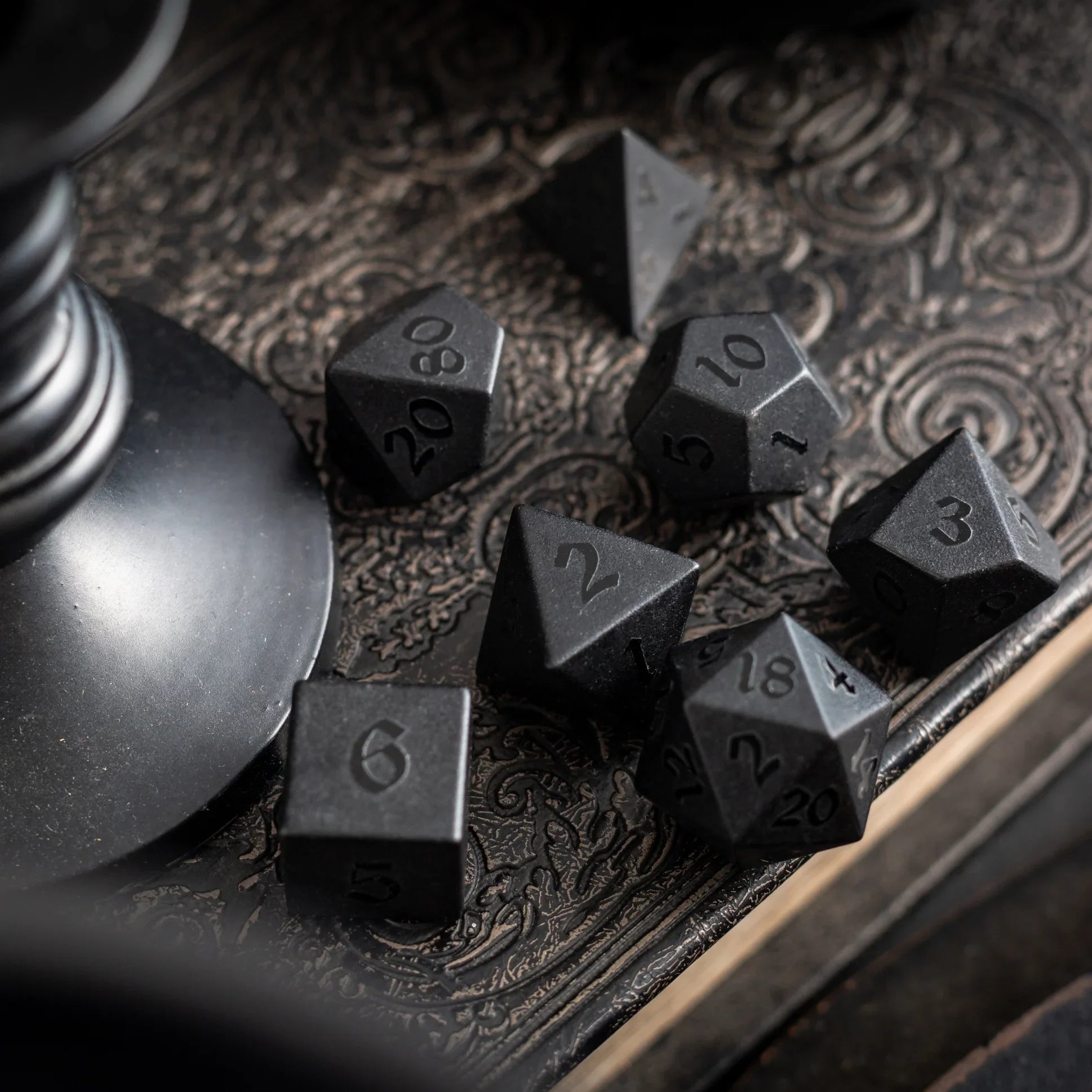
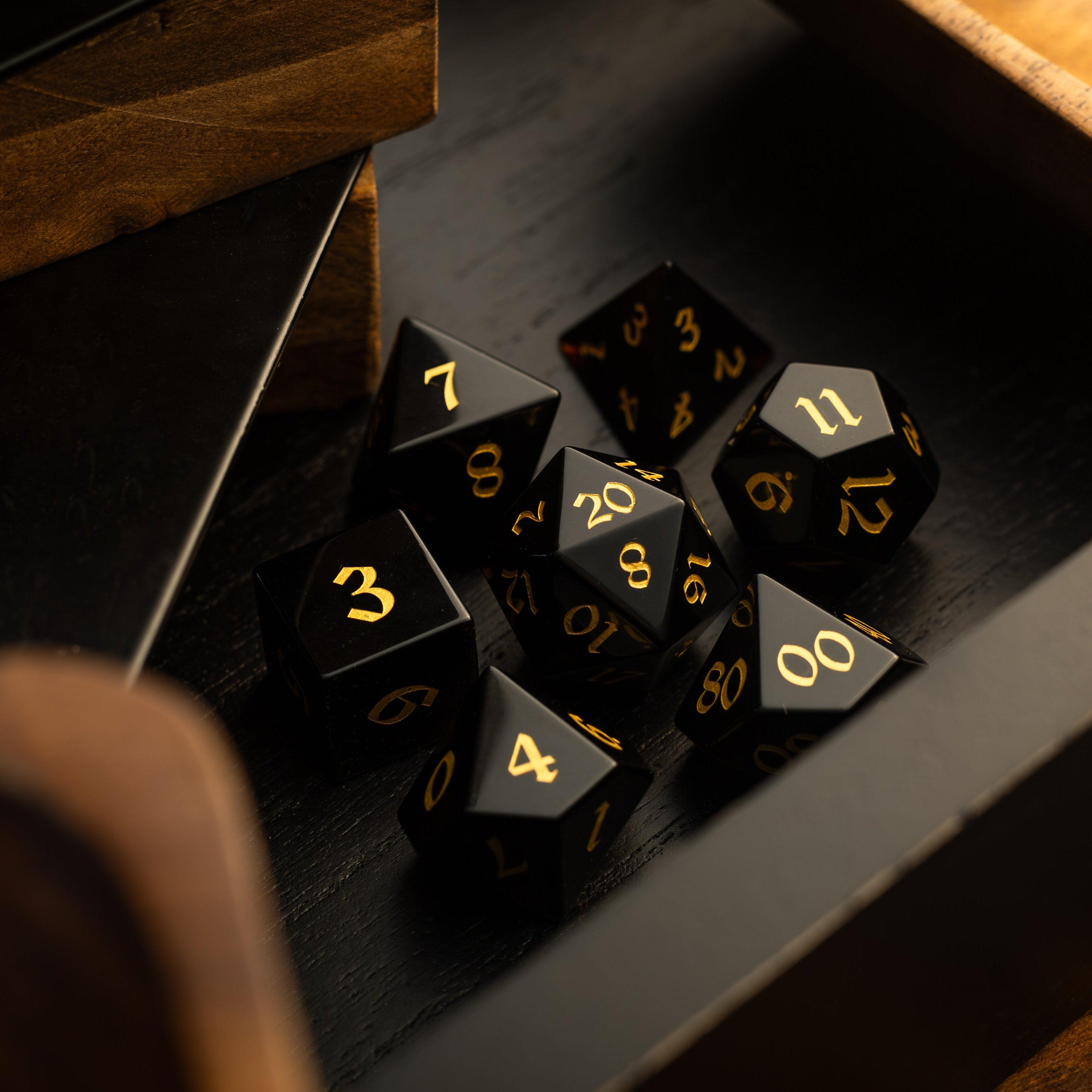
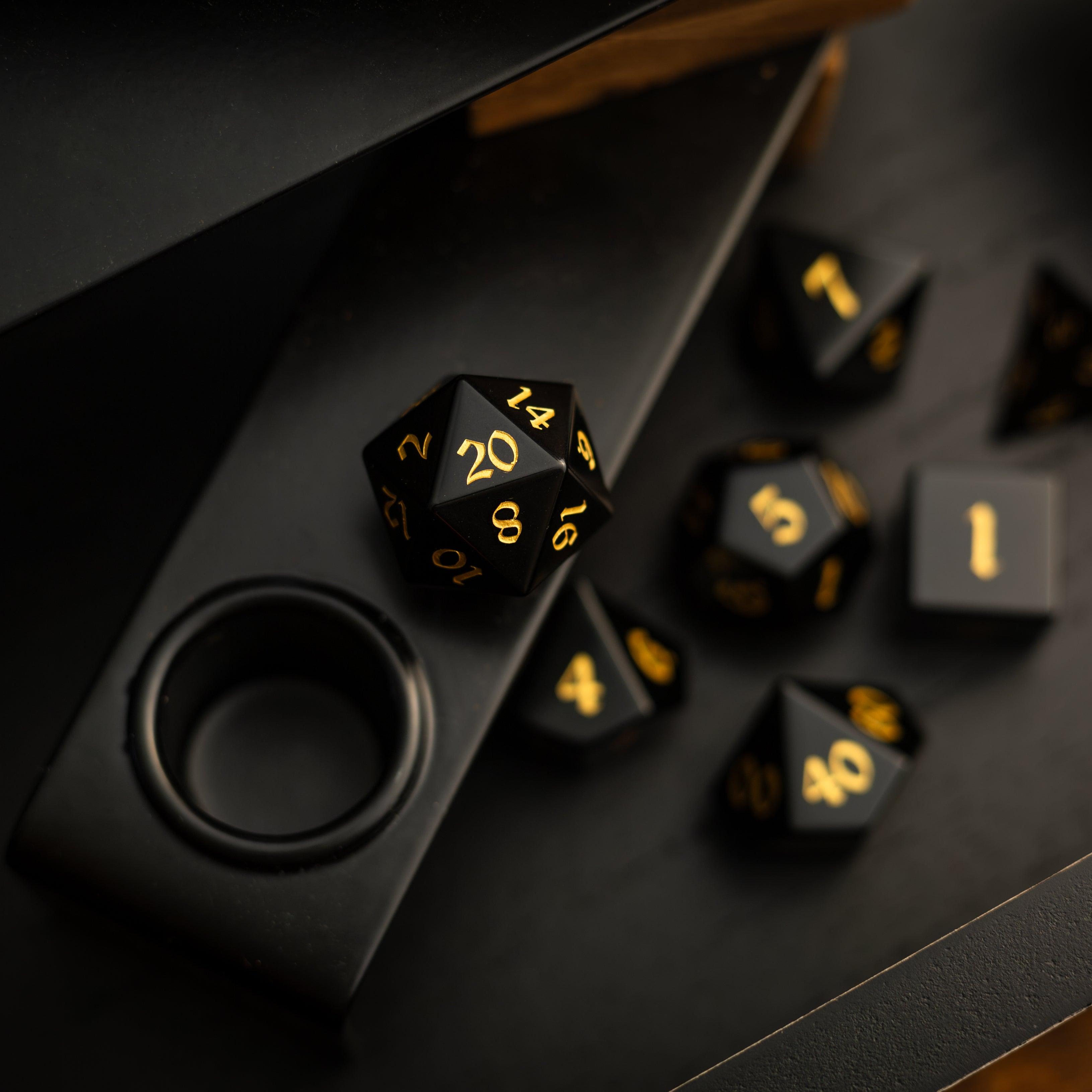
Black Obsidian
-
Yellow Tiger's Eye
-
Yooperlite
-
Opalite
These premium dice reward careful handling and are often stored separately to protect their polished surfaces.
Glass Dice
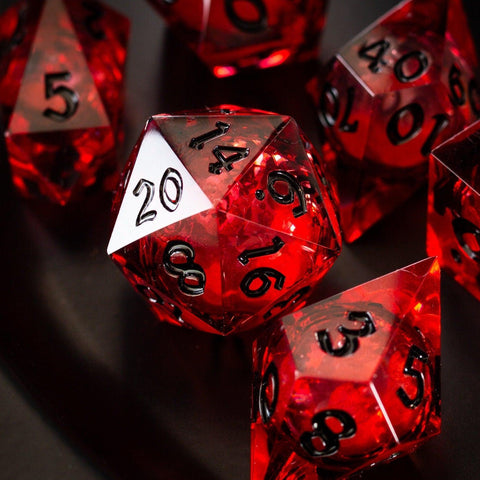
Glass dice create brilliant visual effects thanks to their transparency and reflective qualities.
Options such as Runic Dice's Black Inked Lightning Cracked Glass Dice or Dark Nox Forge Fire Glass Dice offer eye-catching designs that many collectors proudly display between game nights.
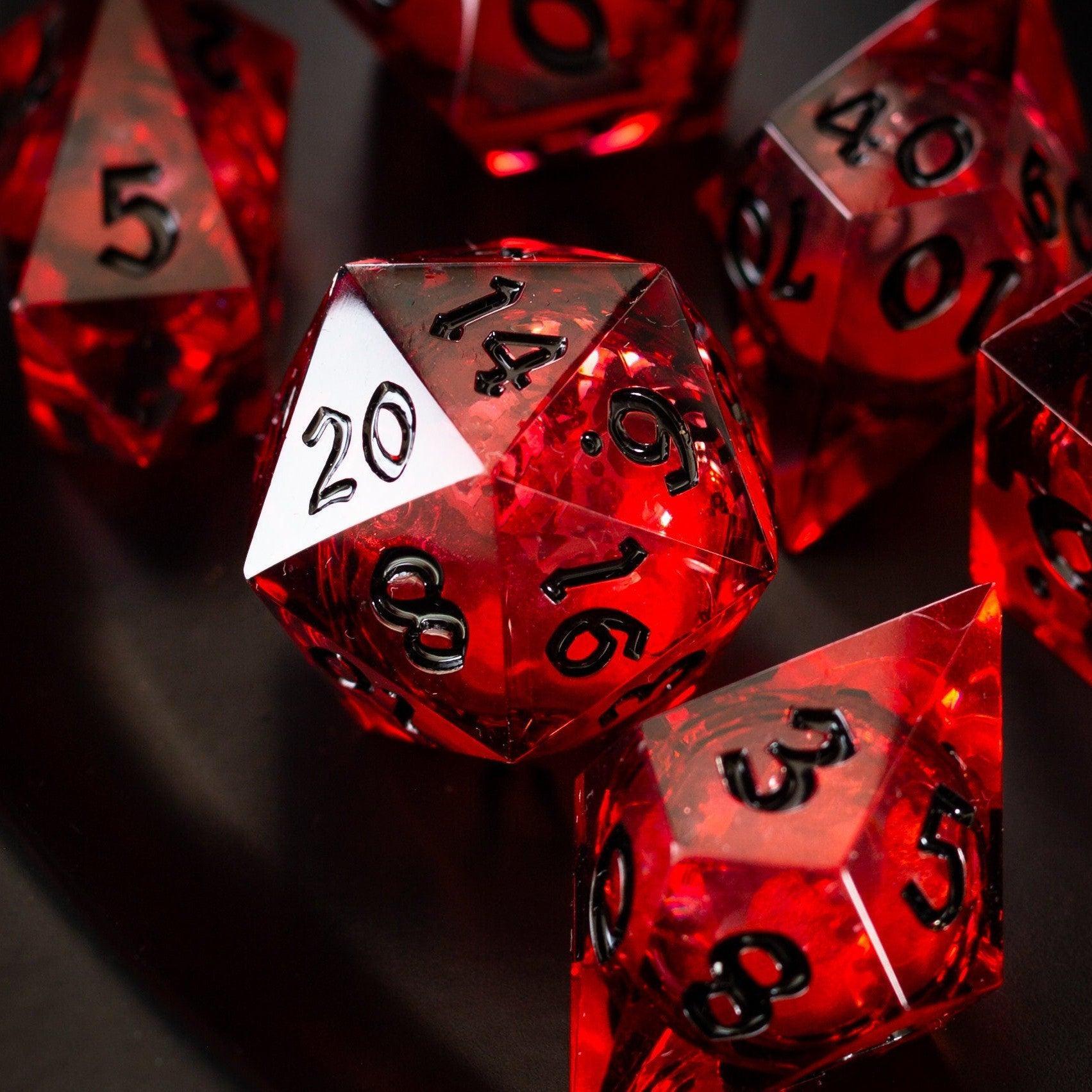
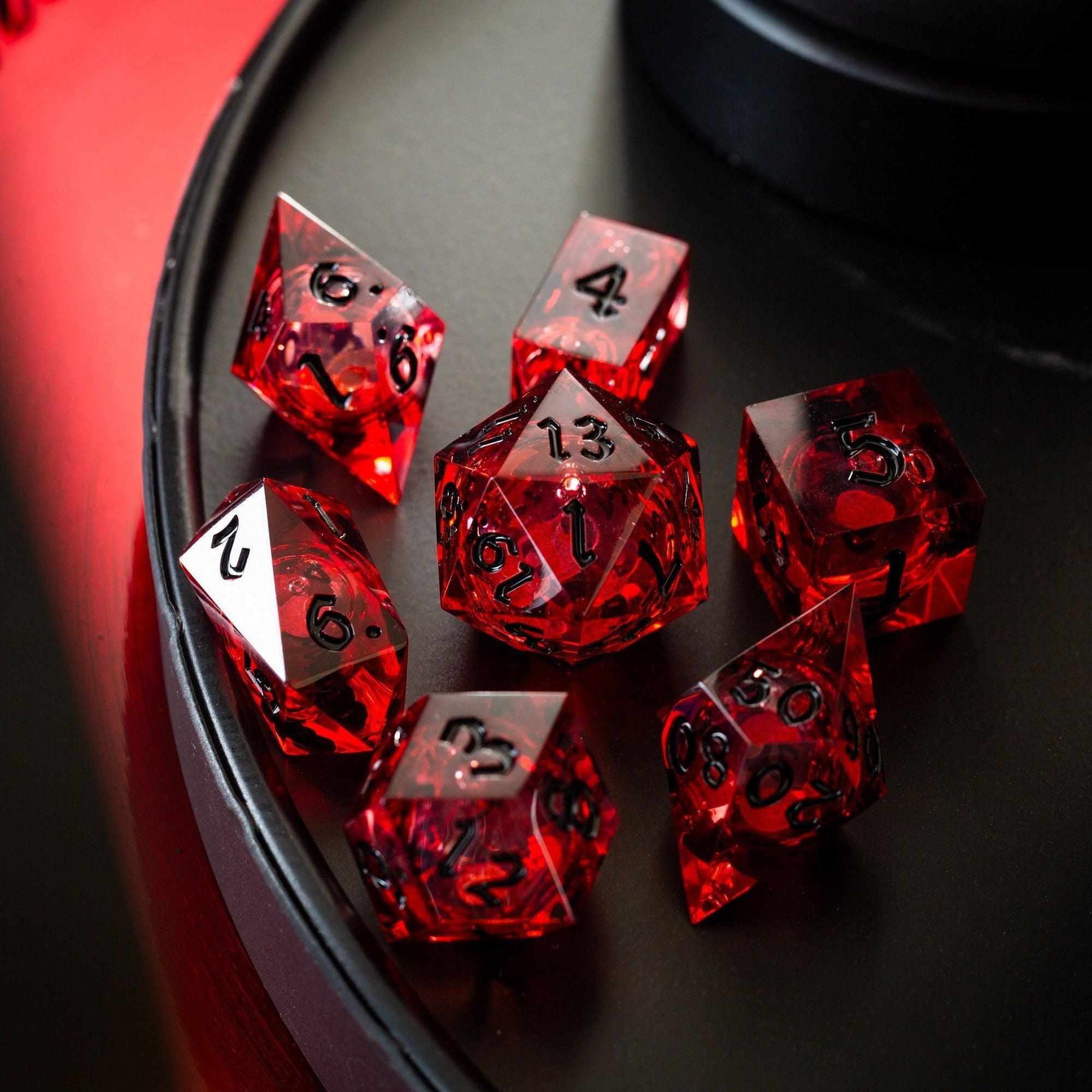
Liquid Core Dice
Liquid core dice feature suspended decorative elements that move inside the die as it rolls. The internal decoration adds visual interest without affecting gameplay.
They have become increasingly popular among collectors looking for something a little different while still enjoying a complete RPG dice set.
Polyhedral Dice Material Comparison
| Material | Appearance | Weight | Durability | Readability | Ideal Use |
|---|---|---|---|---|---|
| Resin | Bright colors and creative designs | Light | High | Excellent | Everyday gaming |
| Metal | Bold metallic finishes | Heavy | Very High | Excellent | Frequent play and collecting |
| Gemstone | Natural patterns and polished stone | Medium to Heavy | Moderate | Good to Excellent | Careful collectors |
| Glass | Transparent and reflective | Medium | Moderate | Good | Display and occasional play |
| Liquid Core | Moving decorative center | Medium | High | Excellent | Fantasy-themed collections |
Every material has strengths. Choosing between them depends on your preferences rather than any gameplay advantage.
Tips for Building a Balanced Polyhedral Dice Collection
A great polyhedral dice collection grows gradually rather than all at once.
Consider adding new sets with different purposes.
Start With Versatility
Choose one dependable set that works for nearly every character.
Good features include:
-
High contrast numbering
-
Comfortable size
-
Durable finish
-
Easy readability
Add Variety Over Time
As your campaigns grow, so can your collection.
You might add:
-
A gemstone set for a favorite long-term character
-
A metal set for epic encounters
-
A resin set with colors matching a wizard or druid
-
Glass dice for special occasions
-
Liquid core dice for magical characters
Building slowly allows you to appreciate each addition rather than filling storage with sets you rarely use.
Match Dice to Characters
Many players enjoy assigning different fantasy dice to different heroes.
Examples include:
-
Deep purple amethyst for spellcasters
-
Black obsidian for rogues
-
Golden tiger's eye for paladins
-
Bright resin swirls for bards
-
Blue liquid core dice for ocean-themed adventurers
These small touches add personality without affecting gameplay.
Organizing, Storing, and Protecting Premium Dice
An organized collection stays in better condition and makes preparing for game night much easier.
Helpful storage solutions include:
-
Padded dice bags
-
Display cases
-
Foam-lined organizers
-
Individual storage compartments
Many collectors also keep a quality dice tray nearby. Besides creating an organized rolling area, trays help reduce impacts on premium materials such as metal, gemstone, and glass dice.
For heavier dice, a dice tower offers controlled rolls while helping contain energetic throws. Pairing premium dice with practical tabletop gaming accessories protects both the collection and the gaming table.
Keeping each set clean with a soft microfiber cloth and storing it away from excessive moisture helps preserve its appearance for years of adventures.
Common Mistakes New Dice Collectors Should Avoid
Building a collection is exciting, but avoiding a few common mistakes makes the hobby even more rewarding.
-
Assuming multiple dice sets are required to play
-
Buying only based on appearance without considering readability
-
Storing heavy metal dice loosely with gemstone or glass sets
-
Rolling delicate materials on hard surfaces
-
Ignoring protective storage
-
Purchasing many similar designs instead of exploring different materials
-
Believing one material produces fairer rolls than another
A well-made die should be properly balanced regardless of whether it is resin, metal, gemstone, or glass.
Quick Polyhedral Dice Collection Checklist
Before adding another set to your collection, ask yourself:
-
Does it offer something different from my current collection?
-
Are the numbers easy to read?
-
Will the material fit how often I plan to use it?
-
Do I have safe storage for it?
-
Would a dice tray or dice tower help protect it?
-
Does the design match one of my favorite characters or campaigns?
-
Am I collecting it because I genuinely enjoy it?
The best collectible dice are the ones that make you excited to sit down at the table. Some players enjoy a single dependable set for every campaign, while others build shelves filled with beautifully crafted premium dice that celebrate memorable characters and adventures. There is room for every approach.
As your collection grows, focus on quality craftsmanship, practical organization, and designs that reflect your own gaming style. Whether you favor elegant gemstone sets, colorful resin creations, striking glass dice, solid metal craftsmanship, or mesmerizing liquid core designs, each addition can become another memorable part of your tabletop journey. Over time, your collection becomes more than a group of polyhedral dice. It becomes a personal record of adventures shared with friends and the stories still waiting to be told.

Leave a comment
This site is protected by hCaptcha and the hCaptcha Privacy Policy and Terms of Service apply.