
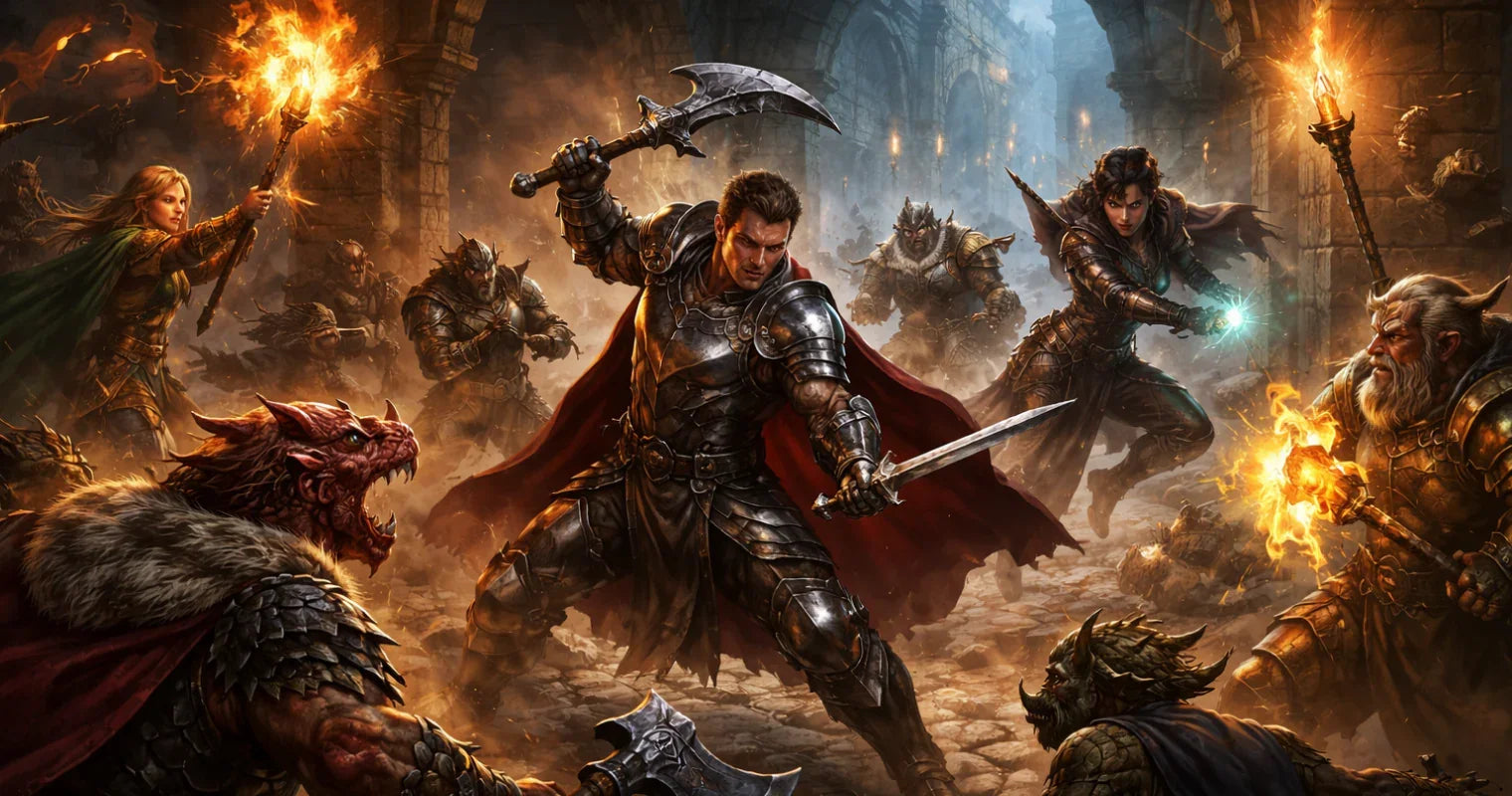
D&D Combat Tactics: Mastering the Battlefield for Smarter Victories
Combat is one of the biggest reasons people fall in love with Dungeons & Dragons. Every encounter tells a story, whether you're defending a village from marauding goblins, battling an ancient dragon, or desperately holding a narrow bridge against overwhelming odds.
While lucky rolls can create unforgettable moments, experienced players know that D&D combat tactics are about much more than rolling a natural 20. Smart positioning, teamwork, careful planning, and good decision-making often determine whether the party celebrates a hard-earned victory or scrambles to recover after a defeat.
The good news is that becoming a stronger tactical player doesn't require memorizing every rule or building the "perfect" character. By learning how to think about the battlefield, you'll contribute more in every encounter regardless of your class or experience level.
Why Combat Is More Than Rolling High Numbers
Many new players assume Dungeons and Dragons combat revolves around dealing as much damage as possible.
In reality, successful groups think several turns ahead. They protect vulnerable allies, control enemy movement, manage limited resources, and work together to solve problems that raw damage alone cannot.
Consider two parties facing the same group of enemies.
The first charges forward individually, attacking whichever monster is closest.
The second party:
-
Focuses attacks on dangerous enemies first.
-
Keeps the healer protected.
-
Controls narrow passageways.
-
Uses spells to limit enemy movement.
-
Communicates every round.
Even if both groups roll similarly, the coordinated party usually takes less damage and finishes the encounter more efficiently.
That's what makes D&D combat strategy so rewarding. Good decisions multiply the effectiveness of every dice roll.
Understand Your Role in Combat
Every adventurer contributes differently during battle. Knowing your role helps you make better decisions while supporting the rest of the party.
Frontline Defenders
Fighters, paladins, many barbarians, and durable melee characters excel at:
-
Holding enemy attention
-
Protecting weaker allies
-
Blocking narrow paths
-
Surviving prolonged combat
Sometimes preventing damage is more valuable than dealing it.
Damage Dealers
Whether ranged or melee, damage-focused characters shine when they:
-
Eliminate dangerous targets quickly
-
Finish weakened enemies
-
Apply consistent pressure
Choosing the right target often matters more than maximizing damage.
Spellcasters
Casters influence the battlefield through:
-
Area damage
-
Battlefield control
-
Buffs
-
Debuffs
-
Utility spells
A well-placed control spell can prevent far more damage than another fireball.
Support Characters
Support specialists help everyone succeed by:
-
Healing
-
Enhancing allies
-
Removing harmful conditions
-
Creating opportunities
Their impact often isn't reflected in damage numbers, but it frequently decides difficult encounters.
Scouts
Fast or stealthy characters can:
-
Gather information
-
Control enemy positioning
-
Flank when appropriate
-
Eliminate isolated threats
Controllers
Some characters specialize in shaping combat itself by:
-
Restricting movement
-
Creating hazards
-
Separating enemies
-
Forcing difficult decisions
Understanding your strengths allows the entire party to function more effectively.
Master Battlefield Positioning
One of the biggest differences between beginners and experienced players is how they move.
Positioning influences nearly every aspect of combat tactics 5e.
Protect Vulnerable Allies
Spellcasters and ranged attackers are often priority targets.
Instead of everyone rushing forward, let durable characters stand between enemies and fragile teammates.
Control Chokepoints
Doorways, bridges, tunnels, and staircases naturally limit enemy movement.
Holding these locations allows a small group to withstand much larger forces.
Use Cover
Walls, ruined pillars, wagons, statues, and barricades all reduce enemy opportunities.
Good cover can:
-
Increase survivability
-
Force enemies to reposition
-
Buy valuable time
Think About Flanking
Some groups use optional flanking rules, while others do not.
Regardless of the rules at your table, attacking enemies from multiple directions often creates tactical pressure and limits their escape options.
Stay Within Support Range
Don't wander so far ahead that:
-
Healing spells cannot reach you.
-
Buffs become ineffective.
-
Allies cannot assist.
Winning together is almost always safer than fighting alone.
Think Before Every Turn
Combat moves quickly, but thoughtful players pause briefly before acting.
Ask yourself a few simple questions every round:
-
Which enemy poses the biggest threat?
-
Is an ally in danger?
-
Should I attack or reposition?
-
Can I help another party member succeed?
-
Is this the right moment for a powerful ability?
-
What might happen after my turn ends?
For example:
Instead of attacking the nearest monster, your fighter notices an enemy mage preparing another devastating spell.
Rather than chasing a weaker target, the fighter closes the distance, forcing the caster into a more difficult position while the rogue finishes the remaining enemy.
A few seconds of planning can dramatically improve your effectiveness.
Resource Management Wins Long Battles
One of the biggest lessons experienced adventurers learn is that every encounter exists within a larger adventure.
Using every powerful ability immediately may leave the party struggling later.
Manage important resources carefully.
Spell Slots
Ask yourself:
-
Will this spell completely change the battle?
-
Is a lower-level spell sufficient?
-
Could another party member solve this problem?
Hit Points
Avoid unnecessary risks.
Every point of damage avoided is healing that doesn't need to be spent later.
Limited Class Features
Many abilities recharge only after resting.
Use them when they create meaningful advantages instead of simply increasing damage slightly.
Healing Items
Potions and consumables become especially valuable when healers cannot safely reach someone.
Bonus Actions and Reactions
Players frequently overlook these valuable parts of their turn.
Examples include:
-
Opportunity attacks
-
Defensive abilities
-
Quick healing
-
Mobility options
-
Class features
Getting full value from every turn improves your overall D&D battle tactics.
Working Together as a Party
Great tabletop RPG combat rewards cooperation.
No individual hero consistently outperforms a coordinated group.
Focus Fire
Eliminating one enemy reduces incoming attacks immediately.
Splitting damage often leaves every enemy fighting at full strength.
Set Up Allies
Sometimes the best move isn't your own attack.
Instead:
-
Grant advantage.
-
Create openings.
-
Remove obstacles.
-
Control enemy movement.
Helping another player succeed often creates a larger benefit.
Combine Spells
Battlefield control becomes much stronger when spellcasters coordinate.
One character might restrain enemies while another follows with an area spell.
Protect Spellcasters
Powerful spells often require concentration.
Keeping enemies away from your caster protects those valuable effects.
Share Information
Call out:
-
Hidden enemies
-
Dangerous terrain
-
Weak targets
-
Enemy spellcasters
-
Changing objectives
Information wins battles.
Coordinate Movement
Avoid creating obstacles for teammates.
Leave room for allies to maneuver while maintaining defensive formations.
Tactical Comparison Table
| Tactical Decision | Short-Term Benefit | Long-Term Advantage |
|---|---|---|
| Focus fire | Remove enemies quickly | Reduces incoming damage |
| Hold position | Protect nearby allies | Stronger battlefield control |
| Save spell slots | Less burst damage now | Greater flexibility in later encounters |
| Use cover | Higher survivability | Conserves healing resources |
| Help teammates | Improves immediate success | Stronger overall party coordination |
Common Combat Mistakes
Even experienced players occasionally fall into predictable habits.
Charging Ahead Alone
Moving too far beyond the party often leaves you surrounded.
Instead, advance with your allies whenever possible.
Ignoring Positioning
Standing in open areas makes you an easy target.
Look for terrain that works in your favor.
Wasting Powerful Abilities
Don't spend your strongest resources defeating enemies that are already nearly defeated.
Splitting Damage
Choose priority targets together instead of attacking randomly.
Forgetting Bonus Actions and Reactions
Review your character sheet regularly until these abilities become second nature.
Tunnel Vision
Don't focus exclusively on one monster while ignoring larger threats.
Combat situations change constantly.
Ignoring Objectives
Not every encounter requires defeating every enemy.
Sometimes success means:
-
Escaping safely
-
Protecting civilians
-
Holding a location
-
Recovering an artifact
-
Buying time
Winning the objective matters more than chasing every enemy.
Adapting to Different Combat Encounters
Strong tactical players stay flexible.
Different enemies require different approaches.
Fighting Hordes
-
Protect vulnerable allies.
-
Control choke points.
-
Use area attacks efficiently.
Boss Battles
-
Save important abilities.
-
Eliminate supporting enemies quickly.
-
Spread out when facing devastating attacks.
Flying Enemies
Prepare ranged attacks and think vertically.
Ground-based strategies may not be enough.
Enemy Spellcasters
Interrupt concentration whenever possible.
Closing distance can dramatically reduce their effectiveness.
Ambushes
Recover quickly.
Protect fragile characters while reestablishing formation.
Defensive Encounters
When defending a location:
-
Control entrances.
-
Build defensive lines.
-
Avoid unnecessary movement.
Escort Missions
Stay focused on protecting the objective rather than chasing enemies across the battlefield.
Time-Sensitive Objectives
Sometimes delaying enemies matters more than defeating them.
Flexibility remains one of the strongest D&D combat tactics any player can develop.
Small Accessories That Support Better Gameplay
Smooth combat isn't only about strategy. Staying organized helps everyone make faster decisions.
Many groups rely on simple tabletop accessories such as:
-
Dice trays to keep rolls contained
-
Initiative trackers that help everyone follow turn order
-
Condition markers for ongoing effects
-
Spell cards for quick reference
-
Combat notebooks for tracking ongoing abilities
-
Dice vaults that keep favorite sets protected between sessions
Many players also enjoy matching their dice to the personality of long-running characters.
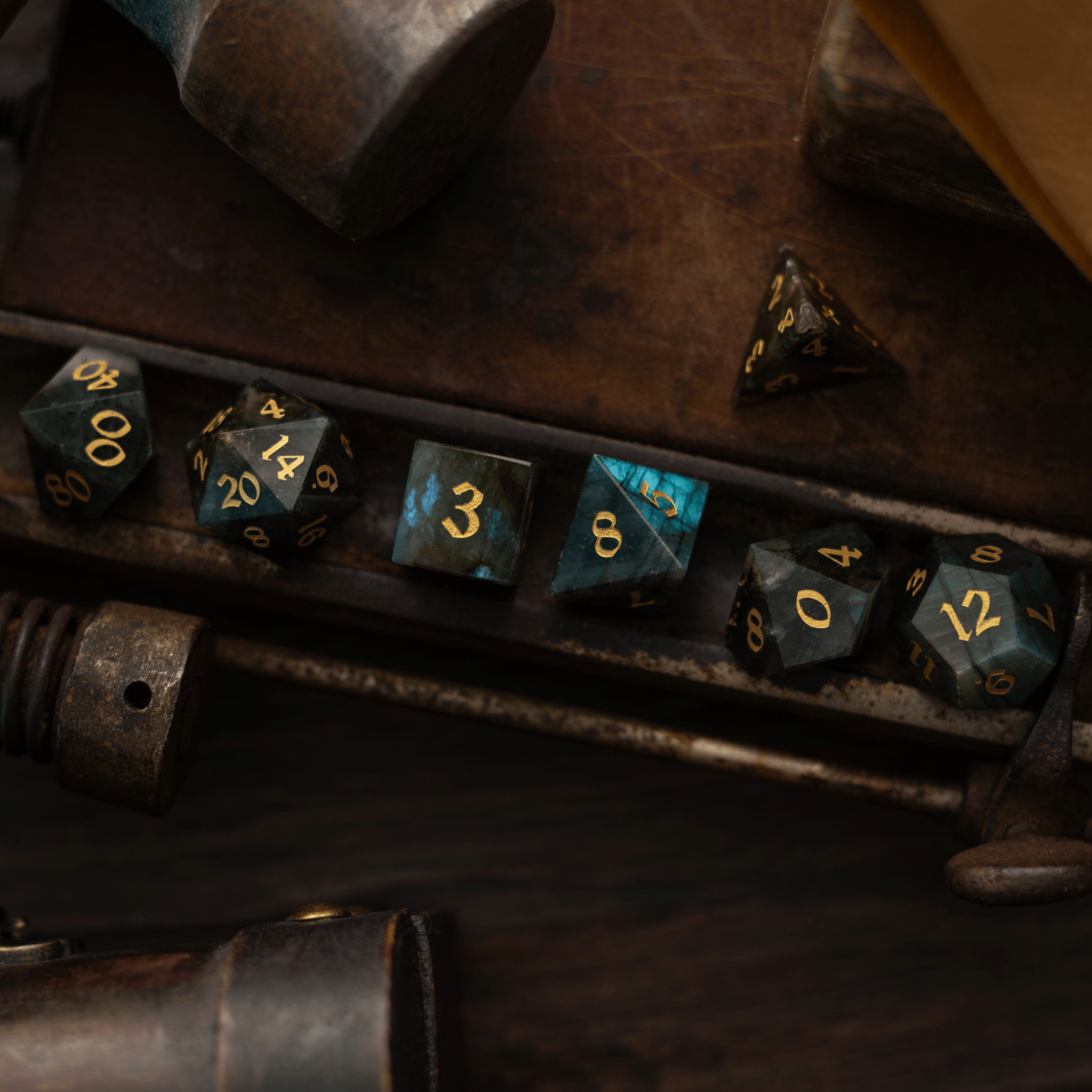
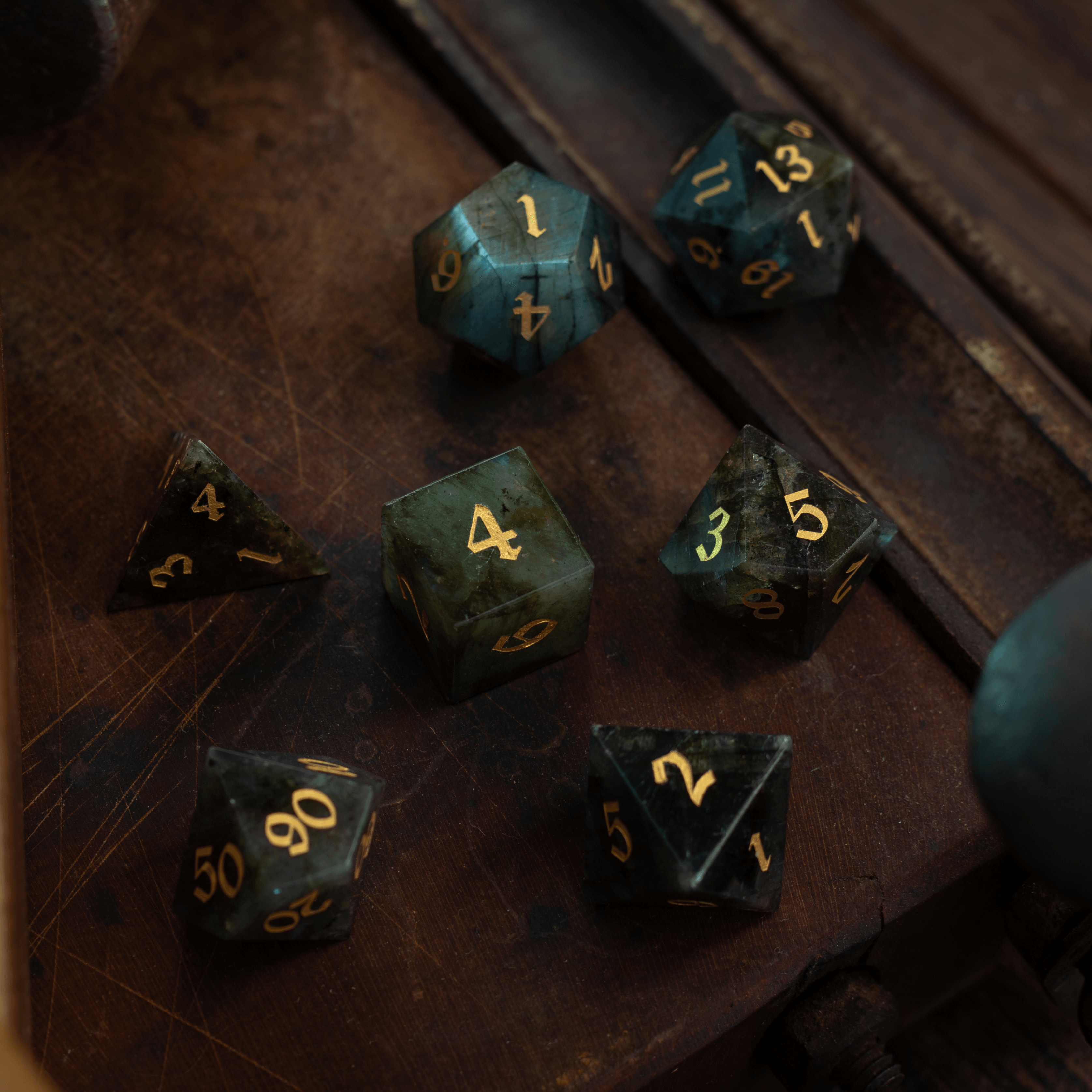
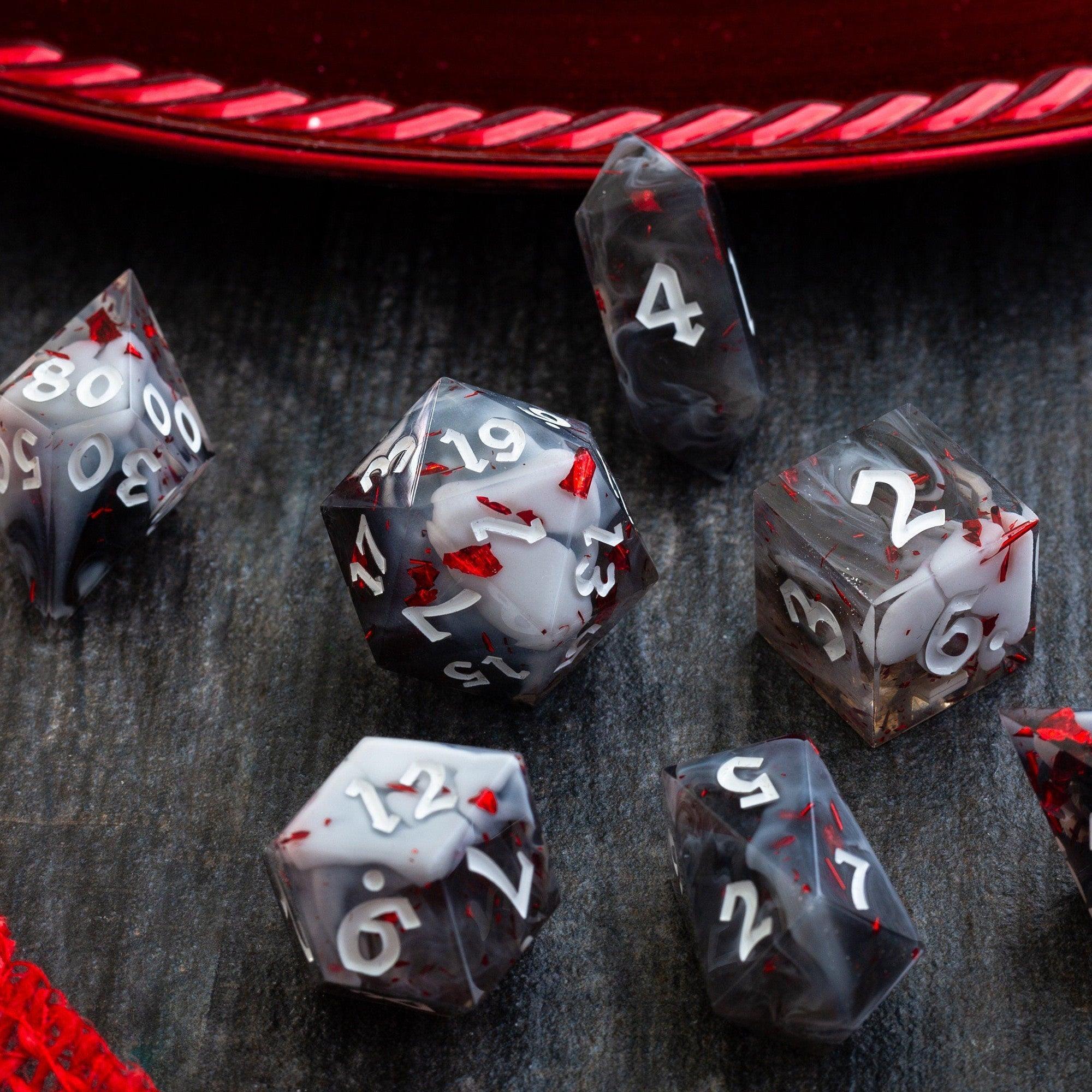
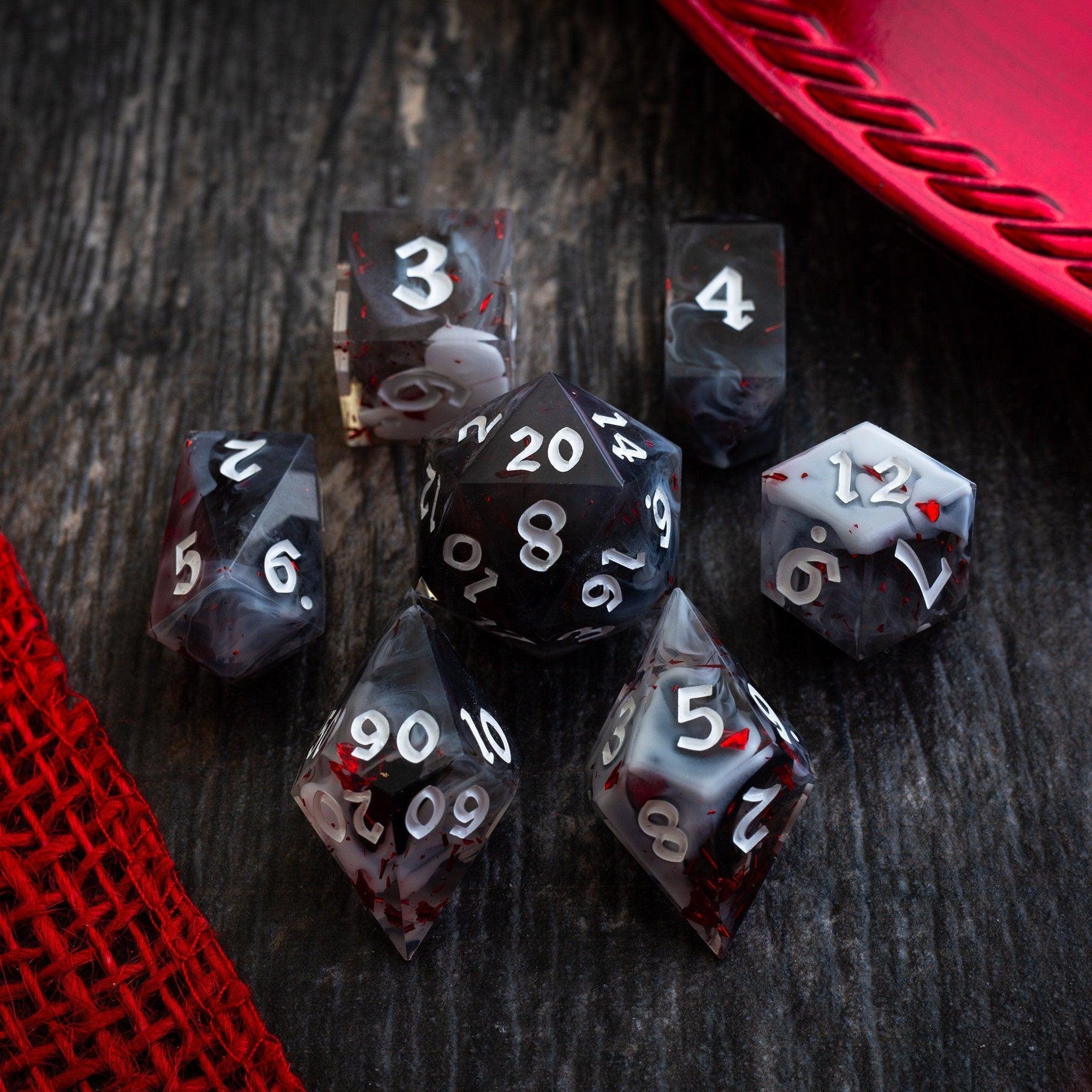
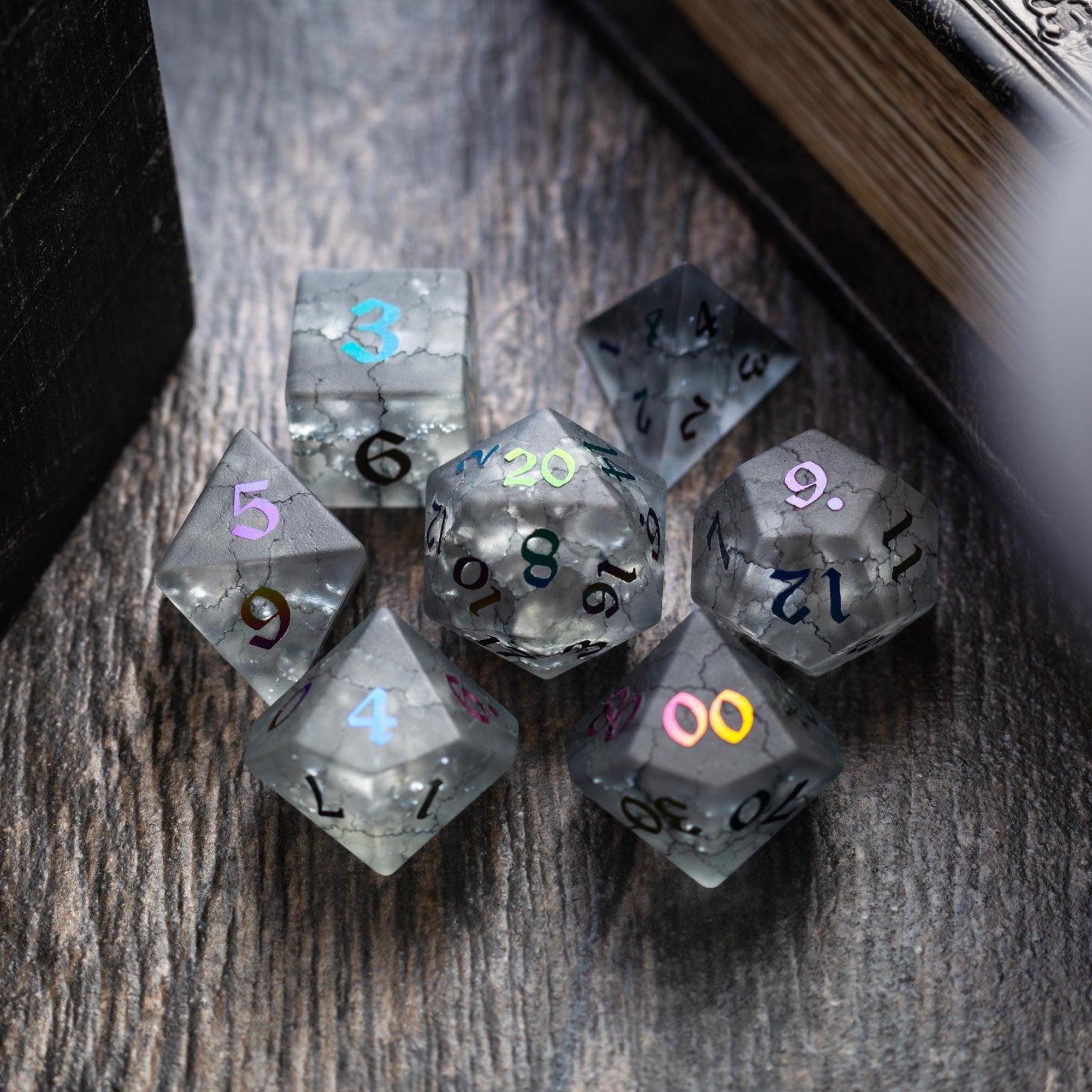
For example, durable metal dice often fit heavily armored champions, while colorful liquid core dice complement dramatic spellcasters. Collectors frequently appreciate elegant gemstone dice for memorable campaign heroes, and easy-to-read resin dice remain popular because they keep combat moving quickly. Some players also enjoy the crisp edges and sharp numbering found on premium sharp-edge or glass dice when readability matters during intense encounters.
These small choices don't improve tactics directly, but they can make each combat round smoother and easier to manage.
Improving Your Combat Skills Over Time
No player masters combat after a handful of sessions.
Every battle offers new lessons.
Continue improving by:
-
Reviewing difficult encounters afterward.
-
Watching how experienced players position themselves.
-
Paying attention to monster behavior.
-
Trying different strategies with familiar characters.
-
Asking teammates what worked well.
-
Remaining flexible when plans change.
The best tactical players aren't those who memorize every rule.
They're the ones who stay aware of the battlefield, communicate clearly, and make thoughtful decisions even when everything changes unexpectedly.
Your Next Encounter Starts Here
Every memorable victory begins with smart decisions long before the final attack lands.
As you gain experience, you'll discover that successful D&D teamwork often outweighs individual heroics. Careful positioning, thoughtful resource management, and strong communication allow ordinary adventurers to overcome extraordinary threats.
Whether you're stepping into your first dungeon or preparing for your next epic campaign, remember that every encounter is an opportunity to learn. Build good habits, support your fellow adventurers, adapt to changing situations, and keep refining your approach. Over time, those small tactical improvements add up, helping you become the kind of player every party is happy to have beside them when the next battle begins.














Leave a comment
This site is protected by hCaptcha and the hCaptcha Privacy Policy and Terms of Service apply.