

Collectible Dice for a Timeless Tabletop Collection
Updated on: 2026-01-05
Looking to level up your dice collection without the guesswork? This friendly guide explains materials, balance, condition, and smart shopping so you can pick sets that roll well and look amazing. You’ll get a practical buyer’s checklist, a simple step-by-step plan, and clear answers to common questions. Whether you’re new or seasoned, you’ll feel confident choosing pieces that match your style and your table.

Let’s make your next set purchase easy and exciting. In the guide below, you’ll find what to check before you buy, how to evaluate materials and finishes, and simple ways to care for your favorite sets so they stay beautiful for years. If you treasure collectible dice, treat them like tiny works of art that still deserve table time.
Buyer’s Checklist
Use this quick list to evaluate any set before you click “add to cart.”
-
Material match:
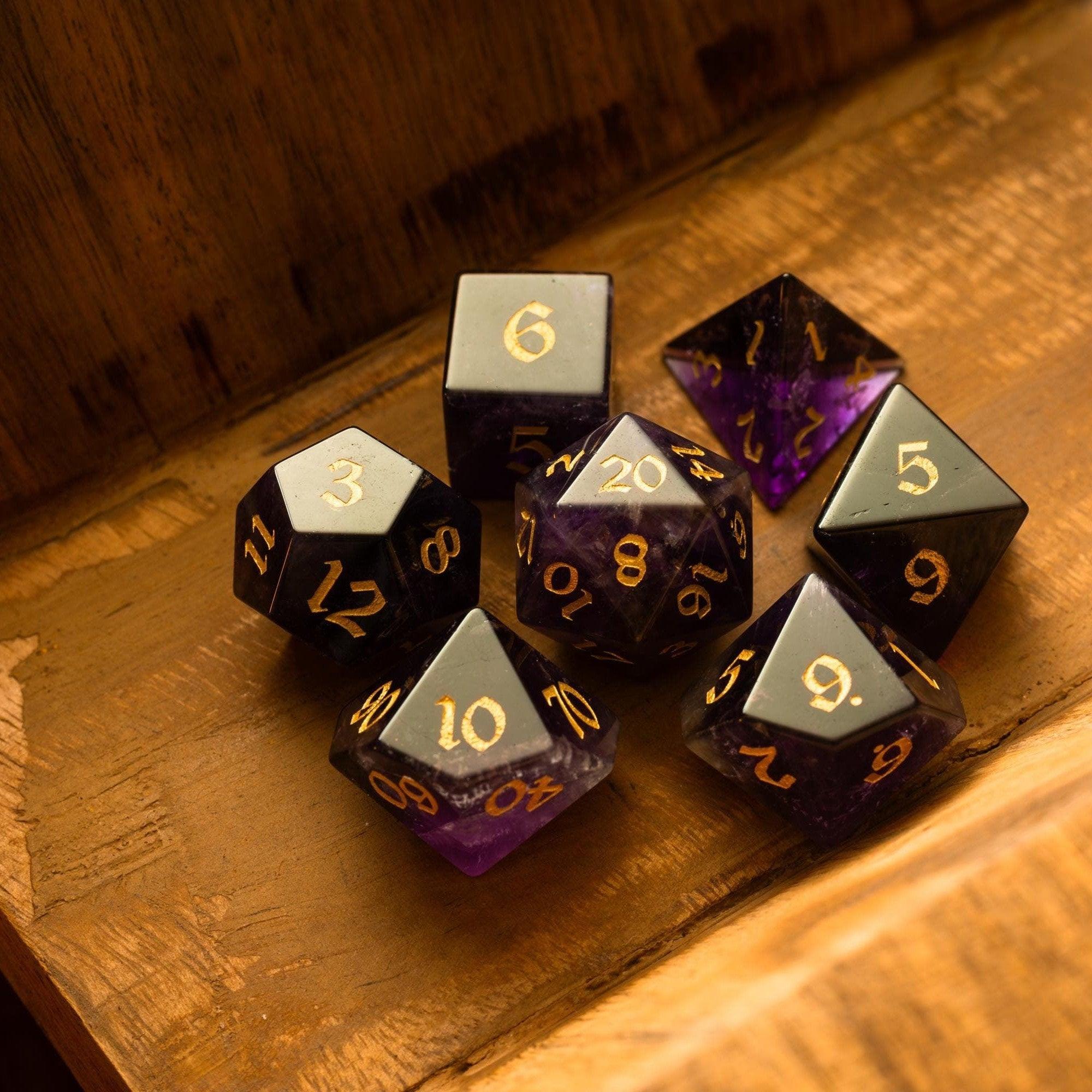
- Decide if you want resin, glass, stone, or metal. Resin is versatile and budget‑friendly, while stone and glass elevate the look and feel. Browse beautiful options in the gemstone dice collection to compare textures and finishes.
-
Face clarity:
- Numerals should be crisp and easy to read at arm’s length. High contrast inking helps in low light.
-
Edge style:
- Sharp-edge casts show detail and shimmer strongly; rounded edges feel softer and often roll more quietly.
-
Finish quality:
- Look for clean faces with no pits, chips, or cloudy areas. Inclusions (glitter, foil, petals) should be intentional and well-placed.
-
Weight and hand feel:
- Stone and metal sets feel sturdy; resin and glass tend to be lighter. Choose what’s comfortable for longer sessions.
-
Balance cues:
- Even faces and consistent wall thickness are good signs. Imperfections that gather on one side can affect rolls.
-
Set completeness:
- Standard RPG sets usually include d4, d6, d8, d10, d%, d12, and d20. Confirm what’s included, especially with specialty releases.
-
Table safety:
- Hard surfaces can scuff softer materials. Use a mat or tray to protect your dice and the table.
-
Storage:
- A fitted case or foam insert helps prevent micro-scratches. Bonus points for sets that ship with a cushioned box.
-
Care instructions:
- Check cleaning advice from the maker. Stone and glass may require gentler handling than resin.
-
Use case:
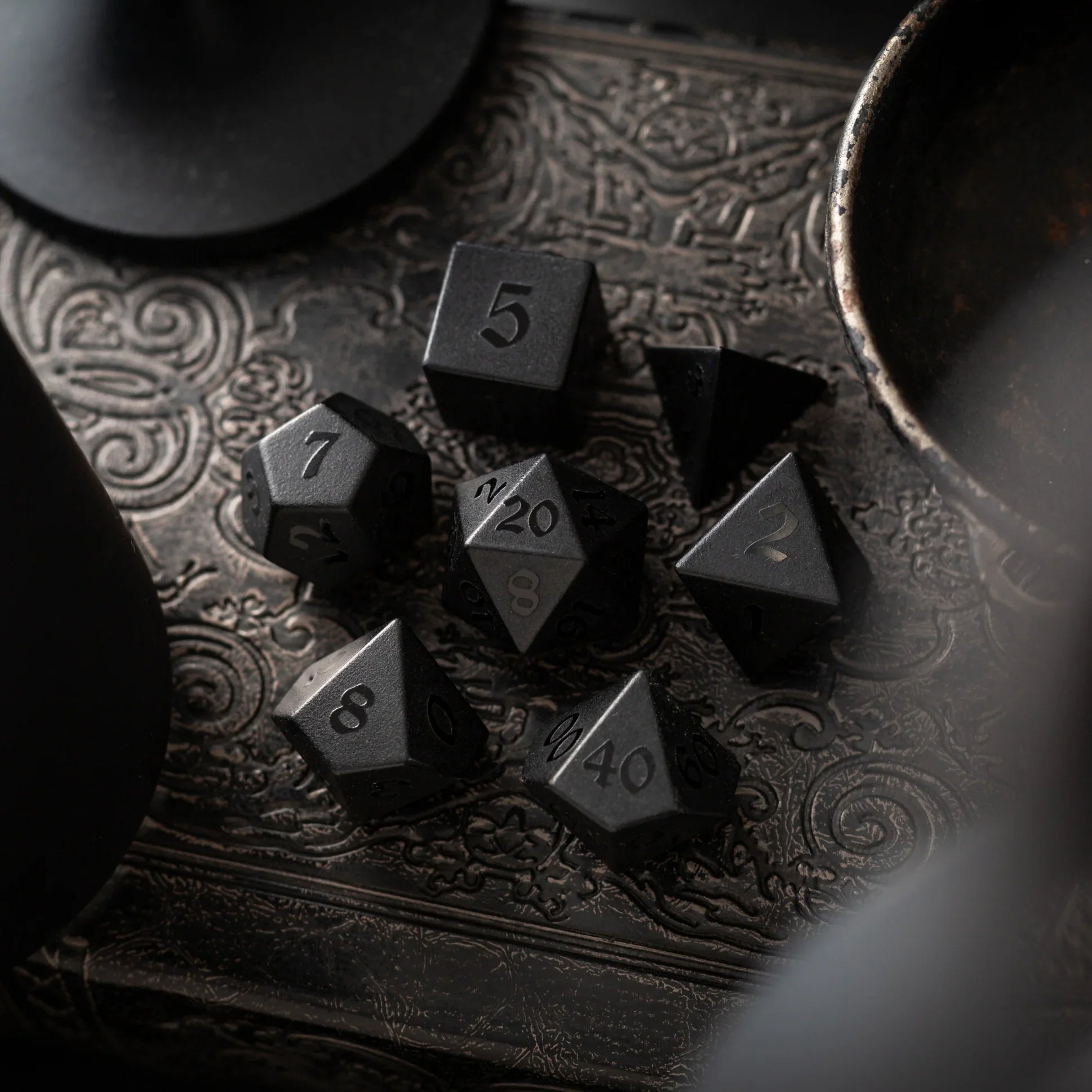
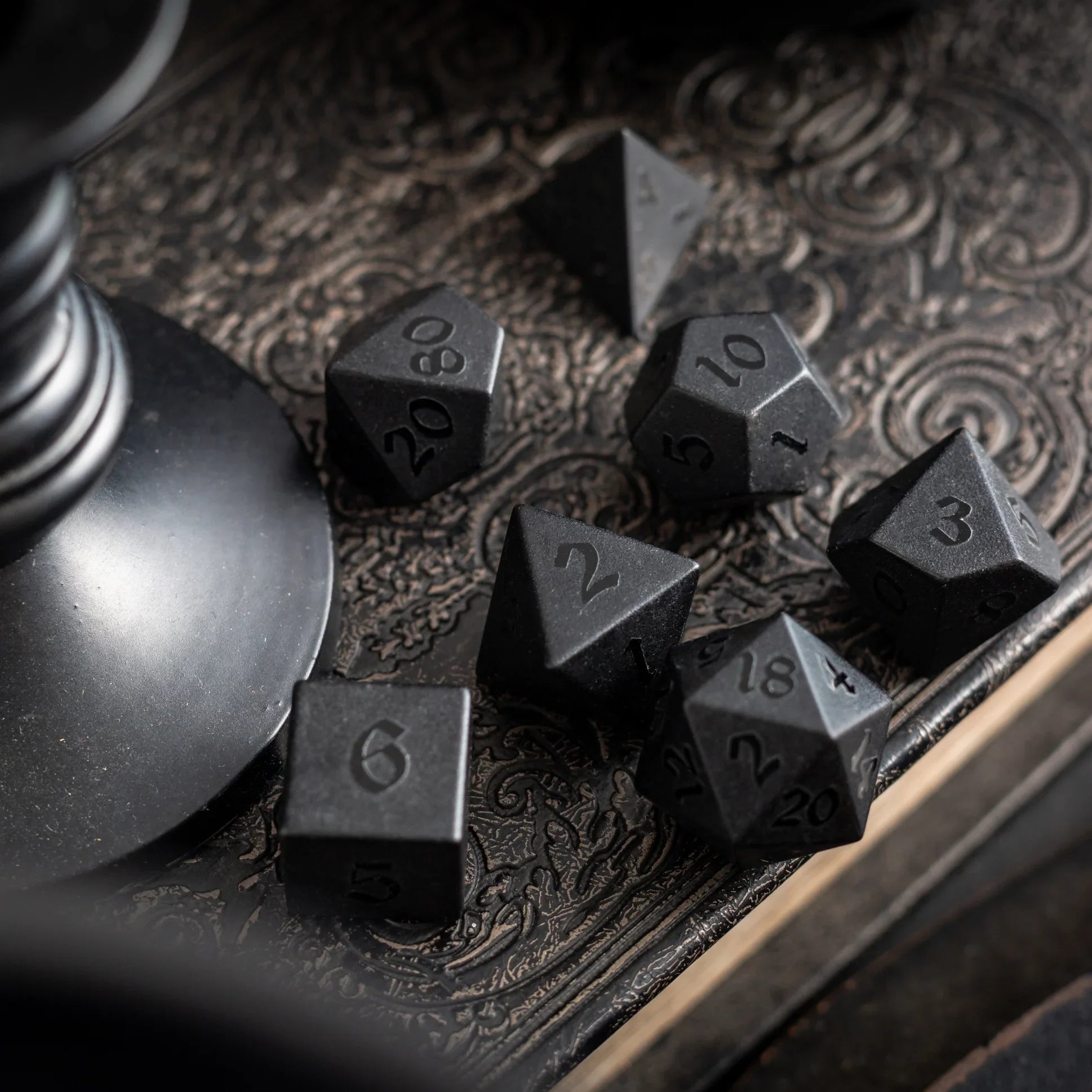
- Want a showpiece, a daily driver, or both? For dramatic table presence, consider a striking stone like an obsidian set.
-
Special effects:
- Liquid-core or layered designs add motion and depth. Explore the liquid-core collection if you love mesmerizing swirls under the numbers.
-
Budget and value:
- Decide on a comfortable price range first. Then compare details—clarity, polish, presentation—to find the best fit.
Step-by-Step Guide
Follow this path to pick a set you’ll be thrilled to roll and display.
1) Define your goal:
Do you want a standout showpiece, a daily driver, or a set that does both? Your goal narrows materials and price ranges fast.
2) Choose your material lane:
If elegance is the aim, gemstone or glass can shine. For versatility and color variety, resin is king. Metal offers satisfying heft.
3) Pick an aesthetic theme:
Decide on a color story (night sky, forest tones, arcane purple) and finish (matte, glossy, glitter, foil, liquid-core). This makes browsing faster and more fun.
4) Vet readability:
Prioritize numeral clarity. High-contrast inking and clean faces minimize eye strain and speed up play.
5) Inspect edges and polish:
Look for smooth edges without burrs and a consistent polish across all faces. Minor variances are normal in handmade sets; you’re watching for anything distracting.
6) Consider balance pragmatically:
Perfect randomness is theoretical. Aim for practical fairness, no visible bubbles congregated near a single face and consistent thickness on translucent dice.
7) Confirm set contents:
Ensure the polyhedral lineup fits your games (for example, check that the d% is included if you need it).
8) Plan for safe rolling:
Get a tray or mat to protect both your dice and the table. If you love big, bold rolls, consider sturdy accessories like dice towers.

9) Store smart:
Keep sets separated to avoid rubbing. A padded box or bag with individual slots is ideal, especially for stone and glass.
10) Review care notes:
Learn basic cleaning and what to avoid (like harsh chemicals or abrasive cloths) to preserve clarity and inking.
Collectible Dice: Pro Tips and Care
Premium polyhedral sets are part art, part tool. Treat them with intention and they’ll reward you with years of satisfying rolls and “wow” moments at the table. If you treasure collectible dice, protect them from hard surfaces and store them with a little extra care.
Handling and rolling: Roll on a padded surface. A felt-lined tray or soft mat cushions impacts, reduces noise, and protects edges. Avoid rolling stone or glass on hard wood or metal; the dice and the table can both suffer.
Cleaning: Dust with a soft microfiber cloth. For resin or glass, a little lukewarm water with a drop of mild dish soap removes fingerprints. Dry thoroughly and avoid submerging pieces with inserts or liquid cores. For stone, stick to dry or barely damp cloths; never use abrasive cleaners.
Storage: Separate sets so faces don’t rub in transit. Foam inserts, velvet pouches with compartments, or fitted display boxes work well. If you want a showstopper for your shelf, explore unique materials and finishes—start by comparing textures and colors in the curated gemstone dice range or browse swirling motion pieces in the liquid-core collection.
Readability upgrades: If your favorite set has subtle numerals, add directional lighting near the table. A small lamp angled across the dice creates shadows that make digits pop. Choose ink colors with contrast for any re-inking projects.
Practical rotation: If a set is glass or stone, rotate it with a more rugged resin set for heavy play nights. That way, your showpieces stay pristine, and your everyday set handles the marathon sessions.
FAQ
Are gemstone sets too fragile for regular play?
They’re sturdier than many people think, but they still deserve a soft landing. Use a felt or leatherette tray and avoid rolling onto hard surfaces. Store them in a padded case so faces don’t rub in a bag or backpack. If you want a bold natural-stone look with proper protection, an obsidian set paired with a tray works nicely.
How can I tell if a set rolls fairly?
Visual checks go a long way: consistent wall thickness in translucent dice, no large bubbles or inclusions clustered near a face, and clean, even edges. For a quick at-home test, roll each die 50–100 times and track results loosely. You’re looking for obvious outliers, not lab-grade randomness. If rolls feel skewed, rotate to another set for important checks in play.
What’s the best way to store and display premium sets?
Keep them separated so edges don’t rub. Foam slots or compartmented pouches are ideal. Display shelves look gorgeous, but add a dust cover or glass door if possible. For a classy natural-stone display, compare options in the gemstone dice collection, and consider an accent tray for safe rolling nearby.


















Leave a comment
This site is protected by hCaptcha and the hCaptcha Privacy Policy and Terms of Service apply.